
Most serious anglers reach a ceiling at some point. The techniques that produce fish become routine, and routine becomes the whole approach. What keeps elite captains and professional guides on the right side of that line is not talent or time on the water. It is a commitment to structured learning that most recreational anglers never pursue.
Studying Elite Anglers to Improve Your Fishing Skills
If you fish long enough, you start to notice a pattern. The captains and anglers who consistently put fish in the boat are not always the ones with the biggest budgets, the fastest boats, or the fanciest tackle. They are the ones who fish differently. They read conditions most anglers ignore, adapt mid-trip when something is not working, and seem to be positioned exactly where the fish show up. That is not luck. That is the result of learning fishing skills from professional anglers who have already made the mistakes, tested the variables, and built systems that hold up under real conditions.
For anyone serious about improving their sport fishing skills, that process starts with understanding why most anglers plateau and what separates the ones who keep getting better from the ones who stop. I have spent more than two decades building relationships with some of the most productive captains and guides in saltwater and freshwater fishing. What I have learned from watching them work, listening to how they think, and putting their knowledge into video has shaped everything that follows.
Why Most Anglers Stop Improving After a Certain Point
Almost every angler reaches a ceiling. You put in time on the water, develop a routine, start catching fish, and at some point that routine becomes your whole approach.
The problem is that fishing is not static. Water temperature, current patterns, forage availability, and fish behavior shift constantly across seasons and years. The technique that worked every summer for a decade may stop producing without any obvious explanation. But once a method is comfortable and returning some results, most people stop questioning it.
The trap is not ignorance. Many experienced recreational anglers know a great deal. The trap is what happens when accumulated experience becomes a closed system. You start filtering new information through what you already believe, reinforcing habits that only partially work and overlooking evidence that something needs to change.
What Separates Elite Anglers from Average Fishermen
Ask a working offshore captain what separates consistently productive anglers from the rest, and the answer almost never involves gear. It involves preparation, observation, and a genuine willingness to be wrong about something you have been doing for years.
- Preparation before leaving the dock: reviewing sea surface temperature charts, current patterns, satellite ocean data, and recent bite reports rather than running to the same coordinates out of routine
- Real-time technique adjustment: changing trolling speed, bait depth, lure position, and leader length in response to what the water is actually doing, not what the rigging card says
- Deep species behavior knowledge: understanding how wahoo, blue marlin, yellowfin tuna, swordfish, and other apex predators use the water column, structure, and current edges across different seasons
That third habit is the one most recreational anglers underinvest in. Preparation and technique adjustment are visible on the water. The study and reflection behind those decisions happen long before the lines go in, and it is where the real gap between elite and average performance is built over time.
How Professional Fishing Captains Develop Their Techniques
There is a persistent myth that great fishermen are born with some intuitive feel for the sport. After spending considerable time around the best in the business, I can tell you that is not how it works. Nearly every captain and guide we have worked with at In The Spread earned their knowledge through a specific and very focused process.
Focused Practice on the Water
Focused, analytical practice is not the same thing as logging hours. Time on the water without any kind of testing framework will make you more experienced. Structured experimentation will make you better. The difference is whether you are paying attention to variables or simply running a familiar routine.
Captain RJ Boyle, who has built his reputation on technically demanding high-speed wahoo fishing and daytime swordfishing in South Florida, did not arrive at his systems by accident. One example he describes from his early wahoo development: he was confident that wire diameter was secondary to lure action at high speed. After running controlled comparisons across multiple trips using identical lures with different wire gauges, he found that heavier wire was suppressing action in ways that mattered to the fish. It changed how he builds every high-speed rig he runs today. His system is what it is because he was willing to challenge something he had been doing confidently for years.
Studying Ocean Conditions as a Core Fishing Skill
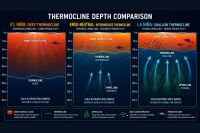
One of the most underrated habits of experienced offshore captains is how much time they spend studying conditions when they are not actively fishing. Sea surface temperature breaks, thermocline depth, color change lines, upwelling around underwater structure, and current edges near offshore canyons and ledges are not secondary details. They are frequently the primary explanation for where the fish are on any given day.
Breaking Free from the "That's How We Do It Here" Mentality
This is where real improvement happens, and it is uncomfortable almost every time.
Every fishery has its local orthodoxy. Certain baits, certain depths, certain trolling speeds, certain seasons to target certain species. Most of this institutional knowledge has real roots in real results, and some of it is genuinely sound. But a meaningful share of "how we do it here" is habit dressed up as expertise: things done a certain way because that is how they were taught, not because they represent the best available approach for current conditions.
South Florida's summer offshore fishing is a useful case study. For years, many anglers maintained baits at or near the surface throughout the warmest months, running ballyhoo and skirted lures in the top 10 feet of the water column by default. The more productive approach, which full-time captains identified through trial and careful observation, is targeting the thermocline layer 20 to 30 feet down during warm water periods. Wahoo, king mackerel, sailfish, and blackfin tuna suspend in that cooler stratum below the sun-heated surface layer. The fish are present throughout the season. The baits are simply in the wrong part of the water column.
Breaking bad fishing habits requires accepting that some part of your approach may be incomplete about something you have been confident in for years. That is not comfortable. It also does not slow the bite once your bait is where the fish actually are.
How to Learn Offshore and Inshore Fishing Techniques from Expert Anglers
The practical question of how to access expert-level fishing knowledge is more answerable now than at any point in the history of the sport. You do not need to know someone personally. You do not need to charter an expensive trip hoping the captain shares what they actually know between fish. Quality instruction is accessible through several direct channels.
Ride-Along Charters and Local Learning
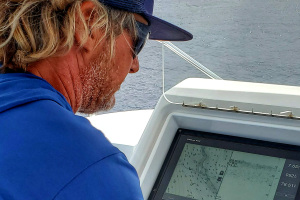
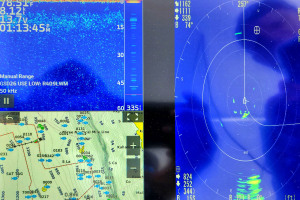
One of the most underused resources for serious anglers is the experience of fishing with a skilled guide in a fishery different from your own. Booking a charter specifically as a learning exercise, not just a fishing experience, gives you direct access to how a professional thinks through decisions in real time. Ask about what they are reading on the sonar, why they chose a particular trolling speed, what changed their positioning during the day. Experienced guides are generally glad to explain their reasoning to someone who is genuinely curious rather than just watching the rods.
Video Instruction from Working Captains and Guides
The most efficient way to compress years of field-earned knowledge into a focused learning period is through well-produced instructional video taught by people who fish professionally. The best fishing instructional video courses go into genuine technical depth: rigging systems built for specific conditions, tackle selection criteria and why they matter, reading oceanographic data, understanding species behavior across seasons, and the decision-making behind every technique choice.
Captain Kevin Hibbard has spent his career running boats out of Kona, Hawaii, in one of the world's most demanding blue marlin fisheries. The knowledge he carries about reading the Kona coast, setting a lure spread for large Pacific blue marlin, and adjusting that spread in changing conditions is rarely available at this depth and specificity in fishing publications. One adjustment he describes involves pulling certain head styles from the short corner position when afternoon glare flattens the surface and fish become less responsive to subsurface vibration. That kind of decision-level detail is what separates genuine instruction from general fishing content.
Building Pattern Recognition Across Fisheries
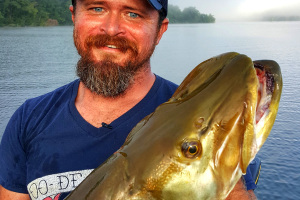
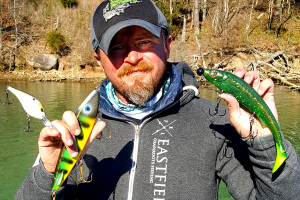
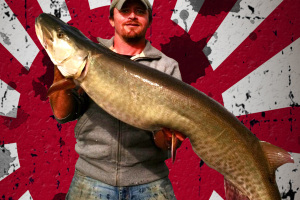
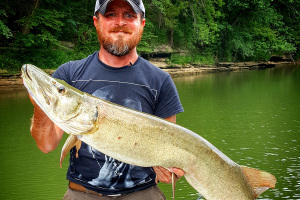
One less obvious benefit of studying techniques from multiple captains across different species is what it does to your ability to recognize patterns in unfamiliar situations. When you study RJ Boyle breaking down a daytime swordfishing drop and then study Cory Allen explaining how muskie relate to current transitions in a Tennessee river system, structural similarities start to emerge across completely different environments.
Fishing Video Courses from Working Professionals

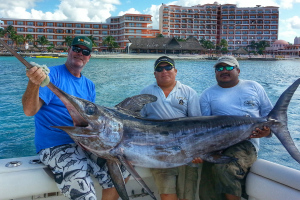
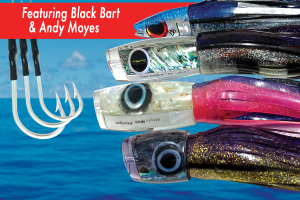
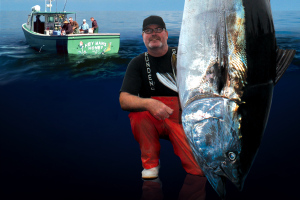
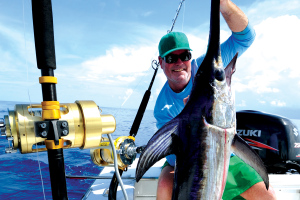
Building Your Own Fishing System from Expert Techniques
Studying elite captains does not mean copying their exact setup and expecting identical results on your home water. It means extracting the underlying logic of what they do and adapting it intelligently to your specific conditions, species, and access.
Take the principle behind high-speed wahoo trolling. The technique exists because wahoo are explosive ambush predators that respond to fast-moving prey near the surface. Captains running lures at 14 to 18 knots are not doing so arbitrarily. That speed mimics a baitfish in full sprint, triggering the predatory response wahoo are wired for. Once you understand why the speed matters rather than just that it works, you can apply that logic to your own fishery and adjust intelligently when variables change.
- Study the core technique from a credible source, paying close attention to the reasoning behind each specific element rather than just the mechanics
- Identify which components are universal to the technique and which are specific to the instructor's home water, target species, or season
- Test the transferable components on your own water with controlled adjustments for local conditions
- Document your results across multiple trips, noting conditions each time, to isolate which adaptations are actually producing results
This process requires more than a single outing to evaluate honestly. But it produces durable improvement because you understand what you are doing and why, not just what someone else does.
Why Mental Flexibility Defines Long-Term Fishing Improvement
Everything else in this article comes back to one thing: the willingness to be uncomfortable in the pursuit of getting better.
The captains and guides we work with most closely are, in our experience, still actively learning regardless of their level of success. RJ Boyle is still testing variables in his wahoo and swordfish rigging. Cory Allen is still refining his muskie presentations across different seasonal transitions. Kevin Hibbard is still adjusting his Kona spread based on current marlin behavior and changing water conditions. Not because they have not figured things out, but because the ocean and the fish keep changing, and the best professionals respond to that reality rather than resisting it.
The belief that you graduate from learning once you reach a certain level of success is one of the most persistent assumptions in fishing. It is why talented anglers stop developing in their 30s and are still running the same approach two decades later, having never fully accessed what the sport is capable of offering them.
Long-term improvement as an angler requires treating every day on the water, including the unproductive ones, as a learning opportunity. The blank days when you were certain the fish should be there are among the most valuable sessions you will ever have, if you go home asking the right questions about why they were not.
Frequently Asked Questions About Improving Sport Fishing Skills
What is the fastest way to improve your fishing skills?
The fastest way to improve your fishing skills is to study under someone already producing consistent results in the fishery you want to develop in, with close attention to the reasoning behind what they do, not just the mechanics. Watching experienced professionals explain the why behind each decision compresses years of trial and error into targeted learning. Pairing that study with structured on-water practice, where you are testing specific variables rather than running your standard routine, can produce faster and more durable improvement than either approach alone.
What do elite sport fishing captains have in common?
Elite sport fishing captains share a consistent set of habits regardless of species or fishery. They prepare carefully before leaving the dock, reviewing ocean conditions, sea surface temperature data, and current patterns. They treat each trip as a data-gathering exercise. They change tactics mid-trip when conditions or fish behavior signals that their current approach is not working. And they continue to study, test, and refine their methods even after years of professional success. The commitment to learning does not stop when the results get good.
Are fishing instructional video courses effective for improving your catch rate?
Video instruction built around working professionals who fish at a high level and go into genuine technical depth can be one of the most efficient learning tools available to a serious angler. The key distinction is between courses built around field-tested expertise and entertainment-focused fishing content. Instruction that covers rigging systems, species-specific behavior, reading oceanographic conditions, and the decision-making behind technique selection provides transferable knowledge that can translate directly to on-water results.
How do you break bad fishing habits and improve your technique?
Breaking bad fishing habits starts with identifying which parts of your current approach are grounded in sound reasoning and which are untested routine. The most effective method is isolating one variable at a time and testing it across multiple trips under comparable conditions. If you always troll at the same speed, spend several trips specifically testing different speeds and document your results. Studying instruction from experienced captains who approach the same species or technique differently will also surface assumptions you did not know you were carrying.
How do professional offshore anglers develop their expertise over time?
Professional offshore anglers develop expertise through a combination of high-volume time on the water, structured experimentation with technique variables, ongoing study of oceanographic and species behavior, and a network of other experienced professionals they consult when they encounter unfamiliar conditions. The consistent thread is treating fishing as a discipline that requires continuous education, not a skill set that gets fully learned at some point and then applied indefinitely without further development.
The Commitment to Continuous Learning Separates Good Anglers from Great Ones
There is no finish line in this sport. The ocean is too complex, species behavior is too variable, and the body of practical knowledge available to serious anglers is growing too fast for any fixed set of skills to stay current indefinitely. Many of the most productive offshore captains and inshore guides working today are sharper now than they were five years ago, not because they were inadequate five years ago, but because they never stopped studying.
That same path is available to any angler willing to pursue it. Whether you are working toward your first blue marlin, building toward consistent yellowfin tuna catches on light tackle, or developing serious inshore depth across multiple species, the process is the same. Find the professionals operating at the highest level in your target fishery, study what they do and understand why they do it, and test that knowledge with discipline on your own water.
In The Spread exists to make that level of field-tested expertise accessible to every serious angler, regardless of where they fish or who they know. The knowledge exists. The captains and guides who built it are ready to share it.
Login
to leave a review.
User Reviews
There are no reviews yet.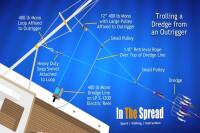
Complete Dredge Pulley Setup Guide
Saltwater
12.28.2020
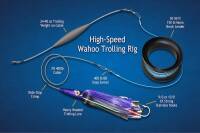
High Speed Wahoo Trolling Rig
Saltwater
09.08.2018
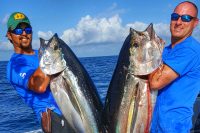
Fishing Light Tackle for Yellowfin Tuna
Saltwater
09.08.2018
0