
Saltwater fish do not wander. They follow structure, the reefs, ledges, current breaks, and temperature boundaries that concentrate food and provide cover. Understanding how each type of underwater structure attracts and holds fish changes how you approach every trip and every species you target.
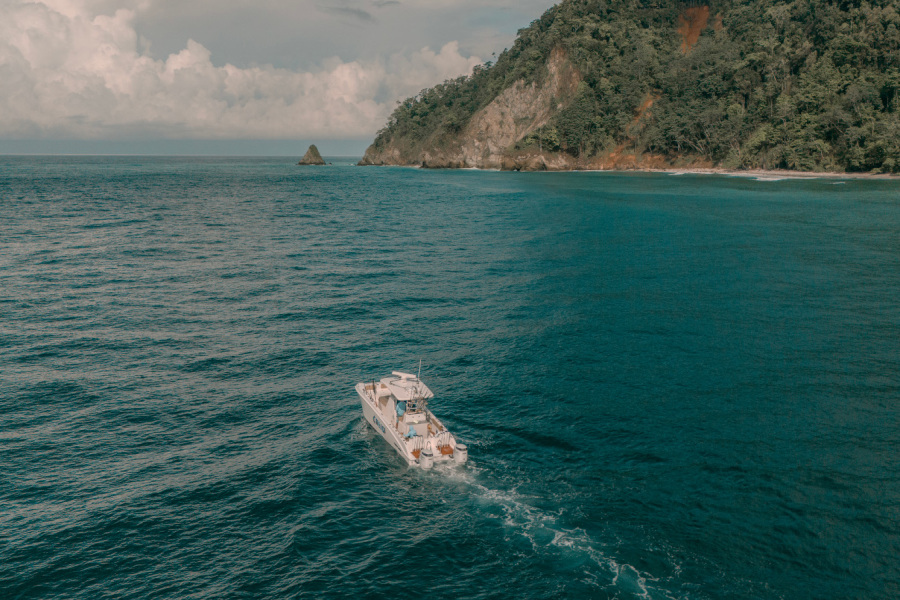
Fishing Structure: Why Fish Stack Where They Do
Every captain who consistently puts fish in the box is doing one thing that casual anglers often miss: reading the bottom. Not just watching the sonar tick across a screen, but genuinely understanding why a specific piece of underwater fishing structure holds fish on one tide and goes cold on the next. Structure is not a mystery. It follows logic. And once you understand that logic, you stop guessing and start fishing with intention.
This article breaks down the full picture of how saltwater fish relate to structure, from natural reefs and seamounts to shipwrecks, oil platforms, current lines, and temperature breaks. If you want to build a deeper foundation in saltwater fishing, understanding structure is where that education starts. For bottom-oriented species especially, no amount of tackle, bait, or technique compensates for being positioned on the wrong piece of bottom.
What Is Fishing Structure and Why Does It Matter?
Fishing structure is any physical or oceanographic feature that alters the underwater environment in a way that attracts and concentrates fish. That definition covers a lot of ground: natural reefs, ledges, wrecks, oil platforms, seamounts, temperature breaks, current seams, and color lines all qualify. Fish rarely move randomly for long. They respond to food, structure, and conditions, and the places where all three converge are where you find them.
Structure matters because it solves problems for fish simultaneously. It provides shelter from predators, a place to intercept and ambush prey, relief from exhausting current, access to oxygenated and nutrient-rich water, and in the case of offshore pelagic species, a reference point in an otherwise featureless ocean. When you find structure that checks multiple boxes at once, especially during a moving tide, you find fish in numbers.
How Physical Structure Shapes Fish Behavior
Physical structure is the tangible part of the equation: the ledges, reefs, wrecks, platforms, and coastal features you can mark on a chart, return to on GPS, and read with sonar. Each type creates a different kind of habitat, and knowing what lives where determines which techniques and presentations make sense when you arrive.
Do Natural Reefs and Ledges Hold the Most Fish?
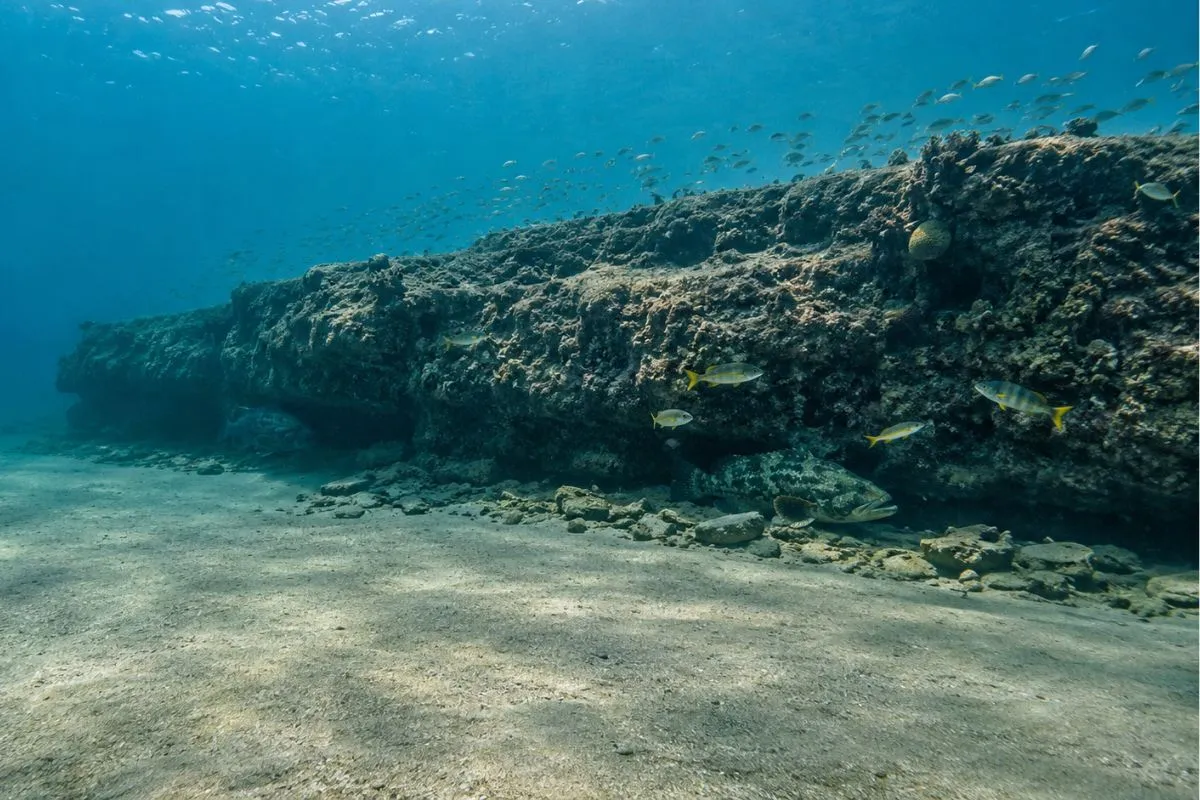
Natural reefs are among the most productive saltwater fishing structures anywhere in the ocean. They've had thousands of years to develop complex ecosystems, layered food webs, and established populations of baitfish, crustaceans, and invertebrates. That biological richness is what draws predators in the first place and keeps them there.
- Baitfish use the edge as a reference point and stack along the contour
- Predators hold in current breaks formed by the ledge face and wait for food to sweep past
- Temperature layering at depth transitions allows fish to move vertically to their preferred range
- Escape routes in both directions give nervous fish the security to stay and feed
Grouper fishing is almost entirely about reading ledges correctly. Grouper stake out specific sections of a ledge, hold tight to the bottom, and rarely stray far from their position. The depth, the bottom hardness, the ledge angle, and the current direction all factor into whether a given spot produces. Get those variables right and you're on fish. Get them wrong and you're burning fuel over empty water.
What Are Seamounts and Why Do They Concentrate Offshore Fish?
A seamount is an underwater mountain that rises significantly from the surrounding seafloor. Even when the summit sits hundreds of feet below the surface, seamounts compress the water column in a way that concentrates nutrients, baitfish, and the predators that hunt them in volumes that flat, featureless bottom simply cannot support.
The key mechanism is upwelling. When deep-ocean currents hit the base of a seamount, they get deflected upward, carrying cold, nutrient-rich water toward the surface. That process triggers a biological chain reaction: nutrients feed phytoplankton, phytoplankton draws baitfish, baitfish draw everything else. On an otherwise open piece of ocean, a seamount is an oasis.
What Are Breaklines and How Do They Hold Fish?
A breakline is a depth transition where the bottom shifts from one level to another. Breaklines are less dramatic visually than steep ledges, but they are no less productive. They function as highways for fish moving between shallow feeding grounds and deeper sanctuary, and as ambush positions for species that prefer to hold in slightly deeper water and move shallow to feed.
Inshore breaklines define the edges of grass flats, the margins of tidal channels, and the transitions from sand to hard bottom. Offshore, breaklines mark the edges of continental shelf structure, the shoulders of underwater canyons, and the gradual steps that precede major ledges. In both environments, fish use them the same way: as travel routes and ambush positions tied to current and tide.
Are Shipwrecks and Artificial Reefs as Productive as Natural Reefs?
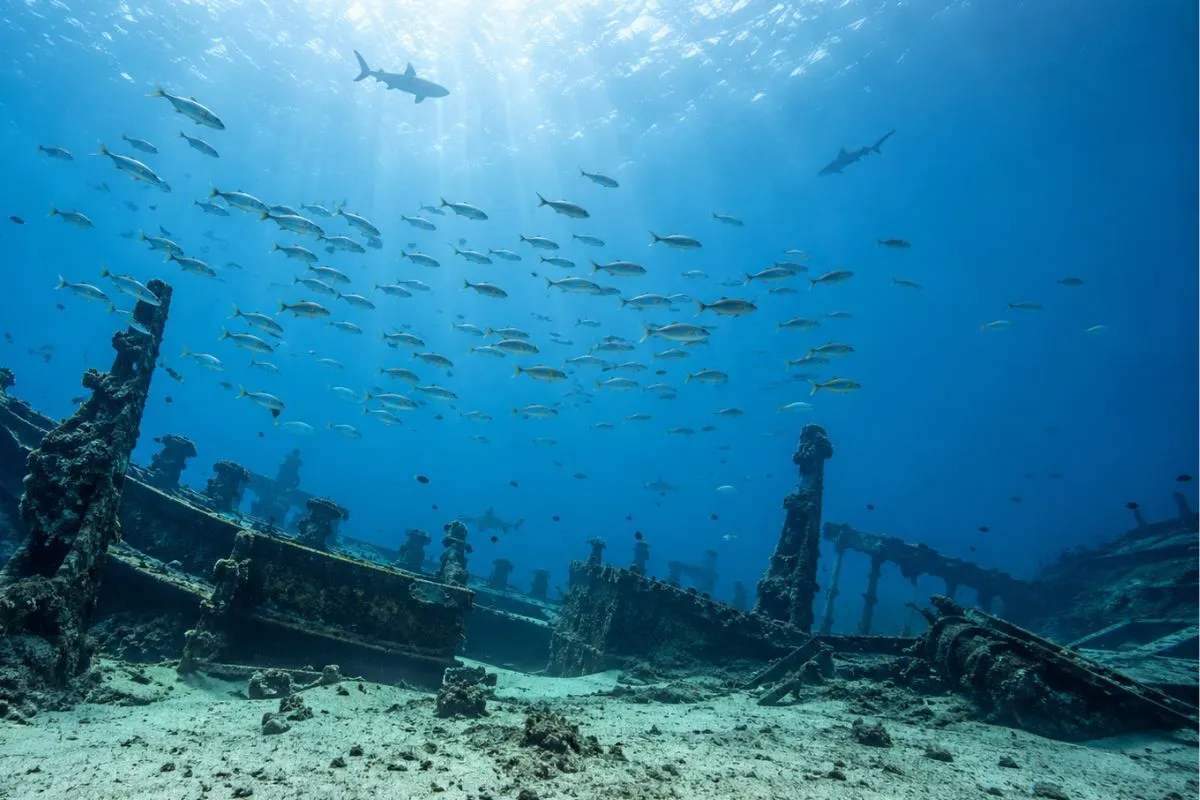
Artificial structures, including shipwrecks, intentionally sunk vessels, and concrete reef balls, can be remarkably productive, especially in regions where natural hard bottom is scarce. Fish show up at artificial structures within days of deployment and within six to twelve months a full reef ecosystem is established, with invertebrates coating the surface, baitfish stacking throughout the water column, and predators working the edges.
The specific advantage of shipwrecks is vertical relief. A wreck sitting on a sandy bottom creates habitat and cover throughout the entire water column that nothing else in the area can replicate. That vertical component is critical for species like amberjack, cobia, barracuda, and African pompano, which patrol depth rather than holding tight to the bottom. For reef and wreck fishing, the wreck itself is less important than what the wreck does to the water column above it.
Oil Platforms: The Most Productive Man-Made Fishing Structure?
One study of California's offshore oil platforms found that, measured as secondary fish production per unit area of seafloor, these structures were roughly 27 times more productive than nearby natural rocky reefs. That number is significant. The reason is surface area. Miles of pipe, cable, and crossbeam material extend through the entire water column, providing hard substrate for invertebrates, baitfish, and predators at every depth simultaneously.
How Do River Mouths and Oyster Bars Produce Inshore Fishing?
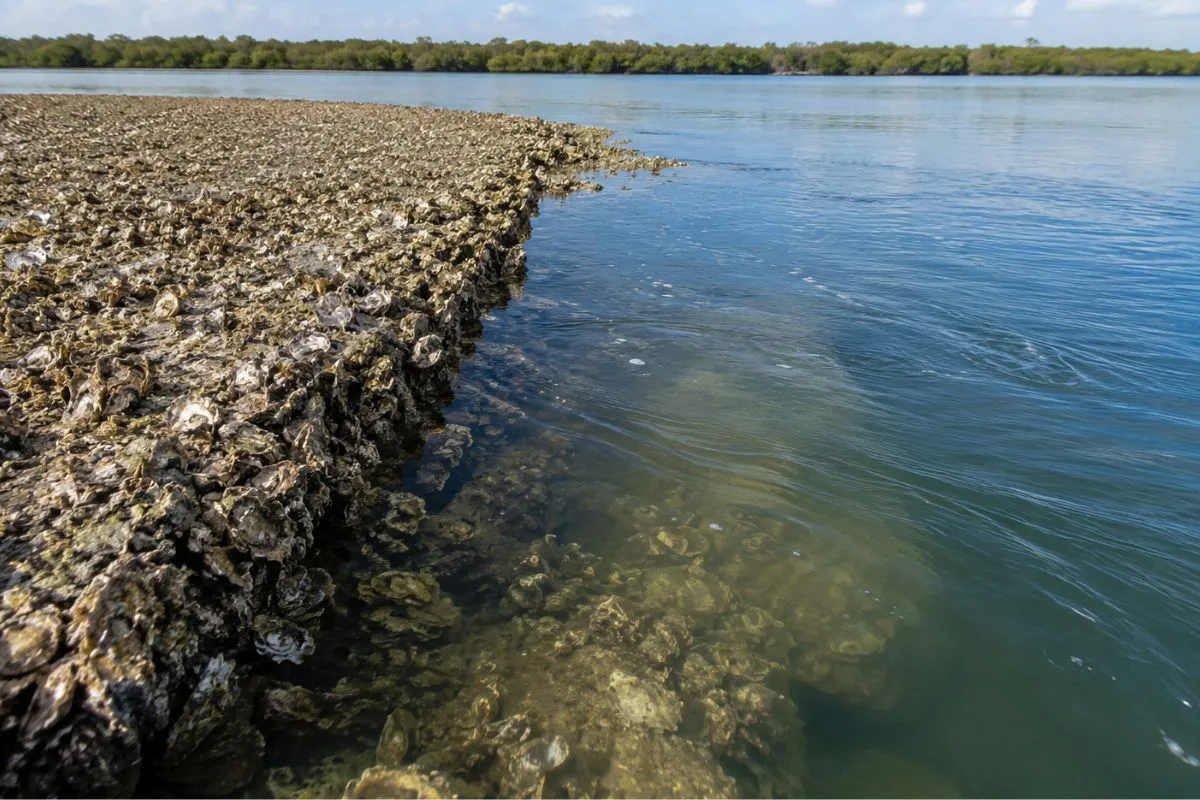
Coastal features create some of the most accessible structure fishing opportunities in saltwater. River mouths, where freshwater meets salt, create dynamic mixing zones that trigger concentrated biological activity. The salinity gradient draws specific baitfish. The current churning through the mouth creates ambush points. Predators stack in the transition zone and feed aggressively when conditions align.
Structure Fishing Videos
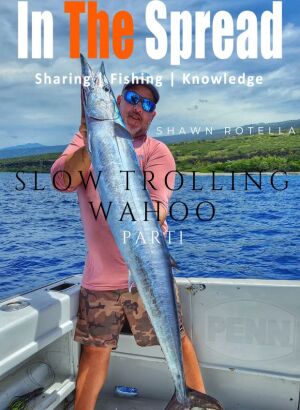
Slow trolling live bait unlocks wahoo opportunities when fish won't chase high-speed presentations, requiring understanding of how weather, tides, and moon phases affect feeding patterns. Captain Shawn Rotella's expertise reveals when to switch from speed trolling, how structure and current relationships concentrate wahoo, and drag management techniques preventing common mistakes that cost fish during fights with powerful speedsters.
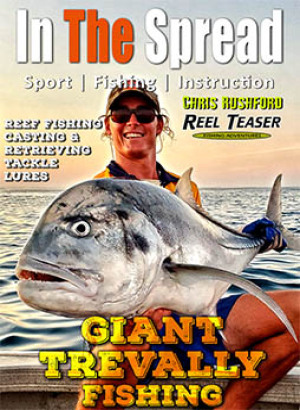
Giant trevally hooked near Rowley Shoals reef edges make immediate runs toward structure, testing tackle and technique before anglers establish control. Success requires heavy spinning setups with drag systems that can turn powerful fish within seconds while boat positioning and fighting angles prevent GT's from using coral to their advantage during brutal initial runs.
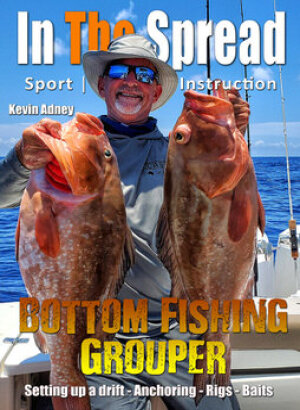
Grouper bottom fishing productivity depends on targeting natural reefs and wrecks where fish concentrate rather than random bottom. Kevin Adney's drift management approach keeps baits working productive structure zones systematically, but success requires understanding how current affects drift speed and positioning presentations where grouper ambush prey rather than sweeping past strike zones or hanging in barren areas between structure features.
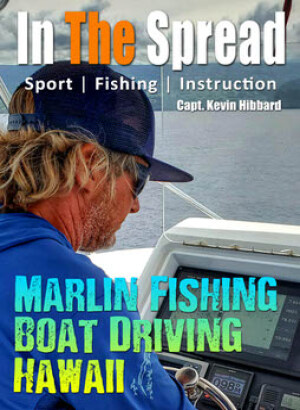
Blue marlin boat driving determines fight outcomes through simple spread setup allowing quick line clearing, understanding fish behavior patterns that inform positioning decisions, and achieving superior position early. Kevin Hibbard's worldwide marlin experience reveals how drag settings, line angle management, and strategic use of current create control needed for landing trophy fish rather than reactive responses after marlin establish advantages.
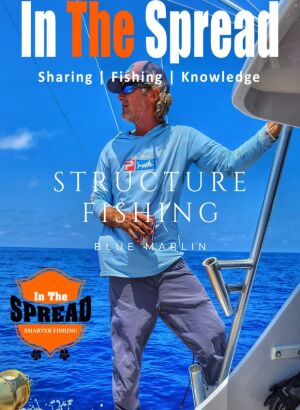
Blue marlin position predictably where ocean structure concentrates baitfish rather than roaming randomly. Captain Kevin Hibbard's insights reveal how currents and upwelling interact with bottom topography creating nutrient-rich zones that establish food chains, determining where marlin patrol and feed most actively rather than trolling aimlessly through surrounding waters appearing identical on the surface.
Edge trolling for wahoo fails when boat control drifts lures out of the narrow productive band where structure meets deep water. Success requires driving precision that maintains consistent depth along reef edges as contours change, reading how tidal movement concentrates baitfish, and adjusting angles to keep spreads working the strike zone continuously.
What Is Non-Physical Structure in Saltwater Fishing?
Not all structure sits on the bottom or shows up on a nautical chart. Non-physical structure, sometimes called oceanographic structure, refers to invisible boundaries in the water column that fish use in exactly the same way they use a reef or a ledge. For offshore anglers targeting pelagic species, these features are often more important than anything the depth finder displays.
How Do Current Breaks Attract Saltwater Fish?
A current break forms wherever moving water slows abruptly or meets an obstacle. Inshore, that means bridge pilings, channel bends, points of land, and submerged bars. Offshore, current breaks form along rip lines, the edges of eddies, and the seams between water masses moving at different speeds.
Current breaks attract fish because they solve two problems at once. Food delivery and energy conservation. Baitfish, plankton, and other prey accumulate at the transition between fast water and slow water. Meanwhile, predators hold in the slower water behind the break, expending minimal energy while intercepting prey swept past them by the current. That combination makes current breaks among the highest-percentage ambush locations in any saltwater environment, regardless of depth or region.
What Is a Thermocline and How Does It Affect Fishing?
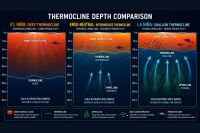
A thermocline is the distinct boundary in the water column where temperature drops sharply from the warmer surface layer to colder water below. Fish do not drift casually through this boundary. They hold above it, below it, or hunt along its edge depending on species preferences and what their prey is doing at any given moment.
Thermoclines function as non-physical structure because they define habitat zones that are as real and distinct as a ledge. Yellowfin tuna often concentrate near or just above the thermocline, where prey is most abundant and the upper mixed layer stays warm and well-oxygenated. Swordfish regularly dive through the thermocline to hunt in deep, cold water and then surface again, using temperature as a physiological tool rather than a constraint.
How Do Water Color Changes and Current Lines Help Find Fish?
Water color changes are among the most visible and consistently underused structural cues in saltwater fishing. A defined color transition, blue water meeting green, or clear water pushing against turbid water near a river outflow, marks a boundary between two different water masses. Those boundaries concentrate baitfish in exactly the same way that physical ledges do, by creating a wall that small fish stack against and predators learn to patrol.
- Blue-to-green transitions indicating warm offshore water pushing toward the coast
- Clear water meeting stained or turbid water near river outflows or bay mouths
- Bright green patches often indicating elevated chlorophyll and productivity, which commonly coincide with upwelling or nutrient-rich water
- Brown or tea-colored surface lines marking freshwater intrusion after significant rainfall
Experienced offshore captains treat color lines as roads. Rather than anchoring on a waypoint, they run the line and watch the sonar for bait and the surface for bird or predator activity. The fish are somewhere along that seam. Your job is to find where the seam is most concentrated and get there first.
How Currents and Upwellings Concentrate Offshore Fish
Current is what activates structure. A beautiful ledge in flat, dead water produces a fraction of what it delivers when current is sweeping across it. The interaction between moving water and physical structure creates upwellings, eddies, and convergence zones that concentrate fish at predictable, repeatable locations.
How Does Upwelling Create Offshore Fishing Hotspots?
Upwelling occurs when deep, cold water rises toward the surface, typically triggered where a strong current encounters a bottom feature like a canyon wall, a seamount, or a steep offshore ledge. That cold water carries nutrients that set a trophic cascade in motion: nutrients feed phytoplankton, phytoplankton feeds zooplankton, zooplankton draws baitfish, and the full chain converges at the surface where large predators can see and chase prey efficiently.
For a deep technical look at how this plays out in offshore fishing, the how to fish upwelling around offshore structure breakdown covers the mechanics in detail. The short version is consistent: find the upwelling, find the bait concentration, find the fish. Satellite fishing maps that display sea surface temperature, chlorophyll concentration, and altimetry data make it possible to identify upwelling zones before you leave the dock rather than discovering them by trial and error.
How Do Eddies and Convergence Zones Hold Pelagic Fish?
Eddies are circular current patterns that spin off major ocean flows like the Gulf Stream or the Loop Current. The edges of eddies, where rotating water meets the surrounding ocean, create convergence zones that concentrate floating debris, sargassum, and baitfish. Pelagic predators patrol these edges in the same way that inshore fish work an oyster bar at falling tide.
How to Read Bottom Composition for Saltwater Fishing
Depth tells you where the structure is. Bottom composition tells you what's living there and what species are likely to hold on it. Both pieces of information matter equally.
Hard Bottom vs. Soft Bottom: Which Produces More Fish?
Hard bottom, whether natural rock, coral reef, or shell, supports the invertebrate life that forms the base of a reef food web. Barnacles, sponges, corals, and encrusting organisms colonize hard substrate and create the feeding foundation that draws baitfish, which draw predators. Hard bottom is grouper and snapper country. It is where structure fishing in the traditional sense happens, and it is what side-scan sonar is best at identifying.
Soft bottom, sand and mud, does not support the same biological density, but it produces its own species and should not be written off. Flounder, pompano, and drum species all thrive over soft bottom when current and bait are present. The most productive spots often combine both types: a hard-bottom patch surrounded by sand creates an edge that functions as a focal point for multiple species simultaneously, with the hard bottom providing cover and the sand providing feeding ground.
Why Are Grass Flat Edges and Submerged Vegetation So Productive?
Grass flats and submerged vegetation create three-dimensional habitat that bare sand cannot replicate. Seagrass blades provide cover for shrimp, small crabs, and juvenile fish. The edge where grass meets open sand or deeper water is where predators stage, and it functions on the same ambush principle as any other structural edge in saltwater.
The grass flat edge concentrates fish in a specific, predictable way on falling tides. Fish moving off the flat as water drops get funneled through defined breaks, channels, and cuts in the grass line. Bait and predators stack at these exit points. Learning where those exits are on your local flat, and understanding which tidal stage pushes fish through them, gives you a significant edge over anglers simply casting across open water and hoping for the best.
How Offshore and Inshore Structure Differ for Fishing Strategy
Offshore and inshore structure fishing share the same underlying logic but require very different execution.
Inshore structure is typically chartable at close range and readable visually on the water. You are working oyster bars, channel edges, bridge pilings, dock lights, mangrove roots, and grass flat margins. The scale is compressed. A ten-foot depth change is significant. Current speed matters enormously because tidal flow in estuaries and passes can run hard. The target species are holding in feet of water, not fathoms, and they are acutely sensitive to light level, tide stage, and water temperature.
Offshore structure operates at a completely different scale. Depth changes are measured in hundreds of feet. Current systems span miles. Oceanographic features like temperature breaks and eddy edges are detected more effectively by satellite tools than by anything on the boat. Captain Mike Hennessy, who runs Colio Sportfishing on the Pacific coast of Costa Rica, emphasizes in his ITS instruction that reading the offshore ocean requires layered thinking. You assess the bottom, the water column, the surface conditions, and the oceanographic data together. No single layer tells the whole story.
How to Fish Structure: Boat Positioning and Presentation
Finding structure puts you in the right neighborhood. How you approach it, and how you present your bait relative to the current and depth, determines whether fish bite.
How to Use Sonar to Identify Productive vs. Dead Structure
Modern sonar, particularly side-scan and down-scan imaging, lets you assess structure quality in real time without anchoring and fishing blind. Productive structure returns a hard sonar signal, shows vertical relief, and displays bait marks or fish suspended above the bottom. That combination tells you the structure is alive and worth working.
Dead structure, the same piece of ledge on a day with no current and no bait, returns the same hard bottom signal but shows nothing in the water column above it. When the sonar shows clean structure and an empty water column, move on. The structure is fine. The conditions are not. Come back when the current picks up or the bait returns.
How Does Boat Positioning Affect Structure Fishing Success?
Positioning is where execution either reinforces or undermines everything you know about structure. With anchored bottom fishing, the anchor should be set far enough upgradient that your scope and chain do not land on top of fish-holding structure and spook what you came to catch.
On offshore ledges and drop-offs, working the upcurrent corner is the highest-percentage starting position. Current sweeps bait over the ledge and drops it down the face. Grouper, snapper, and amberjack waiting below that ledge face see that falling bait as an easy meal. Your bait should behave the same way.
What Rigging Works Best at Each Structure Type?
Structure type should inform your rig choice before you ever pick up the rod. Matching your presentation to the habitat eliminates guesswork and puts your bait where fish are actively looking for it.
A few foundational pairings:
- Natural ledges and hard bottom: knocker rigs and Carolina rigs keep live or cut bait close to the bottom where grouper and snapper hold, with enough weight to stay down in current but not so much that the bait loses its natural action
- Shipwrecks and vertical structure: jigs and live bait fished through the water column are more effective than bottom rigs for mid-column species; let the jig fall freely and watch for strikes on the drop
- River mouths and tidal passes: sliding sinker rigs allow current to carry bait naturally through the mixing zone without added resistance that causes predators to drop the bait
- Grass flat edges and oyster bars: weedless soft plastics and light jigheads keep you fishing efficiently along the edge without fouling on the bottom, and their slow action matches how baitfish move at low current
Structure Etiquette and Conservation
Good structure fishing includes knowing how to treat the habitat you depend on.
- Anchor upgradient of high-pressure spots, especially small wrecks and shallow natural reefs; dropping anchor directly on structure damages invertebrate growth and spooks the fish you came to catch
- Avoid dragging anchors across live coral or fragile hard bottom; a single anchor drag can remove years of biological growth
- Know the regulations around offshore platforms, pipeline corridors, and marine sanctuary boundaries in your region; restricted zones vary and are enforced
- Give other anglers room on small community spots; stacking boats on a single piece of structure degrades the fishing for everyone and concentrates harvest pressure on resident populations
How Tides and Seasons Change Structure Productivity
Structure does not produce consistently across all conditions. The same piece of bottom that held fish on Monday can be empty on Wednesday, and the most common variable is water movement.
Tidal stages shift where fish position relative to structure. On an incoming tide, predators typically stage on the upcurrent side and intercept bait being swept onto structure. On the outgoing, they shift to the downcurrent side and catch prey being flushed off the flat or out of the estuary. Neither stage is automatically superior. The fish and the bait determine it on any given day.
- Winter: Deep structure holds fish seeking stable temperatures away from cold, variable surface water
- Spring: Transitional areas between deep and shallow see increased activity as water warms and fish move up
- Summer: Structure that creates shade, cooler upwelling, or access to deeper cold water concentrates heat-stressed fish
- Fall: Structures along established migration corridors stack fish as they move with cooling water temperatures
Understanding these seasonal tendencies for your target species gives you a year-round framework for fishing structure rather than reacting to conditions after the fact.
Which Structure Types Are Best for Your Target Species?
Structure preferences follow consistent patterns by species. Knowing where your target is most likely to hold shortens the search considerably and gives you a logical starting point for any new piece of water.
- Grouper: Natural hard-bottom ledges and rocky structure from 60 to 200-plus feet; they hold close to the bottom and rarely stray, especially during winter when they push deeper for stable temperatures
- Mangrove and red snapper: Offshore wrecks, platforms, and ledges with current; they typically suspend above the structure more than grouper do and respond well to vertical presentations and natural baits
- Amberjack: Wrecks, platforms, and steep offshore ledges; they patrol mid-column around vertical structure and are aggressive in moving current
- Wahoo: Seamount edges, offshore ledges, color lines, and temperature breaks; they follow current and concentrate where bait stacks against oceanographic boundaries in open water
- Redfish: Oyster bars, grass flat edges, marsh drains, and river mouths; they key on falling tides when prey is flushed off structure and into adjacent current
- Tarpon: Bridges, tidal passes, and inlet channels with strong tidal flow; the current breaks created by physical structure are their primary staging and ambush locations
This is a starting point, not a fixed map. Fish move with season, tide, bait, and pressure. But for any angler building a structure fishing foundation, matching species to likely structure types dramatically reduces the amount of unproductive water you have to eliminate before you find fish.
Frequently Asked Questions About Fishing Structure
What is the best type of structure for saltwater fishing?
The most productive structure is almost always a convergence of multiple features: a natural ledge with hard bottom, adjacent moving current, and active bait. Any single feature in isolation underperforms compared to spots where physical structure, current interaction, and biological activity overlap. Inshore, oyster bar edges on a falling tide are among the most consistently productive structural features in coastal saltwater fishing.
Why do saltwater fish relate to structure?
Fish use structure to solve multiple survival problems at once: finding food, avoiding predators, conserving energy against current, and regulating body temperature by accessing different depths. Structure that addresses several of these needs simultaneously holds fish the longest and in the greatest numbers.
What is a breakline in fishing?
A breakline is a transition in bottom depth where the seafloor shifts from one level to another. Fish use breaklines as travel corridors between feeding areas and deeper sanctuary, and as ambush positions staged against moving bait. They are among the most reliable fish-holding features in both inshore and offshore saltwater environments and are visible on any quality chart plotter with depth contours.
How do I find underwater fishing structure?
Chart plotters with detailed depth contours, side-scan and down-scan sonar, and offshore satellite tools are the most effective combination. For inshore fishing in shallow water, visual reading of tide direction, bird activity, and surface current patterns reveals structure that does not always show clearly on charts. For offshore work, combining bottom charts with sea surface temperature data and chlorophyll imagery gives the most complete picture before you leave the dock.
Does structure fishing work year-round?
Yes, but productivity shifts with season. The same structure may hold fish at different depths or during different tidal stages depending on time of year. Fish in winter tend to push deeper for stable temperatures. Spring and fall see fish staging on transitional structure along migration corridors. Understanding the seasonal tendencies of your target species dramatically improves year-round results.
What is non-physical structure in saltwater fishing?
Non-physical structure refers to oceanographic features including temperature breaks (thermoclines), current seams, water color transitions, and upwelling zones. These invisible boundaries concentrate baitfish and predators in exactly the same way that reefs and ledges do. For offshore pelagic fishing targeting tuna, billfish, and wahoo, non-physical structure is often the primary driver of fish location rather than bottom topography.
Structure Is the Blueprint. Every Fish in the Ocean Follows It.
No fish in saltwater is where it is by accident. It is responding to its environment, and structure, whether that is a limestone ledge, a current seam, the hull of a sunken vessel, or the invisible thermal boundary between two water masses, is the architecture those decisions are built around.
Read the bottom. Read the current. Read the water. Then position yourself where multiple structural elements converge and the water is moving. That intersection is where fishing happens at the highest level, consistently and repeatedly, not just when conditions happen to align.
Understanding structure conceptually is the first step. Applying it across different species, different tidal stages, and different seasons is what builds the kind of read-the-water skill that separates consistent anglers from lucky ones. Every trip is a data point. The captains who fish at the highest level have spent years collecting those data points and refining their ability to interpret what the water is telling them.
The most practical way to start is to pick one structure type in your home water and fish it systematically across different tides, seasons, and conditions. Ledge. Oyster bar. Color line. It doesn't matter which one. Build your read from a single reference point outward, and let the pattern recognition develop from actual time on the water. Theory only takes you so far.
Login
to leave a review.
User Reviews
There are no reviews yet.
Setting Up a Dredge Pulley for Billfish
Saltwater
12.28.2020
High Speed Wahoo Trolling Rig
Saltwater
09.08.2018
Fishing Light Tackle for Yellowfin Tuna
Saltwater
09.08.2018
0