
A swordfish bait fails in three ways. It spins, it collapses on the drop, or it tears apart on the first bill strike. Get those three right and the rest of the daytime program has a chance. Squid, belly baits, whole fish, hooks, crimps and floss, rigged the way working crews actually do it.
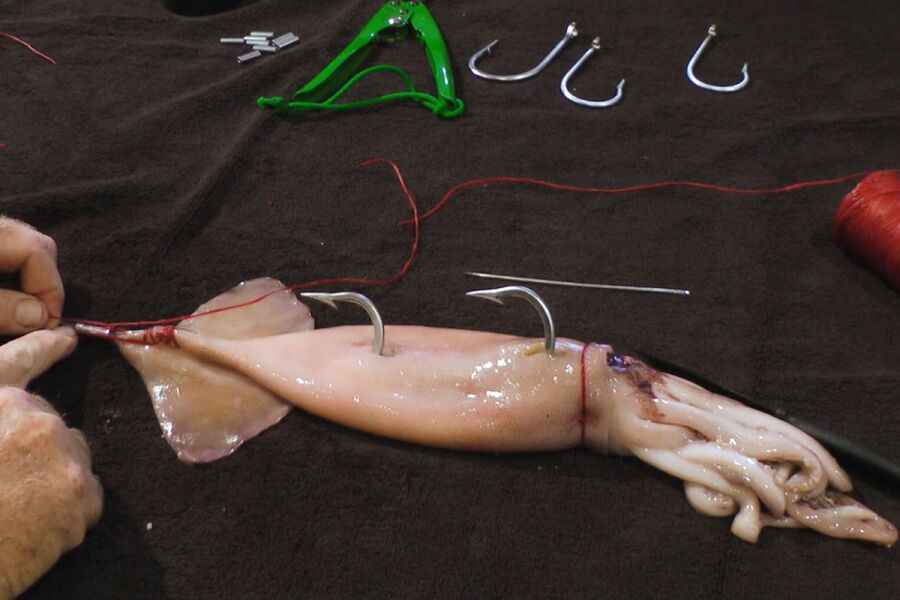
Rigging Baits for Daytime Swordfishing
The first thing you learn fishing swords in the daytime is that a bite usually does not look like a bite. The rod tip moves an inch. Maybe it does it again a minute later. That is a fish coming through your bait with its bill, and if you sit there staring at the rod waiting for it to load up, nothing else is going to happen.
None of that works if the bait came apart on the first swat. You never get to work the fish, because there is nothing left down there to work with.
That is the whole argument for taking rigging seriously. At 1,200 to 1,800 feet you cannot see anything, you cannot feel much, and you get no second chance to fix the rig once it is down. The bait either survives contact and looks alive, or your day is over before it started. Everything else in daytime swordfishing is downstream of what you tie to the end of that leader.
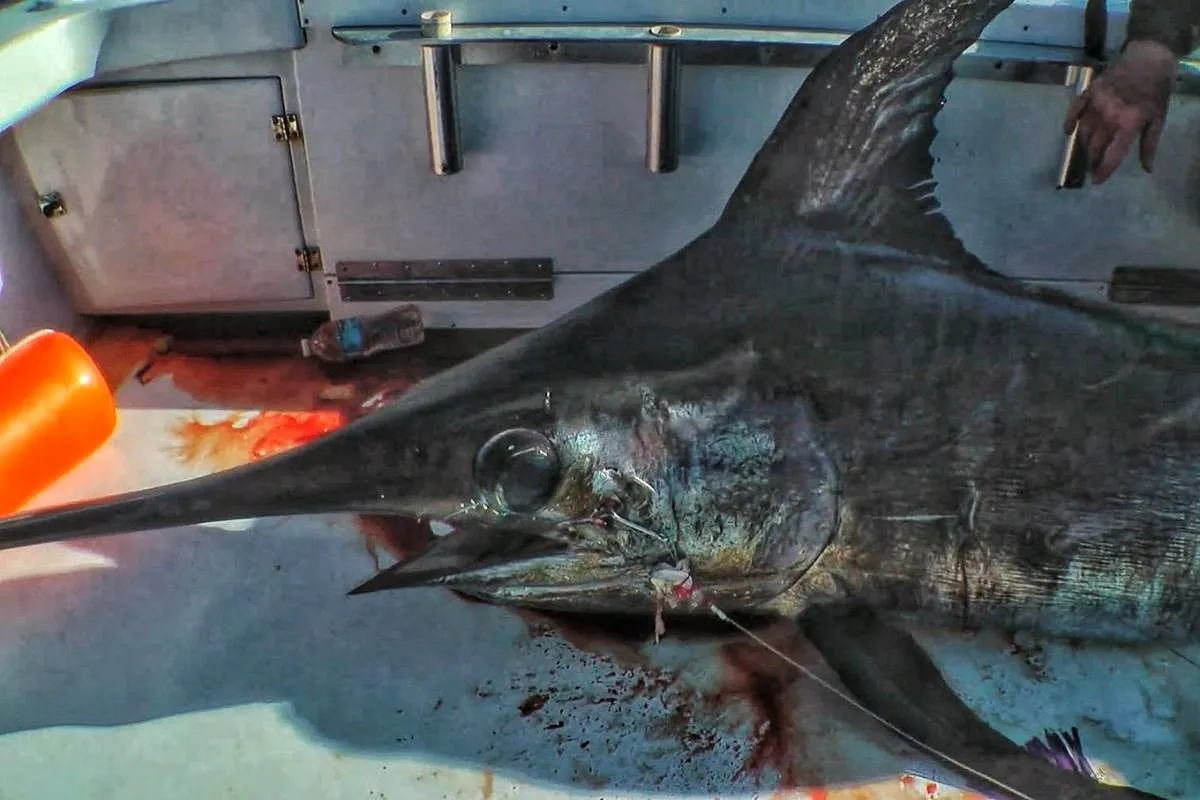
Why Swordfish Baits Fail on the Drop
Most anglers who struggle with daytime swords blame the spot, the current, or the moon. In my experience the bait is usually the problem, and it fails in one of three ways.
It spins. A bait that rotates in the current is the single most common rigging failure and it is fatal. Spin puts twist in your leader, it destroys the natural profile, and it tells a swordfish that whatever is down there is not food. A swordfish bait that spins is worse than no bait, because you are now fishing a lure that actively repels the fish you came for.
It collapses. Heavy lead pulling a bait through 1,500 feet of water column exerts real force on the bait body. If the hook is not lashed in place, it slides. The bait bunches up on the leader, balls into something unrecognizable, and soaks for forty minutes as a wad of meat.
It comes apart on contact. This is the one people never see happen. The fish swats the bait, the bait tears, and the fish moves on. The angler retrieves an empty hook forty minutes later and assumes the bite never came.
What to Do When a Swordfish Swats the Bait
This is the payoff for rigging correctly, and it is worth understanding before you ever cut a bait.
A swordfish does not usually eat on the first pass. It comes through with the bill, stuns or cuts what it thinks is prey, and then turns to collect the pieces. On your end, at 1,500 feet through a couple thousand feet of stretched line and braid, that registers as almost nothing. A twitch. A little load that comes off. Weight that feels slightly different than it did a minute ago.
Do not set the hook into that. There is nothing to set into yet. And do not sit there watching it either, because a bait hanging dead in the water after a strike is a bait the fish has already dismissed.
Engage the reel and bring the bait up about a hundred feet, then drop it back down. That move does two things. It turns your bait into fleeing prey, which is a trigger no predator ignores well, and it puts the bait back into the fish's window falling from above, which is exactly how it expects a stunned baitfish to behave. A fish that was casually investigating your squid will frequently come back and eat it hard on the drop back.
You may run that cycle more than once. Swordfish will work a bait repeatedly before committing, and the fish that hits three times and then eats is common enough that you should plan for it rather than be surprised by it.
What a Swordfish Actually Sees Down There
There is a persistent idea that bait presentation does not matter at depth because it is dark. That is wrong, and understanding why changes how you rig.
Swordfish carry heat-generating organs adjacent to the eyes that raise retinal temperature well above the surrounding water. Their vision stays functional in cold, dim water where most large predators are effectively hunting blind. They are visual hunters at daytime depth. The biology behind that adaptation is not trivia. It is the reason presentation is a core variable and not decoration.
- Profile and movement, meaning the bait hangs and flutters naturally instead of spinning or hanging dead
- Scent, which travels far at depth and is why oily baits like bonito earn their place
- Contrast, which is where your light comes in, and why an LED or chemical stick staged above the bait pulls fish from distance
Freshness feeds all three. RJ makes this point hard in his rigging course and he is right about it: when the bite slows off a moon phase or a tide, bait quality stops being a preference and becomes the whole thing. A bait that has been frozen and thawed twice has lost its oil, its color, and its texture. It will not hold a hook and it will not put out a trail.
The Terminal End: Hooks, Crimps, and the Bite Section
Before any bait touches a hook, the terminal system has to be right.
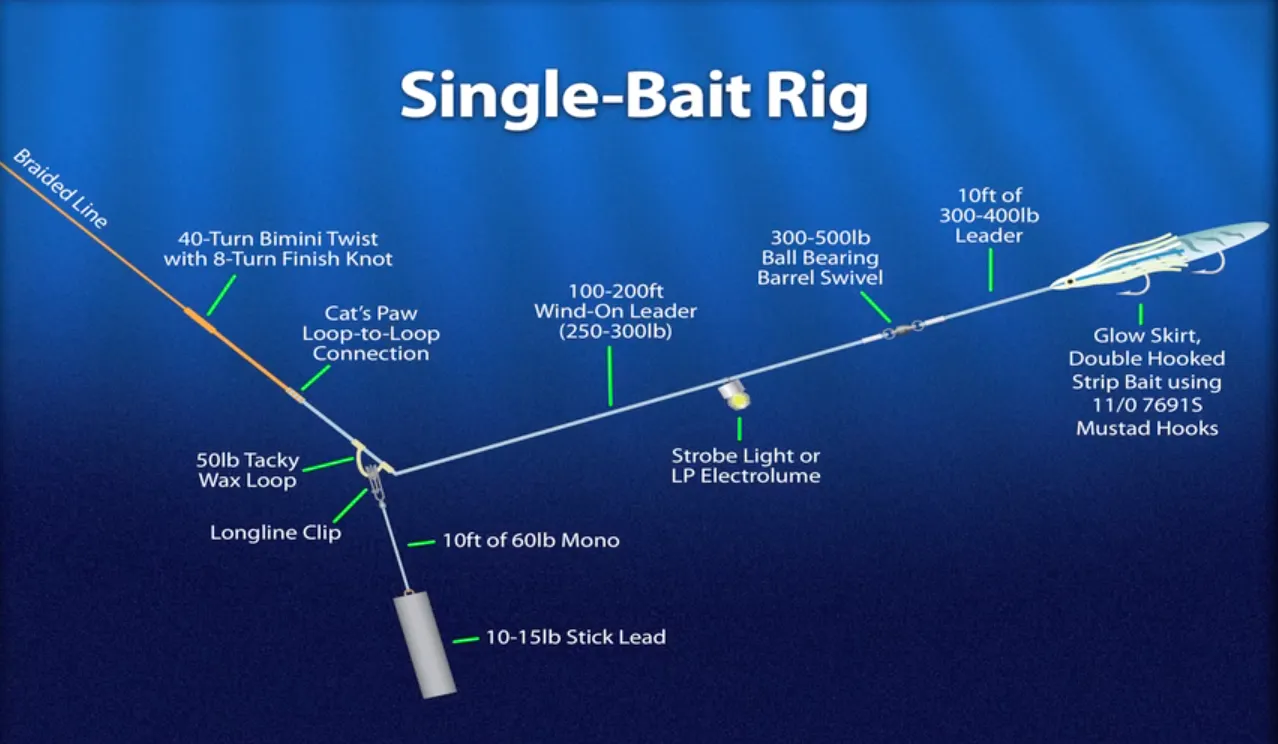
Below your long mono wind-on, you are running a bite section or leader of 5 to 8 feet of heavy monofilament, typically 250 to 300 pound, and up to 400 pound if you are running big circles or heavy J hooks. This is the section that takes the abuse from the bill and the fish's skin during the fight. It gets crimped to the wind-on or to a swivel with double-barrel sleeves, and at these diameters you double crimp. One crimp on 300 pound mono is a coin flip you do not need to take.
Mono, not fluorocarbon. At these diameters fluoro is stiff, awkward to manage on a leader this long, and offers little advantage where visibility is not the limiting factor. Mono stretches under load, tolerates chafe, and behaves predictably when you are winching a fish plus lead up from a quarter mile down. Fluorocarbon still has its place in lighter sections on other programs. On a heavy daytime bite leader it is the wrong tool, and most serious crews have settled on mono for exactly these reasons.
On hooks, J hooks in 9/0 to 11/0 with a southern tuna bend remain the working default among serious daytime crews. They penetrate on an active hook-set, which is what you need when line stretch has already eaten most of your leverage. Circle hooks are the release-focused choice and require sizing up hard, into the 14/0 to 17/0 range, because the circular geometry shrinks the effective gap relative to the stated number. Adoption is genuinely mixed. Many fisheries are moving toward circles as conservation norms tighten, though the daytime electric reel crowd has been slower to convert than the night and billfish fleets. The full breakdown of that tradeoff sits in our article on choosing the right hooks for swordfish.
Rigging Squid for Daytime Swordfish
Squid is the workhorse and it is where most crews should start. It is a primary natural prey item, it holds a hook better than most people expect, and it produces a scent trail that carries.
Run whole squid in the 1 to 3 pound class for a standard deep daytime drop. Smaller squid do not have the body to survive the descent, and oversized squid can actually cost you bites. That range is the most forgiving, but it is not the only answer. When the current is ripping or the local forage is small, medium squid and tentacle rigs earn their keep because they hold their shape instead of blowing out.
The hook goes through the mantle so the point exits at the thickest part of the body, leaving the point exposed and the bait hanging in a natural attitude rather than balled up. That is the easy part. The part that decides whether the rig works is what comes next.
Lash the hook shank to the squid with rigging floss. Wrap the floss around the mantle and the shank together and tie it off tight. This is not optional. Without it, the hook slides on the drop and the squid collapses down the leader, and you soak a useless bait for the next hour. Sew the top of the mantle closed for the same reason, so it does not balloon open and wash out on the way down.
On a large squid you have the option of a second hook set further back in the body and flossed in place. It covers rear strikes the way a stinger does on a whole fish, and it is worth running when the current is up or when fish are hitting short. The constraint is the same as always. The bait still has to track straight. If that second hook pulls the body out of line and starts it rotating, you have traded a hookup problem for a presentation problem, and the presentation problem is the worse of the two.
A skirt pulled over the head adds flash and protects the head from the first swat. Many crews run one. It is a small addition that costs nothing and buys you durability on the exact part of the bait a swordfish hits first.
Rigging Belly Baits from Bonito and Dolphin
Belly baits are a staple of the South Florida daytime fleet and for good reason. They are tough, they are oily, and they can be cut to exactly the profile you want.
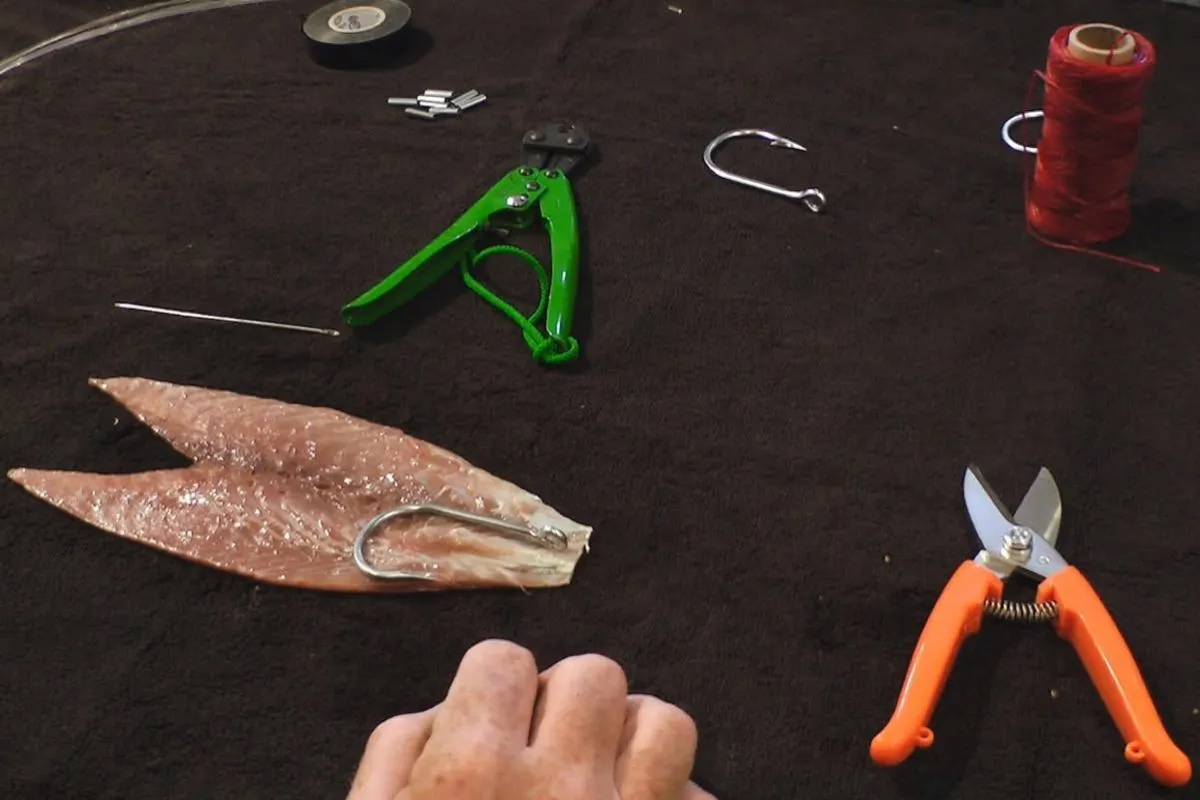
Cut the strip from the belly of a bonito or a dolphin. You want a tapered shape, wider at the leading end and running back to a point, roughly 10 to 14 inches long and 3 to 4 inches across at the head. Round the leading edge. A square or ragged leading edge catches water and starts the bait rotating, and once it rotates you are done.
The hook goes through the thick leading end of the strip, and it gets flossed in place the same way you would floss a squid. The strip should flutter behind the lead like a kite on a string. It should not spin. Watch it in clean water alongside the boat before you commit it to a forty-minute descent. If it turns, recut it.
Rigging Whole Fish: Ladyfish, Mullet, and Tinker Mackerel
Whole baits give you a bigger profile and a different silhouette, and they are worth having rigged and ready when the squid is not producing.
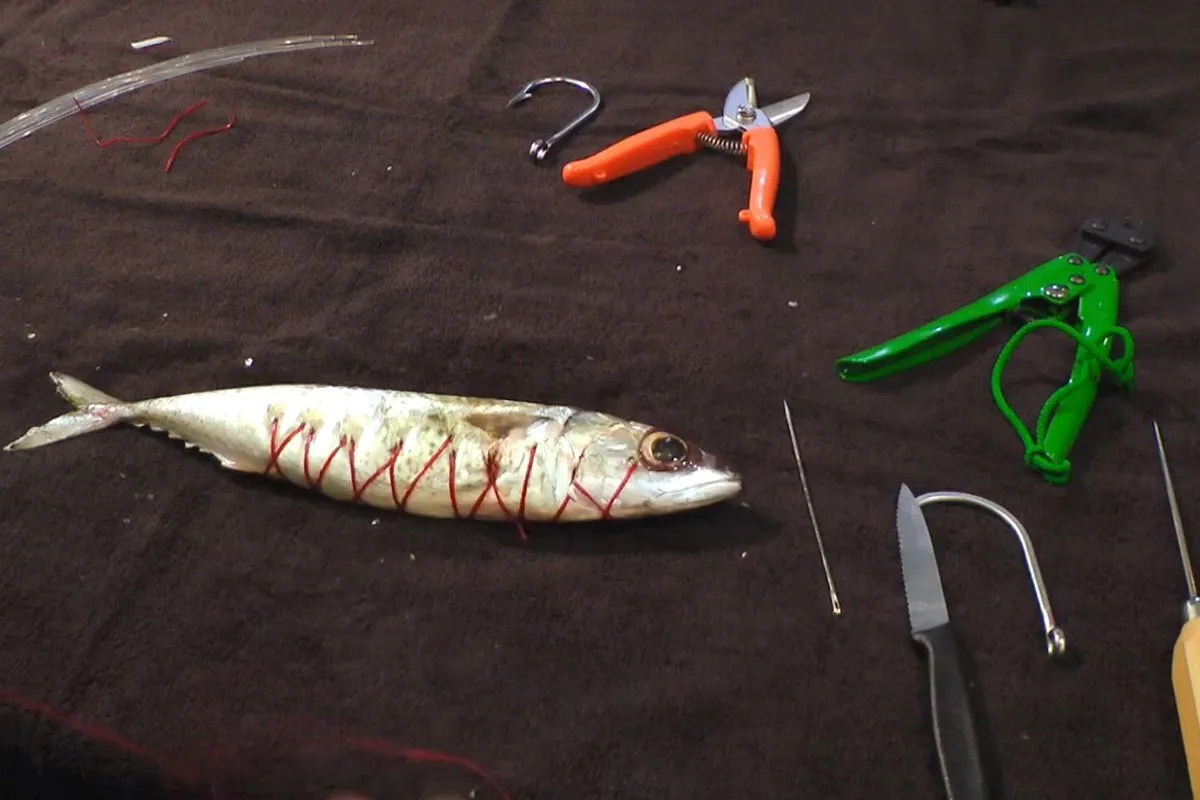
Ladyfish and mullet both work. The rigging priority with any whole fish is the same: it has to track straight and it has to stay together. Sew the mouth closed. A bait that goes down with its mouth open catches water, and it will spin, every time. Set the hook out through the top of the head or the shoulder, then lash the shank against the bait with floss so it cannot work loose.
Tinker mackerel gives you a smaller, tighter profile that some crews prefer when the fish are being selective. Same principles apply. Hook through the nose or the shoulder, secure the shank, make sure it hangs straight.
Matching Bait Choice to the Current
Bait selection is not a preference. It is a response to what the water is doing on the day you are out there.
When the current is running hard, go slimmer and more hydrodynamic. Belly strips and tighter profiles cut through moving water and hold their shape. A big whole fish in heavy current is a sail. It blows out of position, it starts to spin, and it forces you into more lead than you want to be fighting on the way back up.
When the current lays down, you have room for the bigger presentation. Whole ladyfish, mullet, and heavier squid hang and flutter properly in slow water, and that larger silhouette is what pulls a fish in from a distance. In light current the bait can do the work for you. In heavy current your only job is keeping it intact and tracking straight.
Lights, Lead, and Where They Sit on the Leader
Your rigged bait does not fish alone. The wind-on leader above it is a working section, and where you stage things on it matters.
That 100 to 150 feet of mono between your braid splice and your bite leader is what carries your light and your lead connection. The light, chemical stick or LED, sits above the bait and pulls fish in from distance in water where a swordfish's thermally warmed eyes still function. Green is the most widely used. The lead, whether you run a breakaway system or a stick lead on a longline clip, gets staged so the bait is fishing off the bottom, not dragging on it. Most crews run the light several feet above the bait and set the lead far enough up the leader that the bait can hang and flutter freely. Band or clip the light so it cannot swing back into the bait on the descent.
Bait Prep Before You Leave the Dock
The single most common thing separating crews that catch swords from crews that do not is what happened the night before.
Rig your baits at the dock, not at 1,500 feet with a fish window closing. Have five to seven complete baits ready to go, in a mix of squid, belly, and whole fish, so you can change presentations without rebuilding a rig on a rolling deck. Sort your crimps, sleeves, floss, and hooks into containers you can find by feel.
Then bring more than you think you need. You will lose rigs. You will break off. A crew that runs out of terminal tackle after the second drop is done for the day, and there is no worse way to end an expensive offshore run. Pack like you plan to lose three complete rigs, because some days you will.
Rigging Mistakes That Cost You Fish
These come up over and over on boats that are doing most other things correctly.
- Not flossing the hook shank. The hook slides, the bait collapses down the leader, and you soak dead weight
- A leading edge that is not rounded. The bait catches water and spins, which twists the leader and kills the presentation
- Oversized hooks in small baits. The bait cannot move naturally and the bites stop
- Single crimps on heavy mono. Double crimp at 250 pound and up, every time
- Leaving the mouth open on a whole bait. It will spin. It always spins
- Dull hooks. A hook that will not shave hair is not sharp enough for a swordfish, and the line stretch at depth means you have almost no margin on penetration. Check and touch up your points after every drop and after any contact with the bottom
Swordfish Fishing Videos
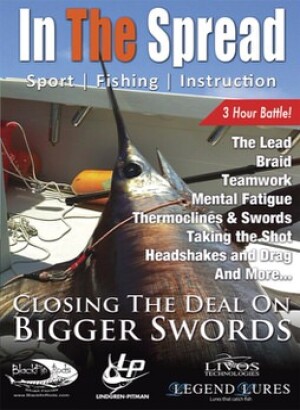
Learn proven swordfishing tactics for landing 500 to 800 pound fish with RJ Boyle. This video covers lead removal timing, harpoon shot execution, drag manipulation strategies, and wheelman boat positioning techniques that determine success when fighting trophy-class swordfish in challenging offshore conditions.
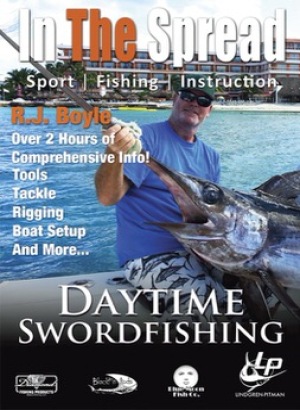
Daytime swordfishing operates at 1,200 to 2,000 feet where broadbill feed actively, creating technical challenges absent in nighttime surface fishing. RJ Boyle explains why depth fundamentally changes tackle requirements, how bait presentation at extreme depth affects strike detection, and what boat positioning precision maintains contact with baits along steep drop-offs where swordfish concentrate during daylight hours.
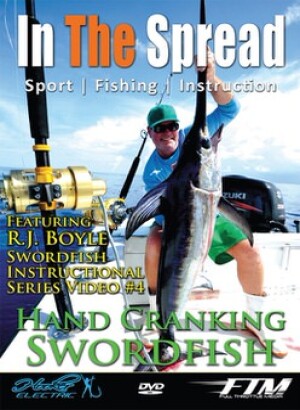
RJ Boyle reveals hand crank swordfishing techniques for IGFA-compliant record catches. This video covers tackle specifications for manual cranking, bait deployment at depth, recognizing swordfish bites, fight management strategies, and when hand cranking succeeds versus power-assisted methods in daytime offshore fishing.

RJ Boyle's comprehensive daytime swordfishing seminar covers the art and science of targeting broadbill swordfish. Learn depth understanding, equipment requirements, advanced rigging techniques, current stratification analysis, and how oceanographic knowledge combines with tactical execution for consistent success in this technical offshore fishery.
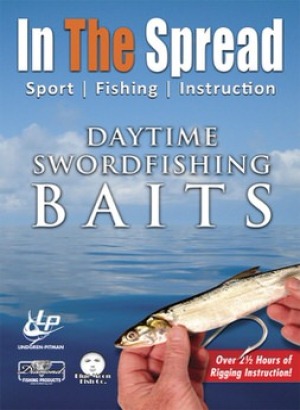
Daytime swordfish become selective when feeding slows due to moon phase or tide, making bait freshness and rigging quality critical rather than optional. RJ Boyle demonstrates seven bait options and specific rigging techniques for each, explaining when ladyfish, squid, dolphin belly, or bonito produce better results based on depth, current, and swordfish feeding behavior at extreme depths.
Frequently Asked Questions About Swordfish Bait Rigging
What is the best bait for daytime swordfish?
Squid is the most reliable all-around choice and the right place for most anglers to start. It is a primary natural prey item, it holds a hook well, and it produces a strong scent trail. Belly strips cut from bonito or dolphin are the other staple of the daytime fleet, with bonito holding up better on the descent because of its firmer flesh and heavier oil content.
How do you keep a swordfish bait from spinning?
Round the leading edge of any cut bait, sew the mouth closed on any whole fish, and make sure the hook is lashed in position so the bait cannot shift on the leader. A spinning bait puts twist in your leader and looks unnatural, and swordfish will not eat it. Test the bait alongside the boat in clear water before committing it to a long drop.
Why do you use rigging floss on swordfish baits?
Rigging floss lashes the hook shank against the bait body so the hook cannot slide during the descent. Without it, the force of a heavy lead pulling the rig down through 1,500 feet causes the bait to collapse down the leader and bunch up. Floss also holds a soft bait like squid together through the first bill strike.
What do you do when a swordfish hits the bait but does not hook up?
Engage the reel, bring the bait up roughly a hundred feet, and then drop it back down. A swordfish typically stuns prey with its bill before returning to eat it, so a first strike is often not an eating attempt. Lifting the bait makes it behave like fleeing prey and the drop back puts it in front of the fish again from above, which frequently triggers a committed bite. Do not swing on the initial strike and do not leave the bait hanging dead.
How many baits should you rig before a swordfish trip?
Five to seven complete rigged baits is a reasonable minimum, mixed across squid, belly baits, and whole fish so you can change presentations without rebuilding on the water. Carry enough terminal tackle to rebuild at least three complete rigs, because break-offs and lost gear are a normal part of the fishery.
Should you use monofilament or fluorocarbon for the bite leader?
Monofilament, for most serious daytime programs. In the diameters used here, fluorocarbon is stiff, hard to manage, and offers little advantage where visibility is not the limiting factor. Mono stretches under load, tolerates abrasion from the bill and the fish's skin, and handles predictably when you are lifting a fish and heavy lead from extreme depth.
Getting Your Baits Right Before the Next Drop
Nothing else in the daytime sword program compensates for a bad bait. You can find the right structure, manage a difficult current, stage your lights perfectly, and put your presentation exactly where the fish is holding, and none of it matters if the squid balled up on the leader forty minutes ago or the belly strip has been spinning since it left the surface.
The good news is that this is the most controllable variable you have. Structure and current and moon phase are conditions you read and adapt to. Rigging is entirely yours. It happens on a table, in good light, with time to do it right, and the crews that treat it that way are the ones putting bills over the gunwale.
Rig them fresh, lash the hook, kill the spin, and give the fish something worth coming back to hit a second time. That is the job.
Login
to leave a review.
User Reviews
There are no reviews yet.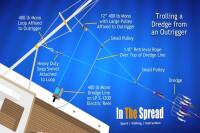
Setting Up a Dredge Pulley for Billfish
Saltwater
12.28.2020
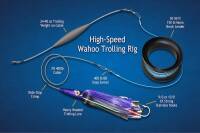
High Speed Wahoo Trolling Rig
Saltwater
09.08.2018
Fishing Light Tackle for Yellowfin Tuna
Saltwater
09.08.2018


0