
- Saltwater Fishing Lures (20)
- Wahoo Fishing Videos (20)
- Yellowfin Tuna Fishing (17)
- Dolphin Fishing Videos (16)
- Marlin Lures Videos (16)
- Planer Fishing Videos (13)
- Snook Fishing Videos (12)
- Boat Positioning Videos (12)
- Blue Marlin Fishing (11)
- Redfish Fishing Videos (11)
- Bottom Fishing Videos (11)
- Reef & Wreck Fishing (10)
- Bait Rigging Videos (9)
- Big Game Legends (9)
- Seatrout Fishing Videos (8)
- Fishing Tackle Videos (8)
- Satellite Fishing Maps (7)
- Mangrove Snapper Fishing (6)
- Swordfish Fishing Videos (5)
- Bluefin Tuna Fishing (5)
- Grouper Fishing Videos (4)
- Jigging Techniques (4)
- Black Drum Fishing (3)
- Tarpon Fishing Videos (3)
- Ballyhoo Bait Rigging (3)
- Saltwater Culinary Creations (3)
- Roosterfish Fishing Videos (3)
- Cobia Fishing Videos (2)
- Sailfish Fishing Videos (2)
- Sheepshead Fishing Videos (2)
- Dredge Fishing Videos (2)
- Tilefish Fishing Videos (2)
- Giant Trevally Fishing (2)
- Saltwater Flies (1)
- Kayak Fishing Videos (1)
- Permit Fishing Videos (1)
- Fighting Chair Techniques (1)
- Tripletail Fishing Videos (1)
- Red Snapper Fishing (1)
- Mutton Snapper Fishing (1)
Start fishing better with FREE Weekly Video Tips delivered straight to your email.
Blue Marlin Fishing Videos: Structure, Trolling, Fighting
Browse Video LibraryBlue marlin fishing starts with the current: marlin feed where it runs into a ledge, seamount or bank and lifts bait toward the surface, and they scatter when it runs along the structure or switches direction. Crews then troll four or five lures over that water at about 7.5 to 9 knots, and some tease fish up and switch them to a dead bait at 5.5 to 6.5. Most fish 50 to 130 lb tackle and keep the fight close.
These blue marlin fishing videos follow the decisions some of the top crews in the world make offshore: reading current and structure, setting the spread, teasing and switching, driving the boat, and fighting big fish on 50 and 130 lb tackle, from island ledges and offshore pinnacles to the edge of the continental shelf.
Featured Instructors
-

Blue Marlin Fishing: Teasers and Baits
39:59 · Mike HennessyMike Hennessy fishes marlin teasers and dead baits on a pinnacle 40 miles off Pacific Costa Rica, and a blue marlin comes up on the teaser and switches to the bait. He covers trolling speeds for lures and naturals and stitching a skipjack’s mouth shut to fish it as a flopper.
WATCH NOW -
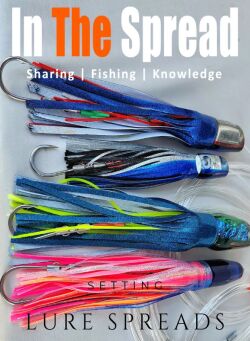
Lure Spread Setup for Marlin Fishing: Kona Style
21:24 · Kevin HibbardKris Ishibashi sets the marlin trolling spread on Kevin Hibbard’s 2nd Offense one line at a time, from the taglines to the teaser on the second wave. He explains which lure swims high on the wave and which tracks in the trough, why the long line goes out first, and why the hooks are singles.
WATCH NOW -

Fundamentals of Fishing Structure for Blue Marlin
29:51 · Kevin HibbardBlue marlin behavior around structure comes down to current, and Kevin Hibbard explains why the side it hits head on holds the bait, from the ledges off Kona to the banks off the Azores. He covers the corner in a ledge where fish stack, live baiting against a ledge, and using a 360 degree sonar to decide when to leave.
WATCH NOW -

Blue Marlin Hooks with Kevin Hibbard
23:17 · Kevin HibbardKevin Hibbard lays out the marlin hooks on the 2nd Offense, starting with the two-piece Sta-Stuk from Release Marine and how its clips deploy on the strike. He covers the longer shank, turned-in points that wedge on a wrapped bill, open-throat hooks for live bait, and keeping the Sta-Stuk IGFA legal inside the skirt.
WATCH NOW -
Featured
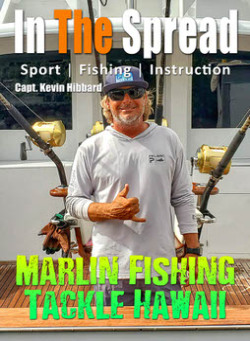
Blue Marlin Fishing Tackle with Kevin Hibbard
29:16 · Kevin HibbardKevin Hibbard walks through the marlin fishing tackle on the 2nd Offense, from Seeker blanks built stiff with a working tip to 1,200 yards of hollow Spectra under a mono top shot. He shows the three tape drag marks, the stand-up chair technique he learned in Australia, and why the fish goes crazy at the leader.
WATCH NOW -

Blue Marlin Trolling Technique with Kevin Hibbard
14:58 · Kevin HibbardKevin Hibbard shows what he looks for when trolling for marlin off Kona: porpoise schools carrying ahi, a few birds on a calm sea, and the current pushing fish onto the ledge. He explains the coin toss between going left or right, how he works an area after a bite, and the cinder cone marks he trusts over GPS.
WATCH NOW -

Fishing Kona with Kevin Hibbard for Blue Marlin
22:33 · Kevin HibbardSpend a day of Kona blue marlin fishing with Kevin Hibbard, starting in 1,000 fathoms just three miles offshore. He reads the current at a buoy, picks between the ledge and deep water, explains why he leaves milky green water, and talks through the bait that sets Kona apart from Costa Rica.
WATCH NOW -

Boat Driving Skills for Blue Marlin with Kevin Hibbard
16:47 · Kevin HibbardKevin Hibbard shows how he drives the boat once a blue marlin is hooked, from driving away from a fish that goes straight down to keeping the bow into the current. He also explains why he keeps the spread to four lures, so the boat is free to go after a fish the moment it bites.
WATCH NOW -

Big Game Legends: Marlin Parker on Kona Granders, Part 1
49:14 · Marlin ParkerMarlin Parker grew up fishing Kona on his father’s sampan and was named for his father’s 1,002 pound blue marlin. In this Big Game Legends interview, he tells how he landed his own 1,257 pound grander and why Kona built its name on trolling lures.
WATCH NOW -

Big Game Legends: Marlin Parker on Kona's Big Fish, Part 2
19:50 · Marlin ParkerIn the second half of his Big Game Legends interview, Marlin Parker walks through the water behind Kona’s big blue marlin: the mountains that keep the coast calm, the current that pushes skipjack onto the ledge off the airport, and Kaiwi Point, where he says more granders have probably come from than anywhere on the island.
WATCH NOW -
Featured
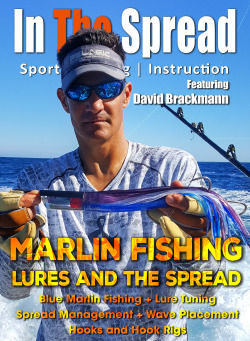
Blue Marlin Lures and Spread Setup with David Brackmann
58:59 · David BrackmannBlue marlin lures set wave by wave in a five lure spread that works in any blue water. David Brackmann builds it from the short corner back, shows how long each lure should stay under on its cycle, and explains why he fishes single hooks and what hookup rate a lure crew should expect.
WATCH NOW10.0/10
How do you find blue marlin offshore?
Off Kona the current has to come in to the ledge; running parallel, it sweeps fish off. A current that holds for days stacks them, and a 180 degree switch takes a couple of days to settle. Around a FAD or bank, marlin sit up current. Busting tuna are barking dogs that won't bite; the marlin hang behind the porpoise schools.
What's the best way to catch blue marlin: lures, baits or bait and switch?
Trolled lures cover the most water and catch most blue marlin. Teasing a fish up and switching it to a rigged dead bait hooks far more of the fish you raise: 30 to 35 percent of lure bites stick on an average day, against 80 percent or better for a pitched bait.
Kona trolls lures because the skipjack that held on its ledges have scattered to the FADs. Off Costa Rica, dead skipjack sewn to flop on the surface draw more bites than live ones; when we filmed there in January, the blue came up on the teaser and switched to a pitched mackerel. Converting those strikes is covered in trolling blue marlin tactics.
What blue marlin fishing gear do you need?
Blue marlin fishing gear runs 50 to 130 lb class: two speed lever drag reels, stiff rods, hollow core braid under a heavy mono top shot, and leaders of 300 lb and up. Most crews set strike drag near a third of breaking strength and let the rod do the lifting.
Kona reels carry about 1,200 yards of 200 lb hollow spectra under 250 to 300 yards of 130 lb mono. Fifty pound keeps a marlin on the surface; 130 with 40 to 45 lb of drag makes it sound. The crews don't agree on strike drag: one sets 30 lb and calls that tighter than most, another runs 28 to 35, and a third marks the lever with three colored tapes.
When do blue marlin bite?
Blue marlin feed in windows set by tide, moon and weather, and most crews look for water around 74 to 82 F. A tide change or an approaching front can turn a slow morning in minutes. Clean blue water is the rule in most fisheries, but not all.
Kona crews count six windows a day: top of the high tide, bottom of the low, moonrise, moon overhead, moonset and moon underneath. Kona leaves milky blue green water; off Costa Rica, over a shallower thermocline, blues bite in pea green water.
How do you fight a big blue marlin from the bridge?
Keep the fight close, back down on the fish, and have the angler wind with body weight rather than arms. Smooth pressure beats jerking, and the fight isn't over when the crew takes the leader. That is when most things go wrong.
When a big fish dumps line, back the drag off almost to free spool: 28 lb set at strike climbs toward 45 as the spool empties. If one sounds, drive away into the current to put an angle and a belly on it. And don't chase the radio; a crew that runs to every hookup stops fishing its own water.
Where is the best blue marlin fishing?
The best blue marlin fishing sits where deep water drops off close to land or rises to an offshore bank, and current hits it head on. Where to go and when is in the top blue marlin destinations for big fish.
How are these fishing videos different from free marlin fishing videos online?
Free marlin videos mostly show the bite. These show the decisions behind it: reading the current, picking the depth, changing the spread with the sea and driving the boat when a fish sounds. In The Spread started streaming sport fishing instruction in 2014, the first platform to do it.
Blue Marlin Fishing Questions
What is a flopper?
A flopper is a dead skipjack with its mouth sewn shut, trolled slowly so it flops across the surface like a wounded fish. A marlin that rises on it thinks another marlin scared the bait away and takes its place. It should flop flat; if it spins, the hook isn't centered.
Why do Kona boats run only four lines?
Fewer lines clear faster. With four lures and no dredge or shotgun, the crew clears one line and the captain runs after a big fish right away. Kona crews also turn hard when their 360 degree sonar marks fish, and a center line would tangle the spread on a 90 degree turn.
Before the next trip
Every spread here starts at the rigging bench: watch our marlin lure rigging videos.
Lure placement wave by wave is in rigging blue marlin lures and setting the spread.