
A properly brined and rigged ballyhoo will troll for hours and catch every offshore predator in the Atlantic. A poorly prepared one washes out in minutes. This reference covers selection, brining, eight rig families, spread placement, and species matching for sailfish, marlin, tuna, mahi, and wahoo.
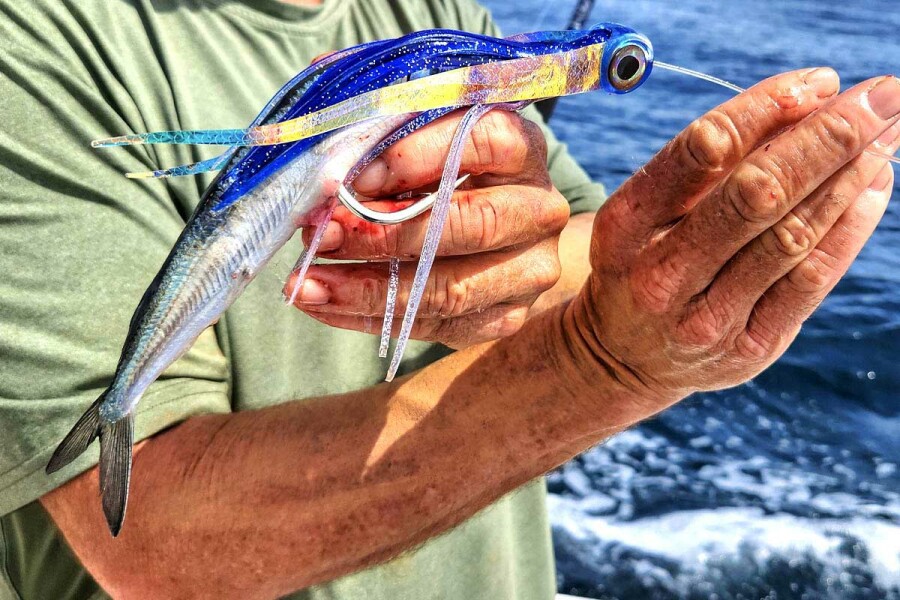
Trolling Ballyhoo as Offshore Bait
Ballyhoo (Hemiramphus brasiliensis) is one of the most widely used natural trolling baits for offshore fishing across the Atlantic, Caribbean, Gulf of Mexico, and West Africa. It produces strikes from blue marlin, sailfish, white marlin, yellowfin tuna, bluefin tuna, mahi-mahi, wahoo, and kingfish. Captains stock it by the flat. Mates rig it before sunrise. Tournament boats burn through more than 100 baits a day during competition.
This is the operational reference on trolling ballyhoo as offshore bait. It covers selection, brining, rigging, spread placement, species matching, and the conditions that change every decision you make. The article is framed for Atlantic dead bait trolling across the U.S. East Coast, Gulf of Mexico, Caribbean, Brazil, and West Africa. Pacific live bait programs and live ballyhoo applications follow different rules and are outside this scope. For the full video catalog with working captains demonstrating each technique, visit the In The Spread Ballyhoo Bait Rigging library.
Why Is Ballyhoo the Standard Offshore Trolling Bait?
Ballyhoo dominates offshore decks because it combines five attributes few other natural baits can match:
- Natural prey profile. Ballyhoo are primary forage for nearly every Atlantic offshore predator. Fish recognize the slender silver body, orange-tipped bill, and natural scent profile on sight and smell. Skirts and artificial lures cannot replicate that chemical signature.
- Triggering action. A properly limbered ballyhoo produces the side-to-side wobble of an injured baitfish. That movement pattern fires the predatory reaction strike from billfish, tuna, and wahoo.
- Versatility. A single bait can skip on the surface, swim subsurface, ride naked behind a teaser, run dressed under an Ilander or Sea Witch, hang on a dredge arm, or sit in a pitch rod ready for a teased fish.
- Reliable supply chain. Top tournament teams plan around 100 plus rigged baits per day during competition. The packer network through Baitmasters, Bionic Bait, and regional suppliers exists to support that volume reliably.
- Sizing range. Available from dink (under 7 inches) to horse (12 to 13 inches), so the same species covers sailfish, white marlin, and grander blue marlin presentations.
The value is not just that ballyhoo catches fish. It is that ballyhoo catches every offshore predator worth chasing, in every offshore fishery, with one bait.
What Is a Ballyhoo and Where Does It Live?
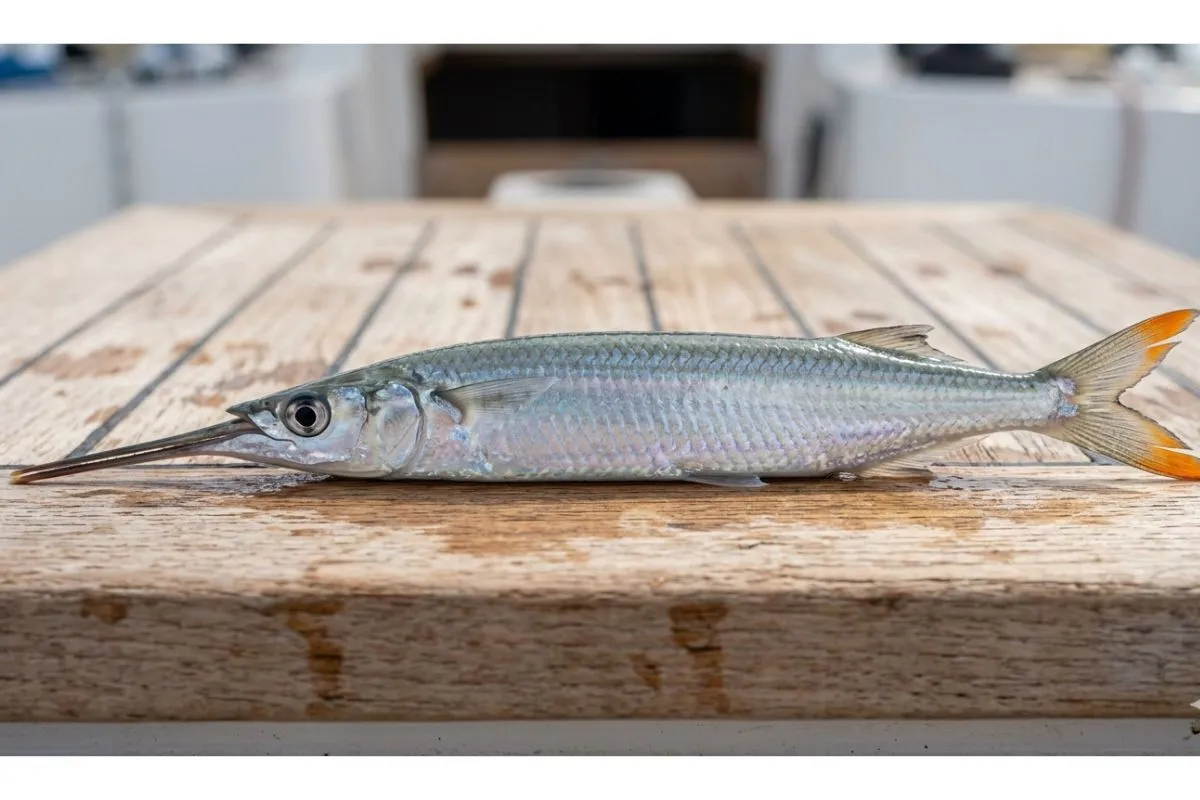
Ballyhoo (Hemiramphus brasiliensis) is a baitfish in the halfbeak family, Hemiramphidae. The name halfbeak comes from the elongated lower jaw that extends well beyond the upper, forming a slender pointed beak. A second species, Hemiramphus balao or balao halfbeak, often appears mixed in with bait shipments and runs softer.
Common length runs 10 to 14 inches with larger specimens approaching 16 inches. Commercial bait sizes typically top out around 12 to 13 inches even when biological maximum runs higher. Distribution covers Massachusetts and the northern Gulf of Mexico south to Brazil including the Caribbean Sea, plus the eastern Atlantic from Cape Verde and Senegal to Angola. Ballyhoo are notably absent from Bermuda, where the Bermuda halfbeak fills the niche.
These are surface zone fish, holding in the top zero to five meters, often over seagrass beds, contour lines, and bank edges adjacent to coral reefs. Their diet leans heavily on algae, seagrass, and plankton, with small crustaceans supplementing.
How Do You Pick Quality Ballyhoo for Offshore Trolling?
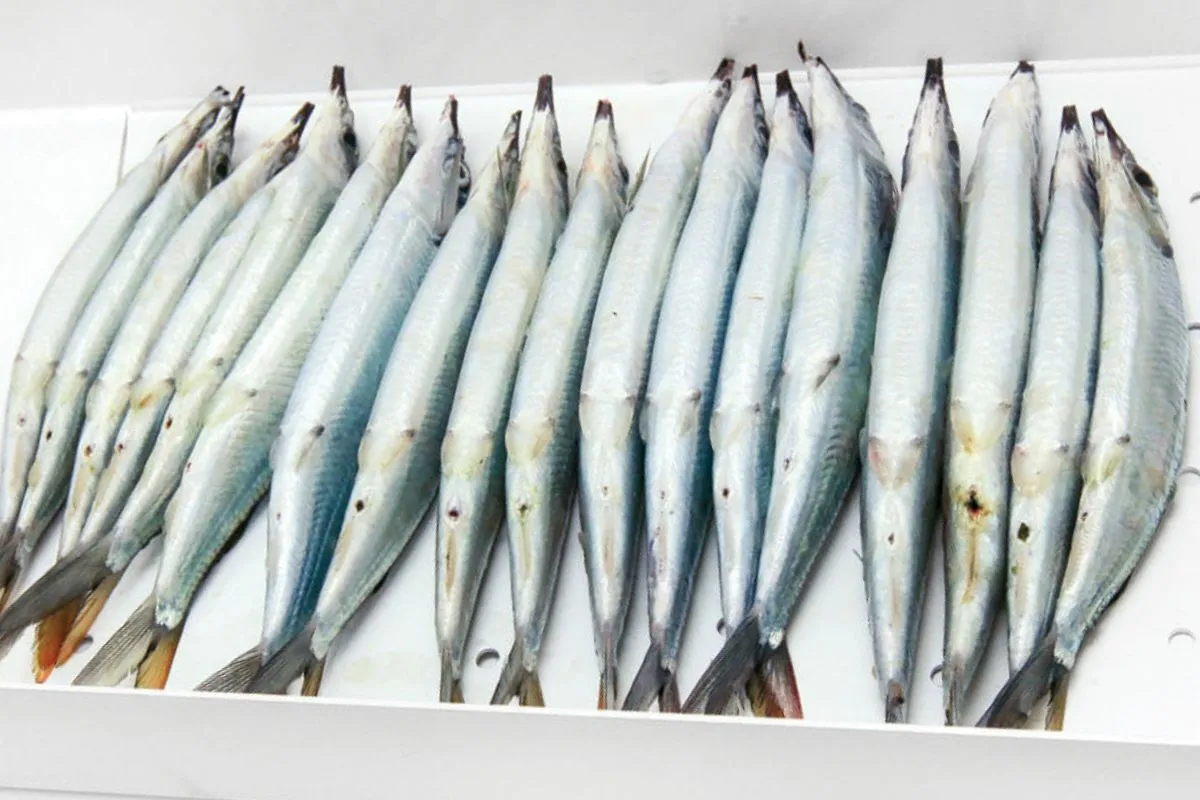
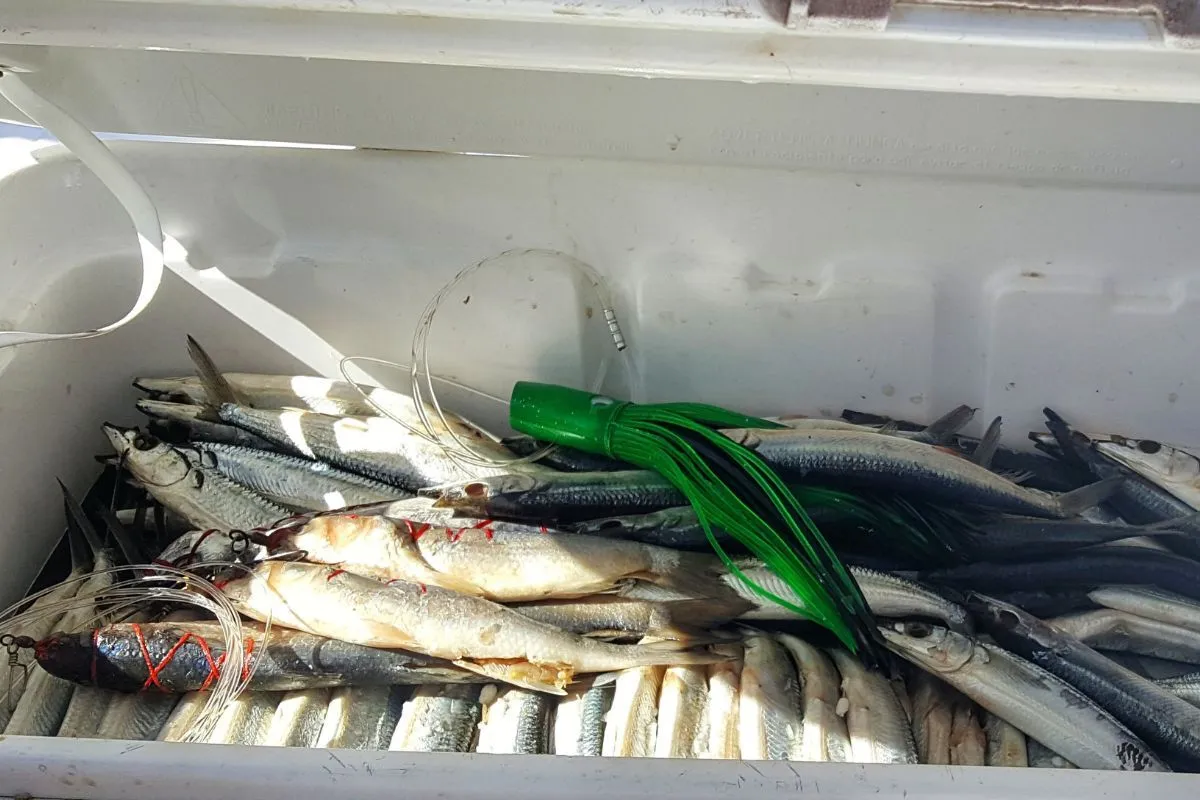
Bait quality starts at the freezer case. Look for clear bright eyes, shiny silver sides, intact bills with orange tips, and intact tails. Avoid bags with frostbite, frozen blood, or excess fluid. Greenish stomach residue indicates greenback ballyhoo; red indicates balao, the softer alternative.
- Slots or smalls / dinks (6 to 8 inches): sailfish, white marlin, naked split bill rigs, skipping presentations.
- Mediums (8 to 10 inches): the offshore default. Fits sailfish, mahi-mahi, school yellowfin, and white marlin scenarios.
- Selects (10 to 12 inches): blue marlin, big yellowfin, and wahoo. Pairs with Ilanders, chuggers, and other lure heads.
- Horse (12 to 13 inches): premium pitch baits for blue marlin and big yellowfin. Note that "horse" in bait parlance typically tops out near 13 inches even though biological maximum runs higher.
For deeper coverage of selection criteria and species applications, see Ballyhoo: The Ultimate Bait for Offshore Fishing. If you want to source your own rather than buy frozen, the cast net and chumming techniques are covered in Ballyhoo Bait From Cast Net to Trolling Spread.
How Do You Brine and Prepare Ballyhoo for Trolling?
Brining separates baits that troll for hours from baits that wash out in minutes. Salt toughens skin. Baking soda preserves color and keeps eyes clear.
For wet brining, mix saltwater, kosher salt, and baking soda with crushed ice into a slush. Commercial mixes like Bionic Brine, MagicBrine, and Baitmasters brine standardize the ratio. A common starting point is one 8 ounce bottle per gallon of water with crushed ice, enough for three dozen medium ballyhoo. Always thaw in saltwater; fresh water destroys flesh.
For dry brining, lay rigged or unrigged baits belly up on aluminum foil or in a stackable bait tray over ice. Dust the bellies with brine powder. The belly is the softest area and washes out first, so it gets brined first. Let baits sit a minimum of four hours, ideally overnight.
- Clear the gut. Run a thumbnail along the belly from gills to anal vent. A bait full of stomach contents spins and washes out faster.
- Pop the eyes. A wooden dowel or de-boner removes both eyes. Left in, water pressure inflates the sockets during trolling and the bait spins.
- Limber the backbone. Pinch and crack the spine along the back, then S curve the bait by holding the head and tail. This is what produces the swimming motion.
- Trim the pectoral fins. Rigor can lock pec fins flared. Trim them flush so the bait does not spin.
Done right, a small ballyhoo runs two to three hours behind the boat. Done poorly, the same bait may last minutes. For the full bait rigging video catalog, visit the In The Spread bait rigging library.
What Are the Best Ways to Rig Ballyhoo for Offshore Trolling?
Eight working rig families cover virtually every offshore presentation. Each one has a defined purpose, and serious offshore programs carry multiple ready to deploy depending on species, speed, sea state, and spread position. Wire leaders and rigging hardware are sharp, so wear gloves when stacking pre rigged baits and keep dehookers and gaffs staged for toothy fish.
The in line circle hook rig covers tournament billfishing, where U.S. Atlantic HMS regulations and many tournaments require or strongly favor non offset circles with natural bait. Use 7/0 to 8/0 non offset circles, monel rigging wire (stiffer than copper, holds shape), and the swivel in mouth method that places the hook ahead of the bait. Hookup ratios improve and gut hooks disappear.
The pin rig uses a short stiff pin (size 10 wire) crimped at the hook eye, running through both jaws. A bait spring or rubber band twists down over the pin to lock it. Fast to assemble, fast to swap. Common on tournament boats and dredges.
The pinless rig is a split bill swimmer where the rigging wire serves as the pin. Bluefin tuna anglers favor this naked subsurface presentation because the bait dives, shimmies, and looks alive.
The skirted rig combines a pin or J hook build with a lure head riding in front: Ilander, Sea Witch, chugger, Mold Craft Hooker, or Squid Witch. The skirt protects the head, adds flash and color, and extends bait life. Trolls 6 to 8.5 knots. Dominant marlin and wahoo presentation.
The double hook wahoo rig uses two hooks inserted top to belly through the bait, paired with an Ilander on a wire leader. Solves the wahoo short strike problem where a fish slashes the tail and circles back. Trolls 8 to 12 knots when the wire is right. Pure lure spreads push 12 to 15 knots, but most natural baits do not survive there.
The naked split bill swimmer runs without a skirt. The bill is split with a knife and the leader threads through the slot, catching water like a swimming plug lip. White marlin specialty and finicky bite solution.
For step by step assembly of these rigs, see Building Ballyhoo Rigs for foundation methods and Rigging Ballyhoo, Trolling Baits for the full eight technique tournament rigging breakdown with RJ Boyle and Mike Tarmey.
Where Should Ballyhoo Run in the Trolling Spread?
A working offshore spread runs flat lines, short outriggers, long outriggers, and a center rigger, with dredges and surface teasers adding visual mass and pitch rods staged for opportunity.
Dredges simulate baitballs five feet under the surface. Natural bait dredges run twelve to thirty six rigged ballyhoo or mullet. Artificial dredges using mudflap silhouettes trade scent for durability and higher speed. The full configuration logic is covered in the In The Spread dredge fishing library.
What Bait Size, Speed, and Rig Match Each Offshore Species?
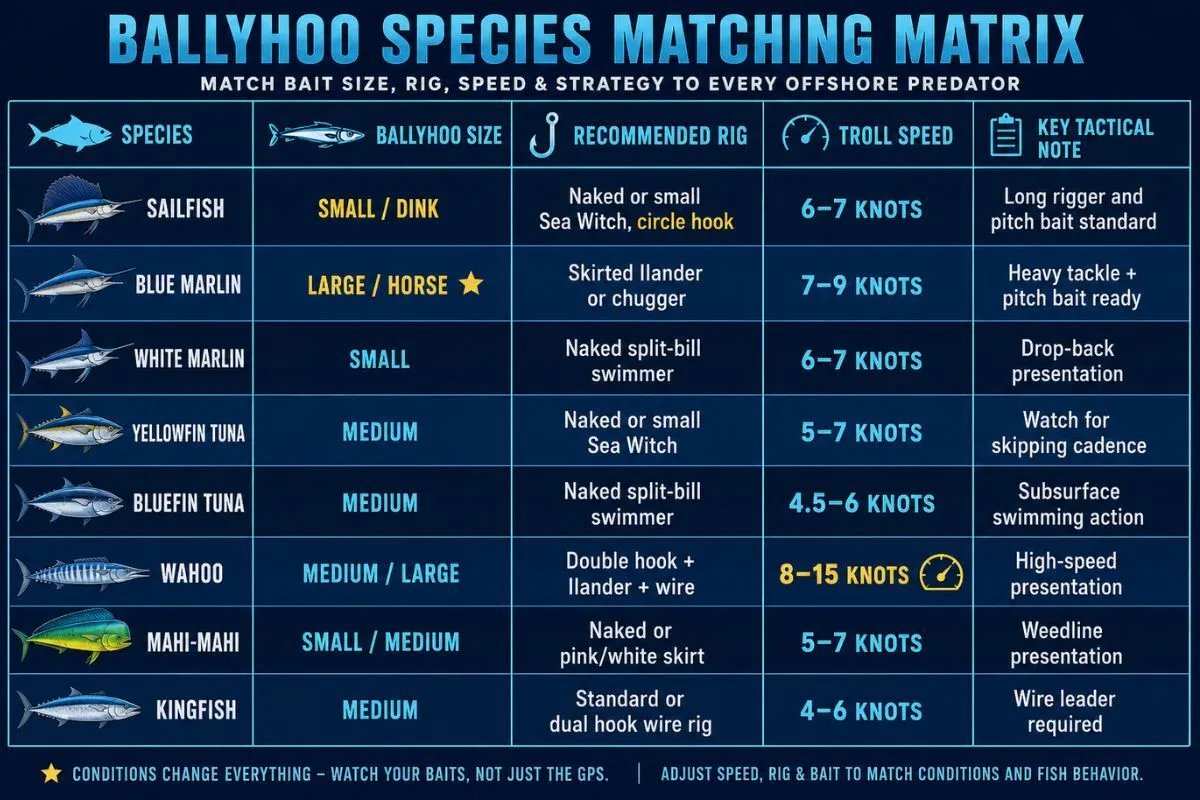
Conditions modify every line in this table. Rough seas call for heavier chin weights and deeper set rigs that hold the water. Calm clear water favors naked baits and longer fluorocarbon. Falling barometric pressure typically slows the bite; pull the troll a half knot. Watch the baits, not the GPS. Current changes effective speed through the water by a knot or more.
When Should You Add a Skirt or Lure Head to a Ballyhoo?
Add a skirt when you need flash, color, and a profile that draws fish from distance, or when sea conditions get rough enough that a naked bait will not survive. Skip the skirt for spooky fish, glassy clear water, or small natural forage profiles.
The most common heads paired with ballyhoo include the Ilander (8.25 inches, 2.5 oz weighted bullet head, trolls to 8.5 knots), the Jr. Ilander (smaller profile for calmer conditions), the Sea Witch and Iland Witch (lighter nylon hair plus mylar flash, popular for mahi and tuna), the Squid Witch (hand tied lead head with rubber squid skirt, Hatteras charter standard), and chuggers, jets, and Mold Craft Hookers for blue marlin pitch and short rigger work.
Color theory follows water and light. Blue and white work in clear blue water as an all around starter. Black and red, purple, or blue dominate in dark or off color water and on wahoo. Bright pinks, yellows, and chartreuse take over on flat sunny days. Green and yellow excel along weed lines. Pink and white is a mahi standard. The full saltwater fishing lure library goes deeper on color.
What Mistakes Cause Ballyhoo to Wash Out, Spin, or Miss the Fish?
The mistakes that account for most failed presentations are predictable and avoidable.
A spinning bait usually means the hook exits off center, the eyes were left in, the pec fins are flared, or the wire wraps are uneven. Hold every bait by the leader and watch it hang straight before deployment, then pull it through the water and watch it track. A bait that does not run right behind the boat will not run right thirty feet back.
Premature washouts come from thin skin, weak brining, or a speed that does not match the rig. Brine harder. Switch to heavier bait. Slow the troll a half knot.
A loose mouth means the pin or rigging wire failed to close the gill plates. The bait will wash out or spin within minutes.
Wrong leader costs fish either way. Mono on wahoo loses the bait. Wire on bluewater sailfish costs bites because the fish sees it.
Trolling speed mismatch is the most common error. Naked baits at 8 knots wash out. Skirted Ilanders at 5 knots look dead. Match speed to rig and species.
Frequently Asked Questions
What is the difference between greenback ballyhoo and balao?
Greenback ballyhoo (Hemiramphus brasiliensis) tend to have firmer flesh that holds up better under trolling pressure. Balao (Hemiramphus balao) runs softer and washes out faster. Greenbacks are the preferred offshore bait when you can get them.
How long does a properly rigged ballyhoo last in the spread?
A well brined small ballyhoo runs two to three hours. Larger select and horse baits with skirts can run four hours or more. Refresh any bait that spins, loses color, or looks chewed.
What hook size do you use for ballyhoo?
Use 7/0 to 8/0 non offset circle hooks for medium ballyhoo and most billfish work. 9/0 for large ballyhoo when targeting bigger billfish. 7/0 to 8/0 O'Shaughnessy or Mustad 3407 for J hook rigs. For small or dink ballyhoo, drop to 6/0 or 7/0 circles.
What trolling speed works best for ballyhoo?
Naked ballyhoo runs 4.5 to 6 knots. Standard chin weighted rigs run 5 to 7 knots. Skirted ballyhoo with Ilanders or chuggers runs 6 to 8.5 knots. Wahoo presentations push 8 to 12 knots with natural baits. Watch the baits, not the GPS, and adjust for current direction.
Do you need to brine pre packaged ballyhoo?
Tournament grade vacuum sealed baits are usually pre brined at the packer. A light dry brine after thawing still firms them up further. Soft baits from off brand or marginal sources benefit dramatically from heavier brining.
Can ballyhoo be used live?
Yes, with careful handling. Cast net or jig caught ballyhoo placed in a livewell can fish live for sailfish or kingfish on kites and flat lines. Live ballyhoo presentations follow different rules than the dead bait trolling covered here and warrant a separate reference.
Building a Ballyhoo Program on Your Boat
Ballyhoo dominates offshore fishing because it combines authentic prey profile, scent, action, versatility, and a mature supply chain in a way no other bait matches. The captains who consistently outproduce the fleet are not the ones with the most expensive lures. They are the ones with the best prepared baits and the most disciplined rigging program.
Start with quality greenback ballyhoo. Brine them properly. Learn the standard chin weighted rig first, then the in line circle, then add a skirted variation. Refresh baits through the day, and match speed to rig and species.
Login
to leave a review.
User Reviews
There are no reviews yet.
Setting Up a Dredge Pulley for Billfish
Saltwater
12.28.2020
High Speed Wahoo Trolling Rig
Saltwater
09.08.2018
Fishing Light Tackle for Yellowfin Tuna
Saltwater
09.08.2018


0