
Tennessee's Collins River holds a self-sustaining muskie population that pushes fifty inches, and most northern anglers have never heard of it. Here is the fishery's story, the three ramps that get you on the water, the gear that handles these fish, and how to time a trip to the spring spawn or the fall feed.
Featured
Fishing the Collins River for Tennessee Muskie
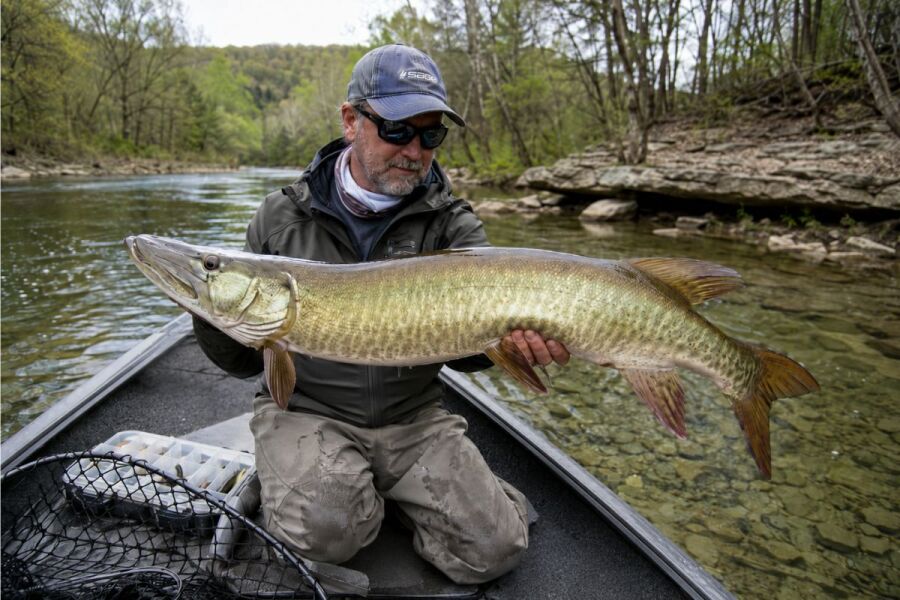
I've fished the Collins River most of my life, and I'll tell you straight, this little river surprises people. Up north, folks figure you have to drive to Wisconsin or Minnesota to tangle with a real muskie. Down here in middle Tennessee, just outside McMinnville, I've put my share of fish past the fifty inch mark in the boat, and most of those northern boys never saw it coming. Collins River muskie fishing is its own animal. You have to understand the river's story, fish it at the right time of year, and know where to drop the boat in. If you want the bigger picture across the state first, take a look at our rundown of Tennessee muskie fishing waters. Otherwise, stick with me and I'll walk you through how this fishery came to be, when it fishes best, and how to get on it.
Where Is the Collins River and Why Does It Hold Muskie?
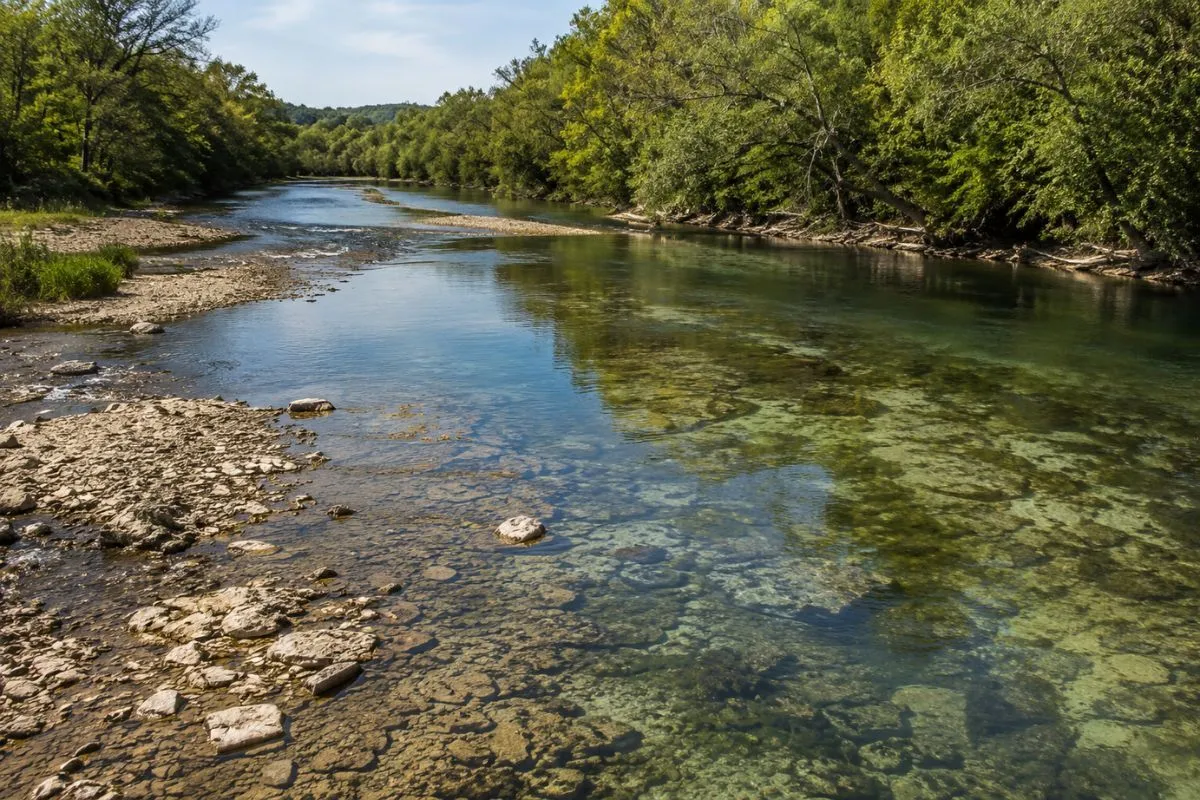
The Collins winds through Warren County here in middle Tennessee, just outside the McMinnville city limits, running along the base of the Cumberland Plateau on the highland rim. It is a cool, shallow little river, fed by springs and a mess of feeder streams, and that cool, clear water is a big part of why a fish you would expect to find up north does so well this far south. A southern reservoir bakes all summer and shoves the fish deep for months. A spring-fed river like the Collins stays livable a whole lot longer.
Long before anybody cared about muskie, the locals fished this river for smallmouth and red eye, the black perch. Folks around here will tell you redeye are a blast on light tackle and mighty fine pan fried, southern style. We have largemouth too, and they grow bigger than they have any right to in a river this cool and skinny. That mix matters more than you would think. A river loaded with bass and perch is a river loaded with groceries, and a muskie needs a full pantry to grow big. These fish did not move into an empty house. They moved in at the top of the food chain and started eating.
Are Muskie Native to the Collins River?
Yes, they are. Muskie are native to the Collins and the rivers around it in middle Tennessee, even if the fishing we have today came from stocking. Way back, native muskie roamed these waters, but once the dams went in and changed the watershed, the spawning grounds got wrecked and the old population faded out. The Native Americans around here called them devil fish, and after a few of them have tooth tagged me or buried a treble in my hand, I have called them a name or two myself.
The Wider Great Falls System
The Collins does not stand by itself. It feeds into the bigger Great Falls system, and there is muskie swimming the Caney Fork, the Rocky, and the Calf Killer, along with Great Falls and Center Hill reservoirs. That whole network is part of why this region gives up fish all year, and it is your back pocket plan when the upper Collins gets too low or too warm. Wintertime especially means a shot at a giant in any of those four rivers. For the full lay of the land across the state, our rundown of the best muskie waters in Tennessee lays them all out.
Where Do Muskie Hold in the Collins River?
A muskie is an ambush feeder, plain and simple, and on a river they live and die by current and cover. Find the spots where a big fish can lay up out of the flow with an easy meal swimming by, and you have found muskie. On the Collins, I am looking for the same handful of things every trip.
Current seams come first. Where the fast water rubs up against the slow, a muskie will sit in that soft water and slide out to clobber anything that washes through confused. Laydowns, logjams, and any downed timber give a fish shade and a break from the current, and I will work a good piece of wood from every angle I can get on it. Rock holds heat and bait, so a ledge, a riprap bank, or a pile of boulders is always worth a few casts. And anywhere a feeder creek or a spring branch dumps in, you have got a buffet, and the muskie will not be far behind it.
When Is the Best Time to Fish the Collins River for Muskie?
Here is the honest truth, the Collins fishes year round, and that is one of the best things about it. Tennessee has no closed season and the river does not ice over, so it is on you to decide when to go, not the weather. But that freedom comes with a catch. When the summer heat is on, you have got to know when to say when, because a muskie fought and turned loose in hot water has a rough time of it. My northern buddies sit out a long winter with cabin fever. Down here we sit out the worst of the summer instead. Our off season is shorter, but backing off in that heat matters just as much for the health of these fish.
Spring and the Spawn
When the water climbs up into the mid fifties, the muskie start their spawning run, pushing up the river and staging on the warmer mud and sand banks along the way. Those big, egg-heavy females set up on shallow flats and current breaks, and that makes the pre-spawn and the spawn about the best shot at a true giant all year. I have laid the whole thing out, the timing, the behavior, and where they go, in my article on the Collins River muskie spawn.
Fall and the Feed
Once the water cools off in early fall, the muskie shake off that summer lull and start feeding like they mean it. Cool water turns a lazy fish into a mean one, and the bite stays good right on through the cold months. There is a whole lineup of lures that shine this time of year, and I get into all of it in my piece on fall muskie on the Collins River.
Summer and Winter
Summer is the time to fish first light and last light, keep your fights short, and get fish back quick, or just leave them be when the water is at its hottest. Winter is when the bigger Great Falls system gives up some of its heaviest fish, with those connected rivers holding cold-water giants if you are tough enough to go after them and patient enough to slow way down.
Collins River Muskie Video Courses
Reading about it only gets you so far. If you want to watch this stuff happen on the water, our video library breaks the Collins down season by season. Start with post spawn muskie on the Collins River, the Collins River fall transition, and Collins River fly fishing tactics (even though relates to fly fishing, the sme principles apply to conventional fishing).
How Do You Access the Collins River?
The upper Collins runs about 25 miles, and there are three public ramps that will get you on it. Knowing them ahead of time saves you a rough morning, because conditions at the ramp can be all over the place:
- Turners Bend ramp, off Myers Cove Road, gets you into the skinny upper water. The current there can make loading the boat a little interesting, so do not be in a hurry.
- A public ramp sits just above the Warren and Grundy county line on Highway 56, and it will put you up in the headwaters.
- The VFW bridge ramp, on Highway 70 just outside McMinnville, is the easiest of the three to deal with.
What Gear Do You Need for Collins River Muskie?
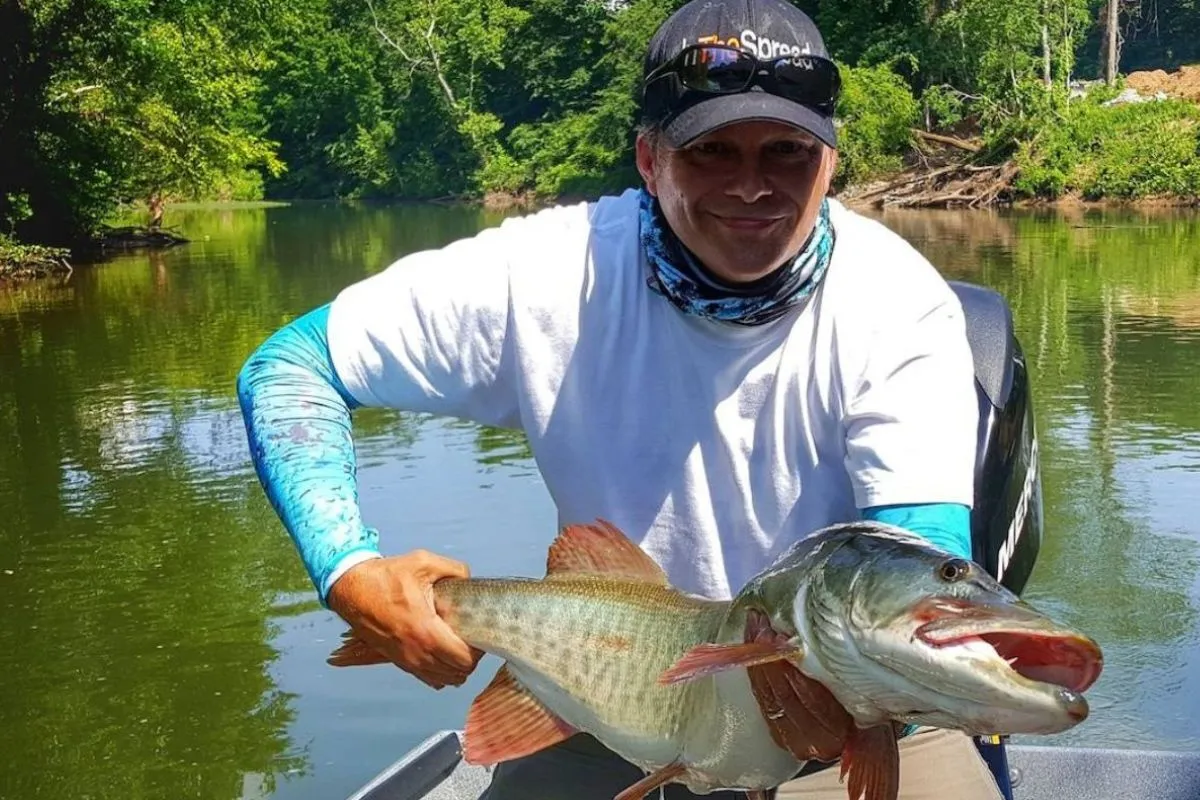
Muskie are the biggest, meanest freshwater fish most folks will ever hook, and the Collins is no place for light tackle. For Collins River muskie, I start with a heavy action rod and a wide spool reel loaded with 65 to 80 pound no-stretch braid. You need that backbone to drive a hook through a hard, bony jaw and to handle a big fish right at the boat, which is where most of them get lost. And run a heavy fluorocarbon or a wire leader, no exceptions, because a mouth full of teeth like that will cut you off in a heartbeat.
Past the rod and reel, there are a few things that ride in my boat every single trip:
- Long nose pliers and a good hook cutter for getting hooks out fast and safe.
- A big net or a boga grip to get ahold of a thrashing fish.
- Polarized glasses for picking out fish and structure in that clear water.
A first aid kit, because sooner or later a green muskie in the boat is going to put a treble somewhere you do not want it. You have been warned.
Lures change with the season. If you want the tackle and the techniques laid out on video, dig into our full muskie fishing video library. How Do You Handle and Release Collins River Muskie Safely?
Because we fish the Collins right through the warm months when a lot of northern water is closed up, handling these fish right is not optional down here. It is the price of a year round season. A muskie takes years and years to grow into a giant, and one sloppy release can throw all of that away. Warm water holds less oxygen at the very same time a hard fight is filling a fish up with lactic acid, so a muskie landed in eighty degree water is fighting two battles at once. That is why the same quick release that is no big deal in October can flat out kill a fish in July.
Collins River Muskie FAQ
Are there muskie in the Collins River?
Yes. The Collins holds a self-sustaining muskie population, with fish that reach and pass fifty inches. Muskie are native to the river, and the fishery we have today traces back to stocking that started in the late 1970s and went regular in 1982.
Where can you launch a boat on the Collins River?
Three public ramps serve the upper river: the Turners Bend ramp on Myers Cove Road, a ramp above the Warren and Grundy county line on Highway 56, and the VFW bridge ramp on Highway 70 outside McMinnville. Check the ramps after heavy rain, since they will mud up.
What is the best time of year for Collins River muskie?
Spring and fall are the standouts. The spring spawn, as the water warms into the mid fifties, brings big females up shallow, and early fall through the cold months brings a hard feed. The river fishes year round, but summer is the time to back off in the warm water.
How big do Collins River muskie get?
Fifty inch fish are a real target on the Collins, and the river has put out fish at and past that mark since not long after regular stocking began.
Is the Collins River muskie population stocked or wild?
Both, really. Muskie are native here, the population got rebuilt through years of stocking, and now it spawns on its own without any more stocking needed to keep it going.
Plan Your Collins River Muskie Trip
The Collins River is proof you do not have to drive north to catch a trophy muskie. We have a native fish here, brought back by years of stocking and now making it on its own, swimming clear southern water inside a day's drive of most of the Southeast. Learn the river, respect the warm months, time your trip to the spring spawn or the fall feed, and pick the ramp that fits the water you want to fish. After that, it is reading water and putting in your time, same as anything else worth doing. For the bigger picture across the state, head back to our overview of Tennessee muskie fishing, and when you are ready to plan around the best window of the year, get into the spring spawn run.
Dwayne Hickey In The Spread, Instructor
Login
to leave a review.
User Reviews
There are no reviews yet.
Setting Up a Dredge Pulley for Billfish
Saltwater
12.28.2020
High Speed Wahoo Trolling Rig
Saltwater
09.08.2018
Fishing Light Tackle for Yellowfin Tuna
Saltwater
09.08.2018


0