
Redfish follow the tide. When water floods onto a flat, they move with it. When it drains, they pull back to channels and creek mouths. Knowing which tidal stage puts fish where, and which presentations work in each window, is what turns an inconsistent angler into a consistent one.
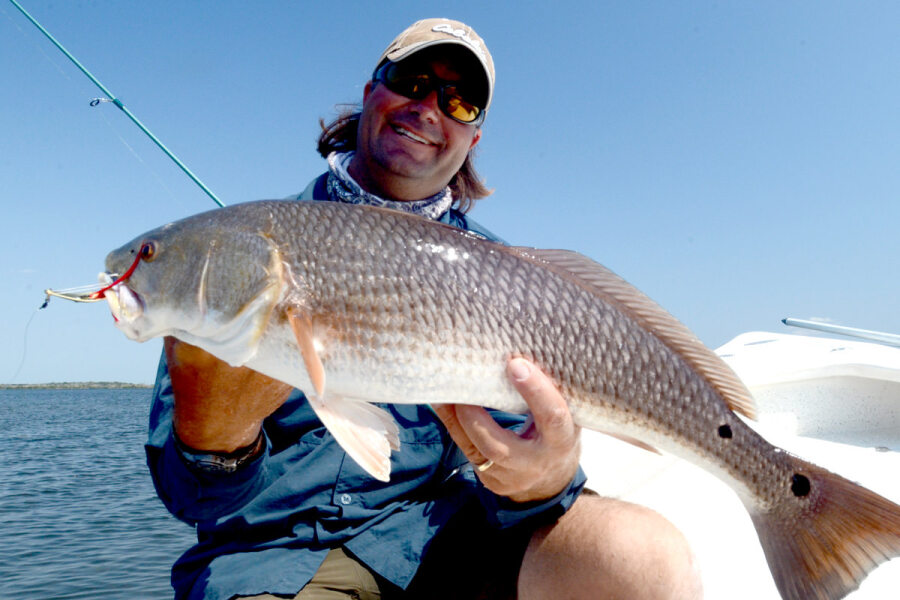
Reading Tidal Patterns to Catch More Redfish
If there is one variable that separates anglers who consistently catch bull redfish from those who work hard for nothing, it is tidal awareness. Water moves, and redfish move with it. Every flat, creek mouth, and oyster bar you fish produces differently depending on whether the tide is rising, falling, or transitioning. Learn to read that relationship and you stop guessing. You start fishing with a plan.
Why Tides Control Where and When Redfish Feed
Tidal movement is the primary engine driving redfish behavior in coastal estuaries, grass flats, marshes, and inshore bays. As water levels rise and fall with the gravitational pull of the moon and sun, the entire feeding environment for red drum reorganizes. Access to shallow-water prey opens and closes. Baitfish and crustaceans concentrate, scatter, and get swept into ambush positions. Redfish respond to all of it.
What makes this species particularly interesting is how efficiently they exploit tidal windows. Red drum (Sciaenops ocellatus) have highly developed lateral lines and exceptional olfactory sensors. They can detect current shifts, vibration from fleeing prey, and the scent of crabs and shrimp moving through a tidal drain from a surprisingly long distance. Tides do not just tell redfish where food is. Tides deliver the food to them.
Bull redfish, the mature fish typically above 27 inches and often running well past 30, tend to be more deliberate about their tidal positioning than slot-sized fish. Larger red drum conserve energy by staging in current seams and ambush positions rather than actively chasing prey across open water. They let the tide work for them.
What Is the Best Tide for Redfish Fishing?
The most productive feeding windows for redfish are the tidal transition periods, specifically the first two hours of an incoming tide and the first two hours of a falling tide. These periods combine moving water, disoriented prey, and fish actively repositioning to feed. Both transitions trigger action, but the falling tide is particularly reliable because it concentrates baitfish and crustaceans that had spread across flooded shallows and now have nowhere to go.
How Redfish Feed During High Tide
Where Do Redfish Go at High Tide?
When water floods onto previously dry or marginal flats, redfish follow the leading edge of that tide. High tide redfish feeding is characterized by fish spreading across marsh edges, submerged grass flats, and flooded mangrove shorelines in pursuit of blue crabs, fiddler crabs, shrimp, and small baitfish that have moved into the shallows to feed or take cover.
Bull redfish in particular show a strong preference for the shallowest accessible water during a flood tide, especially during spring tides (the exceptional high tides produced by new and full moons). These events push water into zones that may only flood a handful of times per month, and big red drum seem to know it. The fishing in those moments can be exceptional.
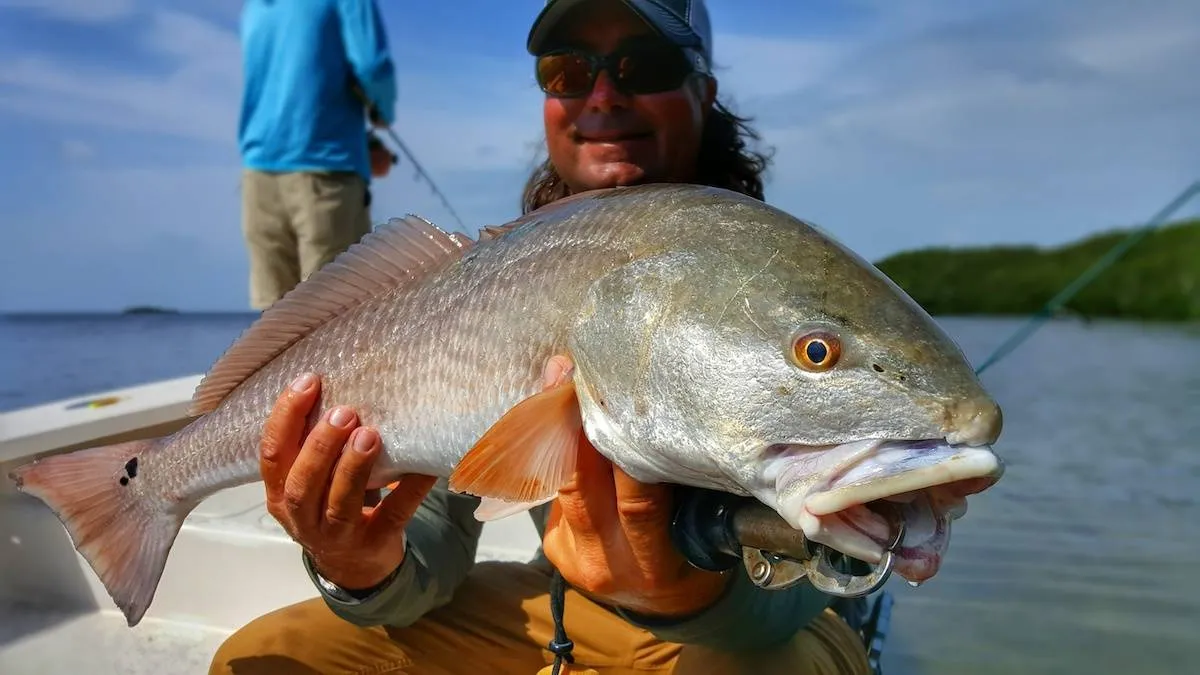
High Tide Fishing Tactics: Presentations That Work
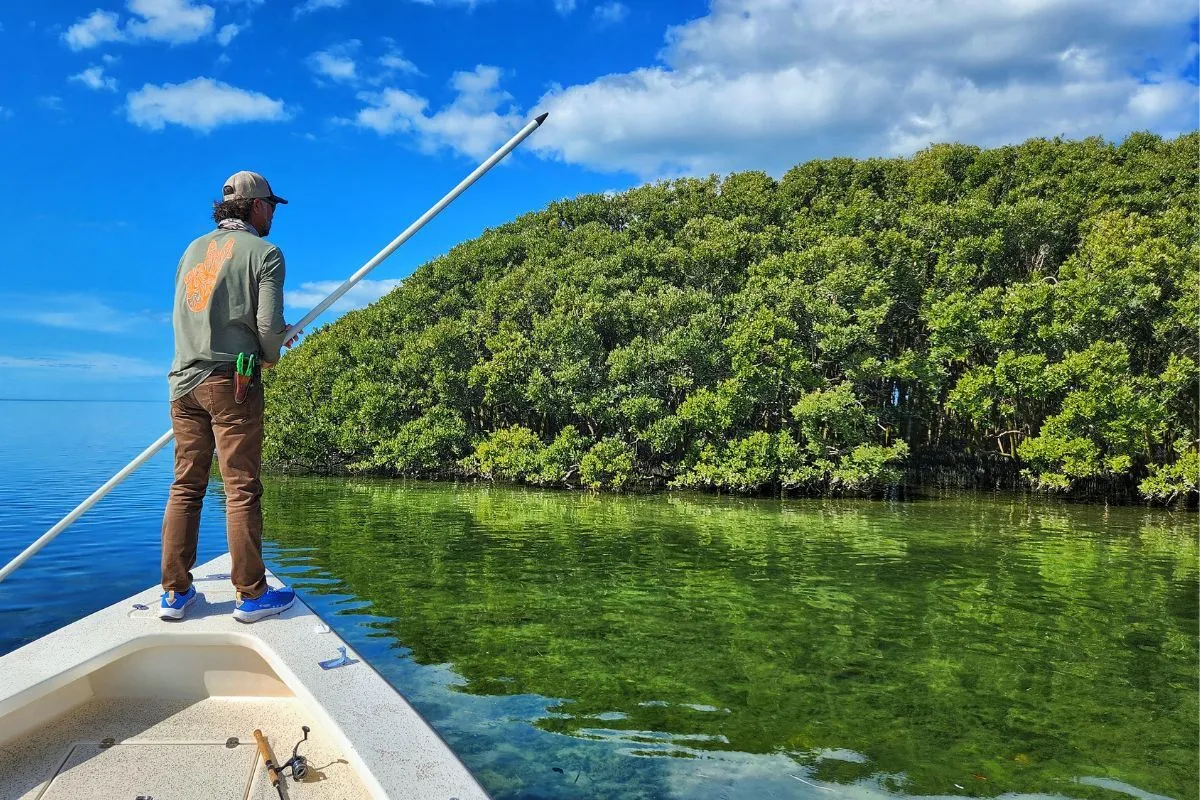
Approaching shallow-water redfish requires stealth. These fish are spooky in skinny water. An electric trolling motor on the lowest setting, a push pole, or simply wading (where conditions allow) will keep you in the game longer than motoring into position.
In clear water, sight-fishing becomes an option and is one of the most rewarding ways to target redfish. Look for wakes, tailing fish, mud puffs, or the subtle shadow of a large fish moving through shallow grass. Cast ahead of the fish's travel direction and let the bait or lure settle before it arrives.
- Gold spoons worked slowly over submerged grass are one of the most consistent producers, especially in water with any clarity
- Weedless soft plastic paddletails on swim jig heads allow you to fish directly through flooded vegetation without constant hangups
- Topwater walk-the-dog plugs work well in the early morning or late afternoon when fish are actively pushing bait
- DOA Shrimp or similar soft plastic shrimp imitations fished slowly along the bottom or under a popping cork produce in murky conditions
Baits for high tide redfish:
- Live shrimp free-lined or fished under a popping cork remain one of the most versatile options at any depth
- Pinfish fished live on the bottom in deeper pockets within flooded flats hold their own when redfish are keyed on finfish
- Fresh cut mullet or ladyfish provides a scent trail that redfish can track through turbid water when visibility limits lure effectiveness
When fishing natural baits, circle hooks are strongly recommended. They improve hookup percentages with minimal effort and make releasing fish much cleaner.
How Redfish Feed During Low Tide
Where Do Redfish Go at Low Tide?
As water drains from the shallows, redfish low tide behavior shifts from wide-ranging foraging to concentrated ambush feeding. Bull redfish pull back to the deepest available water in their area: channels, creek bends, depressions in the flat bottom, and the mouths of tidal drains. These become the waiting rooms where red drum stage while the tide bottoms out.
The important thing to understand is that low tide does not shut off the bite. It focuses it. Every redfish that was spread across several acres of flat is now stacked in a fraction of that area. That concentration creates opportunity, and anglers who ignore low tide conditions are leaving fish on the table.
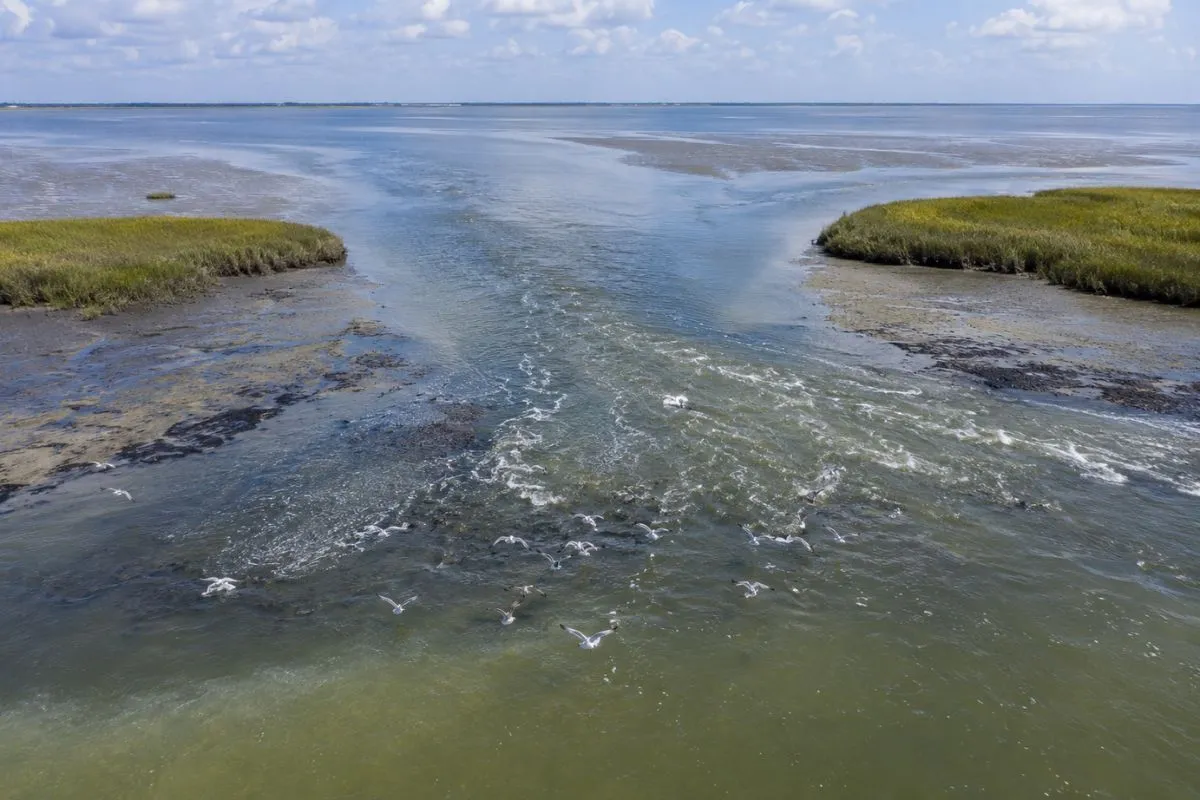
Low Tide Fishing Tactics: Presentations That Work
The key to fishing low tide productively is positioning. You need to intercept fish moving along defined travel routes, not randomly cast open water. Study how your fishing area drains and identify the pinch points, the outside bends of creeks, the junction of two channels, the depression where three flats meet. Those are the spots.
- Quarter-ounce to half-ounce jigheads tipped with paddle-tail soft plastics let you probe deeper holes and maintain bottom contact in current
- Larger soft plastic swimbaits that mimic finger mullet or menhaden produce bull redfish in deeper channels when they are actively targeting finfish
- Deep-running crankbaits can be effective in areas with enough depth, particularly near structure
- Cut mullet chunks fished directly on the bottom are one of the most reliable options for bull redfish in deeper low-tide holding areas
- Blue crabs cut in half or quarters are a trophy redfish bait in deeper channels, particularly in areas where crab populations are high
- Larger live baits like a full-size pinfish or small live mullet can produce the biggest fish in a school when redfish are keyed on finfish over crustaceans
Position your boat uptide and cast with the current whenever possible. This produces the most natural drift and puts your presentation in the strike zone longer.
When Is the Strongest Redfish Feeding Window?
Why Tidal Transitions Trigger the Most Aggressive Feeding
The most consistent and explosive redfish feeding activity happens during tidal transitions, the two-hour windows on either end of high and low tide. Here is why. When the tide direction reverses, baitfish and crustaceans are caught off guard. Water that was carrying them one direction suddenly stalls and reverses. Prey becomes disoriented and vulnerable. Redfish, which had been staging in anticipation, move quickly to exploit the moment.
The incoming transition is particularly strong in the early flood. Water begins covering substrate that was exposed, and crabs, shrimp, and baitfish that were confined to deeper water suddenly have access to new territory. Redfish position themselves at the first drop or channel edge on the leading edge of the flat and intercept everything moving with the tide.
The outgoing transition is equally productive, sometimes more so. As water drains, baitfish that moved deep into marshes and upper creeks during high tide are funneled back out through constriction points: creek mouths, narrows between islands, the lip of a flat where it drops into a channel. Redfish know these choke points and station themselves there with precision.
- Moving water disorients prey and reduces their ability to escape
- Prey concentrates in predictable locations rather than dispersing across open water
- Redfish transition from passive holding to active feeding, producing more aggressive strikes
- The window is time-limited, which stimulates competitive feeding behavior among fish
Redfish Video Courses
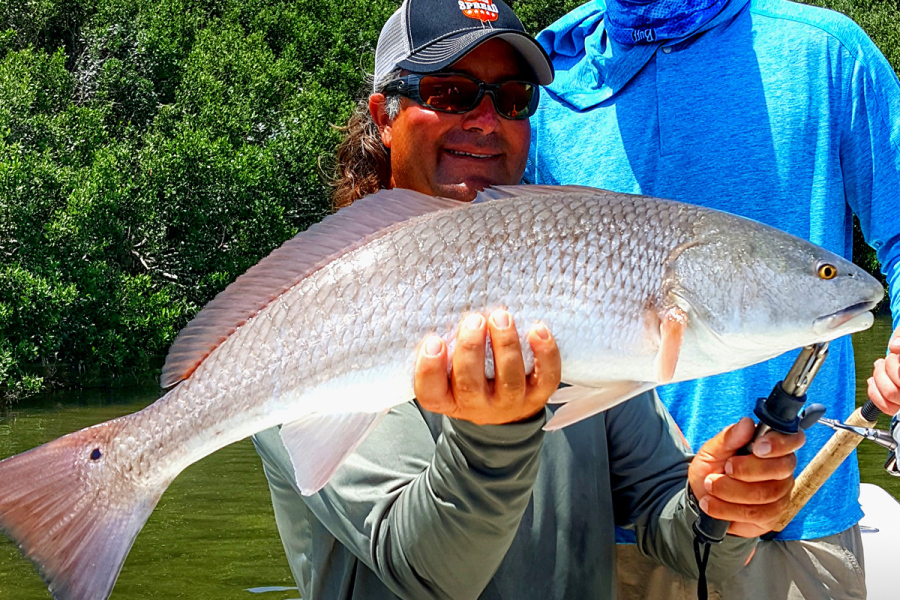

How Structure Shapes Redfish Feeding Zones
Why Points and Creek Mouths Produce Bull Redfish Throughout the Tidal Cycle
Points that extend into deeper water and creek mouths that connect shallow marsh systems to larger bays are two of the highest-percentage locations for bull redfish fishing during tidal changes. Both function as natural funnels that concentrate bait and current in a defined zone. Redfish learn these spots and return to them predictably.
During a falling tide, a point jutting into a deeper channel becomes a prime ambush station. Baitfish being swept off the flat pile up in the current shadow on the downtide side of the point. Bull redfish stack there and feed aggressively, often stacked in groups, until the current slows.
Creek mouths work the same way with more intensity during the falling tide. The drain from an entire marsh system gets compressed into a relatively narrow opening, and baitfish and crustaceans caught in that flow have nowhere to hide. Redfish often school at creek mouths and feed in rotation, taking turns cutting through the baitfish pushed by the current.
On a rising tide, these same structures reverse their function. Redfish stage at the mouth and then push up the creek or onto the flat as water rises, using the channel as the highway in.
How Grass Flats and Grass Edges Define Redfish Location
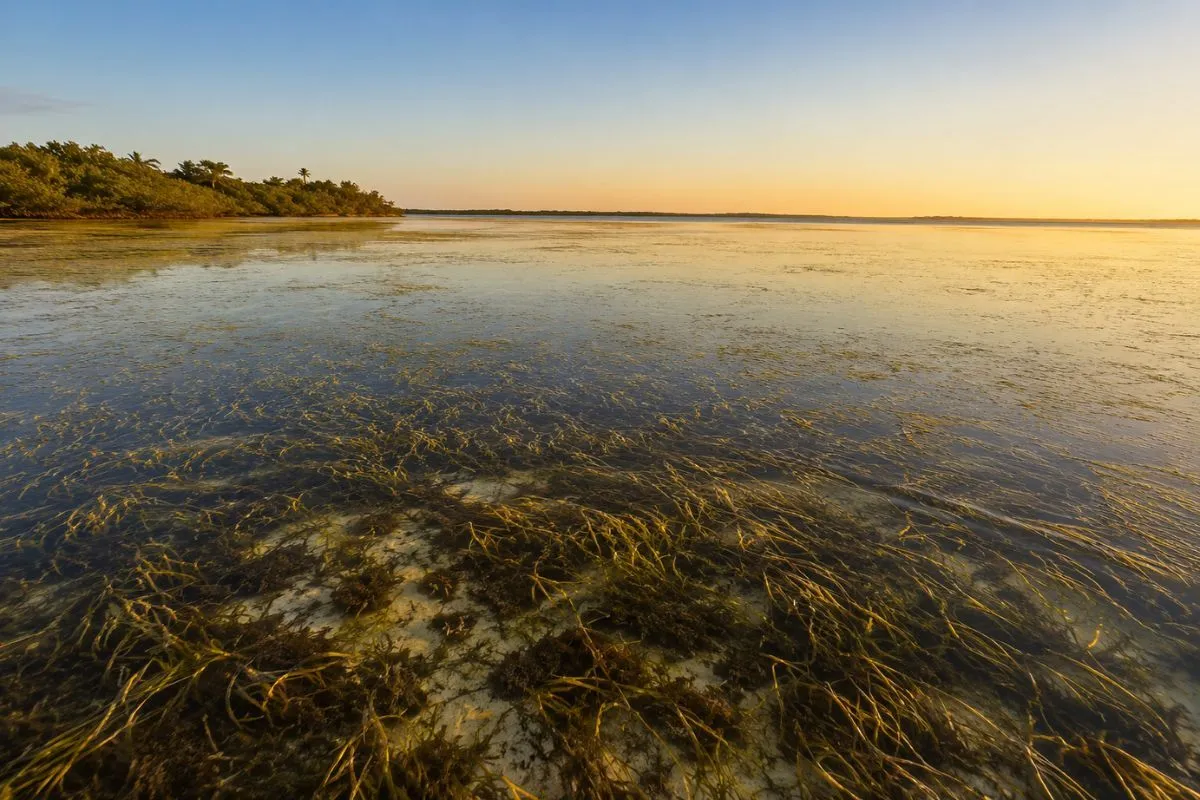
Grass flats are the primary feeding environment for redfish during flood tides, and the edges of those flats are critical during falling tides. Understanding how redfish use this transition zone is one of the most valuable things you can develop as an inshore angler.
During high tide, redfish push well up onto grass flats, using the vegetation for cover while they root through the substrate for crabs and shrimp. Sandy potholes within a grass flat are particularly productive because they create natural ambush points where redfish can see and corner prey. Fish potholes during the flood by working a gold spoon, soft plastic, or shrimp imitation across the open sand and back into the grass edge.
Why Oyster Bars Are Year-Round Redfish Magnets
Oyster bars and oyster reefs are structure that produce redfish at every tide stage. They break current, host enormous populations of crabs and small baitfish, and create the kind of complex habitat that redfish thrive around year-round.
During higher tidal stages when bars are submerged, redfish position on the upcurrent edge and ambush prey carried over the top of the structure. As water drops, focus shifts to the deeper pockets and channels immediately adjacent to the bars. Oyster bars positioned near channel edges or at the intersections of tidal drains with open water are the ones to memorize.
One practical note: fishing the edges of oyster bars (rather than directly over them) during falling tides protects your terminal tackle and avoids damaging the reef structure itself.
How Current Speed Changes Redfish Fishing Tactics
Fishing Bull Redfish in Strong Tidal Current
Strong tidal current and redfish feeding go together well, but only if you understand where to position. In high-flow environments, redfish will not fight the main current over featureless bottom. They find a current break and wait. Eddies behind points, deep holes adjacent to shallow flats, and the downcurrent side of bridge pilings, docks, or exposed shell bottom are where the fish will be.
- Use enough weight to maintain bottom contact and keep your presentation in the strike zone, not bouncing through the water column
- Position your boat uptide and fish with the current so your bait drifts naturally into the holding zone
- Cut bait produces well in heavy current because the scent plume carries far and draws fish from a distance
- Watch for the seam where fast current transitions to slower water, redfish will be sitting right on that edge
Fishing Redfish During Slack Tide
Slack tide requires a different mindset. When current stops, prey is not being funneled into ambush zones, so redfish switch to more active hunting. Subtle presentations become critical because fish have more time to inspect potential food.
- Live bait typically outperforms artificials because natural movement provides the stimulation that current usually delivers
- Smaller, more realistic soft plastics work better than oversized presentations
- Popping corks are effective because the sound and surface disturbance draws fish that might otherwise be passive
- Focus precise casts on high-percentage areas such as potholes, oyster edges, and shadow lines rather than covering water
Slack water is also a signal. A tide change is coming, and experienced anglers use that lull to reposition for the next transition window.
Frequently Asked Questions About Redfish and Tides
What tide is best for redfish fishing?
The first two hours of an incoming or outgoing tide produce the most consistent redfish action. These transition windows combine water movement, concentrated prey, and actively feeding fish. The outgoing tide is particularly reliable because it funnels baitfish and crustaceans through predictable choke points.
Where do redfish go at low tide?
At low tide, redfish concentrate in the deepest available water in their area: tidal creek channels, depressions in flat bottoms, outside bends of tidal creeks, and the mouths of drains emptying from marshes. Creek mouths and channel edges are prime low-tide fishing locations.
Do redfish feed at high tide?
Yes. High tide is an active feeding period, especially for bull redfish pushing onto flooded grass flats, marsh edges, and around submerged oyster structure. Tailing behavior, where redfish tip nose-down to root crabs from soft bottom, is most visible during flood tides in shallow water.
How does moon phase affect redfish feeding?
New moon and full moon phases produce spring tides, which push higher highs and pull lower lows than during quarter moon periods. The greater tidal range means more flooding of shallow habitat, stronger current through channels, and more concentrated bait movement. Many experienced redfish anglers consider spring tide windows around new and full moons to be the most productive of the month.
What is the best bait for redfish during a falling tide?
During a falling tide, cut mullet fished on the bottom at creek mouths and channel edges is consistently effective for bull redfish. Blue crabs cut in half or quarters are a top choice for trophy fish in deeper water. Live shrimp and pinfish remain versatile options throughout the tidal cycle.
Why do redfish tail on grass flats?
Redfish tail when feeding nose-down on crabs, shrimp, and other bottom-dwelling prey in very shallow water. The behavior is most common during flood tides when fish move onto grass flats and target prey that becomes active with rising water. Tailing fish are catchable fish and are usually moving, so lead your cast several feet ahead of the fish.
How Seasonal Patterns Shape Tidal Redfish Fishing
Tides do not operate in a vacuum. Seasonal conditions adjust how redfish respond to tidal movement throughout the year. In spring and summer, early morning high tides push fish onto shallow flats in good numbers, but peak afternoon heat during summer makes the falling tide and low tide transitions more productive as fish seek thermal relief in deeper staging areas. Captain William Toney, who has fished Homosassa, Florida's inshore flats for decades, targets the first flood of the morning in summer before sun angle and heat drive fish off the flat.
Reading Tides, Structure, and Conditions Together
The anglers who consistently find bull redfish are synthesizing tidal stage, structure type, water temperature, bait presence, and current speed simultaneously. If you arrive at a creek mouth at dead low tide with no current and no visible bait, do not anchor and wait. Reposition to the nearest deeper channel and look for birds or nervous water. If a flood tide is running but a stiff opposing wind is dampening the flow, slow down your presentation, switch to live bait, and fish precise spots rather than covering ground. Conditions rarely align perfectly, and the ability to adjust in real time is what separates consistent anglers from occasional ones.
Frequently Asked Questions: Tides and Bull Redfish
How does a rising tide affect redfish location?
On a rising tide, redfish move from deeper staging areas toward the shallows. They follow the leading edge of the flood onto grass flats, into marshes, and along mangrove shorelines. The early flood, when water first begins covering previously dry or marginal bottom, often produces the most aggressive shallow-water feeding.
What is the worst tide for redfish fishing?
Slack tide, the period of minimal water movement at the top or bottom of a tidal cycle, typically produces the slowest action. Fish are not positioned at ambush spots and prey is not being concentrated. The bite often resumes strongly as soon as the tide begins moving again, so slack periods are best used to reposition for the next window.
How do you fish for redfish around oyster bars?
Fish the upcurrent edge of submerged oyster bars during high tide by casting over the structure and retrieving through the current shadow on the downcurrent side. As water drops, shift to the deeper pockets and channels adjacent to the bars. Weedless presentations or jigheads with soft plastics prevent hangups on the shell.
Do bull redfish school during tidal movements?
Yes. Bull redfish are gregarious and frequently travel and feed in groups, particularly around structure during tidal transitions. A school of bull reds staging at a creek mouth during a falling tide is one of the most productive scenarios in inshore fishing. When you find one, expect more in the area.
What rod and reel setup works best for redfish in tidal current?
Medium to medium-heavy spinning gear in the 3,000 to 4,000 reel size class with 20-30 pound braided line and a fluorocarbon leader of 20-40 pounds covers most redfish tidal fishing scenarios. In heavy current with large cut bait, a heavier baitcasting outfit allows better weight control. Match your jighead or sinker weight to current speed so your presentation stays in the strike zone.
Tides, Redfish, and What It All Comes Down To
Redfish tidal feeding patterns are not complicated once you commit to observing them systematically. Water rises and falls. Fish respond. The fundamentals are consistent from South Carolina to Texas: flood tides push fish shallow, falling tides concentrate them at drains and channels, transitions produce the most aggressive feeding, and structure provides the framework around which all of it organizes.
What makes red drum special as a target species is how accessible this pattern is. You do not need a large boat or offshore miles. You need local knowledge, a tide chart, a few quality presentations, and the patience to position yourself ahead of the fish rather than reacting after the fact.
The more time you spend on the water matching what you observe to the tidal cycle, the faster those patterns become second nature. Eventually you stop checking the tide chart because the water tells you everything. That is when the fishing gets consistently good.
Login
to leave a review.
User Reviews
There are no reviews yet.
Setting Up a Dredge Pulley for Billfish
Saltwater
12.28.2020
High Speed Wahoo Trolling Rig
Saltwater
09.08.2018
Fishing Light Tackle for Yellowfin Tuna
Saltwater
09.08.2018

0