
Roosterfish are two different fish depending on where you find them. The one pushing bait through a rocky surf zone demands fast casts and faster retrieves. The one holding around a deep-water reef off Costa Rica requires live bait, patience, and heavy tackle. Both are worth chasing. Neither rewards a one-size-fits-all approach.
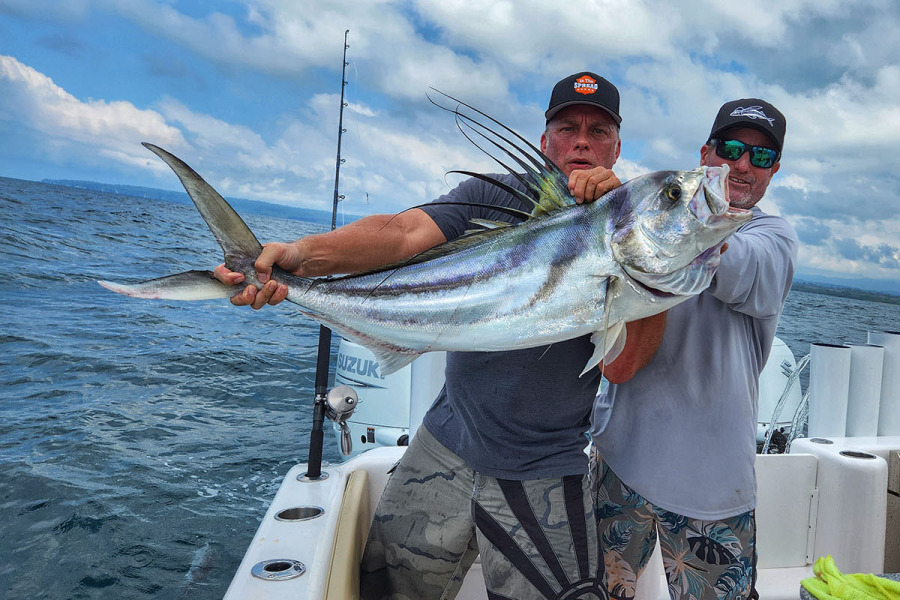
Fishing Roosterfish in the Surf and Deep Water
Roosterfish are one of the most sought-after inshore and nearshore game fish in the Eastern Pacific. They fight hard, eat aggressively, and look unlike anything else in the ocean. That distinctive comb-like dorsal fin breaking the surface on a big fish is something you never forget. But if you've spent time chasing them and come home empty-handed, there's a good reason. Roosterfish in the surf and roosterfish in deeper water are almost two different games. The bait choices, the techniques, the gear, and the way the fish behave are fundamentally different depending on where you're fishing them.
At In The Spread, we've built an entire library of roosterfish fishing instruction with working captains who chase these fish every day in Costa Rica and Mexico. Our instructors have put in the time figuring out what actually works, and this article pulls from that knowledge to give you a real tactical picture of both environments.
If you're targeting roosterfish from the surf, your approach needs to account for dynamic, fast-changing conditions where the fish are usually close to the surface and actively hunting. If you're going after big roosterfish in deeper water, you're dealing with a more patient, structure-oriented game that rewards the angler who can read bottom topography and present a bait properly at depth. Both are productive. Both require a different mindset.
Surf Fishing for Roosterfish: Reading the Zone and Getting Bites
Where Roosterfish Hold in the Surf
Roosterfish in the surf zone are ambush predators using the energy of breaking waves to their advantage. They push baitfish toward shore, cut off their escape routes, and feed aggressively in the turbulence. Understanding where they hold within that dynamic is the first step toward putting one on the end of your line.

When you're scanning the shore looking for a spot to work, pay attention to these features:
- Bird activity over the surf is one of the most reliable roosterfish indicators; frigate birds and boobies working a specific stretch of beach almost always mean bait is being pushed to the surface
- Deeper troughs running parallel to the beach act as patrol corridors that roosterfish use to move along the shoreline
- Points of land or rock outcroppings create current breaks where baitfish stack up, giving roosterfish a reliable ambush point
- Color changes in the water close to shore often signal depth variations or structure changes worth investigating
Tide matters more in the surf than most anglers account for. High tide typically brings roosterfish in tighter to shore, sometimes into water so shallow you'd never expect to find them. Actively changing tides, when water is moving with some force, tend to be the most productive periods because they concentrate bait and trigger feeding behavior. Early morning and late afternoon are the prime windows in most conditions, though an overcast sky can extend those feeding periods considerably into mid-morning.
Best Lures for Roosterfish in the Surf
The right roosterfish surf fishing lures need to accomplish two things: cast far enough to reach fish patrolling beyond the first breaking wave, and imitate a fleeing baitfish convincingly enough to trigger a strike from a fish that can be notoriously finicky.
Surface-skipping lures are the workhorses of surf roosterfish fishing. Lures like the Roberts Ranger and the Whistler skip across the surface in a way that perfectly replicates a panicked baitfish trying to escape. Upgrade the stock hooks on these lures to heavier trebles if you're targeting bigger fish; the stock hardware often isn't up to what a large roosterfish puts on tackle. Some anglers are also switching to strong single inline hooks, which improve landing rates and make releasing fish cleaner and safer.
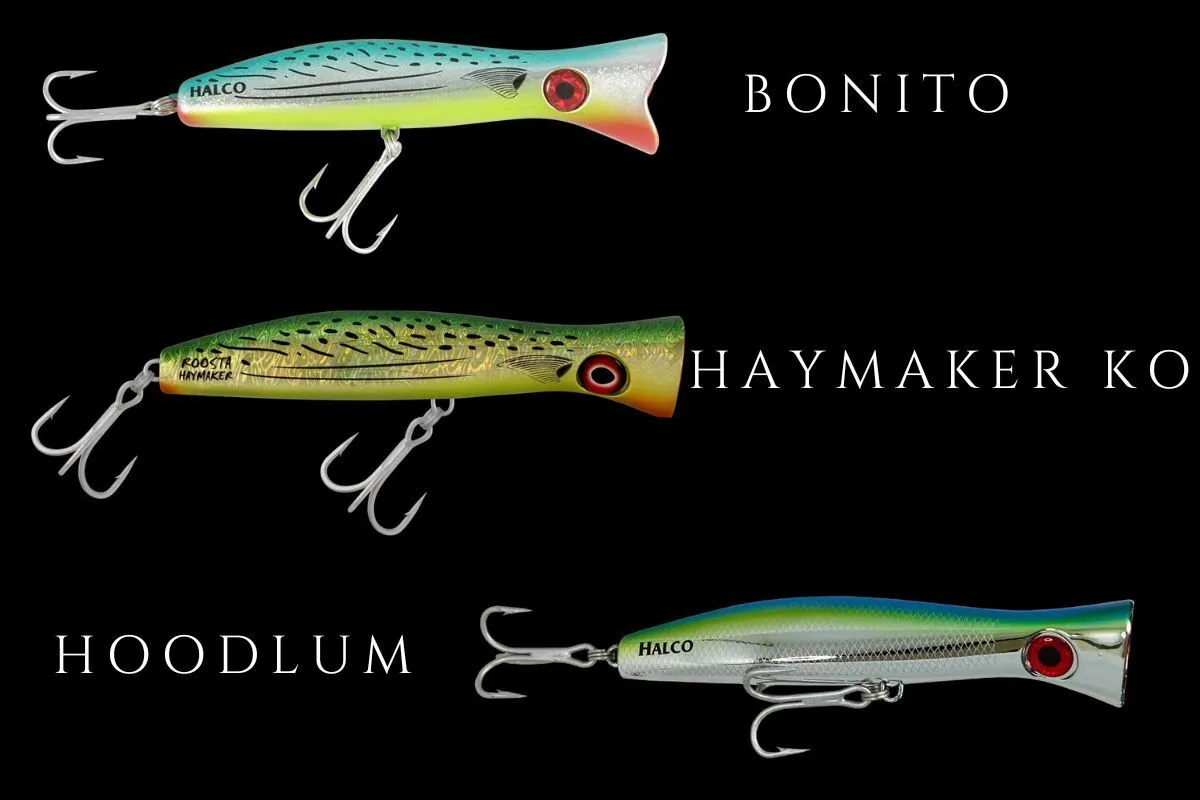
Poppers and stickbaits designed for giant trevally also work extremely well. The Halco Roosta Popper, the Nomad Chug Norris, and offerings from All or Nothing Lures create enough surface commotion that roosterfish actively track them down. A fast, aggressive retrieve with short sharp strokes tends to trigger the most committed strikes. You want the lure looking like something that desperately needs to get away.
Casting and Working Lures in the Surf
Long, accurate casts are non-negotiable when you're fishing roosterfish from the beach. Most of the fish are working just beyond the first breaking wave, and if your lure doesn't clear that zone, you're fishing behind where the action is. Work on building a smooth, powerful cast that lets you place the lure precisely, not just in the general direction of the fish.
Wading into the surf to pick up extra casting distance is a legitimate tactic when conditions allow it. Just be smart about it. The Pacific surf can generate sudden, powerful undertows, and a moment of inattention can turn a productive wade into a dangerous situation. Never sacrifice situational awareness for distance.
Surf Zone Roosterfish FAQ
What is the best lure for roosterfish surf fishing?
Surface-skipping lures like the Roberts Ranger and Whistler are the most consistent producers, along with large poppers designed for giant trevally. The key is choosing a lure you can cast beyond the first breaking wave and retrieve quickly to imitate a fleeing baitfish.
What tide is best for roosterfish in the surf?
High tide and actively changing tides are typically most productive. High tide moves roosterfish closer to shore, while tidal transitions concentrate baitfish and stimulate feeding. Early morning and late afternoon remain the prime feeding windows regardless of tide.
What size hooks should I use for surf roosterfish?
Replace stock treble hooks on surface lures with heavier-gauge trebles rated for big inshore fish. For live bait presentations in the surf, a 6/0 to 8/0 circle hook in a bridle rig through the nose is standard practice. Single inline hooks are also worth considering on lures for improved hookup rates and safer fish handling.
Deep Water Roosterfish Tactics: Going Offshore for Trophy Fish
What "Deep Water" Actually Means for Roosterfish
Before getting into tactics, it's worth defining terms. When we talk about deep water roosterfish fishing, we're not talking about anything like offshore canyon fishing. Roosterfish are a coastal species that rarely venture into truly deep water. The depths we're targeting are still in the 30 to 80-foot range over hard structure, pinnacles, and reef drop-offs. That's relatively shallow by offshore standards, but it's deep enough that the fish behave in ways that are completely different from their surf-zone cousins, and the tackle, presentations, and approach have to reflect that.
How Roosterfish Behave in Deeper Water
Offshore and deep water roosterfish fishing is a different game in almost every respect. These fish aren't pushing bait in the wash. They're holding around structure, waiting to ambush prey as it moves past. That fundamental behavioral shift changes everything about how you approach them.
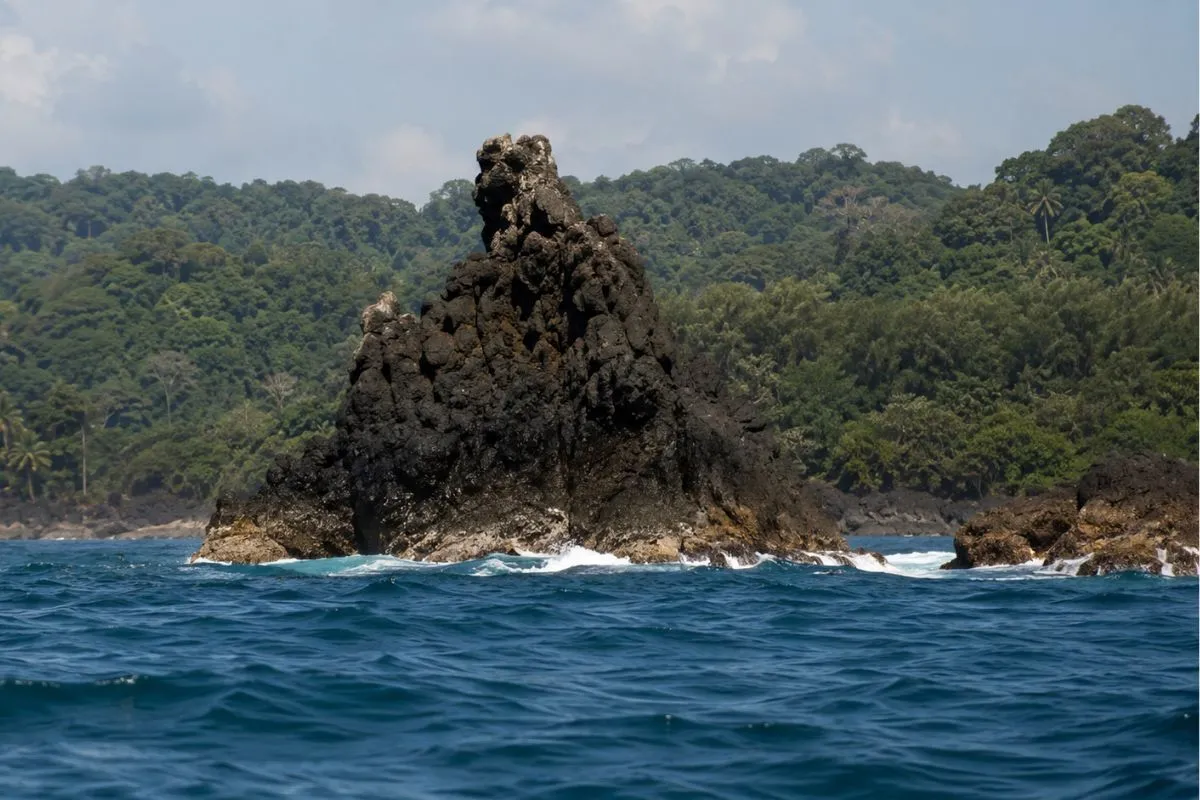
One important distinction: deep water roosterfish are generally less aggressive at the surface than their surf-zone counterparts. They're more methodical hunters. They're often less visible. And most truly giant roosterfish, fish in the 50, 60, and 80-plus pound range, are more consistently found around deeper structure rather than in the open surf, where larger forage species sustain fish of that caliber. If you're chasing a personal best, deep water is where you need to be.
Roosterfish Fishing Courses
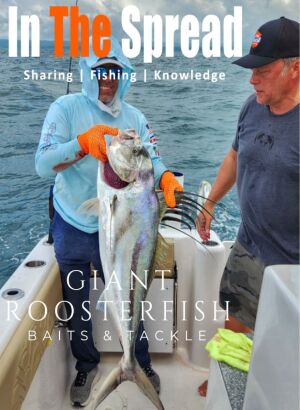
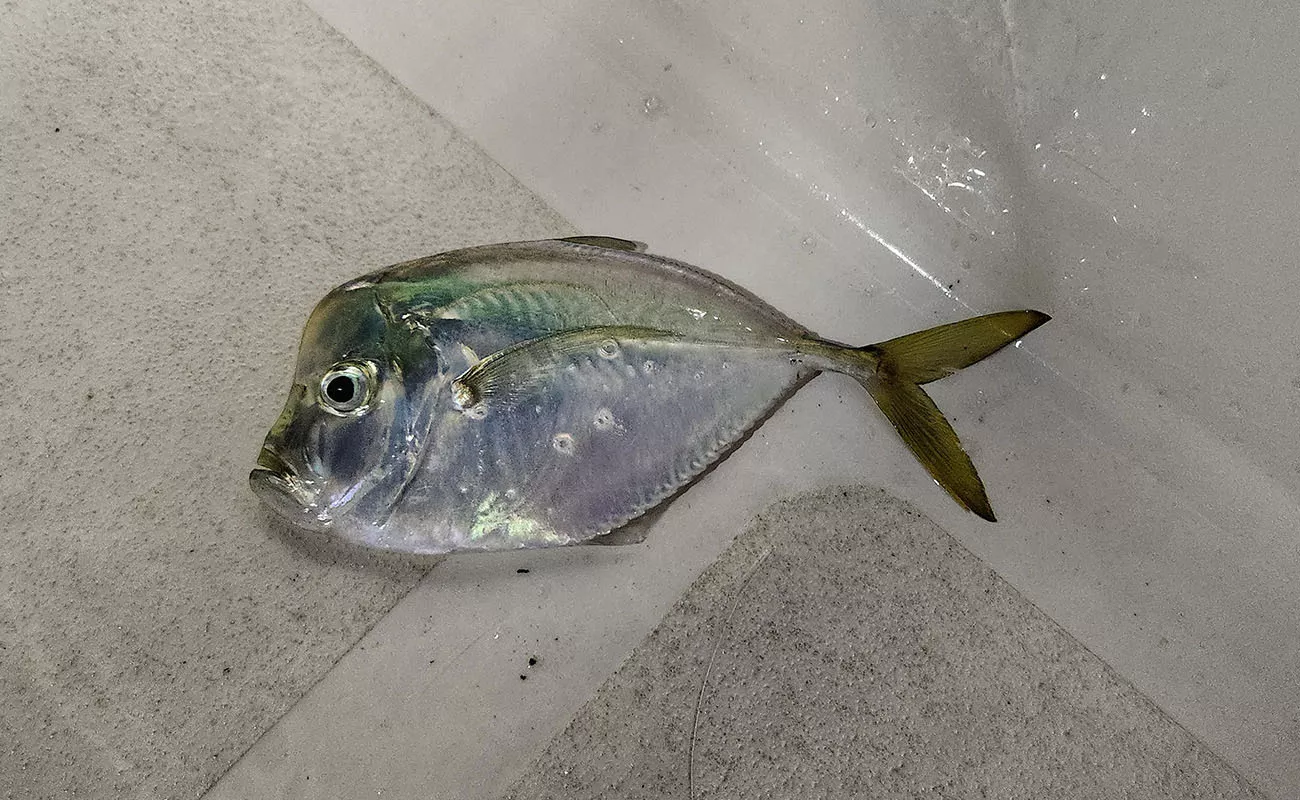
Giant roosterfish patrol deep water around Costa Rica's Osa Peninsula rocky islands rather than surf zones where smaller fish dominate. Mike Hennessy's systematic approach requires stocking 50-plus exotic live baits including bonito and lookdowns, fishing entire water columns simultaneously with surface poppers and deep-trolled baits at 30 to 50 feet, using tackle scaled from 6/0 to 9/0 hooks for trophy fish approaching world record sizes.
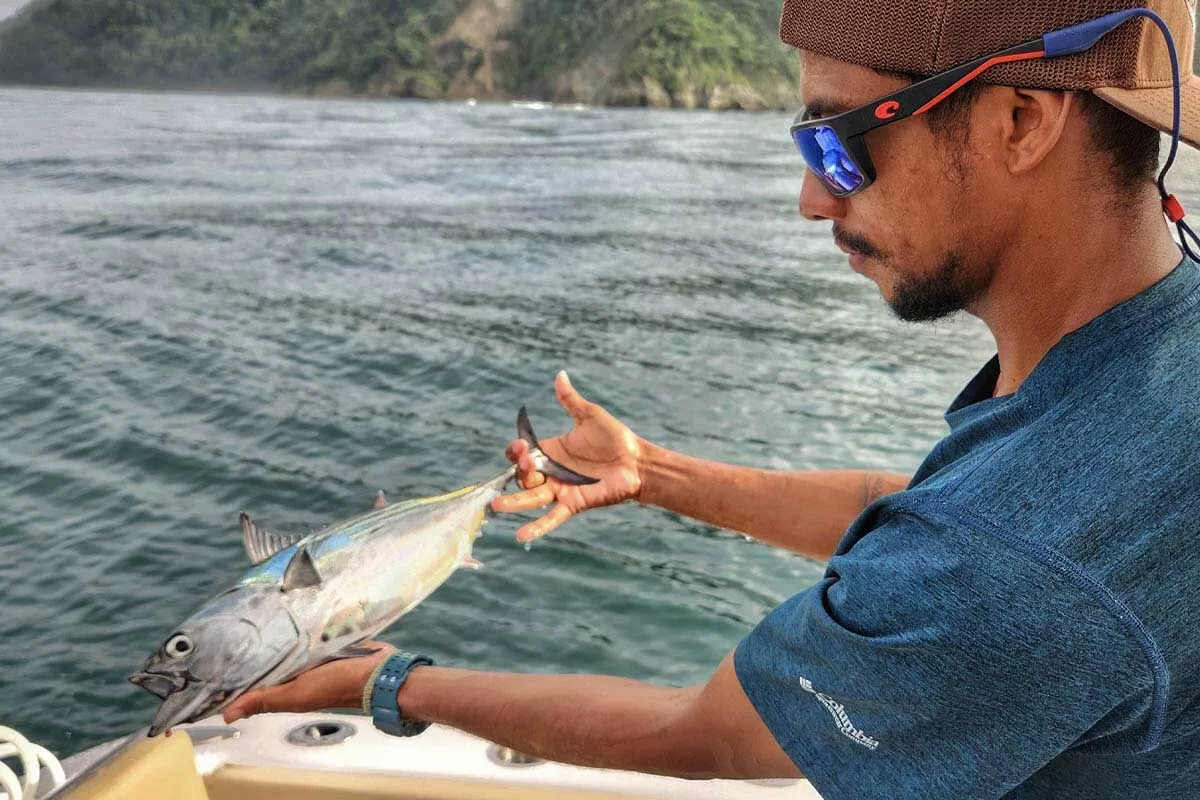
Costa Rica's Osa Peninsula produces world-record roosterfish in deep water where trophy specimens weighing 60 to 80-plus pounds demand unconventional approaches. Mike Hennessy's tactics include large skipjack tuna, baby snappers, and big ladyfish matching substantial forage profiles, plus heavy-duty 30 to 50 lb tackle with 150 lb fluorocarbon leaders and 9/0 circle hooks handling powerful runs.
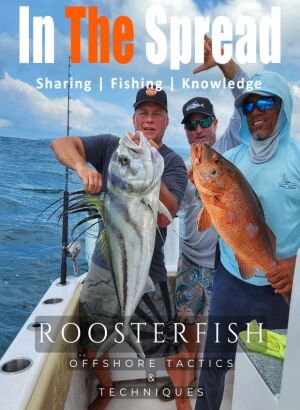
Costa Rica roosterfish giants demand offshore tactics beyond conventional surf techniques, requiring deep water structure fishing around rock piles and ledges. Mike Hennessy's proven multi-depth strategy fishes surface presentations and deep offerings simultaneously while advanced bait management for skipjack, blue runners, and sardines sustains sessions, with tackle scaled from 6/0 circles to 9/0 marlin hooks for trophy specimens.
Best Baits for Deep Water Roosterfish
Captain Mike Hennessy, who runs offshore roosterfish trips out of Costa Rica's Osa Peninsula, has refined his bait selection around a simple principle: match the size of the forage that big fish are already eating. In deeper water, that means going bigger than most anglers expect.
Heavy metal jigs in the 3 to 10-ounce range are the other primary tool for deep water roosterfish, with jig weight scaled to depth and current strength. When fish are holding tight to structure, a pinnacle, a hard drop-off, or the edge of a reef, vertical jigging puts your presentation right in their face. Sharp upward jerks followed by a controlled fall imitate an injured baitfish, which is exactly the trigger profile roosterfish are looking for.
Slow Trolling Techniques for Big Roosterfish
Slow trolling live bait is the technique Captain Mike Hennessy uses most consistently for the biggest offshore roosterfish. Working at 1 to 2 knots while covering productive structure edges and drop-offs, the bait swims naturally and covers ground, a critical advantage when fish aren't stacked in a single spot.
Bridle-rigging through the nose or along the back is the correct presentation. A properly bridled bait swims with a natural, struggling action that a straight hook through the back can't replicate. Keep your reel in free spool and use your thumb to maintain tension on the line. This lets the bait swim freely without constant resistance that would kill its action.
Deep Water Roosterfish Tackle Setup
Fishing for big roosterfish offshore demands heavy-duty, purpose-built tackle. A fish over 60 pounds, pulling against a strong drag in the vicinity of reef structure, will expose every weakness in a light or mid-grade setup. There's also a structural hazard to account for: a running fish that reaches hard bottom or the edge of a reef can cut a leader in seconds. Heavy abrasion-resistant leader material isn't a luxury in this environment, it's essential.
The standard offshore roosterfish tackle configuration:
- Rods rated for 30 to 50-pound test with enough backbone to drive a hook home on a hard hookset but enough tip sensitivity to feel what the bait is doing
- High-capacity spinning or conventional reels with smooth, powerful drag systems capable of handling sustained runs without overheating
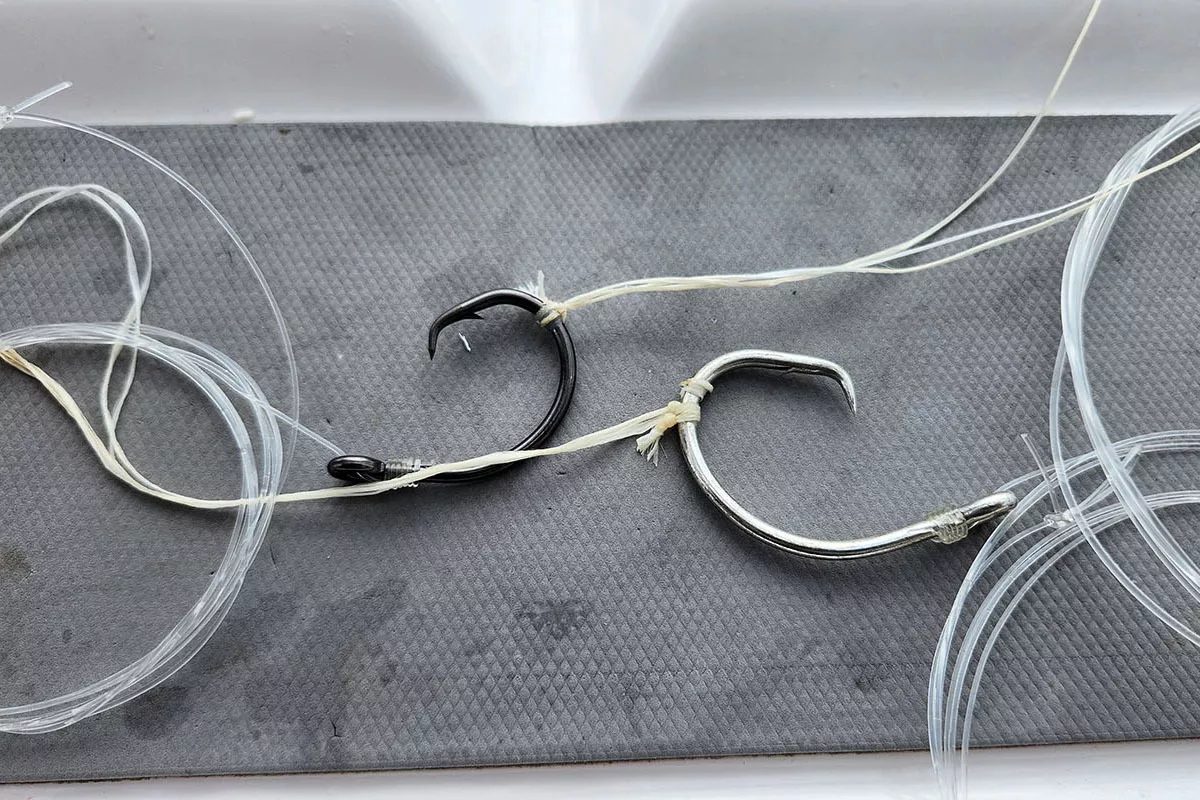
- 50 to 80-pound fluorocarbon or monofilament leader material that resists abrasion from reef and rock contact
- Circle hooks in 8/0 to 10/0 sizes for live bait presentations, which dramatically improve hookup percentages and make catch-and-release safer for the fish
Roosterfish are most active in roughly 75 to 85°F water, with feeding activity dropping off noticeably below about 70°F. Monitoring SST maps before a trip to offshore Costa Rica or Baja will help you identify the most productive zones and time the fishing correctly.
Fighting and Releasing Deep Water Roosterfish
Catch-and-release is standard practice throughout the best roosterfish fisheries, and the way you fight and handle the fish matters. A roosterfish that's been fought to total exhaustion has a significantly lower survival rate than one that's been subdued efficiently. In parts of Costa Rica and Panama, lodge practices and local guidelines strongly encourage or require the release of large roosterfish, especially at high-end operations where conservation is part of the program.
Deep Water Roosterfish FAQ
What depth do roosterfish swim at in offshore conditions?
Most deep water roosterfish you'll be targeting are in the 30 to 80-foot range, holding around submerged reefs, pinnacles, drop-offs, and other hard coastal structure. Roosterfish are rarely found in truly deep offshore water; they're a coastal species that stays close to structure even when they're not in the surf.
What is the best bait for big roosterfish offshore?
Live blue runners, bonito, and skipjack tuna are the standard baits for trophy roosterfish in deep water. When fish are selective, exotic live baits like lookdowns can trigger strikes from fish that have seen standard presentations too many times. Slow-trolled live bait in a bridle rig is the most consistent deep water technique.
What water temperature do roosterfish prefer?
Roosterfish are most active in roughly 75 to 85°F water. Activity drops off noticeably below about 70°F. Monitoring sea surface temperature before heading out is a practical way to identify productive zones and time your trips.
Surf vs. Deep Water: How Roosterfish Behavior Shapes Your Strategy
One of the most important things to internalize about roosterfish fishing is that the same fish species behaves quite differently depending on the environment. Knowing those differences in advance lets you arrive prepared rather than spending half the trip figuring out why what worked yesterday isn't working today.
In the surf, roosterfish are typically aggressive and visual. They're in chase mode, pushing bait into corners where it can't escape. Surface presentations get eaten. Fast retrieves get eaten. The feeding often happens right in front of you, sometimes in water so shallow it looks physically impossible for a fish that size to be there. But these fish can also be maddeningly selective, following a lure right to the beach and turning away at the last second. When that happens, a brief pause, a change in retrieve speed, or downsizing the offering sometimes breaks the lock. Most of the time fast is right; when fish are tracking and refusing, vary the presentation before you give up on the spot.
Where to Catch Roosterfish: Top Destinations
Osa Peninsula, Costa Rica
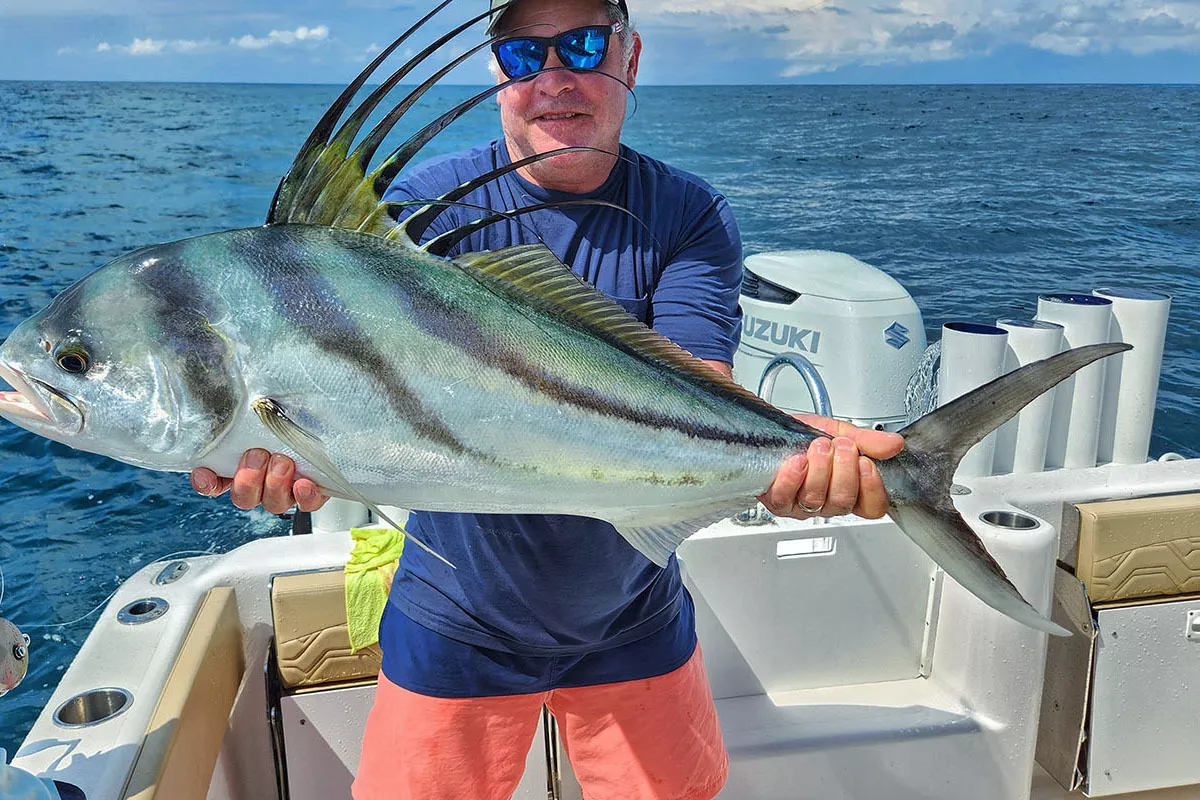
The Osa Peninsula is the top destination for anglers targeting trophy roosterfish. The combination of pristine habitat, abundant forage, and relatively light fishing pressure allows roosterfish here to reach sizes rarely encountered anywhere else in their range. Fish over 80 pounds are documented with regularity in this region, and the Corcovado National Park coastline provides miles of undeveloped structure and bait-rich water.
- Drake Bay provides access to both nearshore surf structure and productive offshore reef systems within a short run
- Matapalo Point is a premier location where strong currents concentrate bait along a defined point of land and neighboring rocky shoreline
- Golfo Dulce offers sheltered inshore water with roosterfish opportunities that differ from the exposed Pacific side
Colio Sportfishing, based in the region, has produced some of the most documented giant roosterfish on record. If the Osa is on your radar, fishing with a captain who knows the specific structure and seasonal patterns in this area is worth every dollar.
Cabo San Lucas, Mexico
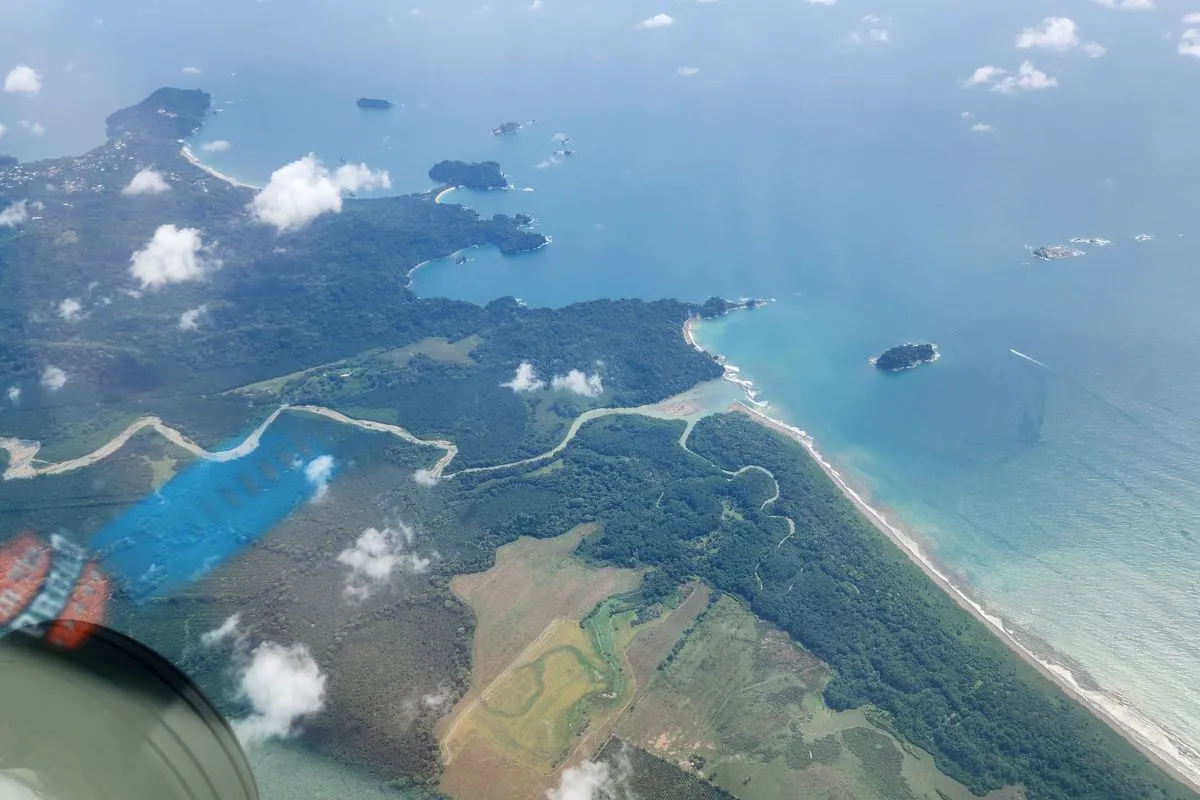
Roosterfish fishing in Cabo San Lucas offers a different profile. The fish aren't as large on average as what the Osa Peninsula produces, but Cabo's accessibility, infrastructure, and year-round fishing climate make it a practical choice for anglers who want quality roosterfish fishing without a complicated logistics footprint. Numerous direct flights from North American cities, a developed charter fleet, and a wide range of accommodations mean you can be on the water quickly and comfortably.
Panama and Other Notable Destinations
A few other destinations belong on the radar of any serious roosterfish angler:
- Piñas Bay, Panama: Home to the legendary Tropic Star Lodge, this remote fishery near the Colombian border has produced some of the largest roosterfish on record. Less accessible, but the numbers and size of fish are exceptional
- Gulf of Chiriqui, Panama: Dense roosterfish populations with significantly less fishing pressure than better-known destinations; a strong option for anglers willing to do a bit more logistical legwork
- Puerto Jiménez, Costa Rica: An accessible gateway town on the Osa Peninsula that offers a practical entry point into the same world-class fishery with more amenity options than the more remote corners of the region
General Roosterfish FAQ
Where do roosterfish live?
Roosterfish (Nematistius pectoralis) are found exclusively in the Eastern Pacific Ocean, from southern California and Baja California, Mexico, south through Central America to Peru. They're primarily an inshore and nearshore species, found in surf zones, over rocky reef structure, and around coastal pinnacles and drop-offs. Costa Rica and Panama produce many of the largest roosterfish caught in modern times, though the IGFA all-tackle record still comes from La Paz, Mexico.
What is the best time of year to fish for roosterfish?
In Costa Rica, roosterfish fishing is productive year-round, with the dry season from December through April generally considered peak. In Cabo San Lucas, summer and fall months (roughly May through November) produce the most consistent action. Water temperature is the primary driver; fish become most active when temperatures reach roughly 75 to 85°F.
Are roosterfish good to eat?
Roosterfish are not widely considered a table fish. The flesh is coarse and dark, and not particularly flavorful compared to other Pacific species. Most anglers practice catch-and-release, which also reflects the fish's growing value as a managed sport fishery. In parts of Costa Rica and Panama, releasing fish is standard practice and in some cases required.
What tackle do I need for roosterfish fishing?
Surf tackle starts with medium-heavy spinning gear in the 20 to 30-pound class, with 50 to 65-pound braid and a 40 to 60-pound fluorocarbon leader. Offshore roosterfish fishing calls for heavier conventional or spinning gear in the 30 to 50-pound class, with 50 to 80-pound fluorocarbon leaders and circle hooks in the 8/0 to 10/0 range for live bait presentations.
What is the world record for roosterfish?
The IGFA all-tackle world record roosterfish stands at 114 pounds, 0 ounces, caught off La Paz, Mexico in 1960. Fish approaching that size are still being caught in the Eastern Pacific, most frequently off the Osa Peninsula of Costa Rica and in Panama's Piñas Bay.
Putting It Together: A Tactical Summary for Roosterfish Anglers
Roosterfish reward the anglers who approach them with intention. This isn't a species you can blind-cast at a random stretch of beach and expect results. The fish are there. Finding them, presenting the right bait in the right way for the conditions, and being ready when they commit is the work.
In the surf, stay mobile. Read the water constantly. Find the structure within the structure: the trough behind the break, the current seam off a rocky point, the drop where the sand goes from light to dark. Use lures you can cast far and retrieve fast. Be at the beach at first light.
Offshore, be methodical. Work the electronics. Find the structure, find the bait, and present your live offering where the fish are actually holding. Give slow-trolled bait time to work. Have the right tackle in hand because when a big roosterfish commits in 50 feet of water near a reef, you need gear that can stop the first run before the fish reaches structure.
Both approaches produce fish. Both have their own rewards. The surf bite, when it's on, is one of the most visually electric fishing experiences in saltwater angling. The offshore bite, when a fish over 80 pounds makes its first run, is in a different category entirely. An angler who can do both competently will catch roosterfish in situations that defeat everyone else.
All regulations governing roosterfish fishing, including any size, bag, or catch-and-release requirements, vary by country and region. Always verify current rules with the relevant national or regional fisheries agency for the waters you're fishing before your trip.
Seth Horne Founder and CEO
Login
to leave a review.
User Reviews
There are no reviews yet.
Setting Up a Dredge Pulley for Billfish
Saltwater
12.28.2020
High Speed Wahoo Trolling Rig
Saltwater
09.08.2018
Fishing Light Tackle for Yellowfin Tuna
Saltwater
09.08.2018

0