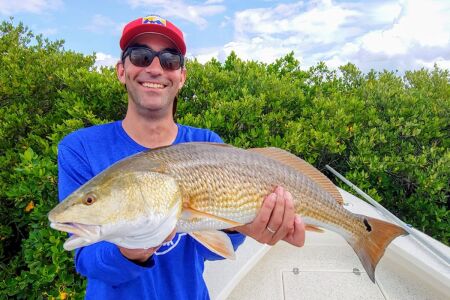
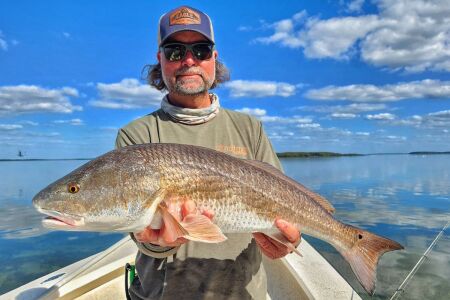
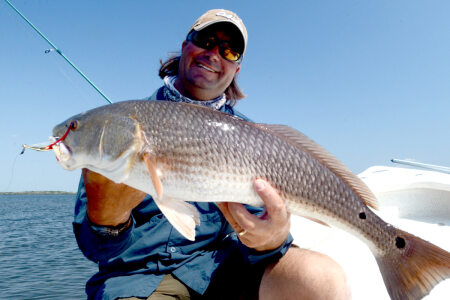
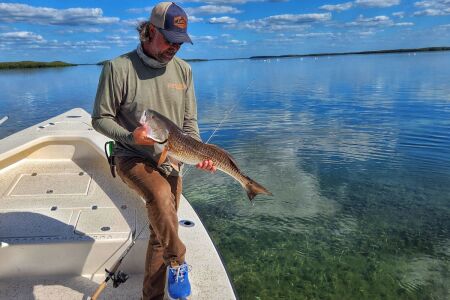
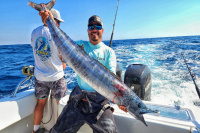
Winter redfish stop roaming and start hiding in warm water. Capt. William Toney's Nature Coast approach covers which refuges to fish, the midday incoming tide, how fronts reset the bite, and the slower baits and retrieves that get cold reds to eat.
Heat does not push redfish off the flats the way it does everything else. Through the hottest stretch of the year I work the Homosassa backcountry and the outside keys, reading shade, current, and mullet schools to find fish that have gotten a lot more specific about where they sit.
Redfish follow the tide. When water floods onto a flat, they move with it. When it drains, they pull back to channels and creek mouths. Knowing which tidal stage puts fish where, and which presentations work in each window, is what turns an inconsistent angler into a consistent one.
Crossing a state line on a redfish trip means new slot windows, new bag limits, and sometimes new gear rules. The rules change often enough that last season's numbers may not be accurate today, so staying current with each state's wildlife agency is part of being a responsible angler.
Finding redfish is a reading problem before it is a casting problem. Edges where bottom types meet, wakes and tails on calm water, and the moving tide that puts fish where they are. Then the lure, bait, and leader that match what is in front of you.
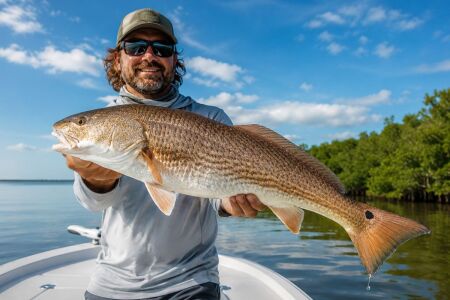
Red drum rank among the most accessible saltwater game fish along Atlantic and Gulf coasts. Learn proven techniques for sight fishing shallow flats, choosing effective baits and lures, reading seasonal patterns, and targeting everything from puppy drum to trophy bull reds.
Cold fronts push Gulf Coast gamefish into predictable deep-water refuges where they wait out temperature drops. Understanding these thermal patterns and fishing protected coves with live shrimp during post-front warming trends turns tough winter conditions into productive fishing opportunities for redfish, seatrout, and sheepshead.
There is no single best bait for redfish. There is the right bait for the water temperature, the salinity, the size of fish you are hunting, and whatever is already swimming around the boat. Five baits, when each one works, and when it will cost you the day.
Spring does not happen on a date. The fish move out of the deep winter water in waves over several weeks, and for a month you can find them in winter mode and spring mode within a mile of each other. Carry a thermometer instead of a calendar.
Winter conditions on Florida's Gulf Coast create perfect opportunities for sight casting redfish. Clear, calm waters and concentrated fish make this season ideal for anglers. Success depends on choosing the right baits, live shrimp remains top choice, and perfecting stealth presentation techniques. Cold weather brings predictable redfish behavior and exceptional visibility for memorable fishing experiences.