
Finding redfish is a reading problem before it is a casting problem. Edges where bottom types meet, wakes and tails on calm water, and the moving tide that puts fish where they are. Then the lure, bait, and leader that match what is in front of you.
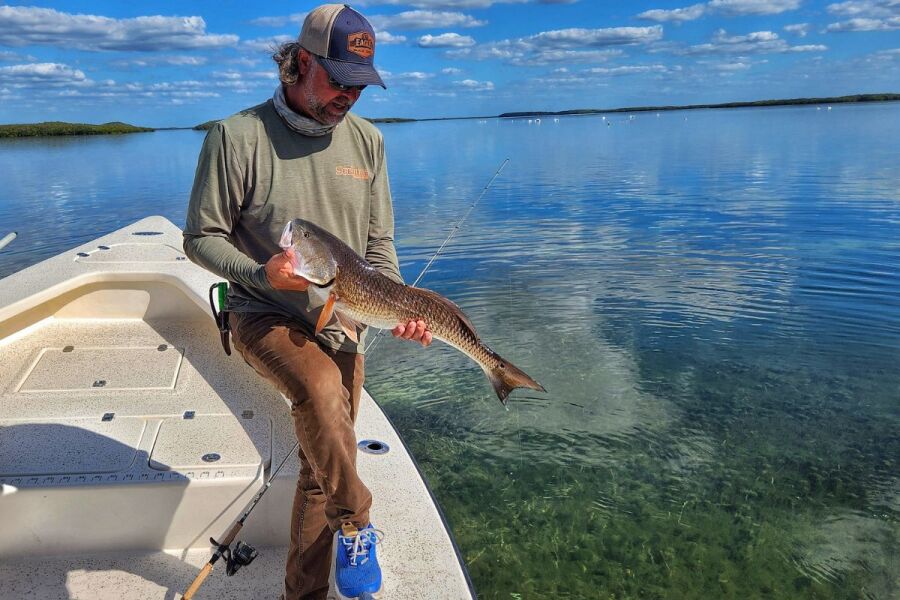
Catching Redfish on Flats, Shorelines, and Structure
There is a moment on a shallow flat, right before you make the cast, that decides whether you catch the fish. Everything after it is mechanics. Where the fish is facing, how fast it is moving, where the sun is, where your line is going to fall, whether you have already been seen. Anglers who catch redfish consistently are making that read every time. Anglers who catch them occasionally are casting first and reading afterward.
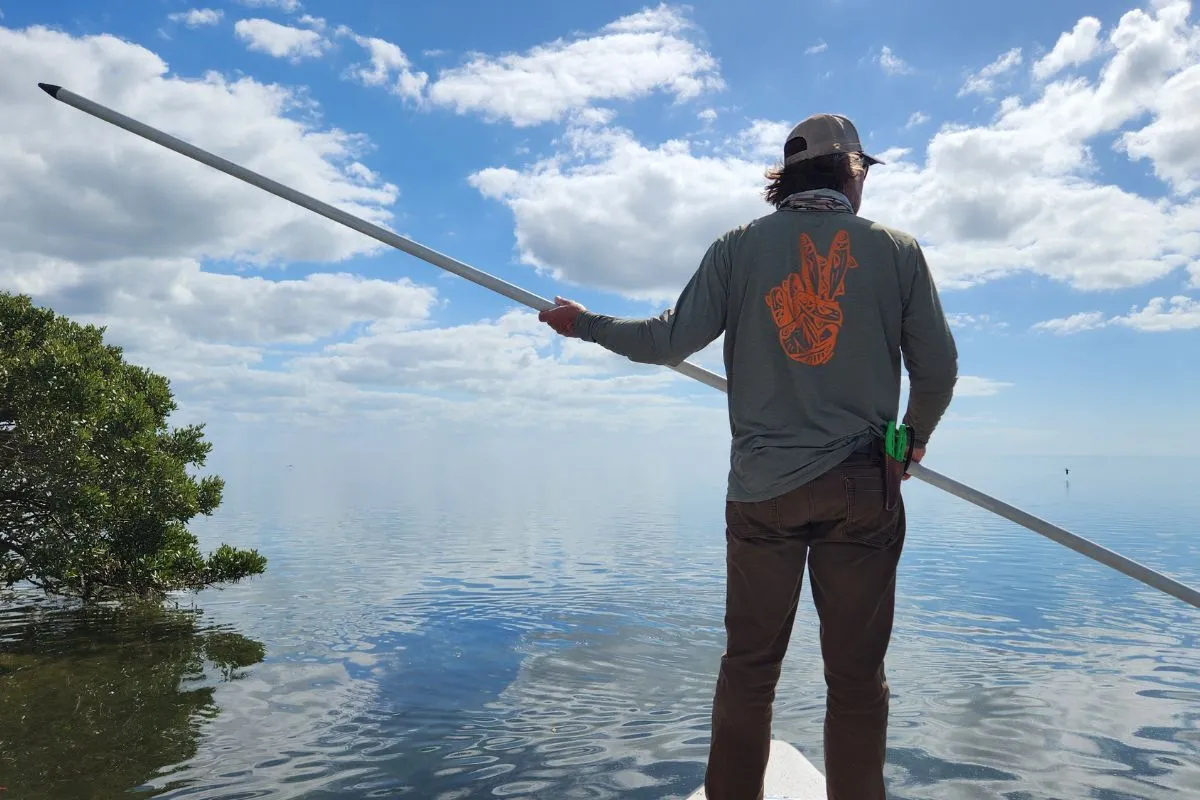
I have spent years filming Captain William Toney work the flats and outside keys around Homosassa, and what stands out is how little of his day is spent casting. He idles, he looks, he poles, he waits. The cast is the smallest part of it. That is not patience for its own sake. It is because a redfish in two feet of clear water gives you one honest opportunity, and burning it on a bad presentation costs you that fish and usually the two behind it.
Where Redfish Hold in Inshore Water
Redfish are not scattered randomly across a flat. They sit where structure and food overlap, and once you learn to see that overlap you can walk onto unfamiliar water and know where to start.
The habitat types that produce across most of the Gulf Coast:
- Grass flats with sandy potholes, which hold crabs, shrimp, and pinfish and give redfish visible feeding lanes through the grass
- Oyster bars and shell edges, which break current and create defined ambush points
- Mangrove shorelines, where fish push tight to the roots on high water to pick off crabs
- Marsh creeks and tidal drains, best on falling water when bait funnels toward the main body
- Jetties, bridges, and dock structure, which hold resident bait and fish through every season
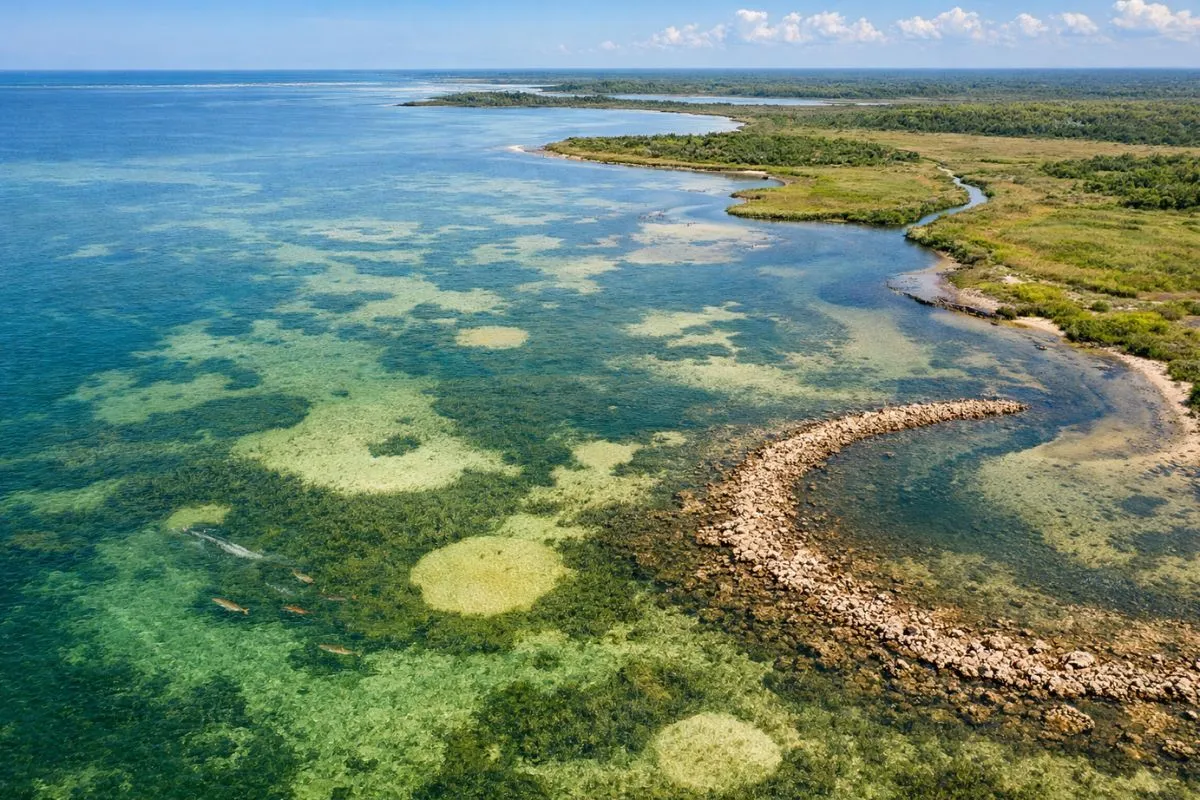
The most useful thing to look for is a transition. Grass meeting sand. Shell meeting mud. A drain cutting through a bar. Redfish position on edges because edges concentrate food and give them something to ambush from. A uniform flat with nothing breaking it up will hold fewer fish than a short stretch where three bottom types come together.
The highest percentage edges of all are the ones that also move water: drains, points, cuts, and pass mouths. Structure concentrates food, but structure with current running across it concentrates food and delivers it.
How to Read a Flat Before You Cast
Sight fishing starts long before the cast, and the anglers who spot fish first catch the most of them. Four visual cues carry most of the weight.
Wakes. A cruising redfish in shallow water pushes a V shaped wake. On a calm morning along a shoreline you can pick that up at a surprising distance, and it tells you both where the fish is and which way it is going.
Tailing fish. When a redfish roots in grass or shell it angles nose down, which puts the tail above the surface. A tailing fish is stationary, it is feeding, and its attention is on the bottom rather than on you. It is the most catchable fish on the flat.
Nervous water. A patch of surface that seems to shiver or breathe when the wind is not doing it usually means a school moving just underneath.
Mud plumes. Rooting fish stir sediment. A cloud of off color water drifting through otherwise clean water is worth a careful approach, and the direction of the drift tells you where the fish went.
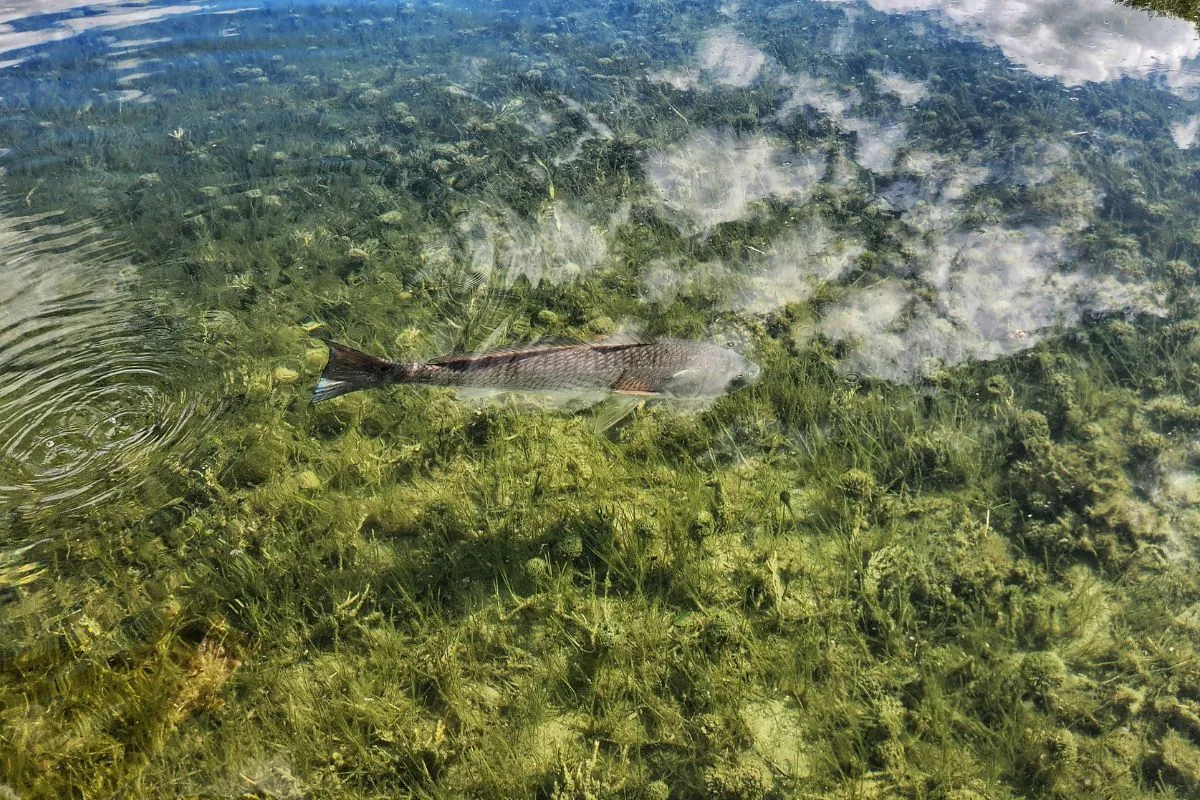
Once you have found a fish, read it before you cast. Which way is it facing. Is it moving or holding. Is it feeding or traveling. The cast goes ahead of the feeding direction, far enough out that the lure lands outside the fish's alarm radius and can be worked into its path. Dropping a bait on top of a redfish in skinny water blows that fish and usually the school with it.
Choosing Lures for Redfish
Redfish are not selective the way a permit or a pressured bonefish is selective, but lure choice is far from arbitrary. What matters is profile, speed, and whether the presentation suits the water you are actually standing in.
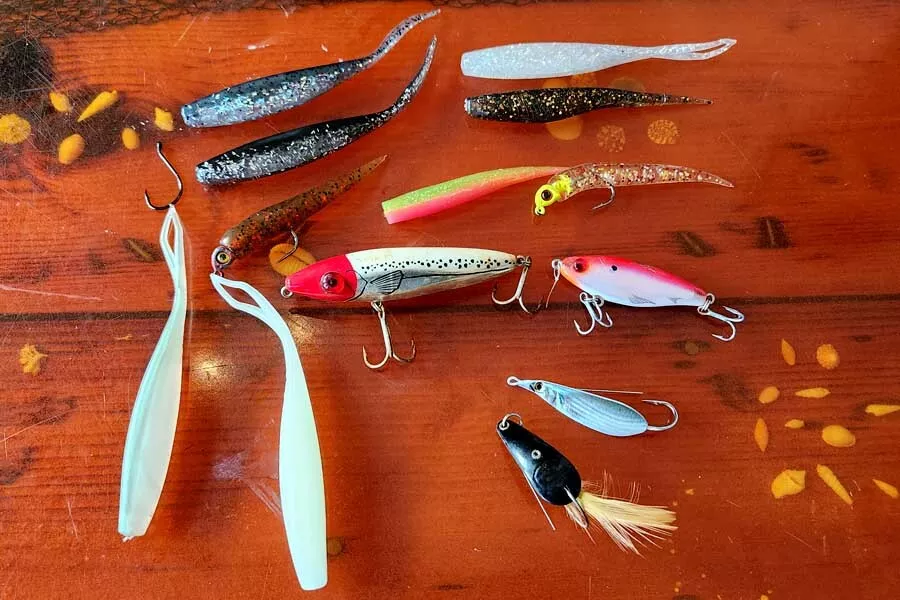
When to Fish a Gold Spoon
The gold spoon is the most versatile piece of hardware in an inshore box, and on the Gulf Coast gold tends to outperform silver by a margin nobody has ever satisfactorily explained to me, particularly in stained to moderately clear water. It flashes, it wobbles, and it covers water.
Fish it when you are searching rather than targeting. A spoon lets you work a half mile of shoreline without anchoring, without bait, and without committing to water that may hold nothing. A few things that matter:
- Use a weedless design over grass and mixed shell, because floating grass will otherwise ruin your morning
- Add a barrel swivel above the spoon or you will fight line twist all day
- Cast past the fish and bring the spoon into the zone rather than landing it on the fish
- Start with a steady retrieve and add pauses if fish follow without eating
Low light is when a spoon earns its keep. Dawn, dusk, and overcast days produce noticeably better than bright midday.
Rigging Soft Plastics for Different Bottom
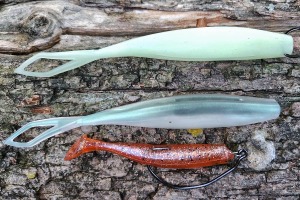
Soft plastics cover more situations than any other category. Paddle tails, shrimp imitations, crab profiles, and jerk shads all work, and the rigging should follow the bottom rather than personal preference.
Over shallow grass, a weedless hook with a natural colored shrimp or paddle tail stays clean while keeping the action alive. In potholes, along channel edges, or over shell, a jig head in the eighth to quarter ounce range gets down fast and supports a hopping retrieve that reads as a fleeing shrimp or a crab working the bottom.
Color logic is straightforward. Natural tones like root beer, gold, and white in clear water. Darker or higher contrast like chartreuse or black in stained water. A rattle or a scent product can tip a lethargic or heavily pressured fish over the edge.
Why Topwater Produces Such Violent Strikes
Nothing in inshore fishing compares to watching a thirty inch redfish crush a topwater plug in knee deep water. The strike is visual and it usually happens faster than you can react to it.
Topwater works because surface disturbance triggers a predatory response, and the low light windows at dawn and dusk are when redfish will commit to the surface. Calm, glassy conditions amplify everything about the presentation. Light chop can still produce with the right plug and wind direction, but heavy chop wrecks both visibility and cadence control, and subsurface options take over.
Fishing Live Bait for Redfish
Lures are search tools. Spoons, soft plastics, and topwater let you cover water and find fish, which is what the last section was really about. Live bait is the higher percentage play once you have found them, or when the fish are wary and conditions are against you. There are days when nothing artificial works and a lively pinfish solves the problem in ten minutes. Live bait fishes itself in a way no lure can replicate, and in clear shallow water where a redfish gets a long look before committing, that authenticity matters.
The baits that produce across most Gulf inshore water:
- Pinfish, Toney's primary choice out of Homosassa, fished under a popping cork or free lined near structure on light wire
- Jumbo live shrimp, available almost everywhere, on a light jig head or kahle hook near grass edges, oyster, and mangrove
- Finger mullet, strongest in fall when redfish key on larger forage and bull reds stage near passes
- Blue crab and fiddler crab, a staple for fish rooting on shell, fished on a simple bottom rig against a hard edge
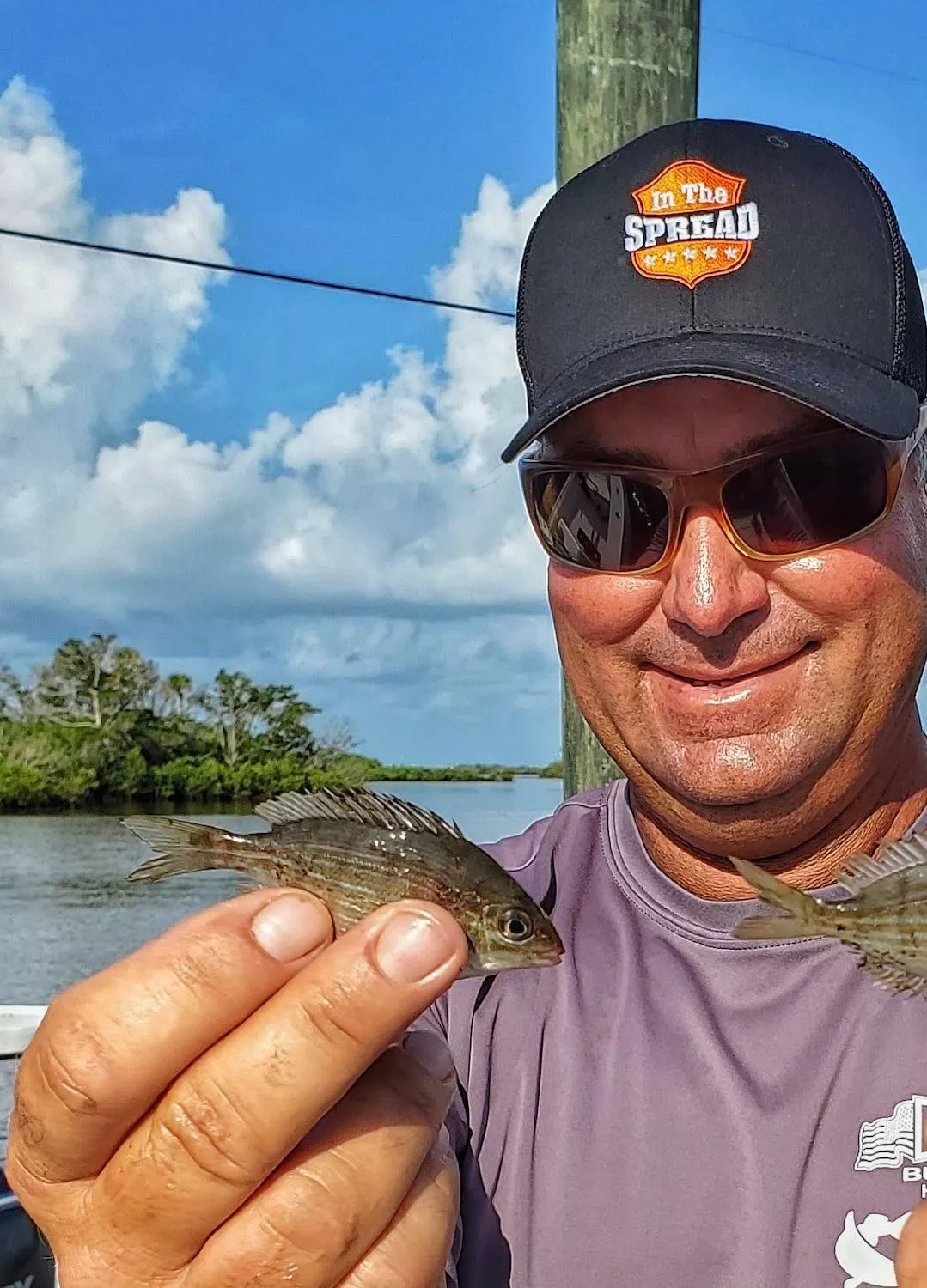
Bait quality is not a detail. A sluggish pinfish is close to worthless, and a bait that will not swim hard against the cork is a bait you should change. Keep the well cold enough to matter and turn the water over often in warm months.
Catching Redfish from Shore, Piers, and Jetties
You do not need a boat to catch redfish, and on the Gulf Coast a real amount of good water is reachable on foot. The rule from the flats carries over intact: fish moving water. From land that means cuts between bars, points, drain mouths, and pass mouths rather than an undifferentiated stretch of shoreline.
Wading is the most productive shore approach on Florida flats. It puts you lower than a boat, quieter than a trolling motor, and closer to the fish than a poling platform allows. Move slowly, and understand that the wake you push in front of you carries a long way in flat calm. Work into the wind and into the current where you can, so your disturbance travels behind you rather than ahead of you.
Jetties and rock structure hold redfish year round because they hold bait year round. Fish the down current side where the rocks break flow, and work the presentation along the edge rather than casting over the top. Live shrimp or cut bait on a knocker rig against the base of the rocks is hard to beat.
Piers and docks produce best at the pilings and along the shadow lines, particularly at night under lights, where redfish sit just outside the illuminated water and pick off bait that drifts through. Cast into the dark side of the light line and bring the bait across it.
Beach fishing turns on in fall when bull reds move along the surf, and the approach has nothing to do with flats fishing. Cut mullet on a fish finder rig in the trough behind the first bar, weighted heavy enough to hold in the wash. Look for cuts and sloughs where water moves between bars, because that is where fish travel.
The Nature Coast is unusually good for wading because the bottom is hard limestone rather than soft mud, and a lot of shallow water is accessible without a boat. That stretch is covered in more depth in Homosassa Florida fishing.
Rods, Reels, Line, and Leader for Redfish
Redfish tackle does not need to be complicated, and the most common mistake I see is people fishing too heavy.
For flats and inshore work, a seven to seven and a half foot medium or medium light spinning rod with a fast action covers nearly everything. It gives you casting distance for spooky fish and enough backbone to turn one out of grass or away from oyster. Pair it with a 2500 to 3000 size reel with a sealed drag, because you will get it wet and you will get it sandy.
Braid in the ten to twenty pound range is the working standard. It casts further, it has no stretch so you feel a soft take on a jig, and the thin diameter cuts wind. Fifteen pound is a good default for most inshore situations, though it is a starting point rather than a universal answer.
Leader is where most anglers overdo it. Twenty pound fluorocarbon at two to three feet is right for clear shallow water. Move up to thirty around heavy oyster, dock pilings, or jetty rock where abrasion is the real threat rather than visibility. In very clear water on pressured fish, dropping to fifteen is often the difference between follows and eats.
For hooks, a 1/0 to 3/0 kahle or circle for live bait, 1/0 to 2/0 jig heads for soft plastics, and 4/0 to 6/0 circles for bull reds on cut bait. Circle hooks across the board on bait, because a redfish takes and turns, which is exactly the motion a circle is built for, and corner hookups release clean.
Getting Bites from Pressured Redfish
Fish on public flats near any population center have seen everything. They have been cast at, hooked, released, and run over by trolling motors. Pressured redfish behave nothing like fish on lightly fished water, and the adjustments are not subtle.
Why Downsizing Works
Heavy leader, thick braid, and oversized hooks are visible in two feet of clear water. Dropping leader diameter, going down a hook size, and switching to a lighter, slower falling lure reduces the visual signature of the whole presentation without costing you the ability to land the fish.
How Approach Angle Decides the Outcome
Boat position and approach angle matter more than lure selection on spooky fish. A fish that knows you are there before you cast is already lost.
Kill the trolling motor well outside casting range, because motor hum carries a long way through shallow water on a calm day. Pole or drift the last forty to sixty feet. Watch your sun angle, since sun at your back throws your shadow and silhouette across the water ahead of you, and sun in your face creates glare that hides fish from you. Keep your line off the fish, and plan the cast so that nothing but the lure enters its field of view.
How Season and Water Temperature Change the Approach
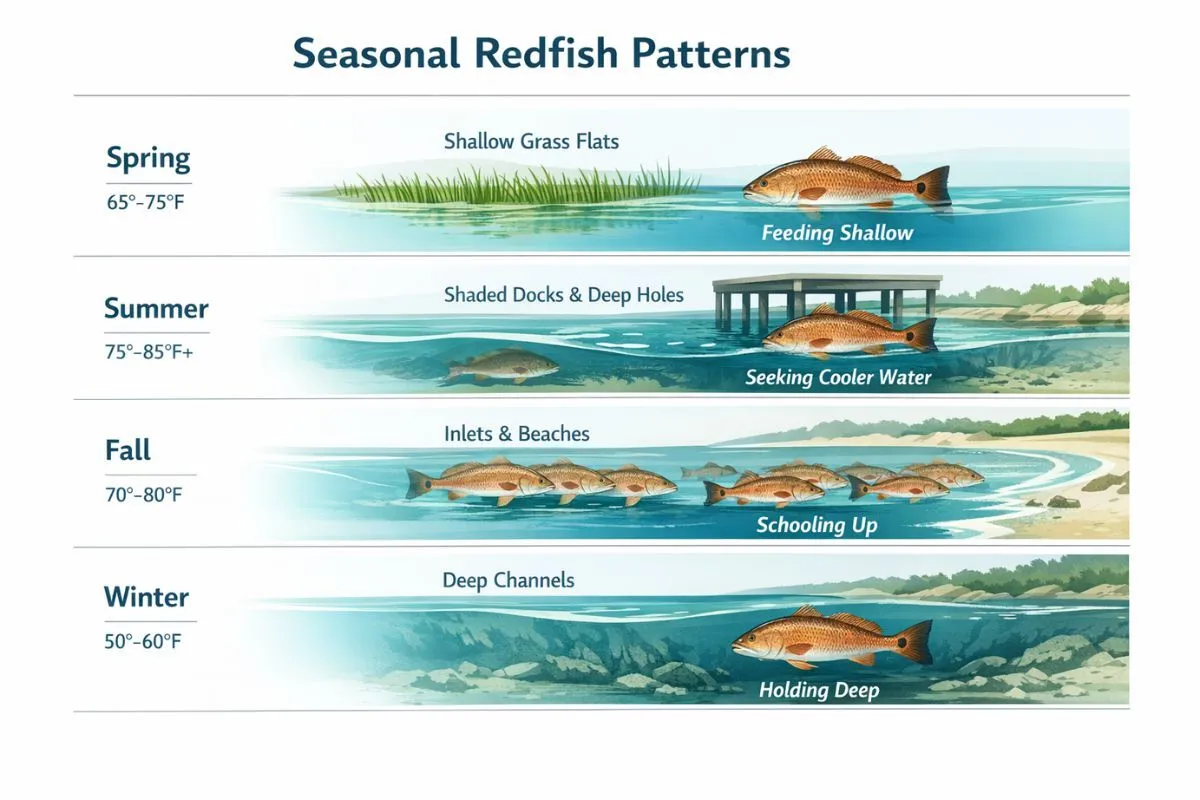
Redfish feed most strongly from the low 70s into the upper 80s. Above that they compress feeding into shorter windows and hold near shade, depth, and moving water. Below the mid 50s their metabolism drops and they concentrate in whatever water holds heat best, which usually means deeper holes, dark bottom, and canals.
Fall is the strongest inshore season across much of the range, with fish feeding hard and schooling up while bull reds stage near the passes, though how much it outclasses spring depends on latitude and how the water temperature has tracked. Spring and summer push fish onto the flats and into the backcountry, which is prime sight fishing water. Winter concentrates them, and the spring fed rivers around Homosassa hold fish in densities most inshore water cannot match.
Redfish Fishing Courses
Common Questions About Catching Redfish
What is the best time of day to catch redfish?
Early morning and late afternoon are the most productive windows, particularly in warm months when fish avoid shallow water during midday heat. Overcast days extend the bite considerably. On tidal flats, the hour on either side of a tide change often produces the most aggressive feeding regardless of the clock.
What size hook should you use for redfish?
For live bait, a 1/0 to 3/0 kahle or circle hook in light wire covers most inshore situations. For soft plastics on a jig head, 1/0 to 2/0 matches most lure bodies. For bull redfish on cut bait near passes and beaches, step up to a 4/0 to 6/0 circle.
What water temperature is best for redfish?
Feeding is strongest from the low 70s into the upper 80s. Above that, fish shorten their feeding windows and hold near shade, depth, and current. Below the mid 50s their metabolism slows and they concentrate in deeper holes and over dark bottom that holds heat, which calls for much slower presentations.
How do you approach redfish without spooking them?
Silence and distance. Cut the motor well outside casting range, pole or drift the last forty to sixty feet, avoid sudden movement, and plan your cast angle so your line and shadow stay out of the fish's field of view. Polarized sunglasses are not optional if you intend to see fish before they see you.
Do redfish feed in cold water?
Yes, but slowly and selectively. In the low 50s they concentrate in deeper, warmer, or more stable water depending on region and available structure, and they respond to a soft plastic crawled along the bottom or a live shrimp suspended nearly motionless under a cork. Fast retrieves and topwater rarely produce at those temperatures.
Can you catch redfish from shore?
Yes. Wading shallow flats, fishing jetties and rock structure, working dock and pier lights at night, and surf fishing cut bait in the troughs during the fall run all produce without a boat. Shore access on the Florida Nature Coast is particularly good because the bottom is hard limestone rather than soft mud.
What are the current regulations for keeping redfish in Florida?
Check your specific management region rather than assuming a statewide rule. Florida divides red drum management into regions, and they have differed substantially from one another, in some cases to the point of catch and release only. Slot ranges, bag limits, vessel limits, and closures have all changed more than once in recent years. Verify current rules for the exact water you plan to fish with the Florida Fish and Wildlife Conservation Commission at myfwc.com before keeping any fish.
What Separates Anglers Who Catch Redfish Consistently
The gap between people who catch redfish sometimes and people who catch them reliably is not tackle and it is not spots. It is the quality of the decisions made in the thirty seconds before the cast.
Reading the transition where grass meets sand. Telling a tail from a mullet flick at sixty feet. Knowing the fish is facing left and feeding into the current, so the lure goes ten feet ahead and to the left. Killing the trolling motor a hundred feet earlier than felt necessary. Choosing the twenty pound leader instead of the thirty because the water is clear and the fish have been hammered all week. None of those is complicated on its own. Together they are the whole game.
Get on the water often enough, pay attention to what worked and what did not, and those decisions stop being decisions. Until then, watching somebody do it correctly is the fastest way to compress the learning.
Login
to leave a review.
User Reviews
There are no reviews yet.
Setting Up a Dredge Pulley for Billfish
Saltwater
12.28.2020
High Speed Wahoo Trolling Rig
Saltwater
09.08.2018
Fishing Light Tackle for Yellowfin Tuna
Saltwater
09.08.2018
0