
Start fishing better with FREE Weekly Video Tips delivered straight to your email.
structure fishing
-

2025, Shallow Water Structure Fishing for Mangrove Snapper
25:52 · William ToneyMangrove snapper around shallow structure demand precise boat positioning and split-second timing. Captain William Toney explains how to read current direction, identify productive rocks through advance scouting, and capitalize on aggressive feeding periods when these hit-and-run gamefish commit to the bite. Success hinges on standoff distance and fishing the correct side.
WATCH NOW -
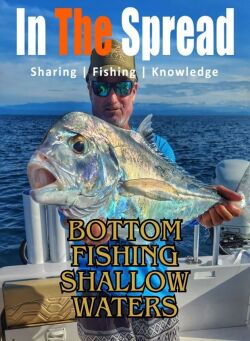
2025, Bottom Fishing Shallow Waters
28:46 · Mike HennessyHard bottom and rock piles at the mouth of Golfo Dulce, along Costa Rica's Osa Peninsula, hold cubera and other Pacific snappers and African pompano in about 50 feet of water. Captain Mike Hennessy fishes live goggle eyes, threadfin herring and blue runners over the rock, and the African pompano that came up shows what this shallow Pacific bottom holds when a live bait gets down into it.
WATCH NOW -
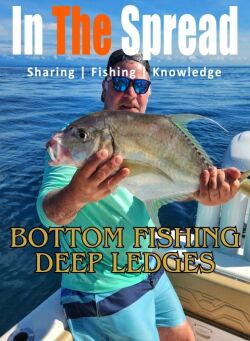
2025, Bottom Fishing Deep Water Ledges
34:34 · Mike HennessyDeep water ledges off Costa Rica's Pacific coast hold Pacific sierra, African pompano and amberjack where current brings bait to the structure. Captain Mike Hennessy shows why setting up within ten feet up-current of the mark decides whether a bait ever reaches the fish, when power drifting holds position because the anchor will not, and how braid lets you feel the bite at depth.
WATCH NOW -
2025, Fundamentals of Fishing Structure: Mike Hennessy
3:05 · Mike HennessyNinety percent of feeding fish concentrate in just 10% of the water around structural features where current creates predictable feeding zones. Mike Hennessy's fundamentals reveal how structure serves as fish highways, ambush points, and current breaks, requiring anglers to identify where flow hits features head-on and position boats for natural bait presentation with current.
WATCH NOW -

2024, Wahoo Slow Trolling: On-Water Techniques with Mike Dupree
54:01 · Mike DupreeBallyhoo rigging technique determines whether slow trolling wahoo baits maintain natural action or wash out losing effectiveness at reduced speeds. Captain Mike Dupree's on-water demonstration reveals planer and bridle deployment for depth control, spread configuration keeping multiple baits working productively, and understanding wahoo food chain relationships that drive fish positioning and feeding behavior throughout the water column.
WATCH NOW -

2023, Fundamentals of Fishing Structure for Blue Marlin
29:51 · Kevin HibbardBlue marlin position predictably where ocean structure concentrates baitfish rather than roaming randomly. Captain Kevin Hibbard's insights reveal how currents and upwelling interact with bottom topography creating nutrient-rich zones that establish food chains, determining where marlin patrol and feed most actively rather than trolling aimlessly through surrounding waters appearing identical on the surface.
WATCH NOW -
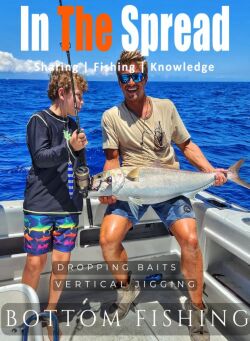
2023, Bottom Fishing with Baits and Vertical Jigs
29:57 · Shawn RotellaDeep structure off Kona at 75 to 80 fathoms, roughly 450 to 480 feet, holds amberjack (kahala) around ledges, wrecks and rock piles, and finding them is a drift problem before it is a bait problem. Captain Shawn Rotella sets up systematic drifts over that structure, drops baits and vertical jigs at the same time, and reads where in the water column the bites come so every drop that follows goes to the depth where the fish are feeding.
WATCH NOW -

2023, Slow Trolling Wahoo with Shawn Rotella Part 1
51:27 · Shawn RotellaSlow trolling live bait unlocks wahoo opportunities when fish won't chase high-speed presentations, requiring understanding of how weather, tides, and moon phases affect feeding patterns. Captain Shawn Rotella's expertise reveals when to switch from speed trolling, how structure and current relationships concentrate wahoo, and drag management techniques preventing common mistakes that cost fish during fights with powerful speedsters.
WATCH NOW -
2022, Basics of Vertical Jigging
20:08 · Chad RaneyVertical jigging effectiveness on deep wrecks, reefs, and oil platforms depends on understanding how high-speed versus slow-pitch presentations trigger different fish responses. Captain Chad Raney's straightforward approach covers rod, reel, rig, and jig fundamentals for speed jigging that targets both pelagic species and structure-oriented fish like amberjack, grouper, snapper, and wahoo holding around vertical formations.
WATCH NOW -

2021, Boat Driving Skills for Blue Marlin with Kevin Hibbard
16:47 · Kevin HibbardBlue marlin boat driving determines fight outcomes through simple spread setup allowing quick line clearing, understanding fish behavior patterns that inform positioning decisions, and achieving superior position early. Kevin Hibbard's worldwide marlin experience reveals how drag settings, line angle management, and strategic use of current create control needed for landing trophy fish rather than reactive responses after marlin establish advantages.
WATCH NOW -
2021, Bottom Fishing Red Snapper with Kevin Adney
22:20 · Kevin AdneyRed snapper concentrate around Gulf Coast structure rather than dispersing across open bottom, making hard bottom location the foundation for success. Kevin Adney's approach develops the game of feel needed to detect subtle bites and position baits where fish feed, using rig construction and hook sizing that handles structure-heavy environments while understanding regulations and preservation techniques for quality catch.
WATCH NOW -
2021, Bottom Fishing Grouper with Kevin Adney
1:14:21 · Kevin AdneyGrouper bottom fishing productivity depends on targeting natural reefs and wrecks where fish concentrate rather than random bottom. Kevin Adney's drift management approach keeps baits working productive structure zones systematically, but success requires understanding how current affects drift speed and positioning presentations where grouper ambush prey rather than sweeping past strike zones or hanging in barren areas between structure features.
WATCH NOW -
2020, Driving the Edge: High-Speed Wahoo Trolling
10:07 · RJ BoyleEdge trolling for wahoo fails when boat control drifts lures out of the narrow productive band where structure meets deep water. Success requires driving precision that maintains consistent depth along reef edges as contours change, reading how tidal movement concentrates baitfish, and adjusting angles to keep spreads working the strike zone continuously.
WATCH NOW -
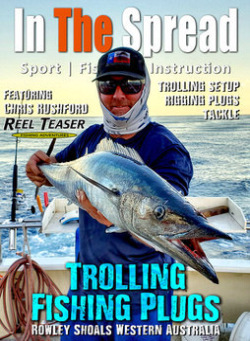
2019, Trolling Swimming Plugs Around Reef Structure
21:03 · Chris RushfordReef systems and deep structures concentrate gamefish around vertical features that casting cannot cover efficiently. Swimming plugs with adjustable bibs reach target depths while mimicking local baitfish, but proper wire rigging, bib tuning, and spread setup determine whether lures maintain action and withstand strikes from toothy predators patrolling hard structure.
WATCH NOW -

2019, Giant Trevally Reef Fishing Tactics Rowley Shoals
51:17 · Chris RushfordGiant trevally hooked near Rowley Shoals reef edges make immediate runs toward structure, testing tackle and technique before anglers establish control. Success requires heavy spinning setups with drag systems that can turn powerful fish within seconds while boat positioning and fighting angles prevent GT's from using coral to their advantage during brutal initial runs.
WATCH NOW -

2019, GianGiant Trevally Casting from Mothership at Reefs
44:47 · Chris RushfordMothership fishing for giant trevally at remote reef systems requires boat positioning strategies that maintain casting accuracy to structure without reef damage or fish spooking. Success depends on reading atoll edges, channels, and current flow from a larger platform, then controlling drift to keep lures working through ambush zones where GT's patrol as apex predators waiting to intercept baitfish.
WATCH NOW -
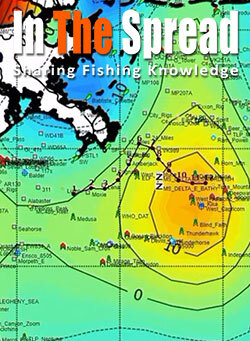
2019, How Altimetry Charts Improve Fishing Forecast
7:34 · Thomas HiltonTemperature and chlorophyll satellites show surface conditions but miss the vertical water movements driving productivity. Tom Hilton explains how altimetry reveals upwelling bringing nutrients from depth versus downwelling pulling them away, why upwelling edges outperform centers for predator positioning, and what sea surface height variations indicate about food chain sustainability.
WATCH NOW -
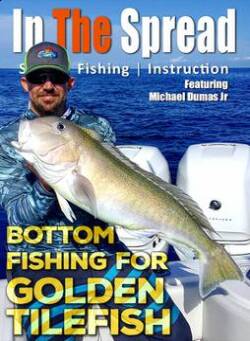
2019, Bottom Fishing for Golden Tilefish in South Florida
24:46 · Mike DumasDepth sounders reveal whether bottom at 600 to 800 feet contains the soft mud golden tilefish require for burrows or harder substrates holding no fish. Learn identifying proper bottom composition, what Gulf Stream current does to bait presentation at extreme depth, and how rigging must account for detecting subtle bites occurring hundreds of feet below the boat.
WATCH NOW -
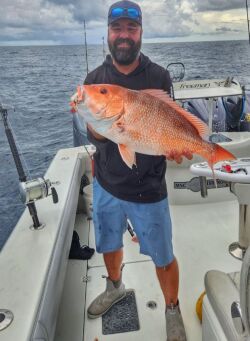
2026, Reading Bottom Structure to Predict Where Species Hold
Seth HorneWhy does a ledge hold scamp while flat rock holds red porgy? Survey data and In The Spread captains explain how bottom structure sorts reef fish through relief, hole size, current and edges, and how to pick the depth, bottom type and spot for your target species.
READ MORE -
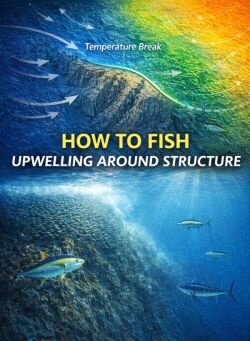
2026, How to Fish Upwelling Around Offshore Structure
Seth HorneWhen current hits offshore structure, cold nutrient-rich water rises toward the surface. That localized upwelling compresses bait and predators into defined zones. This article breaks down which structures create the strongest upwelling, how to read the signs before and during a trip, and how to position and present baits where predators actually feed.
READ MORE