
Wahoo are pelagic predators that hunt where temperature breaks meet structure, from the 100-fathom curve in the Gulf to Hawaiian FADs and Costa Rican seamounts. Catching them consistently requires matching technique to conditions. This article covers high-speed trolling, slow trolling with planers, live baiting on structure, sample rigs, regional patterns, and the tackle that handles their slicing teeth.
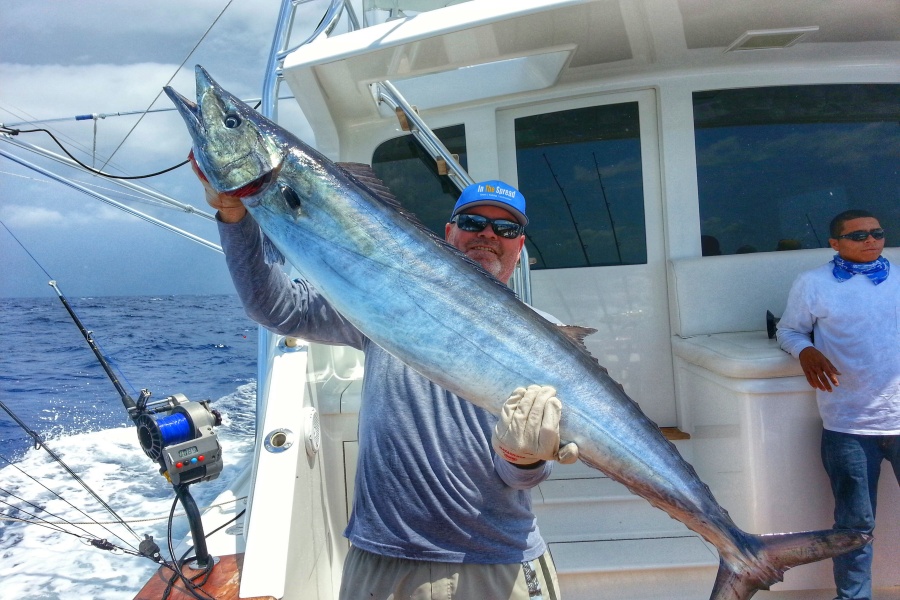
Catching Wahoo with Proven Tactics and Tackle
If you have ever hooked into a wahoo, you know exactly why these fish sit on every offshore bucket list. The strike is explosive, the run is blistering, and the fight is unrelenting. The difference between an occasional wahoo and consistent fish in the box comes down to four things: knowing where the fish position themselves through the water column, matching trolling speed to bait, rigging leaders that survive the strike, and reading water conditions before you ever set the spread.
This article covers the full picture. Biology and range, regional and seasonal patterns, structure and electronics, the four core techniques, sample rigs, the comparative case for lures versus live bait, tackle and terminal setup, fish handling and safety, and the common mistakes that cost more fish than tackle ever does. Each major section bridges to a focused In The Spread cluster article when you want deeper treatment.
- Water temperature: 64 to 82°F, with the most consistent action in the low to mid 70s
- Depth: commonly 90 to 350 feet, with most bites in the 100 to 300 foot band
- High-speed trolling: 12 to 15 knots with skirted lures, bullets, and 16 to 48 oz leads
- Slow trolling: 6 to 8 knots with rigged dead bait, 4 to 6 knots with live bait
- Leader: single-strand wire or stainless steel cable is the default; heavy fluorocarbon is an advanced exception
- Core techniques: high-speed trolling, slow trolling with planers, live baiting, downrigger fishing
What Is Wahoo
Wahoo (Acanthocybium solandri) are members of the mackerel family, but they have evolved for pure speed. Their streamlined torpedo-shaped bodies cut through water with minimal resistance, and they hit speeds approaching 60 mph in short bursts. Adult fish commonly run 4 to 6 feet, with exceptional fish over 7 feet and 100 pounds.
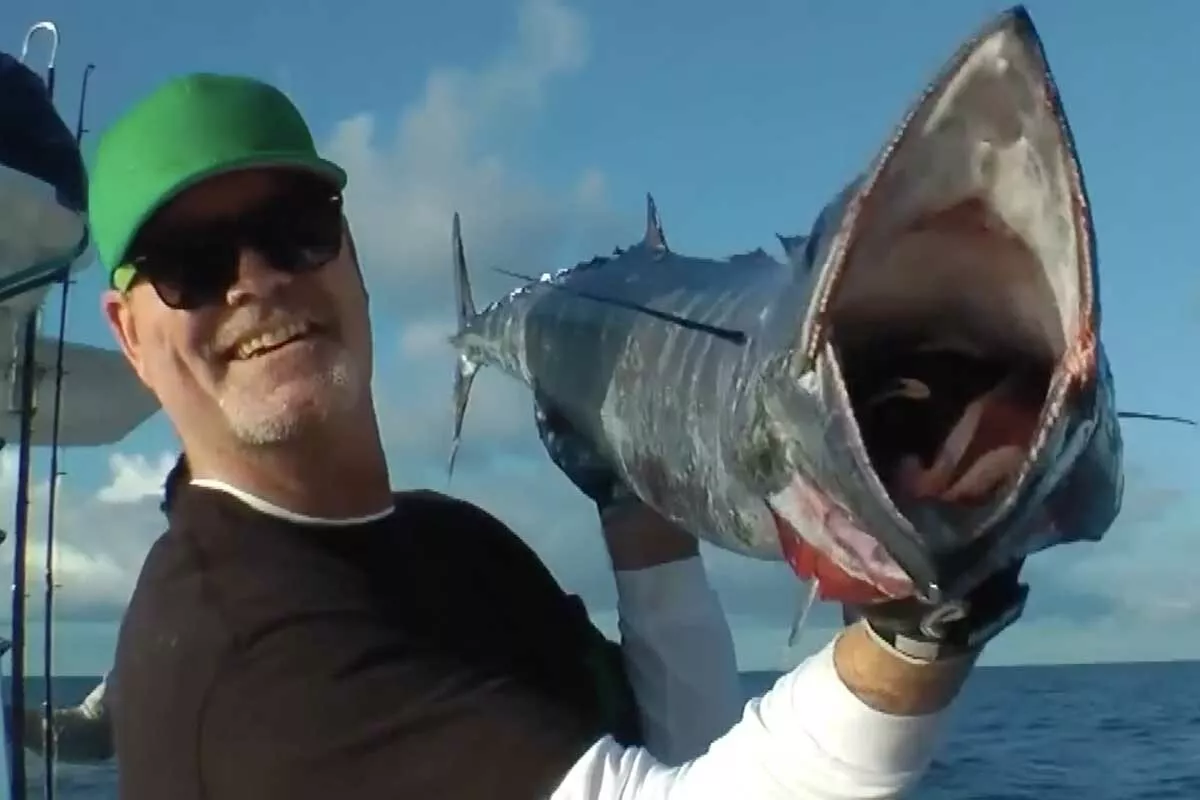
For deeper treatment of wahoo biology and the species profile, see Wahoo Profile: Speed, Range, and Fight Quality and Wahoo Fish: The Razor-Toothed Delicacy.
Where Wahoo Live and How They Behave
Wahoo inhabit tropical and subtropical waters across the Atlantic, Pacific, and Indian Oceans. They are present year-round in the Caribbean, Gulf of Mexico, Hawaii, and throughout Southeast Asia. In subtropical zones they migrate seasonally, following warm water and abundant forage.
Behavior matters as much as range. Wahoo are predominantly solitary hunters cruising temperature breaks and structure in search of their next meal. When conditions align and forage is concentrated, they hunt in small groups of 2 to 6 fish. They do not pack into tight schools the way tuna do, but multiple wahoo often patrol the same feature, which is why catching one fish frequently means others are nearby.
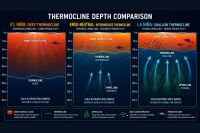
These predators spend nearly all their time in the epipelagic zone, the sunlit upper layer of ocean above the thermocline where photosynthesis happens and baitfish concentrate. They are sight feeders, which is why presentation depth and water clarity matter so much. They rarely leave their preferred depth band or structure line to investigate a poorly placed bait, which means presentation depth and position matter as much as the lure or bait itself.
The hunting style explains why structure matters. Wahoo are not random open-water cruisers. They patrol drop-offs, seamounts, oil platforms, wrecks, and FADs because these features create current breaks and concentrate baitfish. The relationship between structure, current, and temperature is the foundation of every productive wahoo trip.
Water Temperature and Wahoo Behavior
Water temperature strongly shapes where wahoo spend their time, though they will follow forage along productive current and structure lines into less-than-ideal conditions when bait is concentrated. The species spends roughly 90 percent of its time in water between 64 and 82°F, with the most consistent action coming in the low to mid 70s. Within that range, you will see the most aggressive strikes and the densest concentrations.
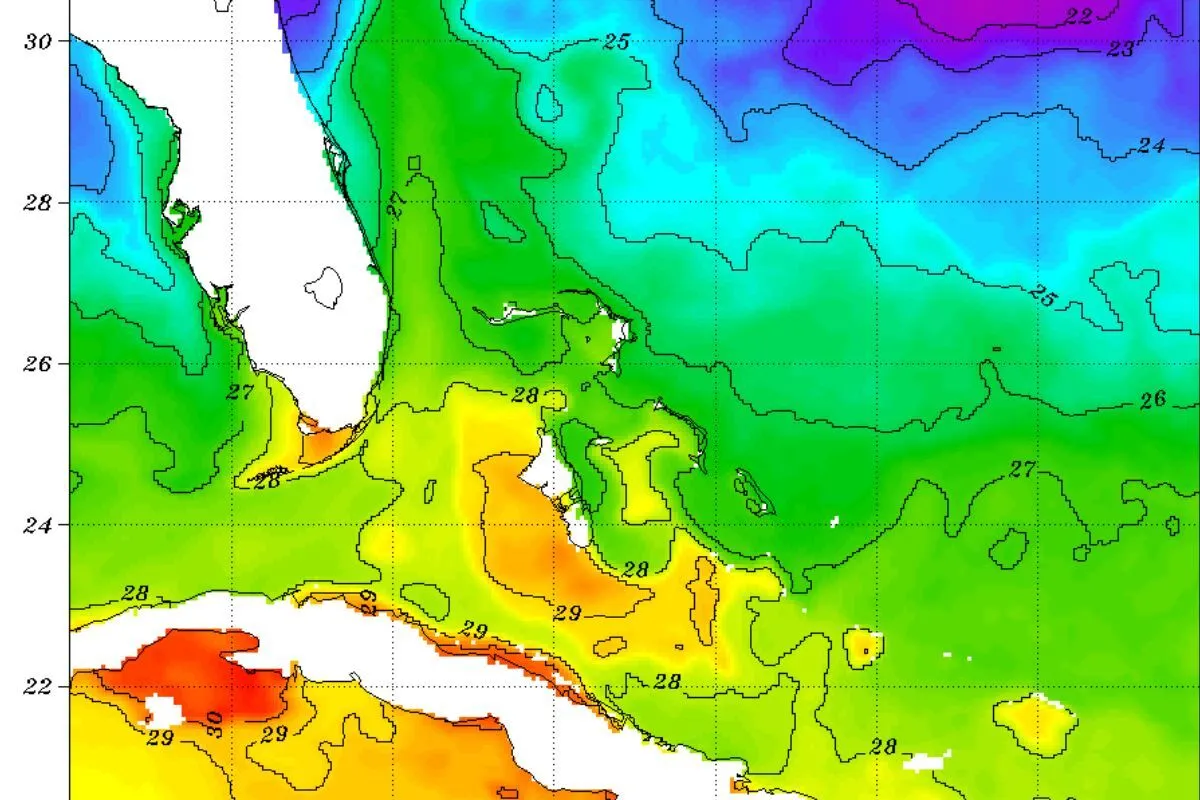
The most productive water of all is where a temperature break collides with structure. Picture the edge of the continental shelf where a 72°F break meets a steep drop-off. That intersection concentrates bait, and wahoo patrol it relentlessly. Before burning fuel offshore, study satellite data showing sea surface temperature, chlorophyll, and altimetry. Look for color changes around drop-offs, counter-rotating eddies pulling nutrient-rich water over structure, upwellings where current pushes over bottom contour changes, and sharp temperature gradients of 2 to 3 degrees over short distances.
Wahoo Fishing by Region
Wahoo fishing is a regional sport. Peak seasons, productive depths, and preferred techniques shift dramatically depending on where you fish. The summary below covers the major fisheries. For deeper regional treatment, see Wahoo Fishing in Florida: Expert Regional Tactics and Catching Fall Wahoo from North Carolina to Hawaii.
Gulf of Mexico. Peak season runs November through March, when surface temperatures drop into the 70 to 75°F range. Fish concentrate along the 100-fathom curve and around oil rigs, natural ledges, and hard bottom. The Cay Sal Bank, Flower Garden Banks, and deep water off Louisiana all produce strongly through winter.
Florida East Coast. November through March produces the best action as fish follow baitfish migrations south along the Gulf Stream edge. The fishery extends longer in South Florida where water temperatures stay stable. Eddies pulling Stream water across the shelf are the key feature to track on satellite maps.
Florida Keys. Year-round fishing with concentrated action during winter when fish stack up along reef edges and wrecks in 150 to 400 feet of water. The Keys benefit from proximity to deep water and strong current, which keeps the fishery active even when other regions slow down.
North Carolina. May through October brings consistent action when Gulf Stream eddies push warm water against the continental shelf. The 100-fathom line from Cape Hatteras south to Cape Lookout holds fish through summer, with peak catches in fall when baitfish schools thicken.
California. Wahoo show during warmer months, June through October, when offshore water climbs into the 73 to 78°F range. The fishery is more episodic than the Atlantic and Gulf, tied closely to El Niño cycles and warm-water intrusions from the south.
Hawaii. The most consistent year-round wahoo (ono) fishery in U.S. waters. Ocean temperatures fluctuate minimally, so fish relate to FADs, seamounts, and current edges in the 73 to 76°F zone almost every month. Summer peaks correspond with increased baitfish activity around structure.
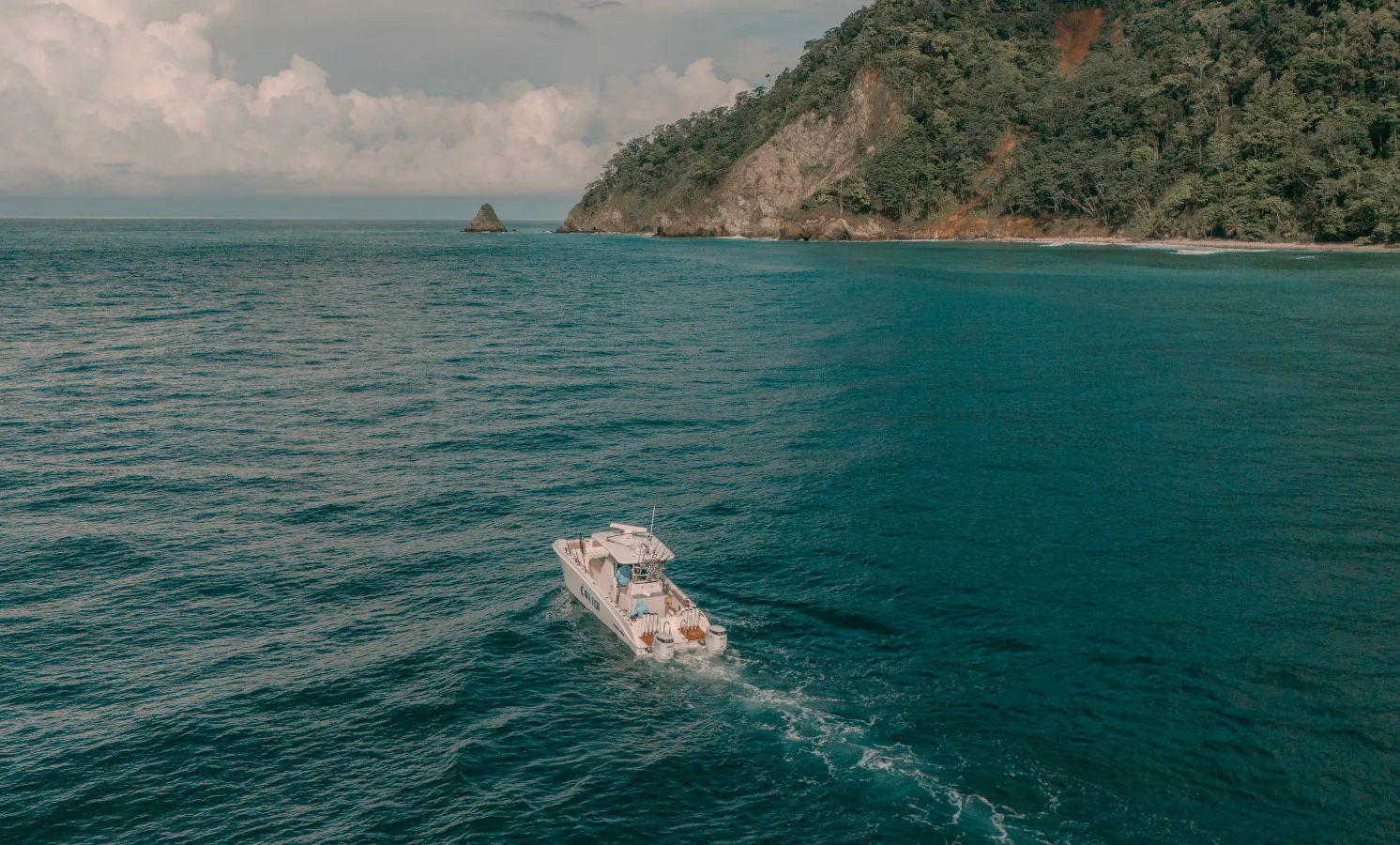
Central American Pacific. Costa Rica, Guatemala, and Panama produce strongest from November through May. The combination of FADs, deep blue water close to shore, and consistent thermal stability makes this region one of the most reliable wahoo fisheries in the world.
Other Global Hotspots
Beyond the major U.S. and Central American fisheries, wahoo support productive sport fishing in several other regions worth knowing about. West Africa, particularly Ghana, Côte d'Ivoire, and the wider Gulf of Guinea, holds strong wahoo populations along blue water that comes close to shore, with productive fishing tied to FADs and current edges. The Indian Ocean fisheries around Mauritius, Seychelles, and Madagascar produce year-round wahoo on FADs and reef edges, with peak action during the cooler months. Central Pacific atolls and Caribbean islands offer similar conditions wherever blue water, structure, and current converge. The principles are the same as everywhere else: temperature, structure, current, and bait.
When Are Wahoo Most Active? Time of Day and Moon Phase
Time of day matters as much as season for wahoo fishing. Early morning, from first light until roughly 10 a.m., is prime time. Wahoo feed aggressively in low light, and your spread reads more naturally before the sun is fully up. Late afternoon, from 3 p.m. until sunset, offers a second productive window. Midday slows down for surface presentations, but you can still catch fish if you go deeper with downriggers or wire line, or if you focus tightly on structure during a tidal change.
Finding Wahoo: Structure, Electronics and Surface Signs
Locating productive water is the half of wahoo fishing most anglers underestimate. The fish concentrate where conditions align, and your job is to read those conditions before deploying the spread.
Reading Structure for Wahoo
Structure for wahoo ranges from natural formations to man-made objects, and anything that concentrates sea life becomes a potential hunting ground.
Natural structure. Temperature breaks function as vertical barriers in open water, congregating baitfish along edges where warm and cool water collide. Work both sides of a break since wahoo often feed on one side while suspending on the other. Sargasso habitat, weed lines, and floating debris create surprisingly productive opportunities. Even a single floating board can hold triggerfish and small jacks, which makes it a wahoo magnet. Upwellings deserve special attention. When current pushes over bottom structure, cooler nutrient-rich water rises to the surface, bringing plankton and baitfish with it. Altimetry charts show these zones as differences in sea height, and the edges of upwellings are where bait stacks up.
Interpreting Sonar and Electronics
Quality electronics have changed how anglers locate wahoo, but understanding what you are seeing separates good days from exceptional ones. When prospecting, look for several specific indicators:
- Baitfish schools appear as dense clouds or concentrations, usually in the upper 100 feet
- Wahoo show up as individual strong marks or small groups, typically just below or beside the bait
- Temperature breaks render clearly on quality units showing surface temperature overlay
- Sharp drop-offs, seamounts, and offshore banks create the bottom contour changes that drive upwellings
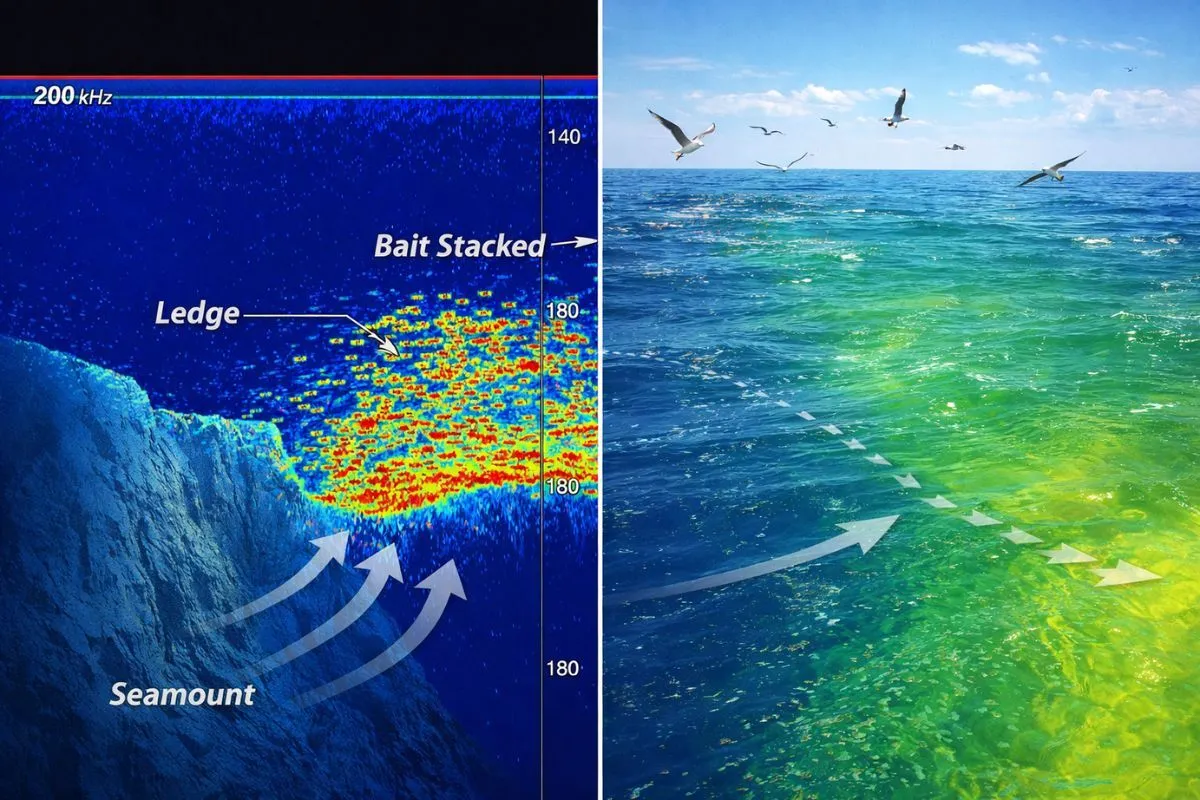
Run both traditional sonar and down-imaging when possible. The combination shows you both the bait column and the structure, and the difference between random open water and a productive feeding station is usually obvious within minutes.
Surface Indicators That Concentrate Wahoo
Surface signs concentrate fish more reliably than satellite data alone, because they tell you where the bait is right now. Bird activity, especially diving terns or frigatebirds, often marks baitfish schools with predators below. Floating debris, weed lines, and color changes all hold bait. Current rips, where two water masses converge and create visible surface texture, are some of the most productive features in offshore water.
Current flow direction matters as much as the structure itself. Wahoo position themselves to ambush baitfish swept along by current. The upcurrent side of structure typically holds more fish, since this is where bait concentrates as it flows past. When you start a troll, work the upcurrent edge first.
Catching Wahoo: Proven Techniques
Wahoo fishing splits cleanly into two phases: searching for fish and exploiting them once you find concentration. High-speed trolling is the search phase. Slow trolling with planers, live baiting on structure, and downrigger fishing are exploit techniques. Most successful trips use both. Cover water with high-speed lures until you find active fish or marks, then throttle down and refine.
Driving the Edge: Boat Positioning Across All Techniques
Boat positioning is an exact science when targeting wahoo, regardless of which technique you choose. Lures and baits need to stay in the productive depth zone, and edges rarely run straight. The transition from shallow to deep along reef edges and shelf breaks happens fast. If you are not weaving along the edge, working the contour line religiously, you are not maximizing your potential.
The critical factor is understanding where your lures are running, not just the depth under your boat. As you work the edge, your presentations move from deep to shallow and back depending on your position. Watching speed-over-ground on a quality GPS, rather than trusting the boat's speedometer, is the single biggest accuracy upgrade most anglers can make. In following seas, apparent speed differs significantly from actual water speed, which shifts where your lures are running and how they swim.
High-Speed Trolling for Wahoo
High-speed trolling is the most popular wahoo search technique for one simple reason: it covers water. When wahoo are scattered or you are searching for concentrations, nothing beats hauling through productive areas at 12 to 15 knots. Some captains push to 18 to 20 knots in tournament-style searching, but 12 to 15 is the working range for most situations.
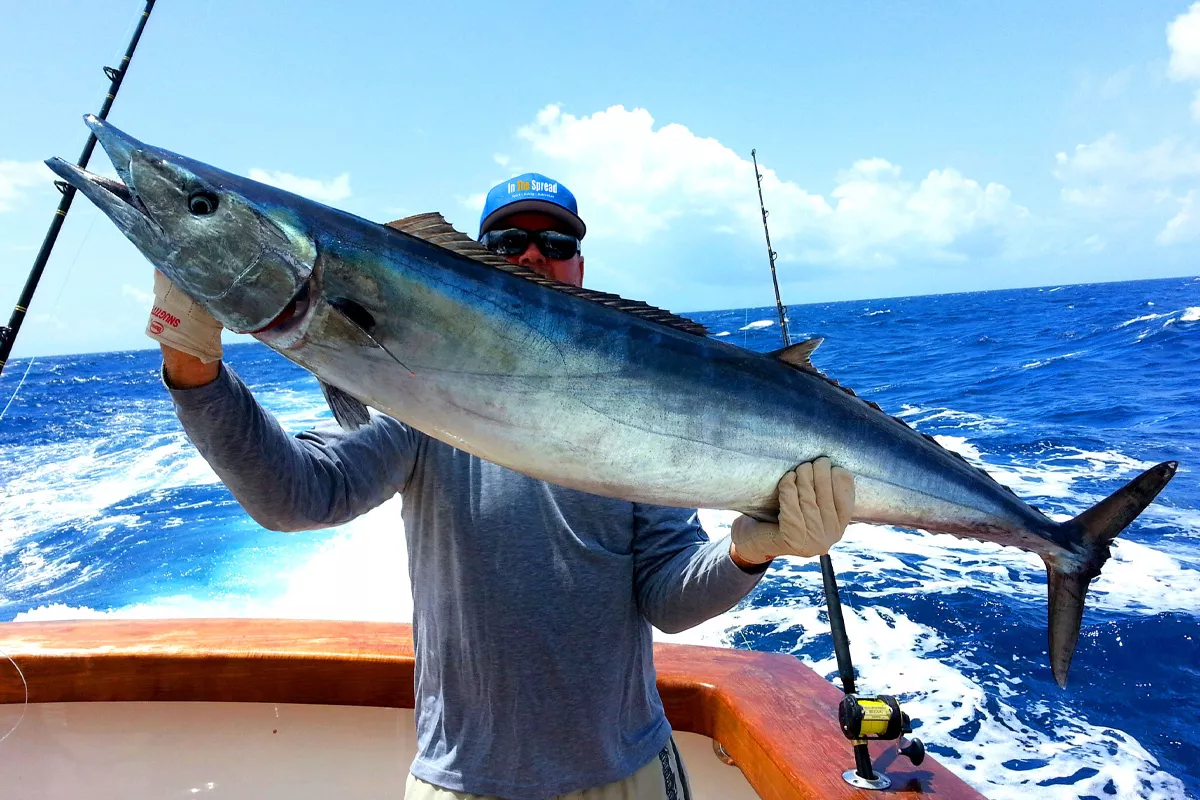
The major benefit is that you cover exponentially more water than you can with slower presentations. Faster speeds also help you avoid barracuda and other species that plague slow-troll spreads. The challenge is that lures tend to swim toward the surface at high speeds. Wahoo are sight feeders that prefer attacking prey from below, so if your lures are bouncing in the prop wash you will get fewer strikes. The solution is heavily weighted rigs.
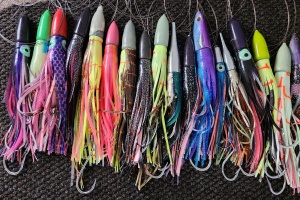
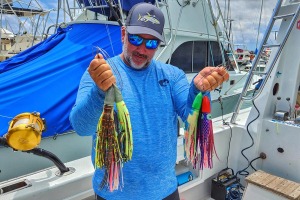
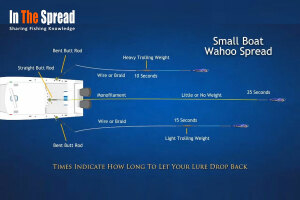
A typical high-speed spread runs four to five lines featuring bullet and jet-shaped lures. Lead weight does the depth work, not the lure head. Use 16 to 48 ounce trolling leads (plus the 3 to 6 ounce lure head) ahead of your lures, or run heavy wire line and planers, to reach the 150 to 250 foot zone where wahoo suspend during midday. Lighter 1 to 2 ounce surface lures ride 75 to 150 feet behind the boat in the shotgun and long-rigger positions, presenting in clean water at the top of the column.
Color selection matters less than maintaining proper action and consistent speed, but the proven combinations are pink and white, blue and white, black and purple, and chartreuse mixes. What kills strikes is inconsistent speed, which causes lures to rise, fall, or lose tracking. Quality autopilots help maintain the precise 12 to 15 knot range that keeps lures in the strike zone.
For technique-specific guidance, see the high-speed wahoo trolling rig breakdown and the best wahoo fishing lures for trolling article.
Slow Trolling for Wahoo
Slow trolling is the exploit technique for fish suspending below the surface. When wahoo are holding deep with bait schools, slow trolling with planers becomes highly effective. The technique trades coverage area for depth precision and natural bait action.
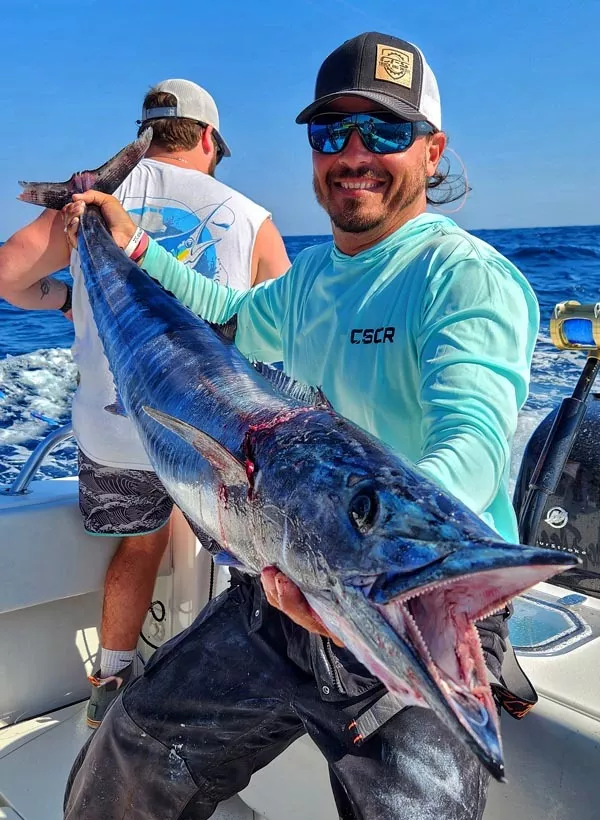
Trolling speeds run 6 to 8 knots when pulling rigged ballyhoo, mullet, and dead baits. Drop to 4 to 6 knots when pulling live bait, since live offerings need to swim naturally without spinning or washing out. The slower pace takes full advantage of both the scent trail and the natural swimming action of fresh baitfish.
This technique is more labor intensive than high-speed trolling. Baits must be checked frequently because wahoo will cut them off with those serrated teeth. Running hooks without baits means you are out of the game. Slow trolling is also more technical, requiring attention to detail and constant adjustments.
A typical slow-troll spread includes one to two planer rods, a flat line if running only one planer, two short rigger rods, two long rigger rods, and often a way-back shotgun lure. Planer size depends on water temperature and target depth. Hotter water pushes wahoo deeper and requires heavier planers.
- No. 8 planer: the standard size for moderate water temperatures and mid-column suspending fish, with approximate working depths in the 30 to 60 foot range depending on speed and line diameter
- No. 16 planer: the heavier option for warmer water that pushes fish deeper, with approximate working depths in the 50 to 100 foot range
For maximum depth, wire line eliminates the need for planers entirely. Monel or stainless wire sinks naturally, allowing lures to reach 200 plus feet at trolling speed. Mark wire at 50-foot intervals with tape or paint to track depth.
Standard slow-troll positioning looks something like this: planer at 75 feet to run below prop wash, flat line at 100 feet, left short rigger at 150 feet, right short rigger at 200 feet, left long rigger at 250 feet, right long rigger at 300 feet, and the shotgun lure 350 feet or more back. These numbers are starting points, not gospel. Experiment with what works for your boat, focusing on getting all presentations into clean water away from the prop wash.
Live Baiting for Wahoo
Live baiting is the technique you turn to when trolling is not producing or when you are marking fish on structure that will not commit to your spread. It is more targeted than trolling, requires patience, and produces explosive results when conditions align.
The concept is simple: present a live baitfish to wahoo in their strike zone, either while drifting or sitting on structure. This works especially well around wrecks, FADs, and seamounts where wahoo are holding but not actively hunting.
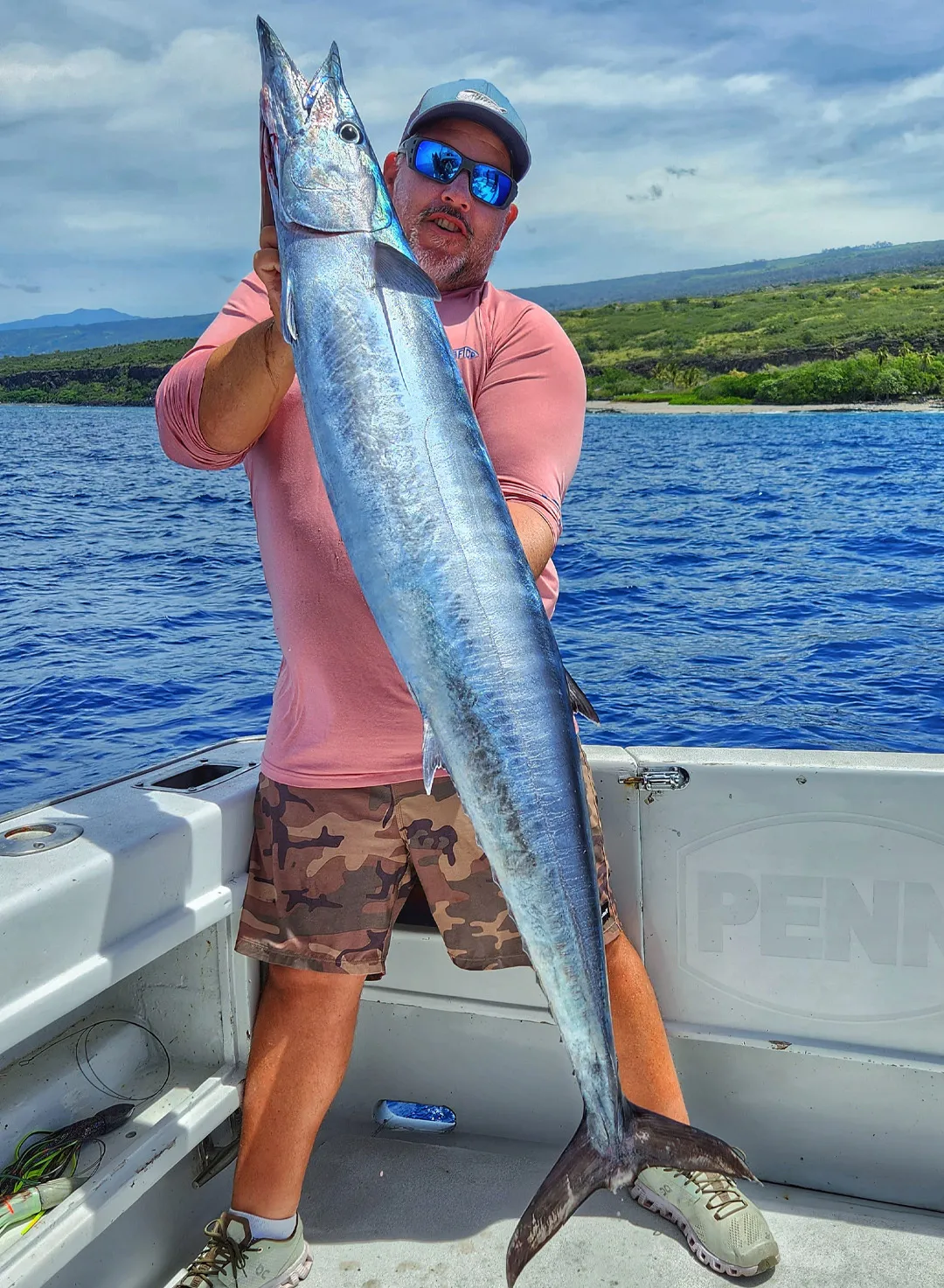
Rigging is critical. Use a nose-hook rig for smaller baits under 8 inches: run a 7/0 to 9/0 hook through both nostrils or through the eye sockets. This lets the bait swim naturally while keeping it secure. For larger baits, use a bridle rig with a small rubber band or light mono loop. Position the hook near the dorsal fin so the bait hangs horizontally.
Leader length runs 10 to 20 feet of single-strand wire or 100 to 130 pound fluorocarbon. Longer leaders work better when wahoo are cautious or when fishing very clear water. Attach the leader to 50 to 80 pound braid or monofilament main line through a quality dark-colored swivel.
When live baiting over structure, position the boat upcurrent and deploy baits at different depths using kites, floats, or weighted rigs. Let the current sweep your baits back over the structure. This presents them naturally, as if they are baitfish drifting with the flow.
Using Downriggers for Wahoo
Sometimes wahoo suspend well beyond planer reach and refuse to move up through the water column. When fish are locked at extreme depths, downriggers become the only effective presentation method. With downriggers, you can run simple but deadly lures like Drone spoons directly past fish at any depth.
Downriggers require attentive management. When you hook up, you need to get the ball up and out of the way fast, or you risk a tangled disaster. One useful tip: replace standard downrigger cable with 200-pound braid line to prevent the humming that accompanies slow trolling on cable.
Watch These Wahoo Techniques in Action
Reading through the techniques is the first layer. Watching them executed by working captains in their home waters is the second. The In The Spread wahoo library covers each of the four techniques above with on-water instruction from captains who run them daily, plus the rigging, lure selection, and boat positioning details that separate working knowledge from practical execution.
Comprehensive Wahoo Fishing Courses
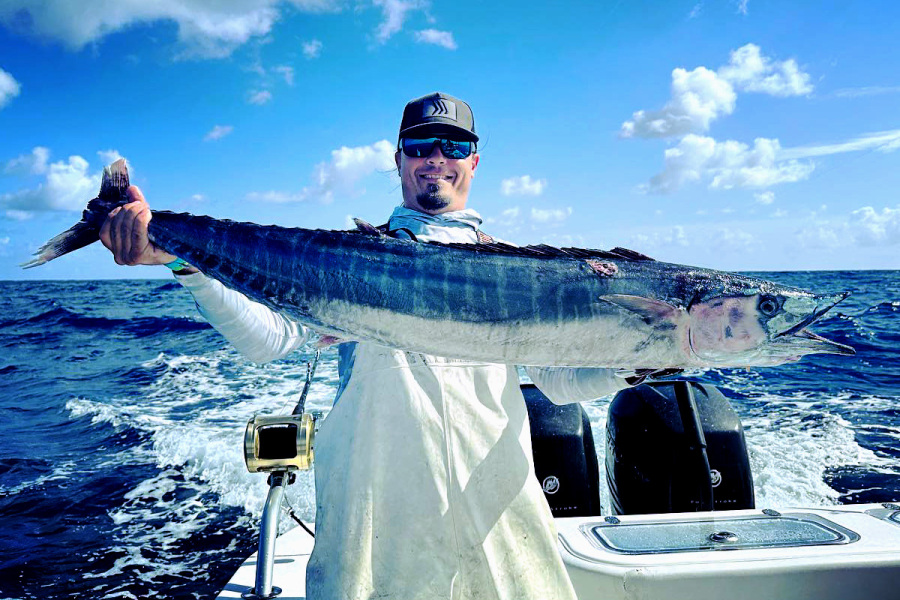
Each course shows the technique in real conditions: the rigging, the spread setup, the boat positioning, the speed adjustments, and the strike response. Subscriber access opens the full library.
Sample Wahoo Rigs
Two canonical rigs that handle the bulk of wahoo work. These are starting templates. Adjust components based on water clarity, fish pressure, and target depth.
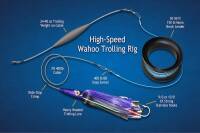
Sample High-Speed Trolling Rig
This rig is for searching at 12 to 15 knots with bullet or jet-head lures.
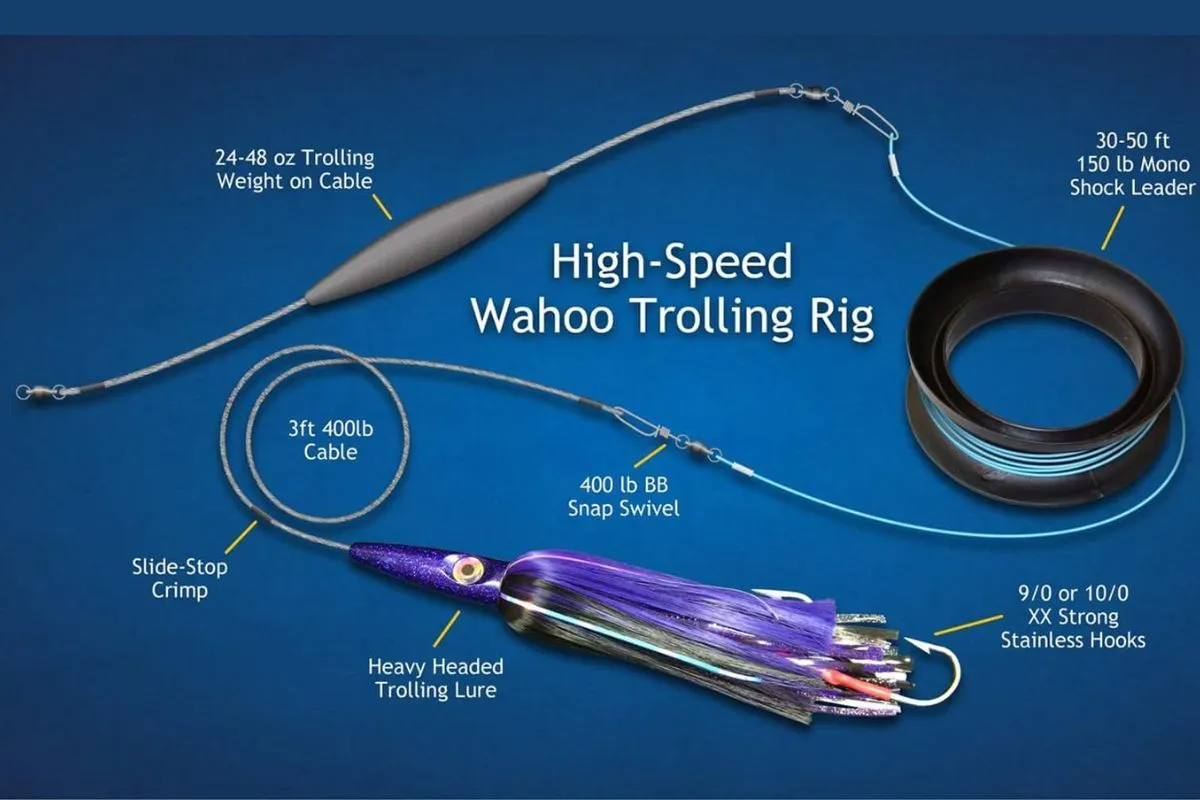
- Lure: 8 to 12 inch bullet or jet-head with skirt; bullets can be rigged with ballyhoo inside for added scent
- Trolling lead: 16 to 32 ounces ahead of the lure to keep the presentation in clean water below the prop wash; heavier 32 to 48 ounce leads or wire line plus a planer for deeper presentations
- Wire bite leader: 3 to 4 feet of single-strand coffee-colored wire, 60 to 100 pound test depending on lure size and lead weight or 3 feet of 400 lb cable
- Shock leader: 8 to 12 feet, or more depending on preference, of 130 to 200 pound monofilament between the wire and the main line, to absorb the violent shock of a strike at speed
- Hardware: quality black or coffee-colored barrel swivel between the wire and shock leader; double-crimped connections throughout
- Hook: 7/0 to 9/0 J-hook or stinger rig positioned to ride alongside or just behind the skirt
- Main line: 50 to 80 pound braid on a 30 to 50 pound class conventional reel
Sample Planer and Ballyhoo Rig
This rig is for slow trolling at 6 to 8 knots when fish are suspending below the surface.
- Planer: No. 8 for moderate temps and mid-column fish, No. 16 for warmer water and deeper fish
- Planer leader: 30 to 50 feet of 200 to 300 pound monofilament from the planer release to a heavy-duty barrel swivel
- Wire bite leader: 8 to 12 feet of single-strand coffee-colored wire, 60 to 100 pound test, between the swivel and the bait
- Bait: horse ballyhoo or large mullet rigged with a sea witch or chin weight to keep the bait swimming straight
- Hook: 7/0 to 9/0 J-hook through the bait with a wire wrap or pin rig to secure the rigging
- Connection: double-crimp the wire-to-hook connection and the wire-to-swivel connection
Fight Management and Clearing the Spread
When a wahoo strikes, immediate decisions determine whether you put fish in the box. Clear the spread fast. Pull all teaser lines, bring in any lines that might tangle the running fish, and keep one short rigger or shotgun out only if your crew can manage a second hookup. Drop boat speed but maintain enough forward motion to keep pressure on the fish and prevent slack. Wahoo run hard initially but tire faster than tuna of similar size, so steady rod pressure and patient pumping wins.
Lures vs. Live Bait: Choosing the Right Approach
The lures-versus-bait debate runs deep in the wahoo community, and the honest answer is that both have their place. Choosing correctly between them on any given day puts more fish in the box.
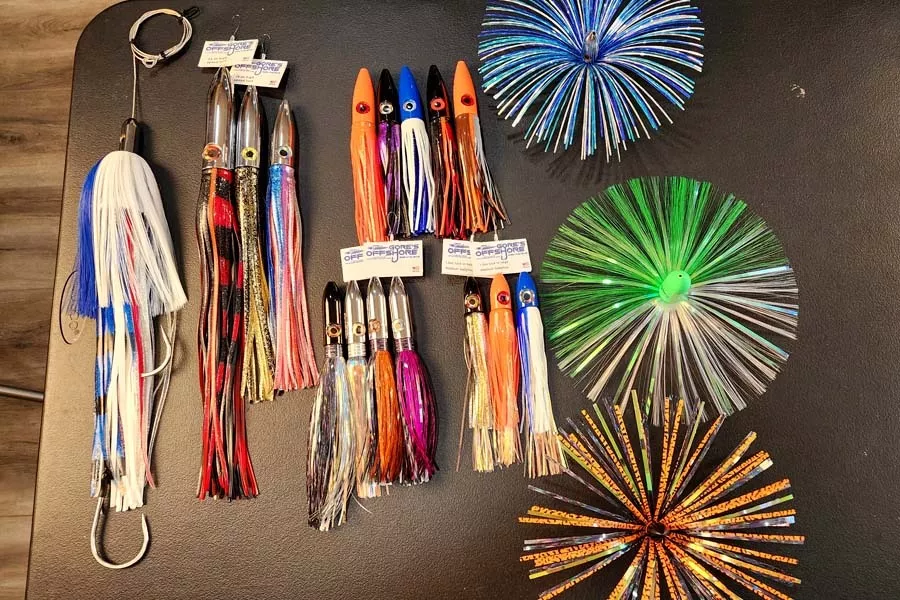
Use live bait when wahoo are finicky, holding tight on structure, or in very clear water where they have time to inspect presentations. The natural scent, action, and profile of a live goggle-eye or blue runner triggers strikes from cautious fish that ignore artificial lures. Live bait excels during slow periods and around known structure where the fish are present but not actively chasing. The downside is maintenance: you have to catch baits, keep them alive, and handle their relative fragility.
The combination approach. Many of the most successful captains run both. Start with high-speed lures to cover water and locate fish. Once you find active wahoo or mark concentrations on the electronics, throttle back and switch to slow trolling with rigged ballyhoo, or anchor up and live-bait the structure. This adaptive approach captures the searching efficiency of one technique and the precision of the other.
For technique-specific bait and lure treatment, see Choosing the Best Bait for Wahoo Fishing, Best Wahoo Baits, and Fishing Stickbaits for Pelagic Heavyweights.
Wahoo Tackle and Terminal Setup
While technique and location matter most, the right equipment makes everything easier. Wahoo are too fast and powerful to forgive inadequate gear.
Rod and reel. For trolling, use 30 to 50 pound class conventional reels mounted on 6 to 7 foot rods with roller guides. Two-speed reels give you options for both the initial run and the grinding fight that follows. Spool with 50 to 80 pound braided line, which offers superior strength-to-diameter ratio and lets you run longer leaders while maintaining sensitivity for detecting strikes at distance. Some captains prefer mono with a braid backing for the extra shock absorption mono provides at high trolling speeds, particularly in tournament settings where mono is required by class rules.
Drag settings. A general starting point for wahoo is roughly 25 to 30 percent of line class at strike (about 12 to 15 pounds of drag on 50 pound line) for high-speed trolling, with the ability to bump to 33 percent or more during the fight. Calibrate with a scale rather than estimating, especially for tournament fishing. Slow trolling can run lighter drags at strike since you have more time to set hooks and the fish loads the rod gradually.
Leaders: wire is the default, fluorocarbon is the exception. Wire is the safer choice for almost every wahoo presentation. Single-strand coffee-colored wire in 40 to 100 pound test handles the bulk of wahoo work. Heavy fluorocarbon (90 to 130 pound) is an advanced alternative that some captains run in very clear water or on heavily pressured fish, accepting a higher cutoff rate in exchange for more bites. If you are starting out or fishing unfamiliar water, run wire. For the full leader-system breakdown including titanium, cable, and casting setups, see Building Wahoo Leader Systems for Trolling and Bait.
Terminal hardware. Quality dark-colored swivels rated for your line class. Black or coffee-colored hardware is less visible than shiny chrome. Crimps should be sized properly for the wire or leader material, and double-crimp every connection for security. Hook sizes of 7/0 to 10/0 cover most applications. J-hooks and circle hooks both work, though many experienced captains prefer J-hooks for the positive hookset wahoo demand.
Safety and Fish Handling
Wahoo deserve respect on the deck as much as in the water. The same teeth that slice leaders slice flesh, and a green wahoo on the deck is dangerous. A few rules separate clean trips from emergency room trips.
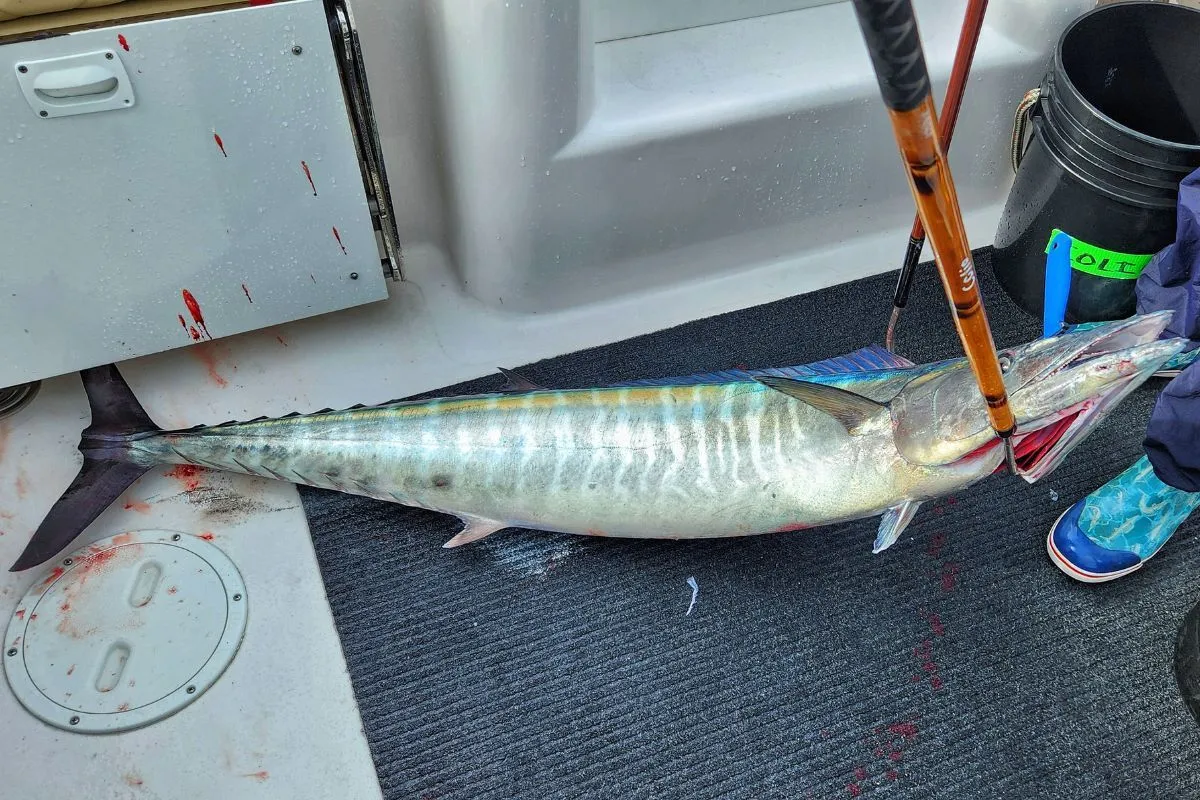
- Never put hands or feet near the head of a green fish. Wahoo continue snapping reflexively long after they appear dead. Clear the area before bringing the fish over the rail.
- Use a quality flying gaff or stout J-gaff with reach. Place the gaff behind the dorsal fin in the shoulder, not the head. Head shots tear meat and create dangerous handling angles.
- Bleed and ice immediately for meat quality. Cut both gill arches as soon as the fish is on the deck and place the fish in a slurry of ice and salt water. Wahoo flesh is among the best on the ocean, and meat quality drops fast in warm fish.
- Manage hooks carefully during de-hooking. Multiple-hook stinger rigs and wire bite leaders create tangles that can drive a free hook into a hand. Cut the leader near the hook and remove with pliers rather than working the hook out by hand if the fish is still active.
Common Wahoo Fishing Mistakes to Avoid
After years on the water and conversations with successful captains across multiple fisheries, the same mistakes come up repeatedly. Avoiding these pitfalls produces more fish than any tackle upgrade ever will.
Running the same speed all day. Water temperature, sea state, and fish activity all influence ideal trolling speed. Start at your baseline (12 to 15 knots for high-speed lures, 6 to 8 for natural baits, 4 to 6 for live bait), then adjust based on results. If you are not getting strikes, change speed before you change lures. Speed adjustments cost nothing and often produce immediate results.
Using inadequate leader material. Those teeth are not negotiable. Even occasional cutoffs mean you are losing far more fish than you are catching. Upgrade to proper wire and stay there. The leader tax is worth paying every time.
Ignoring structure. While wahoo can be anywhere, consistent success comes from focusing on areas where the fish concentrate. Random open-water trolling occasionally produces, but targeting drop-offs, seamounts, FADs, and temperature breaks catches more fish per hour. Structure is the multiplier.
Poor hookset technique. When a wahoo strikes at speed, resist the urge to immediately yank back on the rod. Let the fish load the rod, then sweep firmly to drive the hook home. Wahoo often strike multiple times, and premature hooksets pull the bait away before the fish is properly hooked.
Wahoo Fishing FAQ
What is the best time of year to catch wahoo?
Wahoo are available year-round in tropical waters, with peak action in subtropical regions during cooler months when water temperatures sit in the low to mid 70s. Gulf of Mexico and western Atlantic peak November through March. Florida east coast produces best December through April. Hawaii runs strongest May through September. Central American Pacific peaks November through May.
What is the best bait for wahoo fishing?
Live ballyhoo, goggle-eyes, blue runners, and small bonitos are the top live-bait choices. For artificial lures, skirted trolling lures and wahoo bullets in pink and white, blue and white, or black and purple combinations consistently produce. The right choice depends on conditions: lures cover water faster, while live bait triggers strikes from cautious fish on structure.
How fast should you troll for wahoo?
High-speed trolling for wahoo runs 12 to 15 knots as the working range, with some captains pushing to 18 to 20 knots in tournament searching. Slow trolling runs 6 to 8 knots when pulling rigged dead baits and 4 to 6 knots with live bait. Speed consistency matters more than the exact number, because fluctuations cause lures to lose action.
What depth do wahoo swim at?
Wahoo commonly hold between 90 and 350 feet, with most bites concentrated in the 100 to 300 foot band during daylight. Fish rise to 50 to 100 feet during dawn and dusk feeding windows. Always key off bait position and thermocline depth rather than fixed numbers, since thermocline depth shifts seasonally and by region.
Do you need a wire leader for wahoo?
Yes, wire is the default leader for wahoo because their serrated teeth slice through lighter materials instantly. Single-strand coffee-colored wire in 40 to 100 pound test works for most applications. Heavy fluorocarbon (90 to 130 pound) is an advanced alternative that some captains run in clear water or on pressured fish, but it produces more cutoffs than wire and is best treated as an exception rather than a starting point.
What is the difference between wahoo and kingfish?
Wahoo are larger, more streamlined, and significantly faster than king mackerel. Wahoo grow to 6 feet and over 100 pounds, with vertical bars on the flanks and a more prominent first dorsal fin. King mackerel have a more robust body, spotted sides, and a lateral line that drops sharply. Both are members of the mackerel family, but wahoo teeth are shorter and more closely packed than king mackerel's.
Do wahoo travel in schools?
Wahoo can travel in small groups of 2 to 6 fish but are more often solitary hunters or found in loose aggregations around structure. Unlike tuna, which pack into tight schools, wahoo spread out while hunting. Multiple wahoo often position themselves around the same feature, which is why catching one fish frequently means others are nearby.
What size wahoo should you expect to catch?
Most wahoo caught by recreational anglers run 25 to 70 pounds, with fish over 80 pounds considered exceptional in most fisheries. The world record exceeded 180 pounds, though fish over 100 pounds are rare. A 40-pound wahoo provides a spectacular fight and is common in productive areas.
What line should I use for wahoo fishing?
Use 50 to 80 pound braided main line for most wahoo applications. Braid's thin diameter lets you spool more line and provides excellent sensitivity for detecting strikes at distance. Always run wire leader between the main line and terminal tackle. Some tournament settings require monofilament main line, in which case 30 to 50 pound mono with a heavier shock leader is the standard.
Can you target wahoo from shore?
Shore-based wahoo fishing is extremely limited because the species inhabits offshore waters along the continental shelf, around structure in 20 to 100 fathoms. In rare locations where deep water approaches shore, such as certain Hawaiian islands or Caribbean spots, shore fishing becomes possible. For most anglers, wahoo are a boat fishery.
What time of day are wahoo most active?
Early morning from first light until 10 a.m. produces the most consistent action. Late afternoon from 3 p.m. until sunset offers a second prime window. Midday slows down for surface presentations, but downrigger and wire-line fishing can produce throughout the day. Tidal changes and full moon periods extend the productive windows significantly.
Take Your Wahoo Fishing Further
The beauty of wahoo fishing lies in that explosive moment when everything comes together. You have studied the satellite data, positioned the boat along a temperature break near structure, set the spread at the right depth, and a reel suddenly erupts. That is when the planning, the technique, the searching all pay off in one heart-stopping strike.
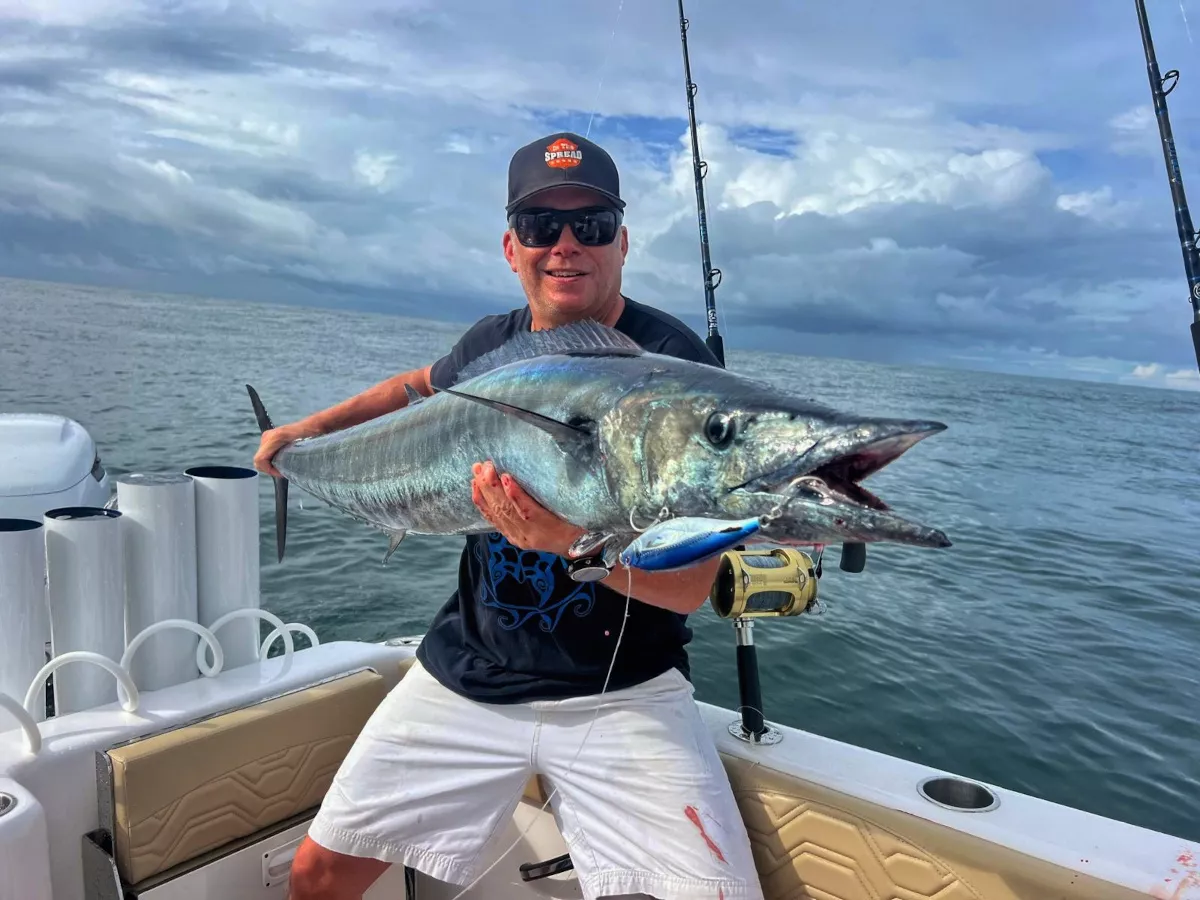
Whether you prefer the water-covering efficiency of high-speed trolling, the technical challenge of slow trolling with planers, the precision of live baiting on structure, or the depth control of downrigger fishing, success comes down to understanding where wahoo live and how they hunt. Understand the relationship between water temperature, structure, current, and bait, and you will connect with one of the ocean's most spectacular gamefish far more consistently.
For working captains and serious anglers who want to see these techniques applied in real fishing situations, In The Spread maintains the most comprehensive wahoo video library in the sport. The captains who teach wahoo fishing are RJ Boyle on high-speed trolling tournament tactics in South Florida, Mike Dupree on slow trolling with planers in North Carolina, and Shawn Rotella on live bait slow trolling and bullet rigging in Kona. and additional captains covering specific regional fisheries and tackle systems.
Login
to leave a review.
User Reviews
There are no reviews yet.
Complete Dredge Pulley Setup Guide
Saltwater
12.28.2020
High Speed Wahoo Trolling Rig
Saltwater
09.08.2018
Fishing Light Tackle for Yellowfin Tuna
Saltwater
09.08.2018
0