
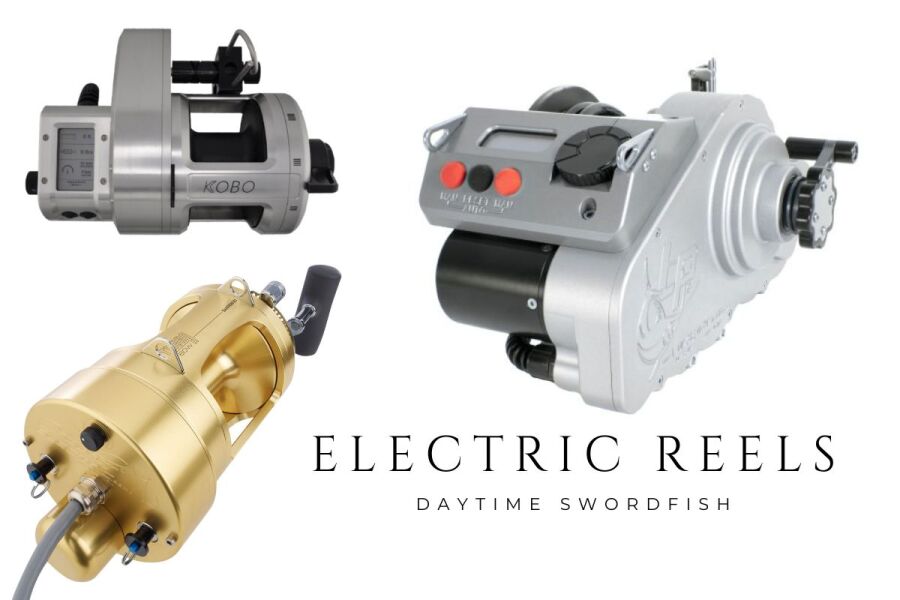
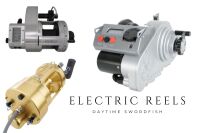
The daytime sword fishery runs on electric reels. But the category spans from casual deep-drop tools to purpose-built commercial machines. Understanding where each option fits, and where each one fails, is the difference between a sustainable sword program and an expensive lesson.
Featured
Choosing an Electric Reel for Daytime Swordfishing
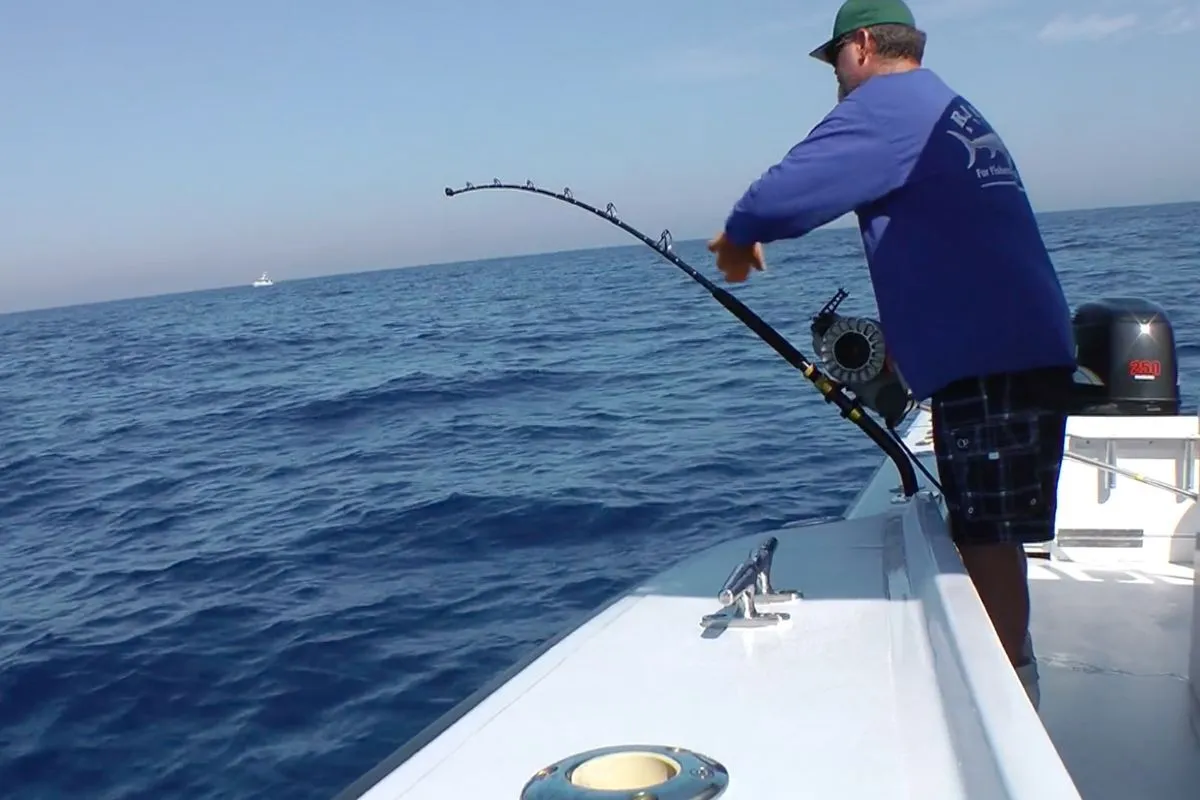
Picture the scenario. You drop a bait to 1,500 feet. The sun is high, the current is running, and your weight is 12 pounds. You get a bite, the fish drops the bait or you pull the hook. Now you have to check your bait. If you are hand-cranking that rig back to the surface, you are looking at 30 to 40 minutes of grinding before you can reset. Do that three or four times in a day and you will be physically spent before the best bite window even opens. This is not a hypothetical. It was the daily reality of daytime swordfishing before electric reels changed the calculus entirely.
Why Did Electric Reels Change Daytime Swordfishing?
Before electric reels became accessible to recreational anglers, daytime swordfishing was largely a one-rod operation. Retrieving a rig from 1,500 feet with double-digit lead weights required full physical commitment. Running a second rod while fighting or repositioning was not realistic for most crews.
Electric reels compressed retrieve times from 30 to 40 minutes down to 7 or 8 minutes at operating speed. That single change made multi-rod setups practical, allowed captains to move between spots efficiently, and extended the productive hours of a trip. The fish are no less difficult to find and no less dangerous on the leader. The electric reel simply removed the physical bottleneck that had limited how aggressively anglers could work the water column and the bottom structure.
What Makes a Reel Qualified for Daytime Swordfishing?
The technical thresholds for a legitimate sword reel are not arbitrary. Each spec corresponds to a specific demand the fishery places on the gear.
- Line capacity: 6,000 or more feet of 80-pound braid. Swords live at 1,500 to 2,500 feet during daylight hours. Add a wind-on leader, extra line for current drift, and margin for a running fish, and a reel that maxes out at 3,000 feet of braid is not sufficient.
- Drag pressure: Minimum 60 pounds of functional drag, ideally 100 pounds. Fighting drag on a swordfish is one thing. The drag required to hold position against a strong current with 10 to 12 pounds of lead is another. The reel needs to handle both.
- Retrieval speed: 300 feet per minute or faster at operating voltage. Speed matters for moving spots efficiently. At 12V, many reels fall short. At 24V, the best purpose-built options reach 550 to 850 FPM.
- Motor type: Brushless DC motors are preferred. They run cooler, produce less electrical noise, and hold up better across the long retrieves and extended fights that swordfishing demands.
- Voltage compatibility: 12V is standard on most center consoles. 24V delivers meaningfully more speed and pulling force. Knowing your boat platform narrows the field quickly.
One additional question worth settling before purchase: does the reel have a manual handle? Purpose-built electric sword reels like the Lindgren-Pitman series do not. Hooker Electric conversions retain the base reel's handle and allow detachable motor configurations. For captains who ever fight a sword on stand-up gear or need manual backup, this matters.
Which Electric Reels Are Purpose-Built for Swords?
Lindgren-Pitman LP-SV-1200
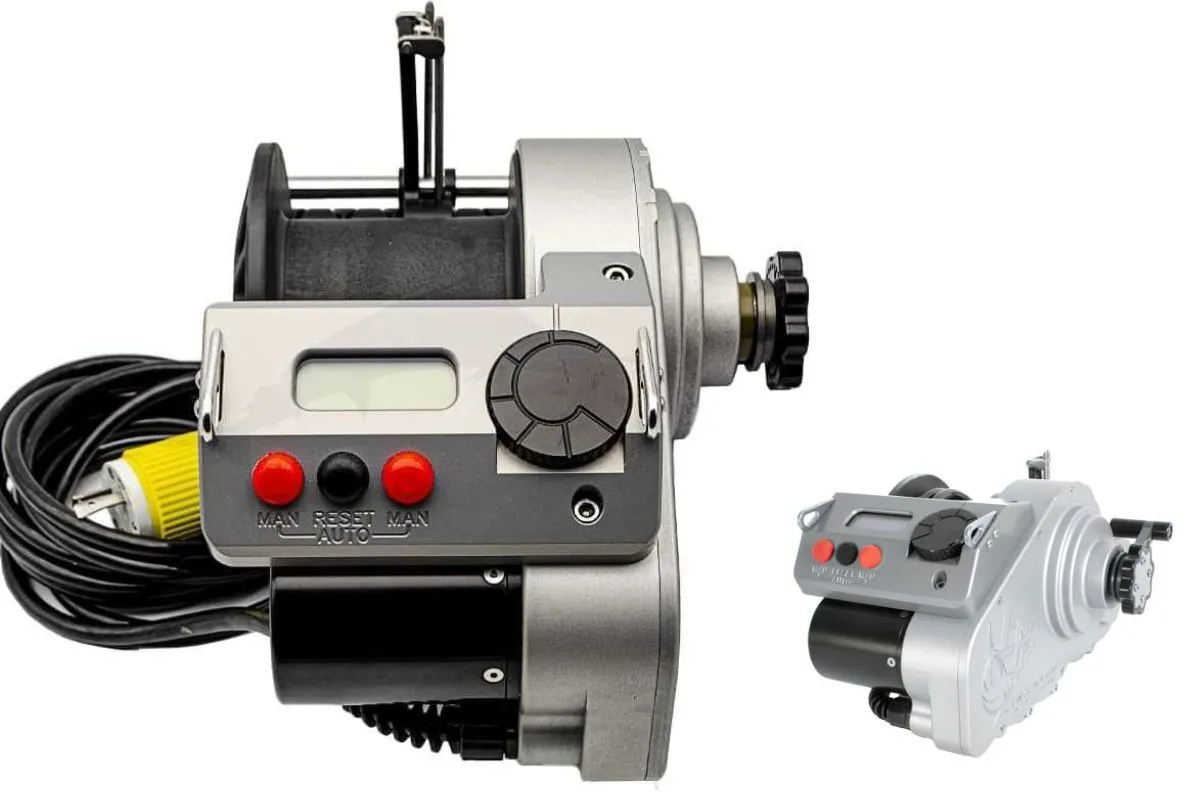
The LP-SV-1200 is the institutional standard for professional daytime sword captains. Lindgren-Pitman has been manufacturing electric reels in Pompano Beach since 1975, and the SV-1200 reflects decades of refinement in commercial and hardcore recreational contexts.
Running on 12V DC, the SV-1200 is fully variable from 50 to 400 feet per minute and maintains 110 or more pounds of pulling force at all speeds. That constant pulling force across the speed range is a critical spec. Many reels deliver rated power only at low speed. The SV-1200 holds its pull whether you are creeping the bait down or driving a rig to the surface on a spot change.
The interchangeable spool system is the defining operational feature. Captains can swap from a sword rig to a deep-drop setup or a dredge configuration in minutes without re-rigging. The cantilever spool design keeps the drive system fully sealed, and the anodized aluminum finish handles saltwater exposure without corrosion issues. The built-in levelwind automates line lay on the retrieve.
The critical trade-off is the absence of a manual handle. The SV-1200 is electric-only. If the motor fails at depth or a captain wants to hand-fight a fish on stand-up gear, there is no backup. The reel also weighs approximately 22 pounds empty, which requires rod holders to be back-plated and through-bolted to the gunnel rather than simply clamped.
Lindgren-Pitman LP-S2-1200
The S2-1200 shares the commercial DNA of the SV-1200 but runs at two fixed retrieval speeds rather than fully variable. It delivers up to 100 pounds of drag pressure and the same sealed drive architecture. For anglers who want LP reliability at a slightly lower entry price point and do not need the full variable speed range, the S2-1200 is a legitimate choice.
Lindgren-Pitman LP-SV-2400
On boats running 24V electrical systems, the SV-2400 is the natural step up. The higher voltage delivers 50 percent faster retrieval speeds and 75 percent more pulling force than the 12V S-1200. It also minimizes performance loss from voltage drop on larger vessels where long cable runs can reduce delivered voltage. If your sportfisher is wired for 24V and swordfishing is a primary target, the SV-2400 is the most capable purpose-built option in the LP line.
Hooker Electric (Penn International 80VISW / Shimano Tiagra)
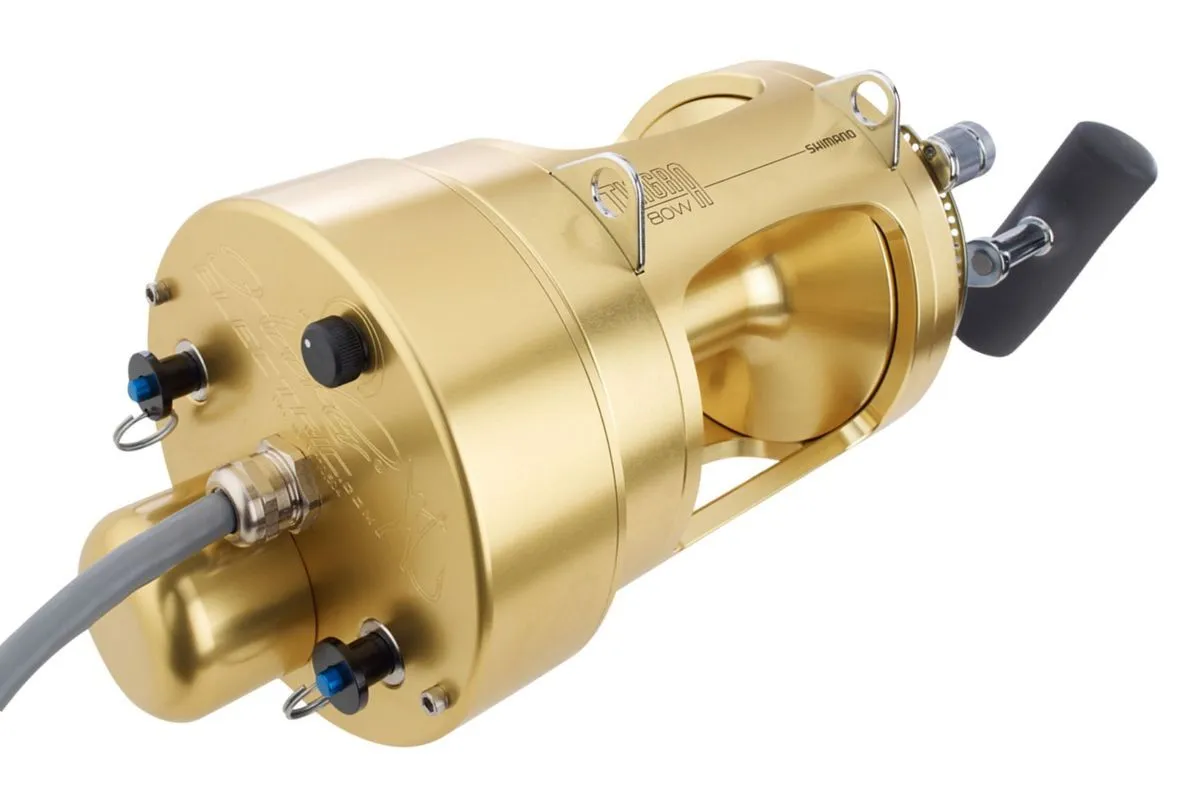
Hooker Electric takes a fundamentally different engineering approach. Rather than building a standalone electric reel from scratch, Hooker manufactures motor assemblies that mount seamlessly onto proven conventional platforms: the Penn International 80VISW and Shimano Tiagra series.
Variable speed on the Hooker system allows captains to drive the bait down fast, slow the retrieve during a bite, and dial back for the long grind on a large fish. The combination of electric efficiency on the retrieve and conventional capability on the fight has made the Hooker Penn 80VISW the preferred setup for many South Florida sword captains running dedicated programs.
How Does the KOBO Power Reel Stack Up Against Established Brands?
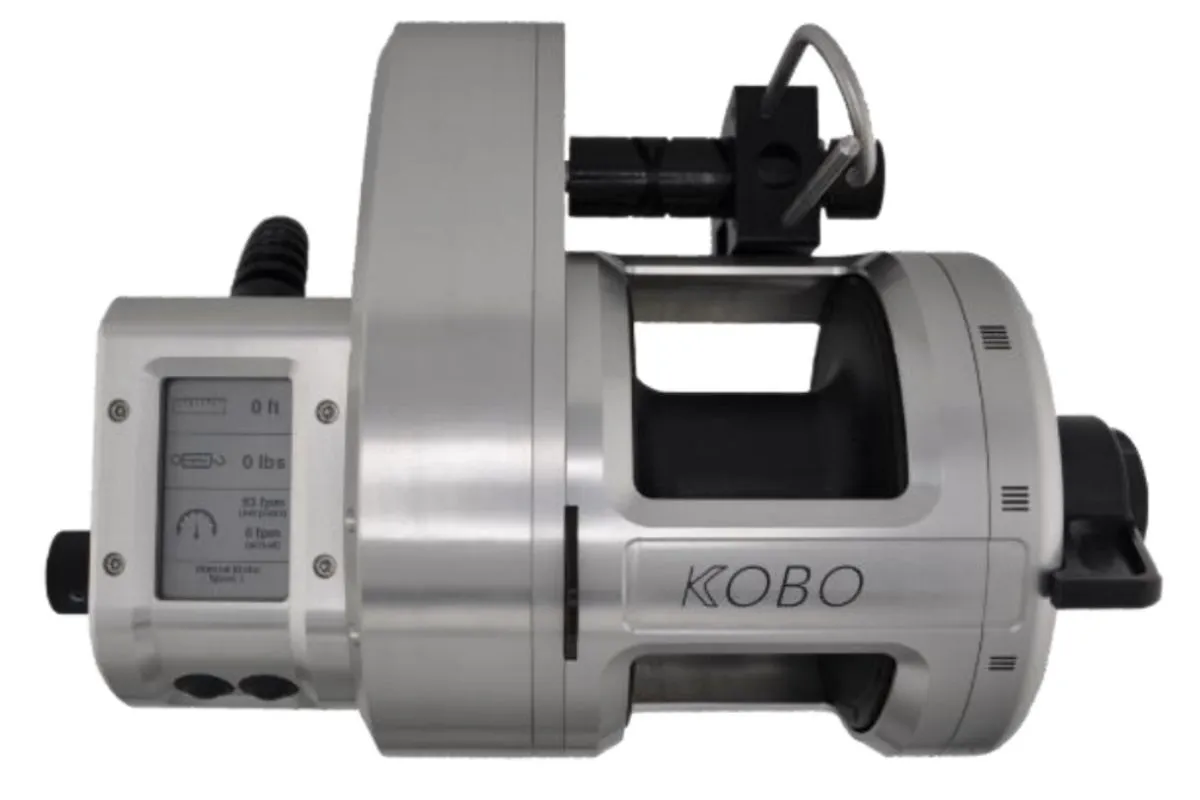
KOBO is the most technically ambitious new entrant to the daytime sword reel market. The KOBO Power Reel is priced at $6,500 (currently discounted from $7,750) and includes two extra spools. It is built to order, which signals small-batch manufacturing rather than off-the-shelf production.
The standout feature is a real-time drag display that shows live tension on the digital readout during the fight. No other production electric sword reel currently offers this. The ability to watch actual drag pressure in real time rather than relying on pre-set mechanical settings is a meaningful operational advantage when fighting a fish of unknown size at depth over extended periods.
The KOBO also auto-detects and switches between 12V and 24V without any manual configuration, making it operationally compatible with both center consoles and large 24V sportfishers from a single unit. At 12V it delivers 550 FPM with 60 pounds of motor pulling force. At 24V it reaches 850 FPM with 90 pounds of motor pulling. Those retrieval speeds exceed the LP-SV-1200's 400 FPM ceiling at 12V and the SV-2400 at 24V. Motor pulling force at 60 and 90 pounds trails the LP-SV-1200's 110-pound constant pull, which matters under heavy current with maximum lead.
The honest caveat is straightforward. As of the date of this article, KOBO has 17 verified reviews, all positive, from captains who have landed swordfish on the reel. That is an encouraging early return. It is not the same as the institutional track record of LP, which has been building in Pompano Beach for 50 years, or Hooker Electric, which has extensive professional adoption across South Florida's most productive sword fleet. For early adopters, tech-forward captains, and anglers running dual-voltage boats who want live drag data, the KOBO is a compelling option. For captains running a professional charter program where reel failure is not an option, LP and Hooker remain the proven choice.
Are Japanese Electric Reels a Viable Option for Swords?
Shimano and Daiwa both produce electric reels capable of targeting swordfish, with important caveats about application and depth range.
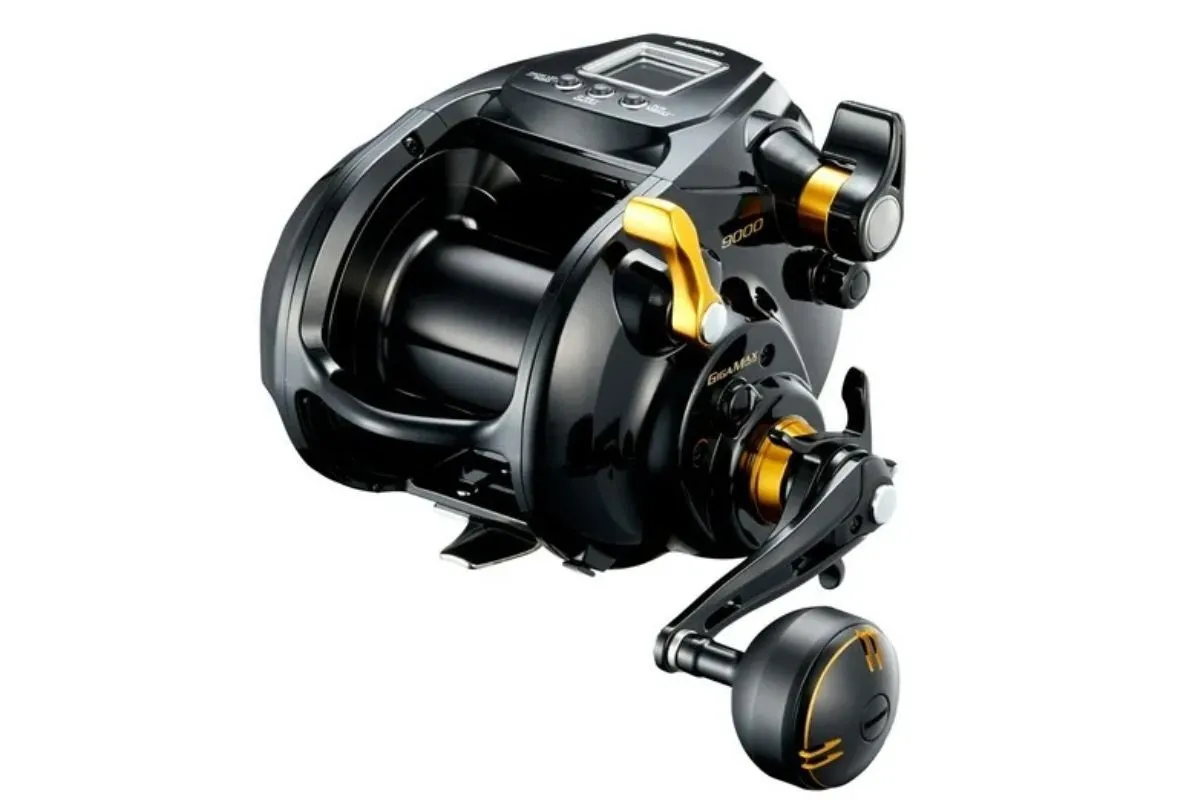
The Shimano Beastmaster BM9000B features a brushless Giga-Max motor, Thermo-Adjustable drag that automatically slows the motor when drag is slipping to manage heat, and up to 55 pounds of drag pressure. It is a genuinely capable reel for swordfish and handles the task well in the 1,000 to 1,500 foot range. The Daiwa Seaborg 1800M-RJ, released at ICAST 2024, is Daiwa's first electric reel specifically designed to handle daytime swordfishing applications alongside standard deep-drop use.
Does Using an Electric Reel Take the Sport Out of Swordfishing?
This question comes up consistently, and the honest answer is no, with important context. The electric reel handles the mechanical work of the retrieve. It does not make the fish easier to find, does not tame the fight once the fish is on the leader, and does not simplify the boathandling required when a 200-pound swordfish is at color. Long fights of four, six, and eight hours are still entirely possible on electric gear. Terminal tackle failure, leader problems, and boat positioning errors remain constant variables regardless of reel type.
What Else Do You Need to Run an Electric Reel for Swordfishing?
The reel is the centerpiece, but the surrounding setup determines whether it functions reliably over a season of hard use.
On the electrical side, a hardwired installation is strongly preferred over portable connections for any serious sword program. The LP-SV-1200, KOBO, and similar reels use a Hubbell HBL328DCP 30-amp 28VDC plug as the standard connection. A Blue Sea Systems Series 187 30-amp DC circuit breaker is the recommended protection for the KOBO system; LP has equivalent wiring kit specifications. Never run a battery charger to power an electric reel directly. The unclean power will damage circuitry and void most warranties.
Rod holders must be back-plated and through-bolted to the gunnel to support reel weights of 22 to 23 pounds, plus the dynamic load of a fish. Standard clamp-style holders are not adequate. A reel leash or safety tether is essential; if the reel breaks free from the holder during a fight, it needs to be secured to the boat.
Rod pairing should match the reel's application. For LP and KOBO-style standalone electric reels without a handle, a straight butt or bent butt rod designed for rod-holder fighting is appropriate. Hooker Electric setups on Penn Internationals pair naturally with stand-up or chair rods depending on how the captain prefers to fight fish.
Swordfishing Video Courses




Which Electric Reel Is Right for Your Swordfishing Program?
The right answer depends on the boat platform, the frequency of use, the depth range being fished, and the tolerance for early-adoption risk. The following framework covers the most common scenarios.
Professional charter captain running swords daily on a hardwired outboard center console: LP-SV-1200 or Hooker Electric Penn International 80VISW. Both are proven in this exact application. The LP-SV-1200 offers the interchangeable spool advantage. The Hooker Penn offers manual fight capability and detachable motor flexibility.
Recreational angler who wants the ability to fight a sword on stand-up gear: Hooker Electric with detachable motor. The motor comes off, the reel stays on, and the fight transitions to stand-up tackle without any compromise in reel performance.
Large sportfisher running a 24V electrical system: LP-SV-2400 or KOBO Power Reel. The SV-2400 is the proven commercial-grade option. The KOBO delivers faster retrieval speeds at 24V with live drag data and auto-voltage detection. Both are competitive at this tier.
Tech-forward angler who wants live drag feedback, dual-voltage flexibility, and is comfortable being an early adopter: KOBO Power Reel. The feature set is genuinely differentiated, the early user feedback is positive, and the price is competitive with LP when the included extra spools are factored in.
Frequently Asked Questions About Electric Reels for Swordfishing
What is the minimum drag required for a daytime swordfish reel?
A minimum of 60 pounds of functional drag is the practical floor for daytime swordfishing. Top-tier options like the LP-SV-1200 and KOBO deliver 100 to 110 pounds of drag capacity, which provides margin for heavy current, large fish, and the shock loads that occur during aggressive head shakes and long runs at depth.
Can I use a Daiwa Tanacom 1200 for swordfishing?
The Tanacom 1200 has been used to land swordfish, but it is not recommended as a dedicated sword reel. Its drag pressure and line capacity are calibrated for deep-drop bottom fishing in the 600 to 1,200 foot range. For a serious daytime sword program fishing 1,500 feet and beyond, step up to a reel purpose-built for that depth and load.
How much line do I need on an electric sword reel?
A minimum of 5,000 feet of 80-pound braid is the practical floor. Most experienced sword captains prefer 6,000 to 7,000 feet to account for deep drops in strong current, running fish, and the need for a substantial wind-on leader section. The KOBO and LP platforms are rated for 6,500 feet or more of 80-pound braid.
Is a 12V or 24V electric reel better for swordfishing?
Both work. A 12V system is standard on most outboard center consoles and supports reels like the LP-SV-1200 and KOBO Power Reel at full rated performance. A 24V system delivers meaningfully more pulling force and retrieval speed and is worth specifying if the boat platform supports it. The KOBO auto-detects voltage, making it the most flexible option if the boat's system voltage could change.
Do electric reels work for night swordfishing as well as daytime?
Night swordfishing typically targets shallower depths in the 300 to 600 foot range, which is within the capability of a wider range of electric reels, including the Shimano Beastmaster and Daiwa Seaborg series. The extreme depth demands and heavier leads are primarily a daytime consideration. That said, using a purpose-built sword reel for night fishing provides operational headroom and requires no compromise.
The Reel Is the Foundation of the Daytime Sword Program
Daytime swordfishing asks more of the angler, the crew, and the gear than almost any other offshore discipline. Depths pushing 2,000 feet, lead weights measured in pounds, and fight times that can stretch for hours all converge on the single piece of equipment mounted in that rod holder. Choosing a reel that was not built for this application does not just limit performance. It puts the entire operation at risk at the worst possible moment.
To go deeper on swordfishing technique, rigging, and the tactical decisions that separate consistent producers from occasional participants, explore In The Spread Swordfishing Video Courses, featuring working captains who fish these depths every season.
Seth Horne
Founder and CEO
Login
to leave a review.
User Reviews
There are no reviews yet.
Setting Up a Dredge Pulley for Billfish
Saltwater
12.28.2020
High Speed Wahoo Trolling Rig
Saltwater
09.08.2018

Fishing Light Tackle for Yellowfin Tuna
Saltwater
09.08.2018



0