
Fall is when wahoo move into feeding mode along thermal edges from Morehead City to the Kona Coast. This regional playbook breaks down the months, baits, structure, and tactics that produce in North Carolina, Florida, Louisiana, California, and Hawaii, with captain-tested approaches for both slow trolling and high-speed runs.
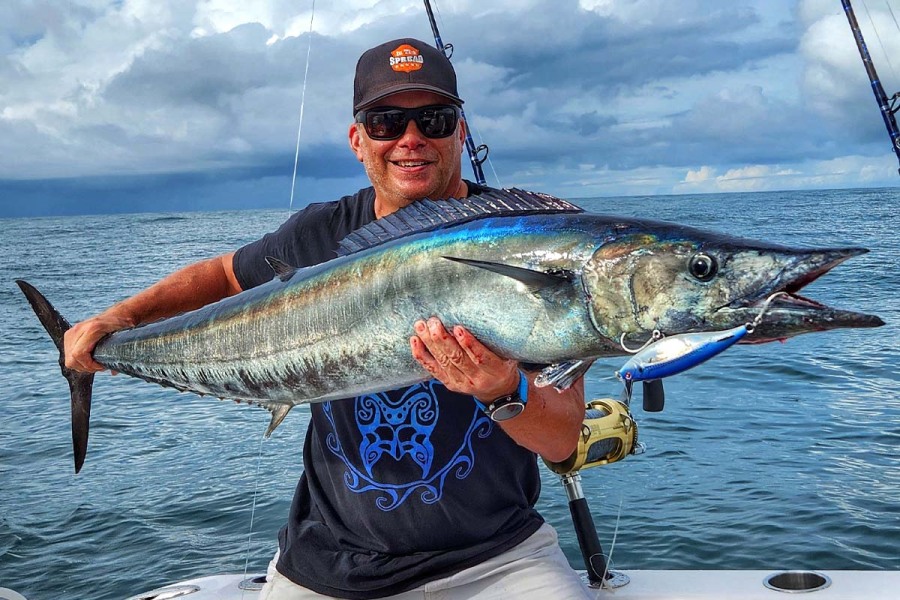
Catching Fall Wahoo From North Carolina to Hawaii
The first time I felt a wahoo eat at high speed off Costa Rica, I thought a tackle store had exploded behind the boat. The reel went from quiet to screaming in maybe a quarter second. That sound, more than anything else, is why fall wahoo fishing has become one of the most addictive pursuits in offshore angling. When water temperatures start sliding off their summer highs and bait pushes along weed lines, ledges, and structure, wahoo (Acanthocybium solandri) move into feeding mode and give offshore fishermen a window that runs from the Outer Banks to the Kona Coast.
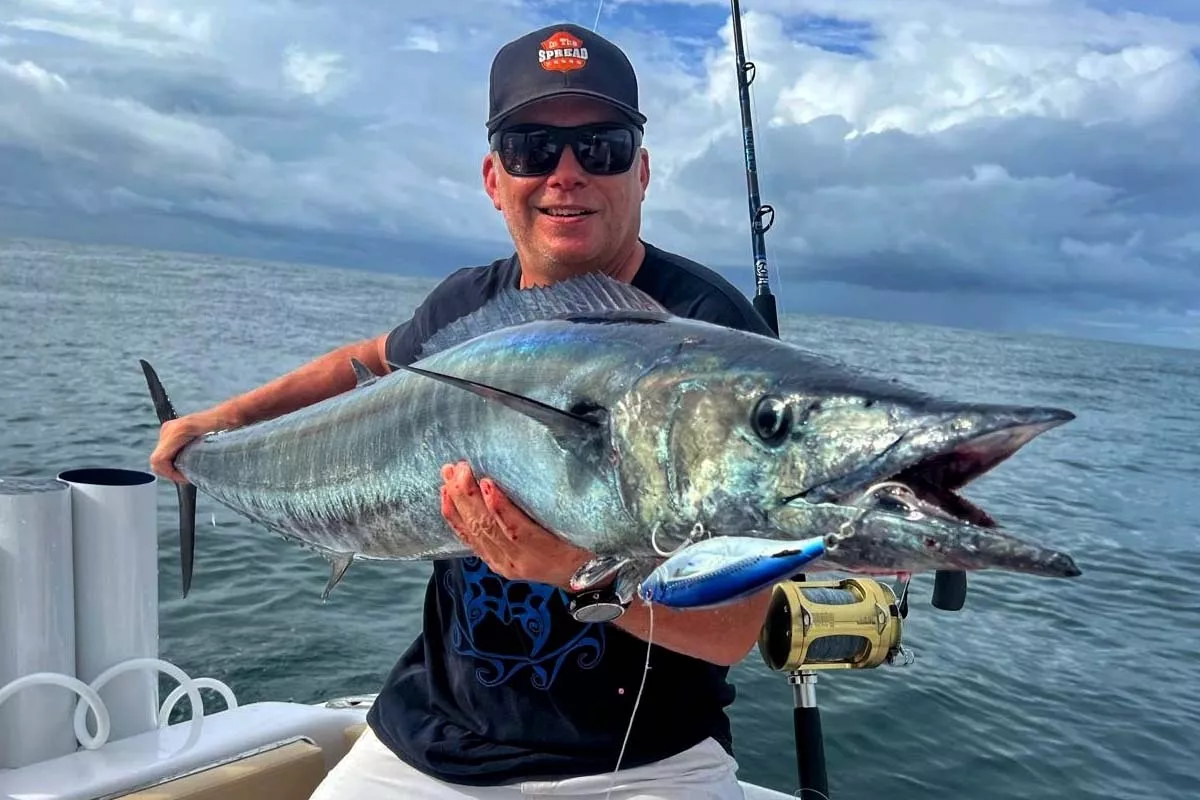
What Makes Fall the Best Season for Wahoo Fishing?
Wahoo are pelagic predators built for speed, with torpedo bodies that hit recorded sprints near 60 mph. They live their lives following temperature, bait, and current. Fall lights all three of those fuses at once. As surface temperatures drop from late summer highs into the upper 70s, wahoo concentrate along thermal edges where warm Gulf Stream water meets cooler coastal currents. Bait stacks on those edges. The fish feed harder and more predictably than they do in the dog days of August.
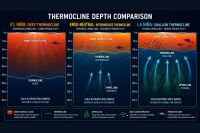
Research on wahoo movement consistently shows the fish spending the great majority of their time in water between 64°F and 82°F, with the most active feeding zone falling roughly between 70°F and 78°F. That is exactly the band most U.S. coastlines pass through from September into early winter. If you are looking for a single reason fall is the strongest season, that temperature overlap is it.
Where Are the Best Fall Wahoo Spots in the United States?
There is no single best region. There is a best region for the way you like to fish and the months you can get on the water. The five coastlines below cover almost every productive fall pattern available to U.S. anglers.
How Do You Catch Wahoo Off the North Carolina Coast?
North Carolina wahoo fishing out of Wilmington and Wrightsville Beach typically peaks from October through early December, when the Gulf Stream still runs warm and the cooler shelf water creates a sharp temperature break. The Steeples and Black Jack Hole are two of the most consistent fall structures, both holding bait long enough to keep wahoo working through them.
Slow trolling is the dominant method here. Capt. Mike Dupree of Bale Money Sportfishing has spent years dialing in this style off the Carolina coast and tells me he holds tight to a fairly narrow depth band. "I personally like to stay between 30 and 40 fathoms, sliding a little deeper or shallow depending on how the water is laying," he says. Most of his productive ground tops out around 300 to 400 feet. That depth window holds true for a lot of the eastern seaboard fall fishery.
Wahoo Slow Trolling with Planers - Mike Dupree
Slow trolling wahoo creates opportunities when high-speed presentations fail to trigger selective fish. Captain Mike Dupree's North Carolina expertise reveals using satellite data for isolating temperature breaks and current convergences, tackle specifications for slower speeds including planers for depth control, and ballyhoo rigging techniques producing natural presentations that aggressive methods cannot replicate effectively.
Ballyhoo rigging technique determines whether slow trolling wahoo baits maintain natural action or wash out losing effectiveness at reduced speeds. Captain Mike Dupree's on-water demonstration reveals planer and bridle deployment for depth control, spread configuration keeping multiple baits working productively, and understanding wahoo food chain relationships that drive fish positioning and feeding behavior throughout the water column.
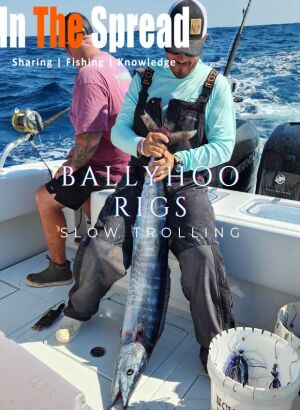
Wire and fluorocarbon leader choices for slow-trolling ballyhoo affect wahoo hookup rates through preventing teeth cuts versus reduced visibility triggering selective fish. Gore Offshore rig systems simplify ballyhoo preparation through pre-made components, requiring proper threading, hook positioning, and securing methods maintaining natural profiles and swimming action throughout trolling sessions at reduced speeds.
A word of caution. Carolina fall weather is famously unstable. Cold fronts can stack 8-foot seas onto a calm morning forecast. Watch the sea state before you commit, and never push past your boat or your crew.
Where Are the Top Wahoo Spots in Florida During Fall?
Florida wahoo fishing is genuinely a year-round game, but the action shifts geographically through fall. South Florida from Miami down through the Keys turns on first, often by mid-October, while the Panhandle and northeast Florida pick up momentum into November and December.
- The Islamorada Hump and the Marathon Hump in the Florida Keys
- Jupiter Inlet through Stuart, where the Gulf Stream pushes close to shore
- Deepwater ledges off St. Augustine and Jacksonville, particularly into the winter months
- The Steps off Destin in the Panhandle, where wahoo follow bait along the dropoff
Live bait fishing dominates South Florida. Goggle eyes and blue runners pulled on a kite or slow trolled around structure are responsible for a huge percentage of the area's wahoo catches. Ballyhoo rigged with chuggers and skirts work well behind boats running a planer or a downrigger, putting the bait in the strike zone where wahoo prefer to attack.
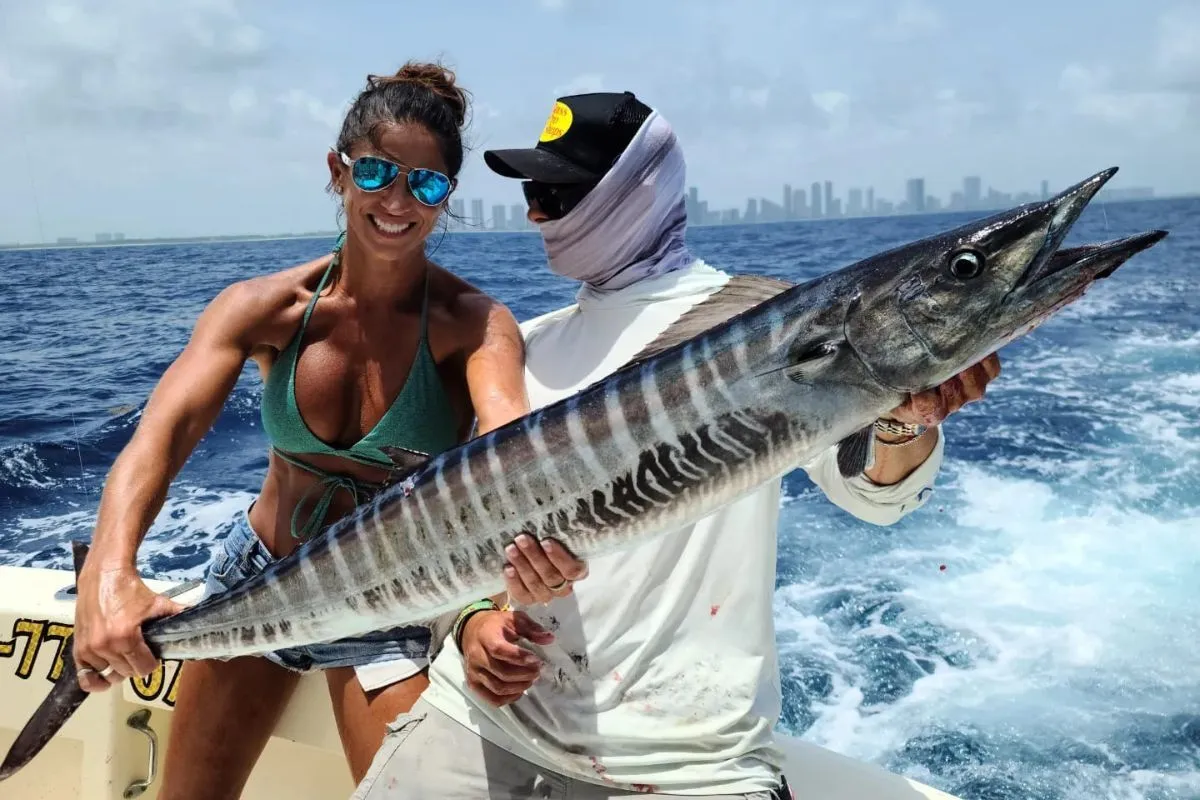
If you want a deeper look at how Florida captains rig their baits, our article on choosing the best bait for wahoo breaks down the matchups by region and method.
What Tactics Work for Wahoo in Louisiana's Gulf Waters?
The Gulf Coast wahoo fishery out of Venice and Grand Isle is one of the most underrated in the country. Fall here generally means September through November, with the offshore rigs and lumps holding fish that are feeding hard before winter.
The mix of structure available is what makes Louisiana different. The Midnight Lump and Ewing Bank both hold bait year over year, and the oil platforms scattered across the deepwater Gulf act as floating ecosystems. Wahoo cruise these rigs looking for hardtails (the local name for blue runners), cigar minnows, and small bonito.
- High-speed trolling with wire-line setups and heavy bullet lures around the deeper rigs
- Slow trolling with rigged ballyhoo or live hardtails along temperature breaks
- Vertical jigging when fish are stacked on a specific structure or thermocline
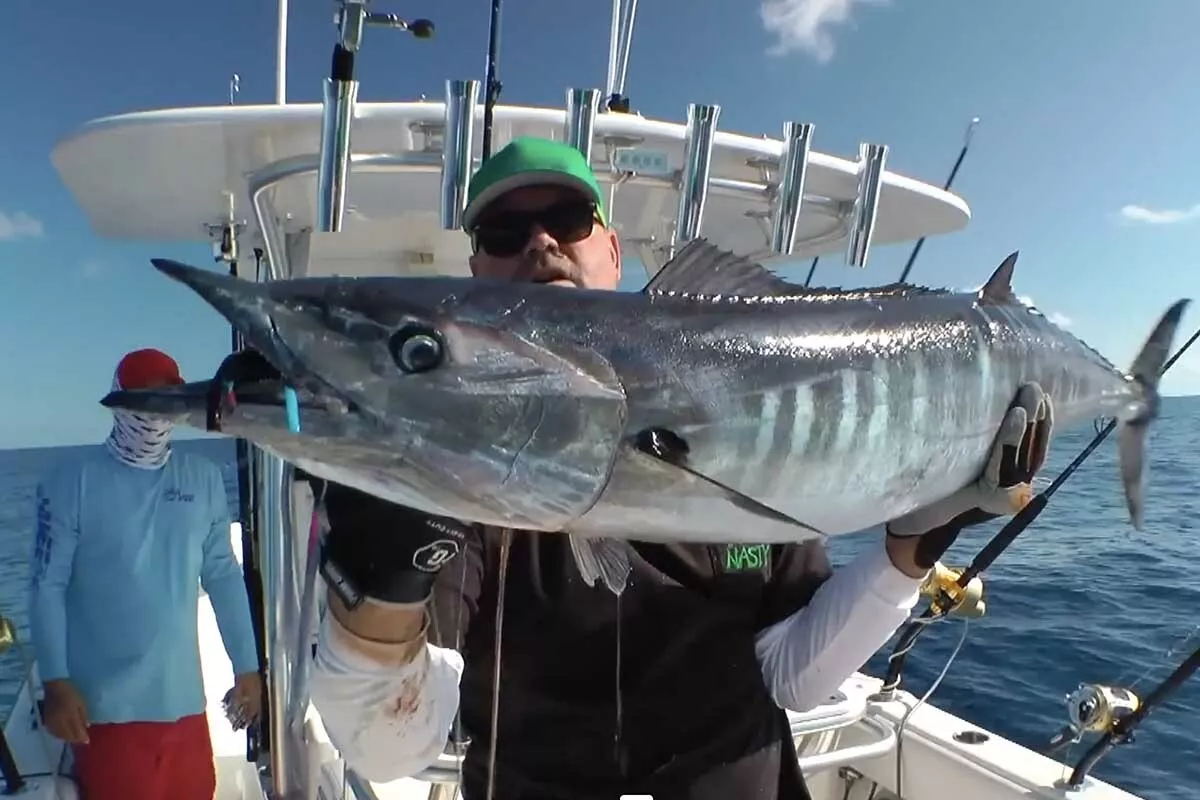
Capt. RJ Boyle has put together one of the most thorough breakdowns of the high-speed approach I have seen anywhere. Our course on high-speed trolling for wahoo with RJ Boyle covers everything from spread placement to leader construction.
High Speed Trolling for Wahoo Courses
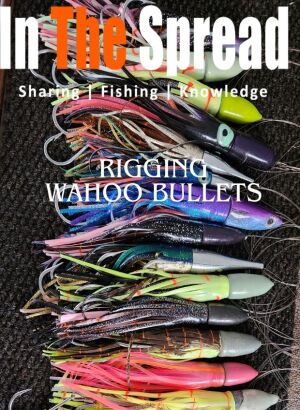
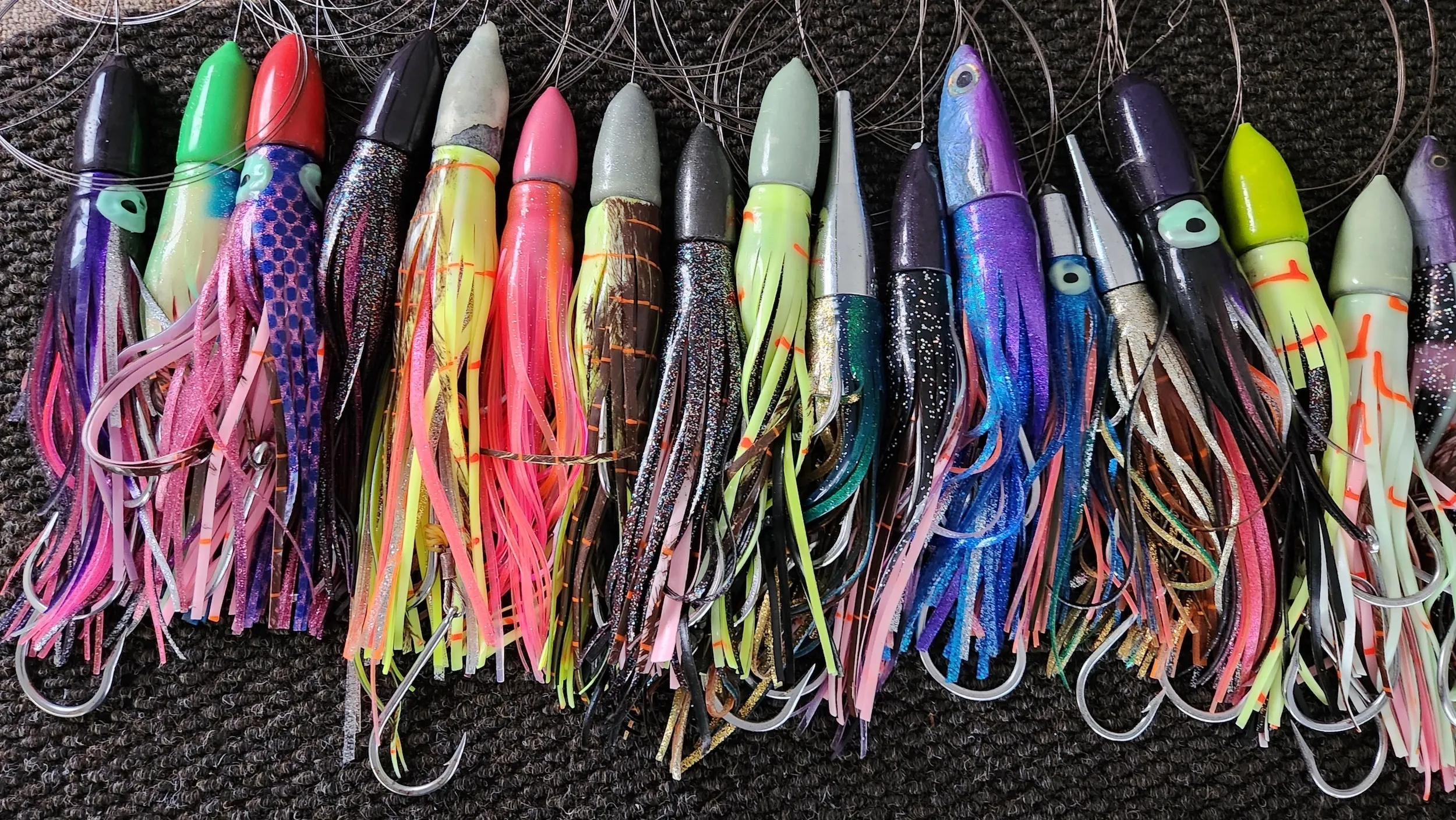
Wahoo bullet lures excel at high-speed trolling through streamlined cone design and heavy metal heads that dive and dance unlike other presentations. Arthur Bjontegard's rigging expertise covers wire leader changes, hook placement, and skirting techniques determining whether lures maintain proper action at velocities wahoo fishing demands, plus skirt color significance and trolling speed adjustments for triggering aggressive strikes.
Overcomplicated wahoo spreads create tangling problems that waste fishing time during high-speed trolling. Success depends on matching spread complexity to boat size, running three rods on center consoles with strategic short and long lure positioning, and understanding how your specific boat handles turns to prevent line crossing during hookups or directional changes.
Edge trolling for wahoo fails when boat control drifts lures out of the narrow productive band where structure meets deep water. Success requires driving precision that maintains consistent depth along reef edges as contours change, reading how tidal movement concentrates baitfish, and adjusting angles to keep spreads working the strike zone continuously.

Wahoo demand trolling speeds exceeding 12 knots because their predatory behavior targets fast-moving prey, but standard offshore rigging fails at these speeds. RJ Boyle explains why high speed triggers strikes, how lure configuration and wire leaders handle forces at 18 knots, and what immediate post-strike response prevents the short strikes and cut-offs wahoo create when anglers react too slowly.
Rod sensitivity and flex characteristics determine strike detection success during high-speed wahoo trolling at 12-plus knots where equipment must transmit vibrations clearly while absorbing violent strikes. RJ Boyle's expertise reveals why quality tackle matters beyond durability, affecting hookup and landing rates through design specifications supporting sustained high-speed use rather than marketing claims inadequate when powerful fish test equipment limits.
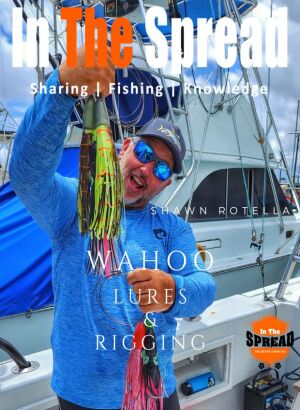
Custom wahoo lure making provides advantages commercial offerings cannot replicate when targeting formidable predators at high speeds. Captain Shawn Rotella's process crafting lead bullet lures with strategic skirt colors, piano wire leaders, and non-IGFA hook rigs demonstrates how construction quality and rigging techniques affect both lure longevity and action during trolling sessions demanding constant performance.
Hurricane season overlaps the early Louisiana fall window. Run a serious weather plan, file a float plan, and respect the offshore distances involved. The Midnight Lump is not a place to learn anything for the first time.
When Do Wahoo Show Up Off the Southern California Coast?
Pacific wahoo are not a guaranteed species off Southern California, but during warm-water years (typically late summer into October) they push north along the warm currents and put on a show off San Diego, Catalina, the Channel Islands, and around San Clemente Island. The 9-Mile Bank and Butterfly Bank are two of the more reliable spots when the temperature climbs above 70°F on the inside.
- High-speed trolling with bullet lures behind heavy wire to find fish quickly
- Slow trolling live mackerel or small bonito through bait schools
- Casting stick baits and poppers when wahoo show up busting on the surface
Live mackerel is the gold standard out here. If you can find them and keep them lively, you have what every fall wahoo in the bight wants to eat.
How Do You Target Wahoo in Hawaii's Tropical Waters?
In Hawaii, ono fishing (the local name for wahoo) is arguably the most sought-after pursuit on the islands, with this fish considered the prize of the table. Fall, particularly October into December, lines up with strong bait runs and steady action along the Kona Coast, the Penguin Banks off Oahu, and offshore of Maui.
Capt. Shawn Rotella of Fishing Kona Style is one of the most respected ono fishermen in the islands and runs almost exclusively with a slow trolling approach. He told me he gets roughly the same bite count slow trolling as he does running high-speed spreads, but he burns far less fuel and the fishing is more interactive for his anglers. You see the bite, you feel the speed of the strike, and you stay engaged for the entire trip.
The bait choices in Hawaii reflect the local ecosystem. Opelu (mackerel scad) and aku (skipjack tuna) are the two most important live baits, with rigged ballyhoo and Hawaiian-style bullet lures rounding out the spread. Goggle eyes show up in some setups when they are available.
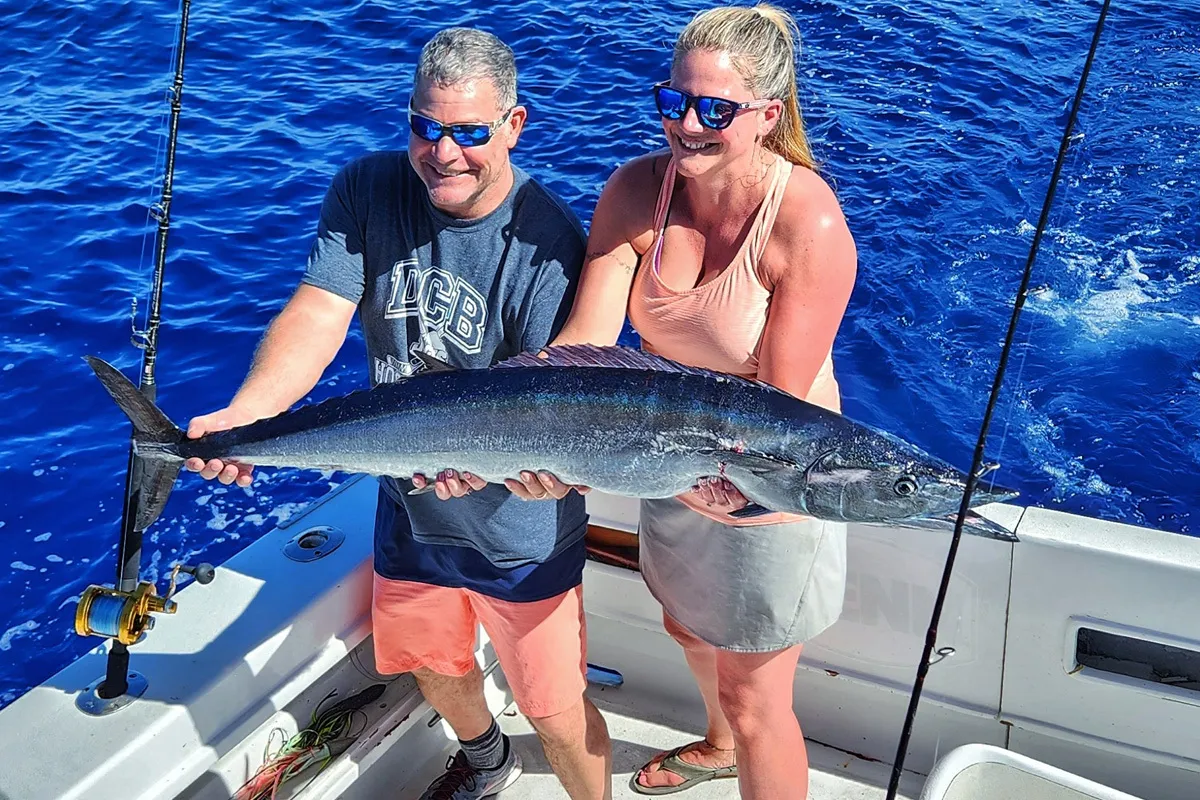
For a complete look at how Shawn rigs and runs his program, our two-part course series covers both his slow trolling philosophy and his live bait deployment in detail.
How Do You Choose the Right Lure Color for Wahoo?
Wahoo lure colors matter more than most anglers realize. Wahoo are sight-driven predators with excellent color and contrast vision in clear ocean water. The right color in the right light condition can be the difference between five fish and zero, especially when fishing pressure is heavy.
What Colors Work in Bright Sun and Clear Water?
When the sun is high and the water is clear blue, wahoo see lures from a long distance. Reflective and high-visibility colors win. Bright pink, electric blue, vibrant orange, and chrome or holographic finishes all draw fish from significant distances. The flash of a metallic head against blue water mimics fleeing baitfish, and that is exactly the visual trigger you want.
Which Wahoo Lures Perform Best on Overcast Days?
Cloud cover changes the game. Light gets diffused and contrast drops, so colors that pop against gray water move to the front of the spread. Fluorescent chartreuse, UV pink, dark purple, and black-and-red combinations all work well under overcast skies. Many of the most productive Hawaiian bullets I have run feature a black core with a colored skirt for exactly this reason.
What Should You Run at Dawn or Dusk?
Low light is when most big wahoo eat. The first 90 minutes after sunrise and the last hour before sunset routinely produce the best bites of the day. Glow finishes, pearl white, bright yellow, and iridescent patterns help wahoo track a lure when ambient light is weak. If you are fishing the dawn bite, deploy lures in the dark and have your spread set before the sky starts to lighten.
How Do You Pick a Color for Murky or Green Water?
Off Louisiana, parts of the Carolinas, and inshore Pacific waters, you will sometimes fish wahoo in less than crystal-clear conditions. In murky or green water, you want either contrast or camouflage. Solid black creates a strong silhouette against any backdrop. Moss green blends with the water column. Bright orange and chartreuse offer the contrast that helps fish find the lure when visibility is reduced.
What Tackle and Techniques Work Across Every Region?
Whether you are running North Carolina ledges, Hawaiian banks, or California islands, wahoo tackle demands the same core attributes. The fish hits hard, runs fast, and has a mouth full of teeth that turn fluorocarbon into ribbon. A few principles travel across every fishery:
- Heavy-action rods rated 50 to 80 pounds for high-speed work, paired with lever-drag reels packed with 60 to 130-pound braid or mono
- Single-strand or cable wire leaders rated 80 to 175 pounds, scaled to the size of fish in the area
- Drag pressure set high enough to drive the hook home on the first explosive run
- SST charts and bathymetric data used together to find temperature breaks over productive structure
- Speed variation built into every trolling pattern, since wahoo often eat on a sudden change rather than a steady pull
Wahoo prefer water in the upper mixed layer where temperature, oxygen, and bait all align. Pay attention to where current and structure interact. A ledge that drops from 200 feet to 1,000 feet, a current rip that holds a temperature break, or a rig that sits in 70°F water are all places worth running through more than once. For a deeper read on how fish relate to the water column, our article on how to fish upwelling around offshore structure explains the mechanics.
How Do You Stay Safe While Fishing Offshore for Wahoo?
Offshore fishing is the most rewarding and the most unforgiving form of angling I know. Offshore safety for wahoo trips is non-negotiable. Almost every regional hotspot in this article sits 20 to 60 miles from the nearest port, and the weather changes faster than the fishing.
Before you leave the dock, confirm a current marine forecast and sea state. File a float plan with someone on shore who knows your route and your expected return. Make sure your boat carries Coast Guard required safety equipment, including USCG approved life jackets, signal flares, an EPIRB, and a working VHF radio. Carry water and sunscreen in volume. Wear closed-toe deck shoes or fishing boots. The deck of a moving boat with a green wahoo flopping at your feet is the wrong place to be in flip flops.
Frequently Asked Questions About Fall Wahoo Fishing
When is the best month for fall wahoo fishing?
The best month varies by region. North Carolina peaks from October through December. South Florida turns on in late October and runs through early winter. Louisiana fires from September through November. California is best August through October during warm-water years. Hawaii produces strong action from October into December.
What water temperature do wahoo prefer?
Wahoo are most active in water between 64°F and 82°F, with the strongest feeding window falling between 70°F and 78°F. Sea surface temperature charts that show clear thermal breaks in this band are the single most useful tool for finding fish.
How fast do wahoo swim?
Wahoo are among the fastest fish in the ocean, with documented speeds reaching roughly 60 mph in short bursts. That speed is why their initial run is so violent and why proper drag setup matters.
What is the best technique for wahoo, slow trolling or high-speed trolling?
Both work. Slow trolling at 6 to 9 knots with rigged ballyhoo and live bait is more interactive, more fuel efficient, and excellent around structure. High-speed trolling at 14 to 18 knots with bullet lures covers more ground and finds aggressive fish quickly. Most serious wahoo programs use both depending on conditions. Our high-speed wahoo trolling rig article covers the gear side of the high-speed setup.
What baits work best for wahoo?
Top wahoo baits include rigged ballyhoo, live blue runners, goggle eyes, mackerel, cigar minnows, and regional specialties like opelu and aku in Hawaii. Bullet lures, jet heads, and weighted skirted lures round out the artificial side.
Where can I find fall wahoo fishing spots in the United States?
The strongest U.S. fall wahoo regions are North Carolina (Cape Fear and the Outer Banks), Florida (Keys, Stuart, St. Augustine, Destin), Louisiana (Midnight Lump, Ewing Bank, deepwater rigs), Southern California (9-Mile Bank, Catalina, Channel Islands) during warm years, and Hawaii (Kona Coast, Penguin Banks, Maui offshore).
Do you need wire leader for wahoo?
Yes, wire leaders are highly recommended for wahoo because of their razor-sharp teeth that can easily slice through monofilament or fluorocarbon. The standard is 175-300 pound braided cable wire for trolling lures, with 480-600 pound stainless cable for larger presentations, though some anglers successfully use 200-300 pound mono leaders as an alternative. For live bait rigs, lighter single-strand wire (#5-#10, approximately 40-124 pounds) is often used for short 18-24 inch bite leaders.
What lure color is best for wahoo?
There is no single best color. Match the color to the light. Bright pink and chrome for sunny days. Chartreuse and dark combinations for overcast. Glow and pearl for low light. Black and orange for murky water.
For a complete reference on the species, our wahoo fishing ultimate guide covers biology, seasonal movement, and tactical depth across every U.S. fishery.
Wrapping Up the Fall Wahoo Run
Fall is the window when wahoo are most predictable, most aggressive, and most accessible to U.S. anglers. From the Cape Fear ledges of North Carolina to the Kona Coast of Hawaii, the same animal feeds in five very different environments and rewards anglers who match technique to local conditions. Slow trolling earns its place in regions with concentrated bait and structure. High-speed trolling earns its place when you need to cover water and find fish fast. Live bait, properly rigged, beats almost everything else when wahoo are eating selectively.
If you are ready to take the next step, our wahoo video library puts you on the boat with captains who have spent decades dialing in their regional patterns. From Mike Dupree's slow trolling system to Shawn Rotella's lure rigging concepts, every course is built to put more fish in your spread. Tap into the full wahoo video library and turn this fall into your best wahoo season yet.
Seth Horne
Founder and CEO
Login
to leave a review.
User Reviews

Benjamin
09.18.2024
0

Robert
09.18.2024
0
Setting Up a Dredge Pulley for Billfish
Saltwater
12.28.2020
High Speed Wahoo Trolling Rig
Saltwater
09.08.2018
Fishing Light Tackle for Yellowfin Tuna
Saltwater
09.08.2018
0