
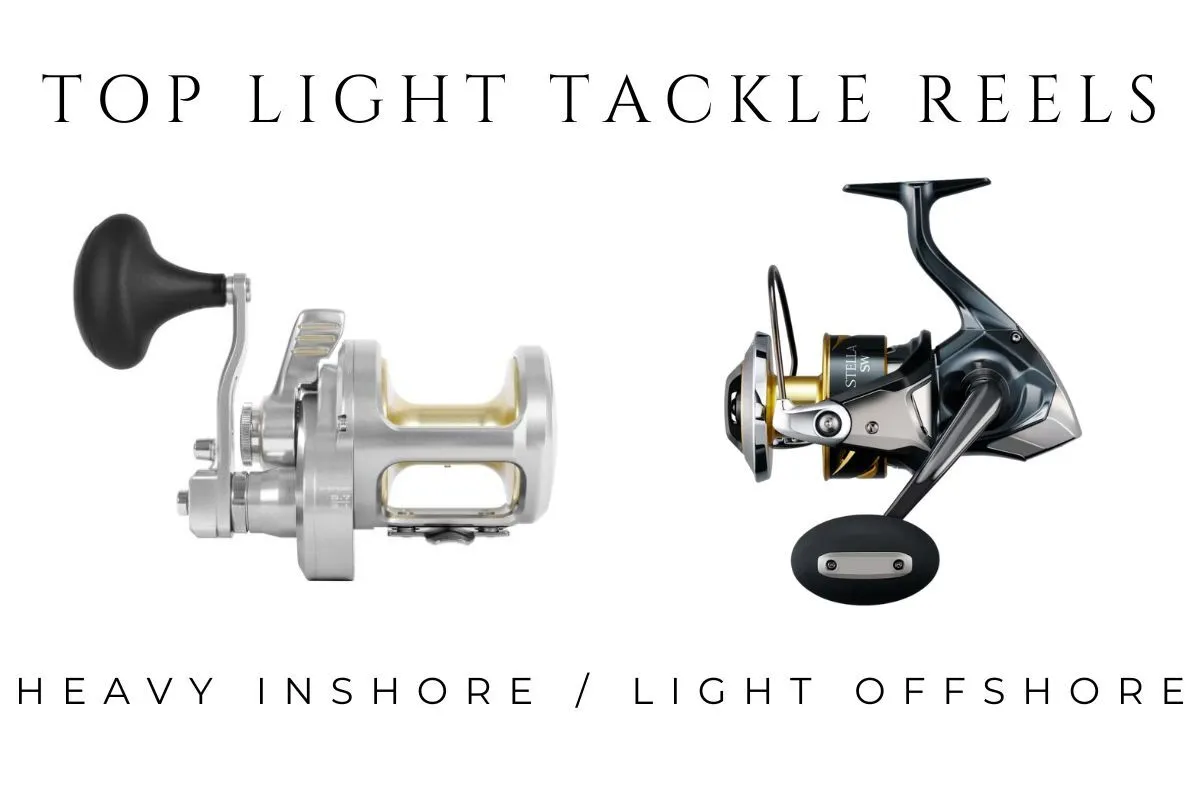
Not every offshore trip calls for a 50-wide. The heavy inshore / light offshore angler needs a reel that casts all day and still has the drag, line capacity, and structural integrity for tuna, cobia, and sails. Here is what the best spinning and conventional reels in this category actually deliver.
Choosing Light Tackle Reels for Offshore Fishing
There is a category of angler who does not fit neatly into the inshore or offshore box. They spend most of their time in 20 to 60 feet of water chasing redfish, cobia, and kings, but when a weather window opens and the bite is right, they run to the blue water. They want one reel, or a tight two-reel arsenal, that handles both worlds without compromise. This is the "heavy inshore / light offshore" angler, and the fishing tackle industry has finally caught up to them.
What Does "Light Tackle Offshore" Actually Mean?
Light tackle offshore means gear that is light enough to cast and work lures all day, comfortable enough to fish from a center console without a harness, and capable enough to handle serious pelagics when fished correctly. That is a specific performance band, and the reels that occupy it are a distinct category.
What line classes define light offshore tackle?
Light tackle offshore fishing operates primarily in the 20 to 65 lb braid range, with 20 to 30 lb braid on the low end for finesse presentations and tournament light-line applications, and 40 to 65 lb braid for targeting real pelagics where runs are long and the fish are large. Mono and fluorocarbon topshots in the 20 to 30 lb class are standard in sailfish tournament fishing and anywhere light-line rules apply.
What fish are realistically in play on this gear?
A properly matched light offshore setup is fully capable of handling:
- Blackfin tuna and school-size yellowfin tuna up to 60 to 80 lb
- Mahi, king mackerel, and wahoo
- Cobia and large amberjack in the 30 to 60 lb range on reefs and wrecks
- Sailfish and smaller white marlin on light line
- Large snook and tarpon in nearshore applications
Where light tackle offshore gear reaches its practical ceiling: 150 lb class bluefin, large bigeye tuna, and any application requiring sustained drag above 35 lb. At that point, you are no longer in the light tackle category regardless of what the reel's spec sheet says.
What Should You Look for in a Heavy Inshore / Light Offshore Reel?
The spec sheets on modern spinning reels are full of impressive numbers, but the numbers that actually determine real-world performance in this niche are drag consistency, line capacity, sealing quality, gear ratio, and reel weight. All five matter.
How much drag do you actually need, and how do you read the spec?
A minimum realistic max drag of 20 lb is the entry point for this category. More useful is the ability to fish smoothly at 25 to 30 percent of your line's actual breaking strength without the drag sticking, surging, or fading as the spool heats up under a sustained run.
Carbon fiber drag washers represent the meaningful upgrade over felt or synthetic alternatives in this application. Carbon dissipates heat more effectively, keeping drag output consistent through a long fight. Large-diameter drag stacks compound this advantage by distributing braking force across more surface area, reducing heat generated per square inch of drag material.
Two things the spec sheet does not tell you. First, manufacturers typically record max drag with the spool nearly empty. On a full spool at normal fishing positions, usable drag is meaningfully lower than the box number, particularly on smaller, higher-drag reels. Structure your safety margin around that reality, not the headline figure. Second, drag is not linear across spool levels. Check your drag setting at full spool and again at half spool. Some reels gain drag as the spool empties and the effective lever arm shortens. Know your reel's curve before you point it at a tuna.
How much line capacity do you need for offshore species?
A working baseline for this category is 250 to 300 yards of 30 to 40 lb braid. That covers most inshore-to-nearshore applications and handles school tuna, cobia, and sails without getting spooled when you can use the boat to chase the fish. For open-water bluefin, larger yellowfin, or any situation where chasing is not an option, you want 350 yards or more of 50 lb braid.
How important is corrosion resistance and sealing?
It is critical for any reel that will be used in both inshore and offshore environments regularly. Corrosion resistance in a spinning reel is a layered system, not a single feature. The most important components to evaluate are the drag system seal, the body and rotor seal, and the bearing protection.
IPX ratings give you a standardized reference point:
- IPX5 means the reel can handle water jets from any direction
- IPX6 means it withstands high-pressure water spray
- IPX8 means it can be submerged beyond one meter
What size reel, gear ratio, and weight bridge inshore feel and offshore performance?
The 4000 to 8000 spinning reel range is where this category lives, with the 5000 to 6000 class as the most versatile sweet spot. But size alone does not determine how a reel handles all day.
Reel weight is a primary factor that most spec-sheet comparisons underemphasize. A 6000 class reel that weighs 14 oz fishes very differently over an eight-hour day than one that weighs 10 oz. Body material drives much of that difference. Machined aluminum frames are stiffer and more corrosion resistant but heavier than carbon composite alternatives. For this niche, the stiffness of a full-metal body is worth the weight at the 6000 class and above, where loads on the gear train demand rigidity. At the 5000 class for lighter applications, composite or mixed-material bodies offer a meaningful weight reduction without compromising structural integrity for the target species.
Gear ratio matters more than most crossover reel guides acknowledge. A high-speed reel in the 6.0:1 to 6.4:1 range retrieves more line per crank and excels at poppers, fast jigs, and chasing fast pelagics. A mid-speed reel in the 4.9:1 to 5.6:1 range generates more torque per turn, which is an advantage on live bait, heavy jigs, and sustained cranking against a strong fish. For a true one-reel crossover setup, a mid-to-high ratio in the 5.5:1 to 6.0:1 range is the most versatile. Shimano's XG and HG designations and equivalent labeling from Daiwa correspond directly to this distinction. Understand what you are buying before you select a model.
Which Spinning Reels Work Best for Heavy Inshore and Light Offshore Use?
Is the Shimano Stella SW worth the investment for light offshore work?
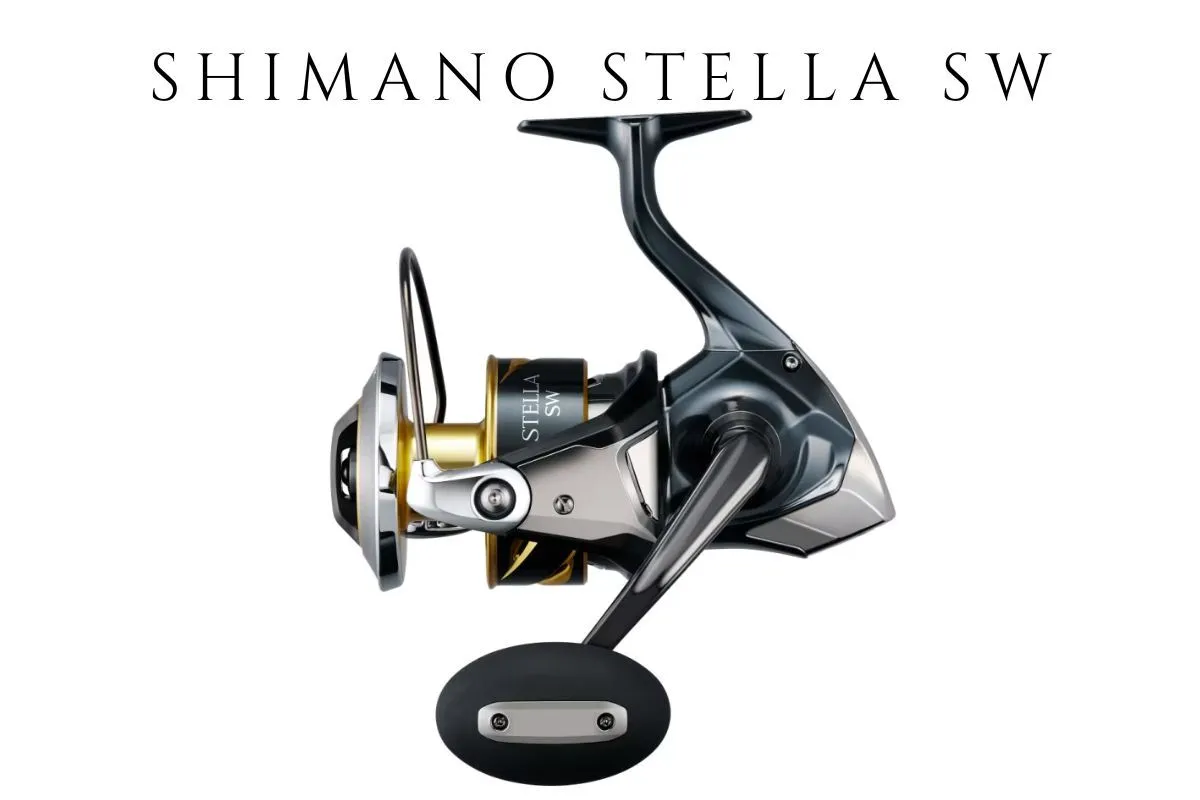
For anglers who fish hard and often, targeting tuna, GT, and larger pelagics on relatively light gear, yes. The Shimano Stella SW in the 6000 to 8000 range is the benchmark against which every other reel in this category is measured. The HAGANE body eliminates flex under load, which matters when you are cranking against a powerful fish at 25 lb of drag. The InfinityDrive system reduces main shaft friction under heavy loads, producing more cranking torque when you need it most. The Stella's value is in the structural margin it provides and the durability it delivers over years of sustained hard use, not in a single-day performance advantage most anglers will notice on school-size fish.
Is the Shimano Saragosa SW the best value in this category?
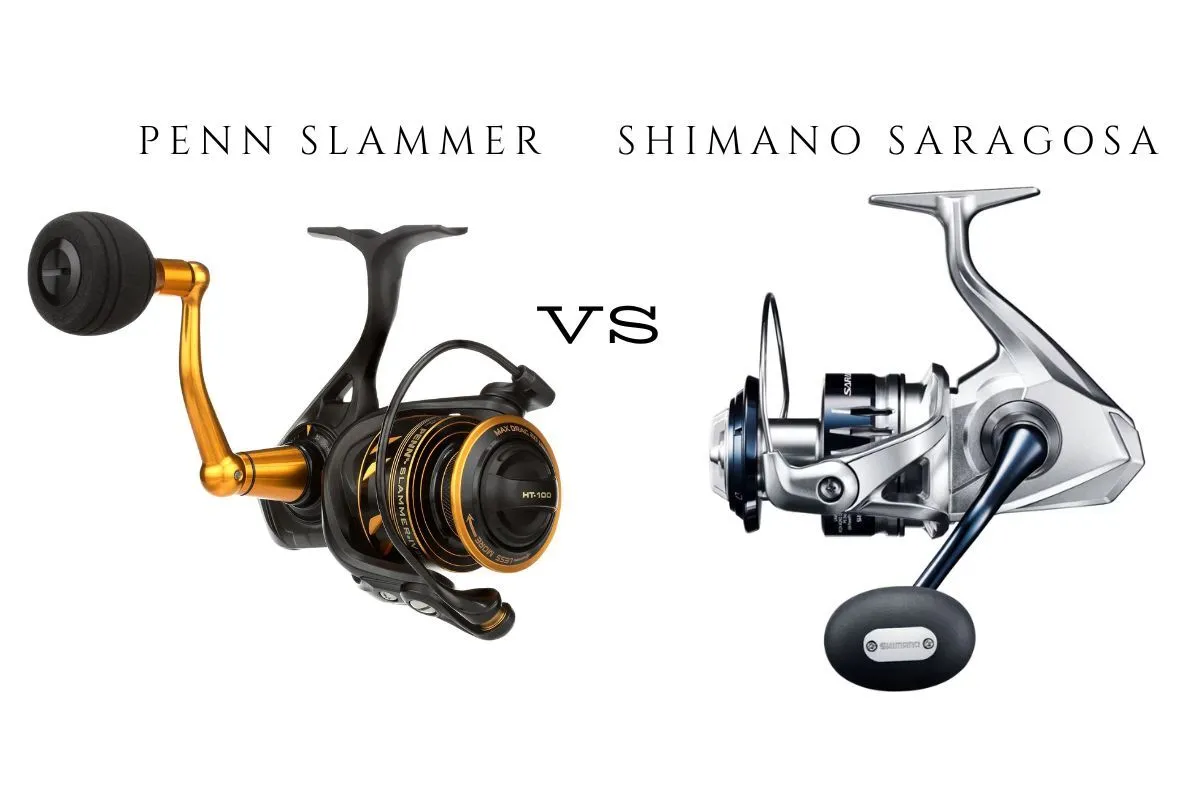
It is the most broadly recommended reel in this niche. The Shimano Saragosa SW in the 5000 to 8000 range delivers drag architecture closely mirroring the Stella SW on key sizes, cold-forged HAGANE gears, and the InfinityDrive system at roughly half the Stella's price. The 6000HG and 8000HG designations are the most relevant for crossover use: the HG ratio sits in the mid-speed range and balances cranking torque against retrieve speed well for the full range of techniques this niche demands.
What does the Daiwa Saltiga offer that other reels do not?
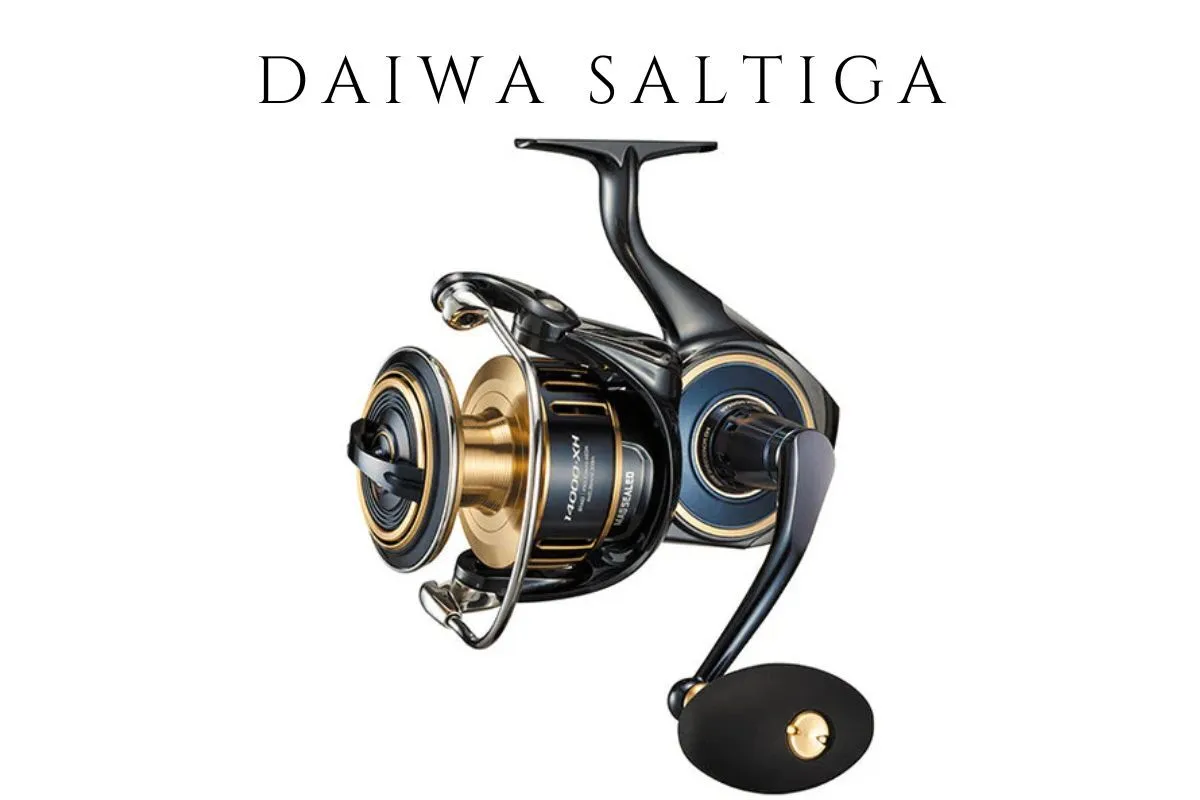
The Daiwa Saltiga distinguishes itself through its Monocoque body construction, a single-piece frame design that eliminates the body joint found on conventional spinning reels. That joint is a structural weak point under the torsional stress of a powerful fish. Removing it produces a more rigid platform for the gear train, translating to smoother cranking under heavy load and improved gear longevity over time. The 8000 to 10000 sizes are built for 30 to 65 lb braid applications and are purpose-built to fish high drag numbers on powerful fish. If your offshore fishing regularly involves large yellowfin, GT, or amberjack where you need to maintain 25 to 35 lb of working drag over a long fight, the Saltiga is the appropriate tool.
Is the Daiwa Certate SW a legitimate light tackle option?
The Daiwa Certate SW achieves high max drag output in a noticeably lighter and more compact package than the Saltiga. Available in the 8000 to 14000 size range, it is the choice for an angler who prioritizes reel weight and handling sensitivity but still needs serious drag capability. The framing note worth keeping in mind: the Certate SW's size range starts where most anglers stop thinking of gear as light tackle. Its strength in this category is for the angler targeting larger pelagics who wants a reel that handles like precision fishing equipment rather than a winch.
Where does the Penn Slammer IV fit in this lineup?
The Penn Slammer IV is the charter-grade workhorse of this category. In the 4500 to 6500 size range, it offers IPX6 sealing, a brass main gear, CNC-machined gears, and carbon fiber drag washers in a full-metal body built to absorb hard use. Some Central American charter operations run the larger Slammer IV models for light trolling, which reflects the structural integrity of the platform. It is also an excellent dedicated second reel: run a Saragosa or Stella as your primary casting setup and a Slammer IV rigged with live bait or a pitch bait in the rod holder.
Is the Tsunami SaltX II worth considering?
For budget-conscious anglers who want full sealing and high drag output without flagship pricing, the Tsunami SaltX II in the 4000 to 6000 range is a credible option. It is fully sealed and produces roughly 50 lb of max drag on larger models. It is not in the same construction tier as the Shimano and Daiwa flagships, but it is capable for hard inshore use with regular offshore crossover trips. Verify current availability before purchasing, as Tsunami's distribution has been inconsistent.
Which Light Conventional Reels Cross Over from Inshore to Offshore?
Spinning reels dominate this category for casting and lure work, but conventional reels remain the superior tool for live bait, pitch bait, and slow-troll presentations. The lever drag system gives you instant, repeatable drag adjustment during a fight without losing your position on the handle. Two-speed options in the 16 to 20 class give you cranking flexibility that no spinning reel can match.
When does a conventional reel make more sense than a spinning setup?
When you are not casting. Live baiting for sailfish or cobia from a drifting boat, pitch baiting at a buoy or weedline, and slow-trolling with natural baits are all applications where a light conventional outperforms spinning. Low gear on a two-speed gets you the torque to turn a powerful fish or grind up from depth. High gear recovers slack quickly when a fish charges the boat, which is exactly the situation that costs anglers fish on single-speed setups.
What makes the Shimano Talica the standard for light conventional offshore fishing?
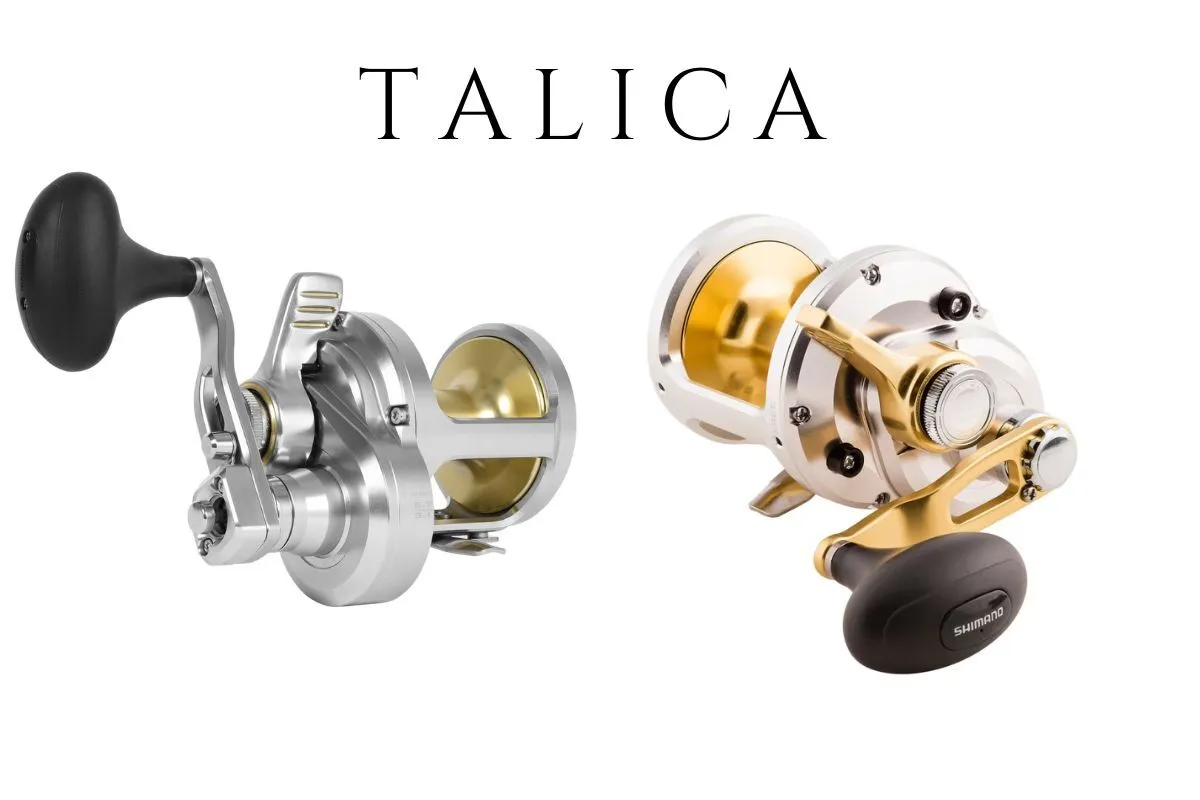
The Shimano Talica in 16 and 20 sizes is compact, light for its class, and built around a lever drag with high retrieve rates suited to fast pelagics. The Talica 20 BFC is the purpose-built light-line billfish variant, engineered for a refined low-drag curve and a fast retrieve that helps maintain tension on a jumping sailfish or white marlin on light line. These reels are popular with tournament sailfish anglers along the Southeast coast and in Central America for exactly those reasons.
What is the Fin-Nor Marquesa Pelagic built for?
The Fin-Nor Marquesa Pelagic in 20 size is a purpose-built light-line marlin and sailfish reel for serious tournament anglers. Its carbon drag and custom drag cam are engineered for smooth, consistent performance at low drag settings, which is where light-line billfish fishing lives. This is not a general-purpose reel. If you fish IGFA line classes or tournament light-line divisions, pair it with verified IGFA-compliant monofilament that breaks close to its label and set drag precisely off a scale rather than relying on the printed line rating.
How Do You Match a Light Offshore Reel to the Right Setup?
What rod pairs best with a light offshore spinning reel?
A 7-foot medium-heavy rod is the baseline pairing for the 5000 to 6000 class spinning reel. It is long enough for casting distance, balanced for all-day handling, and has enough backbone to work jigs and poppers while maintaining sensitivity for lighter presentations. For the 8000 class targeting tuna and larger pelagics, step up to a 7-foot heavy with a faster tip that loads quickly on a cast but carries real lifting power in the butt section.
What line setup should you run on a heavy inshore / light offshore reel?
- 30 to 40 lb braid for mahi, blackfin, school YFT, king mackerel, cobia, and sails
- 50 lb braid for run-and-gun tuna or any application involving sustained high-drag fights
- 20 to 30 lb monofilament or fluorocarbon topshot for light-line billfish and tournament applications
Fluorocarbon is the standard leader material for most clear-water offshore applications because of its low visibility and abrasion resistance. Monofilament leaders have more stretch, which can be an advantage in light-line applications where a stiff connection to a jumping billfish increases the risk of a pulled hook.
How should you set drag for light tackle offshore fishing?
Set drag before you leave the dock, not after a fish is hooked. The working rule is 25 to 30 percent of your line's actual breaking strength, measured with a scale at the rod tip with the rod at a realistic fighting angle and line coming off the spool at a slow, steady pull. On 40 lb braid that actually tests at 48 lb, your working drag ceiling is proportionally higher than if you calculated off the label. On 50 lb braid, a working drag of 12 to 15 lb is a sound starting point for most school pelagic applications, but test your specific line rather than assuming the label is accurate.
Practical Reel and Setup Recommendations by Scenario
Run-and-gun tuna and cobia from a center console: Stella or Saltiga 8000 with 50 lb braid on a 7-foot heavy jig and casting rod. This setup handles everything from 20 lb blackfin to 80 lb yellowfin and produces enough drag to stop a big cobia before it reaches the bottom.
Light Gulf and Southeast offshore (mahi, blackfin, kings, sails): Saragosa SW 5000 to 6000 or Penn Slammer IV 5500 with 30 to 40 lb braid on a 7-foot medium-heavy. This is the most versatile single-reel setup in this category.
Frequently Asked Questions About Light Tackle Offshore Fishing Reels
What size spinning reel is best for light offshore fishing?
The 5000 to 6000 size range is the most versatile for heavy inshore and light offshore use. It balances casting comfort, reel weight, and drag capacity for most pelagic species up to 80 to 100 lb.
Can you use an inshore spinning reel offshore?
A standard inshore reel in the 2500 to 4000 class lacks the drag output, line capacity, and structural rigidity for offshore pelagics. The 4000 to 5000 class is the practical minimum, and only if the specific reel is built to offshore sealing and drag standards.
How much drag do you need for tuna on light tackle?
A working drag of 12 to 18 lb is appropriate for school-size yellowfin and blackfin tuna on 30 to 50 lb braid. Max drag capacity of 30 lb or more provides the structural headroom to fish those working drag settings without stressing the reel's internal components.
Why does max drag on the box not match real-world performance?
Manufacturers measure max drag with the spool nearly empty. On a full spool at fishing positions, usable drag is lower. Drag also varies across spool levels as the effective lever arm changes. Check your actual drag setting at the rod tip, at full spool and again at mid spool, before you fish.
Is the Shimano Saragosa SW good for offshore fishing?
Yes. The Saragosa SW in the 5000 to 8000 range is one of the most widely used light offshore spinning reels available. It has been proven on yellowfin tuna, cobia, sailfish, and large amberjack and delivers Stella-adjacent drag performance at significantly lower cost.
What is the difference between the Shimano Stella SW and Saragosa SW?
Both use similar large-diameter carbon drag systems on equivalent sizes. The Stella SW adds a full ball bearing InfinityDrive system rather than a bushing, a more refined body construction, and greater durability under extreme prolonged stress. For most anglers in this category, the performance difference is noticeable but not decisive.
Fishing Light Tackle Offshore with Confidence
The right heavy inshore / light offshore reel is not a compromise. It is a specific tool for a specific angler, one who understands the performance envelope of their gear and fishes within it deliberately. Get the drag setting right, test your actual line strength, match the gear ratio to your primary technique, and choose a reel built to the sealing and structural standards this kind of fishing demands. The fish are there. The gear is capable. The rest is execution.
Login
to leave a review.
User Reviews
There are no reviews yet.
Setting Up a Dredge Pulley for Billfish
Saltwater
12.28.2020
High Speed Wahoo Trolling Rig
Saltwater
09.08.2018
Fishing Light Tackle for Yellowfin Tuna
Saltwater
09.08.2018
0