
Few fish demand more from an angler than a blue marlin. This is the complete framework for chasing them: how they hunt, what tackle holds, which baits and lures earn strikes, where the biggest fish live, and how to send them back strong. Built from real time on blue water.
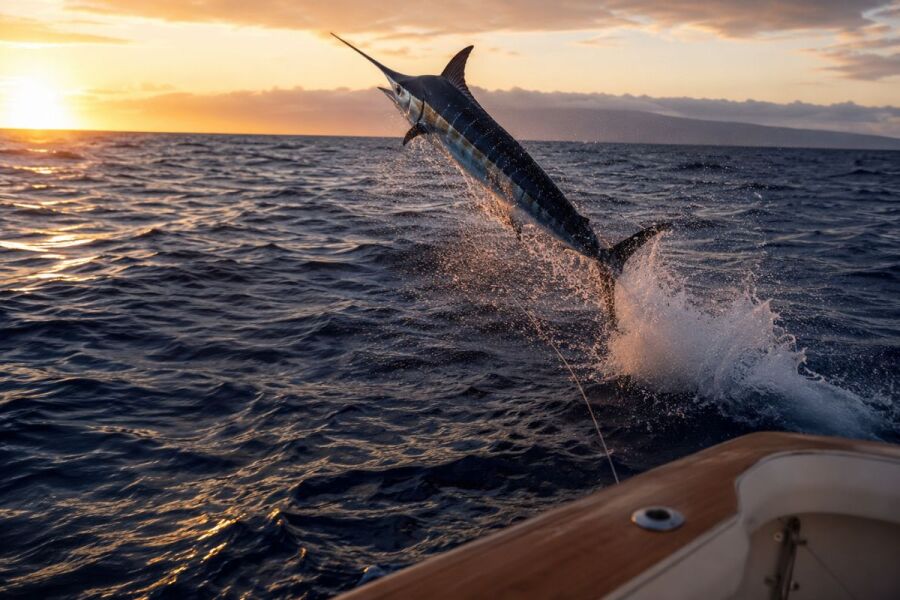
Blue Marlin Fishing: Tackle, Techniques, and Top Spots
There are fish, and then there is the blue marlin. I have run spreads from Madeira to Kona, from the Osa Peninsula in Costa Rica to the reef edges of the Indian Ocean, and nothing else in blue water resets the mood on a boat the way a big blue does when it lights up behind the teasers. The bill comes up, the bars flare electric down the flanks, and every person in the cockpit stops breathing at the same time. That is the fish that made me want to understand offshore trolling at a level most anglers never bother to reach.
This article is the foundation for everything we teach on the species. It covers biology and behavior, tackle, baits, lures, the techniques that actually convert strikes, how to fight and release these fish, and the destinations worth the airfare. If you want to watch the captains I have learned from break it all down on the water, our blue marlin fishing video library is where the deeper instruction lives. Read this to build the framework. Watch the courses to see it executed.
What Makes Blue Marlin the Ultimate Offshore Target?
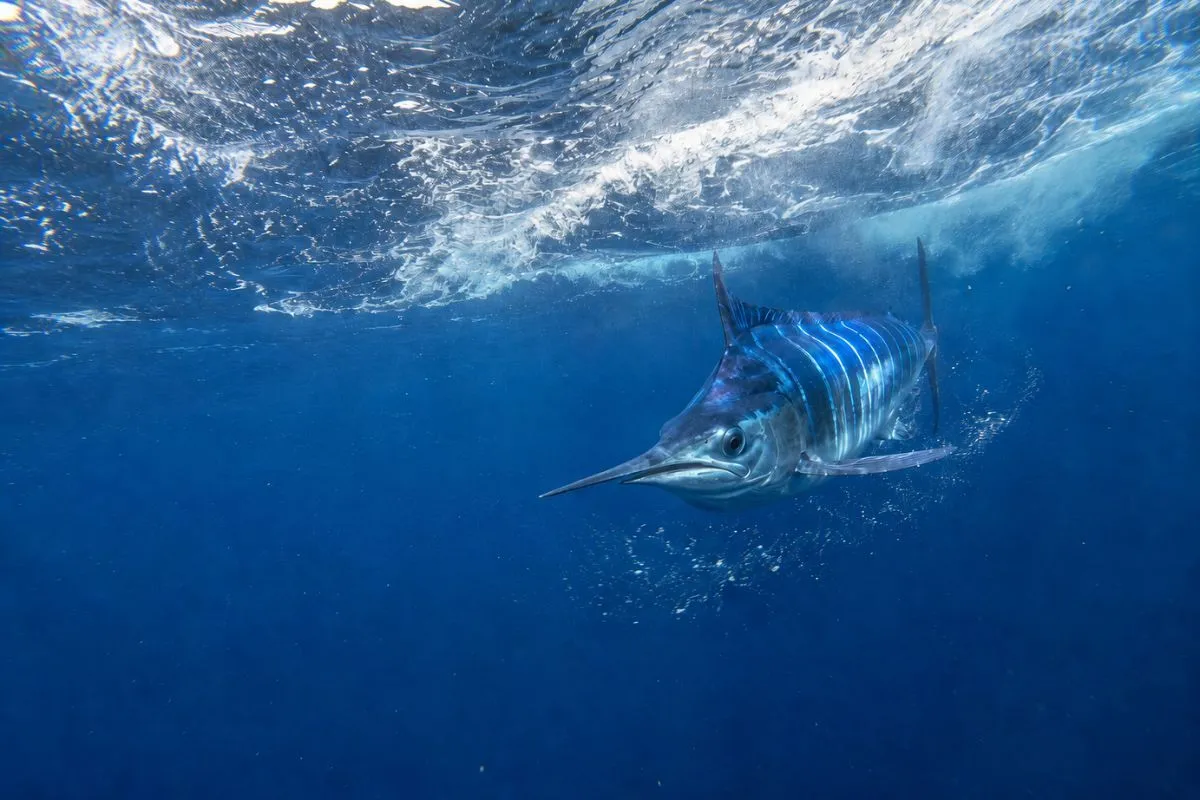
Blue marlin (Makaira nigricans) sit at the top of the pelagic food chain, and they behave like it. Size, speed, endurance, and a genuinely unpredictable temperament combine into a fish that tests every piece of gear and every ounce of fitness you bring. When one is hooked, it runs, it sounds, it greyhounds across the surface, and it will find the one weak crimp or tired knot you did not check that morning.
How Big Do Blue Marlin Get?
Blue marlin size varies a lot between juveniles and mature fish, and between Atlantic and Pacific populations. Here is what the data and the dock scales tell us:
- Early-stage juveniles run about 1 to 3 feet and a few tens of pounds. By the time a fish reaches 4 feet it is already a sub-adult that can approach or exceed 100 to 200 pounds depending on age and condition.
- Adult males, often called studs in the fishing world, commonly run 150 to 300 pounds.
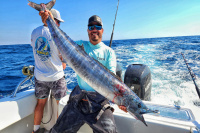
- Adult females are the giants, averaging 200 to 400 pounds, with the largest fish pushing past 1,000.
- The IGFA all-tackle Atlantic record stands at 1,402 pounds, 2 ounces, caught off Vitória, Brazil in 1992 by Paulo Amorim.
- The IGFA all-tackle Pacific record is 1,376 pounds, set off Kona, Hawaii in 1982.
Most documented giants top out around 14 feet, though a handful of outlier reports push toward 16 feet and nearly 1,800 to 2,000 pounds for extreme females. In big-game circles a true grander is a blue over 1,000 pounds, and it remains one of the rarest achievements in all of offshore fishing. A fish over 500 pounds is a legitimate trophy anywhere on earth. The grander threshold is a different category entirely, and most captains who have caught one can tell you the date.
What Does a Blue Marlin Look Like, and How Does It Hunt?
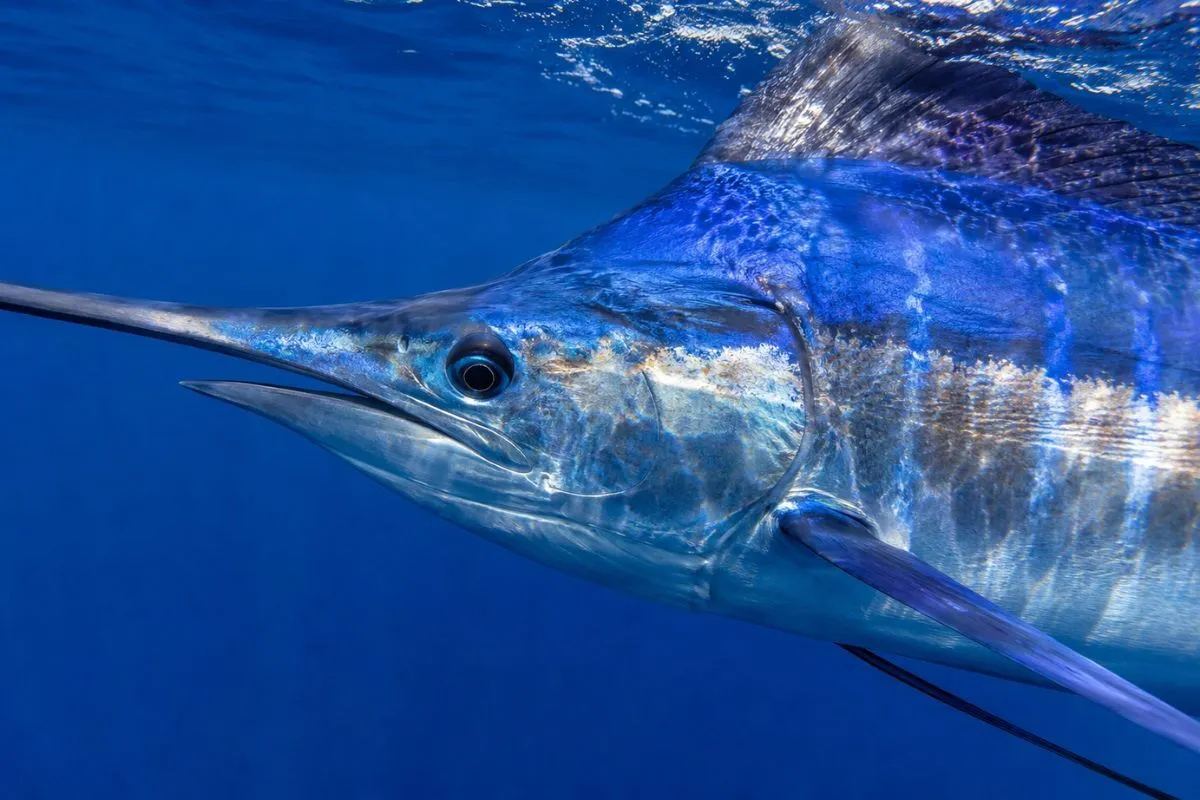
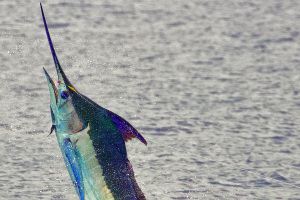
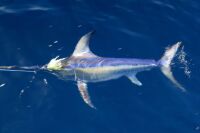
The blue marlin's physical build is distinctive even among billfish. The back is a vivid metallic blue that fades to cobalt along the flanks and drops to silvery white on the belly. That is not decoration. Viewed from above it blends into the dark surface of open water, and viewed from below it disappears into the light. It is camouflage for a pursuit predator that hunts in every direction.
The first thing most people notice is the bill, the elongated upper jaw. It is a hunting tool, not a spear. A blue slashes sideways through a bait school with short, powerful sweeps to stun and injure prey, then circles back to eat what it crippled. That same bill has injured crew and punched through hulls, so you respect it at the boat and you keep your hands clear. The deeply forked tail and the dense muscle around the narrow tail base are what generate the explosive acceleration you feel in the rod when a fish decides to leave. One easy way to separate a blue from a black marlin: a blue's pectoral fins fold flat against the body, while a black marlin's pectorals are rigid and will not fold, and blacks are an Indo-Pacific fish rather than a global one.
How Fast Can a Blue Marlin Swim?
You will see 60 miles per hour cited everywhere. That number almost certainly reflects a short burst of acceleration, not sustained cruising speed. Most realistic estimates put sustained cruising speed somewhere around 20 to 30 miles per hour, with the highest published figures reserved for brief bursts. Hard empirical speed data on the species is limited, so treat any single number with some caution. Either way, this is one of the fastest predators in the ocean, quick enough to run down tuna, mahi, wahoo, and mackerel in open water.
Where Do Blue Marlin Live and What Do They Eat?
Blue Marlin Habitat and Range
Blue marlin distribution covers tropical and subtropical water across the Atlantic, Pacific, and Indian Oceans, and they turn up occasionally in the Mediterranean. They are highly migratory and pelagic, which means they follow oceanographic features rather than sitting on a fixed piece of bottom the way a grouper does. They favor water from 72 to 84 degrees Fahrenheit and are most reliable in blue water over depths of at least 100 meters.
What concentrates them is structure you often cannot see from the surface: warm current edges, temperature breaks, seamounts, canyon rims, and floating aggregators that hold bait. Understanding how the water column stacks is the single most useful skill in finding fish, and it is worth reading up on how the thermocline stacks bait and predators before your next trip, because that layer dictates where the fish will be feeding.
What Do Blue Marlin Eat?
Blue marlin diet is opportunistic, and that is a large part of what makes them such effective predators. They eat what is abundant and reachable. Documented prey includes:
Tuna such as blackfin, skipjack, and yellowfin, arguably the most important forage for large fish.
- Mahi-mahi, which show up on the same weed lines and current edges you fish for marlin.
- Mackerel of various species, which is exactly why they make such a productive live bait.
- Squid and octopus, important in deepwater and low-light feeding.
- Flying fish, the classic surface prey that skirted lures are built to imitate.
- Wahoo, which show up in the stomachs of very large blue marlin, though they are a less common meal than tunas and mahi.
During an active feeding window a blue can eat a meaningful fraction of its body weight in a single session. Match your presentation to what the fish are keyed on locally and you tilt the odds. Ignore the forage and run what you always run, and you leave fish behind.
Locating Blue Marlin with Electronics and Satellite Data
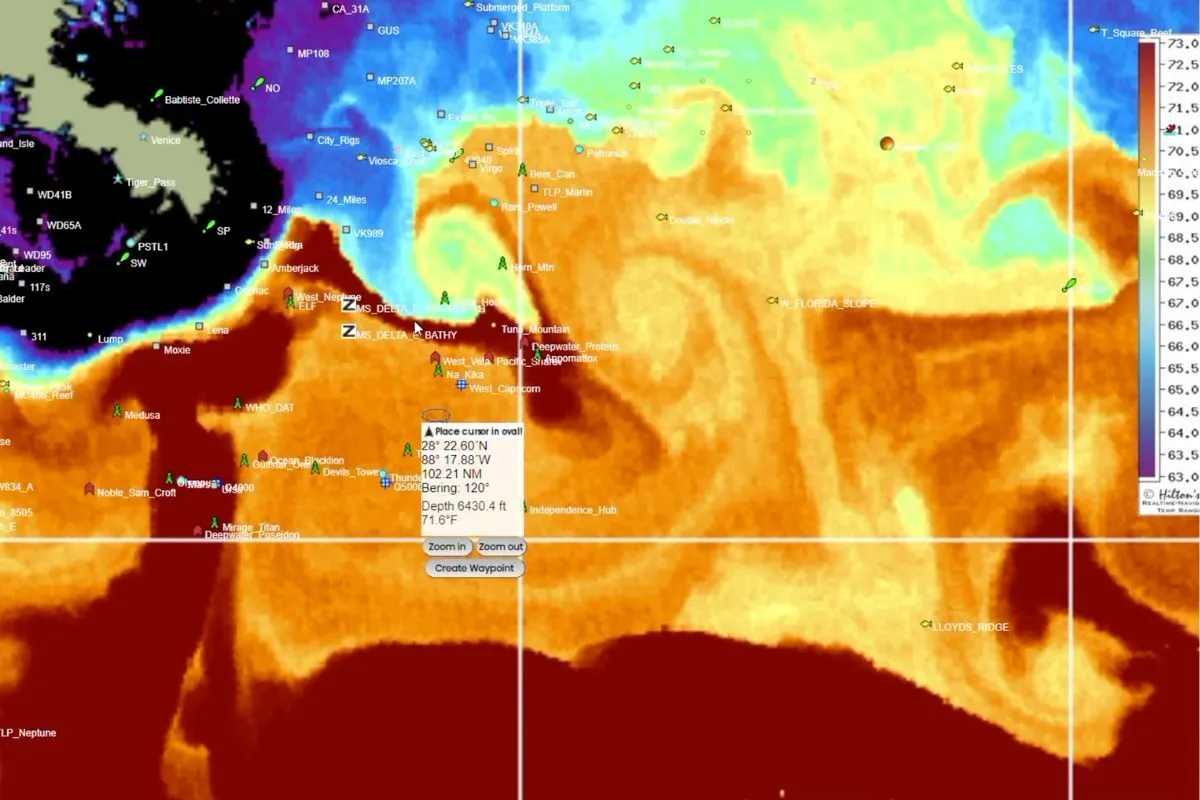
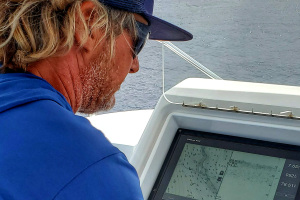
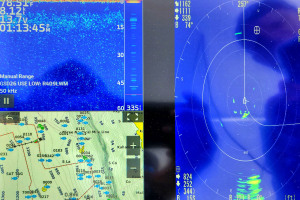
Finding blue water is only the start. Finding blue marlin means reading the data before you leave the dock and reading your electronics once you are out there. Satellite products are where I start. Sea surface temperature charts show you the warm edges and breaks, but do not stop at temperature. Chlorophyll imagery reveals the color changes and clean-water edges where bait concentrates, and altimetry and current data show you the convergence zones and eddies that stack forage along a line you can actually run.
Where Are the Best Places to Fish for Blue Marlin?
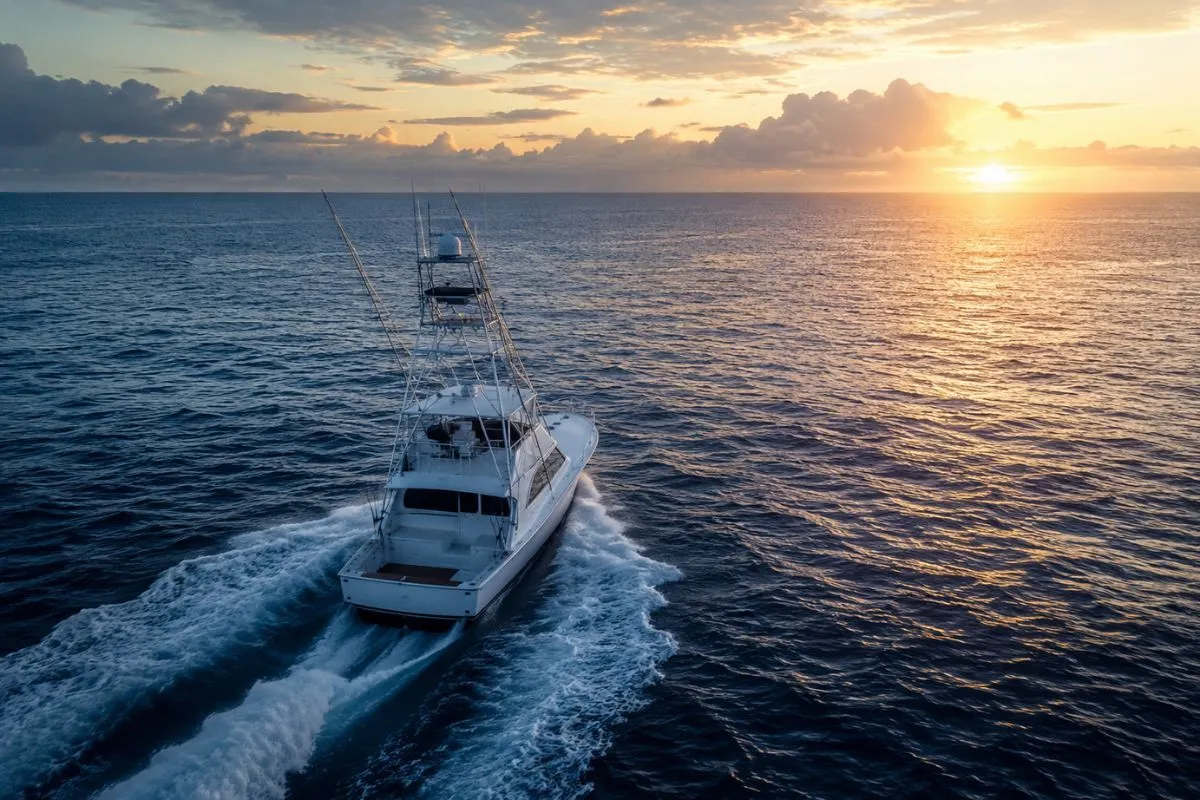
Blue marlin fishing destinations span the globe, but a handful of places produce with a consistency the rest cannot match. If you want the full breakdown of where the biggest fish live and when to be there, we cover the destinations that consistently produce big blue marlin in depth. Here is the short list.
Kona, Hawaii is the most famous blue marlin fishery on earth for good reason. The bottom drops off hard within a short run of the harbor, which puts you over deep, productive water fast, and it fishes year-round with a peak from June through September. The Azores and Cape Verde in the mid-Atlantic aggregate trophy fish around seamounts and deep ridges from June through October, and Cape Verde in particular gives up numbers of fish in the 500 to 800 pound class. Costa Rica and the Pacific coast of Central America fish best from December through April. Cabo San Lucas peaks from May through September.
What Tackle Do You Need for Blue Marlin Fishing?
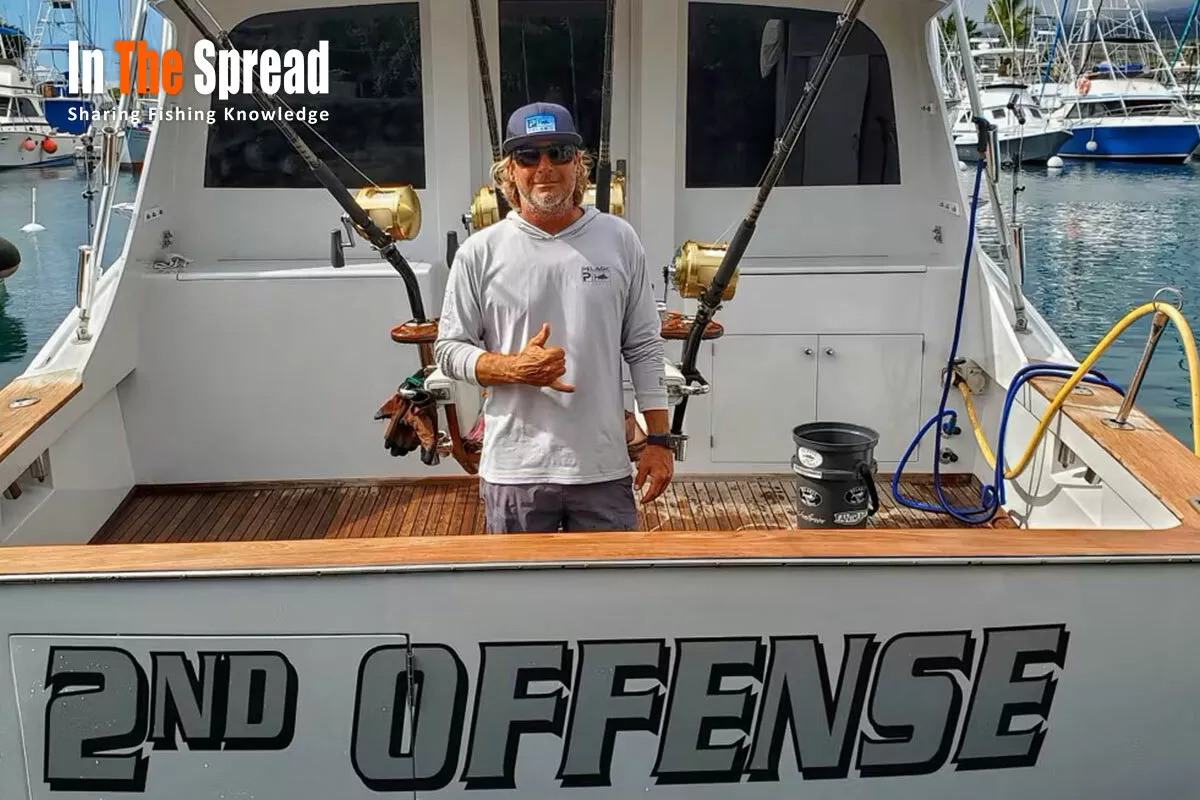
Tackle is not the place to save money on this species. A blue will find and expose every weakness in your setup, so build it to hold and check it before you leave the dock. If you want the full walkthrough, Kevin Hibbard's blue marlin tackle breakdown is as thorough as anything out there. The fundamentals below get you started.
Rods and Reels
For fish in the 150 to 400 pound class, a heavy conventional rod rated for 50 to 80 pound line, 6 to 7 feet long, paired with a quality conventional reel holding at least 400 yards of 50 pound mono, is a solid platform. For trophy fish over 500 pounds, and certainly anything with grander potential, step up to a 7 to 9 foot stand-up or chair rod rated for 80 to 130 pound line, with a reel holding a minimum of 500 yards of 80 and a smooth, powerful drag that holds pressure through long runs. Shimano Tiagra, Penn International, and Accurate ATD reels all earn their place in that class.
Line and Leaders
Most serious operations still build around monofilament top-shots, typically 50 to 130 pound, often over braid backing for capacity. Straight braid has its advocates, but mono earns its keep through shock absorption and easier handling on a big fish, and if you run braid as your main line you want a substantial mono top-shot between it and your terminal tackle. Leaders run 200 to 400 pound mono or fluorocarbon, matched to conditions and fish size. Where granders are a real possibility, most captains step up the leader accordingly. There is no prize for landing a fish on light leader when the fish of the trip swims off with your lure.
What Are the Best Baits and Lures for Blue Marlin?
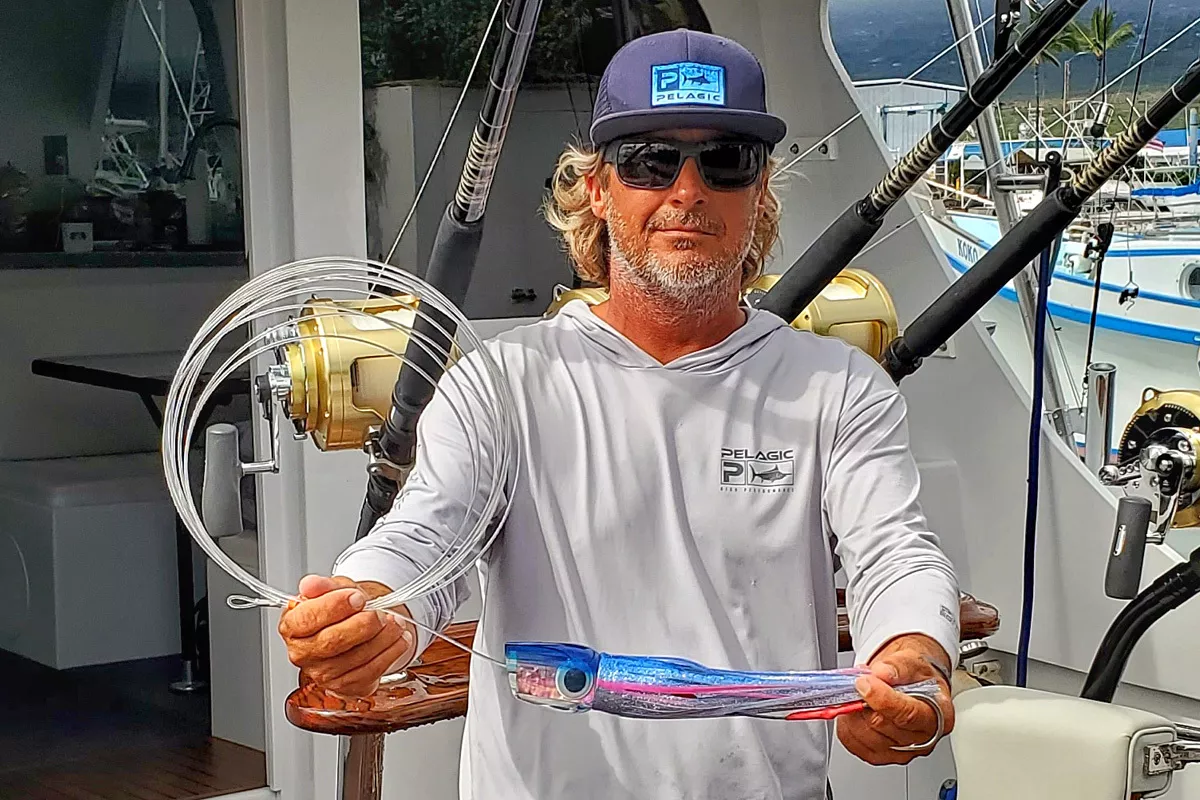
The bait-versus-lure question has no single answer, and the best crews carry both because the right tool changes with the day. How you rig either one matters as much as which one you choose, and we break down rigging lures and setting a trolling spread in its own detailed article, including literal spread examples by boat size and sea state.
Live and Dead Natural Baits
Natural baits shine when fish are visible or when the trolling bite slows and you need to slow down with it. The most consistent producers:
- Live mackerel on a circle hook and wire leader, one of the most dependable live baits anywhere in the world.
- Live skipjack or bonito, deadly on big Pacific blues around Kona and the rest of Hawaii.
- Rigged ballyhoo, the backbone of countless Atlantic spreads.
- Whole rigged mullet or bonito as a long-rigger bait when you want bulk and splash in a bigger sea.
Skirted Lures and Other Artificials
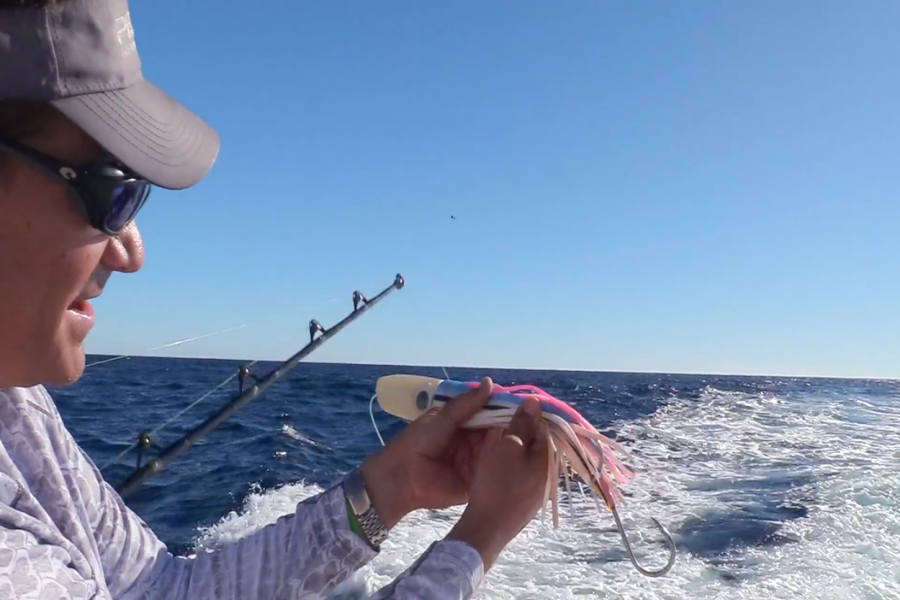
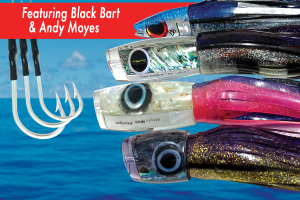
Skirted trolling lures are the foundation of most programs worldwide because they cover water and pull fish from a distance. The skirt pulses like a fleeing baitfish, and head shape, skirt material, and color get matched to sea state, water clarity, and local forage. As a working rule, run brighter and more visible lures in rough water, and cleaner, more natural colors in flat calm. Plungers throw violent surface turbulence and bubble trails, jet heads spray water through the face to mimic a panicked bait, and in the right surface feed a big stickbait or popper will draw a vicious response. That said, in many fisheries a well-presented pitch bait to a raised fish will beat plastic on the day. The skill is knowing which tool the moment calls for and switching without hesitation.
Blue Marlin Fishing Courses
What Are the Most Effective Blue Marlin Fishing Techniques?
Technique is where days are won and lost, and small adjustments compound. Once you have the fundamentals here, our breakdown of the tactics and gear decisions that convert strikes goes into the specifics that separate crews who raise fish from crews who actually catch them.
Trolling
Trolling is the most widely practiced method because it covers water and keeps a spread in front of hunting fish. The standard approach runs a coordinated set of lures and teasers at 7 to 10 knots, covering the long rigger, short rigger, flat line, and center positions. Dredges are central to the modern game. A dredge pulls a subsurface ball of bait that raises fish and dramatically improves how many of them commit to a hook bait. If you are not running one, you are leaving fish in the water.
Drift Fishing with Live Bait
Drifting live mackerel, skipjack, or a similar bait over structure or along a temperature break shines when fish are concentrated in a defined zone and sustained trolling is not producing. It is a slower, more deliberate way to work fish you know are there.
Kite Fishing
A kite suspends a live bait at the surface with almost no visible leader, and the struggling, splashing presentation can be irresistible when marlin are feeding shallow in calm conditions. It is a low-profile approach that beats trolled lures on certain flat, bright days.
Sight Fishing
When the water is flat, the sun is high, and you are wearing good polarized glasses, you can put a bait directly in front of a fish you can see. It demands fast, precise boat handling, but the conversion rate on a clean pitch to a willing fish is as high as anything in the sport, and it is some of the most exciting fishing you will ever do.
How Do You Fight and Land a Blue Marlin?
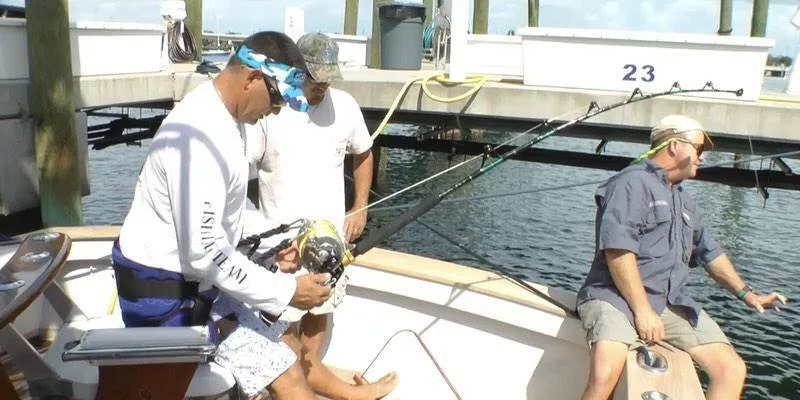
Raising and hooking a blue is only half the job. Fighting a blue marlin is a coordinated effort, not a solo battle between one angler and one fish, and crews who understand their roles land far more of what they hook. The driver fights the fish with the boat, using the throttle to gain line and control the angle. The angler's job is simpler than most first-timers expect: keep steady pressure and never give the fish slack. When a big blue greyhounds straight at the boat, which they do, you wind as fast as you physically can to stay tight, because a slack line is where hooks come loose and fish are lost.
Staying Safe at the Leader
The most dangerous moment on a marlin boat is at the leader, with a green fish close to the transom. Everyone in the cockpit should have shoes on and a knife within reach. Position the angler, the leaderman, and the release or gaff man so that no line or leader ever lies across anyone's legs, because a fish that decides to run can take a wrap off the deck faster than you can react. If the fish is hot and close and the sea is up, the right call is often to cut the leader and let it go. No fish is worth an injury, and a released green fish swims off fine.
Record-Class and IGFA Considerations
If a record-eligible catch matters to you, the rules are specific and worth knowing before the fish is at the boat. In broad strokes, you cannot hand-line the fish or back up the reel with a hand-line, you cannot pass the rod to another angler, and only a gloved hand may touch the leader. There are also limits on double-line and leader length that vary by line class. This is the short version. Before you fish for the record book, read the IGFA's official angling rules in full so a technicality does not cost you a catch you earned.
Why Catch-and-Release Matters, and How to Do It Right
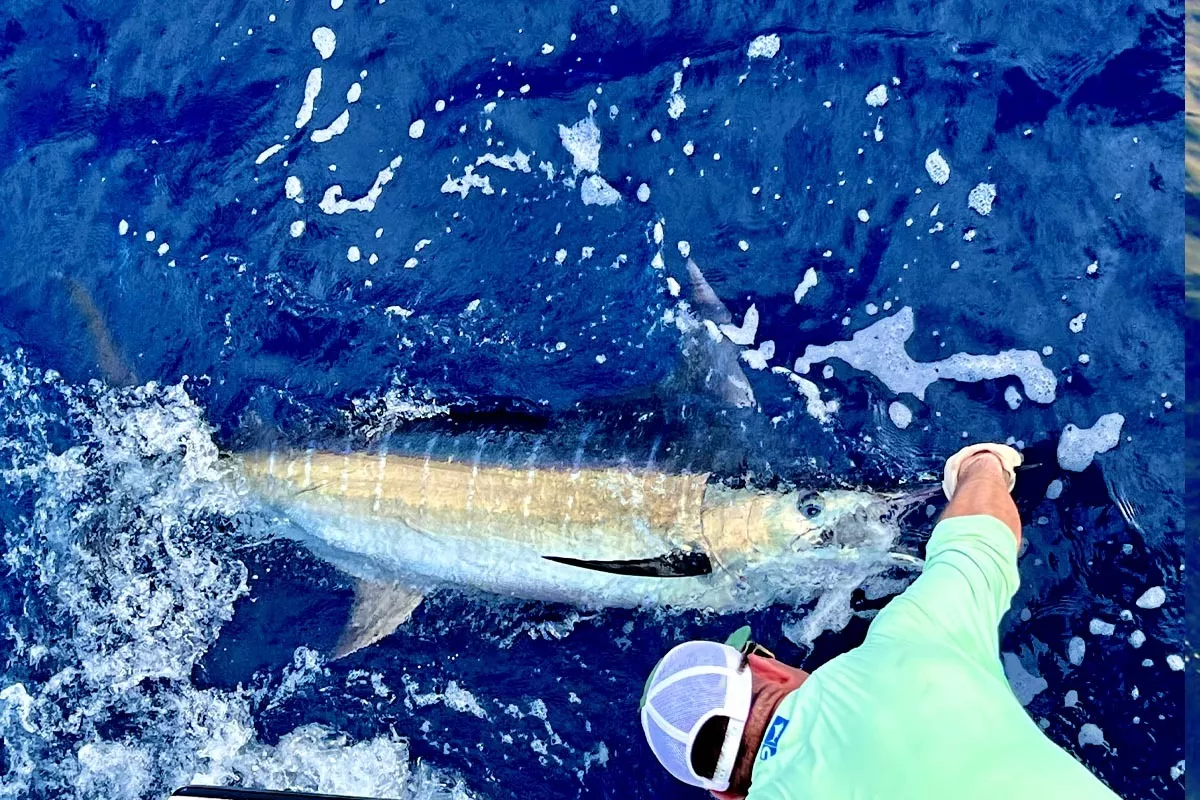
Most serious blue marlin crews in modern offshore circles release their fish, and I am firmly in that camp. The species is currently classified as Vulnerable on the IUCN Red List with a decreasing population trend, driven largely by commercial longline pressure and historical harvest. Handled right, a released blue swims off strong and lives to be caught again.
Circle hooks are central to responsible fishing with natural baits. They dramatically reduce deep-hooking and gut-hooking, the primary causes of post-release mortality. Circle hooks are mandated in most major billfish tournaments any time natural bait is used, including pitch baits, drift baits, and bait-and-switch presentations, while straight artificial lures are still commonly fished on J-hooks. Beyond hook choice, the handling is what matters: keep the fish in the water alongside the boat, minimize air exposure, use a bill rope and proper dehooking tools to control it safely, and confirm it is swimming strongly before you cut it loose. We cover smart billfish handling and release practices in our In The Spread Blue Marlin Fishing: Teasers and Baits video.
On the regulatory side, blue marlin are managed as a highly migratory species, with oversight from NOAA Fisheries in U.S. waters and internationally through ICCAT in the Atlantic, IATTC in the eastern Pacific, and WCPFC in the western and central Pacific. Permits, minimum sizes, and reporting or landing requirements change, and they differ by jurisdiction. Before you fish, confirm the current rules directly with NOAA Fisheries and the relevant management authority for the waters you are fishing rather than relying on anything you read secondhand, including this article.
Frequently Asked Questions About Blue Marlin Fishing
What is the world record blue marlin?
The IGFA all-tackle Atlantic record is 1,402 pounds, 2 ounces, caught off Vitória, Brazil in 1992 by Paulo Amorim. The Pacific all-tackle record is 1,376 pounds, set off Kona, Hawaii in 1982.
What is the best trolling speed for blue marlin?
The most productive range is 7 to 10 knots. Rougher water calls for the higher end to keep lures working the surface properly. On calmer days you can drop to 7 or 8 knots, especially when presenting live or rigged baits.
What pound test line do you use for blue marlin fishing?
Most crews run monofilament top-shots from 50 to 130 pound, often over braid backing for capacity. Mono stays dominant for its shock absorption. Know your line class if IGFA record eligibility matters to you.
What is the best bait for blue marlin?
Live mackerel and live skipjack are among the most consistent natural baits, while rigged ballyhoo and whole bonito lead the dead-bait trolling options. Skirted lures form the foundation of most spreads, though a well-presented pitch bait to a raised fish will out-fish plastic on many days.
What water temperature do blue marlin prefer?
They concentrate in water from 72 to 84 degrees Fahrenheit. Temperature breaks and warm current edges inside that band are reliable aggregation points, along with the bait schools that hold there.
What is the difference between a blue marlin and a black marlin?
They are separate species. Black marlin have rigid pectoral fins that do not fold flat against the body, while a blue marlin's pectorals fold back. Blues are found across the Atlantic, Pacific, and Indian Oceans, while blacks are an Indo-Pacific species. Their ranges overlap in parts of the Pacific and Indian Oceans.
Is blue marlin good to eat?
It appears on menus in Hawaii and Japan, but as an apex predator it can carry high mercury levels, particularly in large specimens. Combined with its Vulnerable conservation status, most experienced anglers consider harvest hard to justify. The meat quality is outstanding.
Putting It All Together on the Water
The gap between an angler who occasionally raises a blue marlin and one who consistently puts fish in the leader comes down to accumulated knowledge, and every element compounds. Tackle selection, spread configuration, lure rigging, boat positioning, fight tactics, and release technique are not separate skills. They are one system, and a blue marlin will find the weakest link in it every single time. Build each piece with intention and the fish start to come together.
Login
to leave a review.
User Reviews
There are no reviews yet.
Complete Dredge Pulley Setup Guide
Saltwater
12.28.2020
High Speed Wahoo Trolling Rig
Saltwater
09.08.2018
Fishing Light Tackle for Yellowfin Tuna
Saltwater
09.08.2018


0