
Most anglers obsess over which lure to buy and ignore what actually gets bit. This is the trolling breakdown: the plugs, feathers, cedar plugs, and spreader bars that raise yellowfin, blackfin, and bluefin, and the speed, position, and color calls that make any of them work.
Running Tuna Trolling Lures That Raise Fish
The best tuna trolling lures for yellowfin are small skirted lures and squid imitations run well back in a staggered spread, pulled around 7 to 8 knots in clean water away from the wake, with bigger, noisier lures up close to raise fish. That's the accepted answer, and most of it holds. What it leaves out is how yellowfin actually choose, and on our Kona shoot the fish chose the lure nobody expected.
This piece covers the trolled spread: what you run, where each lure swims and how fast you pull it. Casting to busting fish, chunking and live bait are their own games, and the rest of how we find and catch yellowfin lives in our yellowfin tuna fishing tips and tactics.
A Kona Yellowfin Spread Built to Look Like Feeding Skipjack
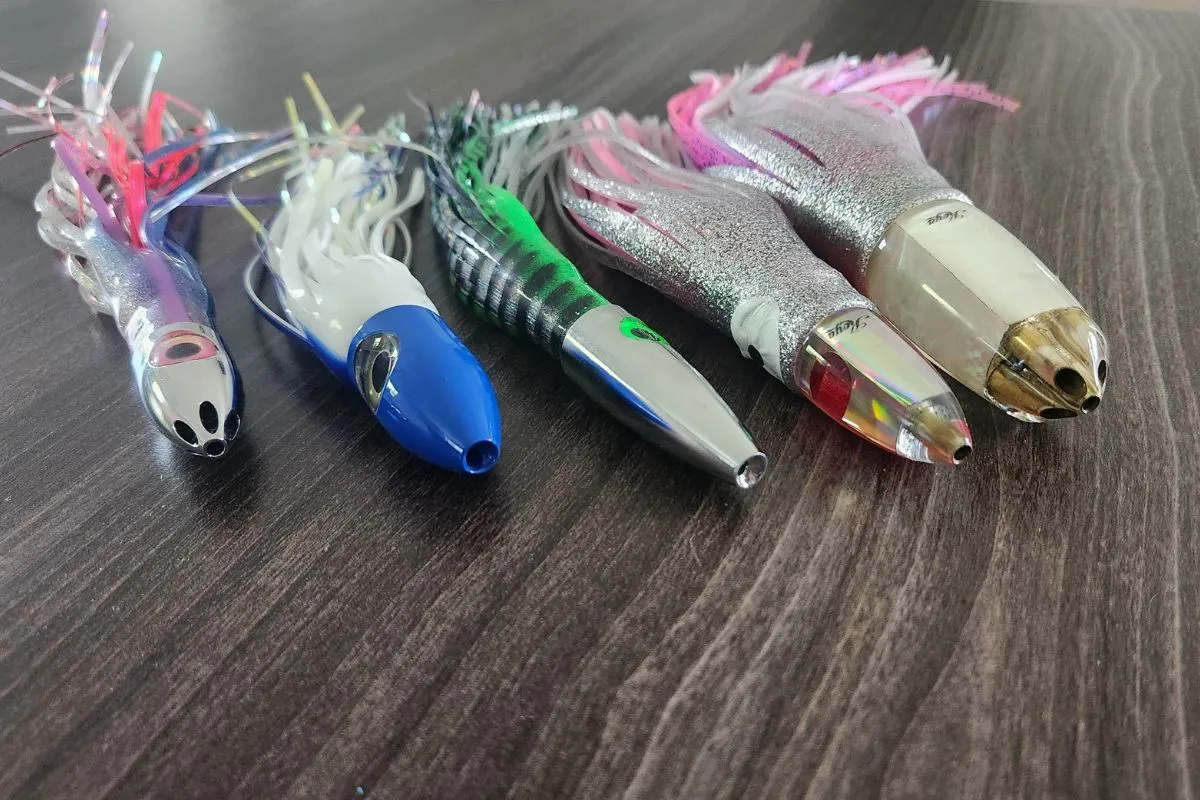
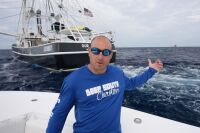
We filmed with Shawn Rotella off Kona in early summer, when a big push of migrating yellowfin comes through on its rotation. Fish that have just arrived, he says, are "a little more suicidal than normal," and they eat trolling lures well. Shawn runs one spread for marlin and tuna together, because off Kona both are eating the same things.
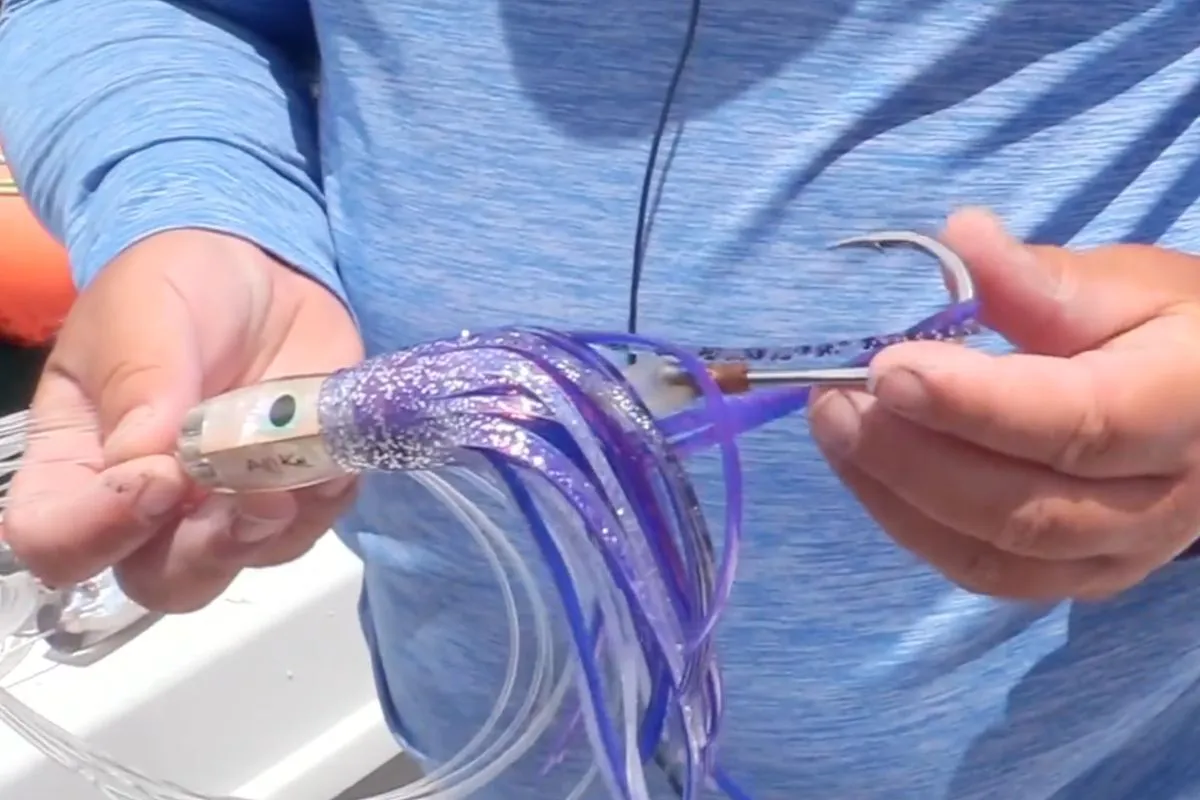
He doesn't think of that spread as five separate lures. He thinks of it as one scene. "We're gonna try to basically look like a feeding school of skipjacks." The two lures up close are big, loud and shaped like skipjack, and the head inside one of them is a skipjack he molded himself and turned into an insert. Behind them everything gets smaller: a medium lure, then little bullets and squid, the bait slipping out the back of the pack.
That last lure is the one he's really fishing for tuna. "If you run over a pile of hungry tunas, they're gonna see those little small baits behind the pack sort of get away, and they're gonna pick those little outlying ones off." Or, as he put it later, the tuna come through thinking, "Hey, you guys missed one, it's back there. I'm gonna go grab it."
When Yellowfin Lock Onto One Size of Bait
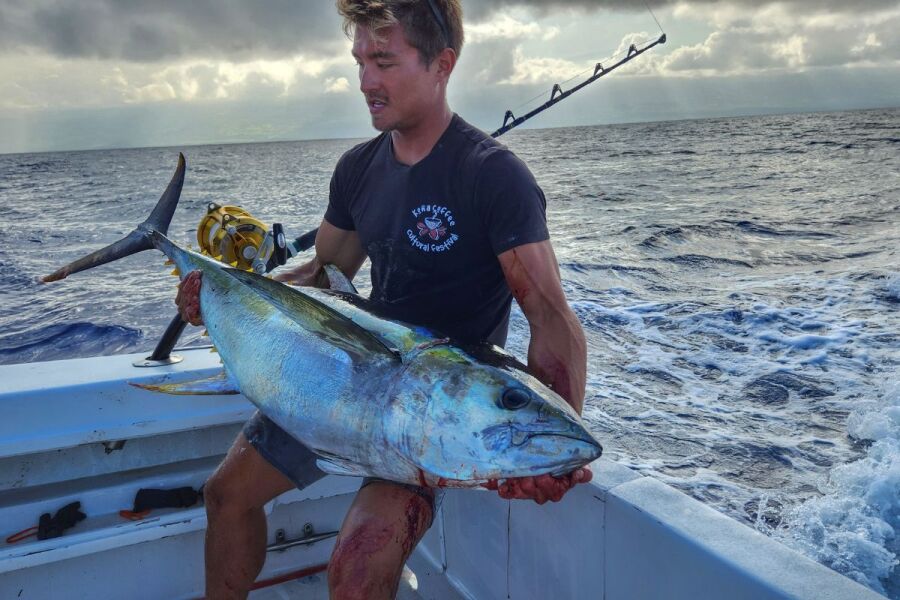
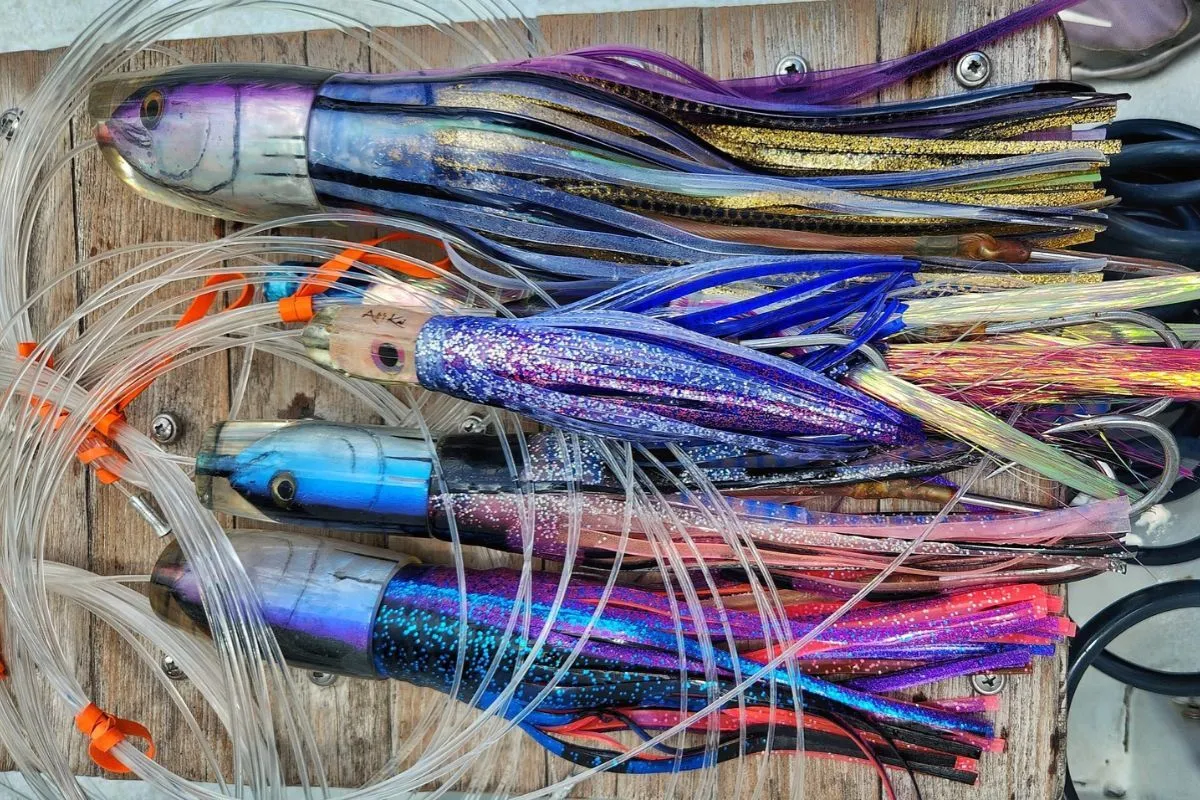
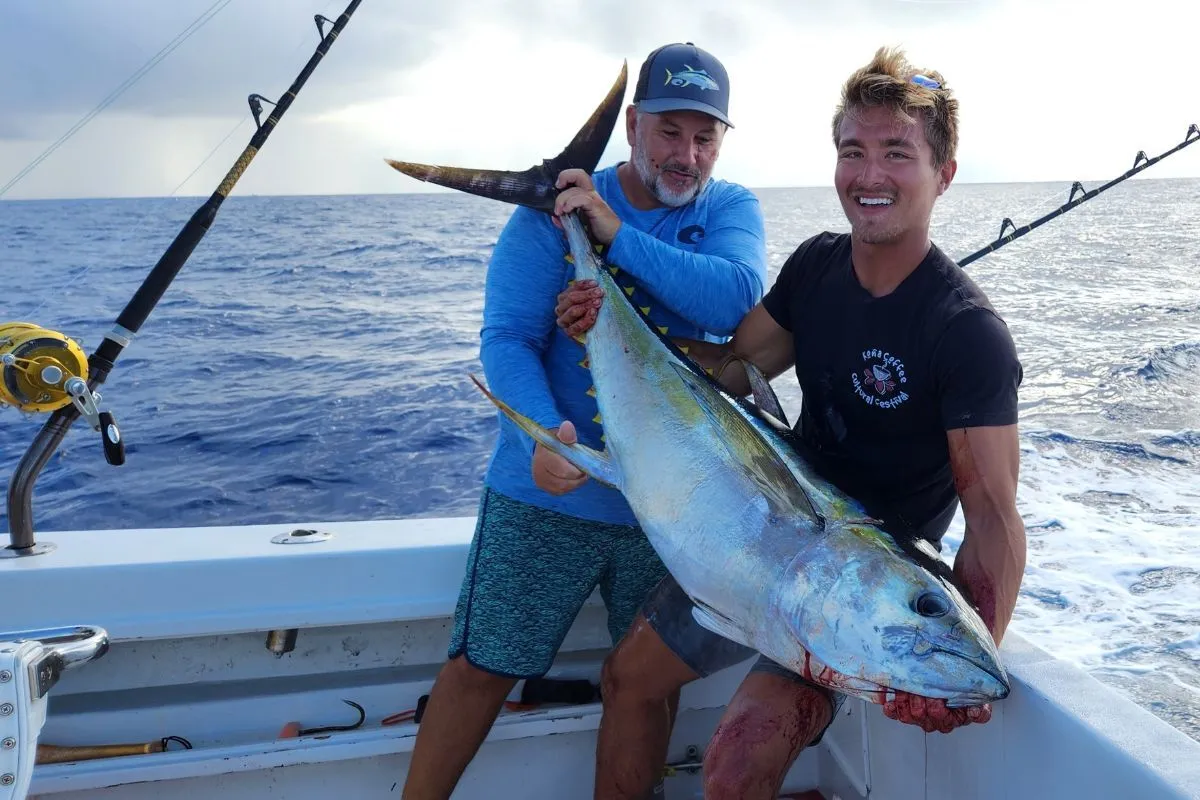
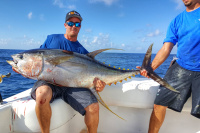
Shawn's thinking makes sense. The small lures out the back look like little flying fish or squid getting away from the pack, and in theory that's what a tuna picks off first. The fish we caught didn't read it that way. It ate the skipjack lure, one of the biggest in the spread. That goes against conventional wisdom, but this is nature. The yellowfin in that area were probably feeding on bigger baits that morning, so that's what this one keyed in on. You see this a lot with tuna. They get so focused on one type or size of bait that they will completely ignore everything else.
The fish was full of squid when it came up, which made the choice stranger. Shawn took it in stride: "You think you know what you're doing and then the fish just tell you, ah, you don't really know anything." He also took it as information. With that much squid in the fish, he figured a little daisy chain of squid run out long might pick up another bite, and they went to dig one out.
So build your spread around what the tuna are eating. Off Kona that comes with a complication: big marlin eat the tuna, and at times they eat really small baits too. Shawn sets his spread for the marlin that could show up at any moment, and his thinking still puts the tuna on the smaller lures farther from the boat. Mostly I was surprised the tuna ate the bigger lure. You usually don't see guys running lures that big for tuna, but this scenario came down to the ever-present big marlin.
Why Tuna Stay Out of Your Wake
The long-held rule offshore is that lures swimming in clean water, outside the turbulence of the prop wash, get bit more than lures buried in it. Shawn has watched yellowfin prove it. When fish are busting near the boat, "they'll feed right next to you and they'll feed in front of you, but you'll never see one do that right behind you." He rarely sees one blow up inside the wake or the bubbles. "I think something puts 'em slightly off right there."
That's why his smaller lures sit farther back, and it shapes how he works fish he can see. When yellowfin blow up off to one side, he'll sometimes put the boat into a turn so the lures swing out over the fish. The noise off the back of the boat is then projecting away from where the tuna are feeding, and he has picked up bites that way.
What Shawn says about tuna avoiding the boat and the bubbles of the wake is what I hear from tuna fishermen around the world. That's why you have to be careful not to run over the school. Most times you can get close and throw lures, or get well ahead of the school and pull baits across and in front of where the tuna are moving.
When the fish are up and close enough to reach, the casting side of that choice is covered in our article on casting lures to yellowfin and bluefin tuna.
Setting Tuna Trolling Lures by the Wave
Most spread advice gives distances in feet. Shawn sets his lures by the waves in his wake instead. He starts on the third wave and staggers everything side to side, each position one wave farther back than the last.
Some crews run what he calls the dice pattern, laid out like the five on a die: the two corners parallel to each other, the center in the middle and two lines out long. He prefers the stagger. "That way I can turn any way. I wanna turn as tight as I wanna turn," and the lures come inside each other, which avoids a lot of tangles. Kona's light wind helps. A line that blows over another one won't wreck the spread, so he can push the center as far from everything else as it will go.
That center lure matters most for tuna. "Most of our tuna bites are gonna come on that center far away."
Trolling Speed and Color for Yellowfin Lures
Most crews troll tuna lures somewhere between 6 and 10 knots and adjust until every lure swims right. For marlin or tuna, Shawn brings the RPMs down to 7.5 to 8 knots. It's a cleaner wake, and the lures run well: "they still get up and splash and pop, but they're not like tumbling out going crazy."
High-speed trolling for wahoo is the opposite. He runs 10 to 12 knots with much heavier lures that stay well under the surface, the program covered in our wahoo trolling lures article.
The usual color advice keys on water clarity and light. Shawn picks by what the tuna are eating. On his smaller tuna lures his go-to is pink or a pinkish purple, "real squid looking" colors. When the yellowfin are eating fish more than squid, blue and silver get picked out more often.
Rigging Tuna Lures for Marlin Water
Everything in Shawn's spread is rigged heavier than a traditional tuna lure, "because we just don't know what's gonna eat it." Blue marlin of 500 to 800 pounds have no problem eating a three or four inch squid, just as a tuna would. "It is Kona. We could have 10 pound mahi mahi try to eat the biggest lure and we can have seven, 800 pounders try to eat the little tiny lure, which has happened on numerous occasions."
On his smaller lures he runs a stout, heavier-gauge Quick Rig Koga hook in an open style, not curved like a southern tuna hook, since billfish eat these lures too. On a strictly billfish lure he'd set the hook as far back in the skirt as it would go. Fishing for both, he pulls it farther up toward the head, because tuna like to bite the front. A 100-pound tuna can inhale a small lure whole anyway. Smaller tuna are where you might miss a few.
On the bigger lures he likes a closed-style hook, which he uses for billfish and which works on tuna because "it's gonna find its way into the corner of the jaw. Almost circle hook-esque." That's the hookup you want. A tuna hooked in the snout, in his words, is "kind of like pulling on a giant live bait. You have absolutely no control over 'em when they're next to the boat." The yellowfin we boated had swallowed a billfish-rigged lure, and the hook was right in the corner of its mouth.
Hook choice for the rest of tuna fishing, from trolling to bait, is broken down in our article on hooks for tuna fishing.
Timing the Yellowfin Bite on the Tide Change
Shawn has never noticed a major difference between incoming and outgoing tide. What he watches is the window just before and just after the peak high or peak low, "by far the most active time." The first feeding window is the early morning low-light bite, with fish up on the surface. The next is the tide change itself.
When the fishing is really good it doesn't matter, and they bite all day. When it's normal and bites are hard to buy, you need to be in the right spot at the right time, and that means planning the day backward from the tide. "We know the tide change is seven o'clock and it takes me two hours to troll there. Well, I'm leaving at five."
Off Kona in summer the high tides fall in the afternoon and move more water than the lows. A ledge the current only grazes can turn on when a big incoming high pushes that current straight into it. "If the ledge is here, you want the current running into it some way, shape or form."
Our bite was the textbook case. A strong south current was running, and we hooked the fish where the bottom contour turns out and the current sets up upwelling in that pocket, right on the tide change, as the boat next to us hooked up too. The only thing that didn't follow the textbook was the lure it chose.
Yellowfin tuna fishing videos
Yellowfin tuna around Venice trawlers feed competitively on bycatch discharge, creating brief windows where aggressive strikes can overwhelm standard tackle and technique. Captain Josh Howard explains how live bait selection matches trawler discharge, why hook and drag specifications prevent lost fish around moving vessels, and when these mobile feeding situations produce versus platform fishing.

Yellowfin tuna in the Bahamas punish anglers who rely on yesterday's patterns. RJ Boyle, Mark Hamilton, Triston Hunt, and Chip Sheehan explain how bird behavior interpretation, real-time chumming adjustments, and trip planning decisions separate productive offshore days from expensive fuel burns with minimal fish contact.
Yellowfin tuna reject more baits than they strike when chunking and drifting. RJ Boyle explains how chum distribution rate, bait matching, and drift positioning determine whether competitive feeding behavior triggers or fish simply feed selectively on free chunks without committing to hooked offerings.
Venice, Louisiana is known for its abundant yellowfin tuna fishing, with captains and crews using advanced tactics and techniques. Capt. Josh Howard utilizes trawl boat by-catch to create a healthy chum slick, while In The Spread fishing video teaches ideal baits, chumming, and chunking. Fishing in the Gulf of Mexico relies on working fixed or mobile fish aggregators, making trowl boats an excellent fishing opportunity.
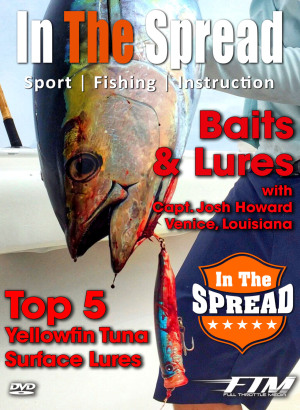
Yellowfin tuna around Venice, Louisiana oil platforms reject surface lures that work elsewhere in the Gulf. Captain Josh Howard explains how Mississippi River discharge affects baitfish profiles, why popper and swimming bait selection must match local forage size and behavior, and when surface presentations outperform subsurface approaches around Louisiana oil structures.
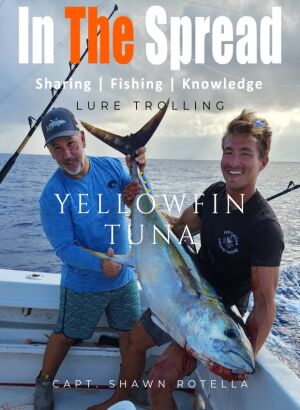
Yellowfin tuna trolling tactics shift dramatically when skipjack schools appear, demanding lure adjustments most anglers miss. Captain Shawn Rotella's Kona expertise reveals how predatory patterns, tide influences, and habitat structures determine which lure colors and trolling speeds trigger strikes from Thunnus albacares, plus post-catch gilling and cooling techniques preserving quality for premium table fare.
Yellowfin Tuna Trolling Lure Questions
What speed should you troll lures for yellowfin tuna?
Most crews troll tuna lures between 6 and 10 knots, adjusting until each lure swims cleanly. Shawn Rotella runs 7.5 to 8 knots off Kona when he's fishing for marlin and tuna, because the wake stays cleaner and the lures splash and pop without tumbling. High-speed wahoo trolling at 10 to 12 knots is a different spread entirely.
Where in the trolling spread do yellowfin tuna usually bite?
Usually on the lures farthest from the boat. Tuna tend to avoid the water directly behind the transom and inside the prop wash, so smaller, quieter lures run well back draw most bites. In Shawn Rotella's Kona spread, set by wake wave, most tuna bites come on the center lure, the farthest back at wave seven.
What color trolling lures work best for yellowfin tuna?
Match the color to what the tuna are eating. When yellowfin are feeding on squid, pink and light purple squid colors are a strong go-to on small lures. When they're eating fish more than squid, blue and silver often get picked out more. Water clarity and light still matter, so carry both families of color.
What One Kona Yellowfin Says About Tuna Trolling Lures
Shawn's spread did almost everything it was built to do. It put the boat on the right current at the right time, raised a yellowfin on the tide change and hooked it in the corner of the jaw. The fish just wanted a bigger meal than anyone planned for. Build the spread around what the tuna are eating, keep the small stuff back where shy fish feel comfortable, and rig every line for the biggest fish in your water, because sooner or later it eats the lure you least expect.
Watch the whole spread go out, position by position, in Lure Trolling for Yellowfin Tuna with Shawn Rotella.
For live bait, chunking and the other ways yellowfin get caught, browse our yellowfin tuna fishing videos.
Login
to leave a review.
User Reviews
There are no reviews yet.
Setting Up a Dredge Pulley for Billfish
Saltwater
12.28.2020
High Speed Wahoo Trolling Rig
Saltwater
09.08.2018
Fishing Light Tackle for Yellowfin Tuna
Saltwater
09.08.2018
0