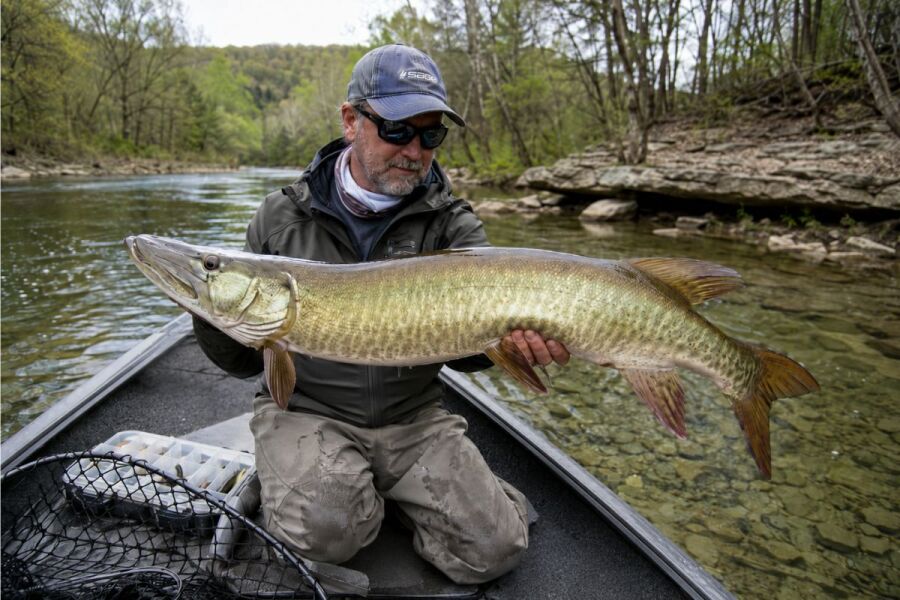
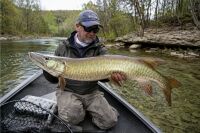
Tennessee's Collins River holds a self-sustaining muskie population that pushes fifty inches, and most northern anglers have never heard of it. Here is the fishery's story, the three ramps that get you on the water, the gear that handles these fish, and how to time a trip to the spring spawn or the fall feed.
Dwayne Hickey shares proven winter musky techniques from decades on Tennessee's Collins River. Learn where cold water muskies hold, which lures trigger strikes below 50 degrees, and how to fish creek mouths and current breaks when other anglers stay home.
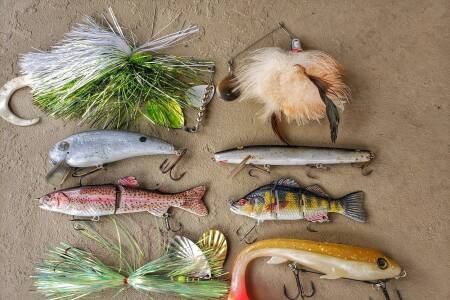
Southern muskie fishing in the summer is challenging due to the lack of closed seasons and ice covered rivers. However, abstaining from fishing is short but crucial for species health. Fall offers excellent action with various lures, including top water and spinnerbaits. Swim baits are available in various sizes and colors for clear and stained river water.
The Tennessee muskie, a popular fish, begins its spawning ritual in Southern waters when water temperatures reach mid-50 degrees. Muskie fish, like walleye, white bass, and suckers, travel up to 20 miles to spawn. After recovery, some fish stay in upper reaches of rivers. Muskie males seek female partners in late March until mid-April.
Live bait for muskie fishing is effective, especially in the fall/winter season. However, some argue it's unfair due to gut hooking. To avoid this, muskie anglers use two hooking systems: a quick strike rig, which prevents gut hooking musky, and a circle hook rig for safe hook-ups. Large baits like gizzard shad, bullhead catfish, and suckers are suitable for deep water lakes.