
Musky fly fishing on a southern river comes down to the slow water beside the current and casts that land closer than feels safe. Chad Bryson works the Collins River in June, from confluence eddies to root wads, and shows why a fly four feet from the cover isn't close enough.
Musky Fly Fishing on the Collins River with Chad Bryson
(00:40:57)
Watch Full Video
View Short Trailer
Instructor:
Chad Bryson
Description
/
Review
/
Instructor
Where River Muskie Hold for Fly Anglers
Musky fly fishing on a river starts with slow water next to fast water. Chad Bryson filmed this on the Collins River on June 2, part of what he calls the South's "annual year-round muskie fishery" in its streams and rivers. Where a tributary meets the main river, "you always wind up with a big eddy pool... water kind of going around in a circle, waiting its turn to go downstream. That's where muskie like to stay. They don't like to stay in the fast current" the way a trout would.
He reads the bank the same way. "Anytime you see that exposed in the river or creek bank," he says of a big tree's root system, "you can count on the fact that underneath it is a big hole. May not be 10 feet deep, but in comparison to what the rest of the river or creek is around you, it's going to be deeper."
And he doesn't skip the small water. "Every musky river in the South has these fabled pools that everybody says, 'Oh, yeah, it's the only place there's musky in the river.'" Chad has watched jet boats run past a tiny eddy "just big enough to hold one fish" day after day. "Don't bypass the tiny little" spots.
How Close a Muskie Fly Has to Land
Closer than most anglers are willing to cast. "I say, 'Cast all the way to the tree trunk,' and someone will cast invariably, and it lands four feet from the trees. That's not close enough. It has to touch the trees. The hair on the fly needs to touch the root wad at the base of the tree."
That means hanging up now and then. "If you're not getting your fly hung in the structure that you're casting to from time to time, you're not getting the fly close enough. So don't be afraid to get in there, get it hung, paddle in there."
Patience is the other half. "Muskie eat when they damn well get ready to eat, and not a second before. They'll lay up all day with their belly full... and then something will happen, and they'll just decide, 'You know what? I'm going to kill it and eat it.'"
Inside the Video
- The water: the Collins River on June 2, from a tributary confluence to fast runs and small eddies
- The cover: submerged trees, root wads and undercut banks
- The flies: big bucktail flies, soaked before the first cast
- The fish: a muskie caught and revived for close to 30 minutes
Musky Fly Fishing Questions
How do you revive a muskie caught on the fly?
Slowly, head upstream. Chad spent "25, almost 30 minutes reviving this fish." Pulling a fish back and forth pushes water into its gills backward, and a net can compress the gill plates. "You caught that fish, the fish ran a marathon and exhausted itself." Fish released too early can be found floating downriver.
How many figure eights should you do with a muskie fly?
More than you think. Chad digs the rod deep, rips the fly and does several eights. "Everybody also asks me, 'How do I know when enough figure eight is enough figure eight?' Truth is, I don't know either. Just do it till you're sick of it, and then do it a little bit more."
Why soak a muskie fly before fishing a spot?
So the first cast counts. A dry bucktail fly won't sink or swim right. "When I pull up to a spot... before I do any of that, I'll pitch a fly just off the side of the boat in the water just so it can soak really good," Chad says. Then the fly "has got all the action right off."
Fly Fishing a Southern River for Muskie
Chad reads a southern river for muskie the way a trout guide would, then puts the fly closer to the wood than most anglers dare. For the rods, reels, lines and leaders behind it, watch musky fly fishing gear with Chad Bryson.
Login
to leave a review.
User Reviews
Jeff Snyder
04.23.2020
0
Anonymous
09.14.2018
0
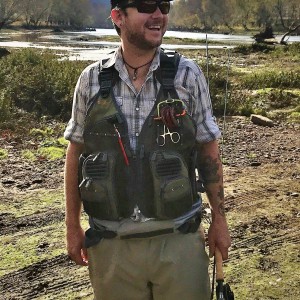
Capt. Chad Bryson
No sir, Chad Bryson isn't your typical person. He is a maestro of the wide aquatic wilderness and a man of the river, a wise man of the stream. He has served as an angler, a guide, and even a product development consultant for more years than a catfish has whiskers. He is regarded as a pillar of the fly fishing industry.
Read moreVideos
We Recommend

0