
Late summer pushes big black drum up into the Nature Coast backwater channels to forage, and the water is often too stained to see bottom. Capt. Madison MacDonald reads the tailing fish and golden flashes anyway, and puts a small blue crab right on the eat.
Sight Casting Big Black Drum on the Nature Coast
(00:36:40)
Watch Full Video
View Short Trailer
Instructor:
Madison MacDonald
Description
/
Review
/
Instructor
I have chased fish from Madeira to Kona and across the Indian Ocean, and I still get a jolt out of watching a good stick pick apart shallow, murky water for a fish most anglers drive right past. That is what happened when I filmed with Capt. Madison MacDonald along the Nature Coast, guiding Capt. William Toney onto big black drum that had pushed up into a backwater channel to feed. The water was off color. You could not see bottom. And yet, if you knew what you were looking for, the fish gave themselves away.
Madison is the nephew of Homosassa legend Capt. William Toney, and he grew up learning this water the way you only can when your family has fished it for generations. He poles an 18 foot Maverick skiff for redfish, seatrout, and snook, runs to Bay Port when the tarpon show, and for a change of pace he hunts these bruiser drum on the same flats and backcountry. Sight fishing is the heart of everything he does. If you want the full picture of the fishery this article lives inside, start with the black drum fishing video collection, then come back here for the why behind what you are seeing.
This is not the pretty, gin clear, tails in the sunlight version of drum fishing you read about everywhere else. This is late summer, stained water, and a fish that feeds by scent as much as sight. Learn to read it and you will catch drum when the conditions look wrong to everyone else.
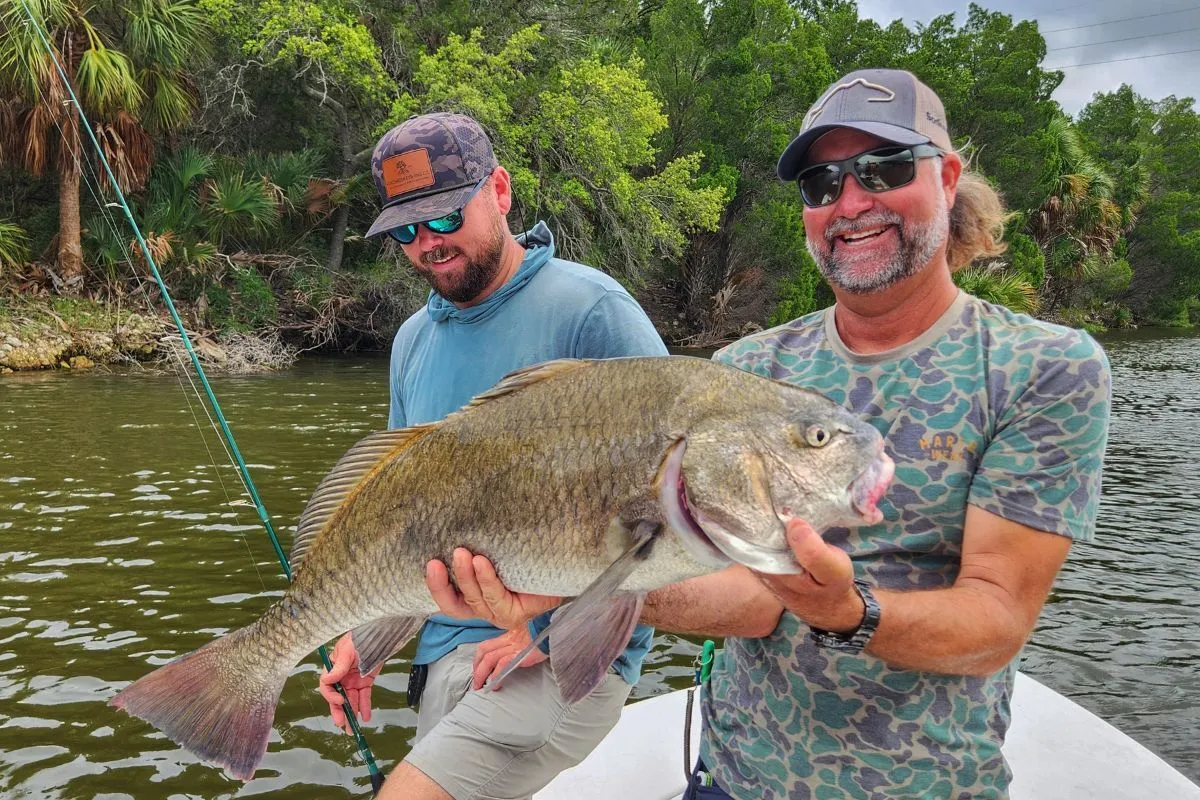
Why Big Black Drum Push Into Backwater Channels in Late Summer
Most people think of black drum as a cold weather fish, and along the Nature Coast that reputation is earned. When the water drops, the big schools stack into deep holes and warm river inlets, which is a completely different game covered in Capt. William Toney's winter black drum approach. But that is not the fish we were on.
In late summer, the big drum do something a lot of anglers never key on. They push up into the stained backwater channels of the backcountry and work the side banks, hunting the crabs and crustaceans that move with the water. These are not open flats. The water is often off color, the fish hold tight to the bank edge, and they concentrate in a way that rewards an angler who can read subtle signs. The forage is there, the current delivers it, and the drum set up along the side bank structure to intercept it.
That is the whole reason this window matters. You are not covering water hoping to bump a fish. You are targeting a specific seasonal behavior in a specific kind of place. Species, season, structure, and food all line up. Miss the timing and the fish are somewhere else. Hit it, and you are casting to fish that are there to eat.
Reading the Water for a Golden Flash
Here is where most anglers fail before they ever make a cast. In off color water, you are not going to see a fish laid out on white sand. You are looking for sight casting clues that are far more subtle, and Madison scans the bank for them constantly.
The first is a tailing fish. A big black drum feeding on the bottom tips down, and its broad tail breaks the surface or waves just under it as the fish roots for food. The second is what Madison calls the golden flash, the glint of the drum's flank turning in the stained water as it works the side bank. The fish appears, then disappears, then shows again a few feet down the structure. It is a moving target that never fully commits to being visible.
Watch for these signs as the fish forage:
- A broad tailing drum breaking the surface as it feeds head down on the bottom
- The golden flash of a turning flank in murky water along the bank
- Mud clouds and stirred bottom where a fish has been rooting for crabs
- Nervous movement and pushes of water where you cannot see the fish itself
The mud clouds matter as much as the fish. A drum stirring the bottom leaves a signature even when the animal has slipped out of sight, and that tells you where to put a bait. This is the same read that makes anglers deadly on the Nature Coast redfish flats, except the water is dirtier and the fish are heavier. It is a waiting game. You spot, you wait, you cast to the spot, and you stay patient enough to let the fish come back to it.
Boat Positioning on Feeding Drum
You can spot every fish along the bank and still blow the whole thing by running your boat into the zone. Boat positioning is the quiet skill that separates anglers who catch these fish from anglers who watch them leave.
The principle is simple even if the execution takes practice. You do not want to stage the boat right on top of the fish, because a big drum in skinny, stained water spooks and takes the school with it. You set up a safe distance off the feeding zone, far enough that you do not push the fish, close enough that you can still place a bait accurately where they are working. Madison knows where the drum will hold relative to the structure they are on, so he stages the boat to that spot rather than to the fish he can see at that moment. Get this wrong and it does not matter how good your cast is. The fish are already gone.
How he reads a specific piece of structure to know exactly where to stage, and the working distance he runs on this kind of water, is something you want to watch him do rather than read about. The boat positioning instruction library is built around exactly this kind of decision making across species and situations.
The Small Blue Crab Presentation
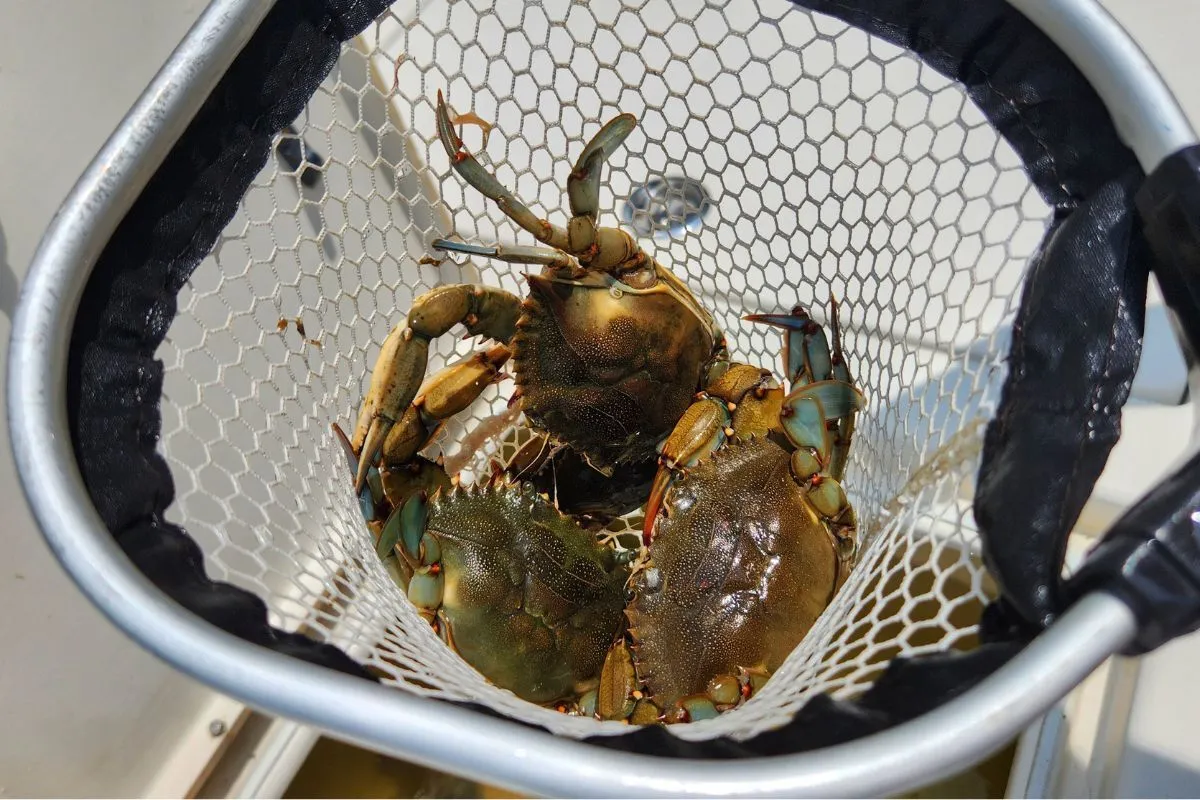
Bait choice on these fish is not a debate. Small blue crabs are what Madison runs, and the reason comes straight from how the fish is built. Black drum have crushing plates in their throat made for grinding up hard shelled prey, and along these backcountry channels crabs are the natural forage the fish are already keying on. Match the food and you are ahead before the bait ever lands.
The other half of the equation is scent. Black drum are scent feeders as much as sight feeders, which is exactly why they can hunt effectively in the stained water where you can barely see them. A crab that leaks scent into the current gets found, even by a fish that never saw it drop. When the bite is slow, releasing more scent into the water is one of the levers Madison pulls, and how he doctors a crab to do that is one of the details worth watching him demonstrate rather than guessing at.
The presentation itself is patient. You let the crab get all the way to the bottom in the zone where you saw a fish or saw the mud cloud, and you wait. The drum you spotted, or another one working the same bank, will eventually come across it. You are not retrieving. You are delivering a scent trail to a fish that feeds with its nose down.
If you want to learn this straight from the source, Capt. Madison MacDonald's instructor page is where his full slate of Nature Coast instruction lives.
The Eat and the Hookset
This is the part that costs people fish, and it is worth slowing down on. When a big black drum finds your crab, it does not just inhale it and bolt. It sucks the bait in, crushes it with those throat plates, and then eats it. That whole sequence takes a beat. If you feel the first pressure and swing, you pull the crab right back out of the fish's mouth before it ever has the bait.
So you wait. You let the drum take the crab fully, feel the weight come tight and stay tight, and then you come up on it. Patience on the hookset is not a nicety here. It is the difference between a hooked fish and a missed one.
When you do connect, the fight is its own animal. A big drum does not scream drag and blister off across the flat the way a redfish will. It leans into the current and turns that broad body sideways, and pulling one to the boat feels like hauling a wet mattress against the tide. It is a heavy, grinding tug of war. On this trip, Toney spotted a good one, put the crab in front of it, and won a slow battle with a fish he put at around 40 pounds on the water. Madison took the rod after that and worked another quality drum to the boat off the same stretch.
What It Takes to Put It All Together
Everything above is the why. It is enough to make you dangerous on late summer drum if you go put in the time. But there is a layer of the how that lives in the details, and that is what Madison breaks down on camera.
In the full course he covers how long to commit to a spot before you move, and the honest answer is more patience than most anglers have. He walks through the exact structure and tide combinations he targets, how to find that kind of water, and which stage of the tide turns the bite on. He gets into his precise tackle setup and hook choice, and how he hooks and preps a crab for maximum scent. And he lays out the biggest mistakes he watches anglers make on these fish, the errors that turn a bank full of drum into a long, quiet afternoon.
None of that is guesswork or generic advice. It is a working Nature Coast guide showing you the field decisions in the water they were made in.
A quick word on keeping fish. Black drum are managed with size and bag limits in Florida, and those rules change. Before you keep anything, confirm the current regulations with the Florida Fish and Wildlife Conservation Commission at myfwc.com, or with NOAA Fisheries for federal waters. The big spawning class drum are old fish and better released to fight again anyway, plus they more than likely will have worms.
Frequently Asked Questions About Big Black Drum
What is the best bait for big black drum?
Small blue crabs are the top bait for big black drum because the fish feed heavily on crustaceans and hunt by scent. A crab presented on the bottom, and cracked to release scent when the bite is slow, matches the natural forage drum are already eating in backcountry channels.
When is the best time to catch big black drum on the Nature Coast?
Late winter, but summer is a prime and often overlooked window, when big black drum push up into backwater channels to forage. In colder months the fish shift to deep holes and warm river inlets, a completely different pattern that calls for a different approach.
How do you sight fish for black drum in murky water?
Watch for a broad tail breaking the surface, the golden flash of a turning flank, and mud clouds where a fish has stirred the bottom feeding. The fish appear and disappear along the bank, so you spot the sign, cast to that spot, and wait for the drum to work back to your bait.
Why do black drum spit the bait before you hook them?
Black drum suck a bait in, crush it with throat plates, and then eat it, so an early hookset pulls the bait out of the fish's mouth. Let the drum take the crab fully and come tight with steady weight before setting the hook.
How hard do big black drum fight?
A big black drum does not run drag like a redfish. It turns its broad body against the current and fights like a heavy, grinding tug of war, closer to hauling a mattress against the tide than a blistering run.
Do you need heavy tackle for big black drum?
You want a medium to medium heavy inshore setup with enough backbone to move a large, stubborn fish out of structure. The fight is about steady pressure rather than speed, so line strength and a strong hook matter more than a fast drag.
Closing Thoughts on Late Summer Drum
The thing I keep coming back to after that trip is how much fishable information is sitting on top of water that looks blank. Most anglers see a stained backwater channel in August and keep driving. Madison sees tailing fish, golden flashes, and mud clouds, and he turns that read into 40 pound drum on a small blue crab. That is the whole edge. Not a secret spot, but the ability to read a fish that feeds by scent in water you cannot see into, and the patience to let the eat happen on the fish's terms.
Go put in the time on your own late summer backwater and you will start seeing what you used to drive past. When you want to shorten that learning curve, watch the full breakdown and browse the rest of the black drum video collection, or step back and take in the bigger picture of Nature Coast inshore fishing and how these fisheries connect.
Login
to leave a review.
User Reviews
There are no reviews yet.Capt. Madison MacDonald
Captain Madison MacDonald is a young Nature Coast guide and the nephew of Homosassa legend Capt. William Toney. Fishing since childhood and guiding since eighteen, he poles an 18-foot Maverick skiff for redfish, seatrout, and snook around Homosassa, Crystal River, and Yankeetown, with a deep passion for big tarpon out of Bay Port. A hunter as well, he guides quail and chases spring turkeys. With In The Spread, MacDonald breaks down sight casting to the big black drum that roam the Nature Coast flats.
Read moreVideos
We Recommend
0