
Pinfish are one of the toughest, most versatile live baits in inshore fishing. This breakdown covers the hook placements, rig setups, and presentation tactics that working captains use to put more fish in the boat. Whether you are free-lining on a flat or dropping a Carolina rig into a deep cut, the details covered here make a real difference.

Pinfish: Live Bait, Rigs, and Inshore Tactics
Pinfish aren't the glamour bait. They don't get the attention that live crabs or threadfin herring do, and most anglers treat them as a backup option rather than a deliberate first choice. Ask any captain running inshore flats from the Florida Panhandle to the Keys and you'll hear the same thing: a lively pinfish on the right hook, presented correctly, catches just about everything. Redfish, snook, seatrout, tarpon, black drum, cobia, and mahi all eat them without reservation.
What Is a Pinfish and Why Do So Many Predators Eat Them?
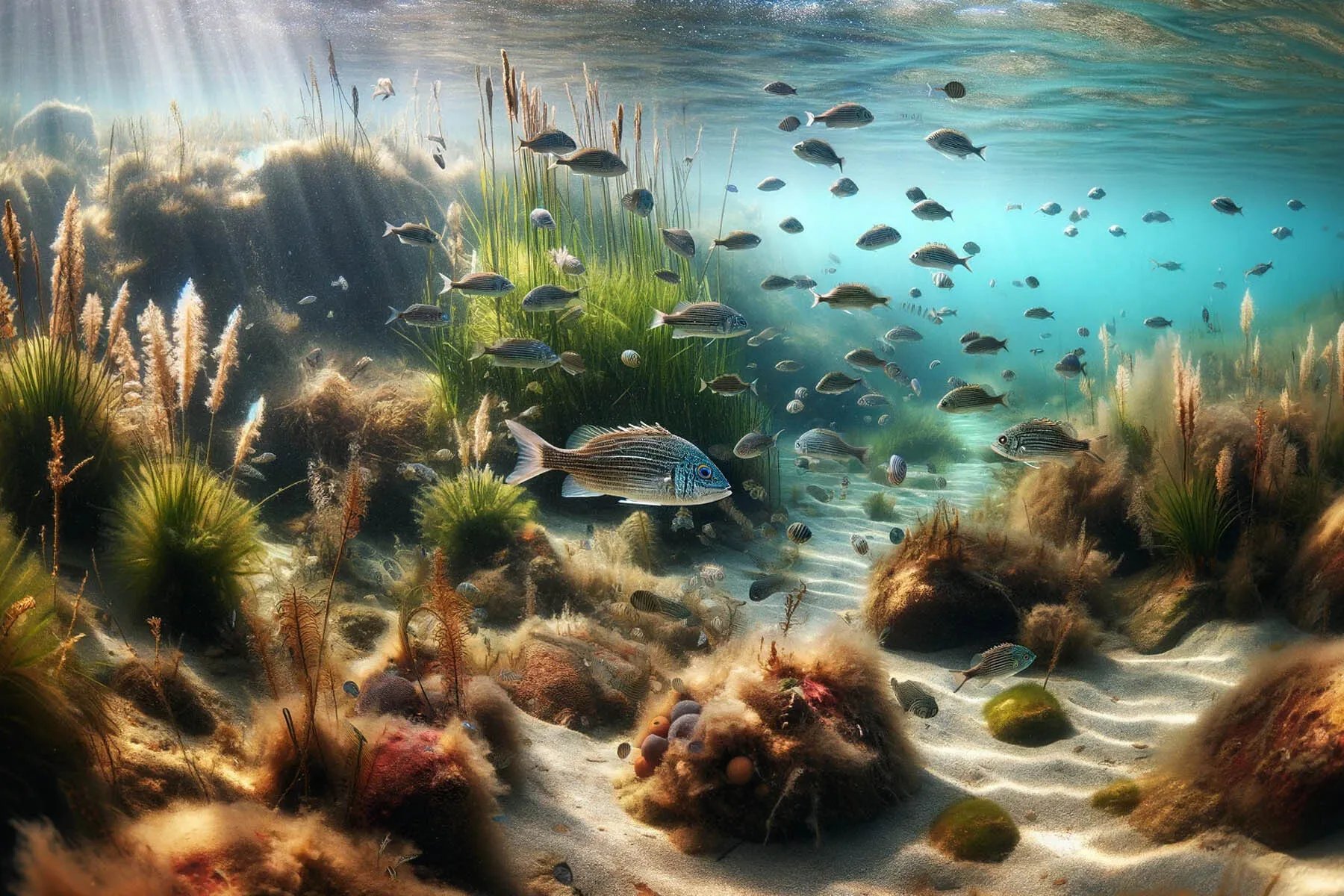
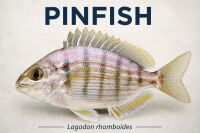
Pinfish (Lagodon rhomboides) are small, schooling members of the family Sparidae, the same family that includes sheepshead and porgy. They range from Cape Cod south through the Gulf of Mexico into the northern Caribbean and the Yucatán, and they're native to the exact estuarine habitats where most inshore predators spend their lives. Most bait-size fish run between 3 and 6 inches, though the species can exceed 14 inches at full size, with fish over 10 to 12 inches uncommon in most inshore catches.
- Durability: pinfish stay lively on a hook far longer than threadfin herring or scaled sardines, surviving hard casts and rough handling without dying, which matters when you're making dozens of presentations on a long day.
- Flash and profile: the deep, laterally compressed silver-green body catches light and mimics the natural prey profile that inshore predators are conditioned to target at close range.
- Scent: fish along the Gulf and Atlantic coasts have been feeding on pinfish their entire lives; the scent signals food, not alarm.
- The forward spine: that first dorsal spine creates a brief moment of resistance when a predator takes the bait, which can hold the fish long enough to turn on the hook and improves hookup rates on species that tend to inhale and immediately spit.

Where Do Pinfish Live and When Are They Most Available?
Seagrass beds are the primary habitat. Pinfish are almost always present in healthy grass flats from late spring through fall, feeding on plant material, small invertebrates, shrimp, and marine worms. They also concentrate around dock pilings, oyster bars, bridge structures, channel edges, and any hard bottom with attached growth. If there's structure and vegetation, there are pinfish nearby.
Availability and depth shift with water temperature. In the warmer months, juveniles stack up in shallow grass at depths of one to four feet and can be found in enormous concentrations. When water temperatures fall below roughly 60 degrees Fahrenheit in late fall and winter, pinfish move toward channel edges and slightly deeper nearshore structure, and so do the predators that eat them. A guide who tracks pinfish movement through the fall transition is usually watching a calendar that tells him where the redfish and seatrout went at the same time.
How Do You Catch Pinfish for Bait?
Catching bait from the water you're fishing beats buying or trapping days in advance. Fresh-caught pinfish carry the live scent and behavior of fish that were swimming moments ago, and that edge is real when you're dealing with pressured redfish or finicky seatrout that have seen too many presentations.
- Sabiki rigs tipped with small pieces of shrimp and dropped over grass or around structure produce fast results. Use the smallest hook sabiki available, in the size 10 to 12 range, to match the size of fish you want.
- Pinfish traps baited with bread, fish scraps, or squid and set overnight in grass flats or near structure will hold good numbers in the right size range with minimal effort.
- Cast nets thrown over visible surface schools on shallow grass are the fastest option when fish are actively schooled and light is good enough to spot them. Check local regulations on mesh size and baitfish possession limits before loading a livewell with mixed species.
Fish in the 3 to 5 inch range are the most versatile for the widest variety of inshore presentations. Larger 5 to 7 inch fish are worth keeping if you're specifically targeting big snook, large redfish, or tarpon, but they consume more oxygen and are harder to keep lively in a crowded well.
Always confirm local regulations on cast nets, traps, and baitfish possession limits before you collect. These can vary by state and sometimes by specific estuary, and they do get updated.
How Do You Keep Live Pinfish in Good Condition?
Pinfish are among the hardiest live baits you can carry, but they still need reasonable care to perform at their best. A sluggish or dying bait doesn't swim correctly, and inshore predators, especially pressured ones, will often refuse a bait that isn't behaving naturally.
- Continuous aeration: recirculating pumps outperform aerator stones because flow matters more than surface agitation alone
- Temperature matching: match your livewell water to the temperature of the water where you caught the fish; a significant differential, even 5 to 8 degrees, stresses bait quickly
- Density management: overcrowding crashes a livewell fast; allow enough space for fish to orient and move freely without sustained contact with each other
- Regular water changes: refresh livewell water throughout the day, especially in summer; pinfish produce substantial waste and deplete dissolved oxygen faster than their small size suggests
Where You Hook a Pinfish Changes What It Does in the Water
Hook placement is the most overlooked detail in live pinfish fishing, and it's the one that has the most direct effect on results. Position determines the bait's swimming depth, its action, how long it stays lively, and how it behaves when it reaches the zone where a fish is holding. There's no single correct answer here. The right position depends on what you're targeting, how the fish are positioned, and what the current is doing.
Hooking through the back, just behind the dorsal fin and avoiding the spine itself, is the standard position for most inshore presentations. It gives the pinfish full freedom of movement in all directions and lets it swim naturally at the depth you're fishing. This is the position you reach for by default on grass flats targeting redfish and seatrout, and it works equally well free-lined, under a popping cork, or on a light Carolina rig. Where it starts to break down is in heavy current, where a back-hooked fish can tire quickly from fighting the flow. If you're fishing a strong tidal cut with current running hard through it, that bait will burn itself out faster than you'd expect.
Hooking through both lips, or just the upper lip, improves casting durability and changes how the fish rides in the water. A nose-hooked pinfish swims upward by instinct, which positions it higher in the water column. Around vertical structure like dock pilings, bridge supports, or mangrove prop roots, that upward tendency works in your favor. You want the bait riding up into the shadowed zone where a snook or mangrove snapper is holding. This is also the better position when you need to make aggressive, long casts without tearing the bait loose on the presentation. The trade-off is reduced action. A nose-hooked pinfish doesn't swim as freely as one hooked in the back, so you give up some natural motion for casting efficiency.
Which Rig Fits Which Situation When Fishing Live Pinfish?
There's no universal pinfish rig, and understanding when each setup works, and when it stops working, is what puts more fish in the boat. The four rigs below cover the vast majority of inshore live pinfish applications.
Free-lining is the simplest and most natural presentation: no weight, no cork, just a hooked pinfish swimming freely. This works best in calm water under two feet of depth where the bait can cover ground without the interference of hardware. It's the hardest presentation for fish to refuse because nothing about it looks unnatural, and it's the first thing experienced anglers reach for when conditions allow. Where it fails is in wind or significant current, where you lose all control of the presentation and the bait gets pushed where you don't want it. It also struggles in water deeper than about four feet because the bait won't stay in the strike zone without assistance.
A popping cork suspends the pinfish at a controlled depth while producing surface noise that calls fish up from below. This rig is highly effective on redfish and seatrout over seagrass flats, particularly when fish are spread out and you need the disturbance to draw attention. Position the bait 18 to 24 inches below the cork for most flat-water applications. When current runs hard, shorten the leader to 12 to 18 inches to keep the bait down rather than letting it swing up and ride uselessly behind the cork. Where the popping cork fails is in cold water, roughly below 65 degrees, when seatrout and redfish don't want to rise to a surface disturbance and are feeding tight to bottom. Switching to a bottom rig in cold water often turns a slow day around.
The Carolina rig, a sliding egg sinker or bullet weight ahead of a barrel swivel with an 18 to 24 inch fluorocarbon leader, puts the pinfish near or along the bottom in channels and deeper structure. This is the right setup for redfish holding in deep tidal cuts, snook in channel mouths, grouper over nearshore hard bottom, and mangrove snapper near structure. Keep the weight as light as conditions allow. A heavy sinker kills the bait's action, and you lose the natural movement that makes live bait work in the first place. In swift current, use the minimum weight that keeps the bait in the zone rather than defaulting to heavier lead.
Which Species Will Eat a Well-Presented Live Pinfish?
More than most anglers expect, and the list extends from shallow grass flats out to nearshore reefs and well offshore.
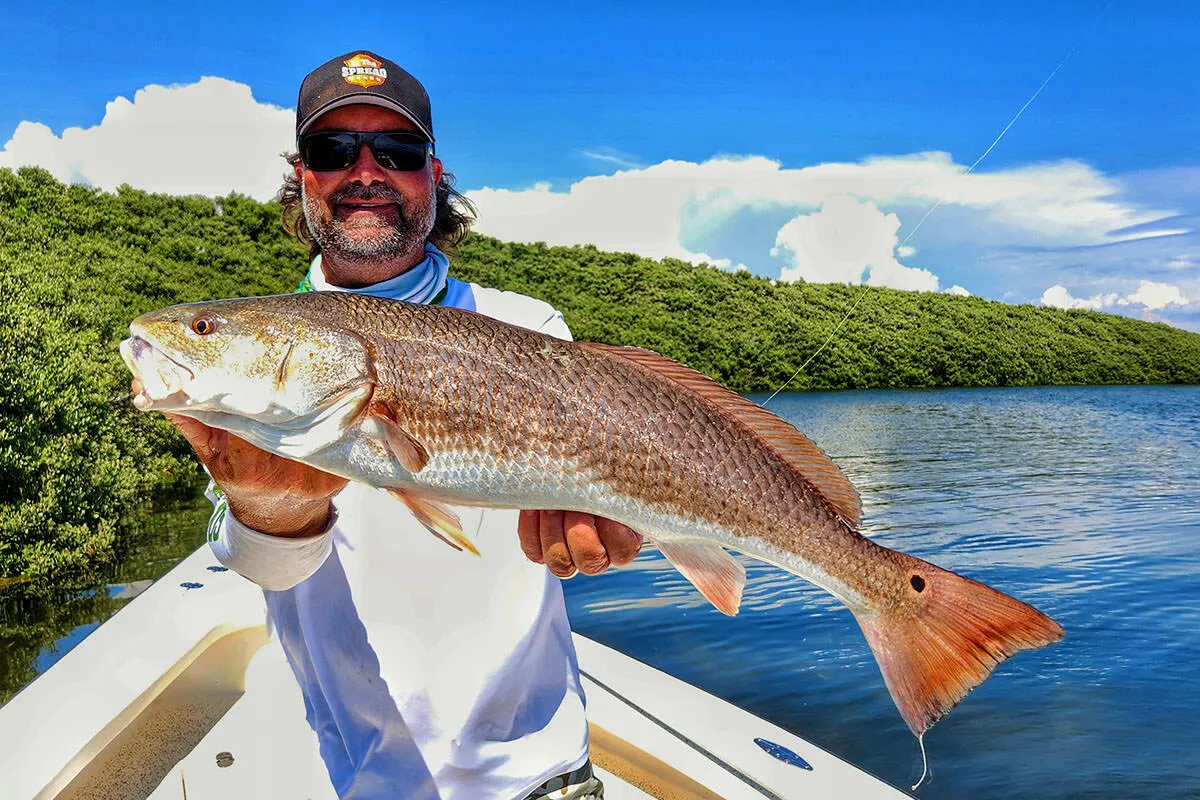
Redfish are the species most associated with pinfish as bait, and for good reason. They eat them confidently across a wide range of conditions and depths. In clear, shallow water on the flats, a back-hooked pinfish under a popping cork is one of the most field-proven presentations in inshore fishing. In deeper channels and tidal cuts during cold months, a Carolina rig is what gets the bait where fish are holding. Hook placement matters more for redfish than for most other species because fish under heavy angling pressure become selective about water column position. A bait riding six inches too high in the column gets looked at and refused. Understanding what changes their behavior in pressured conditions is worth the time. Captain William Toney's live bait tactics for pressured redfish addresses exactly how fishing pressure shifts their feeding behavior and what adjustments put fish in the box. For a broader breakdown of how pinfish fits within the full range of Gulf Coast live bait options, best live bait for redfish covers the seasonal picture thoroughly.
Snook around heavy structure respond extremely well to live pinfish, partly because of the bait's durability. Puffer fish, small jacks, and other non-target species that hang around dock pilings and bridge structure will steal softer baits repeatedly before a snook ever shows up. Pinfish outlast that activity and stay available when the fish you came for finally moves into position. Hook through the lips for tight structure work, letting the bait ride up into the shadow line where snook hold during daylight hours. At dawn and dusk, when snook move out from structure to feed in more open water, a back-hooked pinfish free-lined along the edges is often more effective than keeping it pinned to structure. See catching snook in Florida waters for a full breakdown of seasonal snook tactics and bait selection.
Seatrout over seagrass are a natural match for pinfish because they share the same habitat. The popping cork presentation works year-round on seatrout, with the caveat that water temperature changes how aggressively fish will rise to the disturbance. In summer heat above 85 degrees, seatrout often push off the flats into deeper grass edges and channel margins during the middle of the day. Finding them in those areas and adjusting leader depth accordingly produces better results than working shallow water that's simply too hot.
Tarpon eat pinfish, and this is worth stating directly because most tarpon anglers default to crabs, threadfin, or mullet and don't consider them. A tail-hooked pinfish in a feeding lane or near a congregation point generates reaction strikes when other baits don't produce. The struggling action reads as a wounded fish to a tarpon that's been pressured enough to turn away from standard presentations. Clear water actually helps here because the tarpon can see the bait struggling from a distance and make the decision before it gets too close to the angler.
Larger live pinfish are particularly effective for mangrove snapper when you're trying to select for quality fish and filter out the small juveniles that raid cut bait and shrimp constantly. The bigger profile discourages small fish while still triggering the bigger specimens you're after. Hook through the back and position the bait on the down-current side of structure, letting the bait work in front of where snapper are holding. For detailed mangrove snapper presentation tactics and tackle setups, see mangrove snapper fishing.
What Hook Size Should You Use for Live Pinfish?
Match the hook to the bait size first, then factor in the species and the structure you're fishing.
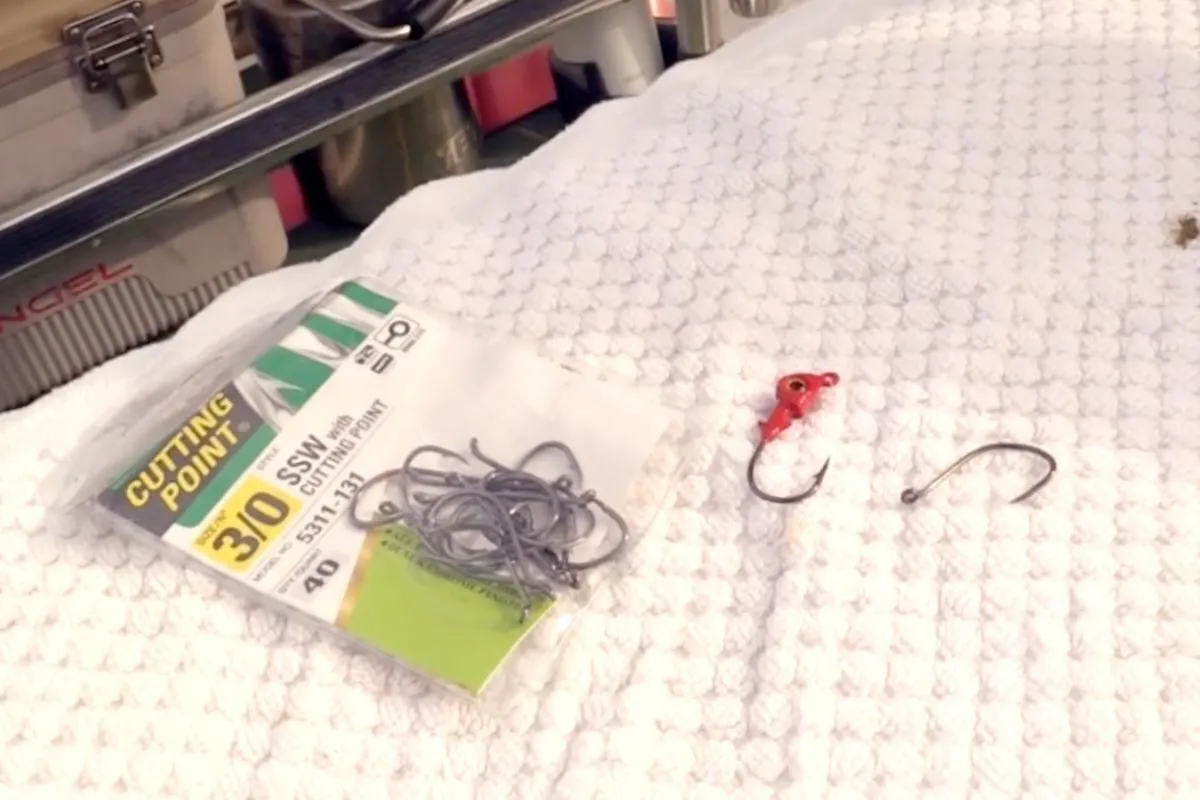
- 1/0 to 2/0 circle hooks for pinfish in the 3 to 4 inch range targeting redfish, seatrout, and mangrove snapper across most inshore conditions
- 3/0 to 4/0 circle hooks for larger 4 to 6 inch pinfish when targeting snook and tarpon near structure, where the wider gap improves leverage on a fish that drives hard at the first opportunity
- Short-shank, heavy-wire hooks over abrasive bottom, oyster bars, and bridge structure where snook and redfish can saw through lighter hooks or damage standard wire over the course of a fight
Avoid jumping to oversized hooks on smaller pinfish. A hook that overloads a 3 to 4 inch bait kills the action entirely, which defeats the reason for fishing live bait in the first place.
When and Why to Modify a Live Pinfish
Most anglers put a pinfish on the hook and fish it as-is, which works the majority of the time. But small modifications to the bait itself can shift performance when conditions demand it, and knowing when to make those changes separates a deliberate angler from one just going through the motions.
Lightly scoring the sides of a pinfish with a knife or the hook point releases blood and amino acids into the water column. This modification makes most sense when you're fishing in current with target fish holding downcurrent, using scent to locate food. It adds urgency to the presentation without killing the bait. In still water or slow-moving conditions on a flat, the modification provides less advantage because the scent doesn't travel as efficiently.
FAQ: Pinfish Live Bait
What do pinfish eat?
Pinfish are omnivores. Their diet includes seagrass, algae, small crustaceans, marine worms, shrimp, and invertebrates found around grass beds and coastal structure. This feeding habit is why they respond readily to small pieces of shrimp or squid on a sabiki rig and why they consistently occupy the same habitats as the predators that feed on them.
How big do pinfish get?
Pinfish can reach roughly 14 inches at maximum size, though fish over 10 to 12 inches are uncommon in most inshore catches. Bait-size fish in the 3 to 6 inch range are the most productive for inshore applications and represent the majority of what you will catch using sabiki rigs or traps.
Are pinfish good to eat?
Yes, though they are rarely kept for the table because of their value as live bait. Larger pinfish in the 8 to 12 inch range have mild, white flesh similar to other members of the porgy family. Their small size and significant bone structure make them time-consuming to clean relative to the yield. Most anglers pass on the table and put them in the well.
How do I keep pinfish alive in a livewell?
Run continuous aeration with a recirculating pump, match livewell water temperature to the source water, avoid overcrowding, and refresh the water regularly throughout the day. Pinfish produce substantial waste and deplete oxygen quickly at high densities. A well-managed livewell with fewer fish in good condition consistently outperforms a crowded one with poor aeration.
What is the best hook size for live pinfish?
For pinfish in the 3 to 4 inch range, a 1/0 to 2/0 circle hook handles most inshore species effectively. Step up to 3/0 to 4/0 for larger 4 to 6 inch fish or when targeting snook and tarpon near structure. Match hook size to bait size first, then factor in the target species and the rig.
How do you hook a pinfish for redfish?
The most effective and widely used position is through the back just behind the dorsal fin, avoiding the spine. This lets the pinfish swim naturally and positions the bait correctly for most redfish presentations, whether free-lined, fished under a popping cork, or on a light Carolina rig. Nose hooking is a better choice when you need to make longer casts without tearing the bait free.
What is the difference between nose hooking and back hooking a pinfish?
Back hooking gives the bait full freedom of movement and keeps it swimming at depth; it is the standard position for most presentations. Nose hooking improves casting durability and causes the pinfish to swim upward toward the surface, which positions the bait higher in the water column. Use nose hooking when targeting snook or mangrove snapper tight to vertical structure where you want the bait working in the shadow zone above the fish.
When does a popping cork stop working for pinfish?
A popping cork becomes less effective when water temperatures drop below about 65 degrees Fahrenheit and fish are holding tight to the bottom rather than rising to feed. In cold-water conditions, switching to a Carolina rig or free-line presentation along channel edges and deeper structure produces better results than continuing to work a cork over flat water where fish are not willing to rise.
What Every Serious Inshore Angler Should Know About Fishing Pinfish
Pinfish earn their reputation as one of the most reliable live baits in inshore fishing by delivering across a wide range of species, structures, and conditions. The fish itself is just the starting point. Hook placement, rig selection, bait modification, and livewell management are what determine whether you're extracting the full performance this bait is capable of or just hoping something bites.
Login
to leave a review.
User Reviews

Benjamin
12.12.2023
5

Robert
12.12.2023
0
Complete Dredge Pulley Setup Guide
Saltwater
12.28.2020
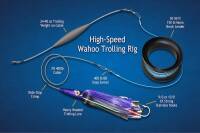
High Speed Wahoo Trolling Rig
Saltwater
09.08.2018
Fishing Light Tackle for Yellowfin Tuna
Saltwater
09.08.2018

0