
Mangrove snapper are leader-shy, hook-shy, and quick to bury you in structure, so the rig decides the day. Here is how to build the setup for shallow inshore water and deep offshore reefs, and how to adjust it as depth and current change.
Rigging Mangrove Snapper for Inshore and Offshore
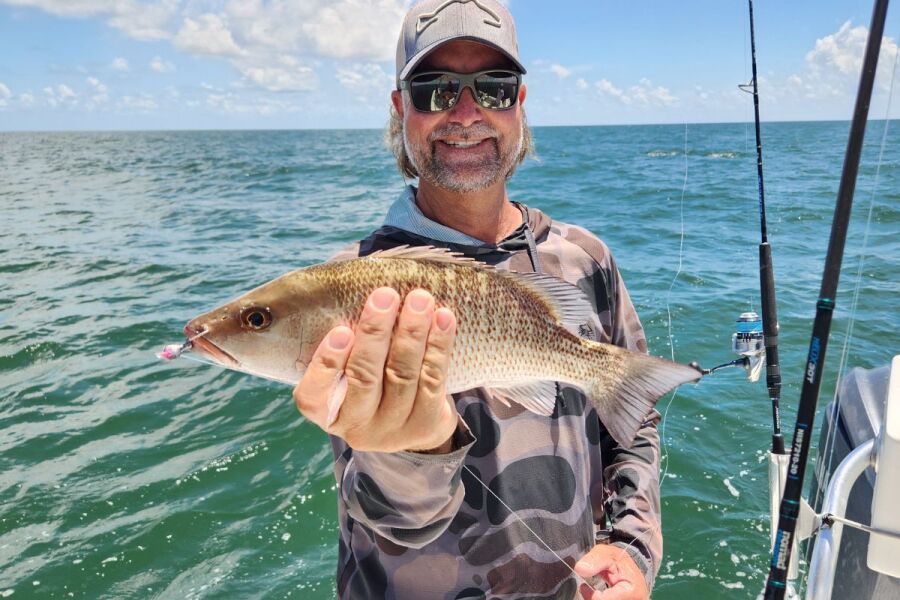
More mangrove snapper are lost at the rig than anywhere else. Gray snapper (Lutjanus griseus) are leader-shy, hook-shy, and built to break you off in the structure they live in, so the terminal setup is not a detail you can hand-wave. Get the rig right for the water you are fishing and you convert bites into fish in the box. Get it wrong with too heavy a leader, too big a hook, or too much lead, and you either never get bit or you get bit and buried in the rocks. This is how to build the rig for both the inshore shallows and the offshore reefs and platforms, and how to adjust it as depth and current change. If you need the broader picture first, start with how to catch mangrove snapper.
What Is the Best Rig for Mangrove Snapper?
There is no single best rig, and anyone who tells you otherwise is selling one setup for every situation. The mangrove snapper rig that works is the one matched to the depth, the current, and how pressured the fish are. For most working captains fishing shrimp or cut bait, the everyday answer is a jighead, because the weight and hook are one piece and the bait falls on a tight line where you can feel the eat. When current or structure calls for a bottom rig, the knocker rig takes over. Those two cover the large majority of mangrove snapper fishing, and the rest is adjustment.
The through-line across all of it is simple: present a natural bait on the lightest, least visible terminal tackle the conditions allow. Mangrove snapper inspect a bait before they commit, and anything out of place, a heavy leader flashing in clear water, an oversized hook, a bait dragging unnaturally against too much lead, gets the whole school to shut down. The rig exists to make your bait look like it is not attached to anything.
The Core Terminal System
Every mangrove snapper setup, jighead or bottom rig, is built on the same spine: braided main line, a fluorocarbon leader, and a hook sized to the bait. Get that hierarchy in your head and the rest is adjustment.
Braided main line is the backbone. It has almost no stretch, which gives you the bite detection and the immediate hook-drive you need to turn a fish before it reaches cover. It is also thin for its strength, so you get more line and better feel. But braid is visible and it does not resist abrasion, which is exactly why you never tie straight to the hook.
That is what the fluorocarbon leader is for. Fluorocarbon is much less visible underwater than braid or mono, not invisible, its refractive index still sits above water's, but close enough to matter, and it takes abrasion against structure far better. It is the single most useful upgrade most anglers can make to their mangrove fishing, because these fish are genuinely leader-shy and will refuse a bait on heavy or bright line in clear water. Connect braid to fluoro with a double uni or an FG knot, then tie the hook on with a clinch or a Palomar.
The hook finishes the system, and it gets sized to the bait, not the fish, because mangrove snapper have small mouths for their body. What kind of hook depends on the rig, which is where the jighead changes the conversation.
Fishing a Jighead for Mangrove Snapper
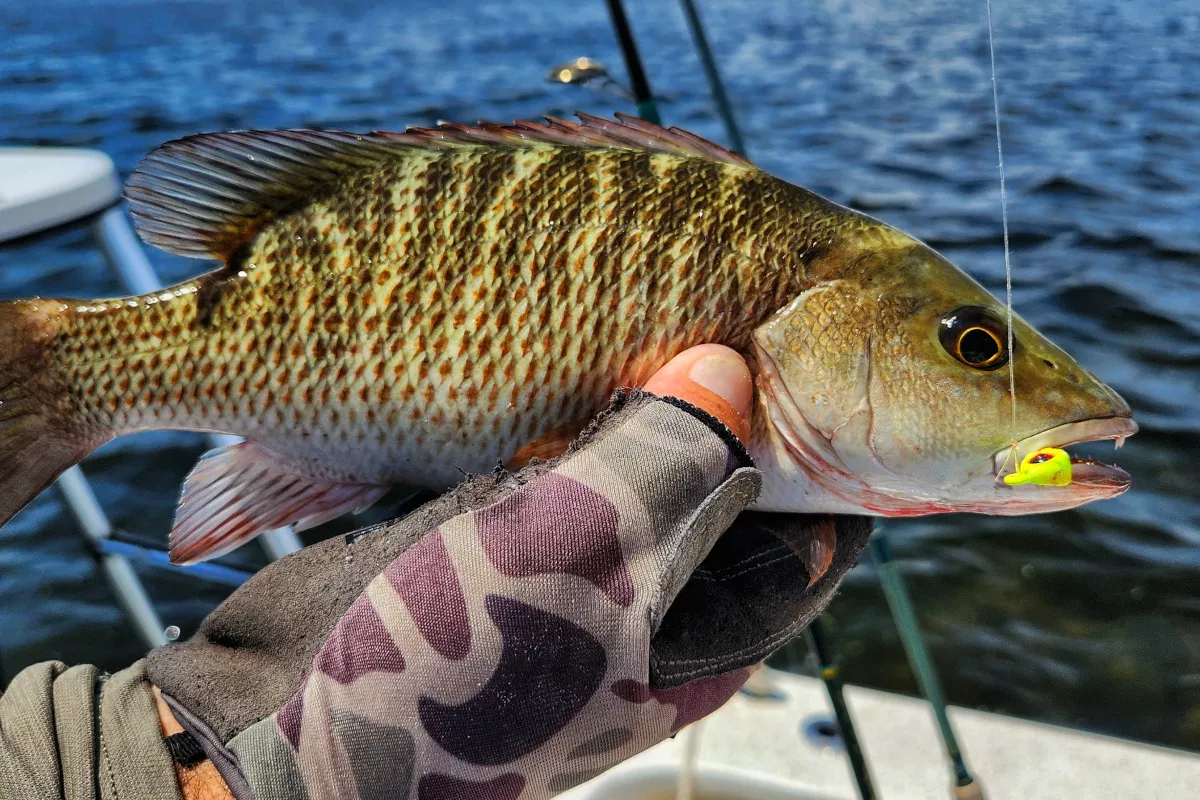
Ask the captains who fish this species for a living what they tie on for shrimp or cut bait and most of them say a jighead. It is worth understanding why, because a jighead is a rig, and for these fish it is often the better one. The weight and the hook are a single piece, so there is no sliding sinker to telegraph the rig and nothing extra to hang in the rocks. The bait falls on a tight line, which lets you feel the eat on the drop, and a lot of mangrove bites come exactly there, on the fall before it ever reaches bottom. And you can work it slightly off the bottom instead of pinned flat, which matters when the fish rise up in a chum slick.
Inshore, around docks, bridges, and mangrove edges, 1/8 to 3/8 ounce is the working range. Go lighter in slack water and heavier only to hold in a pass or a hard tide. Thread a live shrimp so the hook exits behind the horn and the bait rides straight, or pin a strip of cut bait once so it does not helicopter and twist your leader.
Offshore and nearshore, the jighead scales up hard, 3/4 ounce through 2 and 3 ounces, and heavier on platforms when the current rips. This is the point where a simple ounce count for a bottom rig starts to break down, because a lot of captains would rather drop a heavy jighead than build a bottom rig at all. One piece, tight line, feel the fall, fewer things to snag.
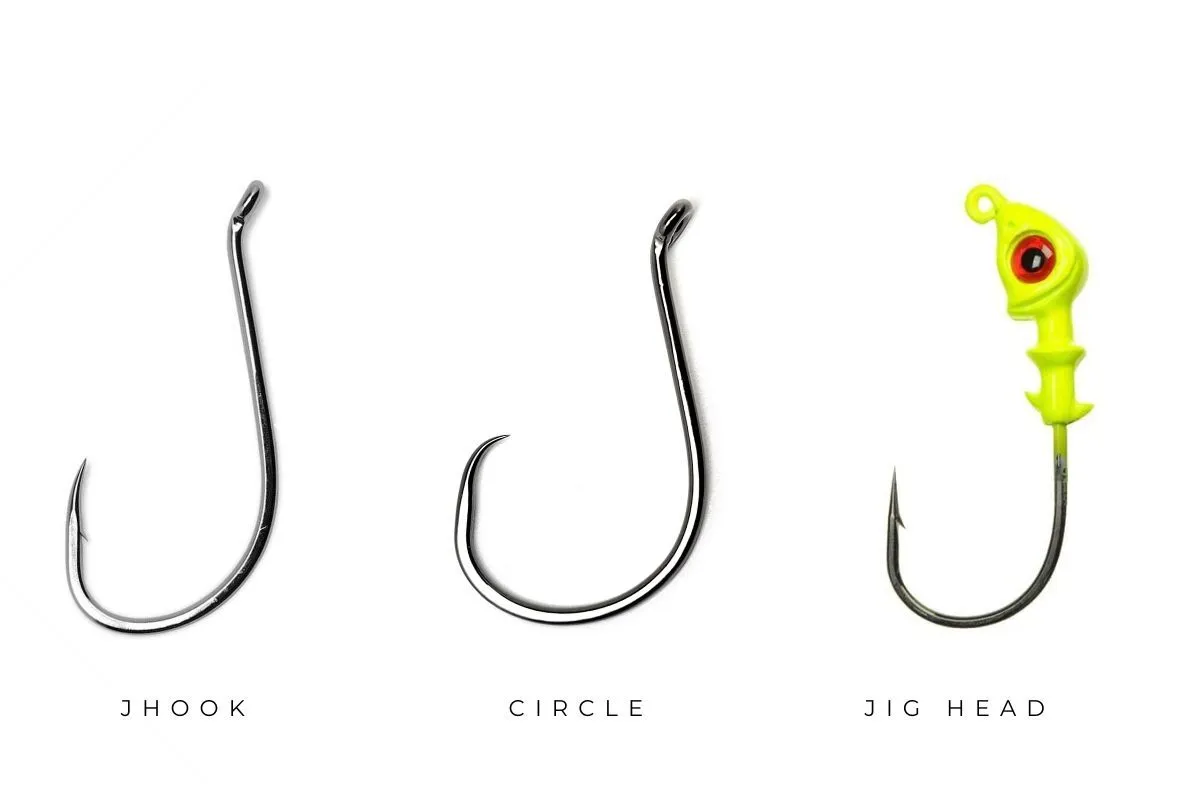
The catch is the hook itself. Most jigheads are J hooks on relatively light wire, and that runs into two things. First, light wire gets bit well but straightens on a big fish pulling into structure, so offshore a heavier-wire jighead is worth the small loss in bite rate. Second, and more important, a J hook with natural bait is not legal everywhere. In the Gulf reef fish fishery in federal waters, non-stainless circle hooks are required with natural bait, and a shrimp or cut-bait jighead is exactly natural bait on a J hook. That makes the jighead a primarily inshore and state-water tool in a lot of places, and it means offshore in federal water you either switch to a circle-hook bottom rig or confirm what is legal where you are fishing. Do not take that off an article, including this one. Verify current hook rules with NOAA Fisheries and your state wildlife agency before you fish.
The Carolina Rig for Mangrove Snapper
When you want the bait to move independent of the weight, the Carolina rig is hard to beat, and some Keys captains rank it first for mangrove snapper, ahead of the knocker rig. You slide an egg sinker down to a swivel, then run three to four feet of 12 to 17 pound fluorocarbon to a short-shank 1/0 or 2/0 hook. The weight holds bottom while a shrimp or baitfish drifts and swims on that long leader, which is exactly the natural presentation a leader-shy fish wants. It shines inshore and on nearshore reefs where the fish are picky, since the long leader keeps the visible braid and the lead away from the bait and a fish can pick it up without feeling the weight. Step the leader heavier around abrasive structure, but the point of the rig is finesse, so do not over-build it.
The Knocker Rig: Deeper Structure and Current
The knocker rig is a bottom-fishing rig first, and it is most at home in deeper water than a lot of people fish for mangroves. Its real strength is anchored up over a ledge, wreck, or platform, dropping a live or cut bait straight down and keeping it pinned tight to the structure in current. It is the reef and bottom-fish default in the Gulf, and it dominates for red snapper more than it does for mangroves, which is worth being honest about rather than treating it as the everyday mangrove rig.
You slide an egg sinker down to the hook eye so the weight rides against the bait, which keeps you on the bottom and in contact through current and a lot of line, and resists snags around heavy structure. Scale it to depth: 20 to 30 pound leader nearshore, up to 30 to 50 pound braid and leader with 2 to 8 ounces of lead offshore, more on platforms where it rips. Reach for it when you have to get a bait down and hold it there against current, not when you are picking apart shallow inshore structure, where a jighead or a Carolina rig does the job better.
The Chicken Rig for Hard Current
When the current or the wind is really up, the chicken rig earns its place. It is a double-drop rig, a bank sinker on the bottom with one or two short dropper loops above it, and it holds the bottom where a rolling egg sinker will not while letting you fish two baits at different points in the column. It is a heavy-current and deep-water tool, useful on the same reefs and wrecks as the knocker rig when conditions turn nasty. Keep the droppers short so the hooks do not tangle, and match the bank sinker to whatever it takes to hold. It is not a finesse rig, so save it for when holding bottom is the whole problem.
Mangrove Snapper Videos
Venice, Louisiana offers abundant resources for mangrove snapper, a delectable fish species found in oil platforms. Fishing in the Gulf of Mexico can be fast and furious, with fish reaching up to 20 lbs and averages 7-8 lbs. Captain Josh Howard shares simple yet lethal fishing tips and strategies for chumming mangrove snapper, including making chum, finding fish, and presenting baits. This fishing video is an excellent learning tool for those looking to fish for snapper.
Rough seas or limited time make inshore mangrove snapper fishing productive alternatives to offshore trips. These bottom dwellers school higher during feeding periods, demanding structure reading skills and depth adjustments throughout the day. Fourth-generation guide William Toney reveals Gulf Coast patterns where mangrove snapper concentrate around accessible inshore structure requiring proper live shrimp and jig head rigging.
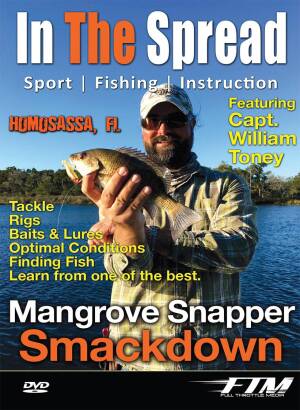
Captain William Toney reveals backcountry mangrove snapper tactics for Florida's spring-fed creeks and rivers. This video covers why temperature-stable waters attract snapper during weather transitions, locating productive structure, live bait selection, tackle specifications, and safe navigation practices in shallow backcountry systems.
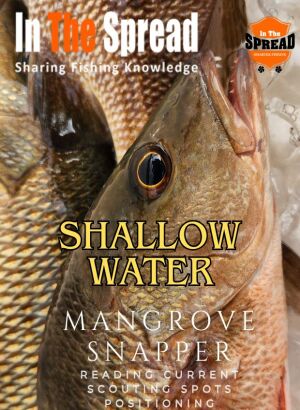
Mangrove snapper around shallow structure demand precise boat positioning and split-second timing. Captain William Toney explains how to read current direction, identify productive rocks through advance scouting, and capitalize on aggressive feeding periods when these hit-and-run gamefish commit to the bite. Success hinges on standoff distance and fishing the correct side.
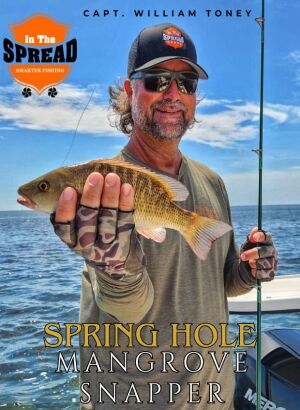
Captain William Toney reveals proven techniques for targeting mangrove snapper in 3-foot deep spring holes without expensive offshore trips. Learn precise boat positioning, live shrimp rigging, and bite detection methods that produce fast action in these productive micro-habitats. This seasonal summer fishery offers consistent results when you know the right approach.
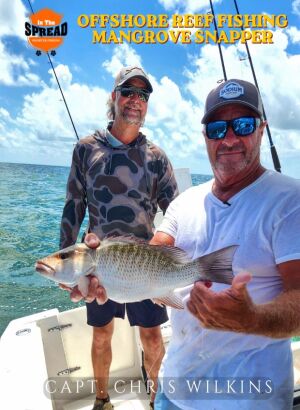
Offshore mangrove snapper fishing is a game of position and presentation. Capt. Chris Wilkins shows how he sets up on hard bottom, tightens spread-out summer fish with chum, and keeps a jighead in the strike zone when layered current tries to lift it.
Matching Rig and Weight to Depth and Current
The rig follows the water. Inshore around docks, bridges, and mangrove edges in roughly 5 to 20 feet, fish light: a jighead, a Carolina rig, or a freelined live shrimp on 10 to 20 pound braid and a 14 to 20 pound leader, with no weight at all where you can manage it. On nearshore patch reefs and hard bottom in 20 to 60 feet, step the leader to 20 to 30 pound and pick the rig by the current, a heavier jighead or Carolina rig when you can, a knocker rig when you need to pin bottom. On the deep reefs, wrecks, and platforms from 40 to 120 feet and beyond, you are into bottom-rig country with heavier braid and leader and enough lead to hold.
Use the lightest sinker that holds the strike zone, and remember that shape matters as much as weight. An egg sinker fishes clean in light current but rolls once it builds. A bank, flat, or pyramid sinker holds where an egg will not, so swapping shape often beats simply adding ounces. On a bottom rig offshore, start around 2 to 4 ounces and step toward 8 or beyond as depth and current demand. The tell is contact: you want to feel bottom and the bite with the bait sitting naturally, not pinned flat. For the finer points of matching hook to bait across these setups, our breakdown of hooks for mangrove snapper goes deeper than a rig article should.
Hooks and Leaders for Mangrove Snapper Rigs
Run fluorocarbon leader over monofilament every time, matched to the water: 14 to 20 pound inshore, 20 to 30 nearshore, and 30 to 50 around heavy offshore structure. Keep it in the two to three foot range for most bottom work, longer when the water is very clear and the fish are picky.
Size the hook to the bait. A 1/0 is a sensible all-around starting point inshore, stepping into the 2/0 to 4/0 range for larger live baits and offshore fish. For natural bait on a bottom rig, lean on non-stainless circle hooks, which are required in the Gulf reef fish fishery in federal waters and improve release survival because they mouth-hook rather than gut-hook. That rule is the one that collides with the J-hook jighead above, which is why the rig and the water have to be decided together. Our resource on choosing baits and lures for mangrove snapper handles matching the bait to the hook.
Do Mangrove Snapper Bite at Night?
Yes, and the night bite is one of the most reliable ways to catch them, especially the bigger, warier fish that get hard to fool during the day. After dark, mangrove snapper leave the tightest cover and move onto shallower structure and grass to forage, which makes them easier to reach.
The rig does not change fundamentally at night, but the setup around it does. Lighted docks, bridges, and structure concentrate baitfish, and mangrove snapper stack on the shadow lines where the light meets the dark. Fish tend to behave less warily in low light, so you can sometimes get away with slightly heavier leader than you would at midday, which is an advantage around structure. The bite often turns on a couple of hours after sunset and runs through the tide changes, so fish moving water, work the light lines, and keep your terminal tackle organized, because a tangle in the dark costs you the window.
Matching the Setup to Conditions
There is no single rig because the conditions never hold still. Water clarity is the biggest driver: drop leader size and hardware to the minimum in clear water, and fish a little heavier in stained or moving water where the fish cannot inspect the rig as closely. Fishing pressure pushes the same way, so a reef that has seen boats all weekend demands lighter, cleaner rigs than one nobody has touched.
One thing extends the rig rather than replaces it: chumming. It is the most effective way to beat leader shyness, because getting the school up in the water column lets you fish lighter, sometimes with a bare jighead or no weight at all as they rise to feed.
What Are the Most Common Mangrove Snapper Rigging Mistakes?
Most rigging problems come down to fishing too heavy. The single most common mistake is a leader that is too thick or too visible for the water, which is the fastest way to watch a school stop biting in clear conditions. If you are getting bites and then they vanish, the leader is the first thing to drop.
Running too much weight is next. Excess lead pins the bait flat, drags it against the current, and telegraphs the whole rig. Carry a range of weights and shapes and fish the lightest that holds the zone. Oversized hooks are the third, because a hook meant for grouper rides too large in a mangrove snapper's small mouth, so you feel taps without ever coming tight. Match the hook to the bait first.
Two more are about technique, not tackle. If you are fishing circle hooks, do not swing on the bite. Reel steadily to load the rod and let the hook find the corner of the mouth. A hard hookset pulls a circle hook right out, and beginners lose more fish to that one habit than to any rig choice. And mind your knots, because these fish run hard and immediately for structure, and a rushed braid-to-fluoro connection or a weak hook knot fails at the worst moment. Tie connections you trust and check them after any fish you pull out of the rocks.
Frequently Asked Questions About Mangrove Snapper Rigs
What is the best rig for mangrove snapper?
For shrimp or cut bait inshore, most working captains fish a jighead, since the single-piece weight and hook let the bait fall on a tight line with nothing to snag or telegraph. A Carolina rig is the next choice when you want the bait to move independent of the weight. In deeper water and current, the knocker and chicken rigs take over. Match the rig to the depth, current, and how pressured the fish are.
How do you rig a jighead for mangrove snapper?
Thread a live shrimp on so the hook exits behind the horn and the bait rides straight, or pin a single strip of cut bait so it does not spin. Use 1/8 to 3/8 ounce inshore and 3/4 ounce up to 2 or 3 ounces offshore, and lean toward a heavier-wire head offshore so it does not straighten on a big fish.
What size hook is best for mangrove snapper?
Match the hook to the bait, not the fish, because these fish have small mouths. A 1/0 suits typical inshore baits, stepping into 2/0 to 4/0 for larger live baits and offshore fish. For natural bait on a bottom rig in Gulf federal waters, a non-stainless circle hook is required.
What pound test leader for mangrove snapper?
Use 14 to 20 pound fluorocarbon for clear inshore water, 20 to 30 for nearshore reefs, and 30 to 50 around heavy offshore structure. Fluorocarbon beats monofilament here because it is harder for a leader-shy fish to see and it stands up to abrasion against rock and wreck.
Do mangrove snapper bite at night?
They do, and it is often the best window for larger fish, which move out of tight daytime cover to feed. Work the shadow lines around lighted docks, bridges, and structure, and expect the bite to build a couple of hours after sunset and run through the tide changes.
Is a jighead legal for mangrove snapper?
It depends on where you fish. A natural-bait jighead is usually a J hook, and Gulf federal reef fish rules require non-stainless circle hooks with natural bait, so a shrimp or cut-bait jighead may not be legal offshore in federal water. Confirm current rules with NOAA Fisheries and your state agency before you fish.
Building the Rig That Actually Catches Them
Rigging for mangrove snapper is not complicated once you understand what you are solving for. You are hiding a hook in a natural bait, presenting it on the least visible line the water allows, and carrying just enough weight to hold the strike zone. For most anglers fishing shrimp or cut bait that means a jighead or a Carolina rig, with the knocker and chicken rigs waiting for deeper water and current. The anglers who catch them consistently are not using a secret rig. They match a simple, sound setup to the conditions and change it the moment the fish tell them to. When the bite stops, lighten up before you leave. When the current builds, change sinker shape or add weight to stay in touch. None of it is expensive: a spool of good fluorocarbon, a box of jigheads and circle hooks in a couple of sizes, and an assortment of sinkers cover almost every mangrove snapper situation you will fish.
For the full picture of finding and working these fish, the complete breakdown of catching mangrove snapper ties the rig into the rest of the program.
Ready to see it done? The mangrove snapper video library puts you on the boat with the captains who fish this structure inshore and off.
Login
to leave a review.
User Reviews
There are no reviews yet.
Setting Up a Dredge Pulley for Billfish
Saltwater
12.28.2020
High Speed Wahoo Trolling Rig
Saltwater
09.08.2018
Fishing Light Tackle for Yellowfin Tuna
Saltwater
09.08.2018
0