
Hook selection is the most overlooked variable in mangrove snapper fishing. This species is structure-oriented, line-shy, and small-mouthed. Those three traits punish oversized or coarse terminal tackle. Get the hook right and your catch rate climbs significantly across every environment this fish lives in.
Choosing the Right Hooks for Mangrove Snapper
Mangrove snapper are unforgiving of sloppy presentations and poorly matched terminal tackle. If your hook is the wrong size, too thick, or mismatched to your bait, you will feel the tap and come up empty. That scenario plays out constantly for anglers who haven't thought hard about their terminal tackle. The good news: once you dial in your mangrove snapper hook selection, this species becomes a far more consistent target across inshore flats, backcountry creeks, dock lights, and nearshore reefs.
What Makes Mangrove Snapper Challenging to Hook?
Lutjanus griseus, the gray snapper or mangrove snapper, is one of the most cautious inshore fish you will encounter in Florida and throughout the Gulf of Mexico and much of the Southeast Atlantic coast. Their wariness is not accidental. These fish live in and around heavy structure: mangrove root systems, dock pilings, bridge abutments, and oyster bars. They've learned to inspect baits carefully and retreat quickly when something feels wrong.
What Is the Best Hook Size for Mangrove Snapper?
The answer depends on where you are fishing and what bait you are using, but the 1/0 circle hook is one of the most consistent performers for mangrove snapper across a range of situations. Hook size also shifts with water clarity. Smaller hooks in cleaner, clearer water can make a meaningful difference with line-shy fish. For smaller inshore fish in the 1- to 3-pound range, a No. 1 or No. 2 can actually outperform a 1/0. When targeting bigger fish on nearshore structure or when using larger cut baits, a 2/0 or 3/0 is appropriate.
- No. 2 to No. 1: Small live shrimp, small cut baits, shallow inshore water targeting fish under 2 lbs
- 1/0 circle hook: The go-to size for most mangrove snapper situations, including live shrimp, finger mullet, and small pilchards
- 2/0 to 3/0 circle hook: Larger cut baits (mullet, pinfish), nearshore structure fishing, targeting fish in the 4- to 8-pound class
- J-hook No. 1 to 2/0: Jig fishing or when using artificial soft plastics in current-heavy environments
Circle Hooks vs. J-Hooks for Mangrove Snapper: Which Should You Use?
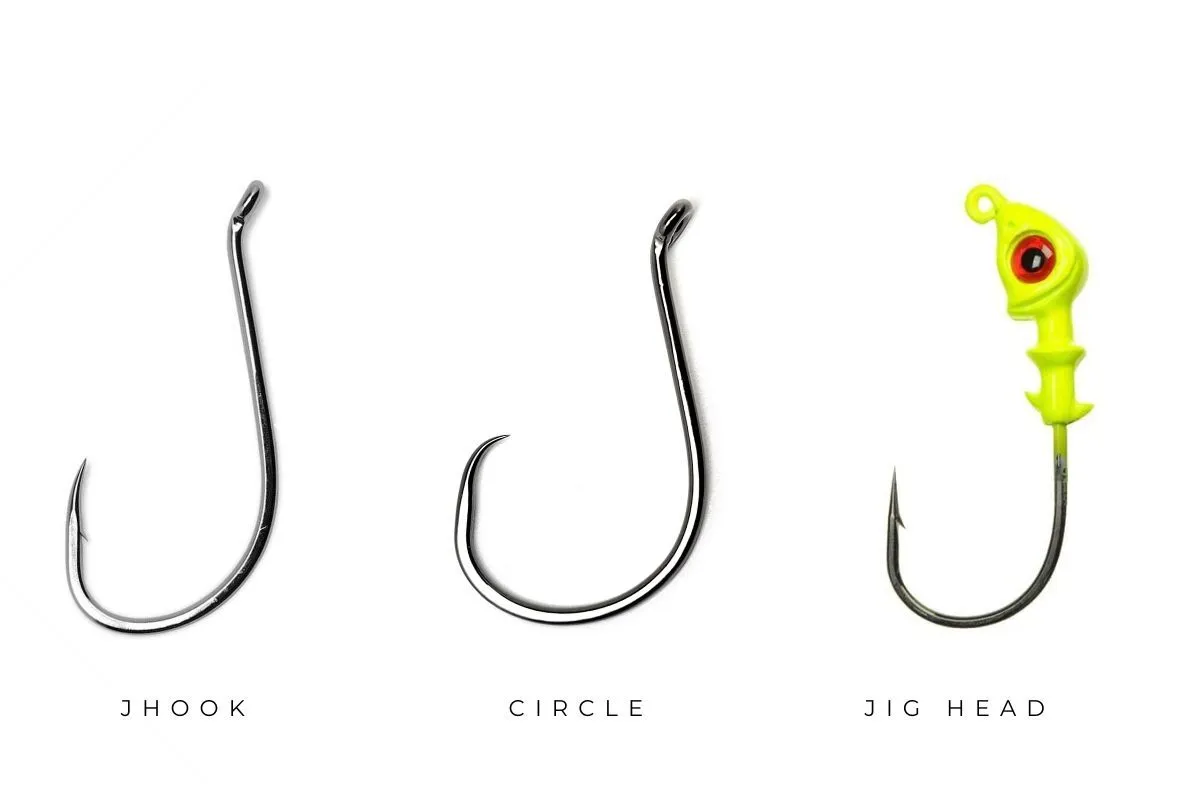
Circle hooks dominate mangrove snapper fishing for good reason. Their geometry creates a self-setting hookup where the point rotates into the corner of the fish's mouth as the line comes tight. You do not need to sweep-set a circle hook. In fact, doing so usually results in pulling the hook out of the fish's mouth entirely. Let the fish move with the bait, feel the weight of the fish, then apply steady pressure.
The self-setting nature of non-offset circle hooks also minimizes gut-hooking, which matters both for catch-and-release survival rates and for regulatory compliance. In Florida Gulf state waters and federal Gulf of Mexico waters, non-stainless steel, non-offset circle hooks are required when using natural baits for snapper and other reef fish. If you fish Florida's Atlantic side, rules vary: non-offset circle hooks are prohibited north of 28° N latitude, and non-stainless steel hooks are required south of that line. Always confirm which rules apply to the specific water you are fishing.
What Hook Features Matter Most for Snapper Fishing?
Beyond size and style, the specific construction of your hook affects performance significantly. Mangrove snapper fishing punishes hooks that are even slightly dull, and the bony jaw structure requires a point that penetrates cleanly on the first attempt.
- Sharpness: A chemically sharpened point is non-negotiable. The snapper's bony jaw will deflect a dull hook. Replace hooks that have contacted the bottom or corroded.
- Wire gauge: 2X to 3X wire provides a good balance between penetration and strength. Lighter wire penetrates more easily and improves bait action, but bends under heavy fish.
- Short shank: Short-shank hooks are better for live bait because they allow more natural bait movement. They are harder to see against the bait profile and harder for the fish to leverage against you.
- Corrosion resistance: Saltwater corrodes hooks fast. Tin-coated or black nickel finishes hold up better than standard finishes. Note: regulations require non-stainless steel, so avoid full stainless.
- Non-offset point: Required by regulation in most snapper fisheries with natural bait. A non-offset point (point aligned with the shank) also reduces the chance of the hook catching weeds or structure.
Which Hook Brands Work Best for Mangrove Snapper?
Four brands dominate the tackle boxes of experienced snapper anglers: Gamakatsu, Mustad, Owner, and Eagle Claw. Each has earned their place for different reasons, and most experienced anglers carry more than one brand depending on the rig they are building.
Gamakatsu's Octopus Circle and Finesse Wide Gap hooks are widely considered the gold standard for sharpness out of the box. Mustad's Demon Perfect Circle offers exceptional holding strength and is available in a wide range of sizes. Owner's SSW All Purpose hook has a reputation for premium finish and razor-edge points. Eagle Claw provides reliable performance at a price point that makes sense when you are losing hooks to structure regularly.
How Do You Rig Hooks for Mangrove Snapper?
Live Shrimp Hook Rigging
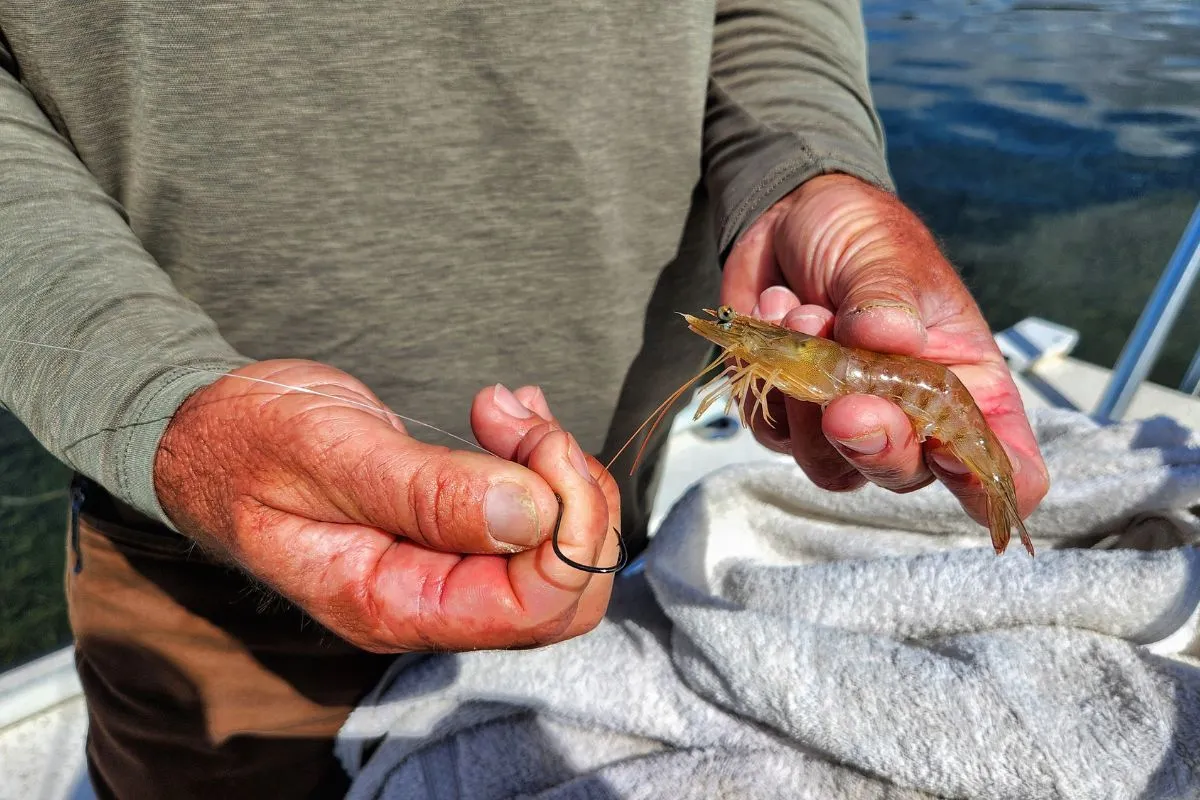
Live shrimp is one of the most consistent natural baits for mangrove snapper. Hook a live shrimp through the horn (the pointed rostrum on the head) with a 1/0 circle hook to keep the shrimp alive and swimming naturally. Hooking through the tail or the body kills the shrimp faster and reduces its movement. That said, tail hooking does improve casting distance and still allows natural movement in current, so it has a place when you are sight-casting or need to cover water. When maximizing bait longevity and subtle action is the priority, horn hooking is generally the better choice.
Cut Bait and Finger Mullet Rigging
For cut pinfish, mullet, or pilchard, thread the hook through the bait once from the top side down, leaving the point just barely exposed. A fully buried point on cut bait slows penetration. A completely exposed point on a heavily inspected bait gets rejected. The goal is a point that barely clears the bait's skin.
Leader and Rig Construction
Use a 30 to 40 lb fluorocarbon leader for most mangrove snapper setups. Fluorocarbon is nearly invisible underwater, and snapper will distinguish monofilament in clear inshore water. The leader length depends on conditions: 12 to 18 inches for standard bottom rigs, and up to 36 inches in very clear, pressured water where fish are line-shy.
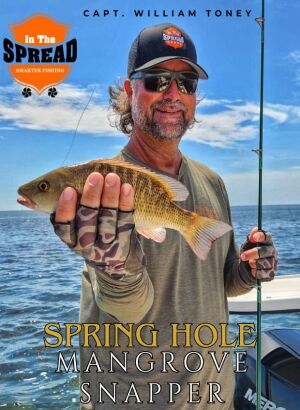
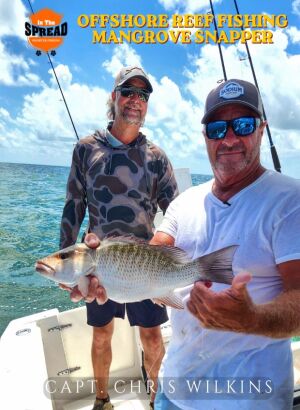
For free-lined live bait presentations, tie directly to the hook with no weight to allow the bait to drift naturally with current. For structured bottom rigs and fish-finder rigs, use a quality barrel swivel to prevent line twist and connect your fluorocarbon leader. For more on rigging techniques, see the In The Spread mangrove snapper fishing videos featuring Captain William Toney, who covers inshore, backcountry, and spring hole techniques in depth.
Mangrove Snapper Fishing Courses
Where Do You Find Mangrove Snapper to Target?
Mangrove snapper are structure-oriented fish at every life stage. Juvenile fish stack up in the shallowest mangrove systems, using the root structure as predator cover. As they grow, they transition to dock pilings, sea walls, oyster bars, and bridge structure in the 6- to 12-foot depth range. Mature fish push further offshore to nearshore reefs, ledges, and hard bottom, where they can reach double-digit pounds.
- Mangrove shorelines at high tide: Fish slide up into the roots to feed. Pitch light tackle presentations along the edge with a free-lined shrimp.
- Dock pilings and bridge structure: Current seams alongside dock corners concentrate snapper in predictable holding positions, especially during early morning and evening transitions.
- Oyster bars and shallow grass flats: Smaller snapper forage alongside redfish and trout on incoming tide across grass adjacent to hard bottom.
- Nearshore reefs and ledges: Bigger fish in the 4- to 10-pound class hold on hard bottom in 20 to 80 feet of water, particularly during summer and fall.
For a full breakdown of inshore Gulf Coast locations and how tidal movement affects snapper positioning, the In The Spread article on Gulf of Mexico inshore hotspots is worth your time.
What Are the Hook Regulations for Mangrove Snapper?
Regulations for mangrove snapper hooks are specific and actively enforced. Understanding them before you rig up saves you from a costly citation and supports a fishery that has enough pressure on it already.
Federal Waters (Gulf of Mexico)
In federal Gulf of Mexico waters, the following requirements apply when fishing with natural baits:
- Non-stainless steel circle hooks required when using natural bait
- At least one dehooking device required onboard and must be used to remove hooks
- Minimum size limit: 12 inches total length
- Bag limit: 10 fish per person per day (aggregate snapper bag, all snapper species combined)
Florida State Waters
Florida state waters have separate requirements:
- Non-stainless steel, non-offset circle hooks required when fishing with natural bait in Gulf state waters
- Minimum size limit: 10 inches total length
- Bag limit: 5 mangrove snapper per person, within a 10-fish aggregate snapper bag
- A dehooking device and a descending device or venting tool must be rigged and ready for use
Regulations change. The numbers listed above reflect current federal and Florida state requirements, but season windows, bag limits, and size minimums are subject to revision by the Gulf of Mexico Fishery Management Council and the Florida Fish and Wildlife Conservation Commission. Always verify current rules before you fish at FWC.com.
Frequently Asked Questions About Mangrove Snapper Hooks
What size hook is best for mangrove snapper?
A 1/0 non-offset circle hook is the most versatile choice for mangrove snapper across most situations. Drop to a No. 1 or No. 2 for small live shrimp in shallow inshore water, and step up to a 2/0 or 3/0 when using larger cut baits or targeting bigger fish on nearshore structure. For jig heads or artificial lures, a 1/0 to 2/0 J-hook is often preferred.
Are circle hooks required for mangrove snapper?
Yes, in federal Gulf of Mexico waters and Florida Gulf state waters, non-stainless steel, non-offset circle hooks are required when fishing with natural baits for snapper species. This applies to both recreational and commercial anglers. Rules differ on Florida's Atlantic side, so always confirm requirements for the specific water you are fishing.
What is the best bait for mangrove snapper?
Live shrimp is one of the most consistent natural baits for mangrove snapper across all environments. Live pilchards, finger mullet, and cut pinfish are excellent alternatives, particularly when targeting larger fish on structure or nearshore reefs.
What leader should I use for mangrove snapper?
A 30 to 40 lb fluorocarbon leader is the standard for most snapper situations. Fluorocarbon's near-invisibility underwater is a genuine advantage with this species in clear, pressured water. Extend leader length to 36 inches or more when fish are particularly hook-shy.
Can you use J-hooks for mangrove snapper?
Yes, for artificial lures and jig heads. For natural bait presentations in regulated waters, a non-offset circle hook is legally required. J-hooks on artificial rigs remain a viable option and provide faster, more direct hooksets in high-current environments.
What hook wire gauge is best for snapper fishing?
A 2X to 3X wire gauge provides a good balance between penetration ease and holding strength for most mangrove snapper applications. Lighter wire improves bait action and penetrates the bony jaw more cleanly. Heavier wire adds durability when fishing around heavy structure where fish can run and leverage the hook against rock or pilings.
Putting It Together
Mangrove snapper are a species that rewards attention to detail. The right hook size for mangrove snapper is not a fixed answer. It shifts with bait selection, target size, water clarity, and structure type. Starting with a sharp 1/0 non-offset circle hook on a fluorocarbon leader, matched to a properly hooked live shrimp, puts you in the right position across the widest range of situations.
From there, observe how the fish are responding. If they are picking up the bait and dropping it before you feel them, go smaller on the hook. If you are losing fish at the structure, consider wire gauge and whether a heavier hook holds the angle you need. Every snapper bite teaches you something.
Login
to leave a review.
User Reviews
There are no reviews yet.
Setting Up a Dredge Pulley for Billfish
Saltwater
12.28.2020
High Speed Wahoo Trolling Rig
Saltwater
09.08.2018
Fishing Light Tackle for Yellowfin Tuna
Saltwater
09.08.2018
0