
Speckled seatrout are one of the most pursued inshore species on the Gulf Coast, and for good reason. They're accessible, they fight hard, and they're exceptional table fare. But catching them consistently takes more than showing up. This breakdown covers the tactics, tackle, and seasonal patterns that put fish in the boat.
Catching Speckled Trout: Tides, Lures, and Seasons
How to Catch Speckled Seatrout: Tactics, Lures, and Seasonal Tips That Actually Work
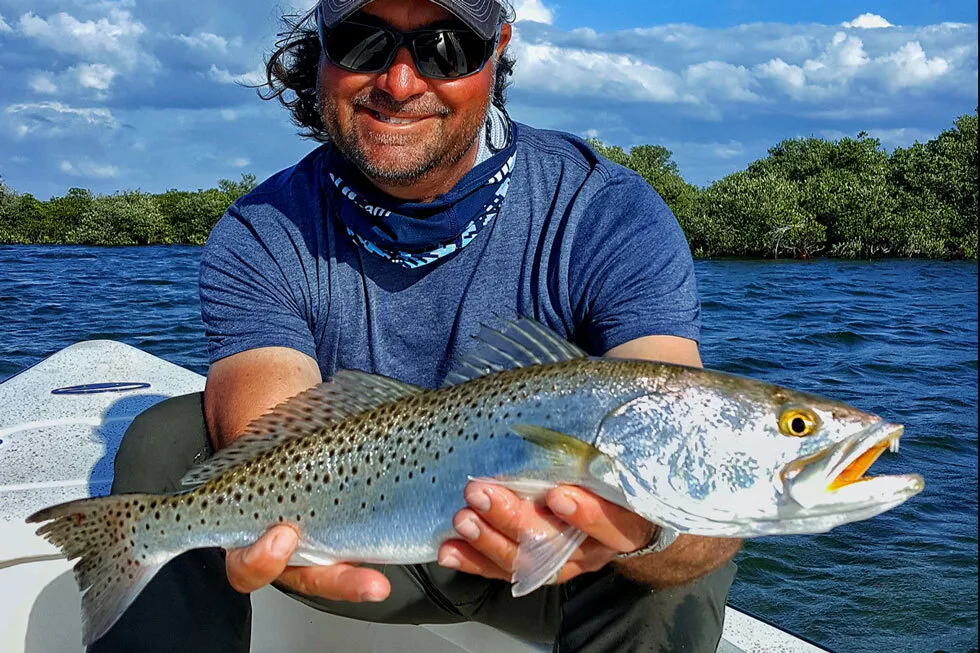
If you've spent any time fishing for speckled seatrout along the Gulf Coast, you already know these fish can humble you fast. One morning they're stacked on the grass flat and eating every soft plastic you throw at them. The next day you're working the same water, same tide, same lures, and nothing. That inconsistency is part of what makes them so addictive, and it's also why knowing the "why" behind the bite matters as much as the what.
Spotted seatrout (Cynoscion nebulosus) go by a lot of names depending on where you grew up. Louisiana anglers call them specks. Florida guides call them seatrout. Texans say trout. All the same fish, and all the same fundamental challenge: you need the right presentation, at the right depth, in the right location, tuned to what the water and season are actually telling you.
What Are Speckled Trout and What Habitat Do They Prefer?
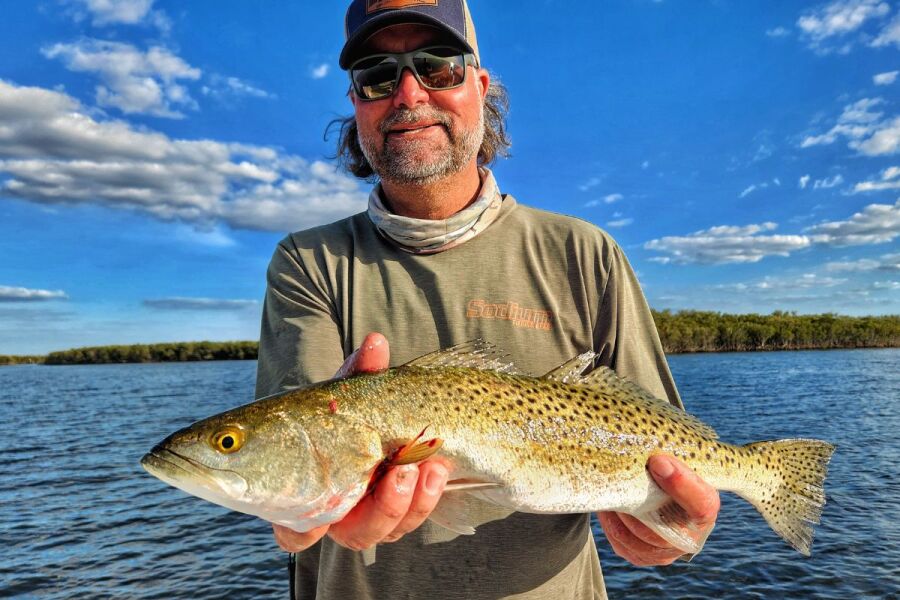
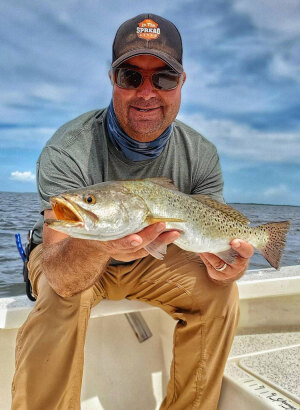
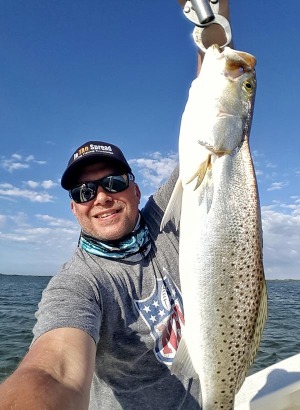
Spotted seatrout are a shallow-water inshore species most abundant from the Chesapeake Bay south through Florida and across the entire Gulf of Mexico to Texas, though the species has been recorded as far north as Delaware Bay and occasionally beyond. Despite the common name, they're not related to freshwater trout at all. They're members of the drum family (Sciaenidae), which puts them closer to redfish and black drum than anything you'd find in a mountain stream. The two prominent canine teeth and the scattered black spotting on a silver body are the instant giveaway.
Where to Find Speckled Trout Throughout the Tide Cycle
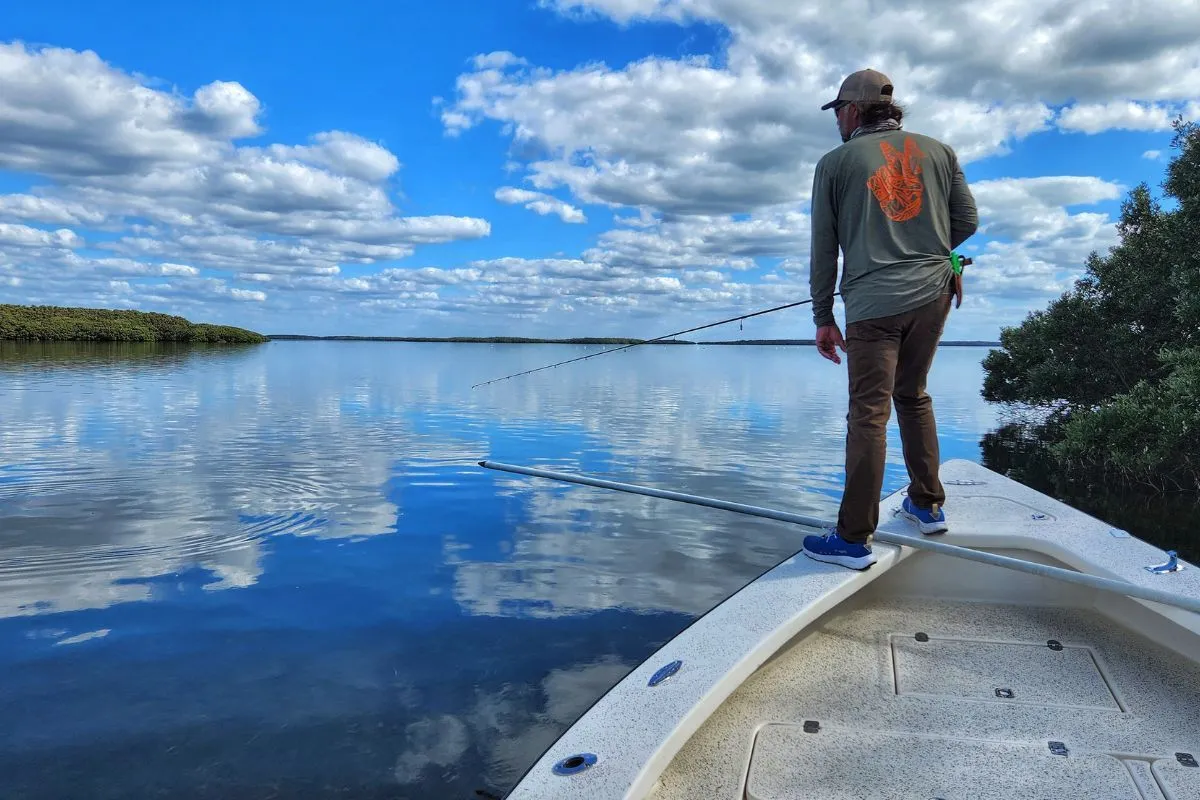
Structure is the organizing principle of speckled trout location. These fish are rarely truly random in their distribution. Even when they appear to be suspended over open water in large basins, they're almost always relating to some kind of edge, subtle bottom contour, shell, or depth change. Understanding this transforms you from someone who fishes water to someone who fishes specific spots with a reason.
On a rising tide, speckled trout push onto shallow flats with the incoming water, spreading out over grass and feeding on the shrimp and baitfish that the tide is moving. Fish are catchable but spread out, so covering water matters. On a falling tide, that same water concentrates fish at predictable points: the mouths of tidal creeks, flat edges where shallow water drops into channels, and cuts in oyster bar lines. These are ambush positions, and trout stack there to pick off baitfish the current is funneling past them.
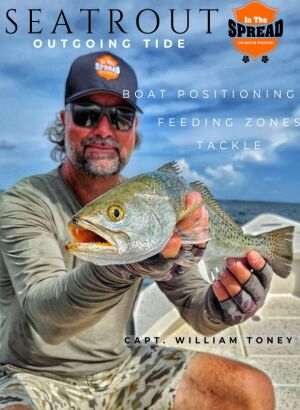
Slack water, both at high and low tide, generally slows things down. The most reliable windows are the two hours of a strong outgoing tide and the first push of an incoming. Capt. William Toney covers this tidal pattern in detail in the how to catch seatrout on an outgoing tide video, walking through specific positioning on the flat and how he adjusts his presentation as the tide drains.
- Seagrass bed edges where grass gives way to sand or mud bottom
- Oyster bars and shell bottom, especially on the downcurrent side during strong tidal flow
- Dock pilings, bridge shadow lines, and any man-made structure in tidal systems
- Tidal creek mouths and channel edges during active tidal movement
- Nearshore Gulf hard bottom and reef structure in 8 to 20 feet of water
Best Bait for Speckled Trout: Live, Cut, and Artificial
Live Bait
If there is one bait that resets a tough day, it's a live shrimp. A 2 to 3 inch live shrimp fished either free-lined or under a popping cork will draw strikes from spotted seatrout in almost any condition. When water clarity is low, when a cold front has the fish finicky, or when pressure has shut down the artificial bite, live shrimp is your fallback. It's hard to fish wrong.
Cut Bait
Fresh cut bait works, especially in murky water or strong current where trout are relying more on scent than sight. Fresh mullet belly, menhaden, and ladyfish are the go-to choices. The operative word is fresh. Frozen cut bait is a distant second in effectiveness because the oils and scent dispersion from truly fresh bait are what trigger strikes in low-visibility conditions.
Artificial Lures for Speckled Trout
Fishing speckled trout on artificial lures is where the craft really opens up. Lures give you more water coverage, more control over depth and retrieve speed, and on a good morning, more action than any other approach.
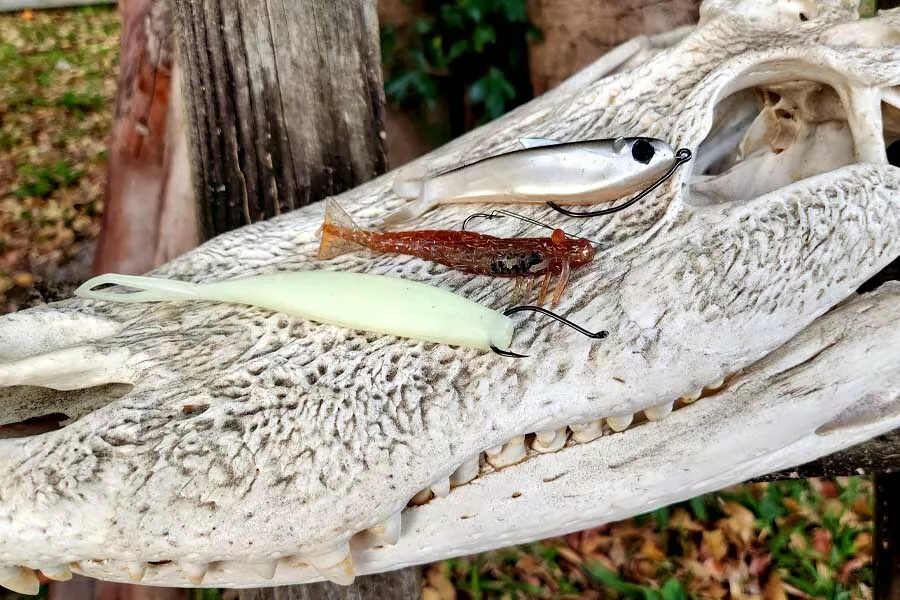
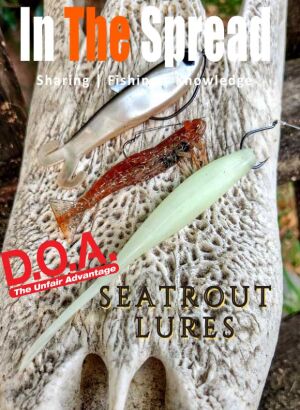
Soft plastic shrimp and paddle tail baits are the workhorses of the speckled trout lure category. DOA Shrimp, Vudu Shrimp, and various paddle tail profiles rigged on light jig heads account for a huge percentage of fish caught on artificials throughout the year. Capt. Mark Nichols, who developed the DOA Shrimp, covers his complete approach in our DOA Lures for speckled seatrout video. His explanation of retrieve speed and pause timing is worth more than any static lure recommendation.
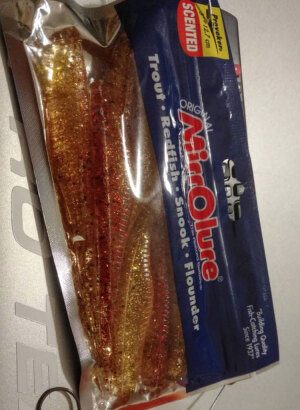
Topwater plugs deserve their own mention. Walk-the-dog style plugs like the MirrOlure Top Dog or Heddon Super Spook Jr fished over shallow grass in the first hour of daylight produce some of the most explosive strikes in inshore fishing. When fish are visibly busting on the surface, slow down and let the bait do the work.
Suspending jerkbaits round out the main artificial categories. MirrOlure Lipped Series and similar suspending twitch baits excel in slightly deeper water and during transitional periods when fish are staging between flats and channel edges. The slow sink rate on a pause mimics a wounded baitfish and gives tentative fish time to commit. A pause-twitch-pause retrieve is typically more effective than a continuous retrieve with these baits.
In deeper or current-heavy situations, particularly around Louisiana and Texas bridge passes, ship channels, and strong inlet cuts, bucktail jigs and leadhead jigs with curly tail grubs are a category worth keeping in the bag. They sink faster, cut through current better, and cover the water column more efficiently than lighter soft plastic rigs when you need to get down quickly to where fish are holding.
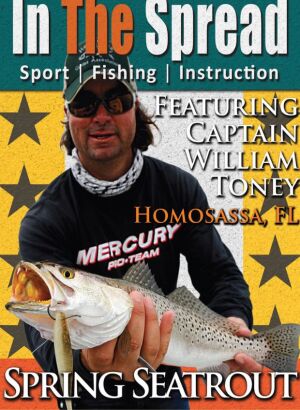
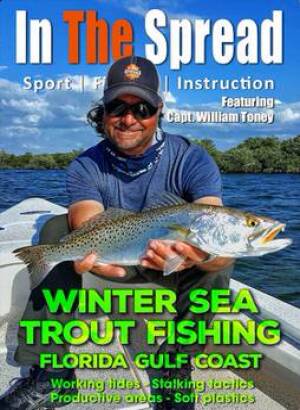
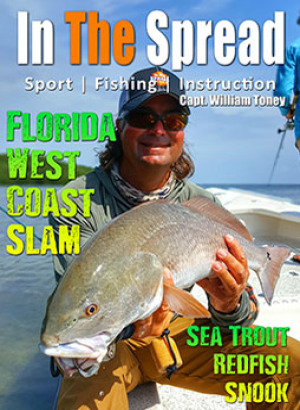
Seatrout Fishing Courses



Jig Head Weight and Hook Size for Speckled Trout
Getting jig head weight right is one of those details that separates consistent anglers from frustrated ones. Too heavy and you're losing natural swimming action, dragging the bottom, and spooking fish in shallow water. Too light and you can't maintain contact with the strike zone in moving water.
A 1/4 ounce jig head is the baseline for most shallow flat fishing in low to moderate current. In water over 5 feet or in stronger tidal flow, 3/8 ounce gives you better control and helps you feel the bottom without losing the bait in the current. In very shallow, calm conditions, dropping to 1/8 ounce keeps the bait in the water column longer and produces more natural action through the retrieve.
How to Rig for Speckled Trout: Popping Corks, Fluorocarbon, and Carolina Rigs
The Popping Cork Rig
The popping cork rig is one of the most versatile and effective setups in speckled trout fishing, particularly over grass beds and anywhere you need to suspend bait at a precise depth. The cork keeps your presentation off the bottom, lets you control exactly how deep the bait sits, and the popping or rattling action itself mimics the sound of feeding fish and shrimp, drawing strikes from a distance.
Fluorocarbon Leader Setup
A fluorocarbon leader for seatrout fishing is not optional in clear water. The near-invisibility of fluorocarbon under the surface genuinely increases strike rate in pressured areas and under high-sun conditions. Leader weight should match the situation: 12 to 15 pound fluorocarbon is the right call for open grass flats and clear water where presentation matters most, while 17 to 20 pound is more appropriate around docks, bridge pilings, and oyster structure where abrasion is a real concern. Running heavy leader over open grass flats costs you bites.
Carolina Rig for Seatrout
A sliding egg sinker, a swivel, and a 12 to 18 inch fluorocarbon leader to a small live bait hook gives you a natural bottom-oriented presentation that works well in channels and on hard bottom. This rig is particularly effective for winter fishing when trout are holding deep in holes and slow presentations are what trigger strikes.
Speckled Trout Fishing by Season
Spring Speckled Trout Fishing
Spring is a transitional period, and transitions concentrate fish. As water temperatures climb out of the 60s and into the low 70s, speckled trout move from winter holding areas back onto grass flats and oyster bars. They're hungry and often aggressive during this post-winter period. The spring speckled trout bite typically peaks as water temps stabilize in the 68°F to 74°F range, which corresponds with the strongest baitfish activity of the early year.
Spring also aligns with the beginning of the spawning season in many regions. Spotted seatrout spawn from late spring through early fall depending on location, and the larger females that dominate the trophy class are critical to long-term population health. If you catch a big fish and aren't keeping it, minimize air exposure, keep it in the water as much as possible during photos, and release it with care.
Summer Speckled Trout Fishing
Summer fishing demands an early start. Speckled trout are on shallow grass flats before sunrise, but by 9 AM rising water temperatures start pushing them off. Topwater lures in the first hour of daylight produce some of the most explosive action of the year. As the morning progresses, move your attention to deeper adjacent water, dock systems, and channel edges where fish retreat to escape the heat.
Fall Speckled Trout Fishing
Fall is the marquee season, especially in Louisiana. Cooling water temperatures drive baitfish into bays and estuaries, and speckled trout follow in force. Feeding activity is at its most aggressive of the year as fish put on weight before winter. Lake Pontchartrain, Lake Borgne, and Calcasieu Lake all produce exceptional fall fishing with fish schooled in numbers that don't exist in any other season.
Winter Speckled Trout Fishing
Cold water concentrates fish. The same holes and channels holding trout in February are drawing fish from miles of surrounding flats. Winter speckled trout fishing in Florida is the best time of year for a genuine trophy fish because larger females, which regulate temperature more efficiently due to their size, tend to dominate the deepest holding areas during the coldest periods. Slow your retrieve, downsize your presentation, and be patient in a proven location rather than covering water looking for activity.
One thing Florida anglers need to be aware of: severe cold snaps can trigger localized seatrout kills when temperatures crash into the low 40s or below. These events can alter local populations for several seasons, which explains why the same hole that produced consistently one January can be comparatively quiet the next. If you fish a winter fishery regularly, it's worth tracking cold-kill events in your area as context for what you're seeing on the water.
Speckled Trout Fishing in Florida and Louisiana
Florida and Louisiana represent the two most productive and most distinct spotted seatrout fisheries in the country, and they require meaningfully different approaches.
In Florida, the fishing is defined by seagrass beds, clear shallow water, and structure like oyster bars and dock pilings. Sight fishing is possible on calm days in systems like Mosquito Lagoon and the Indian River Lagoon. Tampa Bay is one of the most accessible and consistently productive seatrout environments in the state, with strong populations year-round. Capt. Ray Markham and Capt. William Toney break down the specific tactics that work in the bay in the Tampa Bay Seatrout Fishing video, covering lure selection, structure targeting, and seasonal adjustments specific to the bay's environment.
In Louisiana, turbid water and sprawling marsh systems change the equation. Scent and sound become more important than visual presentation. Longer casts cover the spread-out marsh structure more efficiently. Fall is when Louisiana's speckled trout fishery genuinely stands apart from anywhere else in the country, with fish schooled in numbers that are hard to appreciate without having seen it firsthand. One additional factor that reshapes the Louisiana picture significantly is river discharge. High Mississippi River flow years drive large freshwater pulses into the coastal system, pushing trout down-estuary toward higher-salinity water. In those years, the spots that produced all of last fall may be largely empty, while areas closer to the Gulf hold the fish. Tracking salinity conditions and water temperature together is the most reliable way to stay on moving fish in Louisiana marsh systems.
Speckled Seatrout Fishing Articles
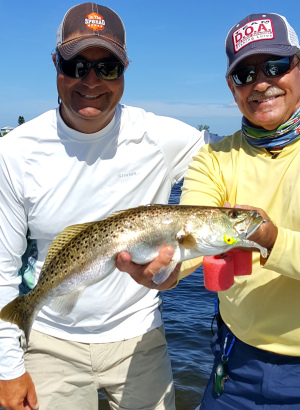
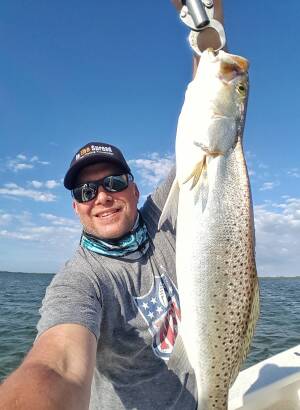
Conservation and Handling
Spotted seatrout populations are managed carefully for good reason, and the large females that every trophy hunter is after are also the fish that matter most to the next generation of the fishery. A mature female trout over 20 inches can produce dramatically more eggs than a smaller fish, and those big spawners are worth protecting even when regulations technically allow harvest.
Speckled Trout FAQ
What is the difference between speckled trout and spotted seatrout?
They are the same fish. Spotted seatrout (Cynoscion nebulosus) is the formal scientific and common name. "Speckled trout" is the regional name used widely across the Gulf Coast, particularly in Louisiana, Mississippi, and Texas. Both terms refer to the same inshore species.
What water temperature do speckled trout prefer?
The ideal performance range for spotted seatrout is roughly 60°F to 80°F. As water temperatures drop into the low 50s, fish become increasingly inactive and seek thermal refuge in deeper holes and warm-water drainages. When temperatures climb into the upper 80s, they shift off shallow flats into cooler, deeper water. These are meaningful thresholds rather than hard behavioral cutoffs, and fish can still be caught outside this range.
What is the best time of day to catch speckled trout?
Early morning, from first light through the first two hours after sunrise, is the most reliable window, particularly in spring and summer. Late afternoon produces a second feeding window as water temperatures drop. Topwater lures are most effective during low-light periods at dawn and dusk.
What is the best tide for speckled trout fishing?
Moving water is the key variable. The outgoing tide is often the strongest bite window because falling water concentrates baitfish at creek mouths, flat edges, and channel points where trout set up to feed. The two hours of a strong outgoing tide consistently produce the best catch rates of the day.
What is a gator trout?
A gator trout is a large female spotted seatrout, typically over 20 inches. These fish are often solitary or in small groups rather than large schools, and tend to respond better to live bait or larger, slower presentations than smaller fish in the population. They are also key spawners, so catch-and-release handling practices matter most with these fish.
What jig head size should I use for speckled trout?
A 1/4 ounce jig head is the standard for 2 to 5 feet of water with moderate current. Use 3/8 ounce in deeper water or stronger tidal flow. Drop to 1/8 ounce in very shallow, calm conditions to keep the bait suspended in the strike zone longer and maintain natural action through the retrieve.
What fluorocarbon leader weight should I use for speckled trout?
Match leader weight to conditions. Use 12 to 15 pound fluorocarbon for open grass flats and clear water where presentation is critical. Step up to 17 to 20 pound when fishing around docks, bridge structure, and oyster bars where abrasion resistance matters. Running heavy leader over open flats will cost you bites in clear water.
When is the best season for speckled trout in Louisiana?
Spotted seatrout can be caught year-round in Louisiana, but fall is peak season. September through November brings cooling water, concentrated baitfish, and the most aggressive feeding behavior of the year. Calcasieu Lake and the coastal marshes near Grand Isle are standout locations for both numbers and size. Keep in mind that heavy Mississippi River discharge years can push fish toward higher-salinity areas closer to the Gulf, so tracking water conditions is important before planning a trip.
What are the current speckled trout regulations in Florida?
Florida seatrout regulations are managed by region, with most zones using a 15 to 19 inch slot limit and bag limits between 2 and 5 fish per person, plus zone-specific rules for over-slot fish. These limits have been updated as recently as 2025 and 2026 in some areas, including tighter restrictions in the Indian River Lagoon, Tampa Bay, and Big Bend zones. Always verify current rules directly with the Florida Fish and Wildlife Conservation Commission at myfwc.com before your trip. Do not rely on year-old information for Florida seatrout limits.
The Foundation of Consistent Speckled Trout Fishing
Catching spotted seatrout consistently comes down to three things: understanding where fish are in the water column and why, presenting the right bait or lure at the right depth with the right action, and reading current conditions rather than fishing the way you fished last time.
The anglers who put fish in the boat most regularly aren't necessarily the ones with the most gear. They're the ones who've invested the time to understand tidal movement, water temperature, and the seasonal patterns that dictate where these fish go and what they eat. That knowledge is exactly what In The Spread is built to deliver, through experienced captains who've spent careers developing these patterns on the water.
Login
to leave a review.
User Reviews

Robert
12.27.2023
0

Benjamin
12.27.2023
0
Setting Up a Dredge Pulley for Billfish
Saltwater
12.28.2020
High Speed Wahoo Trolling Rig
Saltwater
09.08.2018
Fishing Light Tackle for Yellowfin Tuna
Saltwater
09.08.2018

0