
Most anglers use the terms interchangeably, but deep sea fishing and offshore fishing cover very different water. One starts where the reef line ends. The other begins where the ocean floor drops away into the abyss. Knowing which you're actually doing changes everything about how you plan, what you bring, and what you're realistically going to catch.
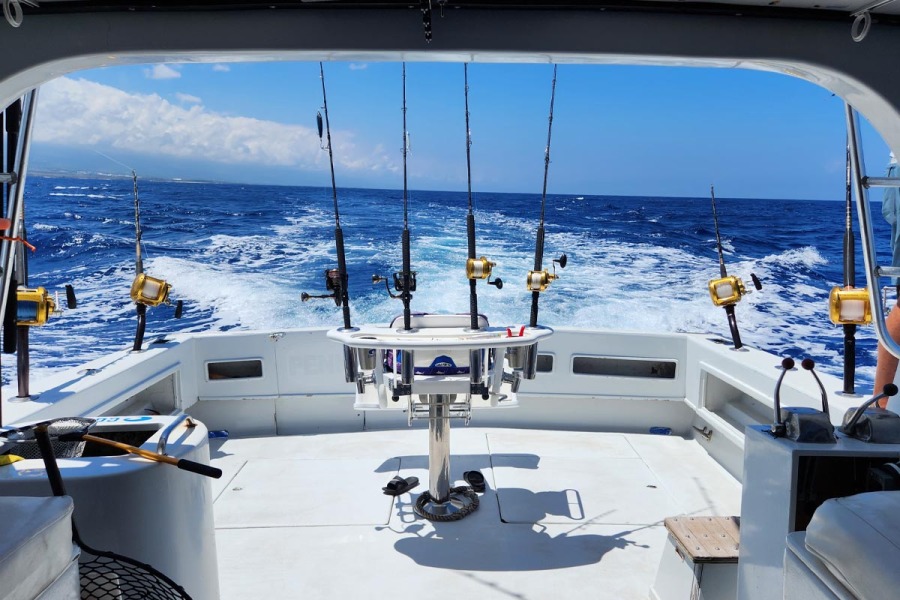
Separating Deep Sea Fishing from Offshore Fishing
If you've spent time around fishing docks, tackle shops, or charter boats, you've heard the terms deep sea fishing and offshore fishing used like they mean the same thing. To someone who hasn't spent real time on the water beyond the inlet, that's an understandable assumption. But they aren't the same thing, and knowing the difference matters practically. It affects how you plan a trip, which boat you need, which species you're realistically targeting, and what an experienced captain is actually talking about.
Here's the direct answer: offshore fishing is a broad category that covers any fishing beyond inshore coastal waters, from reef lines to weed lines to structure in a few hundred feet. Deep sea fishing is a specific subset, a pursuit that takes you into genuinely deep water, well past the continental shelf, where you're targeting the ocean's true apex predators in conditions that demand serious preparation and serious gear.
What Offshore Fishing Actually Means
Offshore fishing begins where inshore fishing ends. Past the protected bays, the grass flats, the nearshore reefs and out into open saltwater where the fish get bigger and the conditions become less forgiving. Where that threshold falls depends on where you fish. On the Gulf of Mexico, "offshore" might mean anything beyond 9 miles. On the Atlantic coast, it often starts at the reef line 20-30 miles out. In some areas, you're legitimately offshore in 80 feet of water.
The defining element is not depth alone. It's distance from protected inshore habitat and the species available to you. Offshore fishing can put you in 60 feet chasing mahi-mahi along a weed line, or working structure at 150 feet for king mackerel and grouper, or running a temperature break at 300 feet for wahoo. A well-equipped 30-foot center console can fish most offshore water effectively. Day trips are the standard.
- Mahi-mahi around weed lines, floating debris, and fish aggregating devices
- Wahoo on ledges, temperature breaks, and current edges
- King mackerel and cobia on reefs and nearshore wrecks
- Grouper and snapper on structure from 80 to 300 feet
- Sailfish along coastal current seams and temperature fronts
What Deep Sea Fishing Actually Means
I'll be straight with you: 200 or 300 feet of water is not deep sea fishing. That's offshore. When you get into 1,000 feet and beyond, when the ocean floor has long since disappeared beneath you, that's deep sea fishing. That's the working definition used throughout this article, and it's grounded in how the ocean floor actually behaves. Charter marketing uses both terms loosely and often interchangeably, so if you're comparing brochures, your mileage will vary.
Here's the oceanographic basis for that threshold. The continental shelf slopes gradually from shore until it reaches the shelf break, which globally averages around 400 to 460 feet deep (roughly 120 to 140 meters). Beyond that point, the bottom transitions from the shelf to the continental slope, where depth drops steeply and quickly. By the time you're at 1,000 feet, you are well down that slope, in water that is categorically different from the shelf above it in terms of temperature, pressure, species composition, and conditions. The 1,000-foot mark isn't an arbitrary line. It's a practical threshold that puts you unambiguously in a different ocean.
One important geographical note: how far you run to reach deep water depends entirely on where you fish. In Hawaii, Madeira, the Azores, and other oceanic island groups built on steep volcanic topography, the shelf break can be just a few miles from the dock. You're in 1,000 feet before you've finished your first cup of coffee. On broad continental shelves like the northern Gulf of Mexico, parts of the southeastern U.S. Atlantic coast, or the Grand Banks, that same depth may require a run of 80 miles or more. The definition of deep sea fishing doesn't change. The commute does.
Deep sea fishing means operating in that post-shelf-break environment, where oceanographic features like current edges, underwater mountains, seamounts, and canyon walls determine where fish stack up. You might troll in 2,000 feet of water for blue marlin or drop baits to 1,500 feet for swordfish. The isolation is real. The fish are genuinely large and wild. The consequences of poor planning are more serious.
Deep sea fishing is defined by depth, and I set that threshold at 1,000 feet. Two or three hundred feet is offshore fishing. It's great fishing, but it's not the same world. Once you cross that shelf break and the bottom disappears beneath you, everything about the pursuit is different.
Seth Horne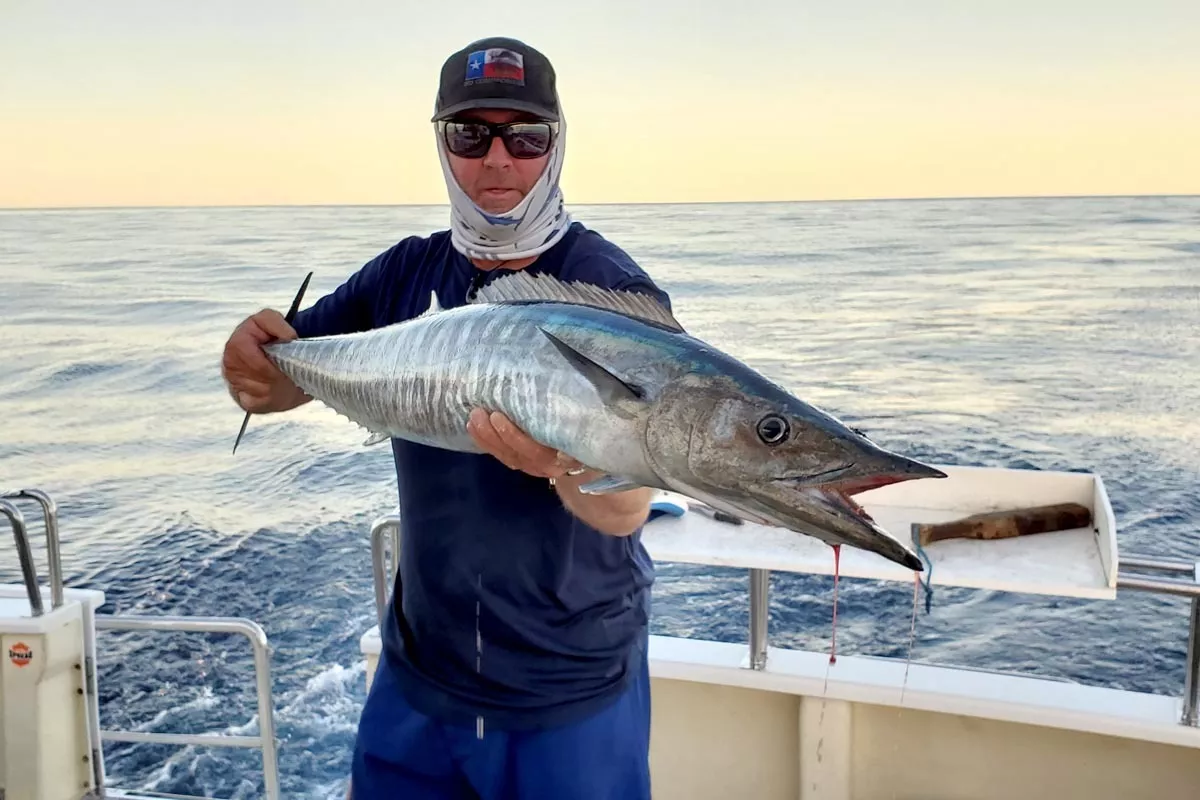
Deep Sea vs. Offshore Fishing: The Defining Differences
The clearest way to separate these two is to look at the variables that actually matter.
Water depth is the most honest dividing line. Offshore fishing typically spans the zone from the nearshore reefs out to the shelf break, covering roughly 60 to 400 feet of water. The shelf break itself averages around 400 to 460 feet globally, though it varies by region. Deep sea fishing begins at and beyond that shelf break, where the bottom tilts steeply into the continental slope and depth drops rapidly toward 1,000 feet and beyond.
Distance from shore follows naturally from geography. Offshore trips often keep you within 20 to 50 miles of port. Deep sea fishing can push you 60 to 100+ miles out where shelf breaks are distant, though in regions with steep underwater topography such as oceanic islands, seamounts, and volcanic coasts, you can reach legitimate deep sea depth in a fraction of that distance.
Target species reflect the environment. Offshore fishing covers coastal and semi-pelagic species across a wide range. Deep sea fishing is dominated by large open-ocean pelagics: billfish, big tunas, broadbill swordfish, wahoo, along with deep-water bottom species like tilefish in 800 to 1,200 feet. Worth noting: many of these same pelagic species are also encountered in shallower offshore zones, particularly wahoo and sailfish, which regularly show up well inside the shelf break depending on currents and season.
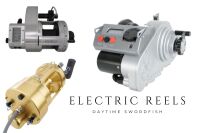
Vessel and gear requirements are significantly different. Offshore trips are feasible on a variety of boats. Deep sea fishing requires a seaworthy bluewater vessel with range, advanced navigation, and purpose-built tackle. Electric reels, heavy conventional tackle, and proper rigging for extreme depth are not optional.
The Species That Define Deep Sea Fishing
The pelagic species of the open ocean are in a class by themselves. Size, speed, fighting ability, and the challenge of finding them in millions of acres of open water is what draws serious anglers back out there, trip after trip.
Blue Marlin: The Standard for Big Game Fishing
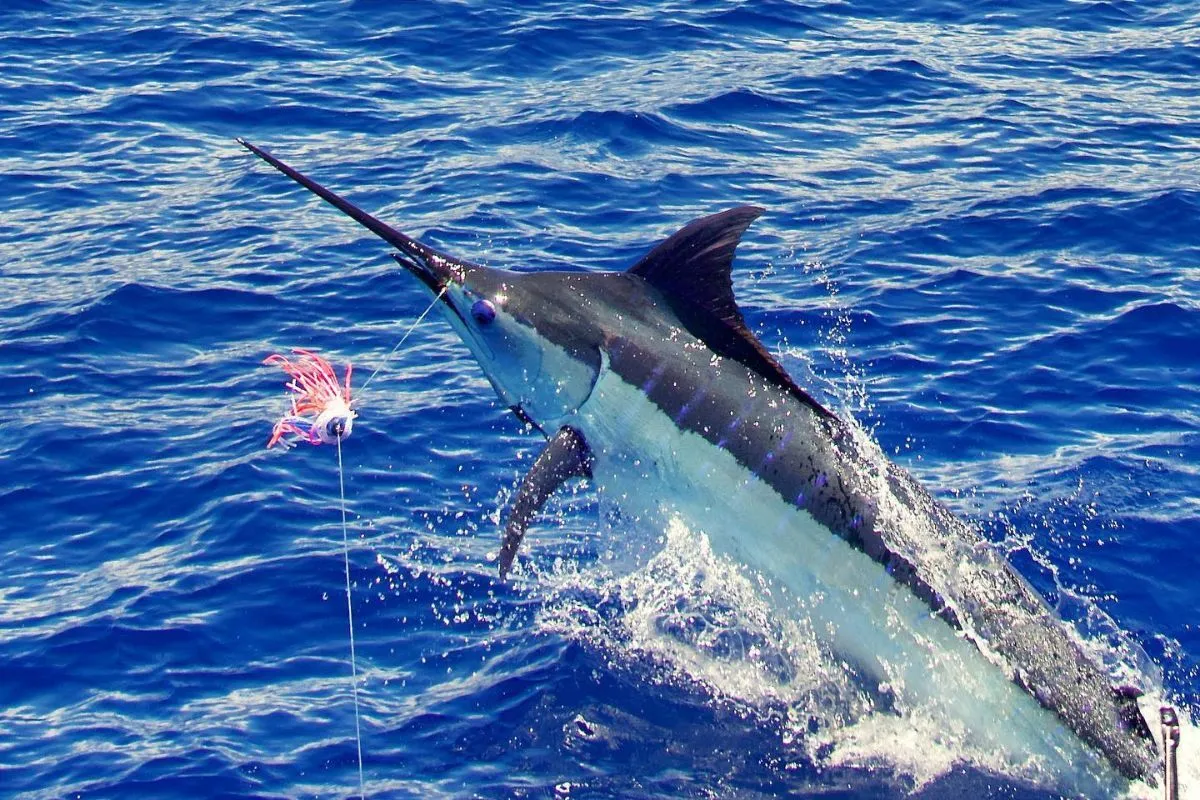
There is no fish that more completely defines big game deep sea fishing than the blue marlin. These fish can exceed 1,000 pounds. Their first run on heavy tackle will test every component of your gear and every ounce of your conditioning. The fight is strategic. You need to understand how to work the boat, manage the angle, and read the fish at every stage of the battle. Catching a blue marlin is a benchmark that every serious offshore angler measures themselves against.
Bluefin and Yellowfin Tuna: Built for War
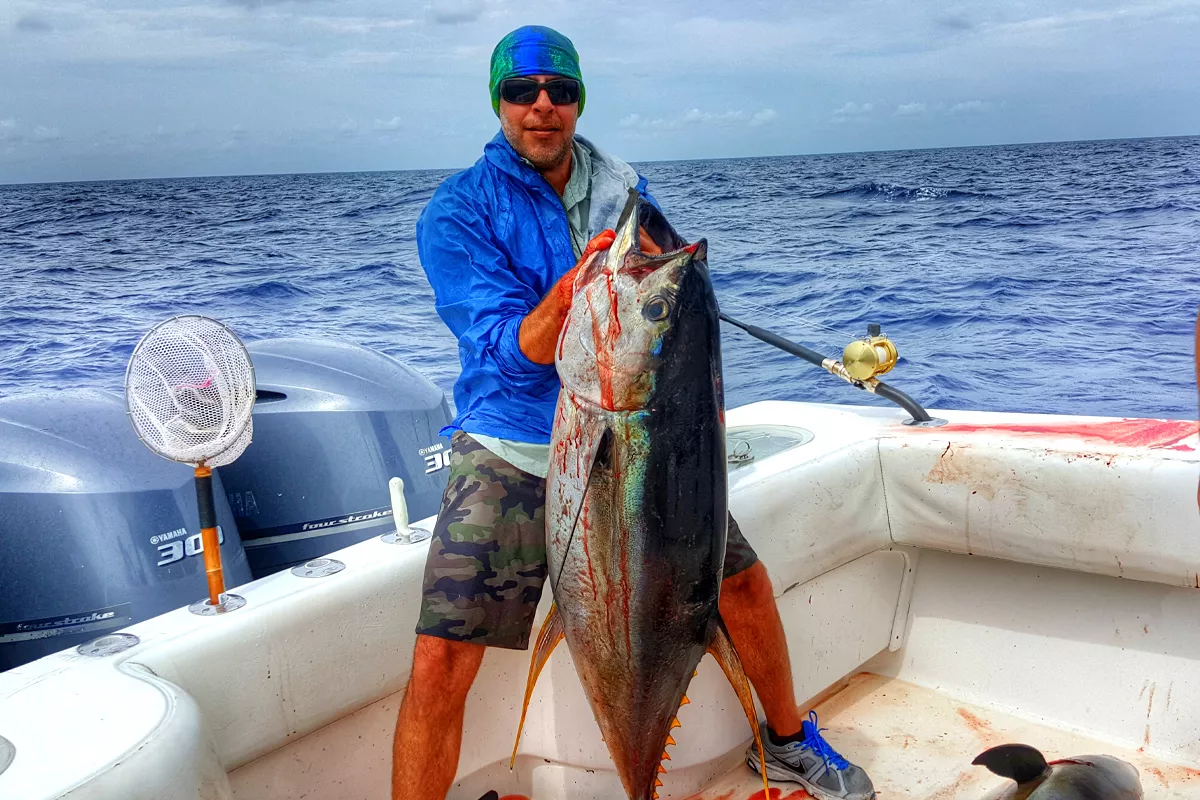
Tuna are purpose-built for endurance and speed. A large bluefin will peel off hundreds of yards of line in seconds. A cow yellowfin will go straight down and refuse to come up, grinding through tackle and anglers with equal indifference. In deep water, the fish are bigger and the fights are longer. The preparation required to target them effectively at depth is a different level from nearshore tuna fishing.
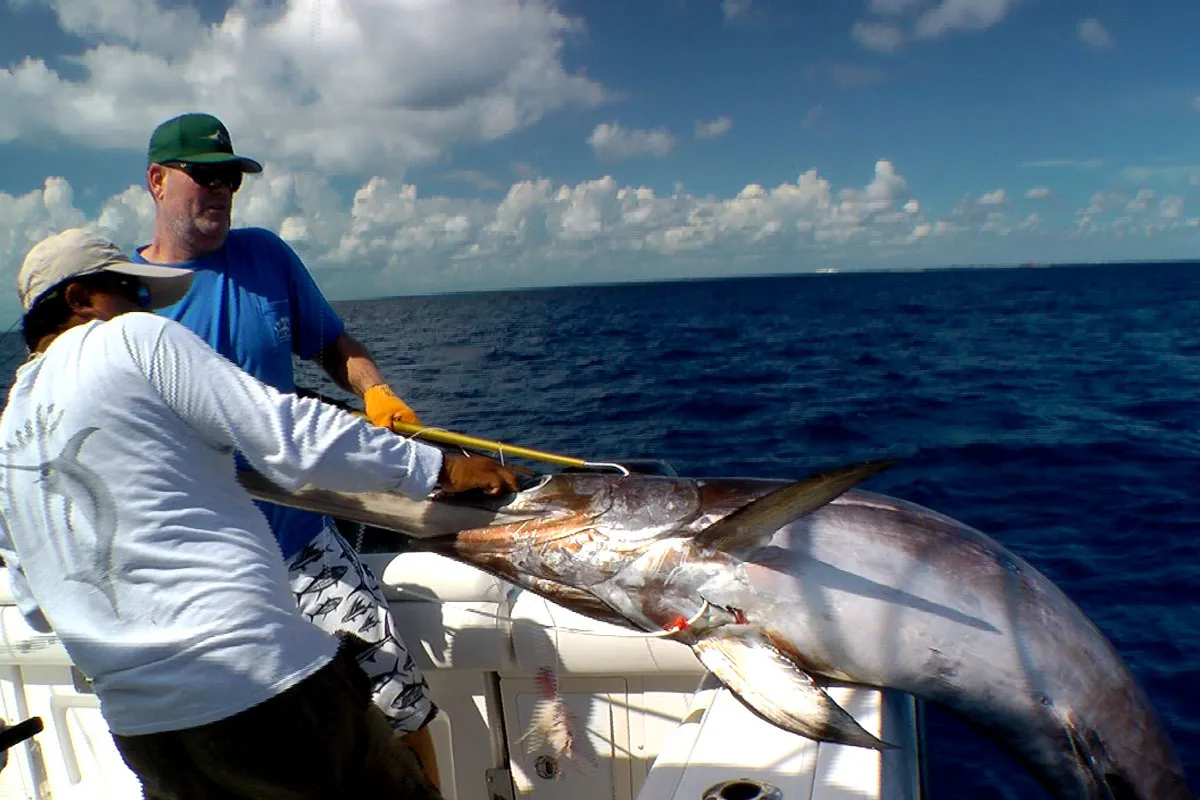
Swordfish: The Deepest Hunt
Swordfish may be the most demanding deep sea target in the Atlantic and Gulf. Daytime swordfishing means sending baits to 1,200-1,800 feet on electric reels, reading subtle bites on heavy conventional rods, and then fighting a fish that has no interest in cooperating. Nighttime sword fishing in shallower water is its own discipline. Either way, broadbills require total commitment from the crew and the boat.
The Species That Define Offshore Fishing
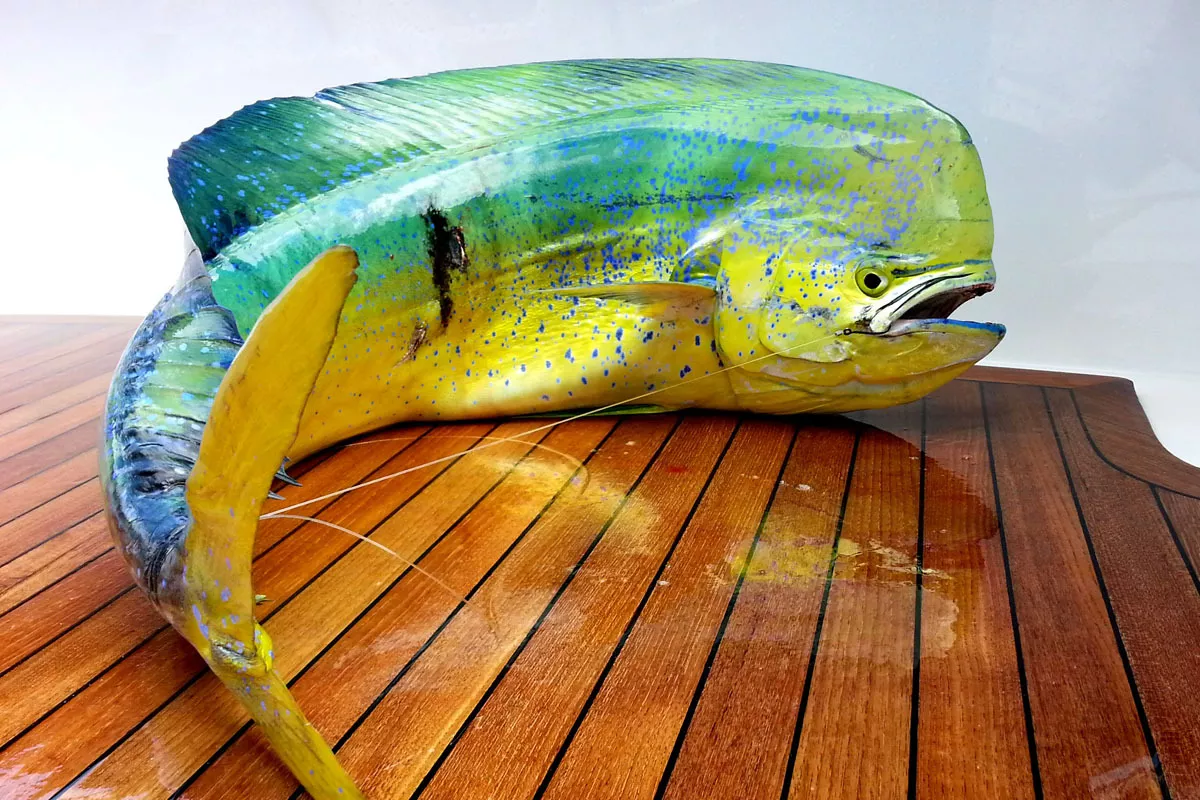
Not every great saltwater target belongs in the deep sea category, and being honest about that actually sharpens the distinction. Offshore fishing spans two very different worlds: open-water pelagic fishing and structure-oriented bottom fishing. Both are legitimately offshore. Neither requires you to cross the shelf break.
Offshore pelagic species are the ones most people picture when they think of going offshore. They roam current edges, temperature breaks, weed lines, and ledges, often well inside the shelf break:
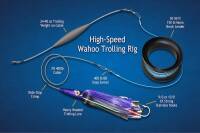
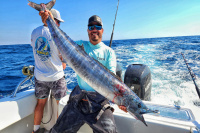
- Wahoo on ledges, temperature breaks, and current edges, targeted with high-speed trolling rigs or slow-trolled live bait
- Sailfish along coastal current seams and temperature fronts, one of the most acrobatic fights in saltwater fishing
- Mahi-mahi around weed lines, floating debris, and fish aggregating devices, schooling fish that offer fast-paced action and exceptional table fare
A wahoo exploding on a high-speed trolling lure, a lit-up sailfish going airborne behind a teaser, or a school of bull mahi-mahi tearing apart a weed line are experiences that need no qualification. These are also species you're likely to encounter on the run out to and back from deeper water, which makes understanding their habits doubly useful on any bluewater trip.
Offshore structure species round out the picture and represent some of the most reliable, high-quality fishing available in the offshore zone. Reefs, wrecks, ledges, and hard bottom in 60 to 400 feet hold fish year-round and reward anglers who understand how to position a boat and present bait correctly:
- Grouper on hard bottom, ledges, and wrecks, powerful fish that head straight for structure the moment they're hooked
- Snapper on reefs and offshore wrecks, multiple species available depending on region and depth, all of them worth targeting
- Amberjack on deeper wrecks and structure, among the strongest pound-for-pound fighters in the offshore zone
- Tilefish
Mahi-mahi dolphin fishing techniques for weed lines, FADs, and open water
Grouper fishing courses covering bottom fishing tactics, rigging, and positioning
Red snapper and reef snapper fishing techniques from working Gulf and Atlantic captains
Reef and wreck fishing for amberjack and structure species
Deep Sea Fishing Techniques
Dredge fishing generates more billfish opportunities by simulating concentrated bait schools that trigger competitive feeding, but improper configuration wastes effort without improving results. Captain Glenn Cameron and RJ Boyle explain equipment specifications, how dredge positioning affects pitch bait presentation, and when tournament scenarios justify the setup complexity versus traditional trolling spreads.
Custom rod building creates performance advantages through blank selection, spline orientation, and component configuration addressing specific applications. Allen Winchel, founder of Blackfin Rods, demonstrates the complete construction process, explaining why each decision from blank to final curing affects rod performance beyond what production manufacturing achieves.
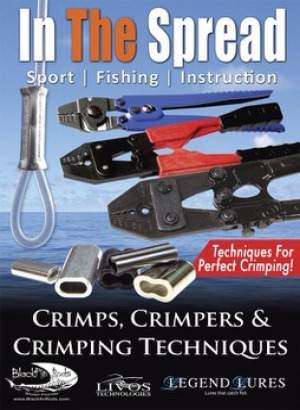
Learn essential crimping techniques for big game terminal tackle. This video covers crimp sleeve selection for mono and wire leaders, proper compression methods with compound and plier-style crimpers, tool maintenance, and preventing connection failures when fighting marlin, tuna, and wahoo.
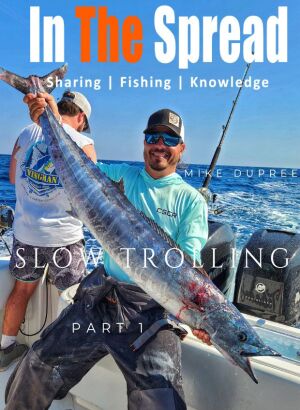
Slow trolling wahoo creates opportunities when high-speed presentations fail to trigger selective fish. Captain Mike Dupree's North Carolina expertise reveals using satellite data for isolating temperature breaks and current convergences, tackle specifications for slower speeds including planers for depth control, and ballyhoo rigging techniques producing natural presentations that aggressive methods cannot replicate effectively.
Tournament anglers maintain tackle meticulously because equipment failure costs placements and prize money. Allen Winchel's cleaning process takes minutes but prevents the guide corrosion, seized reel seats, and finish deterioration that force replacing expensive rods years before blanks actually fail from use.
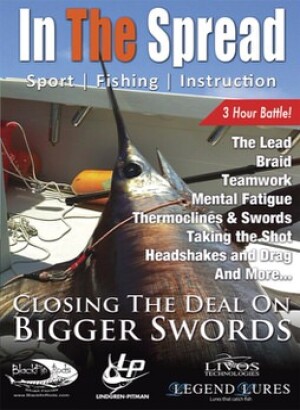
Learn proven swordfishing tactics for landing 500 to 800 pound fish with RJ Boyle. This video covers lead removal timing, harpoon shot execution, drag manipulation strategies, and wheelman boat positioning techniques that determine success when fighting trophy-class swordfish in challenging offshore conditions.
Deep Sea Fishing Techniques That Actually Work
The methods used in deep water are as demanding as the fish. Each one requires a different skill set and different gear, but all of them share the same requirement: thorough preparation before you ever leave the dock.
Trolling for Open-Ocean Pelagics
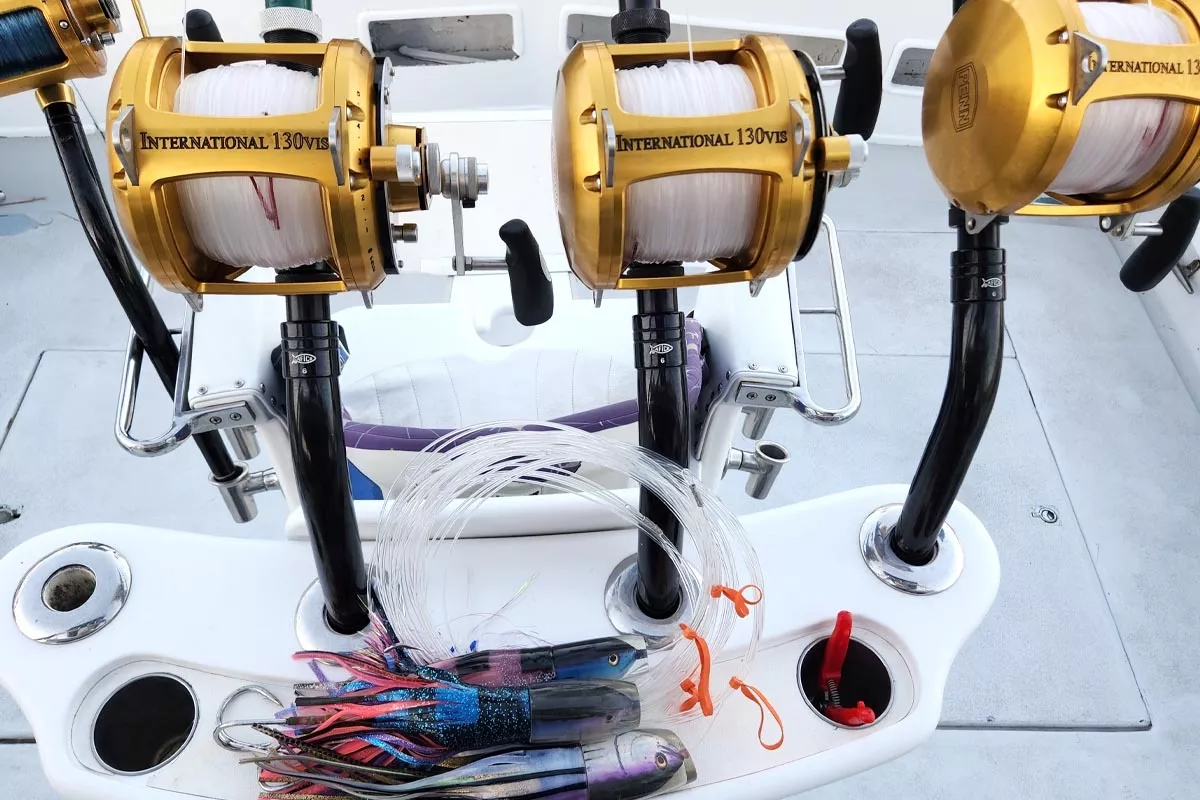
Offshore trolling is the foundational technique of bluewater fishing. You're moving lures, rigged natural baits, or a combination of both through the water at speeds calibrated to mimic fleeing baitfish, which triggers the predatory instinct in marlin, tuna, wahoo, sailfish, and mahi-mahi. The basic concept is simple. Executing it well is not.
Effective trolling requires understanding current and sea surface conditions, lure behavior at different speeds, and how to configure a spread that looks like a real school of baitfish from below the surface. The variables that matter most:
- Trolling speed runs 6-9 knots for natural baits and skirted lures, scaling up to 15+ knots for dedicated wahoo rigs
- Lure selection tied to target species, sea state, light conditions, and the size of natural bait in the area
- Spread configuration using outriggers, flat lines, dredge teasers, and positioned lures to simulate a coherent baitfish school
- Sea surface temperature breaks and color changes as the primary locators for productive trolling lanes
Finding fish in the open ocean is as important as presenting the lures correctly. Satellite fishing maps from services like Hilton's Offshore Navigator are the tool that puts you on the right water before you ever deploy the spread.
Trolling FAQ
How fast should I troll for blue marlin?
Most marlin trolling is done between 7-9 knots using a combination of skirted lures and rigged natural baits. Wahoo-specific rigs can run considerably faster, 12-15 knots or more.
What lures work best for offshore trolling?
Skirted lures in sizes matched to the target species, rigged ballyhoo, and ilander-and-bait combinations cover most deep sea situations. In The Spread's marlin lure content covers spread configuration and lure selection in real depth.
How do I know where to troll offshore?
Temperature breaks, water color changes, and current edges are the primary structural elements. Satellite SST charts give you the roadmap before you leave the dock.
Deep Dropping: Fishing in Extreme Depth
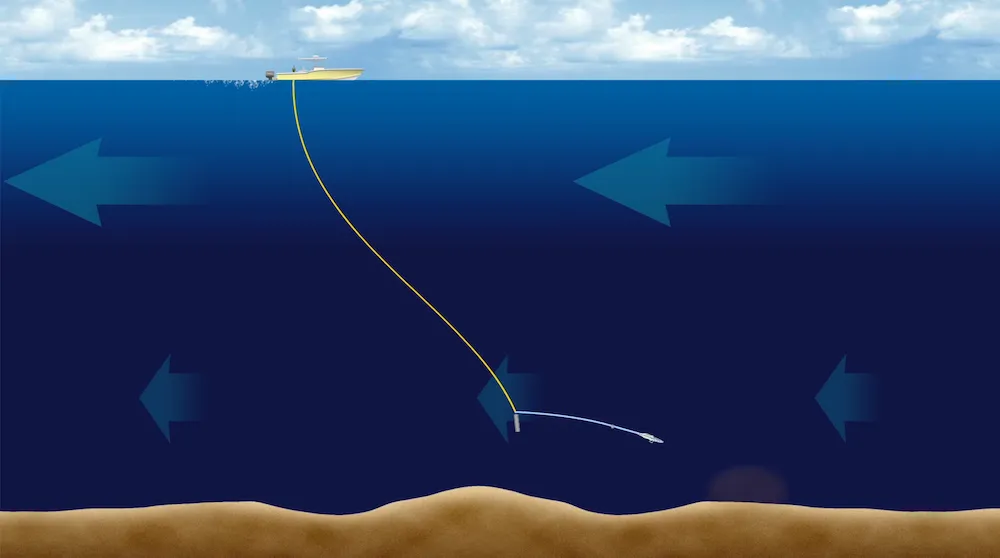
Deep dropping is bottom fishing pushed to its extreme, targeting species that live on or near the ocean floor in water from 800 to over 2,000 feet. Primary targets include daytime swordfish holding at depth, golden tilefish in the soft mud burrows they build on the upper continental slope, deep-water grouper species on hard bottom structure, and wreckfish in the deeper reaches of the Atlantic.
- Electric reels are essentially mandatory beyond 600-800 feet. Manually retrieving a rig from 1,500 feet is not realistic under fishing conditions
- Heavy conventional rods capable of handling the weight required to reach bottom in current
- Multi-hook bottom rigs baited with squid, mackerel, or belly strips depending on target species
- Lead weights selected by current conditions: you may need 3-6 pounds to hold bottom effectively
Reading bottom structure at these depths is a skill that takes time to develop. Ledges, hard bottom transitions, and canyon walls concentrate fish. In The Spread's bottom fishing courses cover the positioning and approach that make deep dropping productive.
Deep Dropping FAQ
What depth do swordfish hold at during the day?
Daytime swordfish are typically found between 1,200 and 1,800 feet during peak daylight hours, moving shallower as light diminishes.
Do I need an electric reel for deep dropping?
For anything beyond 600-800 feet, yes. The weight required to reach bottom at 1,500 feet makes manual retrieval physically impractical under real fishing conditions.
What species can I catch deep dropping?
Daytime swordfish, golden and blueline tilefish, wreckfish, and several deep-water snapper and grouper species are the primary targets. In The Spread's tilefish fishing content is a useful starting point for understanding deep-drop bottom tactics.
Jigging: Active Fishing at Depth
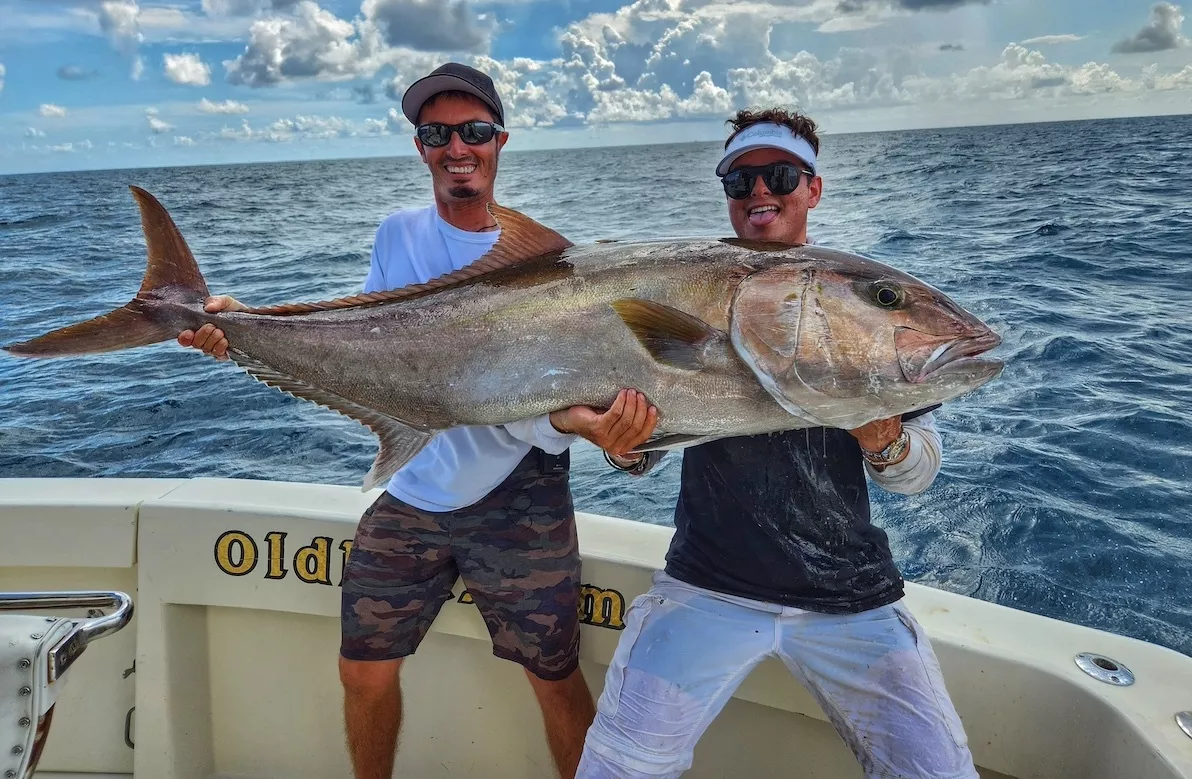
Offshore jigging is one of the most physically demanding techniques in saltwater fishing, and it scales across the entire depth range, from mid-depth offshore reefs and wrecks all the way into genuine deep sea structure. Rather than waiting for a bite, you're continuously working a metal jig through the water column, generating strikes through cadence, movement, and the visual trigger of the jig mimicking a distressed baitfish.
Two primary styles dominate:
Vertical high-speed jigging uses rapid, repeated rod lifts to drive the jig up the water column, triggering aggressive reaction strikes from amberjack, yellowfin tuna, dogtooth tuna, and reef predators.
Slow-pitch jigging relies on a deliberate, rhythmic rod motion that lets the jig flutter and fall naturally, which is deadly on grouper, snapper, and a wide range of bottom-oriented pelagic species that won't respond to faster presentations.
Jigging FAQ
What species respond to jigging in deep water?
Amberjack, dogtooth tuna, yellowfin tuna, greater amberjack on wrecks, and a range of grouper and snapper species are the primary offshore jigging targets.
What jig weight do I use in deep water?
Start with 150-300 gram jigs in 200-400 feet with moderate current, scaling up significantly for deeper water or strong current. The same approach that works on mid-depth offshore structure scales directly into deep sea fishing by adjusting jig weight and cadence. In The Spread's jigging courses cover rigging, cadence, and weight selection across conditions.
Deep Sea Fishing FAQ
What is the difference between deep sea fishing and offshore fishing?
Offshore fishing covers open-water fishing beyond inshore coastal zones, typically in 60-600 feet of water. Deep sea fishing is a more specific pursuit in water exceeding 1,000 feet, targeting large pelagic species like marlin, tuna, and swordfish in the open ocean beyond the continental shelf.
How far offshore do you go for deep sea fishing?
It depends on geography. Some regions have shelf breaks 30-40 miles from port. Others, like productive Gulf canyon systems, require runs of 80-120 miles. The depth matters more than the mileage.
What depth is considered deep sea fishing?
The continental shelf break averages around 400 to 460 feet globally, and that's where the real transition begins. Beyond the shelf break, the bottom drops steeply into the continental slope. By 1,000 feet you are well down that slope in water that is genuinely different in temperature, species composition, and the demands it places on gear and anglers. For this article, and for practical planning purposes, 1,000 feet is the working threshold for deep sea fishing.
What are the best fish to target deep sea fishing?
Blue marlin, bluefin and yellowfin tuna, broadbill swordfish, wahoo, sailfish, and bigeye tuna are the premier open-ocean pelagic targets. For deep dropping, swordfish, golden tilefish, and deep-water grouper species are primary targets.
What gear do you need for deep sea fishing?
A seaworthy bluewater vessel with fuel range, heavy conventional tackle in 50-130 lb line class, electric reels for deep dropping, quality sonar and navigation electronics, and rigging appropriate to the target species. Specific requirements vary significantly by technique.
Is deep sea fishing more dangerous than offshore fishing?
Greater distance from shore means greater exposure to deteriorating weather and longer response times if something goes wrong. A solid float plan, current weather knowledge, reliable electronics, and competent seamanship are not optional on any deep sea trip.
Learning from People Who Actually Do This
The learning curve in deep sea fishing is real. Every species has its own behavior, its own seasonal patterns, and its own tactical requirements. The ocean rewards preparation and punishes shortcuts, whether that's a poorly rigged bait, the wrong trolling speed, or not understanding how depth affects where fish hold during different parts of the day.
At In The Spread, every video course is taught by working captains and guides, people who make their living finding and catching these fish in real ocean conditions. Whether you're preparing for your first swordfish trip, trying to put together a more effective trolling spread for marlin, or learning to read satellite data before you leave the dock, that knowledge is here.
Login
to leave a review.
User Reviews
There are no reviews yet.
Setting Up a Dredge Pulley for Billfish
Saltwater
12.28.2020
High Speed Wahoo Trolling Rig
Saltwater
09.08.2018
Fishing Light Tackle for Yellowfin Tuna
Saltwater
09.08.2018
0