
The roosterfish earns its reputation on impact. That raised comb of dorsal spines mid-charge, the explosive strike, the long runs that test gear and judgment, all of it adds up to one of the most compelling inshore targets in the eastern Pacific. Two destinations define serious pursuit of this fish: Cabo San Lucas and Costa Rica's Osa Peninsula.
Fishing for Roosterfish: Cabo San Lucas vs. Costa Rica
If you have been asking where to go for roosterfish fishing, the short answer is this: Costa Rica's Osa Peninsula is arguably the top destination for trophy fish, and Cabo San Lucas is the stronger fit when infrastructure and convenience matter as much as size. Both places deliver a legitimate world-class inshore experience. The difference comes down to what you want from the trip.
What Makes Roosterfish One of the Most Sought-After Inshore Game Fish
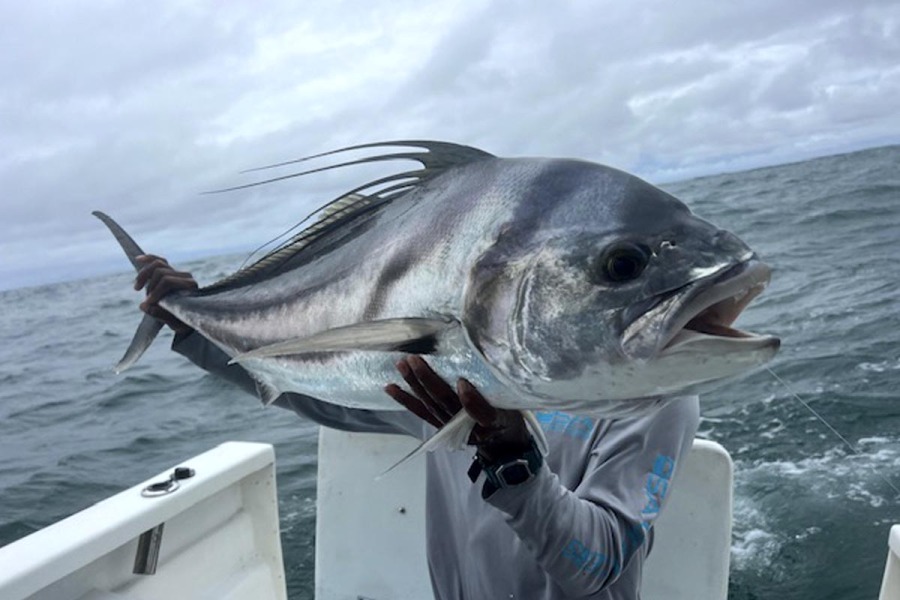
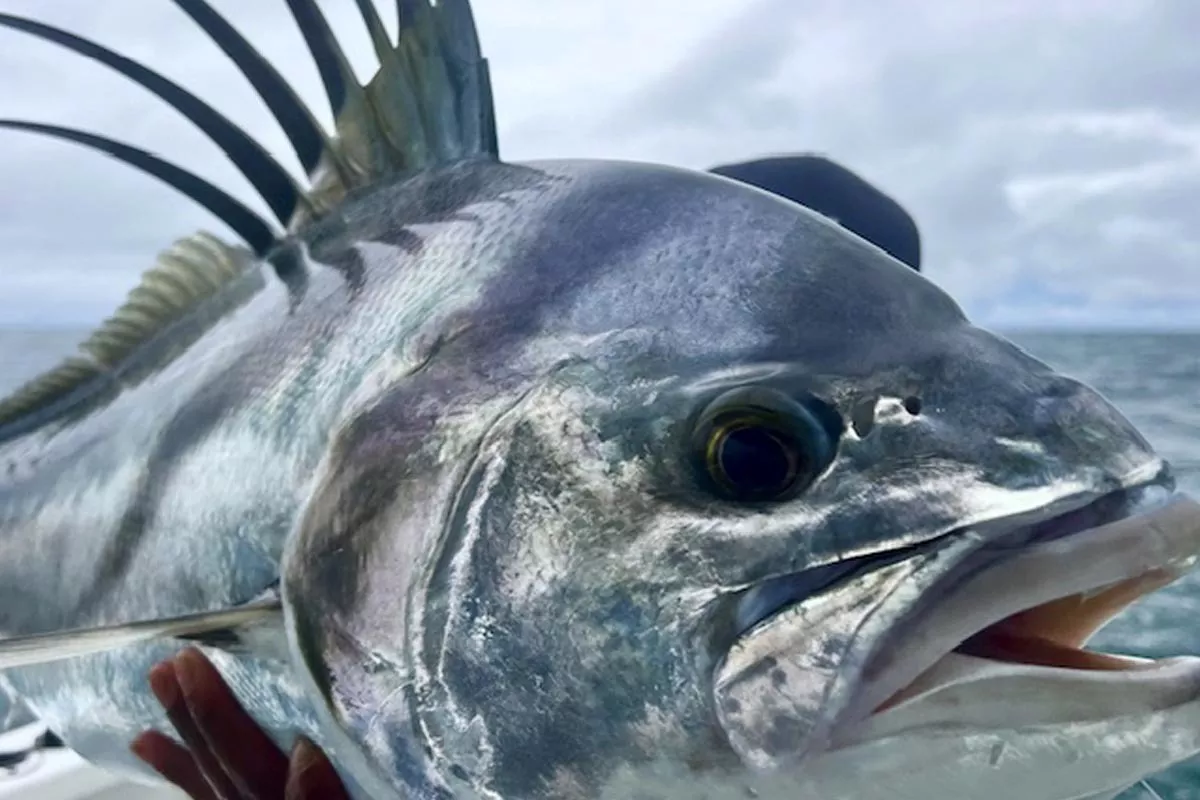
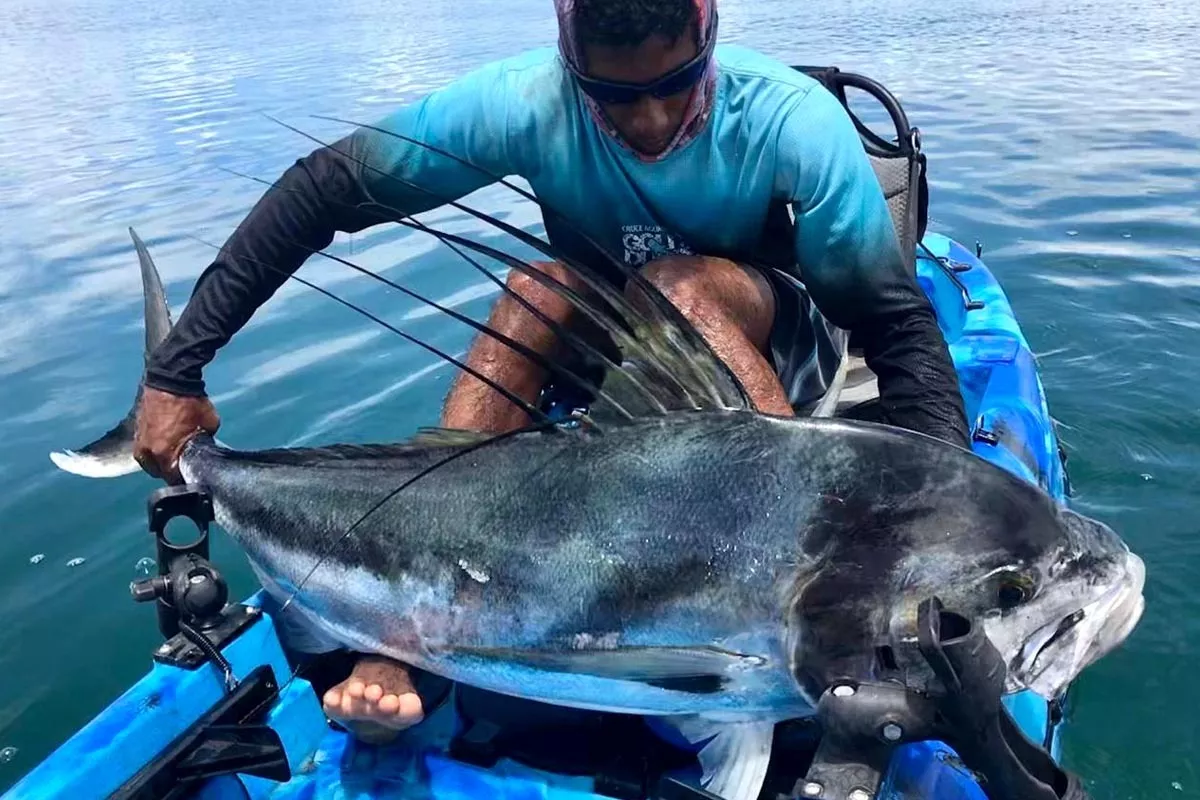
Roosterfish (Nematistius pectoralis) are the only member of their genus within the jack family Carangidae. What makes them legendary to inshore anglers is that comb of seven elongated dorsal spines. They raise it when hunting, when threatened, and when they're lit up and bearing down on a bait. It is one of the most recognizable sights in saltwater fishing.
Most fish fall somewhere in the 15 to 60-pound range, with many common catches in the 20 to 40-pound class. Fish pushing 80 pounds represent genuinely exceptional specimens at most destinations, and the Osa Peninsula regularly produces fish exceeding 100. Their bodies are deep and laterally compressed, marked with two dark curved stripes on a silver-blue flank. They hit hard, run fast, and have the stamina to burn through reels on fish well under their maximum size.
Their range covers the eastern Pacific from southern California to Peru, but the most productive concentrations run from southern Mexico through Panama. They stay close to shore, almost always within a mile of the coastline in water shallower than 200 feet, which makes them accessible from boats, kayaks, and in the right conditions, directly from the beach.
Explore roosterfish fishing videos and instructional courses from working captains at In The Spread Roosterfish Fishing in Cabo San Lucas
Cabo San Lucas sits at the southern tip of Mexico's Baja California Peninsula, where the Pacific Ocean meets the Sea of Cortez. That confluence creates a nutrient-rich environment that has supported world-class sport fishing for generations. While Cabo is best known historically for billfish and dorado, roosterfish in Cabo San Lucas are a major inshore target and have attracted dedicated anglers for decades.
Getting to Cabo San Lucas for Roosterfish
Los Cabos International Airport (SJD) receives direct flights from many US hubs, putting most anglers at the marina within an hour of landing. Charter operations are easy to book in advance, and the established tourism infrastructure means guides, tackle, and boats are available across a wide range of price points. This makes Cabo the more accessible and flexible option for first-time visitors or mixed groups where not everyone is fishing.
Where to Find Roosterfish Around Cabo San Lucas
The most productive roosterfish spots in Cabo share one quality: nearshore structure with tidal current movement. Rocky points, sandy drop-offs, and beach stretches adjacent to deeper water consistently hold fish. The standout locations are:
- Chileno Bay, where rocky points and clear water make sight fishing genuinely viable
- Palmilla Point, a stretch famous for roosters pushing bait tight against the shoreline
- East Cape, slightly further from town and known for larger fish with less crowding
- San Jose del Cabo estuary, productive around tidal changes when baitfish concentrate at the mouth
Best Time of Year to Fish for Roosterfish in Cabo San Lucas
The peak window for roosterfish fishing in Cabo is May through July, when fish are most concentrated and most aggressively feeding. September through November can produce some of the largest fish of the year, though late summer and fall bring hurricane-season swells and less predictable wind that can affect both boat access and beach casting. December through April brings calmer conditions, improved water clarity, and better sight fishing, but also peak tourist season with more pressure on the most popular spots.
What Else You Can Catch in Cabo San Lucas
Roosterfish share these waters with a diverse inshore and offshore fishery. Dorado, yellowfin tuna, wahoo, and multiple billfish species are all accessible depending on the season, making Cabo a strong choice for anglers who want variety alongside their inshore roosterfish fishing.
Fishing Techniques That Work in Cabo
Cabo's clear water, beach access, and well-developed charter fleet make it one of the few roosterfish destinations where multiple methods are genuinely viable in a single day. Slow trolling with live bait around rocky points is the standard approach. Sight casting to fish cruising the shallows is realistic when visibility holds. Topwater roosterfish lures, including large poppers and stick baits, get explosive strikes during the low light periods at dawn and dusk.
Roosterfish Fishing on Costa Rica's Osa Peninsula
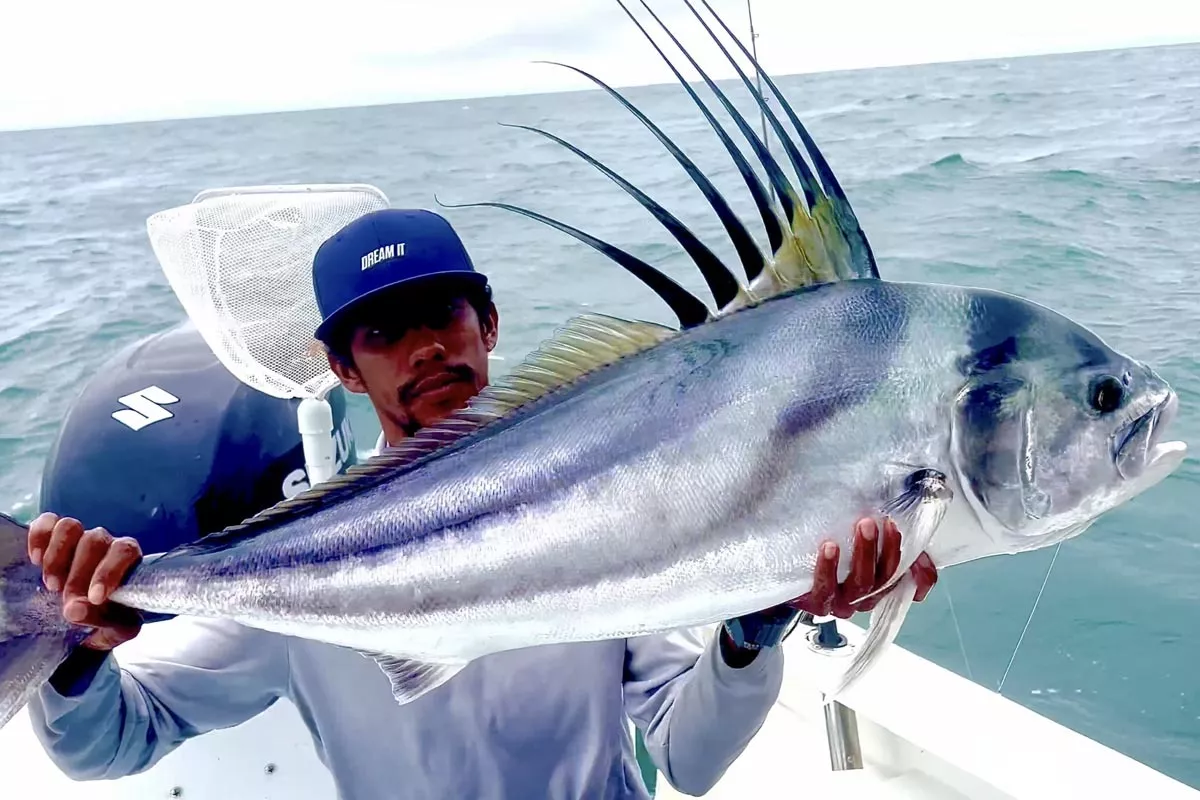
The Osa Peninsula occupies the southwestern corner of Costa Rica, flanked by Corcovado National Park and the Golfo Dulce. National Geographic has described this region as one of the most biologically intense places on Earth. The fishing reflects the health of that ecosystem: nutrient-dense water, strong baitfish populations, and a roosterfish fishery that consistently produces some of the largest fish recorded anywhere in the Pacific.
Getting to the Osa Peninsula for Roosterfish
Reaching the Osa Peninsula requires more planning than Cabo. The typical route is an international flight into San José (SJO) followed by a domestic flight into Golfito, Puerto Jiménez, or Drake Bay, with transfers often arranged through the lodge. Drive options to Golfito exist but add significant time. Most serious anglers book through lodge-based packages that bundle accommodations, meals, transfers, and guide service, which simplifies logistics considerably and tends to deliver better fishing outcomes than a DIY approach in this region.
Why the Osa Peninsula Produces the Largest Roosterfish
The most important factor separating the Osa Peninsula from other roosterfish fishing destinations is fish size. Several conditions combine to produce that result:
- Lower angling pressure means fish are less wary and behave more naturally
- Extensive mangrove systems serve as nurseries, sustaining strong juvenile populations that grow into the fishery
- Rocky shorelines, tons of offshore formations, and the deep structure of the Golfo Dulce create prime ambush habitat
- Converging ocean currents sustain a dense food chain that supports large, well-conditioned fish
Best Season for Roosterfish Fishing on the Osa Peninsula
Roosterfish fishing on the Osa Peninsula is productive year-round, but the two seasons shape your experience in meaningfully different ways.
The dry season runs December through April. Calmer seas, improved water clarity, and glassy morning conditions make sight fishing and topwater presentations highly effective. This is the more comfortable option for most visiting anglers and produces consistent action in shallower nearshore water.
What Else You Can Catch on the Osa Peninsula
The Osa Peninsula runs well beyond roosterfish. Cubera snapper, yellowfin tuna, dorado, various jacks, blue marlin, black marlin and sailfish are all accessible depending on the season and location. For anglers willing to make the trip, this is a multi-species destination with genuinely diverse inshore and offshore options.
Fishing Techniques for Osa Peninsula Roosterfish
Live bait dominates on the Osa Peninsula, and bait size reflects the size of the target. Bonito in the 8 to 12-inch range, mullet, and blue runners are the standard choices. Slow trolling around rocky points, the outer Golfo Dulce, and the waters around Caño Island is the most reliable approach for trophy roosterfish in Costa Rica.
Surface popping with large poppers is highly effective during low light and can draw explosive strikes from big fish. Vertical jigging with heavy metal jigs reaches fish on deeper structure. Fly fishing is demanding but achievable with the right guide and 10 to 12-weight gear with serious backing capacity.
Roosterfish Costa Rica instructional video series featuring Mike Hennessy
Giant roosterfish patrol deep water around Costa Rica's Osa Peninsula rocky islands rather than surf zones where smaller fish dominate. Mike Hennessy's systematic approach requires stocking 50-plus exotic live baits including bonito and lookdowns, fishing entire water columns simultaneously with surface poppers and deep-trolled baits at 30 to 50 feet, using tackle scaled from 6/0 to 9/0 hooks for trophy fish approaching world record sizes.
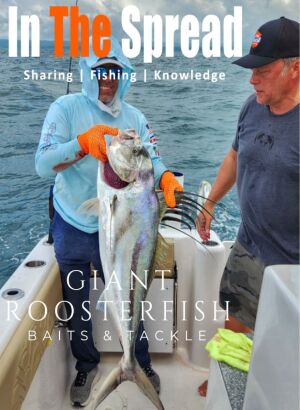
Costa Rica's Osa Peninsula produces world-record roosterfish in deep water where trophy specimens weighing 60 to 80-plus pounds demand unconventional approaches. Mike Hennessy's tactics include large skipjack tuna, baby snappers, and big ladyfish matching substantial forage profiles, plus heavy-duty 30 to 50 lb tackle with 150 lb fluorocarbon leaders and 9/0 circle hooks handling powerful runs.
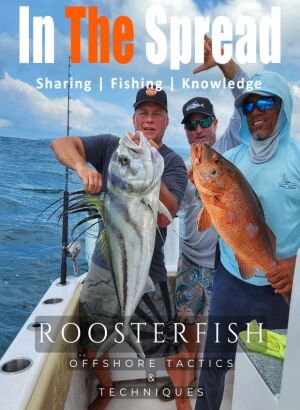
Costa Rica roosterfish giants demand offshore tactics beyond conventional surf techniques, requiring deep water structure fishing around rock piles and ledges. Mike Hennessy's proven multi-depth strategy fishes surface presentations and deep offerings simultaneously while advanced bait management for skipjack, blue runners, and sardines sustains sessions, with tackle scaled from 6/0 circles to 9/0 marlin hooks for trophy specimens.
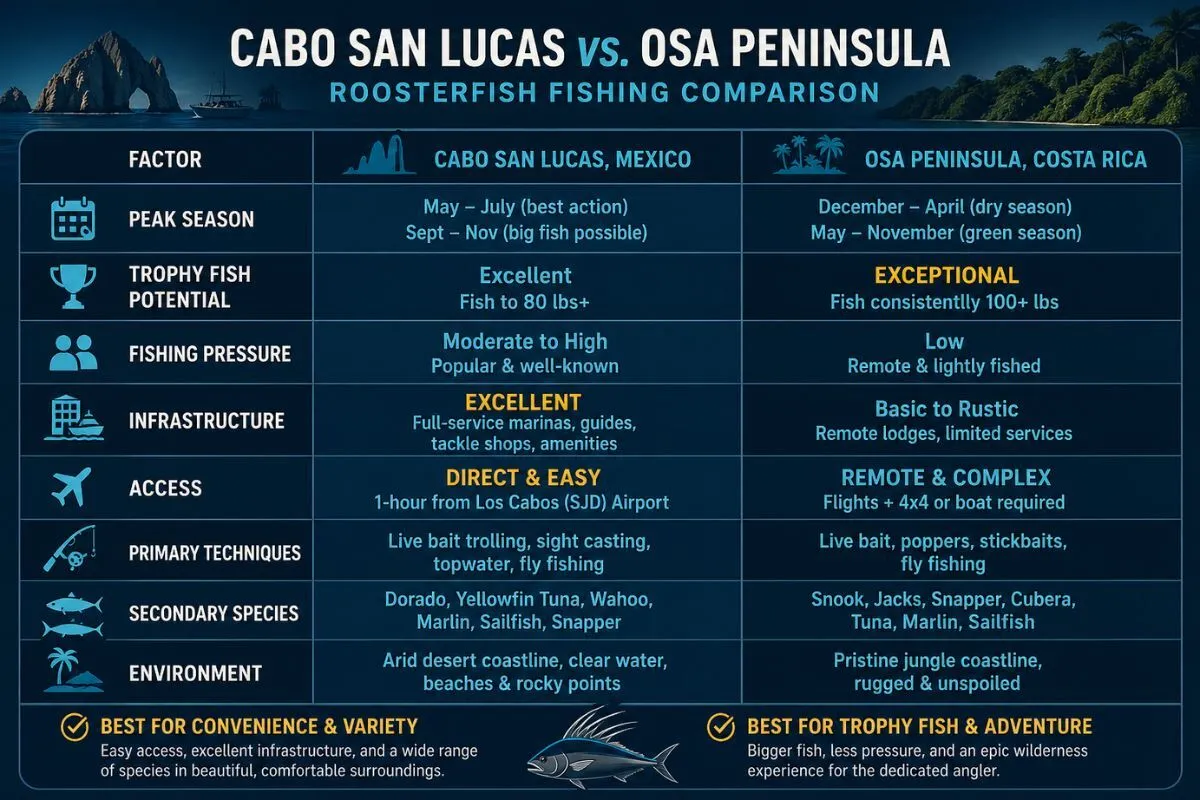
Cabo San Lucas vs. Osa Peninsula: Side-by-Side Comparison
Best Baits and Lures for Roosterfish
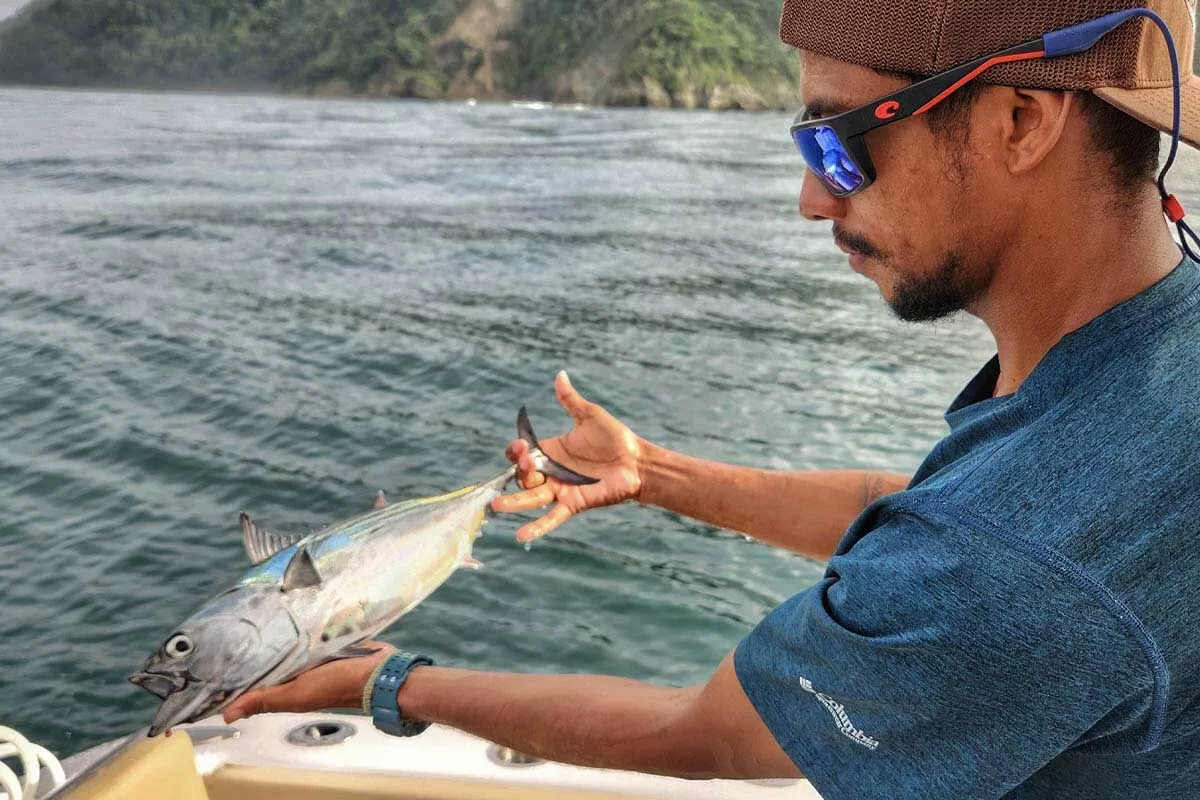
No single factor influences your roosterfish catch rate more than bait selection. These fish are opportunistic predators, but large specimens can be surprisingly selective. Knowing what they are feeding on at a specific location and time separates consistent anglers from those who are simply putting in hours.
Live Bait Strategies for Roosterfish
Live bait consistently outperforms artificials for trophy fish because it delivers the movement, vibration, and scent profile that large predators respond to. Circle hooks are strongly recommended for both rigging efficiency and release survival; they hook fish in the corner of the mouth more consistently and cause less internal injury than J-hooks. The most effective live bait for roosterfish includes:
- Bonito (8 to 12 inches): The premier choice for fish over 50 pounds, with a strong body profile and vigorous swimming action that triggers strikes from large roosterfish
- Mullet (6 to 10 inches): A natural prey item throughout the roosterfish's entire range, effective for all size classes
- Blue runners (5 to 8 inches): Hardy, long-lasting on the hook, and reliable throughout the fishing day
- Sardines (3 to 5 inches): Best when matched to concentrated smaller bait that fish are already keying on
Artificial Lures That Produce Roosterfish Strikes
Artificials offer a visual, active fishing experience and produce well when fish are showing on the surface. Topwater roosterfish lures generate some of the most dramatic strikes in inshore fishing when conditions align.
Color matters more in clear water. Silver and chrome match baitfish flash well in calm, clear conditions. Chartreuse and bright pink produce better in the off-color water common along the Costa Rican coast during the rainy season.
Understanding Roosterfish Habitat and Where to Look
Roosterfish spend the bulk of their time in the upper portion of the water column, making them a genuinely accessible nearshore target. But they are not random in their movement. Specific habitat features concentrate them reliably, and understanding those features is what lets you fish with intent.
Rocky coastlines and reefs give these fish ambush structure. Sandy drop-offs adjacent to deeper water create feeding transition zones that roosterfish exploit. River mouths attract baitfish during tidal movement, though roosterfish typically hold in the cleaner saltwater just outside the brackish mixing zone. Points and headlands with strong current push baitfish into predictable lanes and rank among the most consistent producers in both Mexico and Costa Rica.
Water temperature shapes seasonal distribution. Roosterfish prefer a range of roughly 70 to 85 degrees Fahrenheit, and larger fish tend to tolerate the lower end of that range better than juveniles. Water clarity directly influences feeding behavior because these fish hunt visually. Murky conditions push them to slower feeding patterns or to areas with cleaner water.
Tidal movement is consistently underestimated as a trigger. Fish that are slow during slack tide often turn on quickly when water starts moving. Early morning and late afternoon produce the most consistent surface feeding at any stage of tide.
Learn how to read inshore fishing structure to locate roosterfish and other apex predators
Frequently Asked Questions: Roosterfish Fishing in Cabo and Costa Rica
Is the Osa Peninsula or Cabo San Lucas better for roosterfish fishing?
The Osa Peninsula consistently produces larger fish and offers a less pressured environment, making it the top choice for anglers whose primary goal is a trophy-class roosterfish. Cabo San Lucas is the stronger option for those who prioritize ease of access, established infrastructure, and the flexibility to fish multiple methods including fly fishing from the beach.
What is the best time of year to fish for roosterfish in Costa Rica?
August through November is the prime trophy window on the Osa Peninsula, with less pressure and abundant green jacks driving aggressive feeding. The dry season from December through April offers more stable conditions and is the most popular period for visiting anglers.
What is the best time to fish for roosterfish in Cabo San Lucas?
May through July is the traditional peak. September through November also produces large fish but comes with more variable weather. December through April delivers better water clarity and the calmer conditions that favor sight fishing and fly fishing.
What is the best live bait for roosterfish?
Bonito in the 8 to 12-inch range is the top choice for trophy-sized fish. Mullet and blue runners are reliable in both destinations across all conditions. Match bait size to what fish are actively feeding on whenever possible.
How big do roosterfish get?
Most fish commonly caught run 15 to 60 pounds, with many in the 20 to 40-pound class. Specimens exceeding 80 pounds are exceptional in most locations. The Osa Peninsula and Golfo Dulce region of Costa Rica produce fish over 100 pounds on a regular basis, and multiple IGFA world records across line classes have come from Costa Rican waters.
Can I catch roosterfish from the beach?
Yes, and Cabo San Lucas is one of the best places in the Pacific to do it. Anglers commonly run 4x4 vehicles along the coastline to locate fish pushing bait near shore, then cast poppers, stick baits, or flies from the beach. Beach fishing for roosterfish on the Osa Peninsula is less common and less structured due to terrain and accessibility, but it is possible at certain stretches during the right tidal and bait conditions.
Can you fly fish for roosterfish?
Yes. Fly fishing for roosterfish is challenging but deeply rewarding. A 10 to 12-weight rod with at least 200 yards of backing is the practical minimum. Cabo's beach access makes fly fishing the more logistically accessible option for most anglers. Osa Peninsula fly fishing is more demanding and depends heavily on guide knowledge to create viable shots at cruising fish.
Should roosterfish be released?
Roosterfish are generally considered poor table fare compared to other Pacific inshore species. Nearly all reputable operators in both Cabo and Costa Rica practice and encourage full catch and release for roosterfish, and many lodges have internal rules against keeping them regardless of local regulations. Using circle hooks, minimizing fight time, and keeping fish wet during handling all significantly improve release survival.
Choosing the Right Roosterfish Destination for Your Trip
Both Cabo San Lucas and Costa Rica's Osa Peninsula offer roosterfish fishing that most anglers will never forget. The choice between them is not about quality. It is about what the trip needs to look like for you.
Cabo delivers direct flights, year-round access, a wide spread of price points, and the flexibility to mix inshore roosterfish fishing with offshore pursuits in the same trip. For a first-time roosterfish angler, a mixed group, or anyone who wants to minimize planning complexity, that is a compelling combination.
The Osa Peninsula gives you the fish. Less pressure, a healthier baitfish food chain, deeper structure, and pristine coastline add up to a fishery that consistently produces fish in the 80 to 100-plus pound range. Getting there requires planning, guided lodge packages are the practical norm rather than the exception, and the rainy season demands flexibility in daily expectations. For an angler whose benchmark is the fish itself, that investment is worth making.
Whichever you choose, the fundamentals stay constant. Understand the habitat, match your presentation to what fish are eating, let tides and light guide your timing, and handle every fish as if its survival matters, because it does. The quality that makes both these destinations worth traveling to depends entirely on fish that return to the water healthy.
Login
to leave a review.
User Reviews

Benjamin
10.17.2024
1

Robert
10.17.2024
1

Complete Dredge Pulley Setup Guide
Saltwater
12.28.2020
High Speed Wahoo Trolling Rig
Saltwater
09.08.2018
Fishing Light Tackle for Yellowfin Tuna
Saltwater
09.08.2018

0