
February on Florida's Big Bend offers a narrow but reliable daily window when spotted seatrout feed actively on shallow limestone flats. Captain William Toney explains the thermal cycle that drives trout movement, the post-front patterns that stack fish on hard bottom, and the slow presentations that produce consistent catches in cold water.
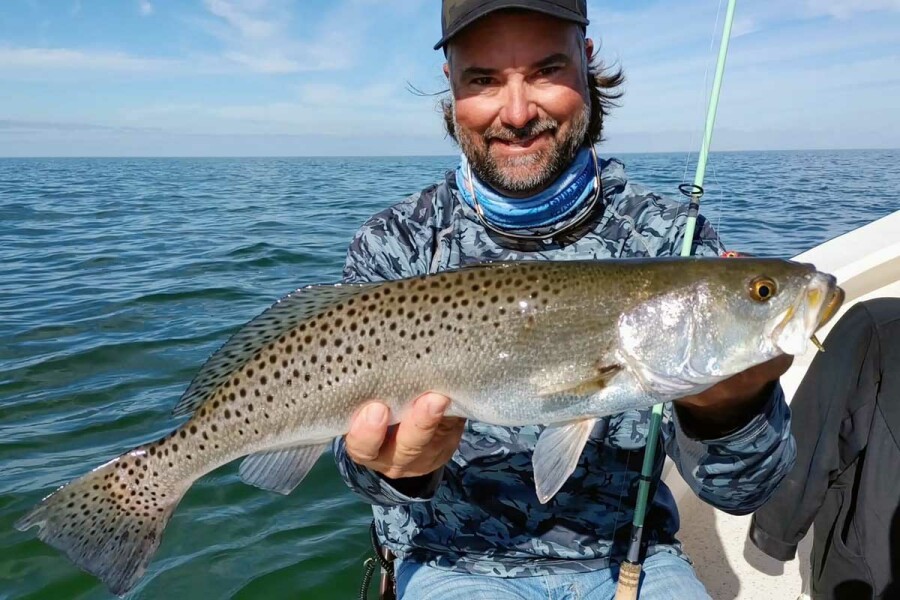
Catching Speckled Trout on Florida's Big Bend in February
Florida's Big Bend coast holds a quiet advantage in February. While much of the state's inshore fishing attention shifts south during the cooler months, the limestone shallows stretching from Pasco County up through Dixie County offer some of the most consistent speckled trout (spotted seatrout) action of the entire year. Cold water concentrates fish. In February, spotted seatrout are not scattered across miles of open flat as they are in summer; they are stacked on specific structure, in predictable water depths, responding to consistent environmental cues. That concentration is what makes this month so productive for anglers willing to study the fishery and approach it with intention.
Captain William Toney has fished these waters his entire life. The patterns he has built his approach around are the same ones that produce fish for anglers who take the time to understand this region's seasonal rhythms. What follows is a detailed look at how to find, approach, and catch February seatrout on Florida's Big Bend from someone who has spent decades learning these flats firsthand.
What Makes Florida's Big Bend the Right Place for Winter Seatrout Fishing?
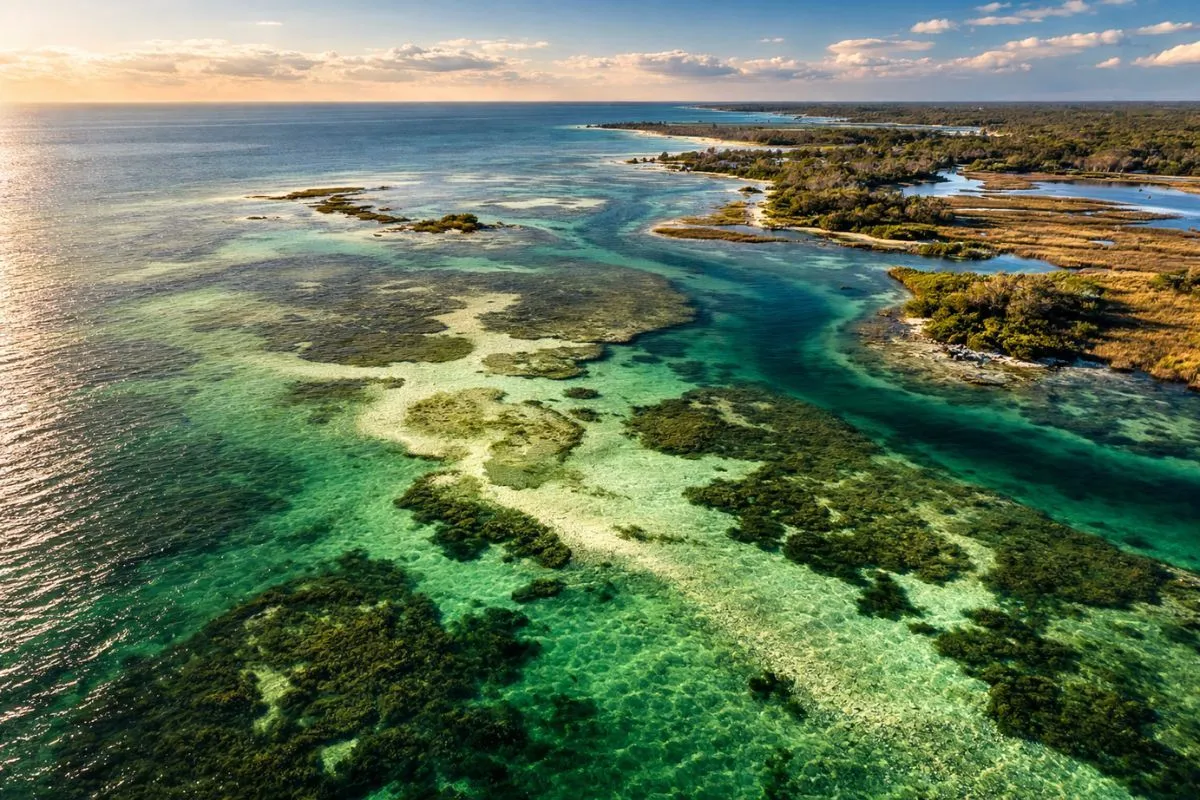
The Florida Big Bend is one of the most ecologically distinct coastlines in the eastern United States. Unlike the sandy, mangrove-lined shores of South Florida, this stretch of coast is defined by exposed limestone substrate, expansive grass flats, and a network of spring-fed rivers that discharge into the Gulf year-round. The Homosassa, Crystal, and Withlacoochee rivers all run through this region, maintaining relatively stable water temperatures even during cold snaps.
- Limestone flats absorb solar radiation more efficiently than sandy substrate, warming shallow water quickly on calm, sunny winter days
- Spring discharge from coastal rivers moderates extreme cold, providing thermal refuges that trout actively seek out
- Clear water visibility is common here even after weather events, because the spring-fed rivers stay clean regardless of conditions at sea
- Shallow grass beds and hard bottom adjacent to deeper channels give seatrout the transition zones they need to survive and feed in winter
These conditions do not replicate themselves easily elsewhere on the Gulf Coast. That specificity is exactly why understanding this fishery gives you a real advantage. For a broader look at why this stretch of coastline produces exceptional results across multiple species, the In The Spread article on Homosassa Florida fishing provides deep regional context on the Big Bend's inshore ecosystem.
How Does Seatrout Behavior Change During February?
Understanding what speckled trout are doing in February is more important than any single piece of gear or technique you bring to the water. In summer, spotted seatrout distribute themselves widely across grass flats and are relatively easy to locate by covering water. February is a different equation entirely. Cold water reduces the metabolic rate of seatrout significantly, making them lethargic, selective about their holding positions, and far more deliberate about expending energy to feed.
The fish's primary winter objective is thermal comfort. When water temperatures drop below 60 degrees Fahrenheit, spotted seatrout begin staging on the shallowest available hard bottom, particularly the exposed limestone flats that receive full sun exposure for the majority of the day. On a calm, clear February afternoon, water temperatures on these flats can rise four to six degrees above the surrounding deeper water within a few hours after sunrise. That temperature differential is enough to pull trout out of adjacent deeper areas and concentrate them on structure you can wade or anchor near and fish effectively.
Where Are the Best Locations for Finding Big Bend Speckled Trout in February?
Location selection in February is the most consequential decision you will make before your first cast. Winter speckled trout on the Big Bend concentrate on a specific type of water, and identifying it from the chart before you leave the dock puts you ahead of the fish before you even get there.
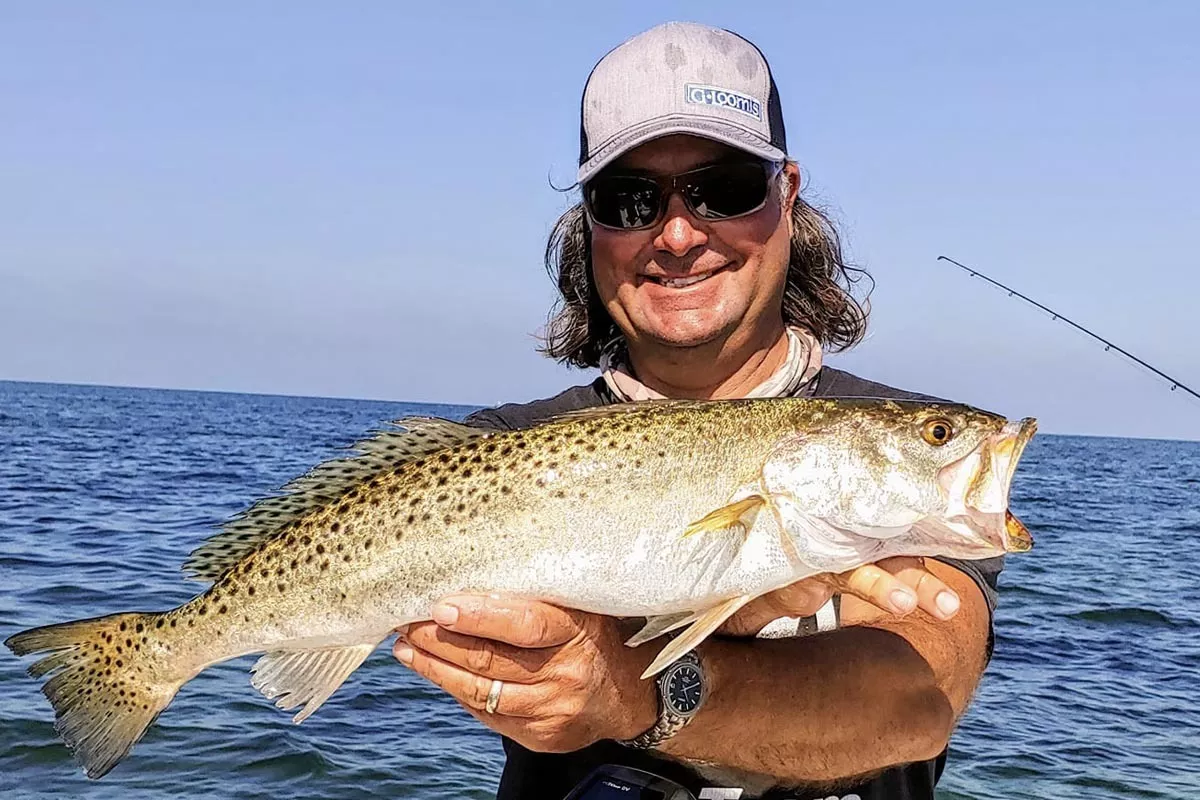
The most productive areas share a recognizable set of characteristics. Look for western-facing points where, once you are positioned on the flat, you can look over your shoulder and see the open Gulf of Mexico. That visual cue tells you that you are on the outermost edge of the flat where depth transitions are close at hand. Seatrout in February want to be within easy reach of the deeper refuge but positioned on the warm, sunlit shallow structure.
- Hard limestone bottom with thin or sparse grass coverage, typically in one to three feet of water on calm, sunny days
- Areas that are naturally sheltered from north and northwest winds, which are the prevailing directions after cold fronts move through the region
- Flats adjacent to creek mouths or river outflows that carry warmer spring water across the bottom
The coastline from Homosassa north through the Crystal River area, and south toward Weeki Wachee, offers consistent access to all of these conditions. These are not secret spots; they are structural patterns that repeat all along the Big Bend shoreline, and once you recognize them on the water, you will find them everywhere. One practical note: the Big Bend's exposed limestone is unforgiving to lower units on low winter tides. This coast requires a shallow-draft vessel and a captain who understands where the rock is. Study the charts carefully before running to outer western points in winter conditions.
Speckled Seatrout Fishing Courses
Captain William Toney reveals springtime speckled seatrout strategies focused on tidal flow patterns and moon phase influences. This video covers why spring transition concentrates big seatrout, reading water movement for fish positioning, lure selection for pre-spawn females, and rod and reel specifications for accurate casts.

Tampa Bay seatrout concentrate along specific depth contours and current breaks rather than spreading randomly across grass flats. Captains Ray Markham and William Toney explain how bottom topography and tidal water movement position fish predictably, what artificial lures match Tampa Bay conditions, and when light tackle techniques improve presentation accuracy in shallow water environments.
Shallow grass flats productive for seatrout through fall become barren when winter cold pushes fish into deeper channels and structure. Captain William Toney explains locating transition zones between deep refuge and feeding areas, why tidal movement timing becomes critical for brief feeding windows, and how lure presentations must slow for reduced winter metabolism.

Captain William Toney reveals summer seatrout techniques using popping cork rigs for grass flats. This video covers why popping corks outperform other summer methods, proper rigging for depth control, selecting productive spots on expansive flats, and drifting strategies that improve coverage and hookup rates.

Captain William Toney shares his top 5 lures successful speckled seatrout fishing.
Inshore slam fishing challenges anglers to catch seatrout, redfish, and snook using a single artificial lure in one day rather than switching presentations per species. Captain William Toney demonstrates this with DOA MirrOlure jig combo, requiring understanding of how conditions, tides, and structure positioning affect all three species while maintaining versatility needed for snook selectivity that makes slam completion difficult.
What Gear and Lures Work Best for Catching Speckled Trout in Cold Water?
Cold-water seatrout are not the aggressive, willing biters they can be in warmer months. Every element of your presentation needs to be calibrated for slow, deliberate action in shallow, clear water. Gear selection in February is a genuine tactical advantage, not just a matter of preference.
What Is the Best Lure for February Seatrout on the Big Bend?
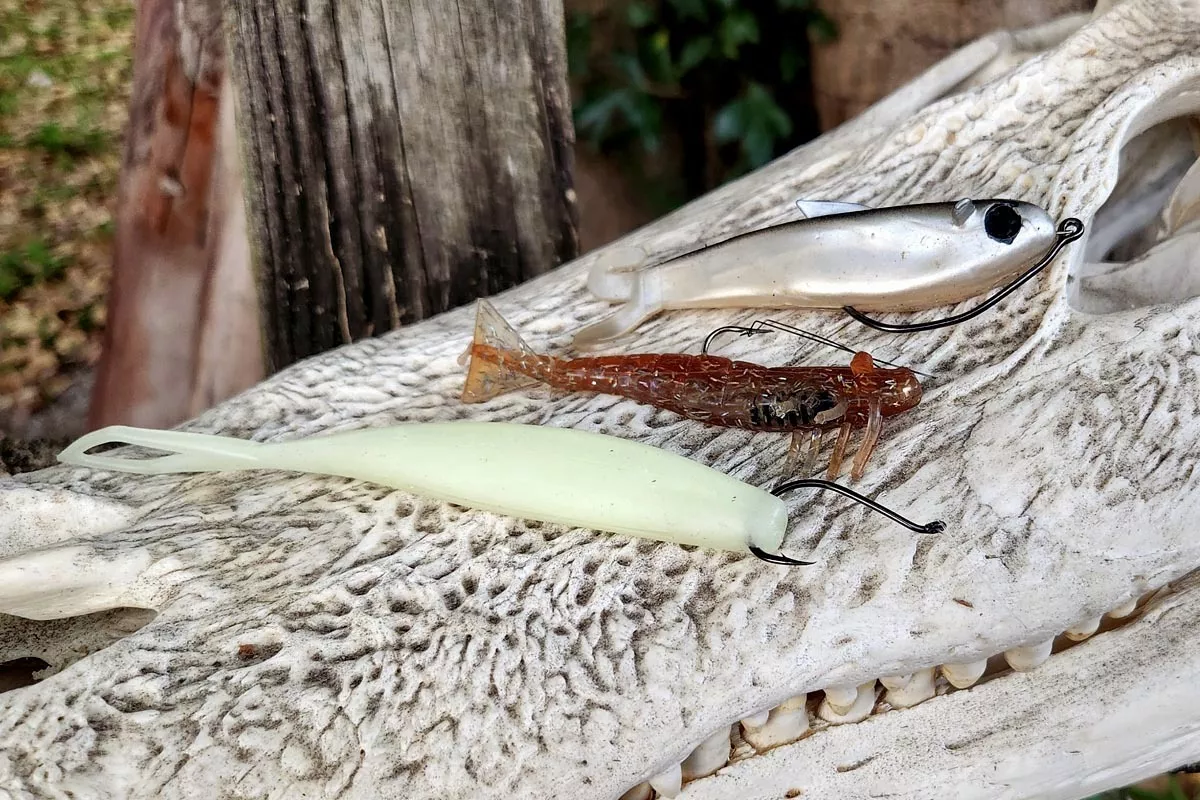
The single most effective lure for speckled trout on the Big Bend in February is the D.O.A. Jerk Bait, nose-hooked on an Owner SSW 3/0 bait hook. This combination has been the standard for inshore trout fishing on these flats for decades, and it continues to produce because it solves the specific presentation problem that cold-water conditions create.
For a complete look at how D.O.A. lures work for speckled seatrout and why they produce across multiple conditions and presentations, DOA Lures for Speckled Seatrout with Mark Nichols is essential viewing. Captain Toney's full Top 5 Lures for Seatrout course covers the complete toolkit across seasonal conditions.
What Rod, Reel, and Line Setup Should You Use for Winter Seatrout?
Your tackle needs to match the delicacy the presentation demands. The standard setup for winter seatrout fishing on the Big Bend includes a 7-foot medium-light to medium spinning rod with a fast action tip for accurate casting and detecting subtle cold-water strikes. Pair that with a 2500 to 3000 series spinning reel. Your main line should be 10-pound braid, with an 18 to 24-inch fluorocarbon leader testing 20 pounds. Fluorocarbon is the right choice here for two specific reasons: its near-invisibility in the clear, post-front water common to the Big Bend in February, and its density, which allows the jerk bait to sink slowly and naturally rather than being held up by a buoyant monofilament leader.
How Should You Approach Seatrout in Shallow Clear Water Without Spooking Them?
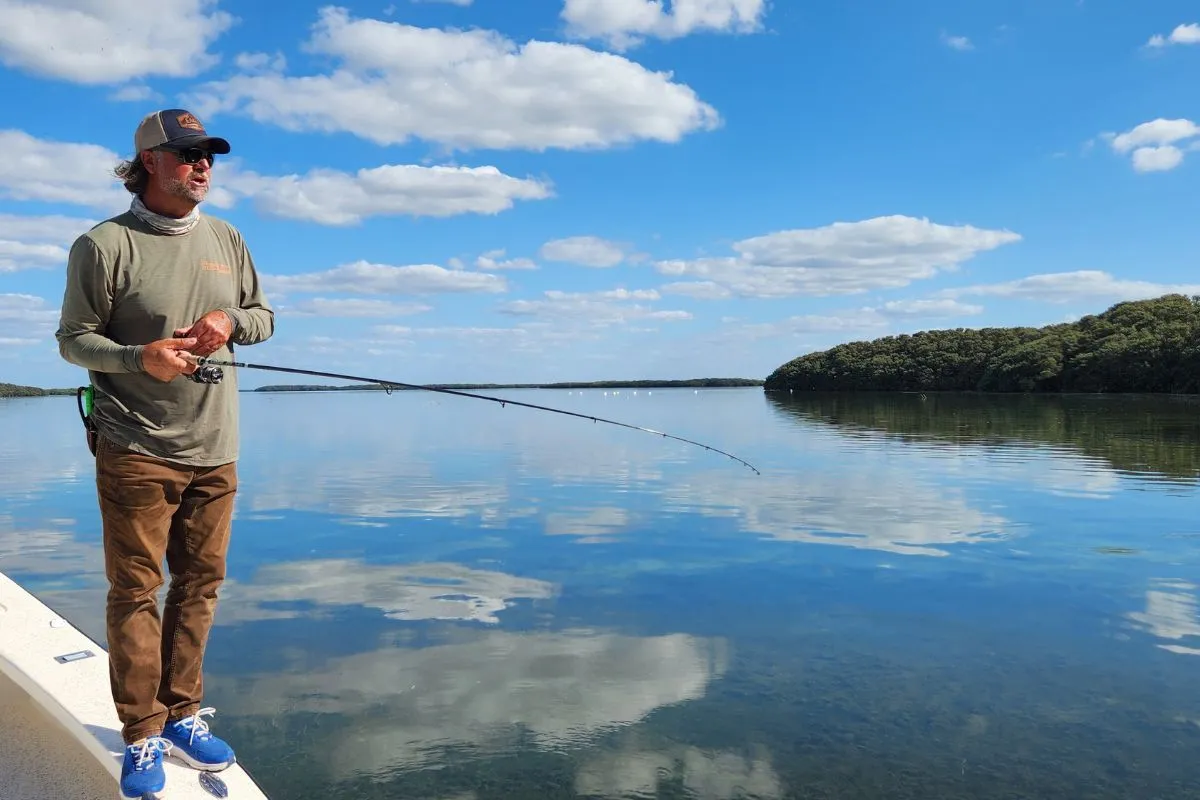
The approach is as important as the lure. On the Big Bend's shallow, clear-water limestone flats, speckled trout have excellent visibility and a high sensitivity to boat noise and water displacement. Getting into position without alerting the fish is a skill that separates consistently successful anglers from those who cover water without putting fish in the boat.
The foundational principle is straightforward: arrive slowly and commit to your position before you begin fishing. Running your outboard up to a flat and immediately dropping off is one of the most common mistakes anglers make in February on the Big Bend. It puts fish down. The correct approach is to cut your motor well outside the area you intend to fish, then use a push pole or trolling motor at its lowest setting to close the distance quietly.
Once positioned, anchoring is almost always superior to drifting in February conditions. The reasoning is practical and two-part. First, an anchored boat creates zero water disturbance during your presentation. Second, and more critically, if you hook a fish, anchoring allows you to stay on productive water. Seatrout that are congregated on warm limestone bottom in February are not solitary fish. Where you catch one, there are typically others holding nearby. Drifting off a productive piece of bottom after landing your first fish is one of the most preventable mistakes you can make on these flats.
How Does the Tide Affect February Seatrout Fishing on the Big Bend?
Tidal movement is the second most important environmental variable in February seatrout fishing after water temperature, and the two interact directly. Understanding how to use the tide to find the right depth on the right structure at the right moment in the day gives you a consistent framework for decision-making on the water.
On a rising tide, water temperatures on the shallow flats equalize with adjacent deeper water, which disperses fish more widely. The best fishing on an incoming tide typically comes in the first two hours, when fish that held in deeper water overnight begin moving onto the flat as it warms in the morning sun. The edges of the flat are most productive during this transition.
How Do Cold Fronts Affect Speckled Trout Behavior in February?
Cold fronts are the defining weather variable of February on the Big Bend, and your ability to plan around them determines more than any other single factor whether your trip produces fish. The impact of a front on seatrout behavior follows a consistent and learnable sequence.
In the 24 to 48 hours before a front arrives, dropping barometric pressure can trigger aggressive feeding activity. Seatrout often bite well in the hours leading up to a front, even as conditions deteriorate. As the front passes and north winds push cold air through the region, water temperatures drop rapidly and feeding activity slows to near nothing. The one to two days immediately following a front's passage are typically the most difficult fishing of the month on the shallow flats.
The recovery period is where the opportunity lives. Three to five days after the front, as skies clear and temperatures moderate, is when the Big Bend's February seatrout fishing is at its most productive. During post-front recovery on calm, sunny days:
- Shallow limestone flats warm two to four degrees above surrounding water within the first two to three hours after sunrise
- Seatrout actively feed during the warmest part of the day, typically from late morning through mid-afternoon
- Clear skies and low winds improve sight-fishing conditions, allowing you to spot fish before you spook them
- Light or no wind eliminates surface chop, making slow soft-plastic presentations more effective and easier to control
Build your February schedule around these post-front recovery windows whenever possible. A calm, sunny day three days after a strong front will almost always outperform a cloudy, windy day regardless of the tide.
How Do You Read the Flat Before You Decide to Fish It?
Reading the flat before your first cast saves time and consistently puts you on productive water. The visual information available from a poled skiff or on foot tells you almost everything you need to know about whether a piece of structure is likely to hold fish on a given February day.
Polarized sunglasses are non-negotiable for this fishery. Without them, you are blind to the bottom color changes, bait activity, and occasional visible fish that indicate a flat is worth your time. Start by scanning for the transition from dark bottom (grass) to pale bottom (bare limestone) in the one-to-three foot depth range. The pale limestone is your primary target in February.
Look for nervous water, the subtle surface disturbance created by baitfish being pushed from below. Finger mullet, glass minnows, and small pinfish holding on the flat are a reliable indicator that predators are present. A flat that holds bait in February almost always holds seatrout nearby.
The Big Bend is also home to strong populations of redfish and snook that overlap with seatrout habitat during winter. Anglers willing to target multiple species on the same flat can pursue the Florida inshore slam, covered in depth by Slam Fishing for Florida Redfish Seatrout Snook.
FAQ: February Seatrout Fishing on Florida's Big Bend
What water temperature do speckled trout prefer in February?
Spotted seatrout often feed most actively when water temperatures are in roughly the 58 to 68 degree Fahrenheit range. On the Big Bend's shallow limestone flats, temperatures can reach the low to mid-60s on calm, sunny February afternoons even after cold overnight lows. Targeting these flats during the warmest part of the day gives you the best window for active fish.
How deep should you fish for seatrout on the Big Bend in February?
The most productive depth range for February seatrout on the Big Bend is one to three feet on shallow limestone flats during sunny, calm conditions. During active cold fronts or overcast days, fish push to adjacent deeper water of four to six feet near channel edges and drop-offs.
What is the best time of day to fish for February speckled trout?
Late morning through mid-afternoon produces the most consistent action in February, once solar radiation has had time to warm the shallow flats and seatrout have moved up from their deeper overnight holding areas. Early morning is generally slow due to cold overnight temperatures in shallow water. This is one of the rare inshore fisheries that often rewards starting later rather than being on the water at first light.
What are the current seatrout regulations in Florida?
All anglers fishing Florida's salt waters must hold a valid Florida Saltwater Fishing License unless otherwise exempt. Florida maintains size and bag limits for spotted seatrout that vary by region and are subject to change. Critically, regulations differ by FWC management zone, so what applies in the Big Bend zone may differ from Northwest Florida or Southwest Florida rules. Confirm your specific zone before you fish. For the most current regulations, visit the Florida Fish and Wildlife Conservation Commission directly at myfwc.com.
Can you catch other species while targeting seatrout on the Big Bend in February?
Yes. Redfish, snook, and sheepshead all share the shallow Big Bend flats with seatrout during February. Sheepshead are especially active around limestone structure and dock pilings throughout the winter months and are frequently caught while seatrout fishing. The Big Bend in February is one of the better places in Florida to pursue the inshore slam legitimately during the cooler months.
Is February a good month for a first trip to the Big Bend?
February is a strong choice for a first visit, provided you plan your trip around a post-front recovery window rather than arriving immediately after a cold front. The fish are concentrated rather than scattered, crowds are thin compared to spring and summer, and the fishing can be exceptional on the right days. A guided trip with a captain who knows the limestone flats is the fastest path to understanding this fishery when you are starting out.
Putting It All Together on the Water
February seatrout fishing on Florida's Big Bend is a study in specificity. The fish are there, they are catchable, and the techniques are not complicated. What separates a productive day from a frustrating one on these flats in winter is preparation: understanding where fish are holding and why, reading the weather cycle correctly, approaching the water without alarming fish, and presenting the right lure at the right speed in front of fish that are not going to move far to eat.
The D.O.A. Jerk Bait on an Owner SSW 3/0 bait hook, a long cast from an anchored boat, a slow retrieve with long pauses, and a flat that has been warming in the sun for three hours. That is the February Big Bend speckled trout formula in its simplest form. Everything else in this article exists to help you understand why those elements work and how to put yourself in position to use them.
Captain William Toney is a fifth-generation Gulf Coast captain based in Homosassa, Florida, and an instructor for In The Spread.
Captain William Toney In The Spread, Instructor
Login
to leave a review.
User Reviews
There are no reviews yet.
Complete Dredge Pulley Setup Guide
Saltwater
12.28.2020
High Speed Wahoo Trolling Rig
Saltwater
09.08.2018
Fishing Light Tackle for Yellowfin Tuna
Saltwater
09.08.2018


Fishing Gulf of Mexico Inshore Waters
Saltwater
11.28.2023

0