
Cobia season in Florida never really closes; it moves. The fish that winter on Key West wrecks show up weeks later under the mantas off Cape Canaveral and Jacksonville. Where to be and when, why the Panhandle run faded, and how Brian Sanders and William Toney catch them.
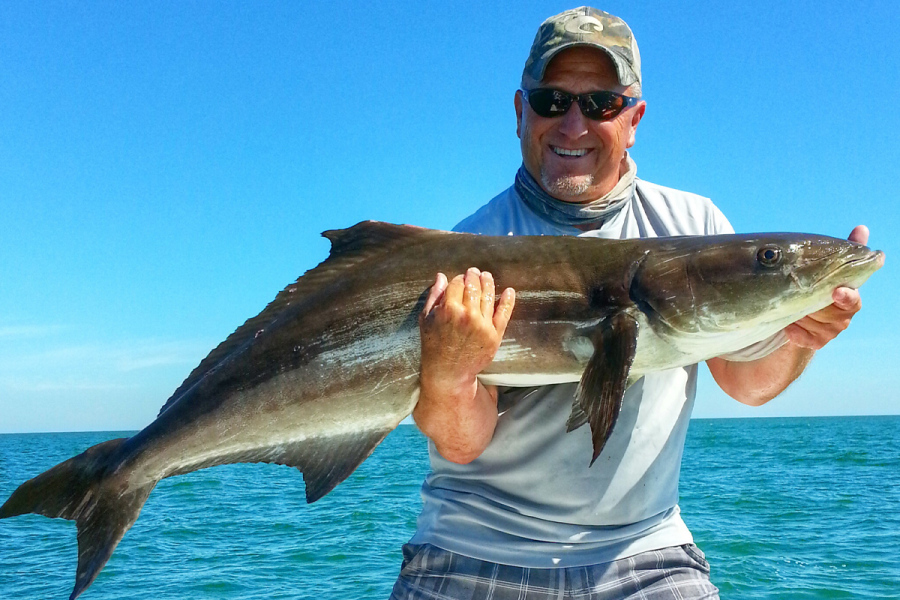
Fishing the Cobia Season in Florida, Keys to Panhandle
Cobia Season in Florida
Cobia season in Florida runs all year, but the fish move with the water temperature. They concentrate in the Florida Keys in winter, push north along both coasts as the water warms into the upper 60s in spring, and a shorter fall run follows on the Atlantic coast. Where you fish decides when you fish, and the Panhandle spring run that once defined the Florida season is no longer the sure thing it was.
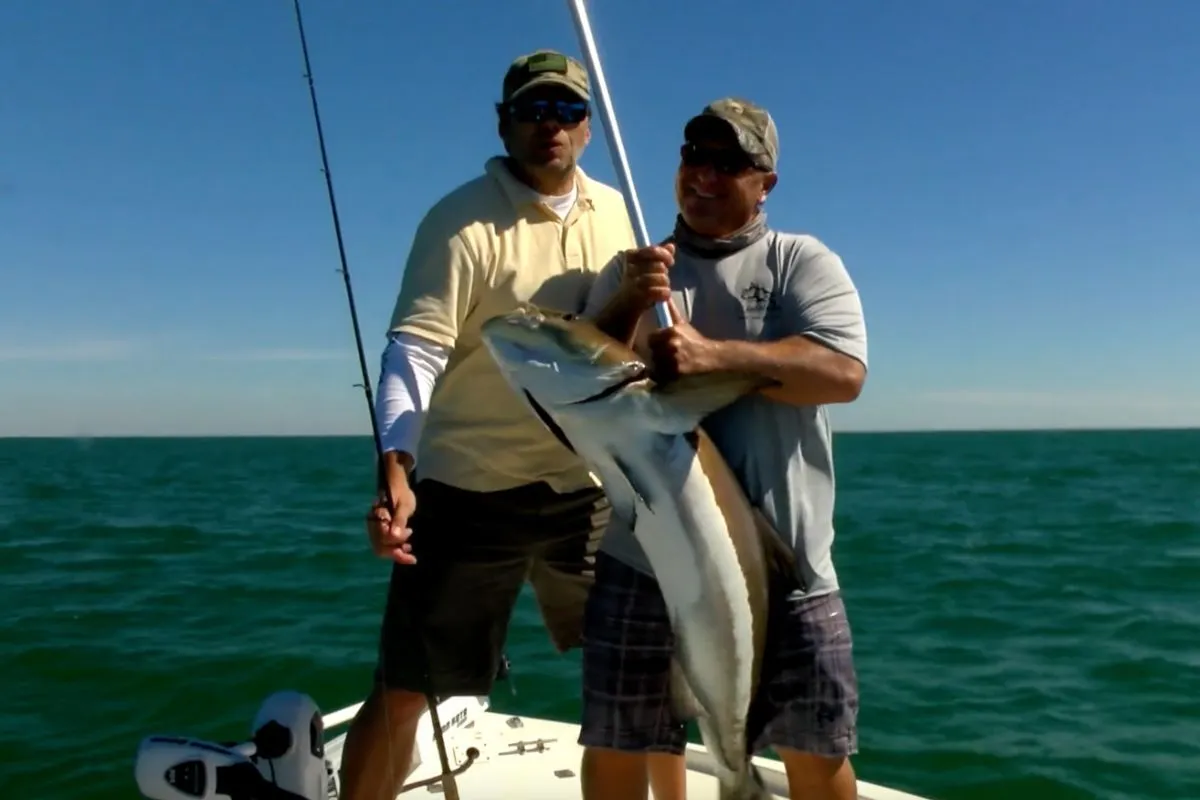
I learned how fast that window opens and closes on a rock pile in the Gulf of Mexico with Brian Sanders, 15 miles offshore in 20 feet of water, filming his course for our cobia fishing video library. Four fish showed on the surface. Brian hooked the first on a soft eel, the bigger fish following it peeled off, and it ate the live bait I dropped in front of it. Brian put that one at 45 to 50 pounds.
When Is Cobia Season in Each Part of Florida?
The calendar below follows the run the way the fish travel it, from the Keys up the Atlantic coast and up the Gulf of Mexico coast, using what the captains in each region report. A cold March or a warm February moves every row by weeks.
When Is Cobia Fishing Best in the Florida Keys?
Cobia fishing in the Florida Keys is best from January through March, when the fish concentrate around Key West. Capt. RT Trosset described two runs to Salt Water Sportsman, one in winter and one in spring. The winter fish hold tight to structure and are a bottom game; the spring fish can show on the surface along the color change while you are sailfishing, which is why Keys crews keep a casting rod rigged. Capt. Chris Trosset fishes mainly the Gulf of Mexico side for them, on wrecks and reefs from 25 to 120 feet.
The Space Coast
From Melbourne Beach to New Smyrna Beach, the run peaks March through May, and Capt. Glyn Austin of Going Coastal Charters calls Canaveral's run "world-class." Salt Water Sportsman puts the start at about 69°F, with fish sight cast under manta rays from the beachfront out to 15 miles. By late May the migrating fish have mostly pushed north, and the summer fishing moves to wrecks in 30 to 60 feet.
Northeast Florida
From Matanzas Inlet to Fernandina Beach, Jacksonville anglers Scott Jones and Nathan Stuart told Salt Water Sportsman that the spring beach run starts when the water reaches 68 to 71°F, with the fish riding under manta rays within a few miles of the beach. By summer they scatter, move offshore, or head north. A short fall run brings them back near the beaches, and from late fall through winter the most consistent fishing is on offshore reefs and wrecks.
Fishing under mantas carries a responsibility. Giant manta rays are listed as threatened under the Endangered Species Act and Florida prohibits targeting them, and a 2024 study of the cobia fishery and manta conservation recommends casting between the ray and the boat, never on top of or in front of it, keeping the hook outside the ray's wingspan, and using lighter or floating lures that are less likely to foul-hook a ray after a bad cast.
Tampa Bay and Charlotte Harbor
In the big bays of Southwest Florida, spring cobia travel the sandbars and the edges of the grass flats, and Florida Sportsman's writer found them most often around the 6-foot sandy contour in Tampa Bay. If no rays are moving across the bar, there probably are not any cobia either. Markers and bridge pilings with heavy current next to deeper water are the other places to look.
Big Bend and the Nature Coast
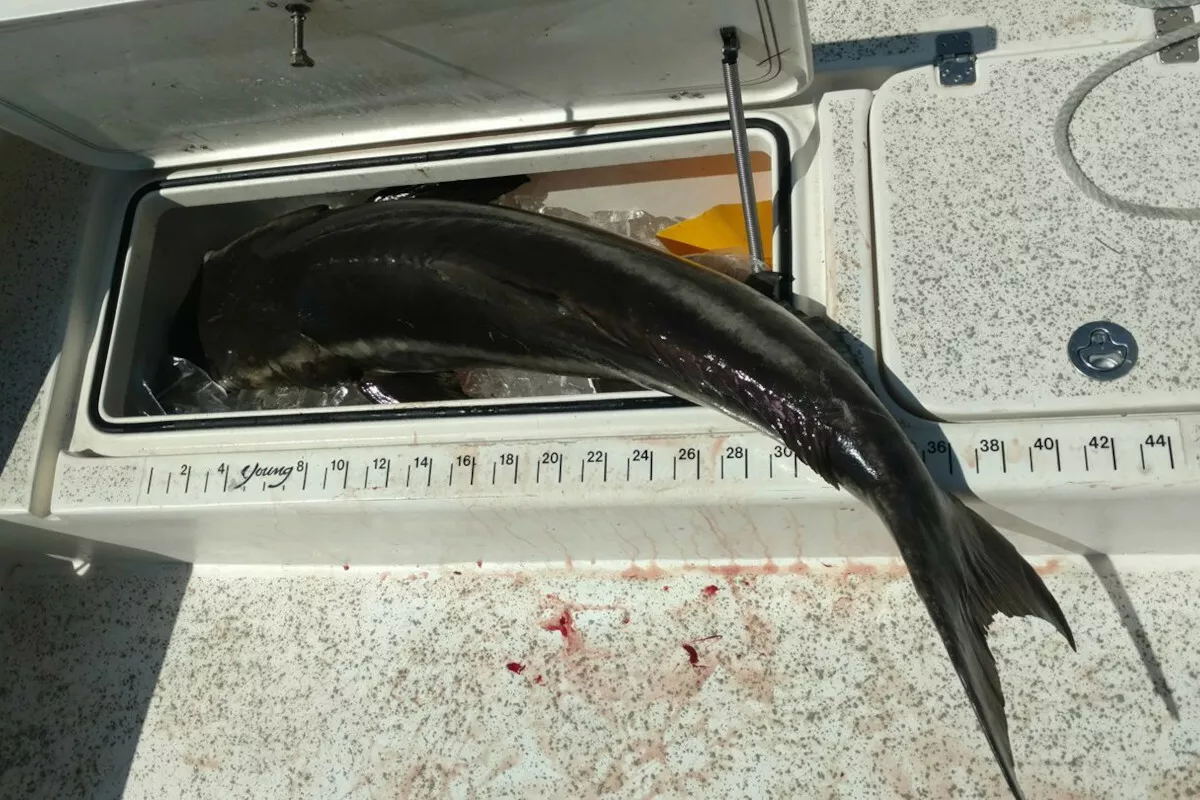
William Toney, a fifth-generation guide out of Homosassa, starts his Big Bend calendar in late March, when the migration of kingfish, mackerel, cobia, and tarpon starts up the coast, and runs it through June. His cobia come off markers, wrecks, and man-made structure more than natural ledges, and he has seen them follow manatees into 3 and 4 feet of water. The tripod marker known as number two off Homosassa produced fish every year of the migration, including the biggest cobia that has ever hit his deck, about 74 pounds.
What Happened to the Panhandle Cobia Run?
For decades the Panhandle run was the one Florida anglers planned around: March 15 to April 15, pods of five to eight fish traveling west half a mile to three miles off the beach, and crews like Capt. Don Dineen's out of Destin spotting them from towers, as Sport Fishing described it. The state record came from these waters: 130 pounds, 1 ounce, caught near Destin, according to FWC.
That run has not been dependable for a decade. Anglers started seeing fewer fish in 2013 and 2014, the big tournaments have stopped, and Sport Fishing reported in 2024 that some days a boat does not see a single fish. The cause is still unsettled; NOAA's Read Hendon called it "more of a mystery from a scientific perspective," and the Gulf of Mexico Council has cut the catch limit. A Gulf-wide tagging study funded by the Gulf States Marine Fisheries Commission and led by Dr. Sean Powers of the University of South Alabama is now testing whether the Gulf of Mexico holds both a migratory and a resident group of cobia. If you catch a fish with a dart tag, report it; the researchers are paying rewards for returns.
Why Florida's East Coast Cobia Count as Gulf of Mexico Fish
The 2013 federal stock assessment placed the biological boundary between the Gulf of Mexico and Atlantic groups of cobia at the Florida-Georgia border. Every cobia from there south to the council boundary west of the Dry Tortugas, including the Atlantic side of the Keys, is managed as part of the Gulf of Mexico group, in the Florida East Coast Zone, with the South Atlantic Fishery Management Council handling management there. The old idea that the two populations mix around Cape Canaveral is not how the fish are managed.
What Triggers the Cobia Run?
Water temperature starts the migration, and on the Atlantic coast the numbers captains report cluster in the upper 60s to low 70s: about 69°F on the Space Coast, 68 to 71°F off Jacksonville. Once the fish are moving, they ride with whatever gives them cover and a meal: manta rays along the Atlantic beaches, rays on the sandbars of Tampa Bay, manatees on the Nature Coast, sharks, turtles, and anything floating.
What keeps them on the surface is a different question, and Brian Sanders answered it on the day we filmed. A cold front had gone through the day before. The wind was out of the north and the sky was high and bright, which means high pressure. Out there the bottom drops only about a foot for every mile you run offshore, by Brian's count, and in water that shallow he has found the fish feel that pressure and stay down. Brian compares it to bass in 2 or 3 feet of water on a bluebird day, when nothing touches a topwater and the only bites come on the bottom. Another boat on the spot told us there had been 40 or 50 fish there before the front. The day we fished, they were still there, but they were not showing.
So the decision on a post-front day is not whether the fish left. It is whether you keep waiting for surface fish or go down and get them. Brian's answer was to work a soft eel slowly along the bottom over the wreck and to put a bait halfway down under the boat, because fish orient to the boat's shadow like any other structure.
How Do You Tell a Cobia From a Barracuda?
On a wreck in clear water, brown fish near the surface can be cobia or barracuda, and at a distance they look alike. Brian's rule is to watch how they move. Barracuda sit nearly still, nosed into the current, barely swimming. A cobia never sits still. It keeps swimming, often in circles. If the brown fish is moving, it is probably the one you want.
Brian also anchors with the sun off his shoulder, not in his eyes, so he can see the whole wreck.
Three Rods Rigged and Ready
Toney says most of the cobia he has caught were fish of opportunity: he was grouper fishing or bottom fishing, he looked down, and there they were. The lesson from his 74-pound fish is what it cost him not to be ready. He saw the fish on the marker but had nothing rigged for it, so he left the marker, caught an oversized pinfish on a light rod, rigged it, and came back hoping the fish had stayed. It had, and he landed it, but he calls it his lucky day.
Brian solves the same problem with three rods rigged before the anchor goes down:
- A live-bait rod for whatever is in the well, pilchard, threadfin, grunt, pigfish, or small snapper, for the fish that will not take anything else
- A soft eel, the bait Brian calls "cobia candy," which he leans on for finicky fish that have already looked at and refused another bait
- A heavy surface chugger for fish that show well away from the anchored boat, a hundred yards off in Brian's example, and stay up for 30 seconds to a minute
You cannot pull the anchor and run to a fish that will be gone in a minute, and a live bait will not cast anywhere near that far. The heavy plug gives Brian the distance, and Brian uses it either to let them eat on top or to tease them back toward the boat, where other baits can be pitched for multiple hookups. How he modifies it, how he works the eel, and how his live-bait rig is built are in his course.
Soft Plastics or Live Bait for Cobia?
Live bait catches cobia. Toney makes the case for soft plastics anyway, and it comes down to speed. A fish of opportunity does not wait while you catch, rig, and pitch a pinfish. A soft plastic is already tied on, it casts farther, and if the fish turns away from it, you can cut and re-rig a different profile or color in seconds while the fish is still in front of you.
His lineup covers the situations cobia put you in: a big eel-style swimbait for fish just under the surface, paddle tails and fleeing-mullet profiles that trigger a chase, and a heavier swimbait he can jig vertically when fish that were on top drop out of sight in 18 feet of water. The one rule he will not bend is hook strength. He has straightened a light-wire jig hook on a cobia that ate a trout bait, and he will not throw anything at them without a heavy, hardened hook.
Leader is the other trade-off. Toney says that most of a big cobia fight happens within 30 or 40 feet of the boat, with the fish staying just out of gaff range, so the leader takes a beating. Yet some cobia are stubborn, hanging around a bait without eating it, and a lighter leader can be what gets them to bite. Which leader he runs, and which jig head goes with which depth, he covers in his soft plastic lures for cobia course.
Cobia and Gag Grouper on the Same Rocks
On the Big Bend, spring cobia come up off the same rocks the grouper fishermen work, and that creates a problem Toney has paid for more than once. Gag grouper are catch-and-release in spring under current rules, with the 2026 Gulf of Mexico gag season set for September 1 to 30 (check FWC, since the dates change yearly), but anglers still fish those rocks for grouper and crank their drags down to pull a fish off the bottom. Throw a swimbait across that rock, have a 30- or 40-pound cobia eat it instead, and a locked drag means a broken line. He has watched cobia break 30-pound braid in an instant.
His compromise is a drag set in the middle, firm enough to turn a grouper, then backed off another click in case a cobia shows. He also points out that a baitcaster's drag is easier to back off in the middle of a fight than a spinning reel's front drag, which is hard to reach when the rod is loaded. If you fish the shallow rocks off Homosassa and Crystal River, our article on shallow water grouper fishing on Florida's Nature Coast covers the grouper side of that same water.
Fighting a Cobia at the Boat
A cobia hooked over a wreck will try to take you back into it. When Brian hooked his fish, the first call was to pull the anchor and get the boat on the fish to pull it off the structure. After that, the fight is at the boat. Cobia come up looking beaten and then refuse to come the last few feet, circling under the boat, which is exactly when the leader and hook take the most abuse. Brian's coaching to me on the rod was to stay vertical over the fish and gain line in short pumps, a few inches at a time. And measure before you gaff: a cobia often looks bigger in the water than it is, and a gaffed fish that comes up short of 36 inches cannot be released in good shape.
Florida Cobia Regulations
Florida's state rules currently match the federal rules on both coasts: a minimum size of 36 inches fork length and "1 per person or 2 per vessel, whichever is less," in FWC's wording. The federal limits took effect November 21, 2022. These rules change, so check FWC's cobia regulations before you fish.
For federal waters, NOAA Fisheries posts the current cobia management rules for both the Gulf of Mexico and South Atlantic.
Cobia Video Courses

Captain Brian Sanders reveals effective cobia baits and lures for targeting fish around structure and wrecks. This video covers live bait rigging with pinfish, seatrout, and crabs, plus artificial techniques using soft plastics, bucktails, and topwater plugs for sight casting and stalking cobia.
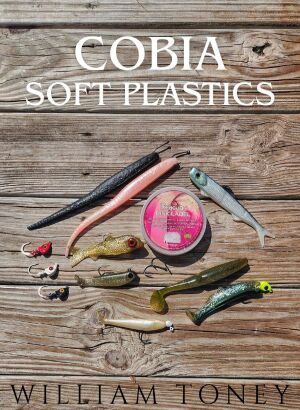
Capt. William Toney breaks down everything you need heading into Gulf Coast cobia season: rod and reel specs, fluorocarbon leader weight, hook selection, and the soft plastic profiles that produce the most strikes. When cobia are moving, having the right setup already in hand is what separates a caught fish from a missed opportunity.
Florida Cobia Questions
When is cobia season in Florida?
Cobia are in Florida waters year-round, but the run moves with water temperature. They concentrate in the Keys from January through March and move up both coasts in spring as the water warms into the upper 60s and low 70s, peaking on the Space Coast from March through May. A shorter fall run follows on the Atlantic coast. The Panhandle spring run, historically mid-March to mid-April, has been unreliable since 2014.
When is cobia fishing best in the Florida Keys?
January through March, when cobia concentrate around Key West on wrecks and reefs from 25 to 120 feet, mostly on the Gulf of Mexico side. A second run in spring brings fish to the surface along the color change.
What is the size limit for cobia in Florida?
Florida's state and federal rules currently set a 36-inch fork length minimum on both coasts, with 1 per person or 2 per vessel, whichever is less. Check FWC before you fish, since rules change.
What is the best bait for cobia?
Live baits such as pinfish, pilchards, grunts, and eels work, and so do soft eels, big swimbaits, and topwater chuggers. The best bait is the one already rigged when the fish shows, since a surfaced cobia may only stay up for a minute.
Following the Cobia Run Around Florida
Cobia reward the angler who knows the calendar for their own coast. Watch the water temperature climb into the upper 60s, look for the rays, manatees, and markers that hold fish, and on the bright, high-pressure day after a front, stop waiting for surface fish and go down after them. When they do come up, the boat that is already rigged gets the bite.
Brian Sanders' cobia baits and lures course shows the three-rod setup working over a Gulf of Mexico wreck, and William Toney's soft plastics course covers the rest.
Every In The Spread cobia course is in the cobia fishing videos collection.
Login
to leave a review.
User Reviews
There are no reviews yet.
Setting Up a Dredge Pulley for Billfish
Saltwater
12.28.2020
High Speed Wahoo Trolling Rig
Saltwater
09.08.2018
Fishing Light Tackle for Yellowfin Tuna
Saltwater
09.08.2018

0