
Captain William Toney has fished the spring-fed flats of Homosassa, Florida his entire life. This article covers the species, waters, and seasonal patterns that define the Nature Coast inshore fishery, along with what sets Toney apart as one of the most knowledgeable and experienced inshore guides working Florida's Gulf Coast today.
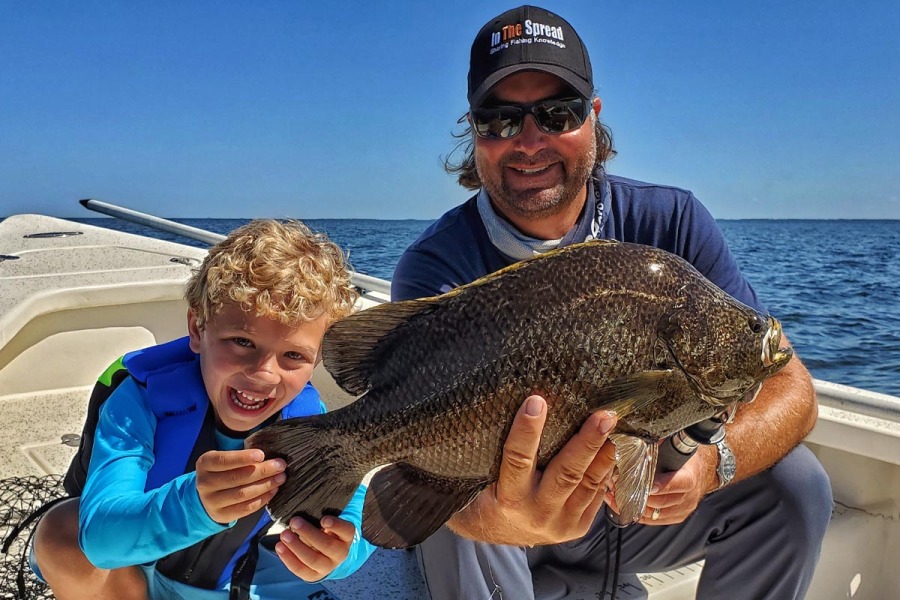
Fishing Homosassa with Captain William Toney
There are fishing guides, and then there are people who genuinely live the water. Captain William Toney is the second kind. Born and raised in Homosassa, Florida, he comes from a family that has been working these Gulf Coast flats for four generations. That is not a marketing line. It means the knowledge he carries was not learned from a textbook or a certification course. It was passed down at the bow of a skiff, in the predawn dark, watching his father and grandfather read the water the way other people read a room.
Toney operates Homosassa Inshore Fishing, one of the most respected charter operations on Florida's Nature Coast. He is also a featured instructor at In The Spread, where he has built a library of instructional fishing videos that bring his on-the-water expertise to anglers everywhere. If you want to understand what serious inshore fishing looks like on the Gulf Coast of Florida, William Toney is one of the most credible people you can learn from.
Who Is Captain William Toney?
Captain William Toney is a fourth-generation fishing guide based in Homosassa, Florida. He has been running guided inshore fishing charters on Florida's Nature Coast for decades, specializing in the flats, backwater creeks, and spring-fed rivers that define the Homosassa fishing experience.
- Base of operations: Homosassa, Florida (Citrus County, Nature Coast)
- Waters fished: Chassahowitzka River, Crystal River system, Homosassa River, the entirity of the Nature Coast coastal flats
- Target species: Redfish, spotted seatrout, snook, mangrove snapper, sheepshead, tripletail, cobia, tarpon
- Guiding background: Fourth-generation guide with multi-decade tenure in the same fishery
- ITS instructor: Featured across multiple instructional video courses at In The Spread covering species, seasons, and technique
His approach to guiding is grounded in education. Toney does not just put you on fish. He explains why the fish are where they are, what conditions brought them there, and what you need to do to catch them consistently. That is a fundamentally different experience from most charters, and it is exactly what makes his In The Spread video content so valuable to anglers who cannot make it to Homosassa in person.
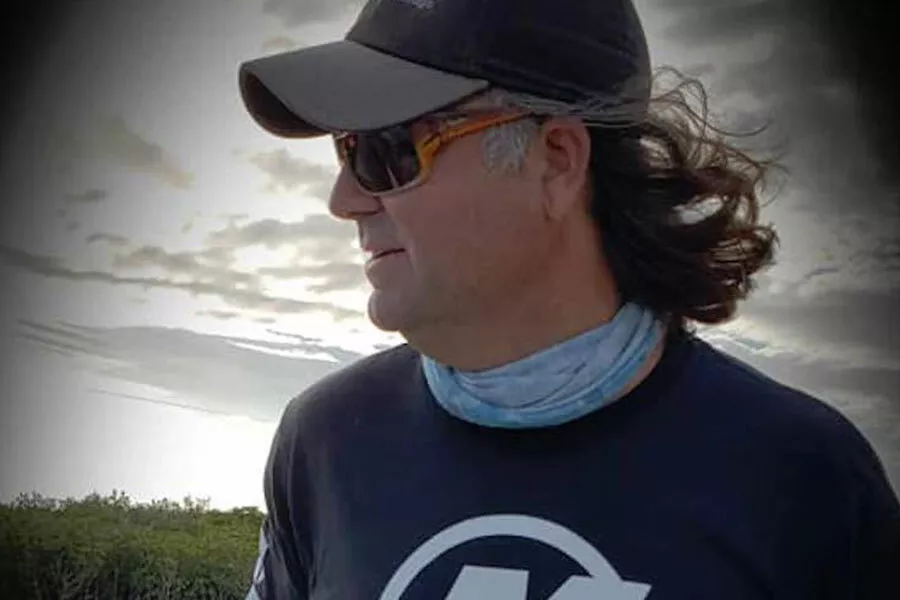
Four Generations of Homosassa Fishing Knowledge
The Gulf Coast of Florida has a fishing culture that runs deep, and Homosassa sits at the center of it. Inshore fishing on Florida's Nature Coast has been a way of life here long before sport fishing became an industry. Captain Toney's family has been part of that culture since well before he was born, which gives him a relationship with this water that no amount of time on the road can replicate.
Growing up in Homosassa meant growing up on the water. The spring-fed rivers, the shallow limestone flats, the dense seagrass beds, the oyster bars tucked into the mangrove edges -- these were not vacation destinations for Toney. They were the neighborhood. He learned to read tidal movement, predict fish behavior by season, and adapt technique to changing water conditions not through formal training but through accumulated time. Thousands of hours on the same water, across all four seasons, across multiple decades.
That depth of local knowledge is genuinely rare. Most fishing guides are skilled anglers who learned a fishery well enough to put clients on fish. Toney operates at a different level. He understands the Homosassa system ecologically, not just tactically. He knows which flats hold seatrout in February because of how the current moves across the limestone substrate after a cold front. He knows where the redfish stack in late fall because he watched his father find them in the same spots decades ago.
The Waters That Define Homosassa Inshore Fishing
To understand why Homosassa is one of the best inshore fishing destinations on Florida's Gulf Coast, you need to understand what makes its water fundamentally different from other Florida fisheries.
Homosassa sits within what is called the Nature Coast, a stretch of Florida's Gulf shoreline characterized by undeveloped coastline, spring-fed rivers, and extraordinarily clear, shallow water. Unlike the turbid, heavily developed coastal systems further south, the Homosassa area retains a wild quality that directly affects the quality of fishing. Several features define the fishery:
- Spring-fed water temperatures remain stable through winter, holding fish in the system year-round rather than triggering major seasonal southward migrations
- Shallow limestone flats provide ideal year-round habitat for redfish and seatrout, particularly through the cooler months when fish abandon sandier Gulf flats
- Dense seagrass beds in the Homosassa Bay support baitfish populations that attract snook, cobia, and tarpon as water temperatures climb in late spring
- Minimal boat traffic and coastal development relative to Tampa Bay or Charlotte Harbor mean fish encounter less pressure and behave more predictably
- The Chassahowitzka River provides a remote backwater corridor that holds mangrove snapper, snook, and redfish in numbers that regularly surprise visiting anglers fishing there for the first time
For visiting anglers, fishing the Gulf of Mexico's inshore waters requires understanding how these habitat types connect to each other and to the seasonal calendar. Toney knows those connections intuitively, having fished every channel, every flat, and every tidal creek in this system more times than he can count.
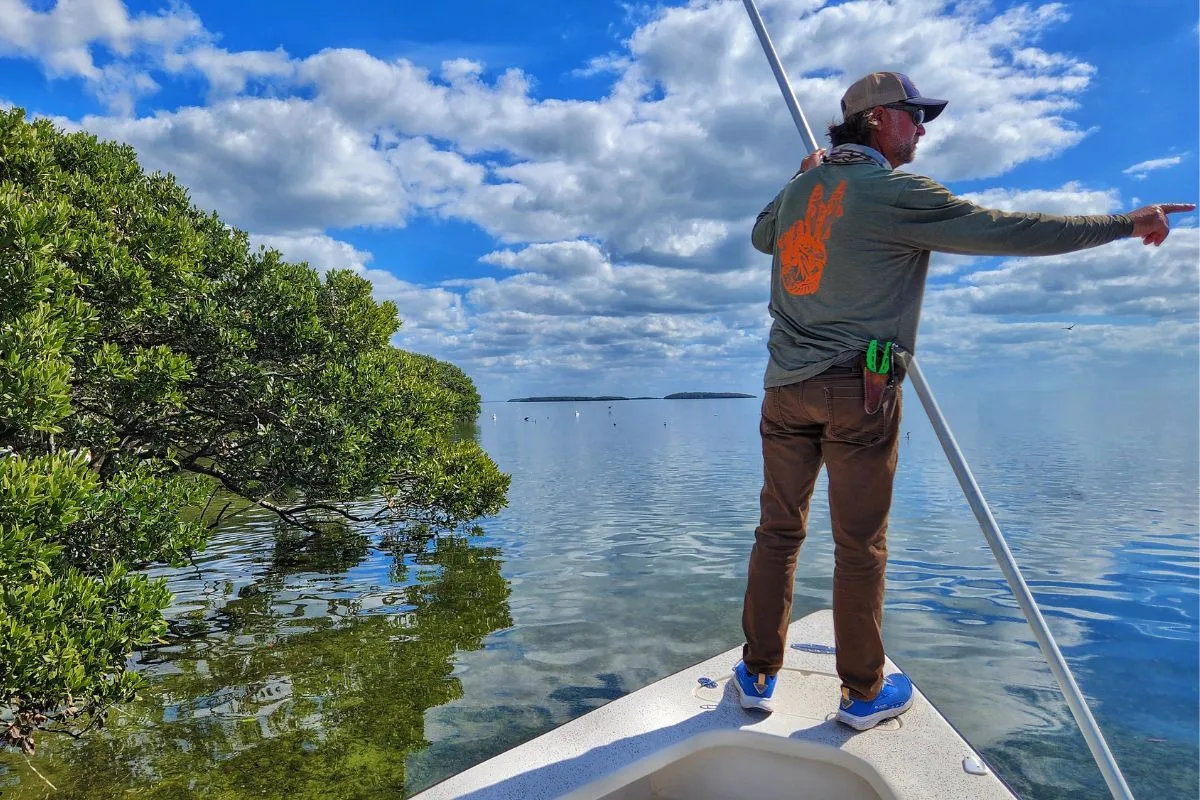
What Species Do You Catch Fishing Homosassa, Florida?
Homosassa inshore fishing covers a remarkable range of species across a compact fishing area. Part of what makes the fishery special is that seasonal rotation keeps the action varied throughout the year. Here is what you are actually targeting when you fish this system with someone who knows it as well as Captain Toney.
Redfish are available year-round and are arguably the signature species of the Nature Coast flats. The shallow, clear water creates sight-fishing conditions that test your casting and your patience in equal measure. These are not naive fish. They see pressure, and they respond to it. Toney addresses exactly that challenge in his ITS course on live bait tactics for pressured reds, which covers how to adjust your presentation when fish have seen everything in the tackle shop.
Spotted seatrout are Homosassa's most consistent species across the calendar. The limestone flat structure holds trout through winter when they have largely vacated the sandier, more southern Gulf fisheries. If you only have time for one species on the Nature Coast, seatrout will put the most bends in your rod across the most months. Toney has produced multiple In The Spread courses on seatrout across all four seasons, which collectively represent one of the deepest species-specific inshore curriculums available for Gulf Coast anglers.
Snook move through the Homosassa system in late spring and summer, staging around passes and river mouths as water temperature rises. They are temperamental, technical fish that punish sloppy presentations and reward anglers who understand their relationship with current and structure. Toney's ITS course on fishing Florida's coastal flats for snook breaks down the habitat and presentation specifics that determine whether you catch snook or simply find them.
Mangrove snapper are an underrated target in the Homosassa backwaters, particularly along shaded dock edges and mangrove shorelines through the warmer months. Toney's instructional work on inshore mangrove snapper at ITS goes into the hook selection, leader configuration, and presentation specifics that most anglers never think about until a big snapper cuts them off.
Sheepshead are a winter and early spring staple around oyster bars, dock pilings, and rocky bottom structure. They are notoriously difficult to hook despite being relatively easy to find, which makes them a genuinely interesting challenge for anglers who get bored catching the same species on the same rig. Toney has produced two ITS courses specifically on sheepshead, covering both Gulf Coast patterns and the specific feeding behavior of fish holding in cold, clear water late in winter.
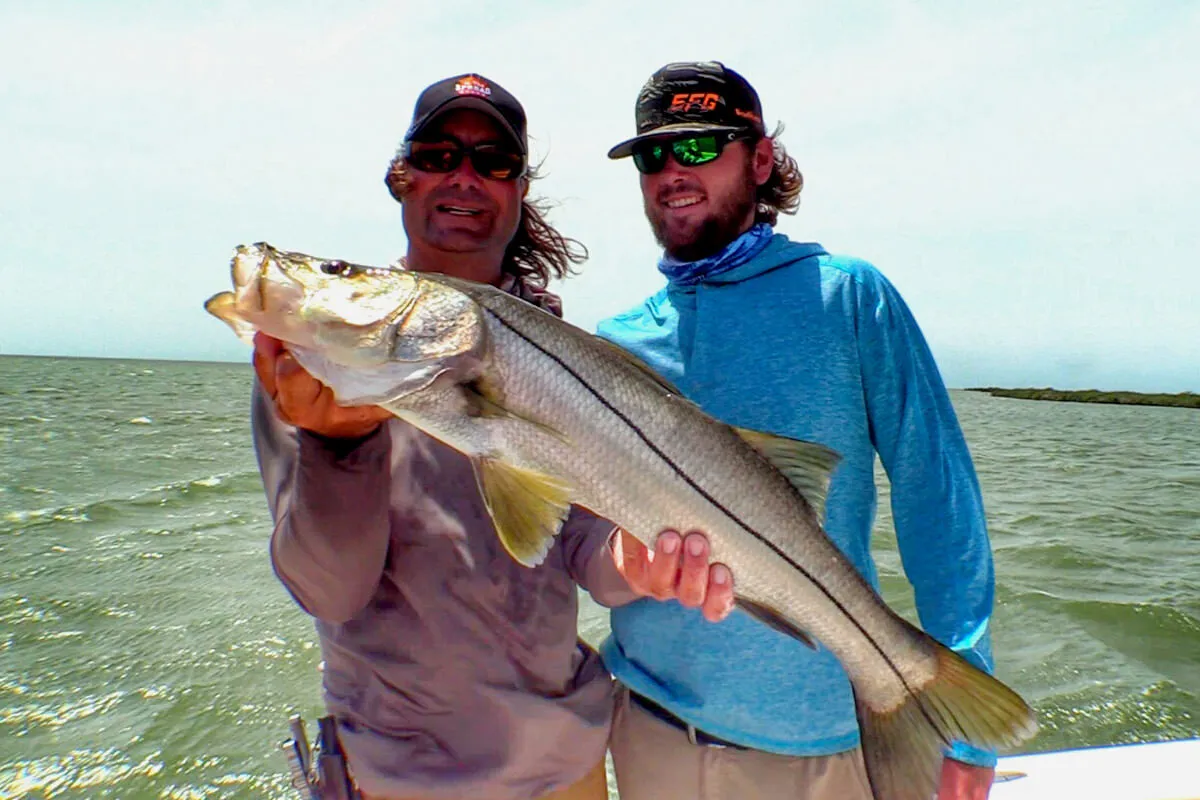
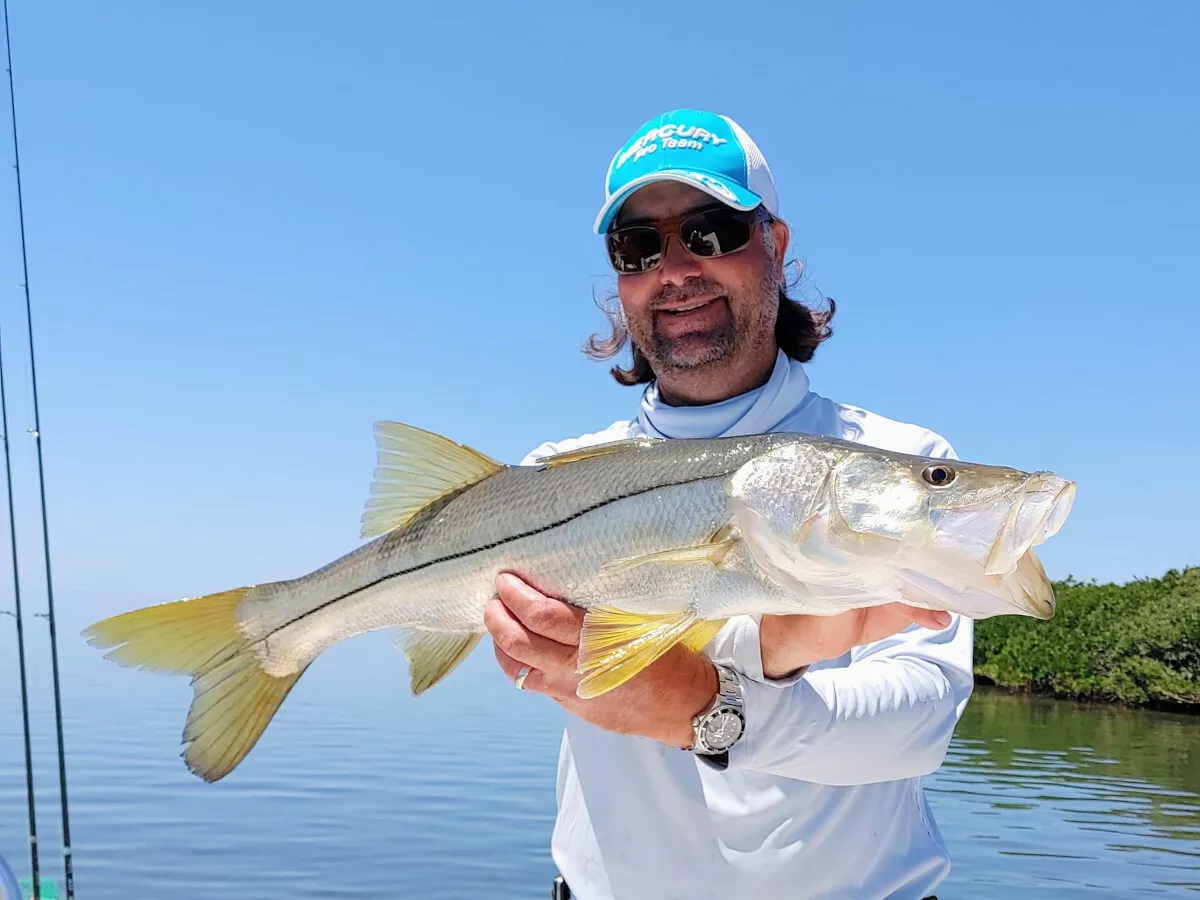
snook caught in Homosassa Florida by William Toney
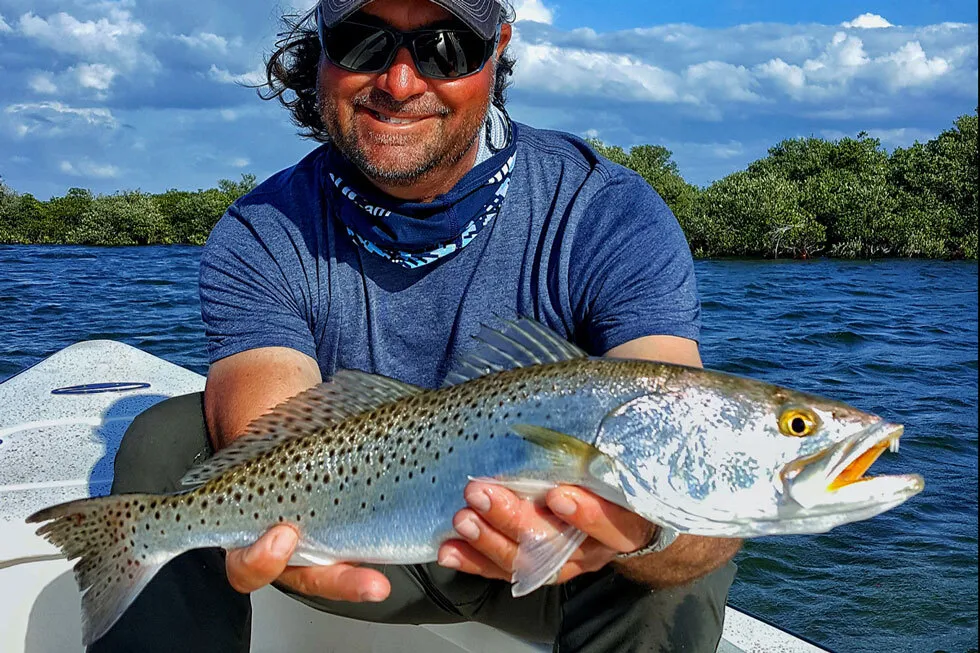
seatrout caught by William Toney in January
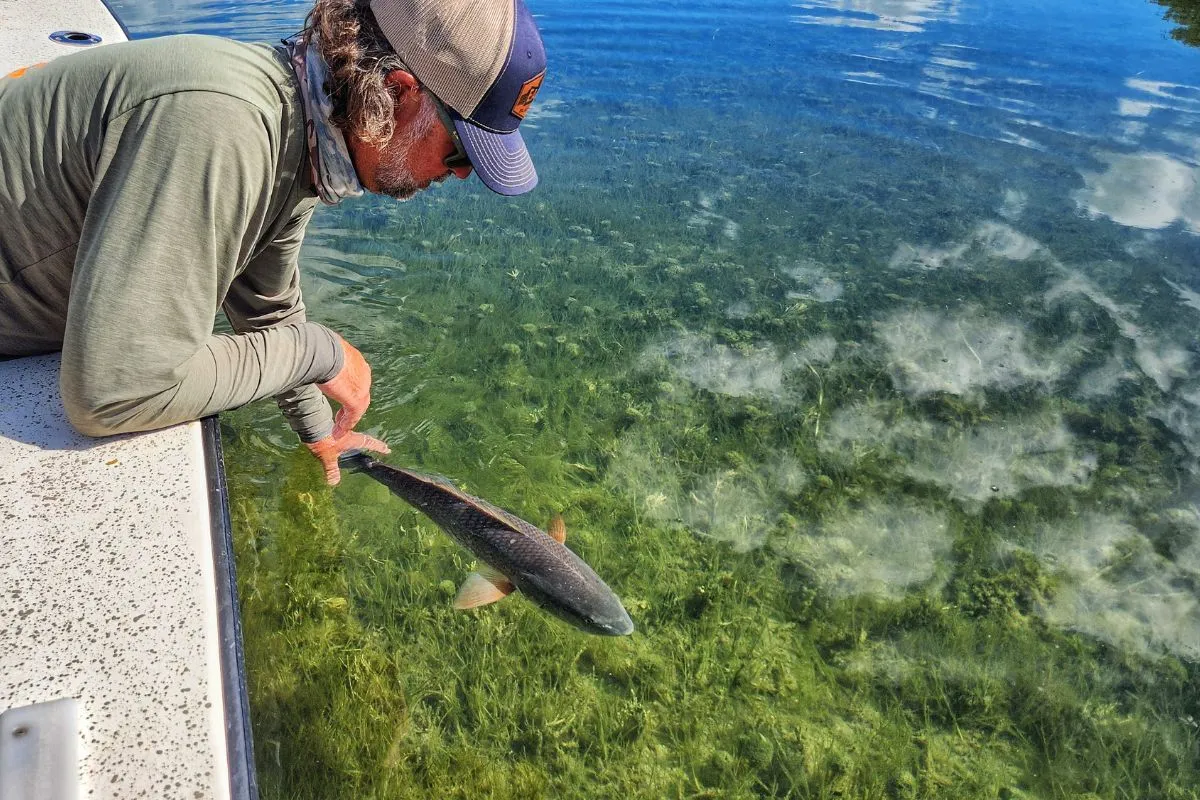
redfish release in crystal clear water
Capt. William Toney's Fishing Courses
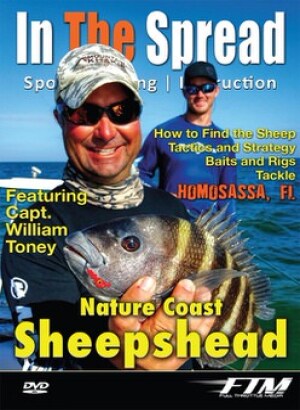
Captain William Toney reveals sheepshead fishing tactics for Florida Gulf Coast shallow structure including rocky areas and oyster bars. This video covers live shrimp and crab presentation, sensitive jig head rigging for bite detection, moon phases and tidal conditions, and stealthy boat anchoring techniques.
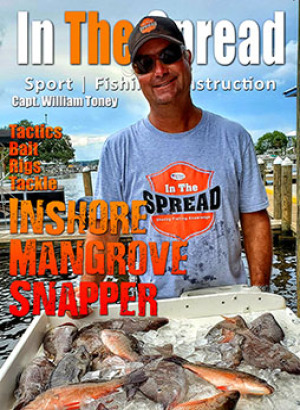
Rough seas or limited time make inshore mangrove snapper fishing productive alternatives to offshore trips. These bottom dwellers school higher during feeding periods, demanding structure reading skills and depth adjustments throughout the day. Fourth-generation guide William Toney reveals Gulf Coast patterns where mangrove snapper concentrate around accessible inshore structure requiring proper live shrimp and jig head rigging.
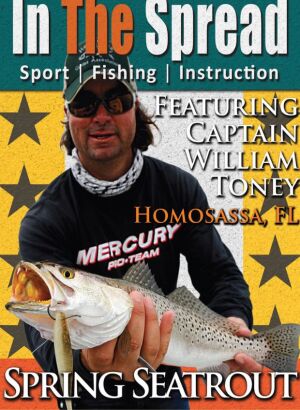
Captain William Toney reveals springtime speckled seatrout strategies focused on tidal flow patterns and moon phase influences. This video covers why spring transition concentrates big seatrout, reading water movement for fish positioning, lure selection for pre-spawn females, and rod and reel specifications for accurate casts.
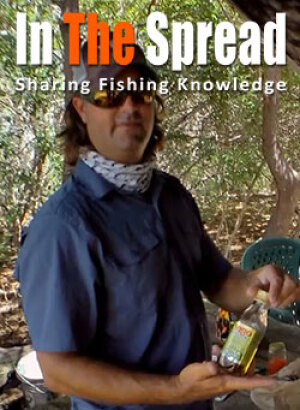
Captain William Toney's fish camp cooking demonstration addresses the common mistake of treating all inshore species identically. Learn why redfish texture tolerates aggressive blackening heat, when seatrout's delicate meat demands quick frying protection, and how fillet thickness determines whether grilling or frying produces better results from your day's catch.
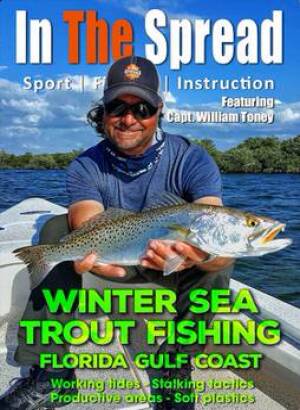
Shallow grass flats productive for seatrout through fall become barren when winter cold pushes fish into deeper channels and structure. Captain William Toney explains locating transition zones between deep refuge and feeding areas, why tidal movement timing becomes critical for brief feeding windows, and how lure presentations must slow for reduced winter metabolism.
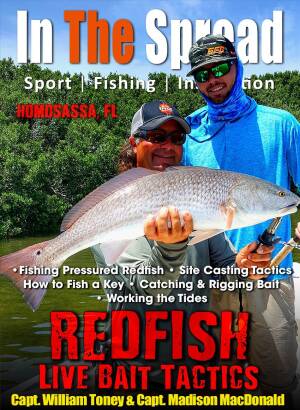
Captain William Toney reveals live bait strategies for catching pressured redfish in heavily fished waters. This video covers effective bait selection and rigging, catching fresh bait without specialized equipment, stealthy boat positioning techniques, natural presentation methods, and tackle specifications for high-pressure situations.
How Captain Toney Approaches Fishing Education
There is a specific quality that separates good fishing instructors from great ones, and it has nothing to do with how many fish they have caught. It is about whether they can transfer understanding rather than simply demonstrate skill.
Captain William Toney is a natural teacher. His guiding philosophy has always been that a client who understands why they are fishing a specific spot, at a specific tide, with a specific presentation takes something home they can use for the rest of their life. A client who is handed a rod and told where to cast takes home a fish count.
That philosophy comes through clearly in his In The Spread video work. Toney does not simply go fishing on camera. He explains his decision-making process, walks through the reasoning behind bait selection and rigging, and addresses the seasonal variables that most captains keep to themselves. Whether he is breaking down the subtleties of live bait presentation for pressured redfish or talking through water temperature and its effect on seatrout feeding windows, there is always a clear thread of reasoning you can follow and apply on your own water.
His conservation ethic is woven into that same teaching approach. The Homosassa system is genuinely fragile in ways that are not obvious to visiting anglers. Seagrass beds, in particular, are slow to recover from prop damage. Toney's guided trips and ITS content both reflect a deep awareness of how angler behavior affects habitat quality over time. That is not a policy position he recites. It is something he has lived alongside since childhood.
William Toney's Instructional Video Courses at In The Spread
Captain Toney has built one of the deepest single-instructor content libraries at In The Spread, covering the full seasonal rotation of Homosassa inshore fishing across multiple species and techniques. His courses are among the most practical content on the platform because they are built around a real, specific fishery that he knows with extraordinary depth.
- Sheepshead Fishing on Florida's Gulf Coast: structure, presentation, and bait selection for winter sheepshead
- Inshore Mangrove Snapper Fishing with William Toney: hooks, leaders, and backwater technique
- Springtime Seatrout Fishing with William Toney: location, presentation, and reading the flat
- Winter Seatrout Fishing with William Toney: cold water tactics on limestone flats
- Techniques for Summer Seatrout with William Toney: warm weather patterns and presentation adjustments
- Live Bait Tactics for Pressured Redfish: reading behavior and adjusting to fishing pressure
- Late Winter Sheepshead Fishing with William Toney: cold water structure and presentation specifics
- Snook: Fishing Florida Coastal Flats: habitat, current, and presentation for flats snook
- Tampa Bay Seatrout Fishing Tactics: applying Nature Coast knowledge to a larger Gulf system
- Cooking Redfish and Snapper with William Toney: culinary technique from the catch through the table
Frequently Asked Questions: Fishing Homosassa with Captain William Toney
What is the best time of year to fish Homosassa, Florida?
Homosassa fishes well year-round, which is one of its defining advantages over more seasonal Florida fisheries. Spring, from March through May, is peak season for multiple species simultaneously: seatrout are active on the flats, snook begin moving toward the passes, cobia appear along nearshore structure, and sheepshead are still holding in the backwater. Winter, particularly January through February, offers excellent opportunities for trophy spotted seatrout and sheepshead on the shallow limestone flats. The spring-fed water system moderates temperature extremes that push fish out of other Gulf Coast fisheries.
What species can you target with Homosassa Inshore Fishing?
Captain Toney's guided trips target redfish, spotted seatrout, snook, mangrove snapper, sheepshead, tripletail, cobia, and tarpon depending on the season. Homosassa's spring-fed water system holds fish year-round, so there is almost always a primary species in productive season regardless of when you visit.
Why is Homosassa considered one of the best inshore fisheries on Florida's Gulf Coast?
The combination of spring-fed water clarity, intact seagrass beds, undeveloped shoreline, and relatively low angling pressure sets Homosassa apart from most other Florida inshore fisheries. The stable winter water temperatures keep fish in the system when they have evacuated sandier southern Gulf flats. The limestone substrate and the Homosassa spring complex create habitat structure that does not exist in most Florida coastal fisheries.
What makes Captain William Toney's approach different from other Florida inshore guides?
Toney's fourth-generation connection to the Homosassa fishery gives him a depth of localized knowledge that visiting guides simply cannot replicate. More distinctively, his educational approach to guiding means clients leave with transferable understanding, not just a fish count. He explains the reasoning behind every decision, from tide selection to bait choice to boat positioning, in a way that makes his clients better anglers long after the trip is over.
Where can I watch Captain William Toney's fishing videos?
All of Captain Toney's instructional video courses are available through In The Spread, a subscription-based sport fishing video platform. His library covers seatrout, redfish, snook, sheepshead, and mangrove snapper across multiple seasons, making it one of the most complete inshore video curriculums available for Gulf Coast fishing.
Do I need to be an experienced angler to book a Homosassa inshore charter?
No. Captain Toney's guiding philosophy is built around education first, which makes his trips accessible to beginners while remaining genuinely instructive for experienced anglers. The Homosassa fishery's clear, shallow water and visible fish make it particularly well-suited for teaching technical sight-fishing at a pace that accommodates different skill levels.
What is the fishing like for redfish in Homosassa?
Homosassa redfish fishing centers on the shallow limestone flats and seagrass edges of the Nature Coast system. The clear water and moderate boat traffic relative to other Florida inshore fisheries mean fish are often visible and catchable, but also educated enough to demand precise presentations. Captain Toney's live bait tactics for pressured redfish course at In The Spread addresses exactly this challenge, breaking down how to adjust your approach when fish have seen everything.
Learning Florida Inshore Fishing from Someone Who Has Lived It
There is something that formal fishing education rarely captures, and that is intuition built from repetition on a specific piece of water over a long period of time. That is exactly what Captain William Toney brings to every guided trip and every In The Spread instructional video he has produced.
Fishing the Florida Nature Coast with someone like Toney is not just about catching fish. It is about understanding a coastal ecosystem well enough to be consistently effective in it, and respectful enough of it to leave it intact for the next generation. That is the ethic his family carried through four generations of guiding on these waters, and it is the same ethic that runs through everything he teaches at In The Spread.
Login
to leave a review.
User Reviews
There are no reviews yet.
Complete Dredge Pulley Setup Guide
Saltwater
12.28.2020
High Speed Wahoo Trolling Rig
Saltwater
09.08.2018
Fishing Light Tackle for Yellowfin Tuna
Saltwater
09.08.2018
0