
In Venice you rarely fish empty water. Rigs and shrimp trawlers stack big yellowfin before you ever cut a bait, and the game is reading that structure and peeling fish off it. This is Captain Josh Howard's method for positioning, chumming, and pulling Gulf giants.
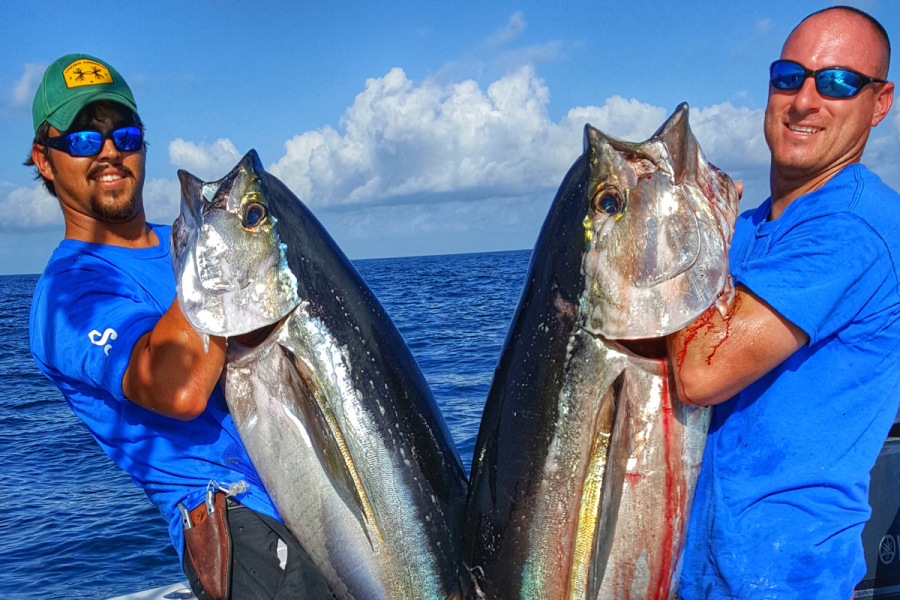
Chunking Big Yellowfin Tuna in Venice, Louisiana
Venice, Louisiana is one of the best yellowfin tuna fisheries in the world, and it fishes on a different logic than open blue water. Out past the shelf you build your own slick and work birds and water to bring a roaming school to it. In Venice you are working structure, permanent and moving, that is already concentrating fish before you ever cut a bait. Deep water sits close to the pass, oil platforms stand like reefs across the Gulf, and shrimp trawlers drag through the night throwing bycatch that stacks predators in their wake. Your job is not to conjure fish out of empty ocean. It is to read the structure and peel big yellowfin off it.
Why Venice is a structure game
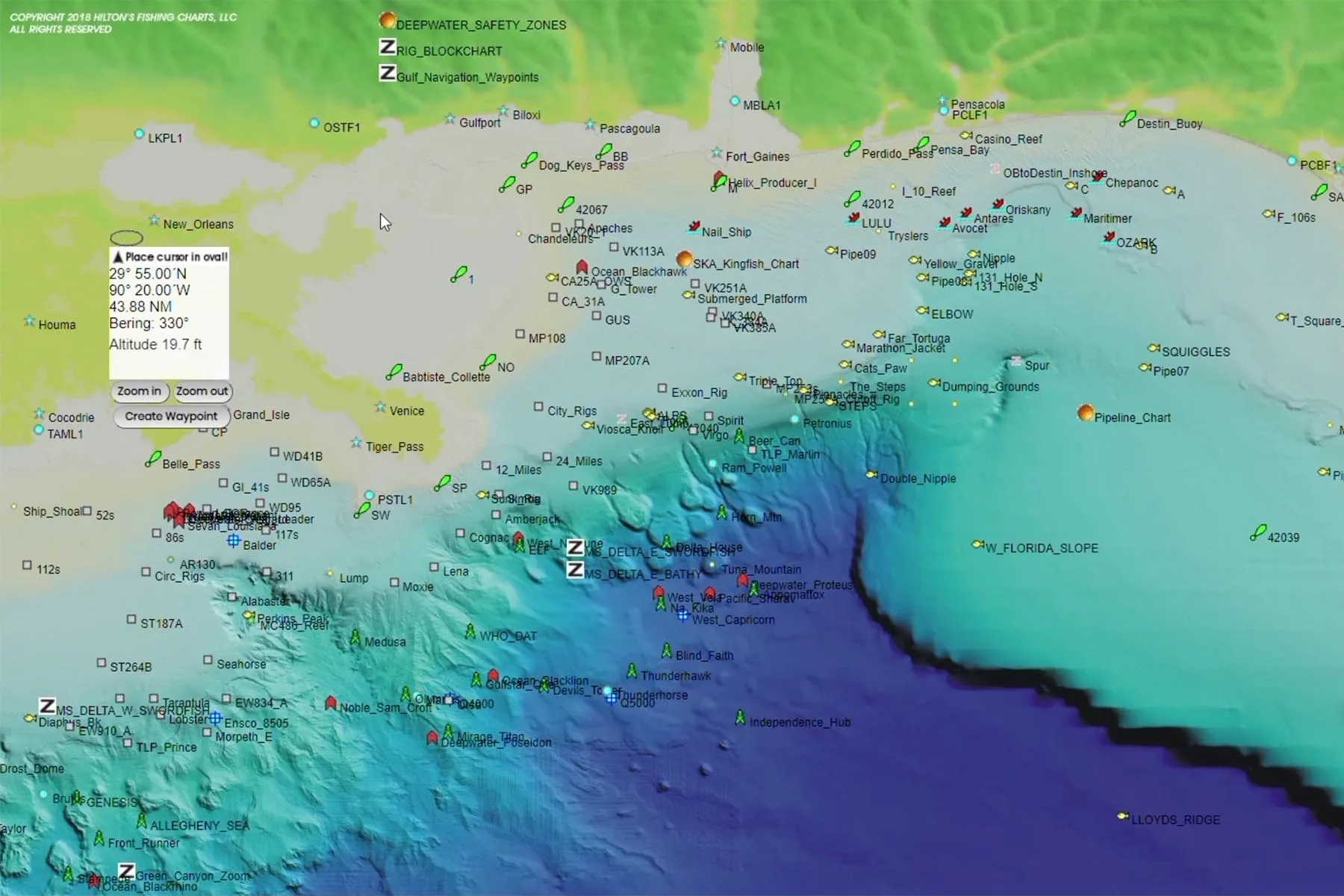
The thing that separates Venice from most tuna fishing is that you are almost never fishing empty water. The Mississippi dumps nutrients into the Gulf, those nutrients feed bait, and the bait stacks along the deep contours and around the thousands of platforms scattered across the northern Gulf. Add the shrimp fleet dragging bottom and culling bycatch, and you have a system that gathers and holds yellowfin around identifiable, repeatable spots.
How do you chunk a trawler bite?
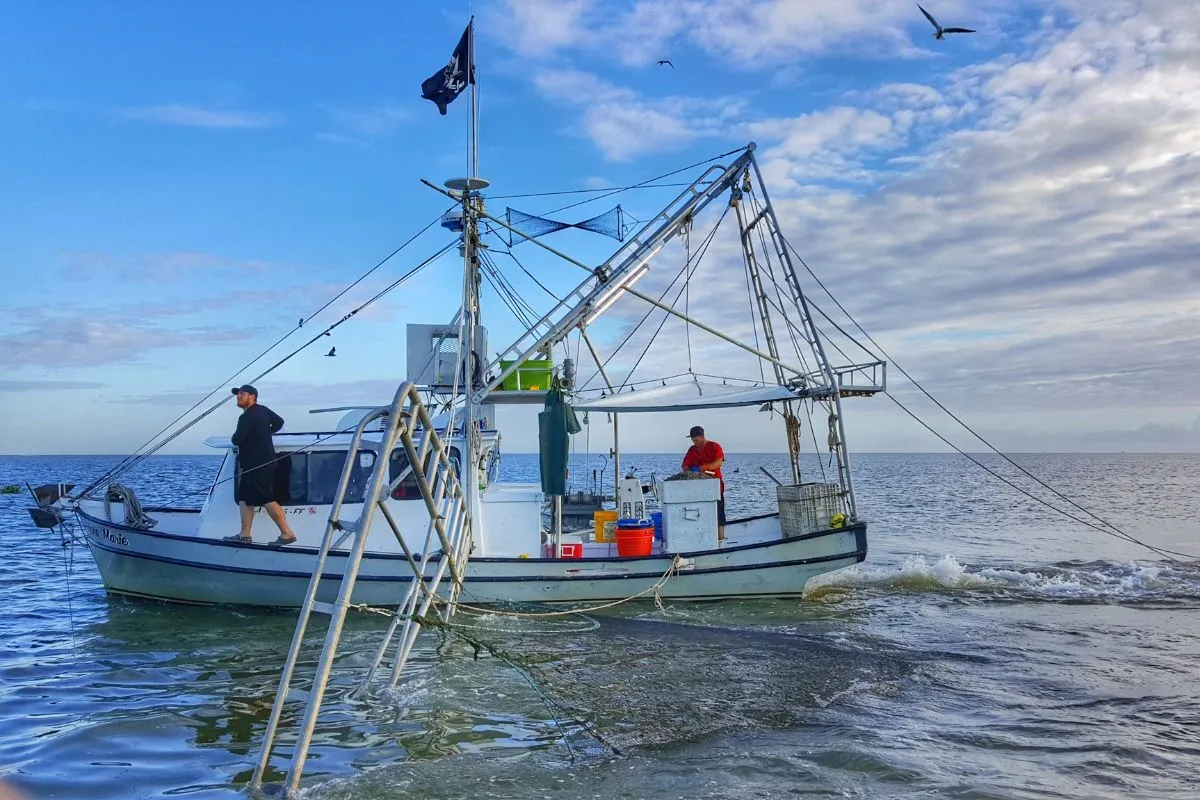
The signature Venice technique, and the one Howard has refined, is working the shrimp trawlers. A boat that has been dragging all night culls its catch and throws the unwanted bycatch overboard, a mix of finfish, crabs, and damaged shrimp, and that steady rain of dead and dying discards is a ringing dinner bell for yellowfin. The tuna key on it, holding behind and beneath the boat, often sitting just off the edges of the prop wash and deeper in the slick depending on current and how much pressure the fish have seen, picking off the discards. You are not creating the feed here so much as inserting yourself into one that is already happening.
How do you read and work the shrimp trawlers?
Not every trawler is worth your time, and learning to read them is half the battle. Watch their movement and their timing. The morning cull, when a boat that dragged all night sorts and dumps its catch, is often the peak window, and a boat culling then is far more likely to be holding tuna than one just setting out. Birds working hard behind a trawler are a strong tell that fish are on it. Understand too that a trawler or rig worked hard by a fleet of recreational boats can go quiet, the tuna pushed deep or shut off, so a fresh boat nobody has crowded is often worth more than a famous one ringed with traffic. Over time you learn the areas and the hours the fleet works, and you can plan a run to intercept boats when they are throwing the most bycatch.
How do you fish the rigs and platforms?
When there is no trawler to work, the platforms are the other half of the Venice structure game. Oil and gas rigs function as permanent artificial reefs, and after decades in place they hold bait from the surface to the bottom, with yellowfin and other predators relating to that bait. Understanding why fish stack on structure is the foundation for fishing them well, because the same principles that concentrate bait around a rig tell you where the tuna will set up to ambush it.
How do you select and cut bait for big yellowfin?
Venice is a big-fish fishery, and the bait strategy reflects that. Howard leans on larger baits, and the reason is selective. Bigger chunks appeal to the larger, more cautious tuna that are looking for a meal worth their effort, and they help you slip past the smaller fish and other species that will shred a small bait before a trophy ever sees it. Bait selection runs to larger offerings like mackerel, herring, and cut pieces of skipjack, sized to draw the fish you actually want.
Cut with intent. Chunks want to be substantial enough to interest a big yellowfin but not so oversized that fish shy off them or smaller species drag them away. Presentation matters as much as size. The chunk needs to drift naturally in the current, tumbling and falling like an injured or disoriented baitfish rather than dragging unnaturally against the flow, because a sharp-eyed yellowfin reads anything that looks wrong. Match your hooked bait to the free chunks in size and fall so it disappears into the slick, and hide the hook in the tougher part of the chunk so it holds without killing the natural drift.
How do you chum to keep yellowfin engaged?
Chumming around structure is about maintaining a steady presence that holds fish without filling them. Howard's chumming strategy is a constant, measured dispersal of bycatch and thawed frozen bait that keeps a scent trail alive and tells the tuna the food is not going to stop. The balance is the same one every chunker fights. Feed too heavily and you satisfy the school before your hooked bait ever gets eaten, and feed too lightly and the trail thins out and the fish drift off it.
What gear do you need for Gulf giants?
Venice yellowfin fight with a power that punishes weak tackle, and Howard is emphatic about gear that will not fail. Hooks are the foundation, and they need to be strong, corrosion resistant, and sharp. Heavy-duty circle hooks are the standard choice, both because they stand up to the fish and because they tend to find the corner of the jaw, which holds well and supports a clean release when you are letting fish go.
The rest of the outfit has to match the fish. A medium-heavy to heavy rod gives you the backbone to turn a big tuna, paired with a high-capacity reel holding plenty of braid so a fish that peels off two hundred yards on its first run does not empty your spool. A smooth, reliable drag is not negotiable, because an inconsistent drag pops leaders and loses fish on the surge. Run a fluorocarbon leader for its abrasion resistance and near invisibility to leader-shy fish, and do not be shy about length, because in clean water or on pressured fish a long leader of fifteen to thirty feet or more puts real distance between your bait and anything the fish might read as wrong. Match your hook size to the chunk you are fishing, big enough to handle the fish and hold the bait but not so large it dominates the chunk and looks unnatural. Set your drag firm enough to bury the hook and control the fish but not so locked down that a blistering run parts the line. On the biggest fish, some Venice crews hand-line baits down and fight fish direct, a specialized and somewhat traditional tactic rather than the dominant method, which puts a premium on gloves, technique, and terminal gear that will not let go under steady load.
On leader, the governing rule in the Gulf is to fish as heavy as the bite will allow. Aggressive fish will eat heavy leader, and heavy leader ends fights faster, so there is no prize for starting light. The working ladder is to begin at 130 pound fluorocarbon and step down only when the fish tell you to, moving to 100, then 80, then 60, until you find the size that stops costing you bites. Run 25 to 30 feet of leader material and replace it once it wears down below about 10 feet, because a short, chafed leader is where a trophy fish gets lost. You can absolutely land a 200 pound tuna on 60 pound fluorocarbon if you have to, but the fight takes longer, so back your drag off and stay patient rather than trying to horse the fish, unless sharks are moving in and the calculus changes.
There is one more reason to end fights quickly, and it has nothing to do with losing the fish. A long, drawn-out battle floods the muscle with lactic acid, and that shows up on the plate. If you are keeping a yellowfin, and in this fishery most crews are, the shorter the fight, the better the meat. Landing fish efficiently is not just about numbers in the box. It is about the quality of what you carry home.

How do water color, temperature, and moon affect the bite?
Even with structure doing the heavy lifting, the water conditions decide how the fish behave. Clean, blue water is what you want, because tuna hunting by sight feed with more confidence in clear water and struggle to track bait in green or muddy water pushed out by the river. When you find a color change where dirty river water meets clean Gulf blue, that edge is often exactly where the fish stage.
When is the best season for Venice yellowfin?
Venice fishes for yellowfin nearly year round, which is a large part of what makes it special. The deep water sits close enough to the pass that the tuna are reachable in every season, and the rigs and trawlers hold fish through the calendar. That said, the fishery has rhythms worth planning around. The cooler months from late fall through winter and into spring are when Venice earns its reputation for giant yellowfin, as the biggest fish move in and feed hard, and winter also opens a real shot at bluefin for crews willing to work for them. The warmer months tend to produce strong numbers of fish, often behind the trawlers as the shrimp fleet works through the season. Match your trip to your goal, whether that is a shot at a genuine trophy or a cooler full of quality fish, and check the current conditions and forecast before you commit to the run offshore.
When you leave the structure behind
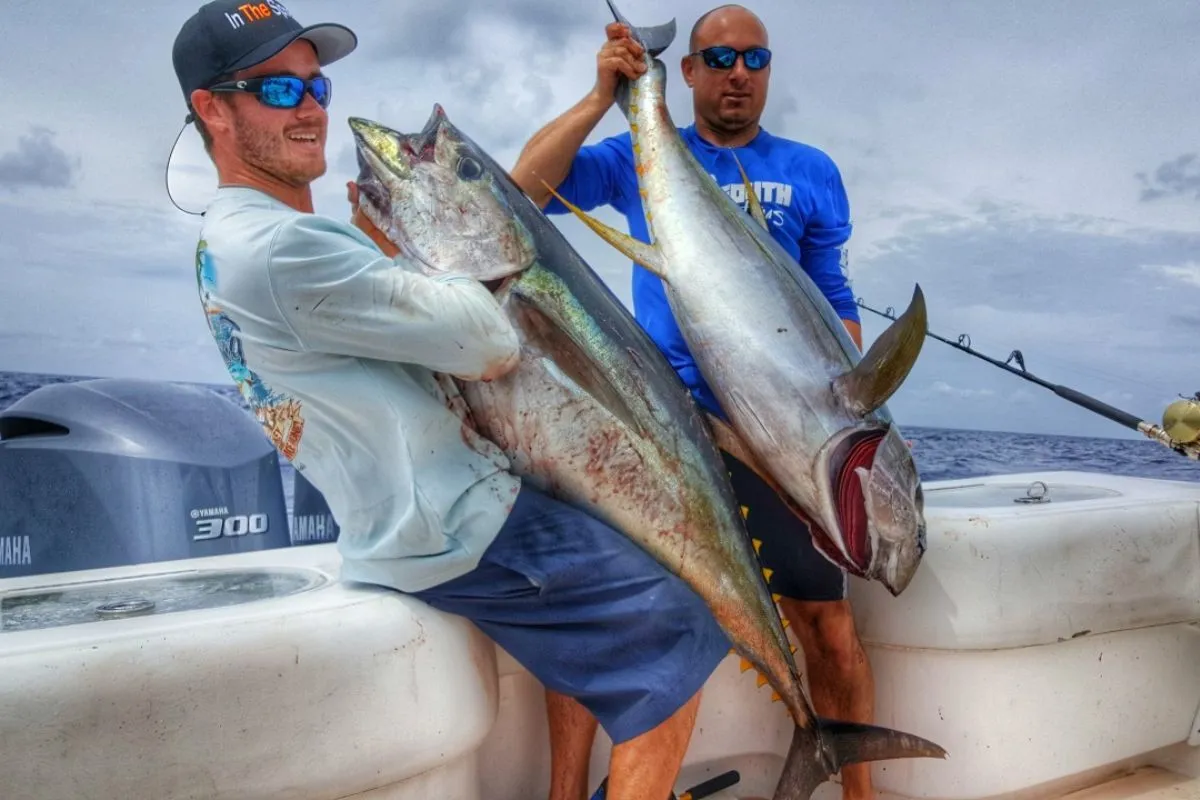
Everything in this article assumes you have structure to work, whether a rig, a platform, or a trawler doing the culling for you. Run far enough offshore into open blue water and none of that help exists, and the game changes to finding and holding a roaming school with nothing but your own slick. That open-water approach, built on reading birds and running a clean drift, is its own discipline, and our breakdown of chunking yellowfin tuna in open water covers it in full. Know which game you are playing, because the water tells you which set of skills to bring.
Venice Yellowfin Tuna Video Courses
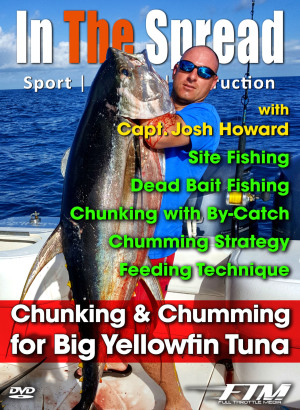
Venice, Louisiana is known for its abundant yellowfin tuna fishing, with captains and crews using advanced tactics and techniques. Capt. Josh Howard utilizes trawl boat by-catch to create a healthy chum slick, while In The Spread fishing video teaches ideal baits, chumming, and chunking. Fishing in the Gulf of Mexico relies on working fixed or mobile fish aggregators, making trowl boats an excellent fishing opportunity.
Yellowfin tuna around Venice trawlers feed competitively on bycatch discharge, creating brief windows where aggressive strikes can overwhelm standard tackle and technique. Captain Josh Howard explains how live bait selection matches trawler discharge, why hook and drag specifications prevent lost fish around moving vessels, and when these mobile feeding situations produce versus platform fishing.
Yellowfin tuna around Venice, Louisiana oil platforms reject surface lures that work elsewhere in the Gulf. Captain Josh Howard explains how Mississippi River discharge affects baitfish profiles, why popper and swimming bait selection must match local forage size and behavior, and when surface presentations outperform subsurface approaches around Louisiana oil structures.
Frequently asked questions about chunking yellowfin tuna in Venice
Why do yellowfin tuna follow shrimp trawlers?
Trawlers cull their catch and throw unwanted bycatch overboard, creating a steady stream of dead and dying baitfish. Yellowfin key on that easy food and hold behind and beneath the working boats to pick it off, which is why positioning your slick into a trawler's trail is one of the most productive Venice tactics.
What is the best bait for chunking big yellowfin in Venice?
Larger baits like mackerel, herring, and cut skipjack tend to select for the bigger, more cautious tuna while helping you slip past smaller fish that shred small chunks. Freshness and a natural drift matter as much as size, so cut chunks that fall like injured baitfish in the current.
How do you keep from overfeeding the fish?
Feed a steady, measured chum line and adjust to the fish. Tighten the cadence when they lose interest or drift off, and back off when they are feeding hard and stacked in the slick. The goal is a constant scent trail that holds fish and keeps competition up without stuffing them.
What water temperature do Venice yellowfin prefer?
Yellowfin in this fishery generally hold in warm water in the 72 to 82 degree range, and temperature breaks where warmer and cooler water meet often concentrate bait and fish. Clean blue water fishes far better than the green or muddy water the river pushes out.
Do the rigs hold tuna when there are no trawlers working?
Yes. Oil and gas platforms act as permanent structure that holds bait and predators year after year. Position up-current of the rig and let your slick pull fish off the structure, with the deeper offshore platforms tending to hold the biggest yellowfin.
Bringing it together in the Gulf
Chunking big yellowfin in Venice comes down to letting the structure work for you and reading it well. You find the fish on the rigs and behind the trawlers rather than conjuring them out of empty water, you position up-current so your slick carries into the zone the tuna are working, and you feed a steady line of larger bait that selects for heavy fish while your hooked chunk disappears among the freebies. Back it with gear that will not fail, clean water and a moving tide, and the discipline to work commercial boats safely and courteously, and Venice will give you shots at the biggest yellowfin of your life.
Login
to leave a review.
User Reviews
There are no reviews yet.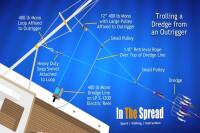
Complete Dredge Pulley Setup Guide
Saltwater
12.28.2020
High Speed Wahoo Trolling Rig
Saltwater
09.08.2018
Fishing Light Tackle for Yellowfin Tuna
Saltwater
09.08.2018
0