
The right hooks for grouper are circle hooks sized to the bait and the fish: 7/0 to 8/0 for most gag and red grouper, smaller for scamp, bigger for black grouper and deep water. Here are the sizes by species and the gear rules that apply.

Choosing Hooks for Grouper Fishing
Hooks for grouper fishing are almost always circle hooks, and for most gag and red grouper on standard baits, that means a 7/0 or 8/0. Go smaller for scamp and small baits, and step up to 9/0 or 10/0 for big baits, big black grouper, and deep water. Hook choice matters more with grouper than with most bottom fish, because the fish eats and turns for the rocks in the same motion, and a hook that is too small, too light, or set the wrong way lets it get there.
Grouper fishing also comes with hook rules. In most Florida waters, natural bait has to be fished on non-stainless steel circle hooks, so the circle hook is not just a preference. The sections below cover the sizes that match each species and the rules that decide what you can tie on.
What Size Hook for Grouper?
Size the hook to the bait first and the fish second. A hook that is too big for the bait kills its swim and hides the point. One that is too small for the fish pulls free or straightens. These ranges are a starting point for heavy-wire, 2X-strong circle hooks. Hook sizes are not standardized across makers, so a 7/0 from one brand can be noticeably larger or smaller than another's. Compare the hook to the bait, not just the number on the package.
- Scamp and small baits (sardines, cigar minnows): 4/0 to 6/0
- Gag and red grouper on standard baits (pinfish, grunts, cut bait): 7/0 to 8/0
- Big baits and trophy fish, including large black grouper: 9/0 to 10/0
- Deep-water grouper (snowy, yellowedge) and mixed deep drops: 8/0 to 10/0, stepping up to 10/0 or 12/0 for consistently large fish
- Goliath grouper: very large, heavy circle hooks, far beyond anything in a standard grouper box
Wire strength matters as much as size. A thin hook penetrates easily but can straighten under the pressure it takes to stop a grouper short of the rocks. A 2X-strong hook is the usual compromise between holding power and penetration.
Florida Circle Hook Rules for Grouper
Grouper are reef fish, and Florida's reef fish gear rules apply. In Gulf of Mexico state waters and in Atlantic waters north of 28° N latitude, natural bait must be fished on non-stainless steel, non-offset circle hooks. In Gulf of Mexico federal waters, the rule is non-stainless steel circle hooks. In Atlantic waters south of 28° N, natural bait must be fished on non-stainless steel hooks. A dehooking device is required on board, along with a descending device or venting tool rigged and ready. In Atlantic federal waters it must be a descending device.
A non-offset, or in-line, circle hook has its point in line with the shank. An offset circle hook has the point bent slightly to the side. Some hooks sold as circle hooks are offset, and those are not legal where the rule says non-offset, so check that the package says in-line or non-offset.
Gag Grouper: The Violent Striker
Gag hold on hard bottom: reefs, ledges, wrecks, and rock piles, from nearshore water out to deeper ledges offshore. Big gag can top 50 pounds, and they eat hard and turn for cover immediately.
Hook Recommendations for Gag Grouper
- Size: 7/0 or 8/0 circle hooks for live pinfish, grunts, and similar baits. Step up to 9/0 or 10/0 for large live baits or when the fish are big.
- Wire: 2X-strong. Thinner wire penetrates easily but can open up when you lock down to keep a gag out of the rocks.
- Type: circle hooks, which the rules require with natural bait in most Florida waters. Let the fish load the rod and come tight instead of swinging on it, and the hook rolls into the corner of the jaw.
Gag and black grouper are easy to confuse at the boat, and the tail and gill-plate differences are laid out in identifying gag, black, and other Florida grouper.
Grouper Fishing Videos
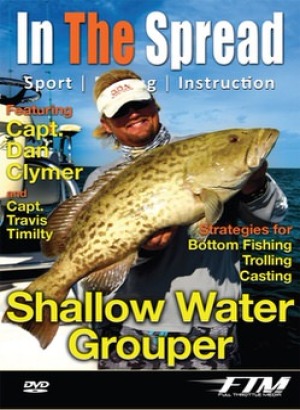
Captain Dan Clymer reveals shallow water gag grouper tactics for Florida reefs. This video covers live bait selection, artificial lure techniques, boat positioning strategies, bottom fishing methods, trolling approaches, and casting techniques for catching grouper in 20 to 60 feet of water.
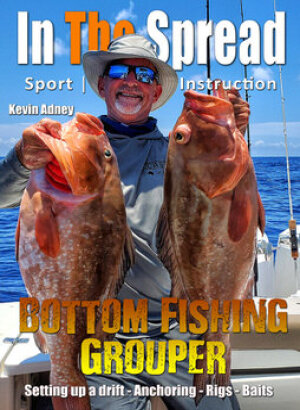
Grouper bottom fishing productivity depends on targeting natural reefs and wrecks where fish concentrate rather than random bottom. Kevin Adney's drift management approach keeps baits working productive structure zones systematically, but success requires understanding how current affects drift speed and positioning presentations where grouper ambush prey rather than sweeping past strike zones or hanging in barren areas between structure features.
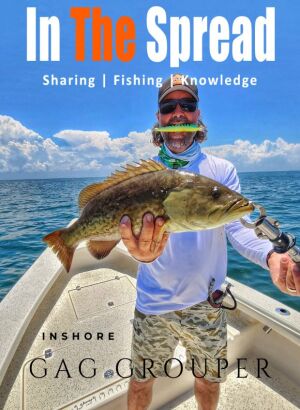
Inshore gag grouper fishing in Florida's shallow waters demands finesse with light tackle using 10 lb braid or heavier setups with diving plugs based on conditions and structure. Captain William Toney's local expertise reveals when jig heads allow delicate presentations versus when diving plugs trigger reaction strikes, plus understanding tide and current effects on fish positioning requiring anchoring strategies for effective presentations.
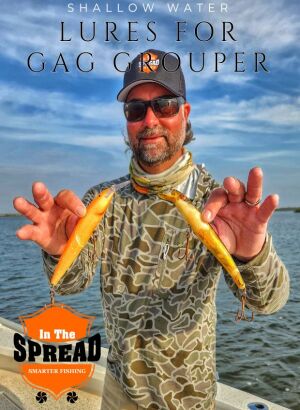
Shallow water gag grouper demand casting lure approaches different from deep fishing because clear conditions allow fish to inspect offerings closely around structure. Captain William Toney's fourth-generation Florida expertise reveals which lure profiles and colors trigger strikes, how boat approach affects spooking wary predators, and technique for extracting powerful grouper from structure before they reach safety.
Scamp: The Small-Mouthed Grouper
Scamp are smaller than gag or black grouper, with smaller mouths, and they are some of the best eating on the reef. Smaller baits like live sardines and cigar minnows work well, and the hook needs to match them.
Hooks for Scamp
Run 4/0 to 6/0 circle hooks with small live baits, going to the larger end with bigger baits. Keep the wire strong even at those sizes, since a scamp still runs for the rocks. Size limits differ by coast, 16 inches in Gulf of Mexico waters and 20 inches on the Atlantic, so check the current rules before you keep one.
Black Grouper: The Deep-Sea Fighter
Black grouper look a lot like gag but grow much larger. The IGFA all-tackle record is 124 pounds. In Florida they are most common in South Florida and the Keys, often on deeper ledges and reefs, and a big one on structure is one of the hardest pulls in bottom fishing.
Differences from Gag Grouper
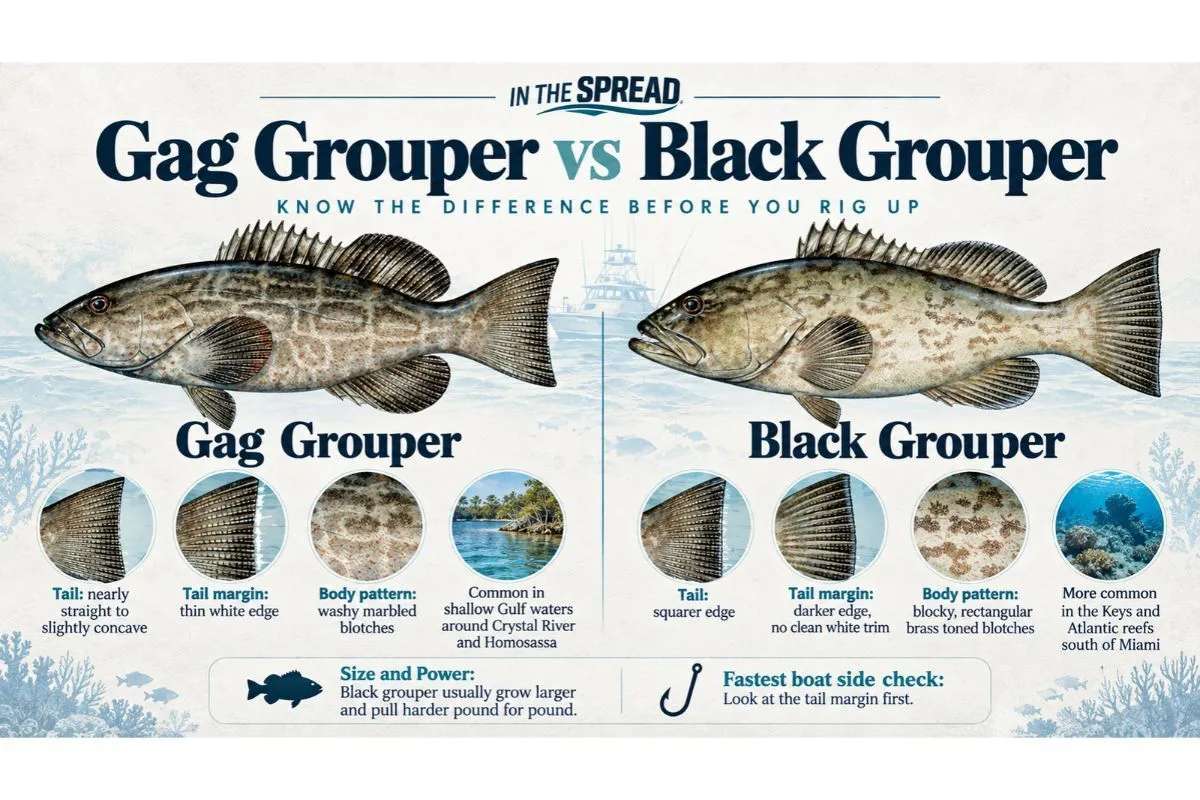
- Size: black grouper grow considerably bigger, so hooks and tackle need to be heavier.
- Habitat: they often hold on deeper reefs and ledges.
- Regulations: black and gag share size limits and, on the Atlantic, a combined bag limit. Check the current rules before you keep one.
Hooks for Black Grouper
Run 8/0 to 10/0 heavy-wire circle hooks, sized to the bait. Big live baits for big black grouper call for the top of that range, and light-wire hooks have no place here.
Goliath Grouper: The Mighty Titan
Goliath are the giants of the family. The IGFA all-tackle record is 680 pounds, and that size and strength demand heavy tackle and careful handling.
Hooks for Goliath Grouper
Goliath fishing calls for very large, heavy circle hooks matched to big baits, on heavy tackle built to pull a fish off structure. Natural bait must be fished on non-offset, non-stainless steel circle hooks, and you must carry and use a dehooking device on any goliath you release.
Most goliath fishing is catch and release. Harvest is allowed only under FWC's goliath permit program. FWC says not to remove large goliath from the water, because their skeleton cannot support their weight out of the water, and to use a descending device or venting tool for fish suffering from barotrauma. Check MyFWC.com/Goliath for the current rules.
Red Grouper: The Bottom Dweller
Red grouper are bottom-dwelling fish found over hard and muddy bottom, feeding on a variety of fish and invertebrates. Younger fish use nearshore reefs, while the larger adults move offshore.
Hooks for Red Grouper
7/0 to 8/0 circle hooks cover most red grouper on standard live and cut baits. Go a size smaller with small baits, and step up with big baits or in water where large fish are common. Use heavy wire here as well, since red grouper head straight for the rocks.
Snowy and Yellowedge Grouper: The Deep Dwellers
Snowy and yellowedge grouper live in deep water, usually reached with electric reels and heavy weights on a deep drop. Yellowedge are taken mostly in the Gulf of Mexico, while snowy are the more common deep-water grouper on the Atlantic side. At that depth, every missed bite costs a long retrieve, so hook choice counts.
Hook Recommendations
Run 8/0 to 10/0 circle hooks on deep-drop rigs, stepping up to 10/0 or 12/0 when big snowy are in the mix or the fish are consistently large. The same circle hook rules apply in deep water.
Fish from these depths almost always come up with barotrauma, so have the descending device rigged and ready before the first drop. A deep-water grouper you plan to release needs to go back down fast. Our article on deep dropping for golden tilefish covers the rigs and depths that put you on these fish.
Matching the Hook to the Fish
The right hook for grouper is the one that matches the bait, holds the fish, and follows the rules. Start with 7/0 to 8/0 heavy-wire circle hooks for gag and red grouper, go smaller for scamp, go bigger for black grouper and deep water, and leave the goliath to tackle built for it. Set the hook by coming tight instead of swinging, and keep the fish out of the rocks.
The hook is one piece of the system. Baits, rigs, and reading bottom are covered in grouper techniques, baits, and the spots that hold fish.
For wrecks specifically, our article on targeting grouper on Florida wrecks covers hook and weight choices for heavy structure.
Login
to leave a review.
User Reviews
There are no reviews yet.
Setting Up a Dredge Pulley for Billfish
Saltwater
12.28.2020
High Speed Wahoo Trolling Rig
Saltwater
09.08.2018
Fishing Light Tackle for Yellowfin Tuna
Saltwater
09.08.2018
0