
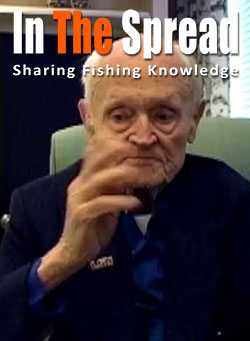
Alfred Glassell
Alfred Glassell caught the most famous fish in sportfishing history: a 1,560-pound black marlin off Cabo Blanco, Peru in 1953 that remains the all-tackle world record more than seventy years later and hangs in the Smithsonian. The first to boat a grander black marlin under IGFA rules, he was also an industrialist, marine science patron, and art collector. Footage of his giant appeared in The Old Man and the Sea. His In The Spread Big Game Legends feature preserves the story of a true icon of the sport.
Videos
Instructor's videos
About Instructor
On August 4, 1953, off Cabo Blanco, Peru, Alfred Glassell caught a 1,560-pound black marlin. More than seventy years later, it still stands as the all-tackle and 130-pound line class world record for the species. No serious marlin fisherman has ever matched it. That single fish is the ultimate achievement in the sport, and it hangs today on the wall of the Smithsonian. But to remember Glassell for one catch, however monumental, is to miss the size of the man. In The Spread is honored to preserve his story as part of the Big Game Legends series.
Glassell was a pioneer of grander marlin fishing itself. He was the first angler to boat a black marlin over 1,000 pounds under IGFA rules, and when he briefly lost that record days later, he took it back within the month with a 1,090-pound fish. His giant off Cabo Blanco was so spectacular in the fight, jumping, tail-walking, and greyhounding across the surface, that the footage was used in the film version of Ernest Hemingway's The Old Man and the Sea. For millions who never set foot on a marlin boat, that was the fish that showed them what a great one could do.
He competed at the highest level, too. Glassell fished on the United States team in the International Tuna Cup Matches for seven years and captained the second-place American team in 1952.
Yet fishing was only one of his passions, and Glassell excelled in nearly all of them. He made his mark in the petroleum industry, collected fine art, and quietly loved freshwater fly fishing. He was a generous champion of marine science, funding and leading research expeditions around the world for Yale University and the University of Miami, where a research laboratory still bears his name. He served as a Life Trustee of Texas Children's Hospital and as Chairman of the Board of the Museum of Fine Arts, Houston.
Industrialist, sportsman, adventurer, amateur oceanographer, philanthropist, civic leader, and patron of the arts, Alfred C. Glassell, Jr. lived several remarkable lives in one, and he stands among the true legends of the IGFA.
In his In The Spread Big Game Legends feature, Glassell's story is preserved for the anglers who came after him, a link to the golden age of big game fishing and to the greatest marlin record ever set. There may be no larger figure in the history of the sport.