
Captain Mike Hennessy of Colio Sportfishing shares his on-the-water seasonal calendar for the southern zone, covering peak windows for blue marlin, sailfish, roosterfish, tarpon, and more. Low fishing pressure and a rare tropical fjord-like embayment create year-round opportunity that sets this corner of Costa Rica's Pacific apart from other regional ports.
Fishing Southern Costa Rica's Pacific Waters Month by Month
The southern zone of Costa Rica sits far enough off the beaten path that most visiting anglers never find it. That gap in awareness is exactly why it fishes the way it does. While the docks at Quepos and Los Sueños fill at first light with dozens of charter boats, Golfito and Puerto Jimenez send out a handful. The fish in this corner of the Pacific carry far less pressure than those in the north. They respond more readily, show up in better numbers, and the experience on the water has a quality that high-traffic fisheries tend to erode over time.
This month-by-month breakdown draws on the field expertise of Captain Mike Hennessy, who leads Colio Sportfishing in the southern zone and brings Pacific big-game knowledge earned across Costa Rica, Fiji, and Hawaii. For anglers ready to start planning, the short answer is this: the southern zone produces quality fishing every month of the year, with different species taking center stage as the calendar turns. What you want to target determines when you go.
What Makes the Golfo Dulce Different from Other Costa Rican Fishing Destinations?
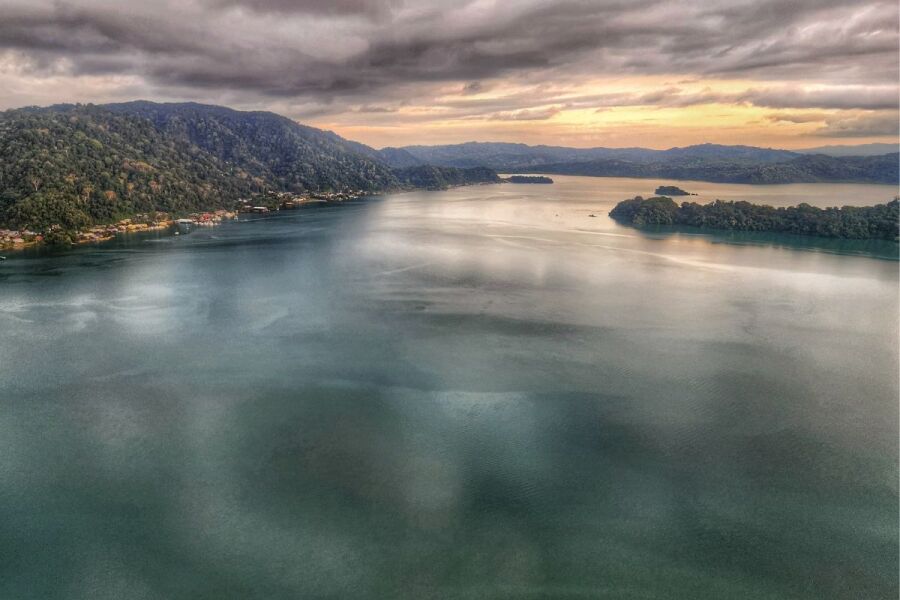
The geography here is not like anywhere else in Central America. The Golfo Dulce is widely described as a rare tropical fjord-like embayment, a deep-water bay flanked by primary rainforest and almost no coastal development. That combination of deep, warm water, productive Pacific inflow, and intact inshore habitat creates a biological richness that supports an unusually diverse fishery.
Unlike Tamarindo in the northwest or the Central Pacific ports clustered around Quepos, the southern zone has no major tourism infrastructure driving fishing pressure. There are no organized fleets, no crowd-fishing situations on the better spots, and no need to race other boats to structure before sunrise. What exists instead is access to both the Golfo Dulce's sheltered inshore fishery and the open Pacific offshore grounds without competing for position. When you're on the bow watching a blue marlin light up in the spread, or sight casting to rolling tarpon inside the gulf, the absence of other vessels is something you feel immediately.
What Species Can You Catch in Southern Costa Rica Throughout the Year?
The southern zone is not a one-species destination. Depending on the month, you can reasonably target blue marlin, black marlin, Pacific sailfish, yellowfin tuna, wahoo, dorado, roosterfish, snook, tarpon, and cubera snapper within the same general geographic area. Very few destinations along the Pacific coast of Central America offer that range within such a compact geographic area.
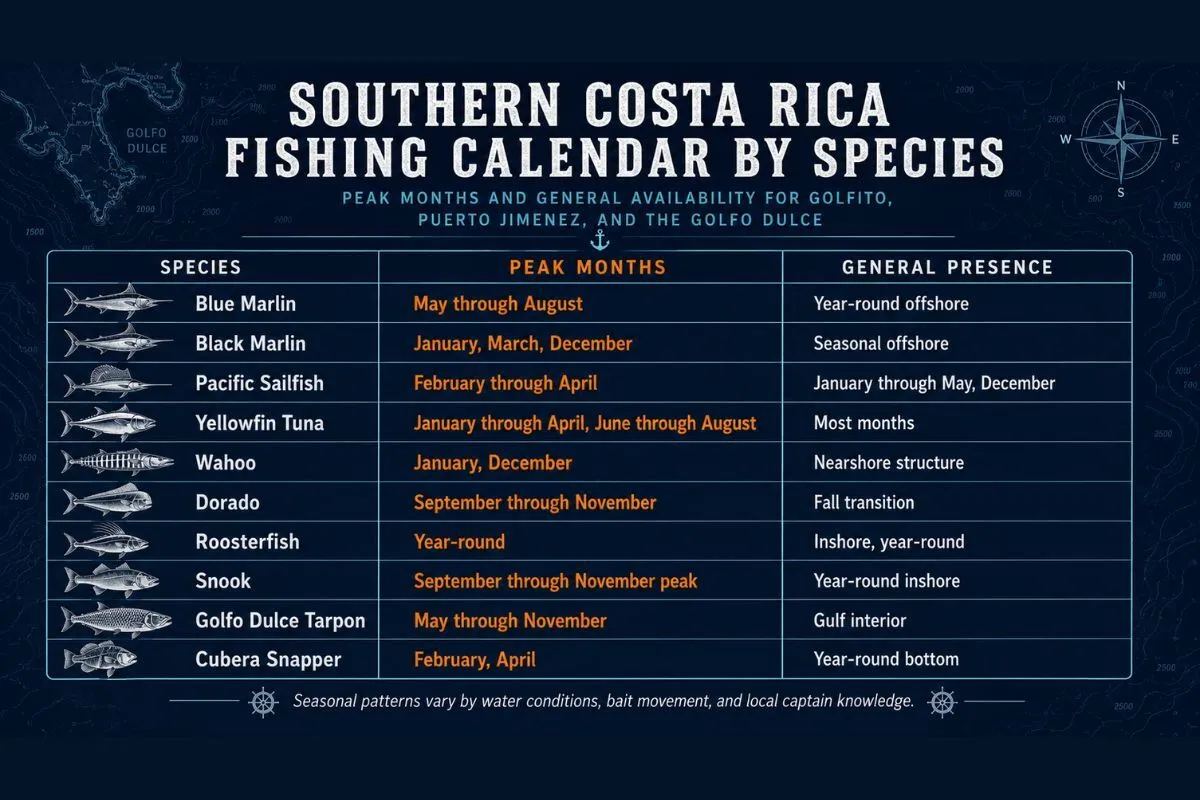
This table gives you a planning framework, but the southern zone regularly delivers surprises. The tarpon fishery inside the Golfo Dulce has produced fish well over 100 pounds in recent years, something that would have seemed unlikely in Pacific Costa Rica not long ago. That kind of emerging potential suggests the full capability of these waters may still be underestimated.
Month-by-Month Fishing Breakdown for the Southern Zone
The windows described below reflect Captain Mike Hennessy's on-the-water seasonal patterns for the Golfito and Puerto Jimenez area specifically. Seasonal peaks vary along Costa Rica's Pacific coast, and captains fishing different ports or micro-areas often describe slightly different best months by species. This calendar is a reliable planning reference for the southern zone; it is not a claim that other regional calendars are wrong. When different operators describe shifted windows, that is often a genuine reflection of local conditions rather than a contradiction.
What Is the Best Fishing in January and February?
January is where the peak season truly opens, and it opens strong. Blue marlin are the headline species, with solid numbers offshore and a fishery that sees enough boat traffic to be productive but never so many boats that the grounds feel crowded. Black marlin show alongside blue marlin during January, adding the possibility of a trophy encounter any time you're running an offshore spread. Yellowfin tuna run consistently, roosterfish action along the rocky inshore structure is excellent, and wahoo appear on nearshore structure for anglers willing to dedicate a morning to them.
The flexibility in January is part of what makes it appealing. You can fish offshore for billfish through the better part of the morning and shift inshore for roosterfish in the afternoon without feeling like you've given up on either bite. That kind of variety is not something most destinations can offer.
When Does Sailfish Season Peak in the Southern Zone?
March and April represent the heart of sailfish fishing in the southern zone, and this is the period most serious billfish anglers plan their trips around. March often produces the most consistent multi-fish days of the year, with sails concentrated along temperature breaks and color changes that Captain Mike and his crew identify using sea surface temperature data before each run. Black marlin appear opportunistically in March as well, and yellowfin tuna numbers build steadily through the month. A well-configured spread in March can target sails while staying open to a tuna or a surprise marlin bite.
April holds strong sailfish numbers while the inshore fishing begins to change character. Roosterfish action heats up noticeably this month, with fish responding to surface presentations along the beaches and rocky points that border the Golfo Dulce's Pacific side. Cubera snapper are in prime condition in April, with fish reaching sizes that make them one of the most sought-after bottom targets in all of Central America. As April progresses, the offshore pattern begins transitioning toward the blue water season, with marlin starting to show in the numbers that will define summer.
Why Do May Through August Produce the Best Blue Marlin Fishing?
The window from May through August is when blue marlin fishing in the southern zone reaches its highest potential. Warm Pacific water pushes in offshore and bait consolidates around the seamounts and depth transitions south of the Golfo Dulce mouth. This is the period where fishing this remote location pays its biggest dividend: the offshore structure here does not see anything close to the pressure that similar grounds attract further north, and in Captain Mike's experience, the marlin in this water tend to respond and eat with a confidence that reflects that.
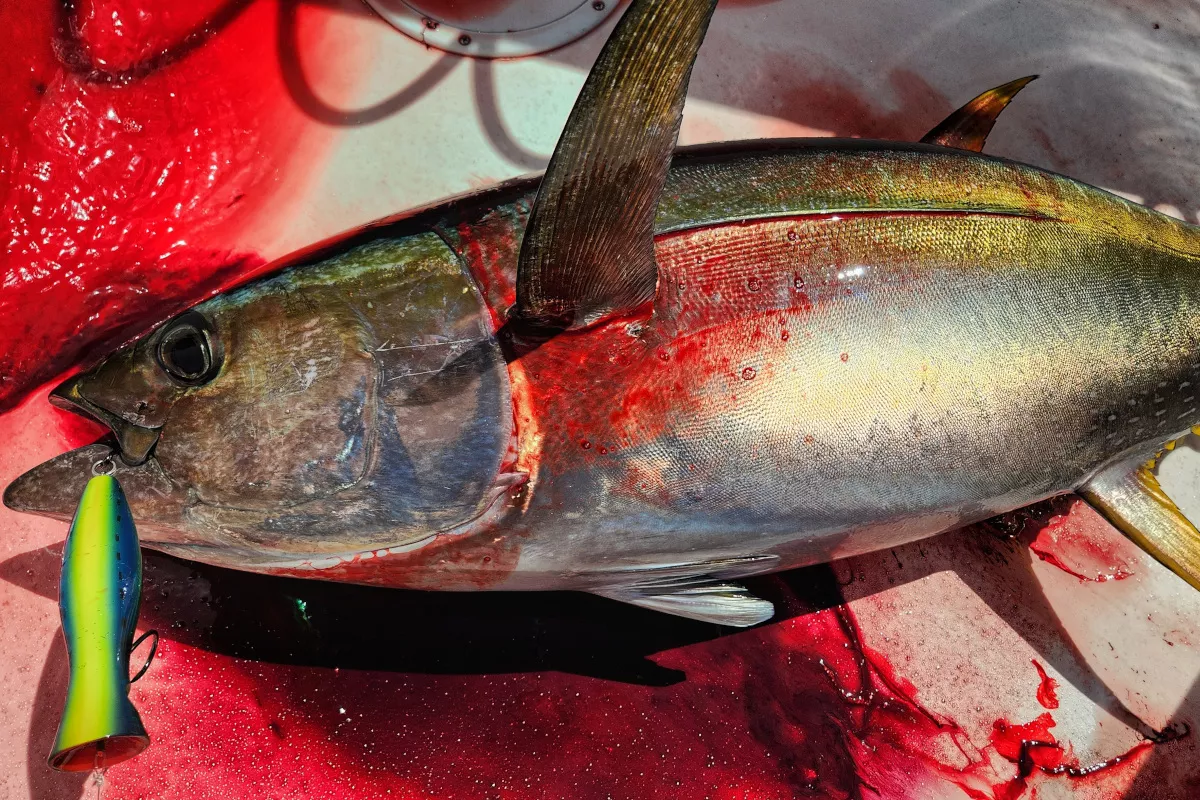
That combination of accessible offshore marlin and inshore tarpon within the same day is genuinely uncommon anywhere on the Pacific coast.
What Happens to the Fishing During September, October, and November?
The fall transition shifts the target list but does not reduce the quality of the experience. September marks the beginning of the dorado run in the southern zone, with mahi-mahi concentrating around floating debris lines, current edges, and color changes in the water. Dorado fishing during this period can be exceptional, with fish that respond to poppers, trolled lures, and live bait with equal enthusiasm. School fish are common and provide fast-paced action, while larger bulls and cows patrol the same edges and push the size ceiling substantially.
Snook come into prime condition during September through November, and this stretch offers the best opportunity for trophy-class fish along the inshore structure, mangrove edges, and estuary mouths that feed into the Golfo Dulce. The tarpon bite inside the gulf continues through November, adding another dimension to an already productive inshore calendar. Blue marlin are still present offshore, particularly as November progresses and the water begins transitioning back toward the peak season characteristics of December.
The fall months in the southern zone reward anglers who stay flexible. A day that starts on dorado offshore can pivot to snook or tarpon in the afternoon without losing any productive time on the water.
Why Is December One of the Most Diverse Months to Fish the Southern Zone?
December is the month that makes the strongest single argument for the southern zone's year-round quality. In Captain Mike's experience, the species list in December is as wide as any month on the calendar: blue marlin, black marlin, sailfish, dorado, yellowfin tuna, roosterfish, snook, cubera snapper, and wahoo can all be reasonably targeted within the same week. Very few months in the southern zone match this breadth of concurrent opportunity.
Inshore Fishing in the Golfo Dulce: What Species Are Available Inside the Gulf?
The Golfo Dulce inshore fishery is not a consolation prize for days when the offshore bite is slow. It operates as a legitimate destination fishery in its own right, running on its own seasonal rhythms that are separate from the offshore calendar. Anglers who plan trips that work both environments consistently come home with a broader and more memorable experience than those who focus only offshore.
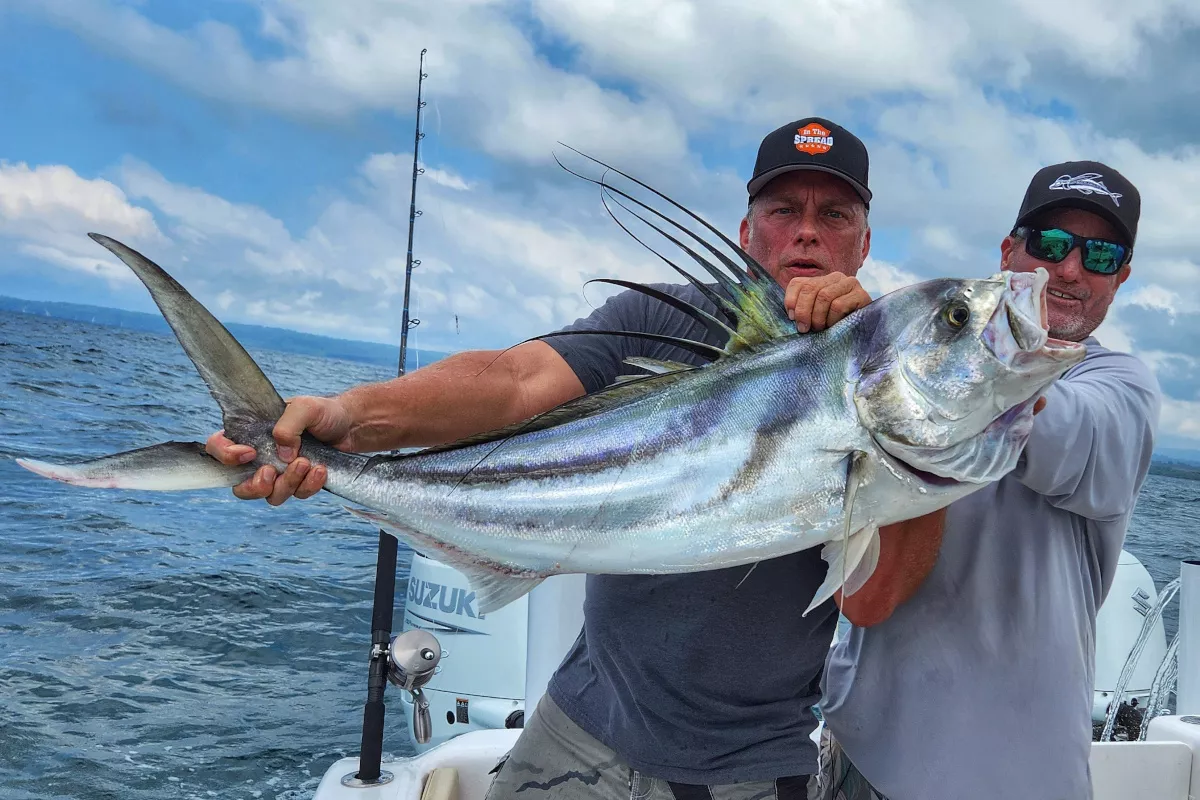
Roosterfish are available year-round along the rocky points, headlands, and sandy beaches that border both the gulf and the open Pacific coast. The southern zone's roosterfish see significantly less pressure than those found in Guanacaste or the Central Pacific, which changes how they respond to surface presentations. Poppers, stickbaits, and live bait fished along structure all produce fish. Captains working this coast regularly note that roosterfish here respond more readily to surface presentations than fish in higher-traffic zones. That difference, however you account for it, makes a noticeable difference in how a day on the water feels.
Cubera snapper are a bottom fishing target that deserves serious planning time. These fish reach weights in the southern zone that are difficult to match elsewhere in Costa Rica. Working live bait or cut bait over rocky bottom and structure during the right tidal windows produces cubera that genuinely test heavy conventional tackle. This is not casual bottom fishing; these are powerful, tackle-testing fish in their own right.
The Golfo Dulce tarpon fishery is the most exciting recent development in this region. A resident tarpon population has established itself inside the gulf, with fish routinely exceeding 100 pounds caught on both conventional gear and fly tackle. Sight casting to rolling tarpon in a Pacific tropical fjord is an experience that is genuinely unique. The fishery is still in its early development, and anglers who fish it now are arriving before it becomes widely known.
Snook peak during the fall months but are present year-round in the rivers, estuaries, and mangrove edges that feed the gulf. The trophy class fish concentrate during September through November, overlapping with the dorado run offshore in a way that creates excellent multi-species options for anglers willing to work both environments across a multi-day trip.
The inshore species list extends well beyond the headline targets. Jacks, including amberjack and the hard-fighting African pompano, hold on structure throughout the gulf year-round and provide excellent action on both jigging gear and live bait. Grouper work deeper rocky bottom and ledges inside and near the gulf mouth, and mackerel appear seasonally on the nearshore reefs and current edges. Giant trevally are present in the southern zone as well, primarily along the Pacific-facing structure outside the gulf. None of these species get the same headline attention as roosterfish or tarpon, but they make the inshore fishing here considerably richer than a single-species destination.
Where Should You Base Your Southern Zone Fishing Trip?
Is Golfito or Puerto Jimenez the Better Base for Southern Zone Fishing?
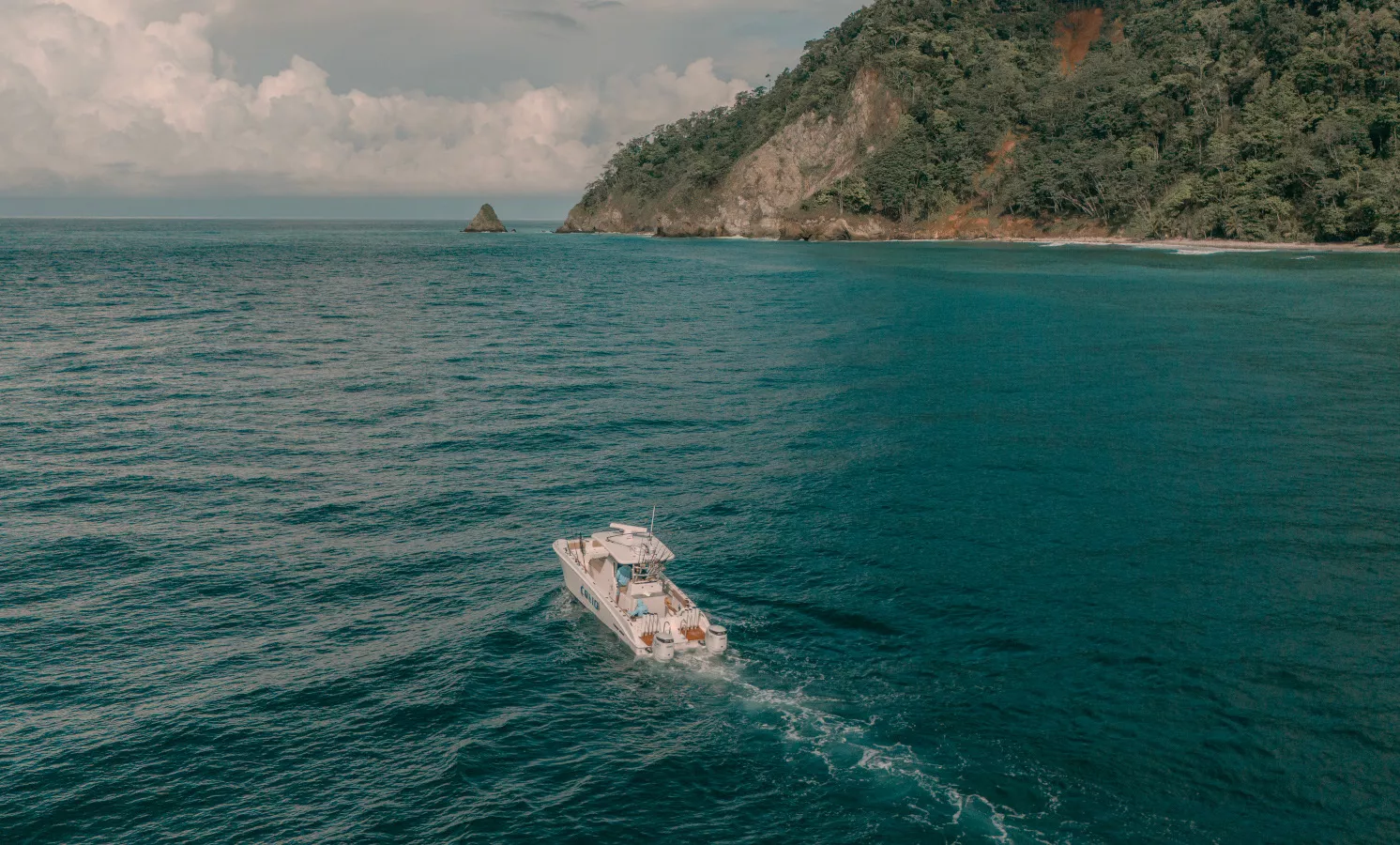
Both Golfito and Puerto Jimenez offer direct access to the Golfo Dulce and the Pacific offshore grounds, but they serve slightly different needs. Golfito sits on the western shore of the gulf and provides the best marina infrastructure in the region. Its protected position gives charter operations calm water for launching regardless of Pacific swell conditions, and the offshore grounds are accessible without running through open ocean to get there. Golfito is the practical choice for anglers focused primarily on the fishing itself.
What Offshore Structure Holds Fish in the Southern Zone?
The Pacific grounds outside the Golfo Dulce mouth hold the seamounts, current edges, and depth transitions that concentrate big game fish during the peak blue marlin and sailfish periods. One of the most consistently productive areas is the Matapalo drop-off, a significant depth break near Cabo Matapalo at the southern tip of the Osa Peninsula where the bottom falls away sharply and current-driven bait concentrations attract billfish and tuna. From Golfito, the run to productive offshore structure typically takes one to one and a half hours depending on target area and sea state, making day trips fully workable without burning the prime morning bite time on the run. Identifying the most productive areas on any given day means reading sea surface temperature data and altimetry before the run to find where bait is stacking and where temperature breaks are sharpening. In The Spread's satellite fishing maps resource covers how to interpret and apply that oceanographic data to offshore trip planning in exactly this kind of Pacific environment.
What Fishing Methods Work Best in Southern Costa Rica?
The southern zone rewards anglers who can work multiple methods depending on what the fish are doing on a given day. Boats that run a single program regardless of conditions consistently leave fish on the table. The primary approaches that produce results across this fishery are:
- Offshore trolling for blue marlin, black marlin, sailfish, and wahoo using a combination of lure spreads, rigged ballyhoo, and pitch baits to raised fish
- Live baiting for yellowfin tuna, roosterfish, and cubera snapper, with locally sourced bait being the most effective option in all three cases
- Popper and stickbait fishing for roosterfish, dorado, and surface-feeding yellowfin tuna when conditions push fish up and they're eating aggressively
- Bottom fishing for cubera snapper and pompano over rocky structure and hard bottom during productive tidal windows, typically with heavy conventional gear
- Sight casting for Golfo Dulce tarpon, using conventional surface presentations or fly tackle on fish that roll visibly on the surface in the calmer sections of the gulf
The ability to shift methods within a single day is what separates productive days from exceptional ones in the southern zone. Understanding when to switch is a skill that comes directly from experience on this specific water.
What Conservation Norms Should Anglers Know Before Fishing the Southern Zone?
The Golfo Dulce and its surrounding waters carry significant ecological designations. The gulf itself is part of a broader protected zone within the Osa Conservation Area, one of the most biologically significant regions in Central America. Anglers fishing the area are expected to operate with that context in mind, which in practice means following Costa Rica's national catch-and-release norms for billfish.
Billfish release is the standard throughout Costa Rica's sportfishing community, and the southern zone operates on that ethic. Blue marlin, black marlin, and Pacific sailfish are almost universally released by sport fishing operators in this region. The fishery's long-term health depends on that practice continuing, and most captains, including those working out of Golfito, enforce it as policy rather than preference.
Captain Mike Hennessy's In The Spread courses covering Pacific big-game fishing
Yellowfin tuna around Costa Rica spinner dolphin schools demand precise approach strategy positioning ahead of moving pods while maintaining distance avoiding spooks. Mike Hennessy's real-world demonstrations include proper low rod tip technique preventing high-sticking failures, reading water for rolling tuna identification, and gaffing skills securing fish during critical final moments where many yellowfin are lost.
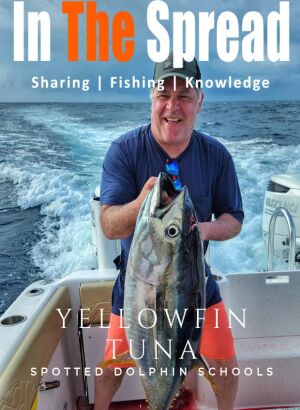
Spotted dolphins and yellowfin tuna feed cooperatively off Costa Rica, creating productive scenarios when dolphins herd baitfish. Mike Hennessy's specialized techniques require distinguishing feeding behavior from traveling schools through water color and bird activity, strategic boat positioning maintaining strike zones without spooking pods, and rigging configurations with bait presentation timing matching the aggressive feeding frenzy intensity.
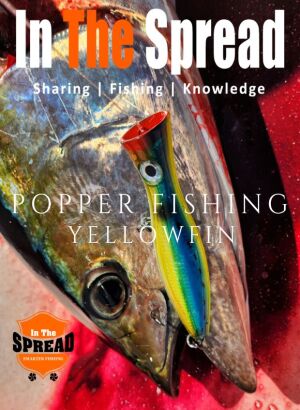
Yellowfin tuna surface feeding around spinner dolphins creates thrilling popper opportunities when reading natural indicators including finback and short beak dolphin activity. Success requires strategic boat positioning avoiding spooking fish with straight approaches, casting 100-plus feet, and mastering pop-and-wait retrieval cadence with 3 to 5 second pauses rather than working lures too fast.
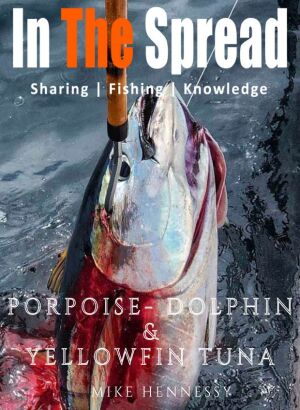
Porpoise and dolphin schools reveal yellowfin tuna locations in vast offshore waters through feeding relationships on similar baitfish. Mike Hennessy's expertise differentiates white belly porpoise, spinner dolphin, and spotted dolphin behaviors around tuna, requiring specific boat positioning and bait presentation tactics for each marine mammal type indicating feeding activity and fish depth beneath schools.
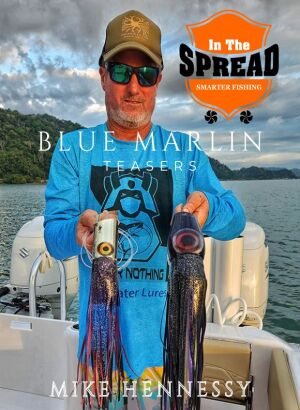
Teasers create visual commotion attracting blue marlin from beyond lure range through disturbance mimicking baitfish schools under attack. Captain Mike Hennessy's techniques reveal optimal spread positioning relative to lures and baits, color selection based on water conditions and light penetration, trolling speed maintaining proper action, and coordinating teaser choices with natural forage patterns throughout seasonal changes.
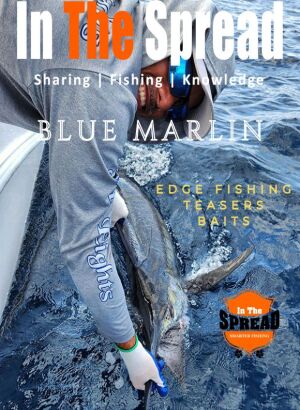
Edge fishing around offshore seamounts and structure concentrates blue marlin where current and depth changes create ambush zones. Mike Hennessy's decades of expertise reveal bait and switch tactics combining teaser attraction with precise ballyhoo or skipjack presentation, requiring timing and positioning that convert teaser-attracted marlin into hookups through strategic deployment and natural bait action.
Frequently Asked Questions: Fishing the Southern Zone of Costa Rica
What is the best month to fish southern Costa Rica for blue marlin?
Based on Captain Mike Hennessy's on-the-water experience, May through August is the most consistent window for blue marlin in the southern zone. Warm water pushes in from the Pacific during these months, concentrating bait and marlin on the seamounts and depth transitions south of the Golfo Dulce. Boats that fish this period consistently report strong marlin numbers, though conditions vary year to year and the fishery produces blue marlin outside these months as well.
When does sailfish season peak in the southern zone?
Sailfish are most concentrated from February through April, with March often producing the highest number of fish opportunities per day. Sailfish are also present in January and December, making the shoulder months worth considering for anglers who want billfish diversity with fewer boats on the water.
Can you actually catch tarpon in the Golfo Dulce?
Yes. A resident tarpon population has established itself inside the gulf, with fish routinely exceeding 100 pounds on both conventional gear and fly tackle. The tarpon bite is productive from May through November, with fish that can be sight cast on the surface during calm conditions. This is one of the only places on the Pacific coast of Central America where this kind of tarpon fishing exists.
Is the southern zone worth fishing during the rainy season?
The rainy season from May through November coincides with some of the most productive fishing of the year. Blue marlin peak from May through August, the dorado run arrives in September through November, and tarpon are active throughout the entire period inside the Golfo Dulce. Rain changes which species are most productive on any given day; it does not shut down the fishing.
How does fishing pressure in the southern zone compare to other Costa Rican ports?
Southern Costa Rica sees a fraction of the boat traffic that Quepos, Los Sueños, and Tamarindo handle on a busy day. The limited tourism infrastructure in Golfito and Puerto Jimenez naturally caps the number of visiting anglers, and most captains who work these grounds believe that reduced pressure helps fish behave more naturally and strike more readily. That quality of experience is increasingly rare in Central American sportfishing.
What tackle should you bring for a southern zone trip?
Medium to heavy conventional gear in the 50 to 80 class range handles blue marlin and cubera snapper. Medium stand-up gear in the 30 to 50 class range works for yellowfin tuna and sailfish. Light to medium spinning gear in the 20 to 30 pound class handles roosterfish and snook. For tarpon on fly inside the Golfo Dulce, a 12-weight rod with an intermediate or fast-sinking line is the standard configuration. Captain Mike and the Colio Sportfishing team provide specific gear guidance based on the season and target species for each trip.
What makes December such a productive month in the southern zone?
December is one of the most species-diverse months on the calendar in the southern zone. Blue marlin, black marlin, sailfish, dorado, yellowfin tuna, roosterfish, snook, cubera snapper, and wahoo can all be reasonably targeted within the same week. The transition from fall conditions back into peak offshore season happens through December, meaning the first and last halves of the month often fish differently. Staying flexible with the daily plan is what unlocks December's full potential.
Why the Anglers Who Find This Place Keep Coming Back
The southern zone of Costa Rica does not market itself. There are no organized fishing campaigns for Golfito, no organized fishing fleets in Puerto Jimenez, and the infrastructure has stayed deliberately modest. That is not a limitation. That is the entire point.
What you get in exchange for the extra planning and travel is an experience that most saltwater anglers only read about. You get offshore marlin and sailfish that have not seen a trolled lure every day for ten years. You get inshore structure where your boat does not need to compete for position. You get a Golfo Dulce tarpon fishery that is still forming, a roosterfish bite that consistently produces quality fish, and a blue marlin season that earns comparison with any destination on the Pacific.
The twelve-month species calendar is the final argument for planning a trip here. Whether you are building a January billfish trip, a summer blue marlin run, a fall dorado and snook combination, or a fly fishing trip anchored around tarpon inside the gulf, the seasonal depth is there to support it. The fish are where they are supposed to be, and captains working these grounds consistently find that the lower pressure helps keep it that way.
Login
to leave a review.
User Reviews
There are no reviews yet.
Setting Up a Dredge Pulley for Billfish
Saltwater
12.28.2020
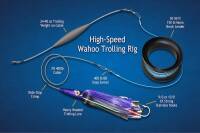
High Speed Wahoo Trolling Rig
Saltwater
09.08.2018
Fishing Light Tackle for Yellowfin Tuna
Saltwater
09.08.2018

0