
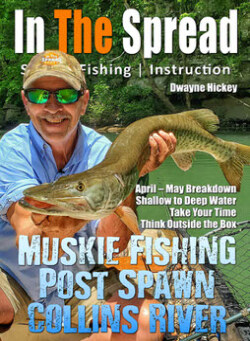
Southern muskie fishing evolved from novelty to legitimate trophy hunting as anglers learned river-specific patterns. Dwayne Hickey explains how Collins River post-spawn muskies transition from spawning areas to feeding zones along banks, weed beds, and creek mouths, why water movement from dam releases affects positioning, and when recovery phases change aggression levels.
Post Spawn Muskie Fishing the Collins River
(00:46:14)
Watch Full Video
View Short Trailer
Instructor:
Dwayne Hickey
Description
/
Review
/
Instructor
Post-Spawn Muskie Fishing on the Collins River
Post-spawn muskies in the Collins River transition from spawning areas to feeding zones where they recover from spawning stress and resume aggressive hunting behavior, but understanding where these fish position along banks, weed beds, islands, and creek mouths during this recovery period determines whether you locate active fish or search randomly through water that looks productive but holds muskies not yet feeding. Dwayne Hickey, known as the "Godfather of the Collins," demonstrates why southern muskie fishing has evolved from a curiosity into legitimate trophy hunting producing big fish year-round when anglers understand river-specific patterns. The Collins River's topographical features and water movements position post-spawn muskies predictably for anglers who learn reading structure rather than relying on northern lake tactics that don't translate to Tennessee river systems.
How Does Post-Spawn Behavior Affect Muskie Location?
Post-spawn muskies move from shallow spawning areas into adjacent deeper water and current breaks where they can feed without fighting excessive flow while recovering energy depleted during spawning. These fish don't roam extensively immediately after spawn but rather stage in specific zones providing easy access to forage and refuge from current. Understanding this transitional behavior helps you focus on areas adjacent to known spawning habitat rather than searching the entire river system randomly. Water temperature climbing through the 60s into the low 70s triggers increased feeding activity as metabolism improves post-spawn.
What River Features Hold Post-Spawn Collins River Muskies?
Banks with current breaks, weed beds providing cover and forage, islands creating eddies and slack water, submerged trees offering ambush points, and creek mouths delivering baitfish and current changes all concentrate post-spawn muskies. Dwayne Hickey explains identifying which features hold fish based on water level, current strength, and how long post-spawn the period is. Early post-spawn finds fish tight to cover while later recovery phases see muskies spreading into more aggressive hunting positions.
When Do Water Movements Change Fish Response?
River flow variations from TVA dam releases affect where muskies position and how aggressively they feed. Understanding how fish respond to rising, falling, and stable flows helps you adjust presentation and location strategies.
Login
to leave a review.
User Reviews
Christopher Ray
02.26.2020
0
Noah Bohrer
08.04.2019
0
Dwayne Hickey
Dwayne Hickey is an In The Spread instructor and one of the most knowledgeable southern muskie anglers in the country. Based in McMinnville, Tennessee, he knows the Collins River intimately, from its weed beds and deep holes to how post-spawn muskies position and feed. He is also a lifelong catfisherman who runs jugs, trot lines, and limb lines for channel cats, blues, and flatheads. In his In The Spread videos, Hickey teaches Collins River post-spawn muskie tactics, reading water movement, and turning a follow into a hookup.
Read moreVideos
We Recommend

0