
Hook choice in GT fishing is a technique decision, not a preference. Single hooks belong on jigs and stickbaits. Trebles belong on poppers. Get it backwards and you will lose fish you should have landed. This breakdown covers both hook types, recommended models, and the size ranges that matter.
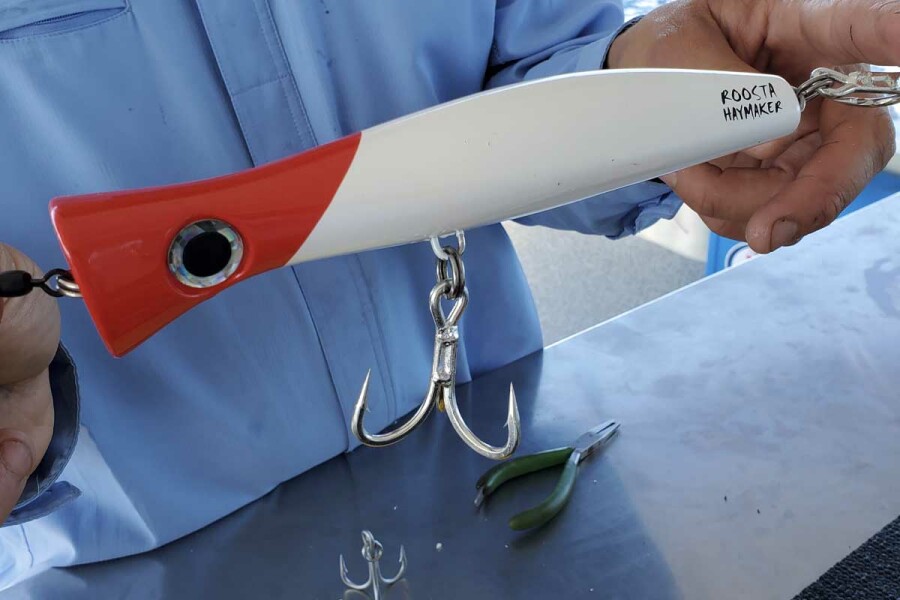
Choosing Hooks for GT Fishing: Single vs. Treble Hooks
Giant trevally are one of the most physically demanding fish you can target on a lure. They hit hard, run fast, and fight dirty. When you are chasing them on poppers, stickbaits, or jigs, the hook you choose is not a minor detail. It is the point where everything either holds together or falls apart. This article breaks down single hooks versus treble hooks for GT fishing, covers the techniques each hook type suits best, and gives you the practical framework to make the right call before you ever leave the dock.
Why Hook Selection Matters More for GT Than Most Species
If you have spent time chasing giant trevally, you already know that these fish do not give second chances. A GT strike is explosive and brief. The fish is also capable of applying sustained, brutal pressure that exposes any weak point in your terminal tackle within seconds.
The hook is where that pressure concentrates. Choose the wrong type or the wrong size, and you will lose fish to throws, straightened points, or failed penetration. Choose well, and the hook disappears from the equation entirely, letting your technique and gear do the work. Hook strength also needs to be matched to your overall system. A hook that is too light for your PE rating and drag setting will fail under load; one that is over-engineered for a light setup will not drive home on the strike. The hook, the line, the leader, and the rod all have to speak the same language.
Single Hooks for GT Fishing
When Single Hooks Are the Right Call
Single hooks are the dominant choice among experienced GT anglers fishing stickbaits and jigs, and for good reason. Their streamlined profile does not fight the lure's action. On a stickbait, a bulky treble hook adds drag and dampens the walking motion that makes the lure irresistible. A well-fitted single hook disappears into the presentation.
The Performance Advantages of Single Hooks
Single hooks for GT jigging are particularly effective because the geometry works in your favor during a fight. With one point of contact, there is less for the fish to use as leverage against you. A GT shaking its head violently has fewer mechanical options for throwing a single hook than it does for throwing a treble. That translates directly into landed fish.
- Cleaner hook penetration on hard-mouthed GT when the point is properly positioned on the lure
- Less snagging in reef and coral environments where treble hooks become obstacles
- More natural lure action on slow pitch jigs and stickbaits where drag from extra hooks hurts performance
- Faster, less damaging release for catch-and-release fishing at sensitive reef systems
- Safer for crew when landing and unhooking fish on a moving deck, because large trebles near hands and legs in a small boat are a genuine hazard that single hooks reduce considerably
Recommended Single Hook Models for GT
For jigging and stickbait applications, the following single hook models are proven:
- BKK Monster Circle and BKK Inline Heavy Circle Hooks (circle hook applications, a special case more suited to live bait and specific jigging scenarios than to standard GT jigging, where J-style and assist hooks dominate)
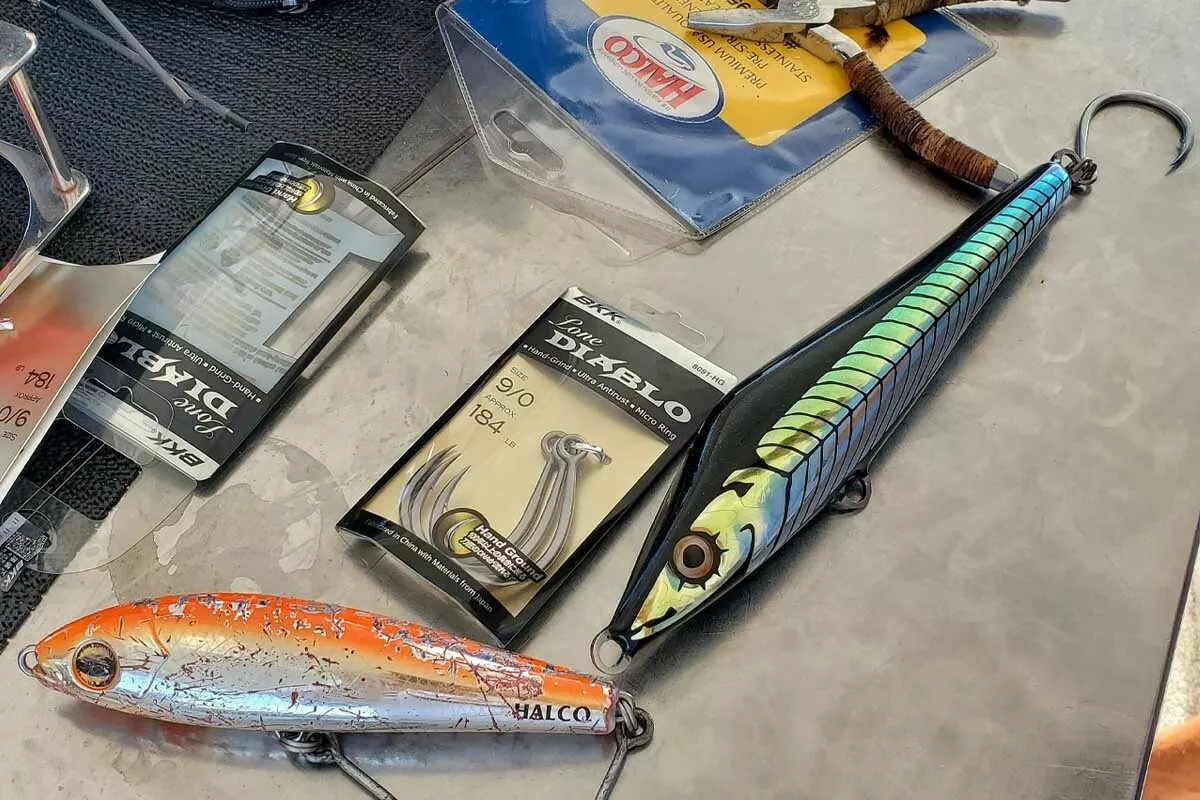
- BKK Lone Diablo Inline Hook 9/0 and Shout Kudako Hooks 9/0 (J-hook style, designed specifically for GT and tuna casting applications, reliable strength)
- BKK SF Deep Heavy Jigging Long Assist Hooks (sizes 9/0 to 13/0, engineered for slow pitch and vertical jigging)
- Varivas Seriola Out Barb Assist Hook (9/0 to 13/0, well-suited for deep jigging)
Fishing Techniques Best Suited to Single Hooks
Slow pitch jigging is arguably the technique where single hooks shine brightest. The controlled, deliberate fall of a slow pitch jig depends on minimal resistance from terminal tackle. Assist hooks rigged on braided cord allow the hook to swing freely and find purchase regardless of the angle of the strike. The hook does not interfere with the flutter that triggers the bite.
High-speed vertical jigging benefits similarly. Rapid, jerky retrieves create tight windows for a GT to commit to the lure. A single assist hook that rides upright on the jig eliminates the frantic hook-clearing that can happen with trebles in a high-speed application.
Stickbait fishing with single hooks requires careful sizing. The hook needs to ride correctly on the lure without dragging the tail down or killing the walk-the-dog action. When rigged right, single hooks on stickbaits consistently produce clean hookups because the fish tends to engulf the bait fully before the hook loads. That said, plenty of GT anglers still run trebles on stickbaits, particularly in open water where reef snagging is not a concern. Trebles can improve hookup rate on fish that clip the lure without committing, but they add drag that softens the lure's action and complicate the release. The tradeoff is real on both sides.
Treble Hooks for GT Fishing
When Treble Hooks Make More Sense
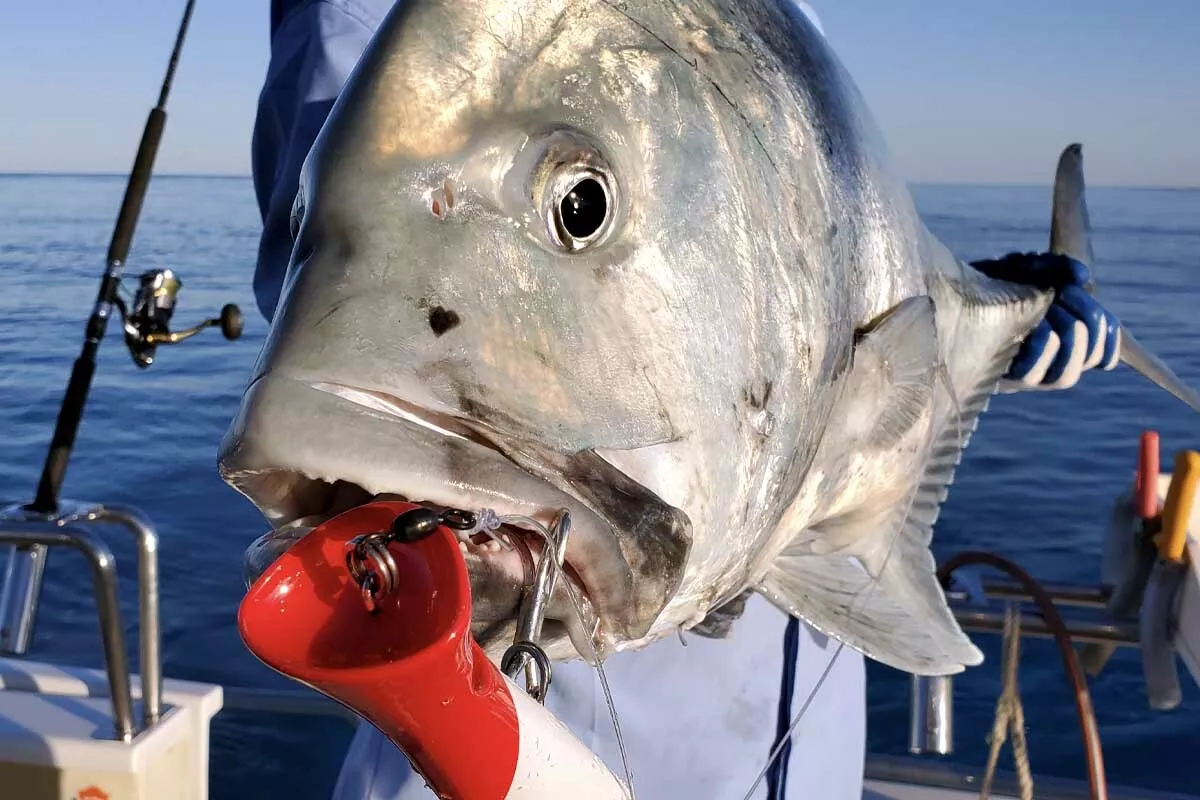
Treble hooks built for GT fishing are not the same as the trebles you find on a bass crankbait. GT-rated trebles are forged from heavy gauge wire, carry extra-wide gapes, and are built to handle sustained pressure from fish that can exceed 100 pounds. When properly matched to the lure, they perform a specific job: maximizing contact on explosive topwater strikes.
Why Poppers and Topwater Lures Prefer Treble Hooks
GT popper fishing creates a specific scenario: the fish attacks aggressively but often from an angle, and the angler has a fraction of a second to capitalize. A treble hook on the rear of the popper and a second treble on the belly dramatically increase the area of hook coverage. Anglers who have fished both hook types on poppers generally report higher hookup rates with trebles, particularly on fish that swipe at the lure rather than committing fully.
Treble Hook Considerations: What You Need to Manage
Trebles introduce real challenges that single hooks do not:
- Higher deep-hooking risk when a fish fully engulfs the lure, particularly with smaller GT
- More complex removal during release, which increases handling time and fish stress
- Snagging hazard around coral and reef structure, which can cost you lures and disturb the bottom
- Size and configuration must match the lure precisely or they will kill the popper's action and create a hook-tangle nightmare on the cast
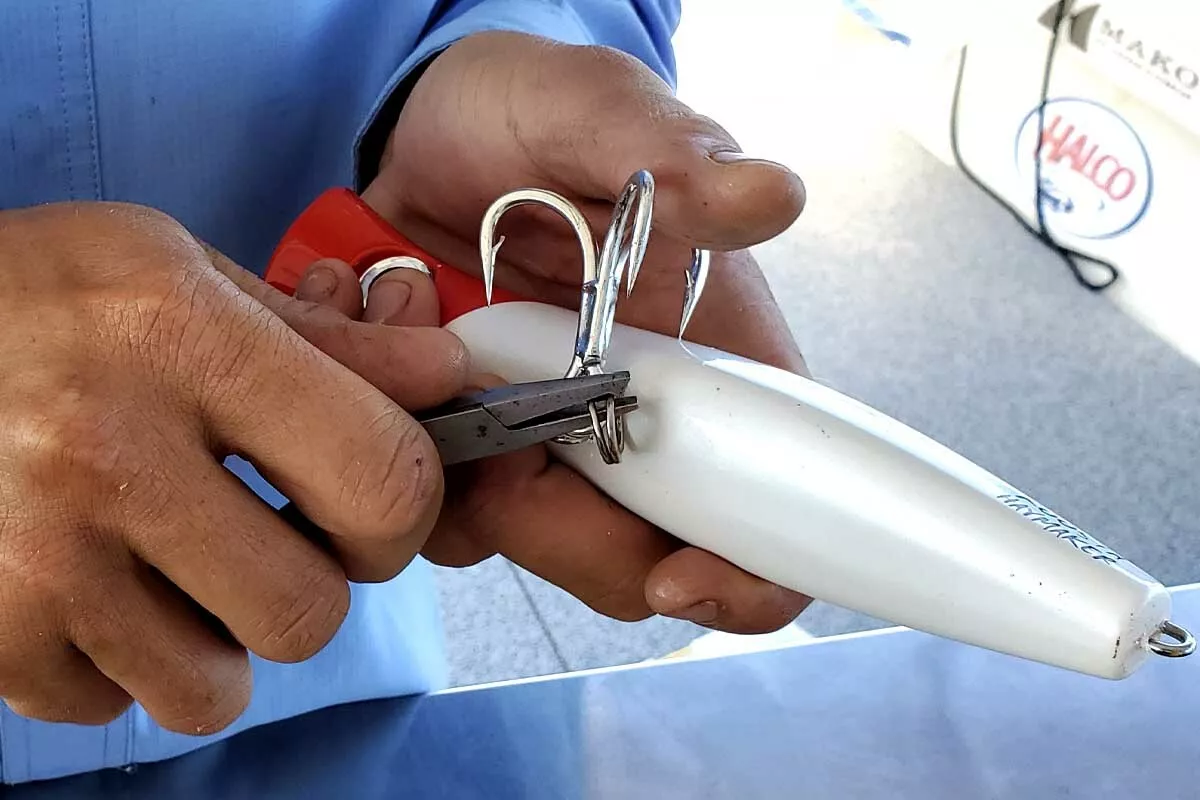
Crimping barbs on GT treble hooks is a practice more anglers are adopting. It does not meaningfully reduce hookup rates on hard-striking GT, and it makes releasing fish significantly faster and cleaner.
Recommended Treble Hook Models for GT
For poppers and hard-body topwater lures, these are the benchmark options:
- Decoy GT Special Saltwater Treble Hook (6/0 to 10/0)
- BKK GT-REX Treble Hooks (5/0 to 7/0)
- Gamakatsu GT Recorder Treble (5/0 to 8/0)
- Owner Stinger Treble: specify the heavy-wire series (ST-66 or ST-76) rather than lighter freshwater variants; the wire gauge difference matters significantly under GT-level pressure
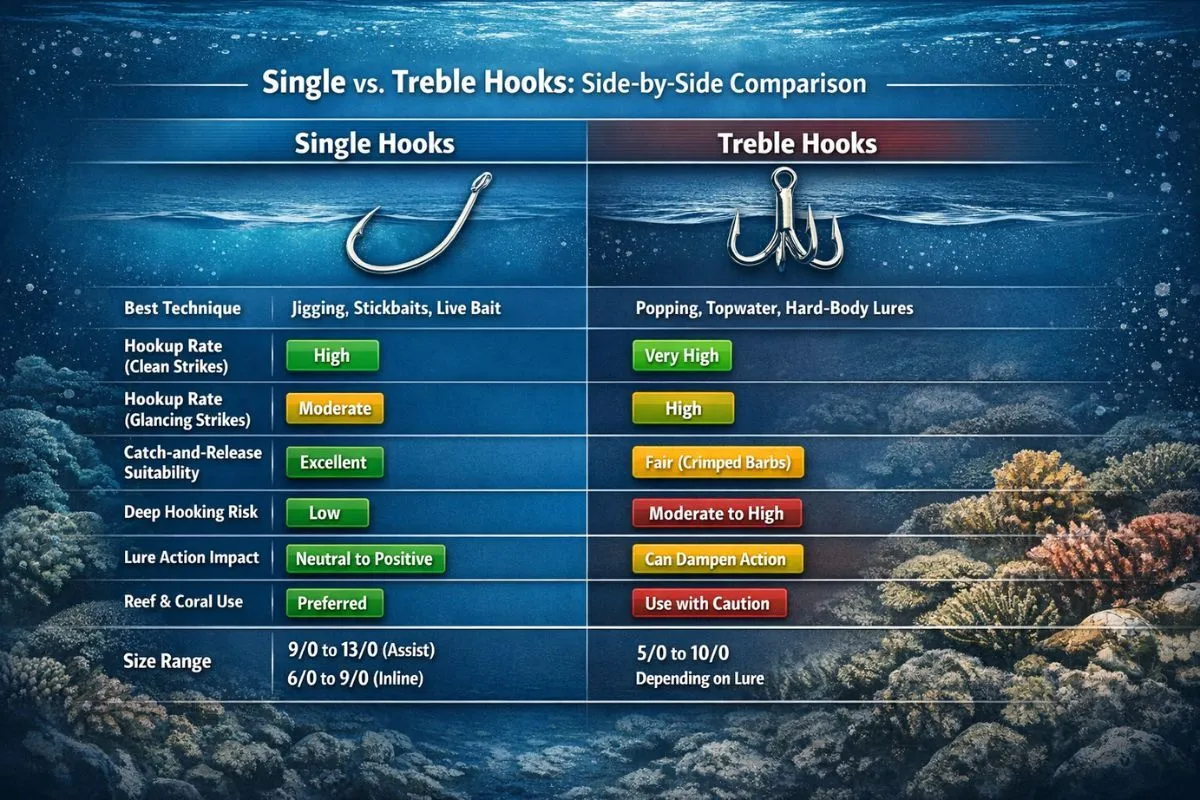
How to Choose the Right Hook for Your GT Setup
Match the Hook to the Technique First
The most common mistake anglers make is choosing a hook based on general preference rather than technique. The hook that makes you deadly on poppers will hurt your jigging game, and vice versa. Start with the technique, then work back to the hook.
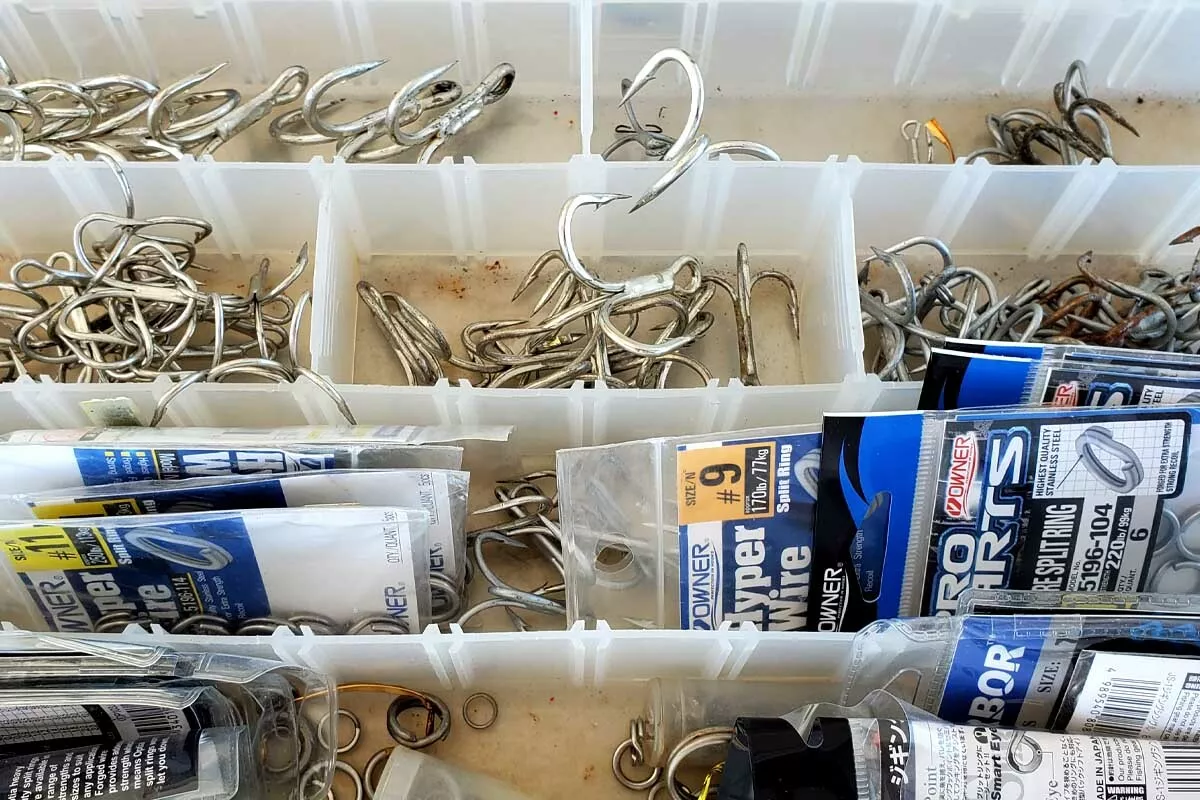
For GT jigging, use assist hooks, single or paired, in the 9/0 to 13/0 range depending on jig weight. For stickbaits, size a single inline hook so it does not drag the tail of the lure. For poppers, trebles in the 5/0 to 8/0 range are the standard, matched to the belly and rear hook hangers on the specific lure body.
Read the Environment Before You Rig Up
Fishing a shallow reef flat is a completely different conversation than fishing an open water structure drop-off. In coral-heavy environments, treble hooks will cost you lures and potentially damage the reef. Single hooks are the responsible choice in those conditions.
In open water, the calculus shifts. Deep jigging over a seamount where there is no structure to snag allows you to focus purely on hookup rate and fighting performance. Jigging-specific assist hooks thrive here.
Know the Regulations Before You Launch
Some GT fisheries have specific hook restrictions, particularly in areas with active conservation programs. Marine parks and protected reef systems may limit treble hook use entirely, or require the use of barbless hooks. Before you fish any destination for the first time, confirm the local regulations through the relevant fisheries authority. Do not rely on secondhand information on this one.
Reef Fishing Tactics for GT's
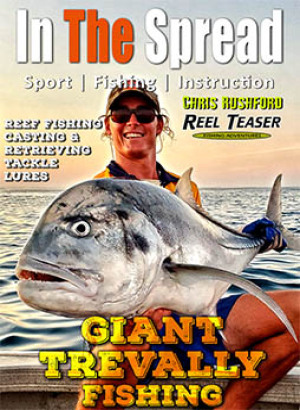
Giant trevally hooked near Rowley Shoals reef edges make immediate runs toward structure, testing tackle and technique before anglers establish control. Success requires heavy spinning setups with drag systems that can turn powerful fish within seconds while boat positioning and fighting angles prevent GT's from using coral to their advantage during brutal initial runs.
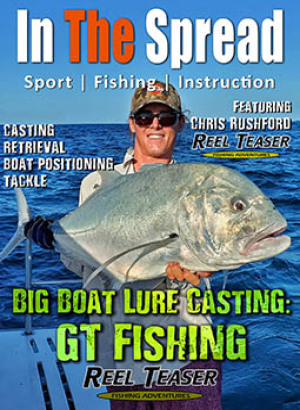
Mothership fishing for giant trevally at remote reef systems requires boat positioning strategies that maintain casting accuracy to structure without reef damage or fish spooking. Success depends on reading atoll edges, channels, and current flow from a larger platform, then controlling drift to keep lures working through ambush zones where GT's patrol as apex predators waiting to intercept baitfish.
Learning from Working GT Instructors
ITS features Fishing Video Courses taught by captains and guides who have caught giant trevally on both hook types across the Indo-Pacific. These are not theoretical discussions. The instruction comes from people who have spent years figuring out what actually works on wild fish in demanding conditions.
The Giant Trevally Fishing Video Courses on ITS cover rigging, technique, reading structure, and the full tactical picture for targeting GT at reef systems. If you want to accelerate what it would otherwise take years of trial and error to learn, that is where to go.
Learn More About GT's
A sea donkey fish or reef donkey is a stubborn and heavy-duty animal that can cause damage to fishing gear. They can be difficult to catch and can be the hardest fighting fish in a given area. The name "sea donkey" comes from their reputation for carrying heavy loads and their tendency to break lines.
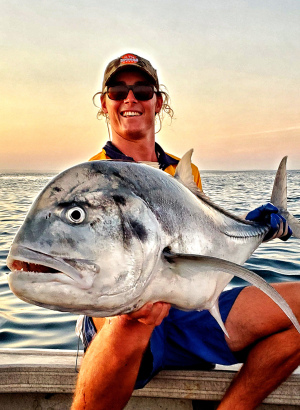
In The Spread breaks down GT fishing from the ground up: popping and jigging rods, reel drag requirements, line and leader specs, top lure choices, and the fight tactics you need when a large giant trevally makes its first run for the reef.
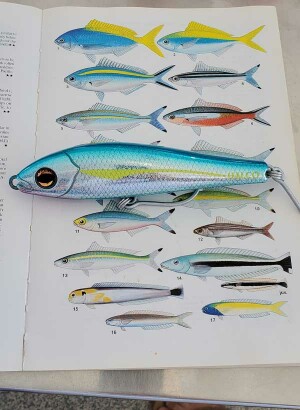
Few offshore techniques generate the immediate, visual intensity of working stickbaits for tuna, giant trevally, and wahoo. In The Spread covers lure selection, retrieve techniques for floating and sinking models, casting fundamentals, and the fight tactics you need when a large pelagic runs hard for the horizon.
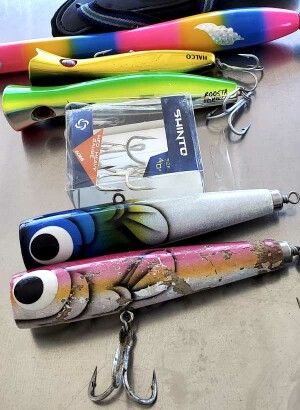
Single or treble hooks for GT fishing? The answer depends on your technique. This breakdown covers which hook type belongs on jigs, stickbaits, and poppers, with recommended models from BKK, Gamakatsu, and Decoy and the size ranges you need before you rig up.
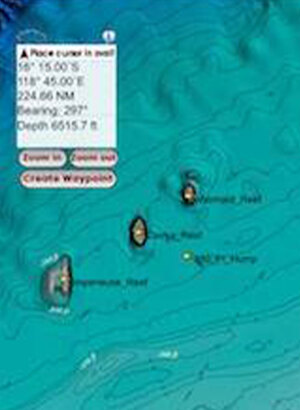
Discover Australia's premier Rowley Shoals fishing destination in this comprehensive guide. Learn advanced reef fishing and offshore fishing techniques using satellite technology to target giant trevally, marlin, and tuna in pristine Indian Ocean waters 150 miles from Australia's coast.
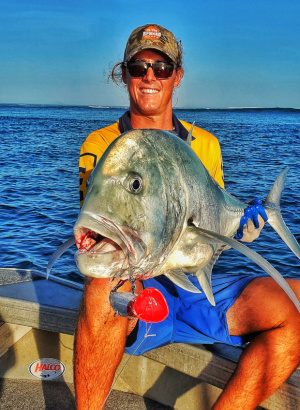
Giant trevally crush surface lures along tropical reef edges, ranking among the most physically demanding gamefish in saltwater.
FAQ: Choosing Hooks for GT Fishing
What hooks do you use for GT fishing?
The two main categories are single assist hooks for jigging and stickbaits, and heavy gauge treble hooks for poppers and topwater lures. Single hooks in the 9/0 to 13/0 range are standard for jigging. Trebles in the 5/0 to 8/0 range are standard for hard-body poppers.
Should I use single or treble hooks for GT poppers?
Treble hooks are generally preferred for GT poppers because the fish often strikes aggressively from an angle, and three hook points increase the area of contact. BKK GT-REX and Gamakatsu GT Recorder trebles in the 5/0 to 7/0 range are well-matched to most GT popper sizes.
What size hooks do you need for giant trevally?
Size depends heavily on the technique. For jigging, assist hooks typically run 9/0 to 13/0. For inline single hooks on stickbaits, 6/0 to 9/0 is common. For trebles on poppers, 5/0 to 10/0 covers most lure sizes.
Are treble hooks bad for catch-and-release GT fishing?
Treble hooks carry a higher risk of deep hooking and more complex removal compared to single hooks, both of which increase stress on released fish. Crimping the barbs on treble hooks reduces harm significantly and is widely practiced in conservation-focused fisheries.
What are the best GT treble hooks?
The most trusted GT-rated treble hooks are the BKK GT-REX, Gamakatsu GT Recorder, Decoy GT Special, and Owner Stinger Treble. All are built on heavy gauge wire designed to handle the sustained fighting pressure of large GT.
Can you use circle hooks for GT fishing?
Circle hooks like the BKK Monster Circle are a special-case option rather than a mainstream GT jigging choice. They excel in live bait applications where a clean corner-of-the-mouth hookup is the priority, and they have a place in certain slow-presentation jigging scenarios. For most GT jigging and casting work, J-style inline hooks and assist hooks are the standard. If you are specifically pursuing conservation-focused live bait fishing for GT, a properly sized circle hook is worth having in the kit.
How do you rig assist hooks for GT jigging?
Assist hooks are rigged on a short length of braided cord attached to the top split ring of the jig. The hook should ride at roughly the midpoint of the jig body to intercept fish that strike at the head. Single assist hooks are common for slow pitch applications; tandem assist hooks are sometimes used on larger jigs in high-speed applications.
Key Takeaways
The single vs. treble debate in GT fishing does not have one correct answer. What it has is a clear framework:
- Use single hooks for jigging, stickbaits, and any reef-adjacent environment where snagging is a risk and clean catch-and-release matters
- Use treble hooks for poppers and topwater hard-body lures where hookup rate on explosive, glancing strikes is the priority
- Match hook size and wire gauge precisely to the lure and technique. An oversized treble will kill a popper's action just as surely as an undersized assist hook will cost you fish on a jig. When swapping hooks, keep total hook weight close to the original hardware to preserve lure balance.
- In regulated or protected fisheries, check local rules before rigging up
- Adapt as conditions change. Anglers who lock into one hook preference regardless of technique leave fish in the water that they should have landed
Login
to leave a review.
User Reviews
There are no reviews yet.
Setting Up a Dredge Pulley for Billfish
Saltwater
12.28.2020
High Speed Wahoo Trolling Rig
Saltwater
09.08.2018
Fishing Light Tackle for Yellowfin Tuna
Saltwater
09.08.2018

0