
Bottom fishing is the most predictable way to put fish in the box offshore. Find the structure on electronics, get bait to depth, and execute. This breakdown covers species-specific tactics for red snapper, grouper, vermilion snapper, mangrove snapper, mutton snapper, and golden tilefish, alongside rigs, baits, and the fighting technique that keeps fish out of the reef.
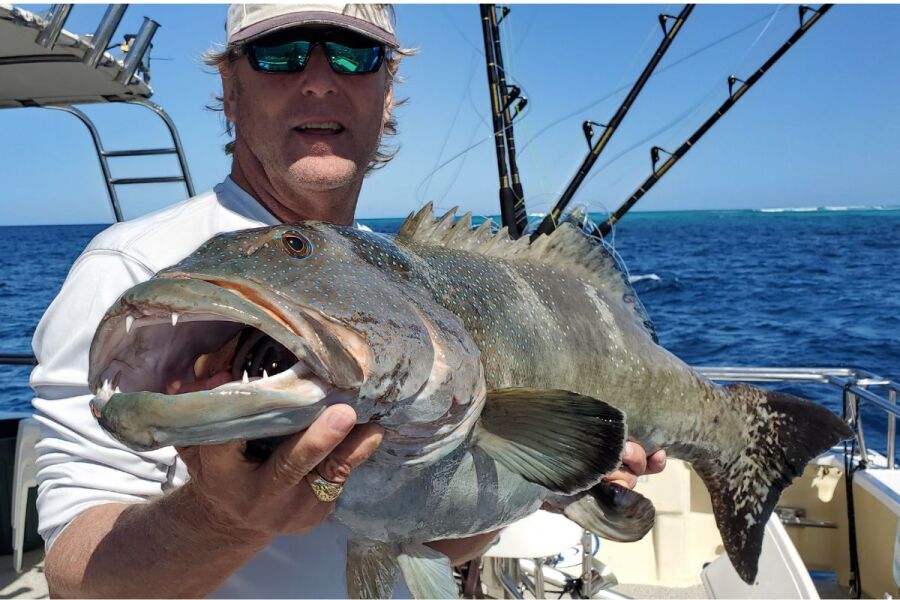
Bottom Fishing Reefs, Wrecks, and Hard Bottom
Most offshore techniques are a search problem. Bottom fishing is a presentation problem. You find the structure on electronics, you see fish holding to it, and from that point forward the only question is whether you can get bait in front of them and keep it there long enough to convert. That's why anglers who do this well fill coolers on days when trollers come back empty.
There's a specific satisfaction to dropping a bait down to a reef and feeling that solid, unmistakable thump. You're not guessing. You're not hoping fish move through your spread. You know they're there because your sounder showed them stacked to the structure, and structure concentrates fish in a way open water never will. Your job is presentation, positioning, and execution.
What Is Bottom Fishing?
Bottom fishing means presenting bait or lures in the lower portion of the water column, at or near the seafloor, over structure where fish live and feed. You use weighted rigs to reach depth quickly, hold position against current, and keep your offering where the fish are looking for it.
Most productive bottom fishing happens from roughly 40 to 300 feet. That range covers the heart of the snapper and grouper fishery on both natural and artificial structure along the Atlantic and Gulf coasts. Hard bottom includes limestone ledges, rocky outcrops, rubble fields, and manmade debris that all return a thicker, brighter signal on your sounder than sand or mud. Below 350 to 400 feet, depending on conditions and current, you're effectively deep dropping: electric reels, heavy multi-hook rigs, and a fundamentally different set of target species. Within that 40-to-300-foot band the fundamentals are consistent: find hard bottom, get over it, present bait at the right depth, and fight fish away from the structure that will cut you off if you give them an inch.
What's the Difference Between Bottom Fishing and Deep Dropping?
These terms get used interchangeably, but they describe two genuinely different things and confusing them leads to the wrong tackle and real frustration on the water.
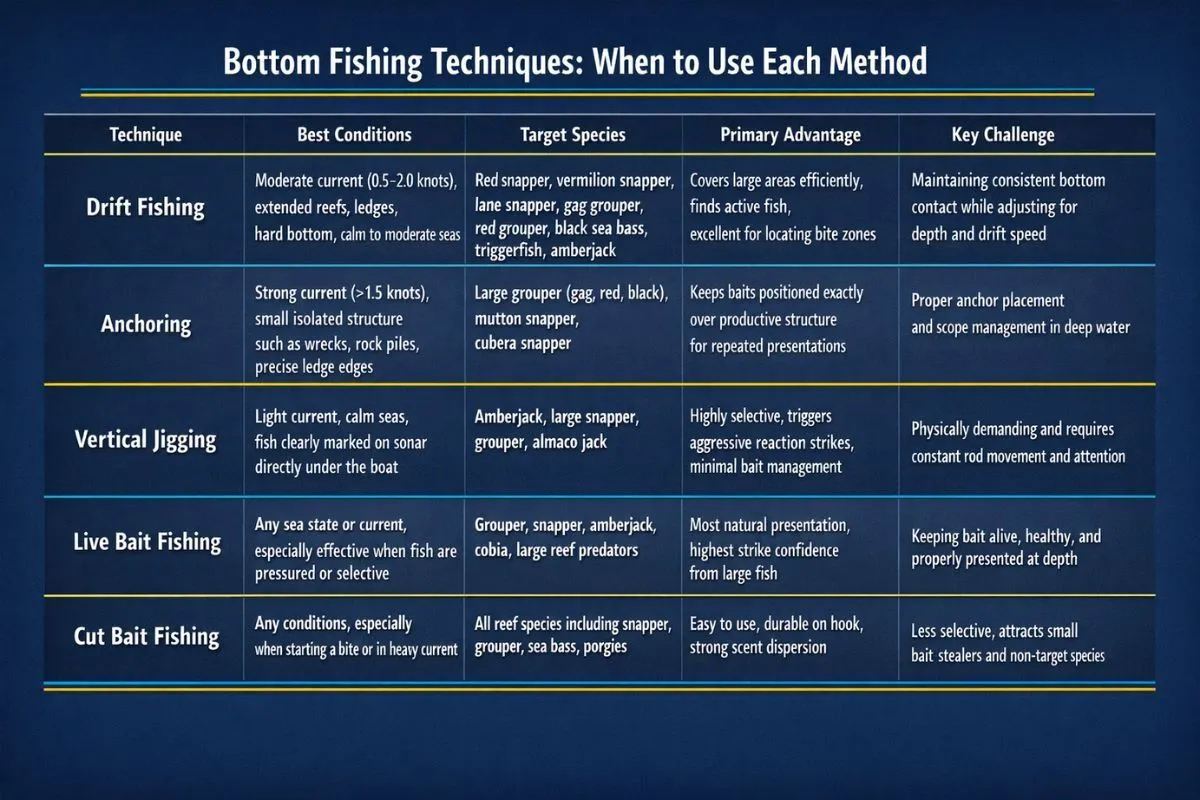
Bottom fishing, as this article covers, runs from roughly 40 to 300 feet using conventional or spinning gear you can hand-crank. You feel every bite, fight every fish with sport tackle, and target the species that define the reef fish complex: red snapper, grouper, mangrove snapper, vermilion snapper, mutton snapper, amberjack, and sea bass. The game is tactile and connected.
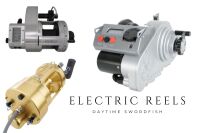
Deep dropping goes to 400, 600, even 1,000-plus feet after species that live far below sport-fishing range. Golden tilefish, blueline tilefish, snowy grouper, and barrelfish. At those depths, hand-cranking isn't practical, especially when you're fishing multiple hooks and potentially bringing up several fish at once. You need electric reels. You need sinkers that weigh 3 to 5 pounds or more. The whole approach becomes a different operation focused on efficiency and production rather than feel. Golden tilefish are firmly in this bucket: the depths they inhabit, the substrate they require, and the gear needed to reach them place them squarely in deep-drop territory even though the logic of finding them connects to bottom fishing principles.
How Do You Read Electronics to Find Bottom Fish?
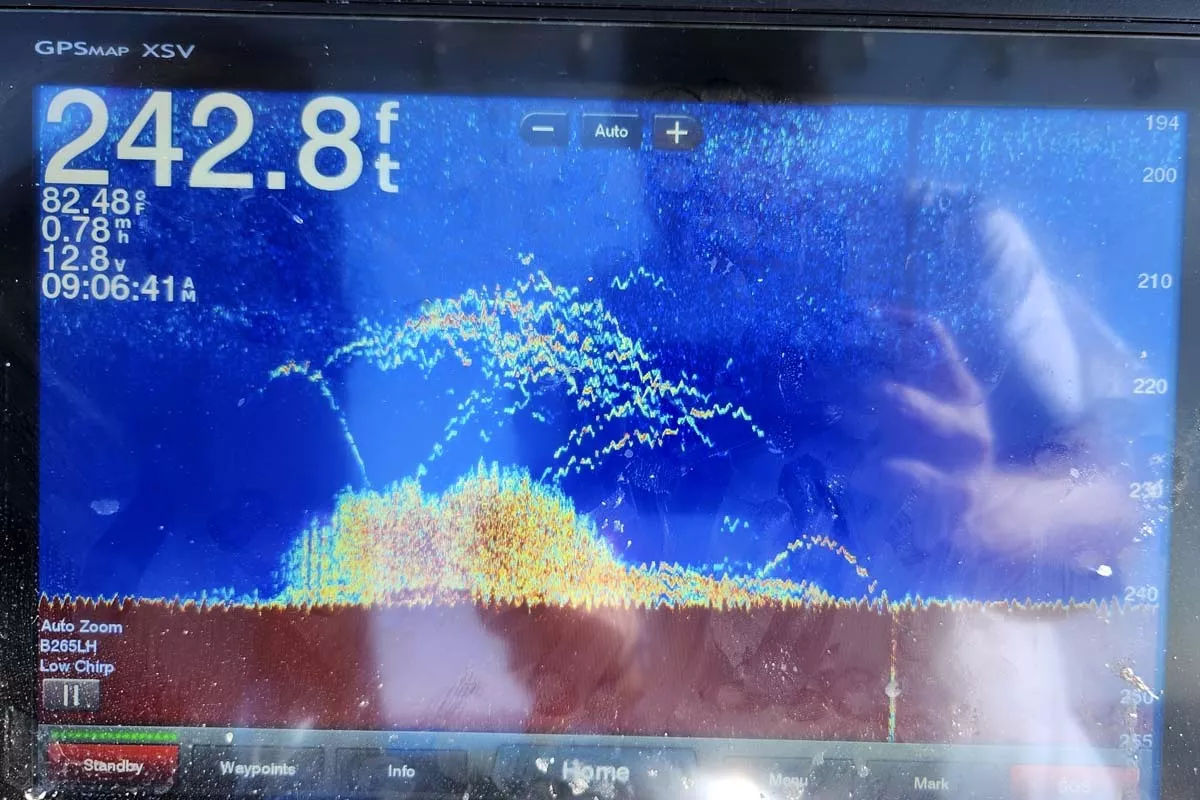
This is where most articles stop at "use quality electronics," which tells you nothing useful. Reading a sounder for bottom fishing is a skill that takes some time to develop, and it matters more than any single rig or bait choice. Your sounder isn't just showing you the seafloor. It's telling you what kind of seafloor it is, whether fish are on it, and how they're positioned.
Hard bottom returns a strong, thick signal. Rocky ledges, limestone outcrops, and reef structure all show as a dense bottom return. Soft mud or sand shows thinner. When you run across a transition from soft to hard bottom, that edge is almost always where fish stack. They're using the current to push bait off the soft substrate into the structure, and they're sitting right at that transition waiting for it.
Fish arches near the bottom usually mean snapper or grouper holding tight to structure. Dense, layered marks suspended 20 to 40 feet off the bottom are often vermilion snapper or amberjack schooling in the water column. A big, single arch sitting hard to a ledge is often a grouper. Learning to read those differences changes how you rig and where you drop.
Before you commit to a drift or an anchor, make at least one slow pass over the structure at low RPM. Get a clean bottom profile. Note where the hard bottom peaks, where it drops off, and where fish are marking most densely. GPS-mark those concentrations before you set up. The anglers who consistently produce fish spend more time running electronics before the first bait goes in the water, not less.
For how to translate those electronics reads into actual boat positioning, the ITS article on boat positioning for bottom fishing goes deep on integrating your sounder with anchoring and drift decisions.
What Species Will You Actually Catch Bottom Fishing?
The mix depends on where you're fishing, what depth you're in, and what structure you're over. But across the Gulf of Mexico and Atlantic seaboard, the same core species show up around reef and wreck structure in predictable ways.
Species-by-Species: How Each One Fishes Differently
This is where generic bottom fishing advice breaks down. Red snapper, grouper, vermilion snapper, mangrove snapper, and mutton snapper all live around the same reefs, but they don't fish the same way. Getting good at targeting a specific species means understanding where it sits in the water column, how it responds to current, what triggers it to bite, and what causes it to ignore your bait.
How Do You Catch Red Snapper on the Bottom?
Red snapper are the most sought-after reef fish in the Gulf of Mexico, and they fish differently depending on the region and the conditions. In the Gulf, they concentrate around oil platforms, artificial reefs, natural limestone ledges, and wrecks from about 60 to 200 feet. In the Atlantic, the population has recovered well but remains under strict federal management with very short seasons, and fish typically run deeper, from 90 to 350 feet.
Red snapper relate to structure hard and feed aggressively when conditions are right. Moving tide is the primary trigger. When tide is slack, bites slow or stop. The first two hours after tide begins to move is consistently the most productive window, and experienced anglers time their arrival at a reef to coincide with that window rather than showing up mid-tide.
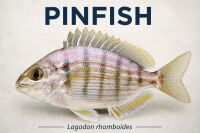
Knocker rigs dominate for red snapper in the Gulf because they keep the bait tight to the structure and give you direct contact throughout the fight. Live bait, particularly pinfish and pogies (menhaden), outperforms cut bait on most days, though fresh cut bonito is a reliable fallback. Heavier gear is standard, 60 to 80-pound braid and 60 to 100-pound fluorocarbon, because these fish live around serious structure and you need to control them from the hookset forward.
In the Atlantic, lighter leader and more natural presentation matter more. Pressured fish in clear, deep water have seen a lot of tackle. Going down to 50 or 60-pound fluorocarbon often makes a meaningful difference on days when bites seem reluctant. On very heavily fished Atlantic ledges, some captains drop to even smaller hooks for legal-size fish in the 10 to 12-inch range, where the smaller hardware produces noticeably better bite rates.
How Do You Fish for Grouper Around Heavy Structure?
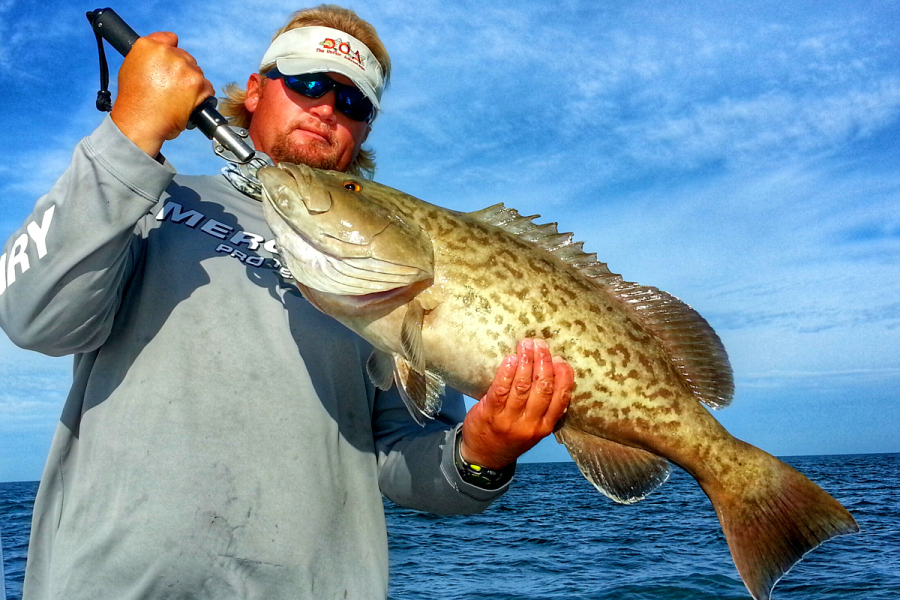
Grouper are ambush predators in the truest sense. They don't cruise structure looking for meals the way snapper do. They hold inside the structure, often deep in crevices or against ledge faces, and wait. When something moves past that looks edible, they come out fast, eat it, and turn straight back toward cover. That initial run is decisive. Let them get back to the reef and the fight is over.
This is why grouper fishing demands more aggressive tackle than snapper fishing of comparable size. You set the hook, immediately apply maximum drag pressure, and physically pull the fish toward the surface before it can orient toward cover. Pumping and cranking hard from the first second. This feels wrong when you're accustomed to fighting fish conservatively, but grouper around heavy structure will not forgive a soft hook set or delayed pressure.
The knocker rig is the standard for grouper precisely because of that direct contact. No sliding sinker, no leader separation between weight and hook. The weight rides against the hook eye, which keeps the bait tight to the bottom and means you feel the bite the instant it happens. Fifty to 80-pound braid as main line, 80 to 100-pound fluorocarbon leader, and a conventional rod with enough backbone to lift 20 to 30 pounds from depth against a fish that doesn't want to come up.
How Do Vermilion Snapper Fish Differently from Red Snapper?
This is one of the most commonly misunderstood distinctions in reef fishing. Vermilion snapper, called beeliners in the Gulf, look like a smaller red snapper and live on similar structure, but they feed fundamentally differently. Understanding that difference determines whether you catch a box of them or drop baits through the school without a bite.
Vermilion snapper are mid-column feeders. They don't sit hard on the bottom the way red snapper do. They school, often in large numbers, and suspend anywhere from 20 to 60 feet off the bottom in the 100 to 300-foot depth range. When you see a dense, layered cloud of marks suspended above the structure on your sounder, that's likely a school of beeliners. Dropping a heavily weighted bottom rig straight to the seafloor often takes you right through the school without a touch, because the fish are above where your bait ends up.
The adjustment is presentation depth. A lighter rig or a double-hook chicken-style rig dropped to the depth where fish are marking on the sounder produces dramatically more bites than heavy sinkers going straight to bottom. Chumming amplifies this: drop a weighted chum bag to the bottom and slowly work it upward, and you'll often see beeliners rise on the sounder in real time, following the chum cloud. Once they're fired up and feeding, they'll eat nearly anything in their path, including artificials.
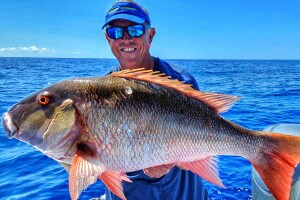
How Is Mutton Snapper Different to Target?
Mutton snapper are among the most prized fish in the Florida Keys and Caribbean, and they demand a different approach than any other snapper species because of how they use structure. Muttons don't hold inside a wreck or tight to a ledge face the way grouper do. They patrol. They move along reef edges, transition zones between hard and soft bottom, and sandy pockets adjacent to structure. You're essentially trying to intercept a fish on its route rather than dropping bait on a fish that's sitting still.
This behavioral difference changes everything about boat positioning. The standard approach of anchoring up-current and letting baits swing back to structure doesn't work as consistently for muttons as it does for grouper. What works better is understanding the specific edges and transitions where these fish feed on a given reef, and positioning so your baits cross those zones at the right depth.
How Do Mangrove Snapper Respond to Presentation Changes?
Mangrove snapper are difficult in a way that isn't immediately obvious when you first start targeting them. They look approachable. They're everywhere around reef structure in Florida and the Gulf Coast. And then you go a whole tide and catch nothing while the boat next to you is loading up, because they're one of the most tackle-shy species you'll encounter on the reef.
They're structure-oriented, often suspending just above the bottom or holding tight to ledge faces and wreck features, but they frequently rise in the water column when chum is present. On a good incoming tide with clean water, you can chum mangrove snapper up significantly off the bottom. The right approach on those days isn't a bottom rig at all. It's a free-lined bait or a lightly weighted presentation fished mid-column.
What About Golden Tilefish as a Bottom Fishing Target?
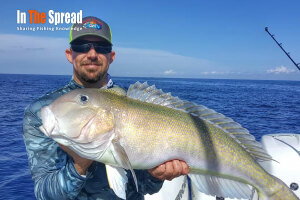
Golden tilefish belong in the deep-drop column, not standard bottom fishing, but they earn a place in this pillar for two reasons: they share the same offshore ecosystem as the species above, and understanding why they require a different approach clarifies the boundary between bottom fishing and deep dropping in a way that helps everything else make more sense.
Golden tilefish live in burrows in soft clay substrate at depths from roughly 400 to 900 feet or more, well below the range where sport tackle is practical. They don't relate to hard structure the way snapper and grouper do. There's no ledge to target, no wreck to drift over, no fish arches showing on your sounder above a visible reef. What you're looking for on the screen is the right bottom composition: a flat or gently sloping return in the correct depth range on the right substrate, with nothing visible above it. New deep-droppers stare at that screen, see no structure and no fish marks, and leave the spot. That's the mistake. The fish are in the bottom, not above it.
Because of the depth, electric reels aren't optional. Multi-hook production rigs with several baits are the standard. Sinker weights reach 1 to 3 pounds to get to the bottom in reasonable time and hold position against current that can be significant at those depths. The tactical approach is closer to trapping than to conventional fishing. You're putting bait in front of holes where you know animals live, and you're reading substrate to know whether those holes are there.
In The Spread Bottom Fishing Video Courses
What Are the Best Rigs for Bottom Fishing?
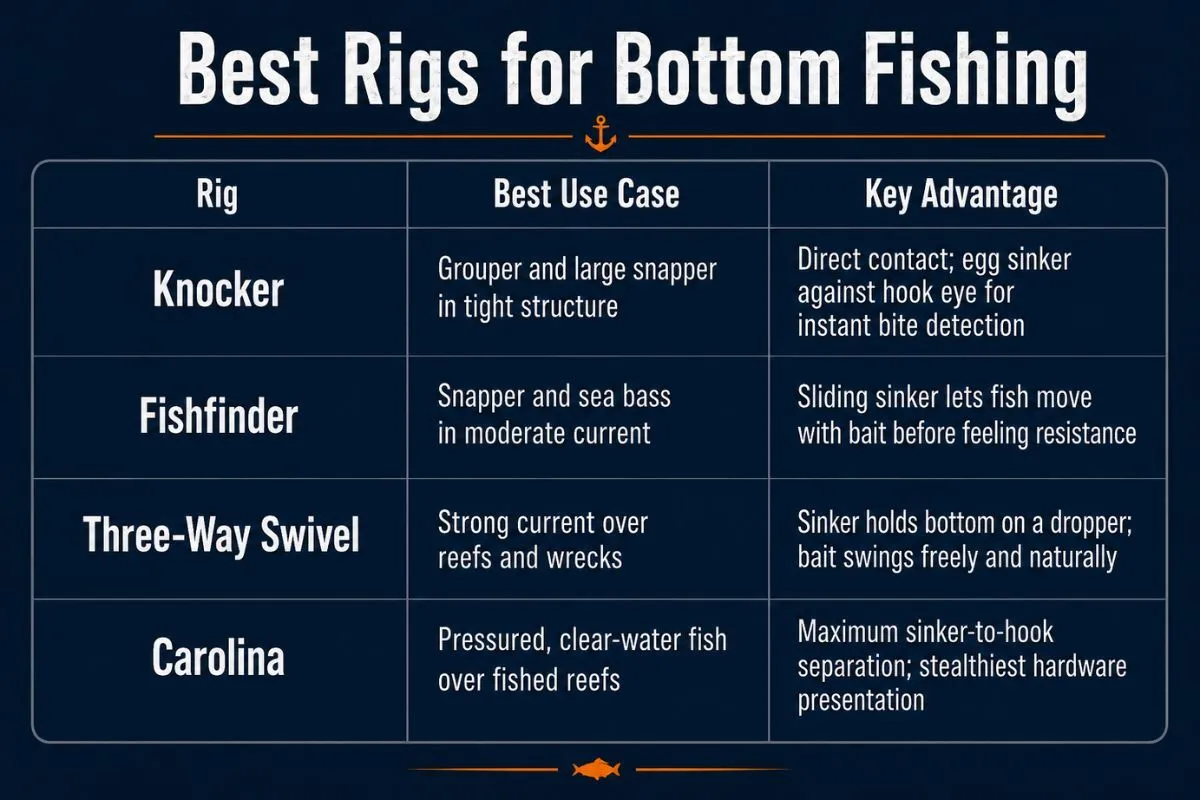
The right rig accomplishes several things simultaneously. It gets bait to depth quickly despite current. It presents naturally without telegraphing hardware to a wary fish. It allows the fish to pick up and move with the bait before feeling resistance. And it keeps you connected enough to set the hook with authority when the bite happens. The specific rig you choose depends on current speed, target species, bottom type, and depth, and experienced anglers often switch rigs mid-day as conditions change.
The Fishfinder Rig
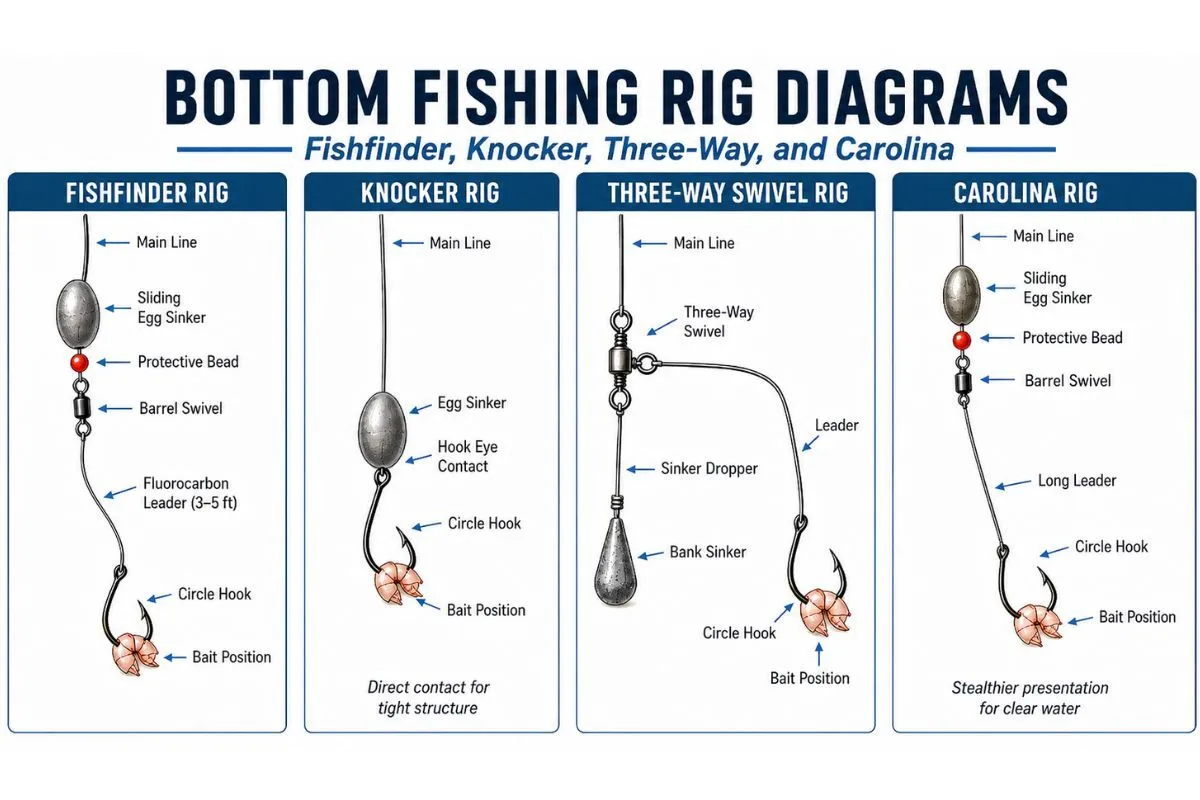
An egg sinker slides freely on your main line above a barrel swivel. Below the swivel, a 3 to 5-foot fluorocarbon leader runs to your hook. When a fish picks up the bait and moves, line slides through the sinker with very little resistance. The fish doesn't feel the weight until you set the hook. That free movement is exactly what triggers a committed bite from suspicious snapper in clear water.
The Knocker Rig
The egg sinker rides directly on the line against the hook eye, with no leader between weight and hook. It's a compact, direct setup that cuts through current cleanly and keeps you in immediate contact with everything happening at the end of the line.
This is the standard rig for big grouper around heavy structure, and for good reason. When a grouper hits and turns toward the reef, you need to feel that the instant it happens and respond immediately. The knocker rig gives you that direct connection. No sliding sinker absorbing the first movement. No leader delay. Hook, weight, mainline. You feel the bite, you set the hook, you pull hard and don't stop.
The Three-Way Swivel Rig for Strong Current
When current runs hard enough to sweep a standard rig off the bottom or drag bait in a way that looks unnatural, a three-way swivel rig solves the problem. A three-way swivel forms the center: main line to one eye, a short 8 to 18-inch dropper with your sinker to the second eye, and a 3 to 5-foot hook leader to the third. The sinker hangs separately and holds bottom while the bait swings naturally in current without being dragged toward the weight.
The Carolina Rig
Similar to the fishfinder in principle, but with two swivels and a mid-rig leader section that keeps the sinker further from the hook. Maximum natural presentation. This is what you reach for on heavily pressured, clear-water reefs where big mangrove snapper or gag grouper have been fished over repeatedly and have developed a wariness toward standard hardware. The additional separation doesn't catch every fish, but it makes a measurable difference on spots that see consistent boat traffic.
Should You Anchor or Drift When Bottom Fishing?
The answer depends on the structure you're over and how the current is running. Neither approach is universally better, and experienced captains switch between them based on what the conditions and electronics are telling them.
Drift when you're covering extended structure such as a long ledge, a reef with scattered relief over a wide area, or soft-bottom terrain where you're prospecting for tilefish at depth. Drifting lets your sounder work continuously as you move, so you're still building the bottom picture while your baits are fishing. GPS-mark every bite or significant arch you see on a drift and build a track of where the fish are holding. Enough drift passes over the same structure and you'll have a precise picture of where to set up an anchor or a tighter drift line.
What Natural Baits Consistently Produce Bottom Fish?
Fresh, oily cut bait is the foundation of productive bottom fishing because the scent dispersion it produces pulls fish from a distance in a way artificials and frozen bait rarely match. Bonito, Spanish mackerel, and blue runner are the most consistent cut bait options across species and regions. Cut bonito in particular produces well on clear-water reefs where snapper are the primary target. Match the chunk size to what you're fishing for. Fist-sized pieces for grouper and amberjack; smaller, palm-sized pieces for snapper.
Squid is the most universal bait in the bottom fishing arsenal. Every reef species eats it. It stays on the hook well in current and through multiple drops. Lightly salt squid strips before using them to toughen the texture and improve hook hold.
- Hook through the nose or just ahead of the dorsal fin for the most natural movement at depth
- Keep livewells well-oxygenated with cool water; warm water kills bait faster than anything else
- Drop quickly once your bait hits the water to minimize stress from the descent
- If bait is dying on the drop, a small descending device can reduce pressure change effects
Bait quality degrades faster than most anglers account for. Drain meltwater from your bait cooler regularly, cut on demand rather than pre-cutting everything at the dock, and replace bait that has softened, discolored, or lost its scent appeal. The angler two boats down who keeps catching after you've gone quiet hasn't found a secret spot. Their bait is probably just fresher.
Do Artificial Lures Work for Bottom Fishing?
They do, and there are specific conditions where vertical jigs and soft plastics outperform natural bait by a significant margin. Most bottom anglers reach for cut bait or live offerings by default, which makes sense on days when fish are feeding normally. But there are situations where artificials are the better tool, and knowing when to make the switch is part of fishing the bottom at a high level.
Vertical Jigs for Reef and Wreck Species
Vertical jigging works because it triggers reaction strikes from fish that aren't actively feeding on scent. A knife jig or flutter jig falling through the water column at speed looks like an injured baitfish, and predators that are otherwise sitting lethargic on structure will often hit it out of reflex. This is especially useful during mid-day slack periods when cut bait presentations produce nothing, and on post-front days when fish are tight and reluctant but still present.
The fall is where most strikes happen. Drop the jig to depth, engage the reel, and work it with sharp upward rod strokes, letting it flutter back down on a semi-slack line between each stroke. Amberjack that are suspending above structure and ignoring bottom presentations will frequently crush a jig worked through their depth range. Grouper will eat a jig worked aggressively just off the bottom, particularly early in the tide when they're most active. The key variable is jig weight: heavy enough to reach the bottom and maintain contact in current, but not so heavy that the fall becomes a dead drop with no action. In strong current you'll often need to go heavier than feels natural, 4 to 6 ounces or more, to get the jig down into the strike zone before it sweeps away from the structure.
Soft Plastics for Pressured Snapper and Grouper
Soft plastics on jig heads have become a serious bottom fishing tool, not a novelty, and they consistently produce on snapper and grouper that have been fished over repeatedly with natural bait. The reason makes sense: a 4 to 6-inch paddle tail or curl tail on a 1 to 3-ounce jig head moves naturally in current, doesn't telegraph a hook through visible bait, and can be fished at any depth in the water column. On reefs that see heavy recreational pressure, especially in areas with short seasons and concentrated effort, soft plastics often produce bites from fish that have completely shut down on cut squid or bonito.
Color matters more than some anglers acknowledge. White and chartreuse produce well in stained or lower-visibility water. More natural colors, pinks, silvers, and translucent whites, work better in clear offshore conditions where fish get a longer look at the offering. Match the size of the plastic to the target species. Smaller profiles for snapper in the 2 to 4-pound range. Larger 5 to 7-inch paddle tails when you're specifically after grouper.

When to Switch from Bait to Artificials
The practical decision comes down to three situations. First, when current is running hard enough to shred cut bait off the hook before fish have time to find it, a jig or soft plastic stays rigged through multiple drops without constant replacement. Second, when fish are visibly marking on your sounder but ignoring scent-based presentations, the movement and flash of a jig often breaks the lockdown. Third, when you want to cover the water column efficiently to find where fish are holding on a given structure, dropping jigs to successive depths is faster than resetting natural bait rigs repeatedly.
What Tackle Do You Actually Need?
For reef fishing from 80 to 200 feet, conventional reels in the 25 to 50-class range paired with 6 to 7-foot rods rated for 30 to 80-pound test cover the range. Lighter for vermilion snapper and smaller snapper species. Heavier for big grouper and amberjack around serious structure. The rod needs enough backbone to generate lifting pressure against a fish running toward cover, which means medium-heavy to heavy action in most cases.
Braid has largely replaced monofilament as a main line for bottom fishing because of its thin diameter, near-zero stretch, and direct sensitivity. Forty to 65-pound braid for snapper. Sixty-five to 80-pound for grouper and amberjack. The lack of stretch is particularly valuable at depth, where monofilament loses a significant amount of hook-setting force before it reaches the fish. You feel bites through braid that you would completely miss on mono.
Fluorocarbon leader should exceed your main line's breaking strength. Abrasion resistance around structure is the primary function. Use 50 to 80-pound for snapper and sea bass. Step up to 80 to 100-pound for grouper and amberjack where the first run will grind leader against coral, concrete, or steel cable. Make leaders at minimum 3 to 5 feet long, long enough to keep the abrasion-prone portion of your rig down in the structure rather than at the surface.
Which Knots Hold Up for Bottom Fishing?
Your terminal connections carry every pound of pressure you put on a fish trying to reach structure, and at depth a knot that slips or fails costs you the fish and the rig both. Three knots cover nearly every bottom fishing connection, and each earns its place for a specific reason.
The Palomar is the connection from fluorocarbon leader to hook. Tied correctly it holds close to the full rated strength of the line, and it does it with a simple, repeatable tie you can execute on a rolling deck without much light. When you are setting hard on a grouper and lifting it away from a ledge, this is the knot taking the load.
The FG knot joins braided main line to fluorocarbon leader. It matters because it forms a thin, smooth connection that passes through the guides cleanly on the drop and the fight, where a bulky knot catches and robs you of feel. It takes practice to tie well, but nothing else gives you that combination of strength and low profile in a braid to leader connection at depth.
The uni knot handles everything else: swivels, snaps, and terminal hardware. It ties fast, holds well under steady load, and lets you re-rig quickly when current or a cutoff forces a change. On a day when the bite is on and every minute of bait in the water counts, a knot you can tie fast and trust is worth more than a marginally stronger one you fumble.
Tie whichever connection you use until it is automatic. The angler who has to think about a knot in fading light with fish marking on the sounder is losing drops. Muscle memory keeps your bait in the strike zone.
Regulations, Circle Hook Requirements, and Releasing Deep Fish
Bottom fishing in US federal waters comes with regulatory requirements that affect how you rig, what you're allowed to keep, and what you're required to do with fish you release. These rules change, and the specifics vary by region, species, and water jurisdiction, so always verify current seasons, bag limits, and size limits at myfwc.com for Florida state waters or your specific State DNR and at NOAA Fisheries (fisheries.noaa.gov) for federal waters before you plan a trip.
One requirement worth calling out directly: in the Gulf of Mexico federal reef fish fishery, non-stainless, non-offset circle hooks are required when fishing with natural bait for reef species. The rule exists for conservation reasons, as circle hooks in the correct configuration significantly reduce gut-hooking and injury in released fish. The practical fishing implication is that you set a circle hook with steady, firm pressure rather than a sharp bass-style hook set. Lifting the rod smoothly and winding tight is the correct technique. Swinging hard on a circle hook often pulls it out of a fish's mouth before it seats properly.
When Does Bottom Fishing Produce Best?
Tide movement is the primary productivity driver, more than time of day, more than season, more than most other variables on the list. When tide is moving, baitfish and small forage move with it. Predators station themselves where the current delivers food and feed actively. The first hour or two of tide movement after slack water consistently produces the most aggressive bites. Build your day around those windows.
Barometric pressure matters. A stable or slowly rising barometer keeps fish feeding normally. A sharp pressure drop ahead of a front often triggers a brief feeding flurry followed by a slowdown as fish become lethargic. Two to three days after a front passes and pressure stabilizes, bite rates typically recover. If you've had multiple slow trips in a row, check the barometric trend over the preceding 48 hours before writing off your spots.
- Summer brings peak species diversity as warmer water drives metabolic activity across species groups
- Spring and fall move fish on and off structure as temperatures shift, often concentrating fish predictably on ledges during transitional periods
- Winter reduces diversity but produces excellent fishing for cold-tolerant grouper and snapper that become the most active species on winter reefs
- Post-frontal periods frequently produce aggressive feeding windows as pressure stabilizes and fish become active after weather-related lockdown
The practical upside of bottom fishing over other offshore techniques is that moderate sea conditions don't kill you. Two to four-foot seas that would make trolling miserable barely affect your ability to drift over structure and catch fish at depth.
How Do You Land Fish Without Losing Them to the Reef?
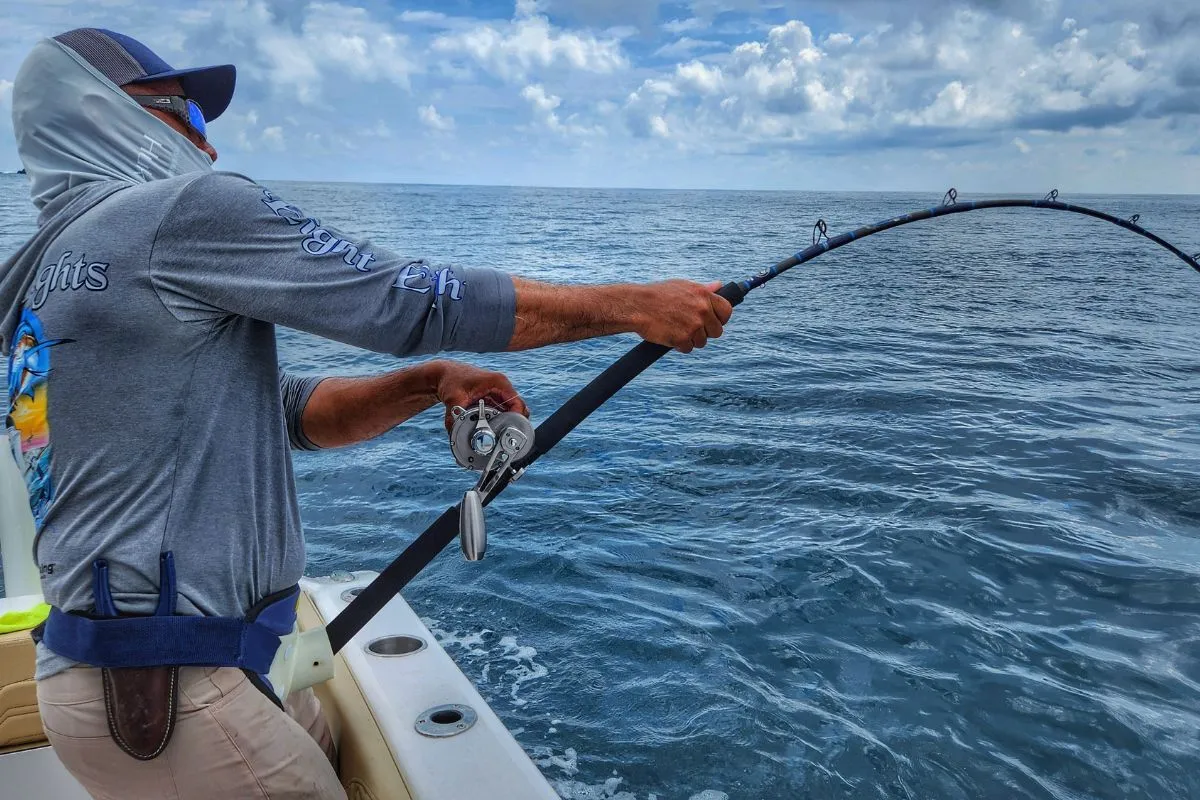
The first three seconds after hookup decide most bottom fishing fights. Grouper in particular make an explosive initial run toward cover, and if they reach it, you're done. The fight is over. You're pulling on dead weight wrapped around coral, concrete, or steel.
The answer is maximum drag pressure from the instant the hook sets. Lock down and lift. Turn the fish before it turns back toward structure. This feels aggressive because we're trained to let fish run and fight them progressively. That approach works fine in open water. Around a reef at 120 feet, it costs you the fish.
Keep your rod at a working angle throughout the fight, somewhere between 45 and 90 degrees from the water. This angle maintains steady pressure and protects your tackle from sudden surges better than a high, nearly vertical rod tip. Pump the rod downward and reel on the recovery. Maintain tension through every moment of the fight. Slack line lets the fish reorient, regain position, and make another run at the structure.
Frequently Asked Questions About Bottom Fishing
What is bottom fishing?
Bottom fishing presents weighted bait or lures at or near the seafloor over structure where reef species live and feed. The core range is 40 to 300 feet, covering the heart of the snapper and grouper fishery on natural and artificial structure. It produces consistently because you're targeting known fish-holding areas rather than searching open water. Hard bottom, including limestone ledges, rocky outcrops, and reef structure, is the foundation of every productive bottom fishing trip.
What rigs are best for bottom fishing?
The four primary bottom fishing rigs each solve a specific problem. The knocker rig keeps the sinker against the hook eye, giving direct contact for grouper around tight structure. The fishfinder rig uses a sliding sinker so the fish can move with the bait before feeling resistance, ideal for snapper in moderate current. The three-way swivel rig places the sinker on a separate dropper so it holds bottom independently while the bait swings freely in strong current. The Carolina rig uses two swivels for maximum sinker separation, producing on pressured, clear-water fish over heavily fished reefs. Conditions and species determine which you reach for first.
What is the difference between bottom fishing and deep dropping?
Bottom fishing uses conventional or spinning tackle to target reef species from 40 to 300 feet. You hand-crank fish to the surface, feel every bite, and fight fish on sport tackle. Deep dropping covers 400 to 1,000-plus feet and requires electric reels because hand-cranking from extreme depths is not practical, especially on multi-hook production rigs. Deep dropping targets different species: golden tilefish, blueline tilefish, snowy grouper, and barrelfish. The two approaches share the concept of presenting bait near the seafloor but require completely different gear and fishing methods.
What baits work best for bottom fishing?
Fresh cut bait from oily fish, bonito, Spanish mackerel, and blue runner, leads the list because the scent trail it produces at depth triggers fish from a distance. Squid is the most universal option: every reef species eats it and it holds well in current. Live bait, particularly pinfish, grunts, and small blue runners, often outperforms everything else when you can keep it alive through the drop. Bait quality matters as much as bait type. Drain meltwater, keep bait on ice rather than floating in water, and cut fresh through the day.
What knots should you use for bottom fishing?
Three knots cover nearly every bottom fishing connection. Use the Palomar to tie fluorocarbon leader to your hook, since it retains close to full line strength and ties simply at the rail. Use the FG knot to join braided main line to fluorocarbon leader, because its slim profile runs through the guides cleanly on the drop and the fight. Use the uni knot for swivels and terminal hardware, where fast, reliable re-rigging matters. Tie whichever you use until it is automatic.
Take the Next Step on the Water
Bottom fishing rewards anglers who understand the nuances. Knowing why vermilion snapper suspend off the bottom while grouper hold inside structure, why the knocker rig outperforms the fishfinder around tight structure while a three-way rig is the better answer when current runs hard, why a falling barometer slows bites before a front arrives: these are the distinctions that separate people who consistently put fish in the box from people who have good days occasionally and can't explain why.
Every species section in this article links to deeper resources built around the specific fish you're targeting. If grouper is your focus, start with the video instruction from Kevin Adney. If you're after mutton snapper in the Keys, Captain Ryan Van Fleet's course is the most detailed resource available on that fishery. If deep water tilefish are on your list, the ITS deep-dropping content covers the substrate reading and electric reel technique that makes the difference at 700 feet.
Login
to leave a review.
User Reviews
There are no reviews yet.
Setting Up a Dredge Pulley for Billfish
Saltwater
12.28.2020
High Speed Wahoo Trolling Rig
Saltwater
09.08.2018
Fishing Light Tackle for Yellowfin Tuna
Saltwater
09.08.2018
0