
The daytime swordfishery was born in the Gulf Stream between Miami and Key West, and it is still the most consistent on the planet. Where the grounds are, when the season peaks, what a day out there looks like, and how to think about fishing the Keys.
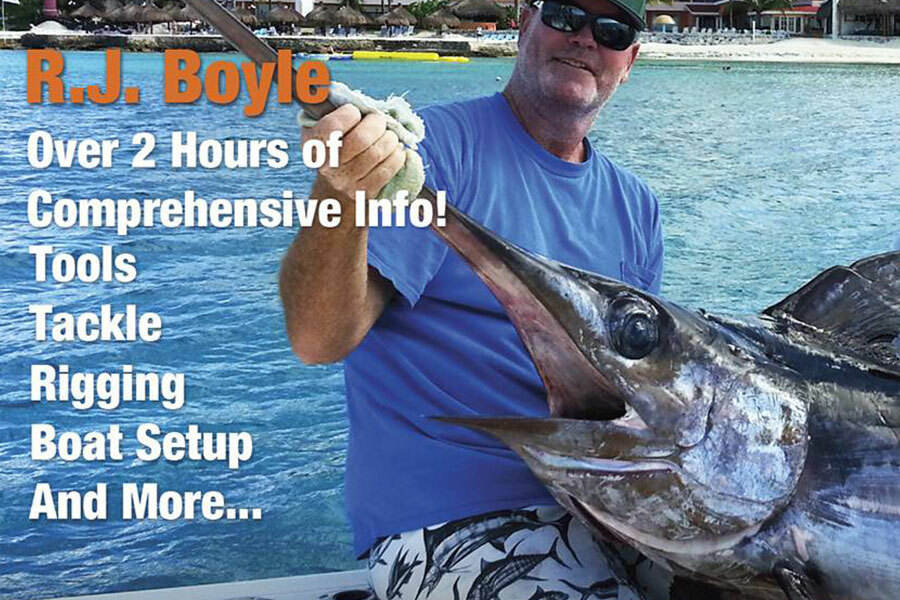
Swordfishing in South Florida and the Florida Keys
The modern recreational daytime deep-drop program was refined here. Not that swordfish are unique to South Florida, they are not, and commercial deep-dropping predates the recreational fishery, but the program that first put everyday anglers on daytime broadbill was worked out in the waters between Miami and the Keys in the early 2000s. This is where it came together, and it remains arguably the most consistent accessible daytime swordfishing anywhere.
That consistency is not luck. It is geography. The Gulf Stream pushes hard against the edge of the reef here, which means deep water sits closer to shore than almost anywhere else a recreational boat can reach. This article is about fishing that specific water: where the productive grounds are from Miami down through the Keys, when the fishing is best through the year, what a day out there actually looks like, and how to think about booking a trip if you are coming to fish it. For the technique itself, the rigging and the drop and the fight, start with how to catch swordfish.
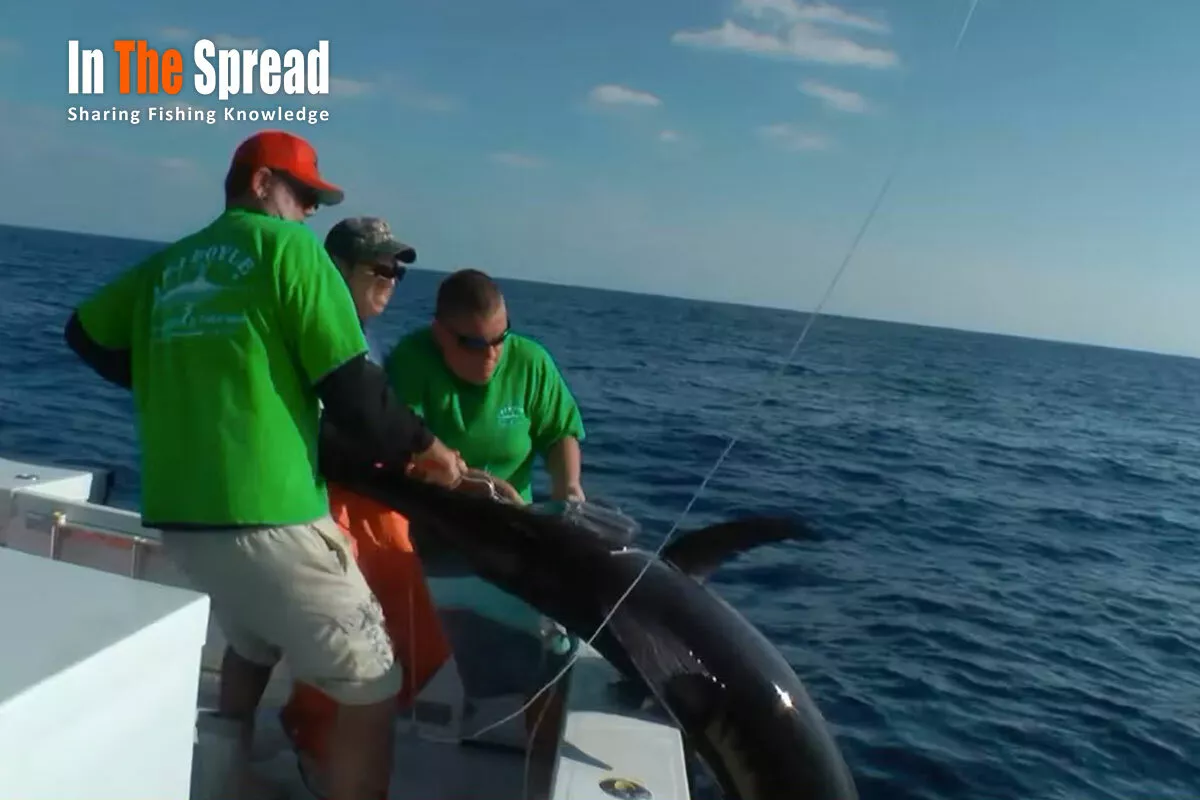
Where the Gulf Stream Puts Swordfish Within Reach
Everything about the South Florida fishery comes back to one feature: the Gulf Stream runs close.
In most swordfishing regions you burn fuel to reach deep water. Off the Northeast canyons you might run fifty to a hundred miles. Off South Florida, the bottom drops from the reef edge into swordfish depth within roughly fifteen to twenty-five miles of the beach, and in parts of the Keys it is closer still. That single fact is why a center console can fish daytime swords here that would need a much bigger boat and a much longer day almost anywhere else.
The productive water is the zone where the bottom falls from around 1,000 feet into the 1,200 to 1,800 foot band that the daytime fishery is built around. Defined structure like ledges, humps, and contour changes concentrates fish, and it is worth finding, but this is not strictly structure fishing in the classic sense. Plenty of good drops are made on open slope along a current edge, where the moving wall of the Gulf Stream sweeps bait and the fish set up to intercept it. The reasoning behind why fish hold where they do applies directly to how you pick a drift here, structure or not.
- Miami and Fort Lauderdale, where the Stream runs tight to shore and the run to deep water is short. This is where the fishery was developed and where the fleet is most concentrated
- Islamorada and Key Largo, the Upper Keys, which often have the fastest access of all to the Stream edge off the reef line
- Marathon and the Middle Keys, a strong daytime charter hub with productive grounds a short run offshore, though the run can be longer in some directions
- Key West and the Lower Keys, where the Straits of Florida provide the depth and the current edge tends to be more variable and sometimes wider
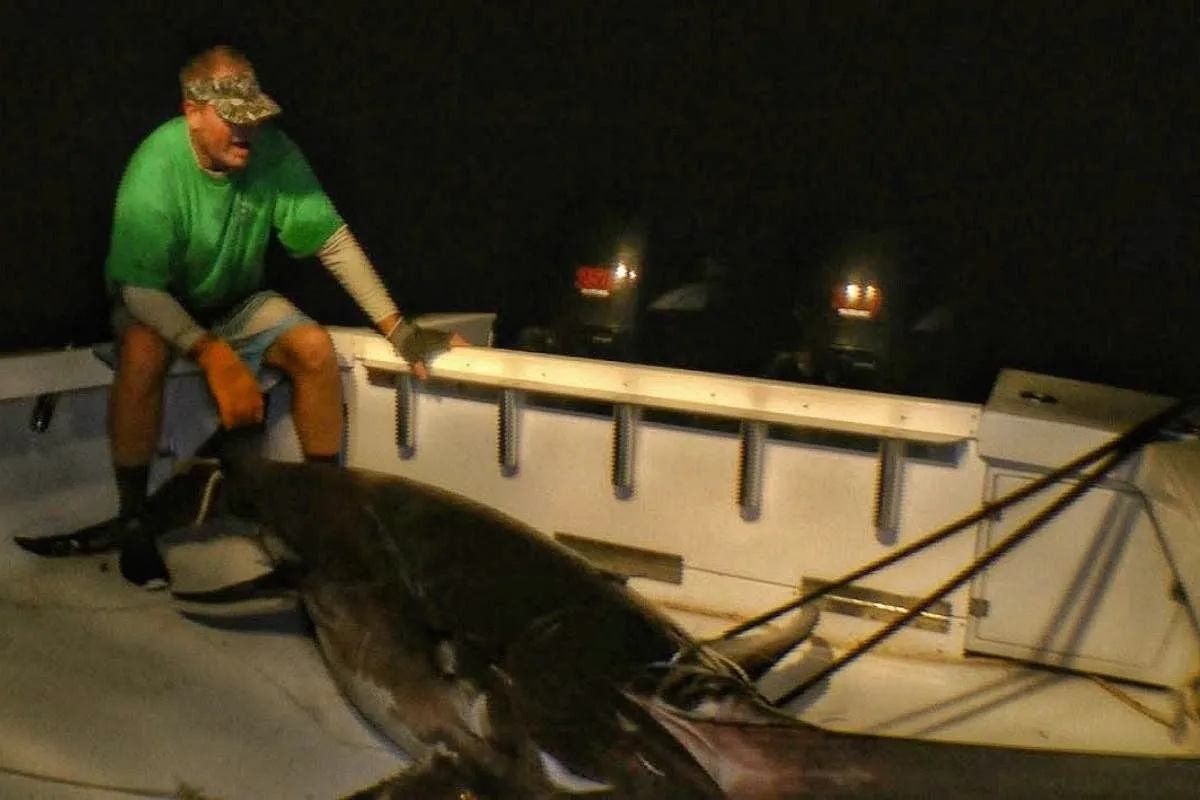
When Is the Best Time to Catch Swordfish in Florida?
South Florida produces swordfish in every season, which by itself sets it apart from most of the world's fisheries. But a year-round fishery does not mean a uniform one, and knowing the rhythm helps you pick a trip.
The most consistent daytime fishing tends to run November through April, through the cooler months, when the Gulf Stream position and the temperature gradients along the edge are most favorable and the seas are often more workable between fronts. This is the window many local captains point to when asked for the prime season.
Summer fishing remains good and the fish are absolutely there, but it comes with two complications. Afternoon thunderstorms build fast off South Florida in the warm months and can cut a day short. And the seas can be less predictable. The fish do not leave, but the weather asks more of you.
Daytime or Nighttime: Two Different Fisheries Off Florida
South Florida is known for the daytime program, but the same fish are caught at night here too, and it helps to know the difference before you book.
One nuance that matters even in the daytime: you are targeting a zone, not pinning the bottom precisely. Swordfish frequently hold off the bottom, sometimes a hundred feet or more up, and a good captain adjusts drop depth and rig accordingly rather than dragging bottom. The mechanics of that live in our breakdown of deep dropping for daytime swordfish.
What a Day of Daytime Swordfishing Off the Keys Looks Like
If you have never done it, the pace of daytime swordfishing surprises people. This is not run-and-gun fishing. It is deliberate.
You run offshore to the grounds, which off the Keys is typically a shorter trip than newcomers expect. You set up a drift over promising bottom and send a bait down into the 1,200 to 1,800 foot zone, which takes real time to reach. Then you work that drift, managing the boat against the current, watching a rod tip for a bite that will be far subtler than the size of the fish suggests. A drop is a commitment of time. You might make several across a day.
- A run offshore to deep water, generally shorter here than in most sword fisheries
- Long drifts with extended soak times, not constant action
- A premium on boat handling and reading current, which is where an experienced captain earns the trip
- A bite that may come as a barely perceptible tap, followed by a fight that can run from thirty minutes to a couple of hours
- Meaningful downtime between drops, and one good fish making the whole day
That last point is worth setting in your head before you go. Daytime swordfishing is a low-frequency, high-reward fishery. You are not filling a cooler with numbers. You are working patiently for one or two of the most impressive fish in the ocean, and the day is measured by that standard.
Key West or Marathon: Where Should You Base a Swordfishing Trip?
If you are traveling to fish the Keys, where you base changes the trip, though less than people assume, because the fish are accessible from most of the chain.
Key West anchors the Lower Keys and offers deep water access along with everything the destination itself brings. The Straits of Florida provide the depth, and Key West's fleet covers swordfish alongside the full spread of offshore and reef options.
Booking a Daytime Swordfishing Charter
Because daytime swordfishing demands specialized tackle, deep local knowledge, and a captain who can handle a boat in current over deep water, most people experience this fishery for the first time on a charter. A few things are worth understanding before you book.
How long should you book for daytime swordfishing? Plan on a full day. This is not a fishery that fits a four-hour window. Between the run offshore, the time it takes to get baits down to 1,500 feet, the long drifts, and the fight itself, you need a full-day window. A full-day charter gives the captain room to make multiple drops, move to different structure, and adjust to conditions. A half day rarely leaves enough margin to fish it properly, and it is the single most common way visitors set themselves up for disappointment.
What to bring and expect. A good operation supplies the specialized tackle, because you are not going to travel with electric reels and 1,500 yards of braid. Come prepared for a long day on the water: sun protection, food and water, and layers if you are fishing the cooler months when it can be brisk running offshore in the morning. Set your expectations for the pace described above. Patience is part of the deal.
Tournaments. Daytime swordfishing has a competitive scene in South Florida and the Keys, with tournaments that draw serious crews. If you are getting deeper into the fishery, they are worth knowing about, both as events to fish and as a way to see how the best crews operate.
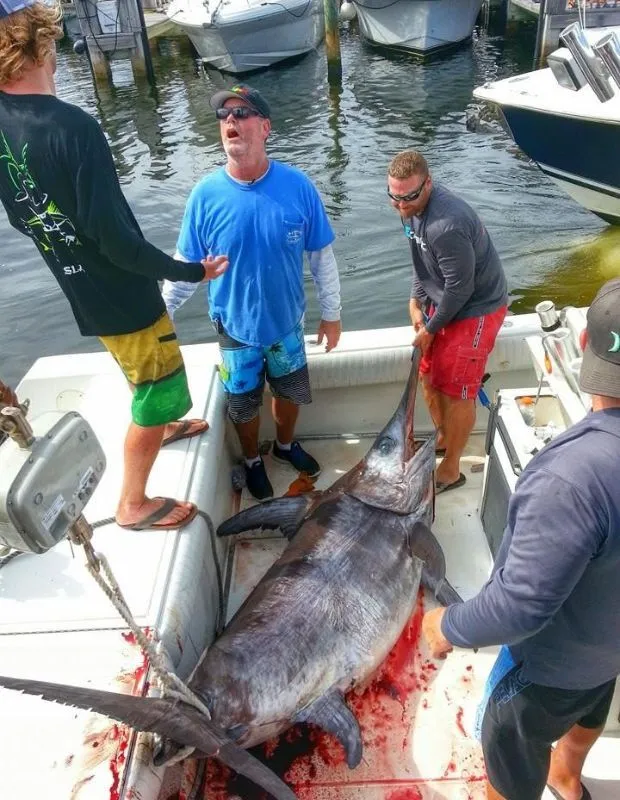
How South Florida Compares to Other Swordfish Regions
South Florida is the most accessible daytime swordfishery, but it is not the only one, and a quick orientation helps put it in context.
The Northeast canyons, off New York, New Jersey, and New England, produce excellent swordfishing from roughly June through September, though the run to the grounds is far longer and the season far shorter. The Carolinas, particularly around the canyons off Cape Hatteras, have a strong fishery through the warmer months. California and the wider Pacific hold swordfish as well, with their own seasonal and structural character. Each of these is a real fishery in its own right.
Swordfish Fishing Courses
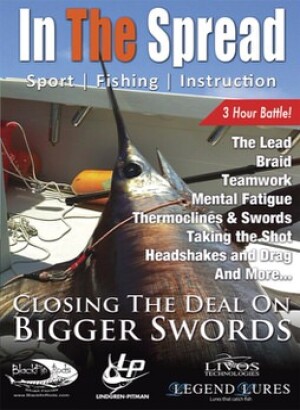
Learn proven swordfishing tactics for landing 500 to 800 pound fish with RJ Boyle. This video covers lead removal timing, harpoon shot execution, drag manipulation strategies, and wheelman boat positioning techniques that determine success when fighting trophy-class swordfish in challenging offshore conditions.
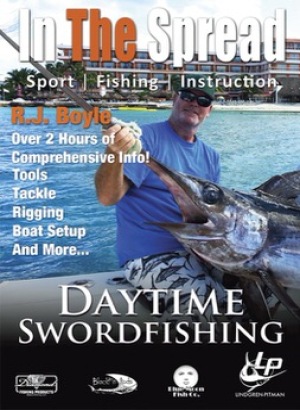
Daytime swordfishing operates at 1,200 to 2,000 feet where broadbill feed actively, creating technical challenges absent in nighttime surface fishing. RJ Boyle explains why depth fundamentally changes tackle requirements, how bait presentation at extreme depth affects strike detection, and what boat positioning precision maintains contact with baits along steep drop-offs where swordfish concentrate during daylight hours.
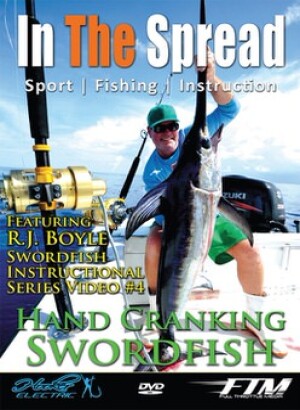
RJ Boyle reveals hand crank swordfishing techniques for IGFA-compliant record catches. This video covers tackle specifications for manual cranking, bait deployment at depth, recognizing swordfish bites, fight management strategies, and when hand cranking succeeds versus power-assisted methods in daytime offshore fishing.
RJ Boyle's comprehensive daytime swordfishing seminar covers the art and science of targeting broadbill swordfish. Learn depth understanding, equipment requirements, advanced rigging techniques, current stratification analysis, and how oceanographic knowledge combines with tactical execution for consistent success in this technical offshore fishery.
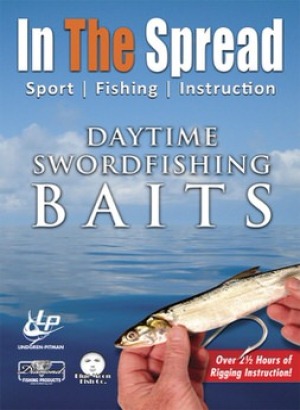
Daytime swordfish become selective when feeding slows due to moon phase or tide, making bait freshness and rigging quality critical rather than optional. RJ Boyle demonstrates seven bait options and specific rigging techniques for each, explaining when ladyfish, squid, dolphin belly, or bonito produce better results based on depth, current, and swordfish feeding behavior at extreme depths.
Frequently Asked Questions About Swordfishing in South Florida and the Keys
When is the best time to catch swordfish in Florida?
South Florida produces swordfish year-round, with the most consistent daytime action generally from November through April when Gulf Stream position, temperature gradients, and workable weather windows align most favorably. Summer fishing is productive too, but afternoon thunderstorms and less predictable seas can complicate trips. A settled weather window matters as much as the calendar month.
How long should you book for daytime swordfishing?
Book a full day. Between the run offshore, the time it takes to get baits down to 1,200 to 1,800 feet, the long drifts, and a fight that can last one to two hours, daytime swordfishing does not fit a short window. A full day gives the captain room to make multiple drops and adjust to conditions. Half-day trips rarely allow enough time to fish the program properly.
Is Key West or Marathon better for daytime swordfishing?
Both put you on productive daytime swordfish grounds, so neither is wrong for the fishing itself. Marathon, in the Middle Keys, is a central and experienced hub for the daytime program with a short run offshore. Key West offers Lower Keys deep-water access along with everything the destination brings. The choice usually comes down to the rest of your trip rather than the fishing.
Can you catch swordfish in Florida year-round?
Yes. The Gulf Stream keeps swordfish accessible off South Florida and the Keys throughout the year, which sets the region apart from seasonal fisheries like the Northeast canyons. The cooler months from November through April tend to be most consistent, but fish are catchable in every season when weather allows you to get offshore and fish effectively.
How far offshore do you go for swordfish off the Keys?
Deep water sits closer to shore in South Florida than in almost any other swordfish region. The productive 1,200 to 1,800 foot grounds are typically within roughly fifteen to twenty-five miles of the beach off Miami and Fort Lauderdale, and in parts of the Keys the deep water is closer still. That short run is a defining advantage of the fishery.
What depth are swordfish caught at in Florida?
During the day, swordfish are caught in the deep-drop band of roughly 1,200 to 1,800 feet off South Florida and the Keys, where the fish hold through daylight hours. They do not always sit on the bottom, and are often found holding well up off it, so captains fish a zone rather than pinning bottom exactly. At night, the fish rise and are caught much shallower, generally between 100 and 400 feet.
Are there regulations for keeping swordfish in Florida?
Yes, and they matter. Swordfish are a federally managed highly migratory species, and permit requirements, minimum size, and bag limits apply and change periodically. Do not rely on a fishing article for the current rules. Verify them directly with NOAA Fisheries and the Florida Fish and Wildlife Conservation Commission before you keep a fish.
Fishing the Water Where It All Started
There is a reason the daytime swordfishery is associated with South Florida even though broadbill swim in oceans all over the world. The people who figured out how to catch these fish at 1,500 feet in the daytime did it here, in the Gulf Stream between Miami and Key West, and the knowledge has been refined in this water for two decades since. When you fish it, you are fishing the most developed daytime sword program anywhere, with the shortest run to deep water and a season that never fully closes.
That does not make it easy. It makes it accessible, which is a different thing. The fish still demand the right tackle, a bait rigged to survive the drop, a captain who can hold a drift in current over deep water, and the patience to work long soaks for one good bite. What South Florida gives you is the best possible place to go learn all of that, or to go put it into practice.
When you are ready to understand the technique behind the trip, our complete breakdown of how to catch swordfish covers the deep drop, the tackle, and the fight from end to end.
Login
to leave a review.
User Reviews
There are no reviews yet.
Setting Up a Dredge Pulley for Billfish
Saltwater
12.28.2020
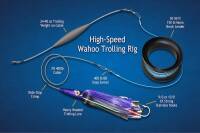
High Speed Wahoo Trolling Rig
Saltwater
09.08.2018
Fishing Light Tackle for Yellowfin Tuna
Saltwater
09.08.2018

0