
The leopard coral grouper, Plectropomus leopardus, is a Near Threatened Indo-Pacific reef predator with a documented maximum size above 20 kg. Knowing where they hold on the reef, how their ambush feeding behavior shapes presentation choices, and how protogynous hermaphroditism affects conservation decisions is what separates anglers who catch them consistently from those who do not.
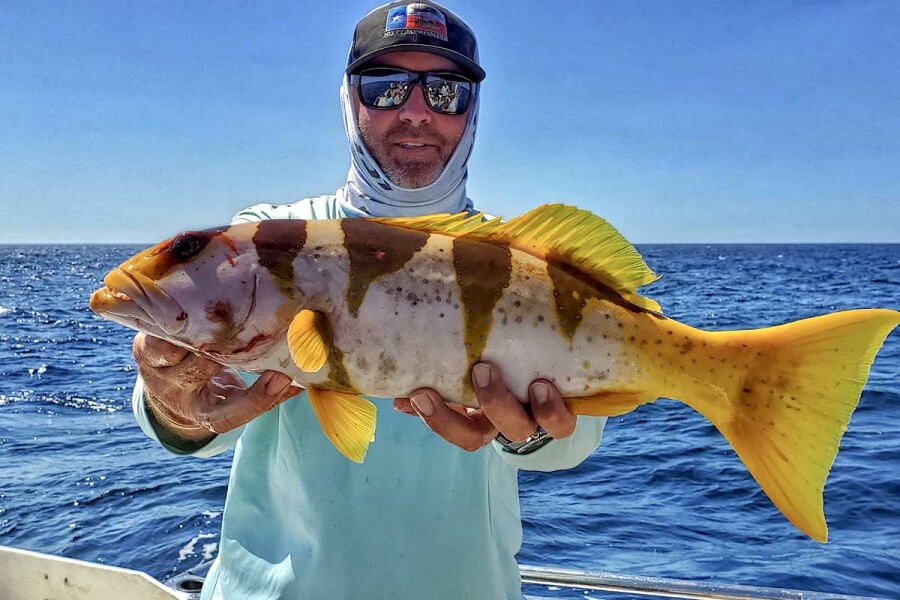
Targeting Coral Trout on Indo-Pacific Reefs
Coral trout are one of the most captivating reef fish you can target anywhere in the Indo-Pacific. They are explosive on the bite, powerful and stubborn in the fight, and smart enough about using the reef to make every hookup feel like a genuine contest. If you have already spent time chasing them across tropical reefs, you know exactly what we are talking about. If you have not, this is the fish that belongs at the top of your list.
What Is a Coral Trout?
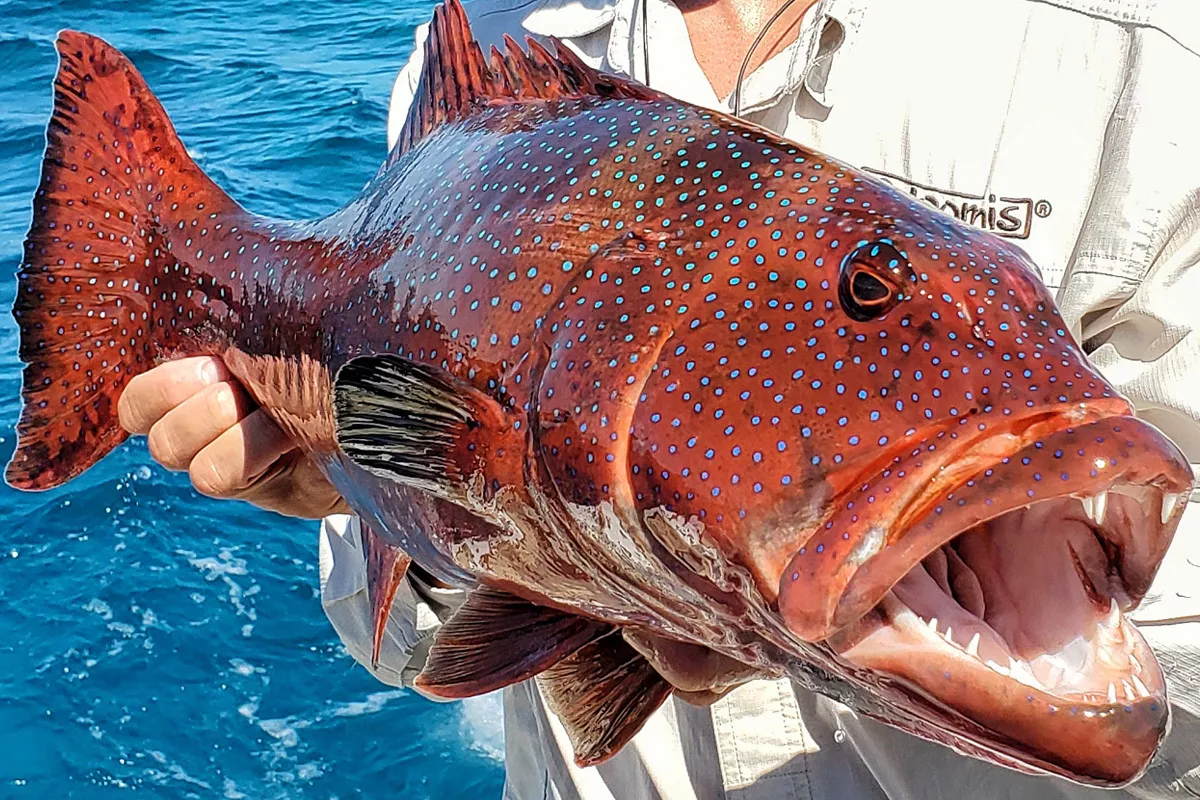
The leopard coral trout (Plectropomus leopardus) belongs to the grouper family Serranidae and is one of the most widely distributed coral trout species within the Plectropomus genus. It goes by several names depending on where you are fishing: leopard coral grouper, leopard trout, and simply coral trout throughout Australia and the Pacific. All of those names refer to the same fish.
- Scientific name: Plectropomus leopardus
- Common names: Coral trout, leopard coral grouper, leopard trout
- Family: Serranidae (groupers and sea basses)
- Typical length: 40 to 70 cm in recreational fishing, with fish over 80 cm considered genuinely large; documented maximum is approximately 120 cm
- Typical weight: 3 to 6 kg in sport fishing; specimens above 8 kg are uncommon for recreational anglers but well short of the species' documented maximum of over 20 kg
- Conservation status: Near Threatened (IUCN Red List)
- Depth range: 2 to 100 meters, with productive fishing concentrated between 10 and 80 meters
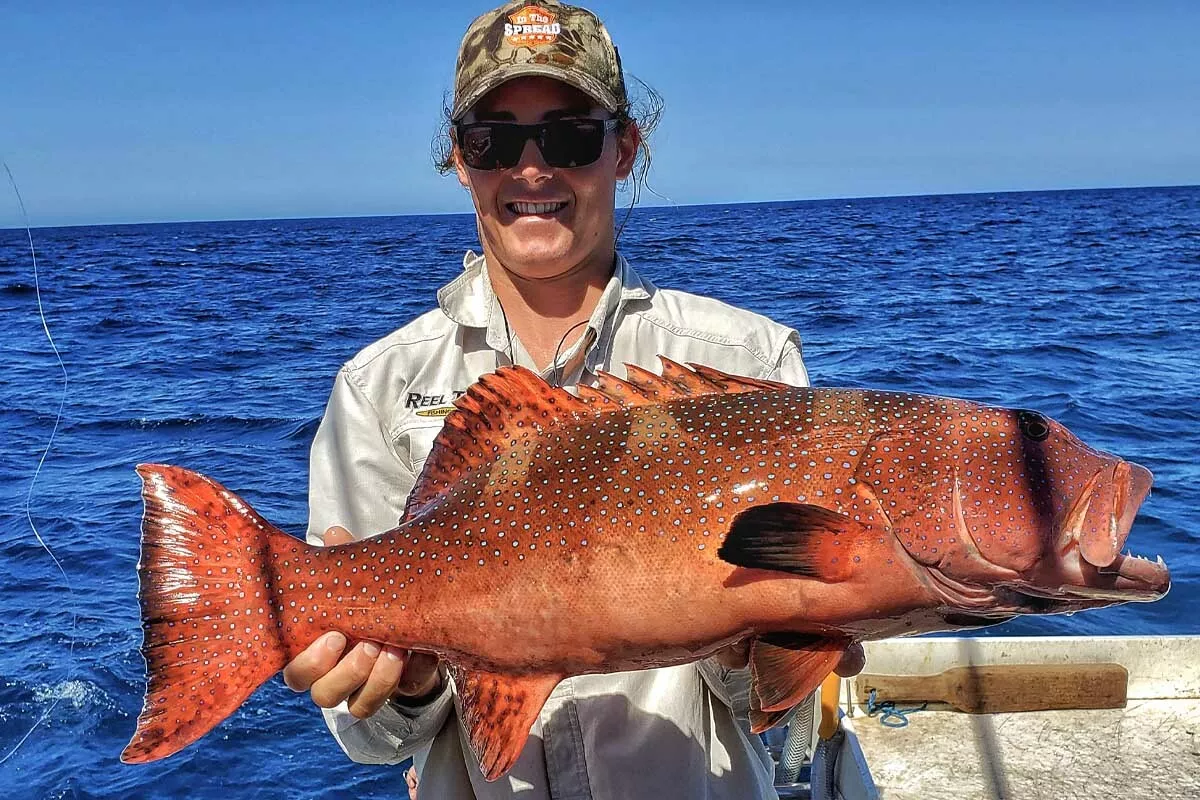
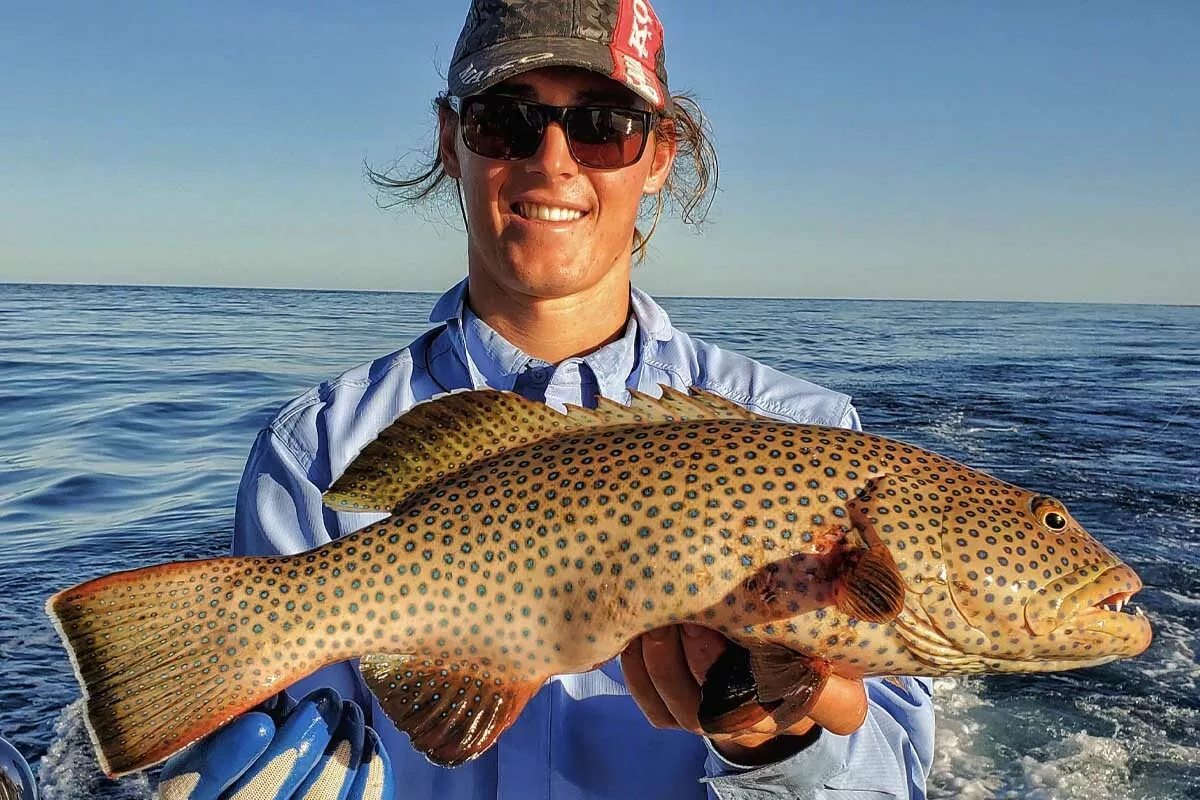
- Identifying features: Vivid red-orange to olive-brown body covered in electric blue spots, heavy build through the shoulders, large mouth with visible canine teeth
The blue spot pattern on a fully fired-up coral trout is one of the more spectacular things you will see in reef fishing. Colors intensify visibly when the fish is active and feeding, and a large specimen coming up through clear Indo-Pacific water is the kind of image that stays with an angler for a long time.
Where Coral Trout Live: Range and Habitat
Coral Trout Range Across the Indo-Pacific
Coral trout range spans the eastern Indian and western Pacific Oceans, from southern Japan and the Great Barrier Reef east to Fiji and Tonga, and west to offshore reef systems including Christmas Island and the Cocos (Keeling) Islands. Core concentrations of the species are consistently documented across:
- The Great Barrier Reef (Queensland, Australia)
- The Rowley Shoals and Scott Reef (Western Australia)
- The Coral Triangle (Indonesia, Philippines, Papua New Guinea, Malaysia, Timor-Leste, and the Solomon Islands)
- Coastal reef systems across Southeast Asia
- Tropical Pacific island reef systems throughout Micronesia and Polynesia
For Western Australian anglers, the Rowley Shoals represents arguably the finest coral trout fishing on Earth. These remote offshore atolls sit roughly 260 kilometers from the Kimberley coast and hold reef fish populations that see very limited pressure. Less pressure means bigger fish and more aggressive, less educated feeding behavior, which is everything you want when you have made the commitment to fish somewhere that remote.
Reef Habitat and Productive Depth Zones
Coral trout are obligate reef fish. They need structure and they use it the way any ambush predator uses cover: to hold position, stay concealed, and strike when prey moves into range. Within a reef system, they concentrate in predictable zones based on depth and structure type:
- Shallow reef tops and bommie edges (10 to 20 meters): Where sunlight penetrates fully and small reef fish school in the greatest numbers. This is the prime topwater and shallow soft plastic zone.
- Mid-depth reef slopes and drop-offs (25 to 50 meters): Where coral structure transitions to rubble and larger predators stage. The most consistently productive depth band for experienced reef anglers.
- Deeper offshore reef walls (50 to 80 meters): Where bigger, less pressured fish hold in quieter water. Metal jigging territory.
Knowing which depth zone holds fish on a given day separates productive trips from frustrating ones. Water clarity, current strength, and time of day all influence where on the reef the fish will position themselves. In low-current, high-visibility conditions fish tend to push shallower. Strong current often drives them down to deeper structure where they can hold without expending energy.
How Coral Trout Feed and Why It Matters for Anglers
Understanding coral trout feeding behavior is the foundation for catching them consistently. These are not pursuit predators. They do not chase bait across open water or run down prey over long distances. They hold in structure, watch the column, and accelerate with tremendous force over a short distance when a target enters range.
Primary diet items include small reef fish such as wrasse, damselfish, anthias, and juvenile parrotfish, along with crustaceans and cephalopods when available. The size of prey a coral trout will eat relative to its own body size is often surprising to first-time anglers. A 50 cm fish will confidently strike a lure 15 to 18 cm long, which tells you something important about presentation scale.
Coral Trout Fishing Courses
Jig head weight and hook placement determine whether soft plastics swim naturally or spin awkwardly on reef edges where big predators patrol sandy transitions. Improper rigging creates unnatural action that causes fish to track without striking, wasting time in productive zones where correctly rigged plastics trigger aggressive responses from trevally, coral trout, and grouper.

Coral trout species patrol Rowley Shoals reef systems based on tidal flow and structure, requiring constant boat repositioning rather than stationary fishing. Success depends on reading how current creates feeding lanes across Clerke Reef and adjusting popper or stick bait presentations to match light conditions and fish positioning throughout tide phases.
Coral Trout Fishing Techniques That Work
This is where the fishing gets genuinely interesting. Coral trout respond to several distinct presentations, and knowing when and where to apply each one is what turns a decent reef trip into a great one.
Fishing Soft Plastics for Coral Trout
Soft plastic lures on jig heads are the single most versatile and consistently productive method for coral trout across most Indo-Pacific reef systems, particularly in the 15 to 50 meter range. Paddle tail and shad-profile plastics in the 10 to 18 cm range cover the full range of conditions well.
Jig head weight needs to be matched to depth and current. Lighter heads in the 15 to 25 gram range work in shallow or calm conditions. Heavier heads from 30 to 60 grams are necessary in deeper water or when current is running. The action that consistently triggers strikes is a slow, twitching fall. Drop the lure to the bottom near structure, pop the rod tip sharply to lift the plastic off the bottom, then let it flutter back down on a semi-slack line. The bite almost always comes on the fall. Watch your line carefully because the take can be far subtler than you expect from a fish with that level of aggression.
- Effective color categories for coral trout soft plastic fishing:
- Natural baitfish silhouettes in white, silver, and blue-back for clear, bright conditions
- Chartreuse and white in stained water or deeper presentations
- Pink and red in shallow, high-visibility conditions
- Prawn and crab tones in tan, olive, and brown for bottom-focused work
Metal Jigging for Deep Reef Edges
Metal jigging is the method of choice when coral trout are holding on steep reef walls and drop-offs in the 40 to 80 meter range. The vertical presentation suits this environment well, and the erratic action of a properly worked metal jig is difficult for an ambush predator in that depth range to ignore.
The slow-pitch jigging approach has become the dominant technique for Indo-Pacific reef species over the past decade, and it is particularly effective on coral trout. Rather than the aggressive fast-pumping associated with traditional speed jigging, slow-pitch uses deliberate, rhythmic rod sweeps that allow the jig to flutter and yaw on the drop. The action mimics a wounded baitfish tumbling through the column.
Topwater Poppers and Stickbaits for Coral Trout
Nothing in reef fishing matches the ferocity of a coral trout topwater strike. When fish are active on shallow reef tops and bommie edges, poppers and stickbaits can produce surface attacks that are as visually intense as anything in sport fishing. A large coral trout launching from below to engulf a popper is the kind of moment that converts anglers into reef fishing obsessives.
This method works best when several conditions align. Fish need to be actively feeding on shallow structure, which is most likely during the first and last hours of daylight. Baitfish visibly pushed to the surface by predators below are the clearest indicator that topwater is the right call. Target shallow reef tops, the upper edges of bommies, and reef plateaus in 2 to 15 meters.
Other Productive Methods Worth Knowing
Soft plastics, metal jigs, and topwater lures get the most attention for coral trout, and rightly so, but they are not the complete picture. Deep-diving hardbody lures cast or trolled along steep reef edges produce well, particularly when fish are holding just below the topwater zone and are not responding to surface presentations. Bladed vibes and paddle vibes worked along reef rubble transitions can also be highly effective, especially in the 20 to 40 meter range where a tight-vibrating retrieve does a convincing impression of a fleeing baitfish over mixed bottom.
Tackle and Gear for Coral Trout Fishing
Coral trout tackle needs to be capable of stopping a fish that will immediately try to dive back into the reef structure the moment it feels the hook. Gear that is too light loses fish. Here is a practical baseline that works across the major presentation methods:
- Rod: A 6'8" to 7'4" medium-heavy to heavy spinning rod with a fast action is the standard choice for soft plastics and topwater. For slow-pitch jigging, purpose-built jig rods matched to your target jig weight are significantly more effective than general spinning rods.
- Reel: A quality spinning reel in the 4000 to 6000 size class for plastics and surface work. For jigging, a high-speed conventional or spinning reel appropriate to the jig weight and depth.
- Braid: 30 to 50 lb braid covers most situations. Move up to 65 lb when fishing close to heavy structure or targeting fish in deep water where abrasion risk is higher. There is no advantage to fishing light when a hooked coral trout is going to make a straight run for the reef.
- Leader: Fluorocarbon in the 40 to 60 lb range is the standard. Coral trout are not particularly leader-shy, but they have rough mouths and are regularly caught near abrasive coral, so fluorocarbon's abrasion resistance is worth the investment over monofilament.
Coral Trout Conservation and Responsible Fishing
Coral trout conservation is a real and legitimate concern. The IUCN Near Threatened listing for Plectropomus leopardus reflects significant commercial fishing pressure across much of its range, particularly driven by demand from the live-reef food fish trade in Asian markets. The situation is not uniform, however. In Queensland, the common coral trout fishery operates under regulated commercial quotas, size limits, and seasonal closures implemented specifically in response to overfishing risk. Recreational fishing contributes a non-trivial portion of total harvest in some regions, which means anglers are part of the conservation equation whether they think about it that way or not.
Here is where the biology we mentioned earlier becomes directly relevant. Because coral trout are protogynous hermaphrodites, with large individuals representing the dominant males in a spawning population, releasing your biggest fish is not just a sentimental gesture. It is one of the most ecologically meaningful decisions you can make on a reef fishing trip. Removing large males from a population disrupts spawning dynamics in ways that removing smaller females does not.
- Practice catch and release on larger, older fish, which are almost certainly dominant males and carry the highest reproductive value
- Use a descending device or venting tool on fish brought up from depth to reduce barotrauma mortality on released fish
- Respect local size limits and bag limits wherever you are fishing, and verify current regulations with the relevant national or regional fisheries authority
- Handle fish wet and minimize air exposure during photography
- Avoid targeting known spawning aggregations, which represent periods of peak ecological vulnerability
The same reef systems that hold coral trout are home to giant trevally and dozens of other high-value species. A healthy reef ecosystem means better fishing across the board. Taking a long-term view on reef fish populations is not idealism. It is simply practical management of the resource that makes the experience possible.
Frequently Asked Questions About Coral Trout Fishing
What is the best lure for coral trout?
Soft plastic lures on heavy jig heads are the most consistently productive option across the widest range of conditions and depths. Paddle tail and shad-profile plastics in the 10 to 18 cm range are the reliable starting point. Metal jigs in the 60 to 150 gram range are the better choice when fishing steep reef walls and deep structure in 50 to 80 meters of water.
How deep do coral trout live?
Coral trout inhabit reef structure from very shallow water down to approximately 100 meters. The most productive sport fishing tends to occur between 10 and 50 meters on reef slopes, bommie edges, and drop-offs. Larger fish in less-pressured locations often hold in 60 to 80 meters of water.
How big do coral trout get?
Most coral trout encountered in recreational fishing range from 40 to 70 cm, weighing 3 to 6 kg. Fish over 80 cm are uncommon in regularly fished locations, and specimens above 8 kg are notable for recreational anglers. The species is documented to reach approximately 120 cm and over 20 kg at maximum size, though fish anywhere near that scale are exceptionally rare.
Where is the best coral trout fishing in Australia?
The Rowley Shoals in Western Australia and the Great Barrier Reef in Queensland are the two most highly regarded coral trout destinations in Australia. The Rowley Shoals, given its remote location and restricted access, consistently produces larger fish and more aggressive feeding behavior than most accessible reef systems.
Are coral trout good to eat?
Yes, and significantly so. Coral trout is considered premium table fish throughout its range. The flesh is white, firm, and mild, making it highly sought after in both recreational and commercial contexts. This culinary value is a primary driver of the commercial fishing pressure the species faces across Asian markets.
Is coral trout the same as leopard grouper?
When anglers and fish markets refer to "common coral trout," they mean Plectropomus leopardus, and yes, that species is also called leopard coral grouper or leopard grouper in scientific literature and throughout Asian seafood markets. It is worth noting that "coral trout" as a term is applied more broadly in Australia and the Indo-Pacific to several closely related Plectropomus species, including the bar-cheek coral trout (P. maculatus), the blue-spot coral trout (P. laevis), and others. If someone tells you they are chasing coral trout on the Great Barrier Reef, they are probably targeting P. leopardus, but not necessarily. Context and location matter.
Fishing Coral Trout with In The Spread
Coral trout deserve significantly more attention from the international sport fishing community than they currently receive outside of Australia. They are a world-class reef species in every meaningful sense: visually striking, athletically impressive, and technical enough in their feeding behavior to genuinely reward anglers who approach them seriously.
In The Spread has built coral trout content specifically because these fish and these environments demand expert instruction rather than generic reef fishing advice. The water is remote, the structure is complex, and the fish are not easy to fool consistently without understanding how they think and feed.
Login
to leave a review.
User Reviews
There are no reviews yet.
Setting Up a Dredge Pulley for Billfish
Saltwater
12.28.2020
High Speed Wahoo Trolling Rig
Saltwater
09.08.2018
Fishing Light Tackle for Yellowfin Tuna
Saltwater
09.08.2018
0