
The right pair of polarized sunglasses changes everything about how you read the water. Glare kills your ability to see fish, track movement, and identify structure before you spook everything in range. This article breaks down the science of polarization, how to match lens color to your fishing environment, and which brands and features are worth paying for.
Polarized Sunglasses for Fishing: See More, Catch More
Polarized sunglasses for fishing are not optional gear. If you spend serious time on the water, whether you are stalking redfish across a grass flat, dropping baits in 1,000 feet of blue water, or wading a mountain trout stream, the quality of your vision directly determines how much fish you catch. That is not marketing copy. It is something every experienced angler figures out the hard way, usually after watching someone with better glass spot three fish they completely missed.
Do Polarized Sunglasses Actually Help You See Fish?
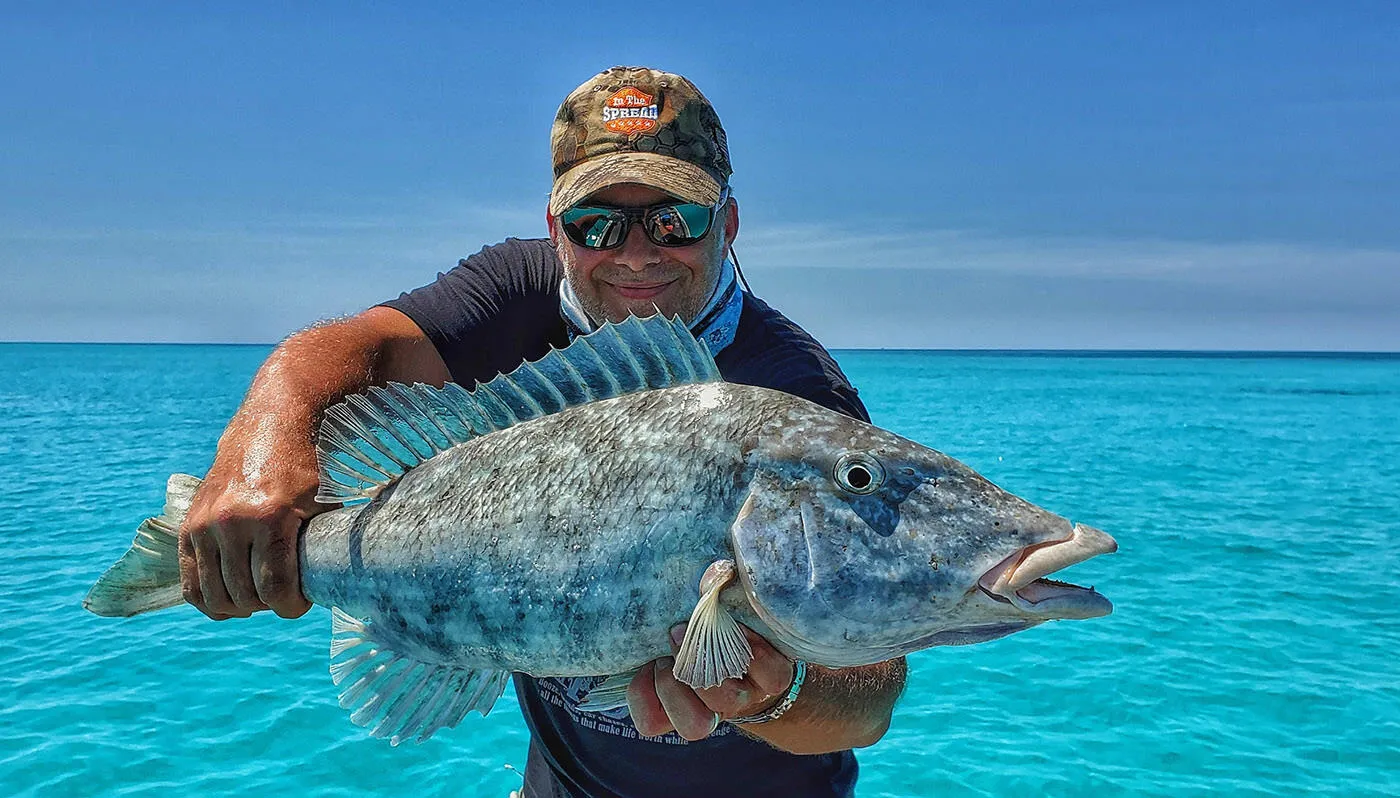
Yes, unequivocally. Polarized lenses help you see fish by greatly reducing the horizontal glare that bounces off the surface of the water and blocks your vision from penetrating below it. Without polarization, all you see is the mirror effect of sunlight on the surface. With a quality polarized lens, that surface glare is dramatically reduced and you can look into the water column. The practical result is that you spot fish, structure, depth changes, and underwater hazards that would otherwise be nearly invisible.
How Polarization Works: The Science Behind the Benefit
Light from the sun travels in all directions. When it strikes a flat, reflective surface like water, it becomes concentrated into horizontal waves, and that concentration is what we experience as glare. A polarized lens contains a chemical filter with a vertical molecular structure. That structure blocks the horizontal light waves while allowing vertically oriented light to pass through. The result is that surface reflection is greatly reduced, and your eye receives light from below the surface rather than just light bouncing off it. How effective this is in practice depends on sun angle, film quality, and the coatings on the lens, which is one reason there is such a meaningful performance gap between budget and premium glass.
What Is the Best Lens Color for Fishing?
Lens color is where most anglers make mistakes. There is no single universal answer because the right fishing lens color depends on light intensity, water depth, bottom composition, and whether you are fishing inshore or offshore. Here is how each color performs on the water.
Gray Lenses: Best for Offshore and Bright Conditions
Gray is the offshore standard. It provides the most neutral color transmission, meaning it does not shift the way colors look, and it is the most effective lens for blocking intense light on open water. When you are running offshore in direct overhead sun with nothing but blue water around you, gray is what you want. It handles the extreme brightness without washing out your ability to read bait schools, birds, or color changes in the water.
Warm Tints: Copper, Brown, and Amber for Inshore and Variable Light
Copper, brown, and amber lenses belong to the same family of high-contrast warm tints, and their performance largely overlaps. All three block blue light, which heightens contrast and makes underwater objects sharper and easier to separate from the background. The differences between them are often more a function of brand formulation than fundamental physics, so do not overthink the distinctions.
As a practical rule: copper tends to perform best across the widest range of inshore conditions, making it the most versatile of the three. Brown excels in early morning and late afternoon fishing in shallow water, where warming the color spectrum helps define bottom texture. Amber is the strongest performer under genuine overcast and flat light, amplifying contrast when cloud cover removes the natural brightness and angle of direct sun.
Yellow and Sunrise Lenses: Best for Ultra-Low Light Conditions
Yellow and sunrise-tinted lenses do not get enough attention in most fishing sunglasses discussions, but they belong in the conversation. These very high-transmission lenses are built for pre-dawn fishing, heavily overcast days, thick canopy streams, and any situation where ambient light is so low that standard tinted lenses create more obstruction than benefit. If you fish first light inshore or wade streams under heavy tree cover, a pair of yellow lenses is worth having.
Green Lenses: Best All-Around Freshwater and Mixed Saltwater
Green lenses offer minimal color distortion with solid glare reduction, making them a strong choice for both freshwater and shallow saltwater environments. They handle a wide range of light conditions and are particularly effective in environments where water clarity varies, such as tidal rivers, estuaries, and backwater marshes. If you fish a mix of freshwater and inshore saltwater, green is often the most practical single option.
Blue Lenses: Best for Bright Days on Open Water
Blue mirror lenses perform well on intensely bright days on open salt water. They are not a low-light option, and they are sub-optimal for reading fine bottom detail in shallow water due to the color shift they introduce. That said, offshore anglers regularly sight-fish pelagics, floating structure, and weed lines through blue mirror successfully. Used in the right conditions, specifically open water in direct bright sun, they provide excellent glare reduction and are easy on the eyes during long days.
Polarized vs Non-Polarized Sunglasses for Fishing: Is There a Real Difference?
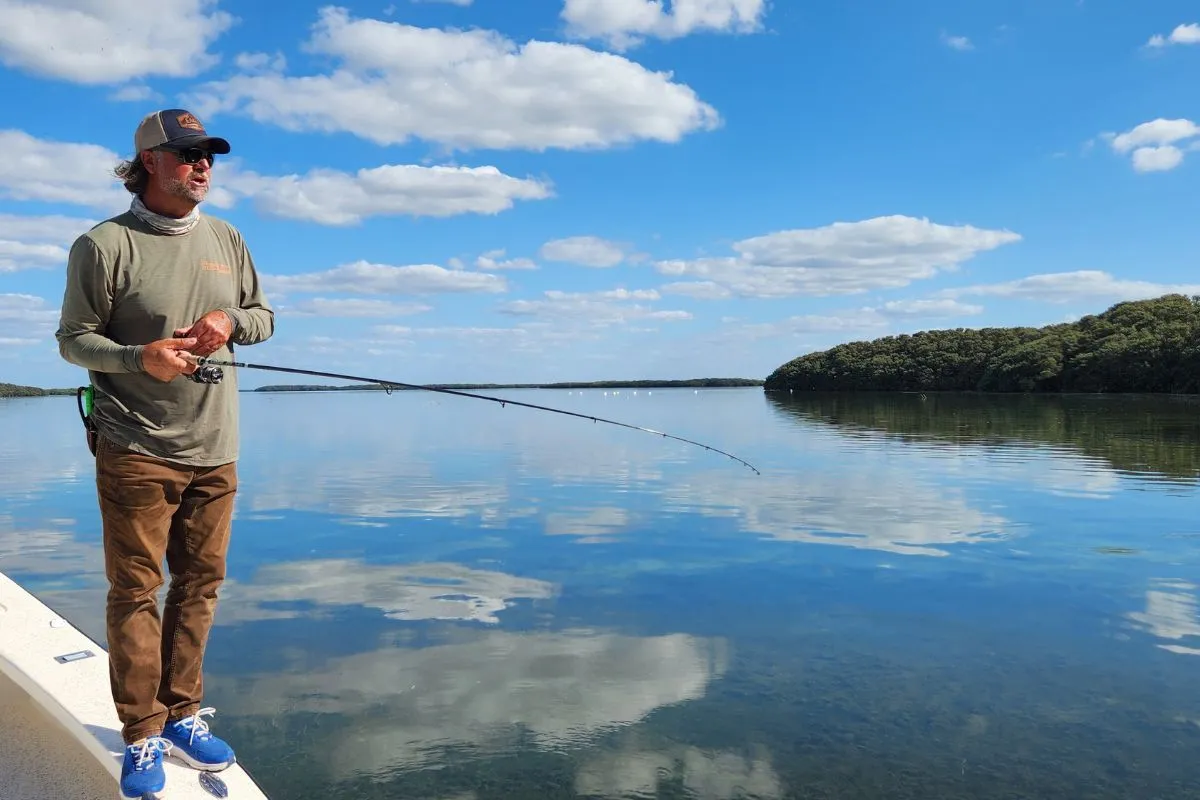
For casual wear or driving, the difference between polarized vs non-polarized sunglasses is noticeable but not critical. On the water, it is not even a close comparison. A quality non-polarized lens will still reduce brightness and improve overall contrast and comfort relative to nothing at all, but it does little to eliminate horizontal surface glare. For sight fishing, that limitation matters enormously. You are working with a fraction of the subsurface visibility that a polarized lens provides, which is the difference between spotting a fish at forty feet and walking right past it.
What to Look for When Choosing Fishing Sunglasses
Picking the right pair involves more than lens color. The following factors will determine whether your sunglasses actually perform over the long haul.
Polarization quality is the most important variable. Not all polarized lenses are created equal. Entry-level polarization films can degrade, bubble, or have inconsistent alignment across the lens, which creates distortion or incomplete glare reduction in parts of your visual field. Some low-end polarized lenses also introduce a subtle "swim" effect as you move your head, which becomes fatiguing over a long day. Premium lenses use fused or laminated polarization technology that is far more durable and optically consistent throughout the entire lens.
- Lens material: Optical glass provides the sharpest clarity but is heavier and breaks more easily; polycarbonate is lighter and impact-resistant but can scratch more easily without hard coatings; glass is generally preferred for optical performance, polycarbonate for durability
- Impact protection: For anglers running boats, casting heavy lures, or fishing around split shot and flying hooks, ANSI-rated impact resistance is a genuine safety consideration; check whether a lens meets ANSI Z87.1 standards if impact protection matters in your fishing environment
- UV protection: Only consider lenses with 100% UVA and UVB protection; anything less is a long-term health risk when you spend extended time on reflective water
- Frame fit and wrap: A wider wrap-around frame blocks peripheral light and wind-driven debris, salt spray, and hook hazards while reducing eye fatigue; proper wrap also eliminates the side and top gaps that allow angled glare to bypass the lens entirely
- Anti-reflective coatings: Interior AR coatings on the back of the lens prevent light from bouncing off the inside surface back into your eye, which is a meaningful source of fatigue that most anglers never identify
- Hydrophobic and oleophobic coatings: For saltwater fishing, a lens that repels water and salt smudges is a major quality-of-life difference; droplets that bead and shed rather than streaking across your lens keep your vision clean during active fishing
- Nose pads and temple grip: Adjustable nose pads and rubberized temple tips matter more than they sound when you are sweating on a long day; you do not want your sunglasses sliding off your face while you are fighting a fish
Prescription lenses and integrated readers are worth knowing about if your vision requires correction. Many quality sport fishing frames are now available in prescription versions, and several brands including Bajio offer integrated bifocal readers built into the lower portion of the lens, which is useful for tying knots and reading charts without pulling your sunglasses off.

Best Polarized Sunglasses for Saltwater Fishing
After years of personal use and watching what the best captains, guides, and tournament anglers reach for, a handful of brands consistently rise to the top. This is not an exhaustive list, and prices vary significantly, but these are options worth taking seriously.
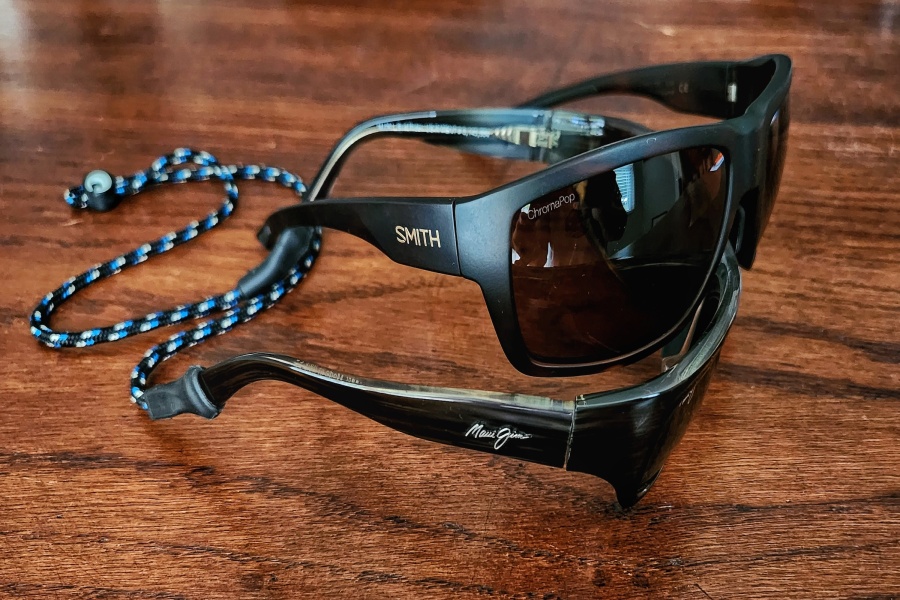
My personal preference is Maui Jim and Smith Optics. I have used both extensively across saltwater environments from the Gulf Coast to the Indian Ocean and they have never let me down. The lens technology in both brands is genuinely superior, and the build quality holds up under hard use. If you are going to invest in one quality pair, they are an excellent starting point.
- Costa del Mar Blackfin Pro: Built specifically for fishing, with vented nose grips, sticky temple tabs, and lanyard holes that keep them on your face during active fishing; many independent roundups rank Costa at or near the top specifically for glass lens quality
- Bajio Nippers: Lightweight, well-polarized, and purpose-built for fishing; frequently rated best overall in independent comparisons, and they punch above their price point
- Smith Optics Guide's Choice with ChromaPop: The ChromaPop technology delivers excellent contrast and color definition; a top performer for trout and freshwater sight fishing
- Leupold Payload: Strong contrast and clarity make these a favorite for bass sight fishing; a lesser-known brand in the fishing space but worth evaluating
Different brands win in different categories depending on who is doing the testing and what criteria they weight. The most useful thing you can do is get your hands on a few options at a dealer with a wide selection and compare them on the water in the conditions you actually fish before committing.
Do You Need Different Sunglasses for Inshore vs Offshore Fishing?
In practical terms, yes. The light conditions, water depth, and visual demands of inshore fishing are different enough from offshore fishing that a single lens color rarely serves both environments equally well.
For offshore fishing, you are dealing with intense overhead sun, open blue water, and no need to see bottom detail. The visual task is reading the surface, tracking birds, watching for color changes, and spotting bait. Gray and blue mirror lenses are built for this environment and outperform the warmer inshore tints under those conditions.
If you fish both environments regularly, the practical solution is two pairs. One pair of copper or green for inshore, one pair of gray for offshore. That covers the full range of conditions you will encounter.
Things You Should Know Before You Buy
A few important realities about polarized fishing sunglasses that do not get enough attention:
Polarized lenses reduce total light transmission, which makes them less effective in genuinely low-light conditions. Dawn and dusk are the best feeding windows for most species, and if your lenses are too dark, you sacrifice visual penetration at exactly the moment when fishing is best. This is why lens color and tint density both matter. A light copper or amber lens lets you fish effectively at first light. A dark gray lens does not.
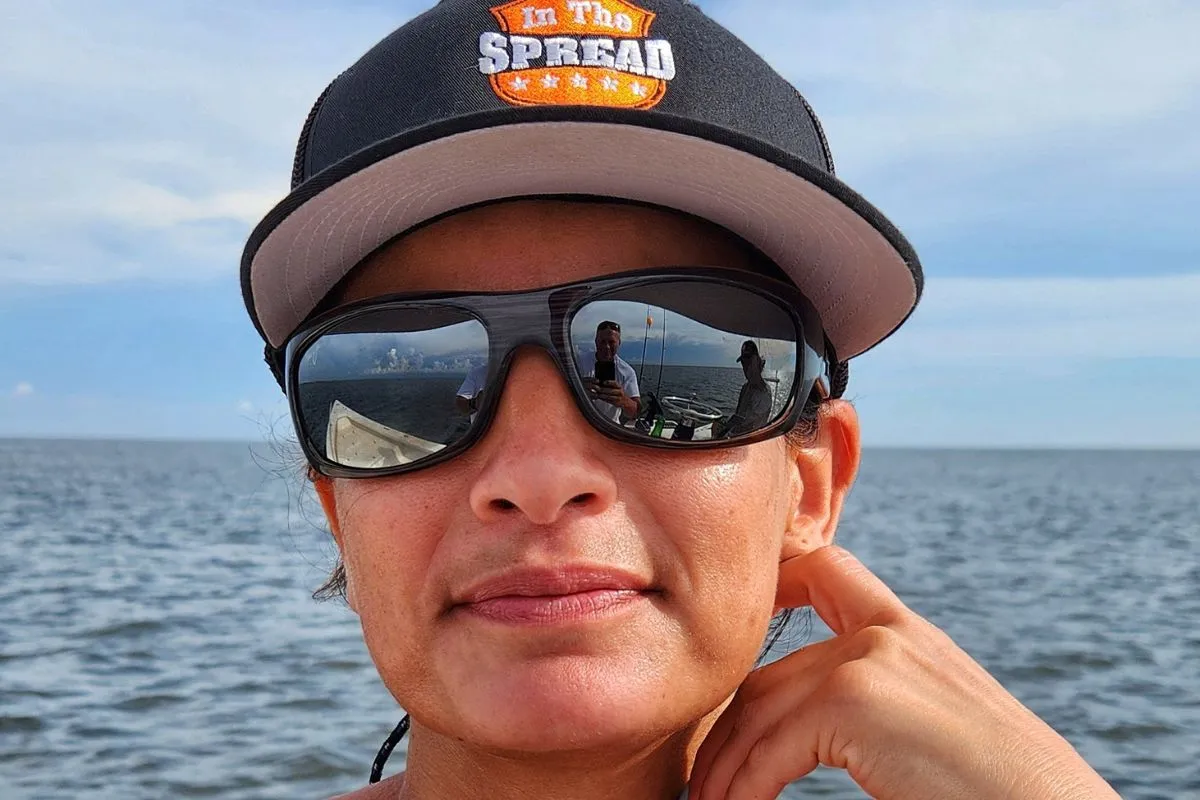
Mirror coatings are a coating applied over the outer surface of the lens, not a different lens material. They add additional glare reduction and look great, but they require care. Scratches on a mirror coating are more visible and more disruptive to vision than scratches on a non-mirrored lens. If you are rough on gear, either buy a frame with a hard case and use it, or skip the mirror coating and prioritize lens durability.
Frequently Asked Questions About Polarized Fishing Sunglasses
Are polarized sunglasses worth it for fishing?
Yes. Polarized lenses greatly reduce horizontal surface glare, which is the primary visual obstruction between you and the fish. For sight fishing, flats fishing, and any technique that involves reading the water to find and track fish, polarized sunglasses are among the most impactful tools you can own. Even for techniques where sight fishing is not the primary method, the reduced eye strain and UV protection make them worth wearing on every trip.
What color polarized lenses are best for fishing?
It depends on where you fish. Copper is the most versatile lens for inshore and sight fishing. Gray is the standard for offshore and bright open-water conditions. Brown and amber are strong performers in low light and overcast conditions. Yellow or sunrise lenses are the best choice for pre-dawn and ultra-low light. Green covers a wide range of mixed freshwater and saltwater environments.
What is the difference between polarized and non-polarized fishing sunglasses?
Non-polarized lenses reduce overall brightness and can improve contrast and comfort compared to no lenses at all, but they do very little to cut horizontal surface glare. Polarized lenses specifically block those horizontal light waves, allowing you to see into the water column rather than just seeing the reflected surface. For fishing that involves reading the water or tracking fish, that difference is fundamental.
Do polarized sunglasses help you spot fish?
Directly, yes. By greatly reducing surface glare, polarized lenses allow you to see into the water column, where fish actually are. In clear shallow water with the right lens color and light angle, a quality pair of polarized sunglasses can reveal fish at distances and depths that would be extremely difficult or impossible to see with non-polarized glass.
What lens color is best for inshore saltwater fishing?
Copper or green lenses are the top performers for inshore fishing. Copper provides excellent contrast for sight fishing over mixed bottom, while green handles a wider range of light conditions and water clarity. For early morning fishing, brown or amber lenses are worth considering due to their stronger performance in lower light. For pre-dawn or very overcast conditions, yellow or sunrise lenses are worth having.
What is the best lens color for offshore fishing?
Gray is the standard for offshore. It provides neutral color transmission, handles intense sunlight without washing out, and is the most effective tint for reading the surface of open water under bright conditions. Blue mirror is an alternative for very bright days, and offshore anglers regularly sight-fish pelagics and floating structure through blue mirror successfully.
Can you wear polarized sunglasses on overcast days while fishing?
Yes, but lens color matters more under overcast conditions. Amber, copper, and brown lenses provide the contrast needed to see into the water when flat light removes the natural angle and intensity of direct sunlight. Yellow lenses are the strongest choice in very low light. Gray and blue lenses are less effective when cloud cover reduces brightness significantly.
How much should you spend on fishing sunglasses?
For quality that holds up to regular hard use on the water, $150 to $300 covers the top tier from brands like Maui Jim, Smith Optics, Costa del Mar, and Bajio. Some direct-to-consumer and smaller brands are now producing competitive polarized options in the $75 to $130 range that test well for casual to moderate use. The cost-per-use math on a quality pair you wear for five or ten seasons usually justifies the investment at the higher end of that range.
The Bottom Line on Polarized Sunglasses for Fishing
Good glass changes how you fish. That is the simplest way to put it. When you can see into the water clearly, you make better decisions about where to cast, how to present a bait, and how to read fish behavior before they react to you. That is a competitive edge that you cannot replicate with any other piece of gear.
Invest in quality, match your lens color to your primary fishing environment, and treat your sunglasses as the essential tool they are rather than an afterthought you grab off a counter on the way to the boat ramp. The difference between a premium polarized lens tuned for your conditions and a cheap pair is not subtle. You will feel it on the very first day on the water.
Login
to leave a review.
User Reviews

Benjamin
12.12.2023
7

Robert
12.12.2023
0

Complete Dredge Pulley Setup Guide
Saltwater
12.28.2020
High Speed Wahoo Trolling Rig
Saltwater
09.08.2018
Fishing Light Tackle for Yellowfin Tuna
Saltwater
09.08.2018
0